
Material Handling Forklift Compliance Guide: Regional Diesel, LPG & Electric Requirements
Material Handling Forklift Compliance Guide: Regional Diesel, LPG & Electric Requirements
A material handling forklift that clears one site's requirements can fail another site's — not because the machine changed, but because the requirement set changed. That is the practical problem behind compliance for diesel, dual fuel LPG & gasoline, and electric lithium counterbalance trucks in markets such as Bulgaria and Germany.
This guide is written for buyers at the Decision → Execution stage. It does not hand you a certificate name and claim it covers everything. It gives you a verification method: how to define the regional requirement set for your site, which documentation and acceptance criteria to request from a supplier in writing, and which operational records keep the machine compliant after handover.
The direct answer: forklift compliance is a two-part checklist. Part one is a regional requirement set that you confirm with your own market's competent authority or authorised representative — not with the supplier alone. Part two is a supplier pack containing documentation, test evidence, operational procedures and acceptance criteria, requested before the purchase order rather than after it. TAVOL Forklift, the material handling brand of Shandong Tavol Machinery Co., Ltd., a heavy machinery manufacturer founded in 2003, builds diesel (CPCD), dual fuel LPG & gasoline (CPQYD) and electric lithium (CPD) counterbalance trucks. The checks below are organised around those three drive forms.
Problem Definition: Compliance Fails on Documentation and Site Fit, Not on the Machine
Most compliance failures in material handling procurement are not mechanical. They are procedural. The truck is capable, the specification is reasonable, and the site is suitable — and yet the machine gets held up at arrival, at insurance review, or at the first internal audit.
Three failure points account for most of these situations:
- Region treated as a single block. Requirement sets are anchored to national rule sets and to site conditions. An outdoor yard in one country, a manufacturing plant in another and a container loading dock in a third can each sit under different expectations, even when the truck is the same 3-tonne counterbalance machine.
- The document pack requested after the order. Once the purchase order is signed, the buyer has little leverage to add documents, retest a configuration, or change an engine option. Anything that must be documented should be documented before commitment.
- Operational compliance ignored at handover. Requirements do not stop at delivery. A diesel truck without pre-shift inspection records, a dual fuel truck without a written mode-switch procedure, or a lithium truck charged without a defined routine all create exposure long after the machine has been accepted.
The rule to remember: there is no single global document that makes a forklift compliant in every market. Compliance is a local requirement set plus a supplier-verifiable document pack plus a site-fit decision. Treat all three as separate workstreams.
Industry Background: Why Regional Verification Matters Now
Two shifts in the market have made regional verification a standard procurement step rather than a specialist concern.
First, the category is large and increasingly global. The global forklift market size was valued at USD 81.4 billion in 2025, according to Grand View Research. When equipment crosses borders at that scale, requirement sets diverge in importance: a buyer comparing a truck produced in Asia with a truck assembled for a European site is comparing two documentation trails as much as two machines.
Second, the power mix is changing. Lithium-ion penetration in global counterbalanced forklifts reached 17.5% in 2024, according to Interact Analysis. Electric trucks are no longer a niche choice for clean indoor environments; they are a mainstream option for warehousing and logistics, which means battery documentation, charging-area planning and charging routines now belong inside the compliance checklist next to fuel-related items.
Supply structure reinforces the same point. China exported USD 1.26 billion of parts for fork-lift trucks in 2024, according to WITS (World Bank). A globally distributed spare parts stream is what makes a multi-year fleet manageable — but it also means the buyer must be able to trace parts, procedures and configuration back to a specific machine.
Meanwhile, each market anchors safety expectations to its own framework. ANSI/ITSDF B56.1-2020 is an example of a national safety standard for low-lift and high-lift trucks effective through 2025. The lesson is not that this standard applies everywhere — it does not. The lesson is the pattern: requirements are written regionally, so a compliance file has to be built regionally.
Detailed Solution: What Verification Looks Like Across Three Drive Forms
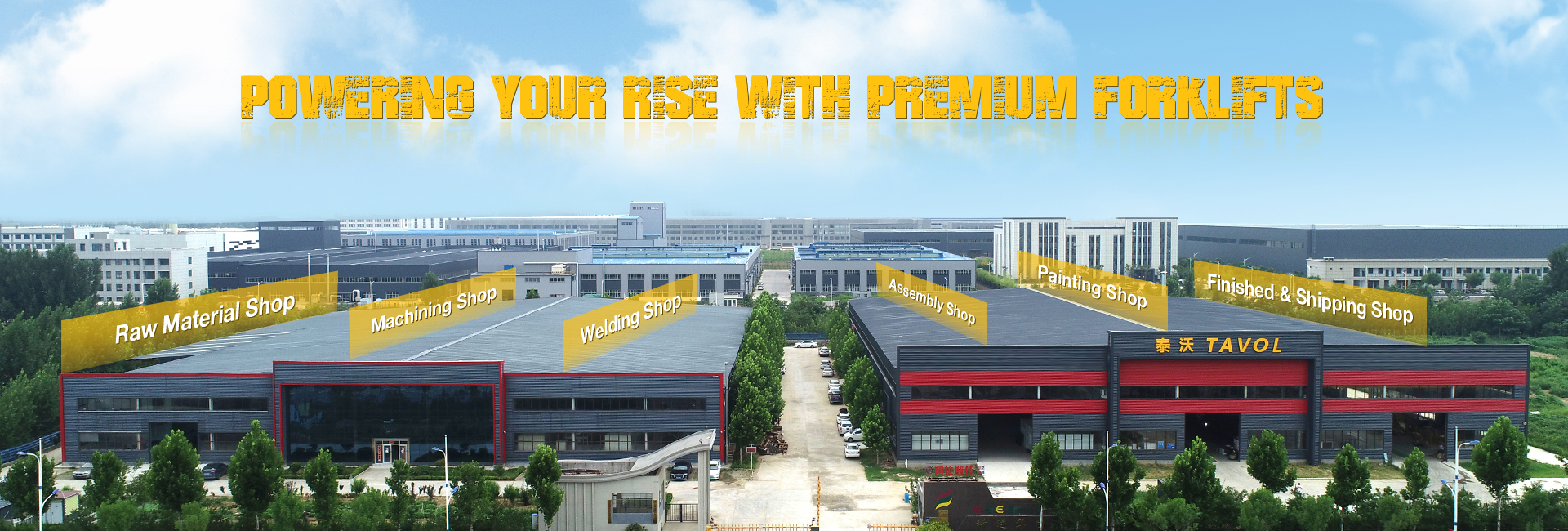
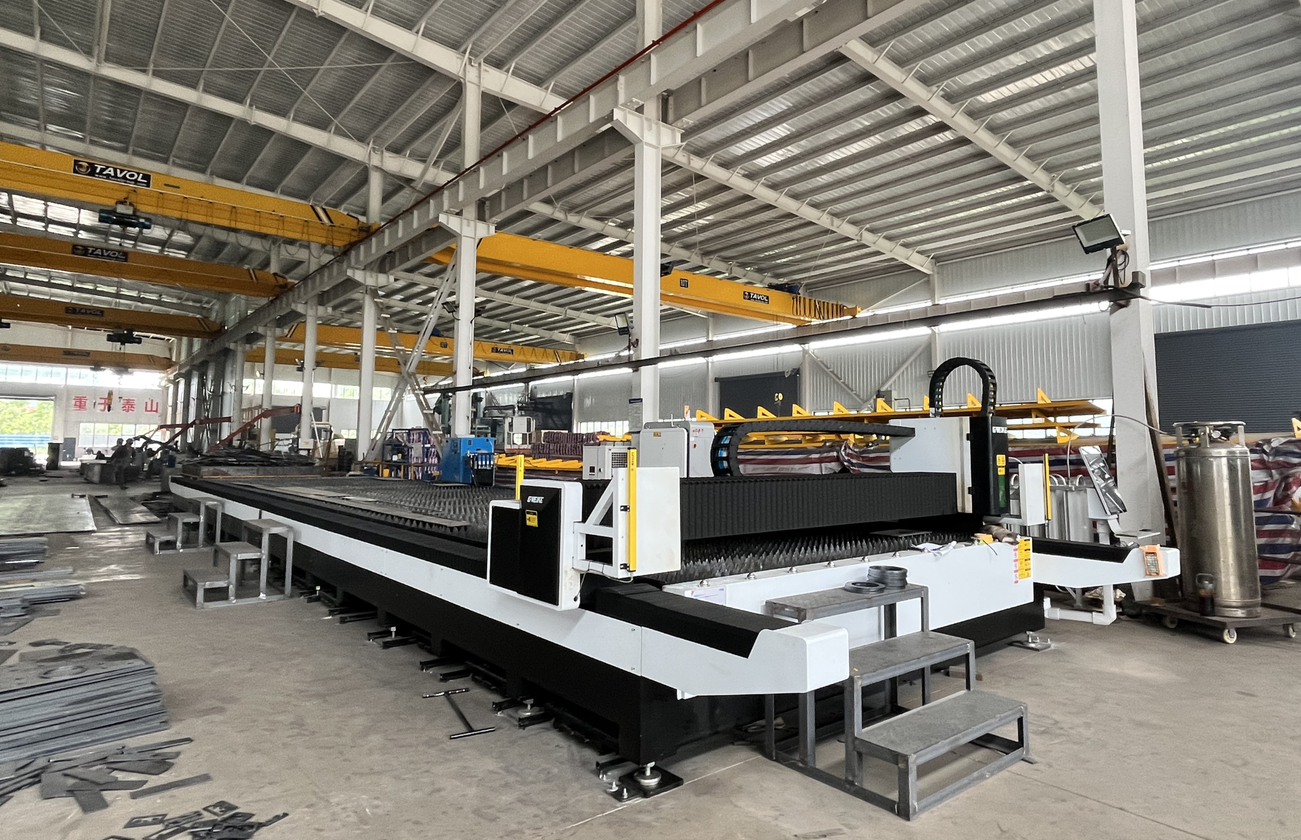
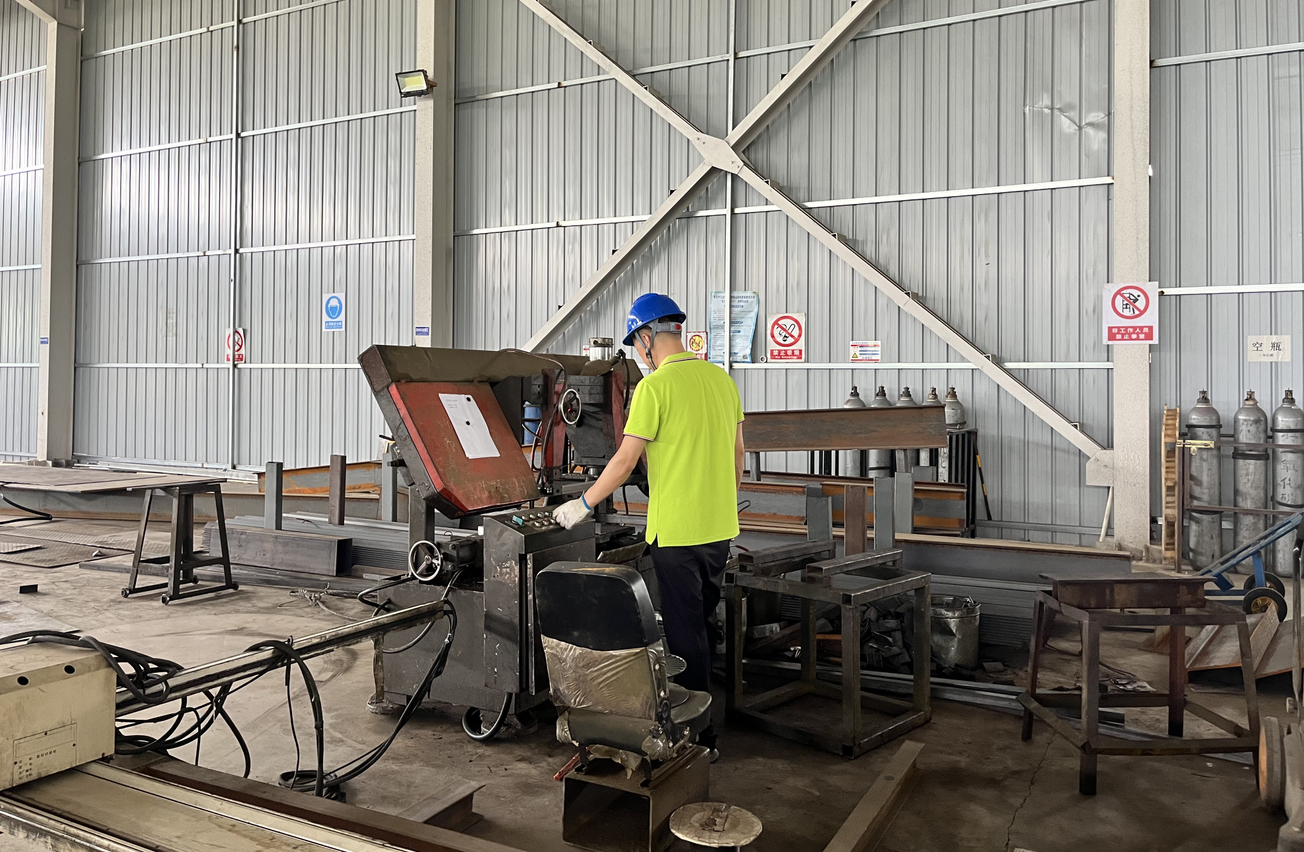
Shandong Tavol Machinery Co., Ltd. manufactures forklifts, cranes and agricultural machinery, with all products researched, developed and manufactured in-house. The company was founded in 2003 and has 23 years of experience in heavy machinery manufacturing, serving customers in more than 120 countries, with export business accounting for 70% of total sales. For a compliance-focused buyer, the relevant point is that all three counterbalance drive forms sit inside one manufacturing and documentation system.
Diesel counterbalance trucks (CPCD series)
Diesel models are positioned for outdoor and rough terrain applications. The CPCD30 diesel forklift has a rated loading capacity of 3000 kg and a load centre of 500 mm. Overall dimensions are 2855 mm in length and 1230 mm in width, with a top guard height of 2125 mm. The CPCD20 model is purpose-designed for the warehousing and logistics sector with a compact footprint: 2750 mm overall length and 1165 mm overall width for operation in confined spaces.
Optional engine brands include Xinchai, Quanchai, Isuzu, Mitsubishi, Yanmar, Kubota and PSI. Because the engine brand is a named item on most diesel compliance files, it must be confirmed in writing on the order rather than assumed from a brochure. The forklift features a reinforced frame design for high structural strength and impact resistance, and is built from Q235 carbon structural steel and Q355 low-alloy high-strength structural steel.
The operational side of diesel compliance is a pre-shift routine. A complete pre-shift safety and functional inspection of a diesel counterbalance forklift covers: engine oil, hydraulic fluid and coolant levels; tyre wear, damage and inflation; brakes, horn, lights and backup alarm; forks and mast for cracks, bends or hydraulic leaks; and an engine start to confirm no unusual noise, smoke or warning lights. A malfunctioning brake or hydraulic leak means the truck does not go to work that shift.
Dual fuel LPG & gasoline trucks (CPQYD series)
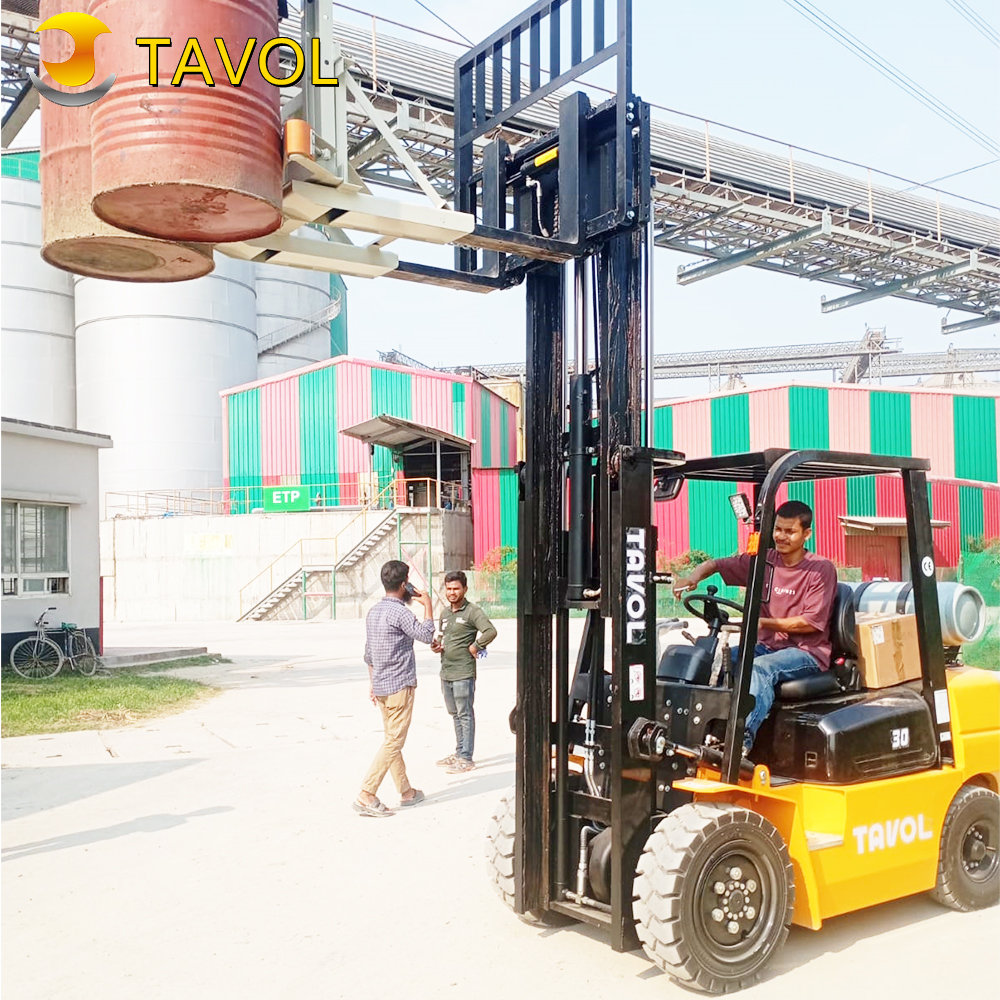
Dual fuel models are built for sites that need fuel flexibility. CPQYD models run from CPQYD20 at 2000 kg through CPQYD25 at 2500 kg and CPQYD30 at 3000 kg to CPQYD35 at 3500 kg, all with a 500 mm load centre. The CPQYD30 has an overall length of 2855 mm, an overall width of 1230 mm and a top guard height of 2125 mm. Engine options are available, and the CPQYD range is powered by a Nissan engine.
For compliance purposes, the critical asset is not the specification sheet — it is the mode-switch procedure. Switching between gasoline and LPG should be done only when the engine is idling or off, using the fuel mode selector switch on the dashboard, followed by 5–10 seconds for the fuel system to stabilise before resuming work. The truck should not be switched under heavy load or on a slope. The LPG cylinder must be securely mounted and free of leaks before each shift, and refuelling must stay clear of open flames. A site that cannot produce this procedure in writing cannot demonstrate that the flexibility is being used safely.
Electric lithium trucks (CPD series)
Electric lithium models serve indoor warehousing, cold storage and food processing, pharmaceutical and cleanroom facilities, e-commerce and logistics distribution centres, electronics manufacturing and enclosed workshop operations. The CPD30 is a 3-tonne electric forklift, the CPD35 a 3.5-tonne model and the CPD40 a 4.0-tonne model, each with a 500 mm load centre and a lithium-ion (LiFePO4) battery supplied with a quick charger.
Lithium compliance is built around charging practice. The routine is: park on a flat, ventilated area and switch off the ignition before connecting the charger; connect the charging cable securely and confirm the charging indicator is active; charge during breaks or idle periods (opportunity charging) rather than always waiting for full depletion; disconnect once fully charged and avoid leaving the connection beyond the recommended time; and inspect battery terminals, cables and connectors weekly for looseness or corrosion. Lithium batteries require no watering or acid checks. Never charge in an enclosed space without ventilation, keep the charging area dry, and do not disconnect cables under load.
Load weighing and overload alerts as a compliance item
Where a site handles weight-sensitive cargo or bills by weight, weighing moves from an efficiency feature to a compliance control. A load weighing configuration uses an integrated load cell with a digital display on the mast, replacing a separate weighbridge for routine lifts, and includes a weighing accuracy calibration requirement and an overload alert function. For operations that must demonstrate they did not exceed rated capacity, the calibration record and the alert check belong on the same maintenance schedule as the pre-shift inspection.
Step-by-Step Breakdown: How to Verify Regional Requirements Before You Commit
Step 1 — Define the site envelope before you look at documents
Write down four things: drive form (diesel, dual fuel LPG & gasoline, or electric lithium), operating environment (outdoor yard, manufacturing plant, warehouse, container dock), maximum load and load centre, and aisle or container constraints. The CPCD30's 2855 mm length and 1230 mm width, or the CPCD20's 2750 mm length and 1165 mm width, mean different things in a 4 m aisle than on an open yard. The site envelope decides which requirement set is even relevant.
Step 2 — Confirm the regional requirement set locally
In Bulgaria and Germany alike, confirm with the competent authority or an authorised representative which requirement set applies to your site type and drive form. Do not accept a supplier's summary as the final word on your own market. Regional standards are written nationally — ANSI/ITSDF B56.1-2020 exists as a US framework for low-lift and high-lift trucks, and its existence is a reminder that other markets maintain their own instruments.
Step 3 — Request the supplier document pack in writing
Ask for the pack before the purchase order, and require each item to be named rather than described generally:
- Model confirmation with drive form and rated capacity (for example CPCD30 at 3000 kg, CPQYD30 at 3000 kg, or CPD30 at 3000 kg)
- Engine brand confirmation for diesel and dual fuel units (options include Xinchai, Quanchai, Isuzu, Mitsubishi, Yanmar, Kubota and PSI)
- Mast configuration (2-stage 3–4 m or 3-stage 4.5–6 m, container mast or full free mast)
- Fork length selection (1220 mm, 1370 mm, 1520 mm, 1670 mm or 1820 mm) and tyre type (pneumatic or solid)
- Material confirmation (Q235 carbon structural steel and Q355 low-alloy high-strength structural steel)
- Dimensions and weights relevant to transport and site access
- Operating procedures for pre-shift inspection, dual fuel mode switching and lithium charging
- Where applicable, load weighing calibration and overload alert documentation
If an item cannot be supplied, that is a decision input — not a detail to be resolved later.
Step 4 — Verify that operational procedures are documented, not assumed
Ask for the procedure text, not a verbal walkthrough. A diesel fleet needs the pre-shift checklist on paper; a dual fuel fleet needs the 5–10 second stabilisation rule and the restriction on switching under load or on a slope; a lithium fleet needs the opportunity-charging and weekly terminal inspection routine. These are the documents an internal auditor or insurer will ask for in year three.
Step 5 — Fix the acceptance criteria in the purchase contract
For TAVOL Forklift, the stated purchasing terms are: minimum order quantity 1 unit; delivery terms EXW, FOB, CFR, CIF, FCA, DDU or DAP; acceptance criteria based on a pre-shipment test; and payment terms T/T or L/C. The delivery term determines where your responsibility begins and which party handles the final leg and import formalities, so match it to your inspection and customs plan. Confirm the pre-shipment test scope in writing so the result can be compared against your Step 1 site envelope.
Step 6 — Re-verify at handover and set the long-term rhythm
Compliance is a repeating cycle, not a delivery event. At handover, confirm the machine matches the document pack item by item. Then place the recurring checks on a schedule: pre-shift inspection for diesel, mode-switch verification and LPG cylinder condition for dual fuel, charging routine and weekly terminal inspection for lithium, and load cell calibration plus overload alert testing where weighing is installed. This is what keeps a fleet compliant across a multi-year service life.
Use Cases: Application Checks for Four Site Types
Outdoor yards in Bulgaria and Germany
Outdoor yards and rough terrain favour diesel. The CPCD series is designed for outdoor and rough terrain applications and is used in open-air yards, timber processing plants and similar environments where diesel engines provide strong power. The compliance check for an outdoor yard is not just the engine — it is whether the pre-shift inspection routine is realistic in cold, wet or dusty conditions, and whether the tyre choice (pneumatic or solid) matches the ground surface.
Manufacturing plants
Manufacturing plants often run mixed indoor and outdoor movements, which is where dual fuel earns its place. A CPQYD truck can operate on LPG indoors and switch to gasoline where LPG supply is constrained. The verification check here is the mode-switch procedure: only while idling or off, using the dashboard selector, with 5–10 seconds to stabilise, and never under heavy load or on a slope. The facility also needs a compliant LPG cylinder storage and changeover point, because cylinder condition is checked before each shift.
Warehousing and logistics
Indoor warehousing, distribution centres, cold storage and cleanroom operations favour electric lithium. The CPD30, CPD35 and CPD40 are built for these environments with no exhaust emissions and lithium-ion (LiFePO4) batteries with quick chargers. The compliance check is the charging plan: the charging area must be flat, ventilated and dry, opportunity charging must be built into shift breaks, and weekly terminal, cable and connector inspections must be assigned to a named role.
Container loading with weight verification
Container loading combines confined-space manoeuvring with a hard weight limit. Where a site also bills by weight or manages weight-based inventory, the load weighing configuration — integrated load cell with a digital display on the mast, weighing accuracy calibration and an overload alert function — replaces a separate weighbridge for routine lifts and provides a record that the load was within rating. That record is often the difference between a routine customs or insurance query and a disputed one.
Comparison Table: Diesel vs Dual Fuel LPG & Gasoline vs Electric Lithium
| Verification point | Diesel (CPCD series) | Dual fuel LPG & gasoline (CPQYD series) | Electric lithium (CPD series) |
|---|---|---|---|
| Rated capacities available | CPCD20 2000 kg, CPCD25 2500 kg, CPCD30 3000 kg, CPCD35 3500 kg, CPCD40 4000 kg | CPQYD20 2000 kg, CPQYD25 2500 kg, CPQYD30 3000 kg, CPQYD35 3500 kg | CPD30 3000 kg, CPD35 3500 kg, CPD40 4000 kg |
| Load centre | 500 mm | 500 mm | 500 mm |
| Power source and options | Diesel engine; brands include Xinchai, Quanchai, Isuzu, Mitsubishi, Yanmar, Kubota, PSI | Dual fuel LPG & gasoline; Nissan engine | Lithium-ion (LiFePO4) battery with quick charger |
| Typical site fit | Outdoor yards, rough terrain, container loading | Mixed indoor/outdoor sites needing fuel flexibility | Indoor warehousing, cold storage, cleanroom, multi-shift logistics |
| Documentation focus | Engine brand confirmation, dimensions, pre-shift inspection checklist | Fuel system confirmation, LPG cylinder handling, written mode-switch procedure | Battery documentation, charging area plan, charging and inspection routine |
| Recurring operational check | Pre-shift inspection before every shift | Mode switch only while idling or off; 5–10 second stabilisation | Opportunity charging; weekly terminal, cable and connector inspection |
| Shared configuration options | 2-stage 3–4 m or 3-stage 4.5–6 m masts; container or full free mast; forks 1220–1820 mm; pneumatic or solid tyres; Q235 / Q355 steel | Same mast, fork, tyre and steel options | Same mast, fork, tyre and steel options |
FAQ: Regional Forklift Compliance and Supplier Verification
How do I confirm which forklift requirements apply to my site in Germany or Bulgaria?
You confirm them locally, not from the supplier alone. Forklift requirements are anchored to national rule sets, so check with your market's competent authority or authorised representative which set applies to your site type — outdoor yard, manufacturing plant, warehouse or container dock — and to the drive form you selected. Regional standards differ: ANSI/ITSDF B56.1-2020 is a US national safety standard for low-lift and high-lift trucks effective through 2025. No single document covers every market, so ask the supplier to state in writing which documents they can supply for your market and treat that answer as a checklist item.
Can one supplier cover diesel, dual fuel LPG & gasoline and electric lithium in the same order?
Yes, when the supplier builds all three drive forms. TAVOL Forklift manufactures diesel CPCD models from CPCD20 (2000 kg) to CPCD40 (4000 kg), dual fuel LPG & gasoline CPQYD models from CPQYD20 (2000 kg) to CPQYD35 (3500 kg), and electric lithium CPD models including CPD30, CPD35 and CPD40. All three families use a 500 mm load centre, mast options from 2-stage up to 4 m and 3-stage up to 6 m, and fork lengths of 1220 mm, 1370 mm, 1520 mm, 1670 mm or 1820 mm. Diesel and dual fuel models can be specified with engine brands including Xinchai, Quanchai, Isuzu, Mitsubishi, Yanmar, Kubota and PSI. One supplier for all three keeps one document pack, one spare parts inventory and one technical contact.
What are the minimum order quantity, delivery terms and payment terms?
Minimum order quantity is 1 unit. Delivery terms include EXW, FOB, CFR, CIF, FCA, DDU and DAP. Payment terms are T/T and L/C. The delivery term decides where your responsibility begins and which party handles the final leg and import formalities, so match it to your inspection and customs plan before the order is placed.
What acceptance criteria can I request before shipment?
A pre-shipment test is the stated acceptance criterion, and the test scope should be confirmed in writing before the order. Pair it with a document request list covering engine brand confirmation, mast configuration, fork length, tyre type and the operational procedures shipped with the machine — pre-shift inspection for diesel, mode-switch procedure for dual fuel, and charging and maintenance practice for lithium. Shandong Tavol Machinery, the company behind TAVOL Forklift, operates a 40,000 m² facility with 300 employees, annual output of 3000 units and a 25-engineer R&D team, so configuration changes are handled in-house.
How does compliance hold up over a multi-year fleet life?
Compliance holds up through routine, not through a single delivery. The routines are defined per drive form: a pre-shift diesel inspection covering engine oil, hydraulic fluid, coolant, tyres, brakes, horn, lights, backup alarm, forks and mast, with any hydraulic leak or brake fault reported before the shift starts; a dual fuel mode switch performed only while the engine is idling or off, with 5–10 seconds for the fuel system to stabilise and no switching under heavy load or on a slope; and a lithium routine using opportunity charging during breaks, disconnecting once fully charged and inspecting terminals, cables and connectors weekly. Where load weighing is installed, calibration of the load cell and digital display and the overload alert function belong on the same schedule. TAVOL Forklift serves customers in more than 120 countries with 70% of sales exported. To confirm configuration, documents and acceptance scope for your site, send your site profile to sls66@tavolgroup.com or request a written quote.
Conclusion: Build the Checklist, Then Buy the Truck
Regional compliance for a material handling forklift is not a certificate you collect — it is a method you run. Define the site envelope, confirm the regional requirement set locally, request the supplier document pack in writing, verify the operational procedures, fix the acceptance criteria in the contract, and then repeat the recurring checks for the life of the fleet.
Diesel CPCD trucks carry the outdoor and rough-terrain workload, with engine brand, dimensions and pre-shift inspection as their document anchors. Dual fuel CPQYD trucks carry mixed indoor and outdoor duty, with the mode-switch procedure as their anchor. Electric lithium CPD trucks carry indoor, cold-storage and multi-shift warehousing duty, with the charging and inspection routine as theirs. Where weight is the constraint, load weighing with calibration and overload alert records completes the file.
Next step for your site
Send your site type, drive form preference, maximum load and container or aisle constraints, and request the document pack, pre-shipment test scope and written quotation for the models that fit. TAVOL Forklift is the material handling brand of Shandong Tavol Machinery Co., Ltd., founded in 2003, manufacturing diesel, dual fuel LPG & gasoline and electric lithium counterbalance forklifts in-house.
Email: sls66@tavolgroup.com | Tel / WhatsApp: +86 156 2134 6916 | Website: www.tavolgroup.com
Office: 15F, Guoshan Center, Changcheng Rd, Taian City, Shandong Province, China.
Download the full company and product range overview: TAVOL Company Profile (PDF)

Have Questions or Need More Details?
Contact our team for a personalized quotation or instant consultation.
Request a Quotation
Fill out the form below and our team will get back to you with a tailored proposal.
WhatsApp Direct Chat
Prefer to chat in real-time? Message us on WhatsApp for instant assistance & quick answers.
- Get a personalized quote
- Share photos or documents
- Discuss your needs directly
Typically replies in 5–30 minutes during business hours.