
Material Handling Forklift: Loading Structural Steel into Export Containers
Export container loading of structural steel is a material handling task where the forklift is rarely the largest machine in the yard, but is often the one that decides whether a loading day succeeds. The work happens at an indoor or outdoor loading dock, inside or at the door of a container that leaves very little maneuvering room, and with components that are long, irregular and frequently presented by an overhead crane. In this application, rated capacity is only the starting point of the decision: turning radius, overall width, mast type, fork length, tire choice and fuel type all determine whether a 3-ton, 3.5-ton or 4-ton machine is the correct purchase.
TAVOL Forklift is the forklift line of Shandong Tavol Machinery Co., Ltd, a manufacturer established in 2003 with a 40,000 m² factory, 300 employees, a 25-engineer R&D team and an annual output of 3,000 units, based in Tai'an, Shandong, China. The company builds diesel forklifts, LPG and gasoline dual fuel forklifts and electric forklifts alongside overhead cranes, gantry cranes and tractors, and serves customers in more than 120 countries and regions. Because the same factory produces both the forklift and the lifting equipment used in steel yards, the container loading workflow below is described end to end rather than as a single machine specification.

TAVOL diesel counterbalance forklift — the machine class typically specified for export container loading of structural steel components.
The application at a glance
- Project type: export container loading and structural steel component handling in steel structure and metal fabrication, machinery export and freight handling operations.
- Working condition: indoor and outdoor loading dock, tight container space maneuvering.
- Function: lifting and positioning irregular-shaped structural components into shipping containers.
- Operating method: standard fork operation combined with overhead crane assistance.
- Matched equipment: standard forks, no special attachment.
- Typical classes: 3-ton, 3.5-ton and 4-ton diesel counterbalance forklifts, with dual fuel and lithium electric alternatives where the duty cycle allows.
- Key geometry (model dependent): minimum turning radius 2,550 mm; overall width 1,230–1,330 mm; top guard height 2,080–2,125 mm; minimum right-angle channel width 4,305 mm with a 1,000 × 1,200 mm pallet.
- Mast range: 2-stage masts at 3 m / 3.5 m / 4 m, 3-stage masts at 4.5 m / 5 m / 5.5 m / 6 m, plus container mast and full free mast options.
Why structural steel container loading breaks normal forklift selection rules
The decisive constraint in this application is not lifting capacity but positioning. A forklift used for structural steel export loading must maneuver in confined container space and place long, irregular components accurately on standard forks, while an overhead crane presents the load. Four conditions shape every equipment decision.
Confined maneuvering space. Container loading leaves very little room for correction once the machine is aligned with the container door. The relevant numbers are the minimum turning radius and the right-angle channel width, not the straight-line lift height. On the TAVOL 3-ton and 3.5-ton diesel models the minimum turning radius is 2,550 mm and the minimum right-angle channel width is 4,305 mm with a 1,000 × 1,200 mm pallet. Those figures should be checked against the actual dock layout and container approach before purchase, because a machine that is 200 mm too wide or turns 150 mm too wide can turn a two-hour loading task into a full shift.
Long and irregular loads. Structural steel components are not palletized cartons. They are beams, columns, bracing and fabricated assemblies whose center of gravity may sit away from the fork heel. Because rated capacity is defined at a 500 mm load center, a long component can move the effective center of gravity outward and reduce the safe working load. The practical rule is to confirm the working load limit for each component family before lifting, and to select fork length accordingly.
Crane-assisted presentation. In this workflow the overhead crane does the heavy presentation and the forklift does the fine positioning. The documented operating mode is standard fork operation combined with overhead crane assistance, using standard forks with no special attachment. That combination exists for a reason: the load is long, fabricated and often coated, so clamping, rotating or bale-handling attachments that work well for paper rolls, bales, carpet rolls or tyres are the wrong tools here.
Indoor and outdoor dock conditions. The same forklift may work under a covered dock in the morning and on an open yard in the afternoon, across wet or dusty surfaces. This favors a counterbalance machine with outdoor-capable power and pneumatic tires, and it is the main reason diesel remains the default power source for this duty rather than a battery machine.
Industry background: steel export projects and the equipment market behind them
Fabricated steel moves internationally in a small number of formats — containerized, flat-rack, breakbulk — and containerized loading is the format that places a forklift in the most constrained position. For European fabrication and machinery export operations such as those in Germany and Bulgaria, the loading dock is often the bottleneck between the finishing shop and the freight forwarder, which makes dock-side handling performance a commercial issue rather than a maintenance detail.
Three externally verified data points frame the equipment market around this application. Grand View Research valued the global forklift market at USD 81.4 billion in 2025. Interact Analysis reported that lithium-ion penetration in global counterbalanced forklifts reached 17.5% in 2024, which means the large majority of counterbalance machines sold worldwide are still internal-combustion units — consistent with heavy outdoor dock duty. On the supply side, the World Bank's WITS database recorded China exporting USD 1.26 billion of parts for fork-lift trucks (HS 843120) in 2024, an indicator of how deep the aftermarket parts chain for Chinese-built forklifts has become for buyers who plan multi-year fleet support.
Two further points matter for a purchasing decision. First, safety standards vary by market: ANSI/ITSDF B56.1-2020 is the safety standard for low-lift and high-lift trucks maintained by ITSDF in the United States, and buyers in other regions should confirm the current edition and local requirements applicable to their own project. Second, electric and lithium machines are growing quickly in indoor and clean-environment segments, but an open steel yard with long duty cycles is a different operating envelope, and the propulsion decision should follow the duty cycle rather than the trend.
How TAVOL material handling forklifts are configured for structural steel container loading
TAVOL's forklift range is organized so that a steel loading project can be specified from capacity, mast, fork and fuel choices independently. The configuration logic below follows the constraints described above, using published model data.
Capacity classes: 3-ton, 3.5-ton and 4-ton diesel counterbalance
Three diesel models cover the container loading band. The CPCD30 is rated at 3,000 kg, the CPCD35 at 3,500 kg and the CPCD40 at 4,000 kg, all with a 500 mm load center. Maximum traction is 21,000 N, 21,500 N and 24,500 N respectively, and lift speed under full load is 450 mm/sec on the 3-ton and 3.5-ton models and 460 mm/sec on the 4-ton model, with descent speeds of 420 mm/sec and 450 mm/sec. Gradeability is listed at 15% loaded and 20% empty across the range. For steel loading, the 3-ton class handles general fabricated components; the 3.5-ton and 4-ton classes provide headroom for heavier assemblies and heavier attachments on the carriage.
Mast options: two-stage, three-stage and container masts
Mast selection is where container work is won or lost. Available mast configurations across these models include 2-stage masts with lift heights of 3 m, 3.5 m and 4 m, 3-stage masts with lift heights of 4.5 m, 5 m, 5.5 m and 6 m, as well as container mast and full free mast options. Mast tilt angle is 6° forward and 12° backward. For container loading, the practical choices are the container mast configuration, which is designed for container-related work, and the 3-stage (triple) mast where higher lift is needed elsewhere in the yard. A full free mast is relevant when lifting must begin without increasing the overall mast height.
Forks, tires and chassis geometry
Fork length options are 1,220 mm, 1,370 mm, 1,520 mm, 1,670 mm and 1,820 mm, which allows the fork length to be matched to component width rather than forcing the operator to work with a mismatched carriage. Tires can be specified as pneumatic or solid depending on the surface. Documented tire sizes include 28×9-15-12PR front and 6.50-10-10PR rear on the 3-ton and 3.5-ton classes, and 250-15-16PR front with 6.50-10-12PR rear on the 4-ton CPCD40. Chassis geometry is consistent within each class: overall width 1,230 mm and top guard height 2,125 mm on the 3-ton and 3.5-ton models, and overall width 1,330 mm with a 2,080 mm top guard height on the 4-ton model. All three share a 1,700 mm wheelbase, with the turning radius at 2,550 mm. Ground clearance is 130 mm on the 3-ton and 3.5-ton models and 150 mm on the 4-ton model. Structural components are manufactured from Q235 carbon structural steel and Q355 low-alloy high-strength structural steel.
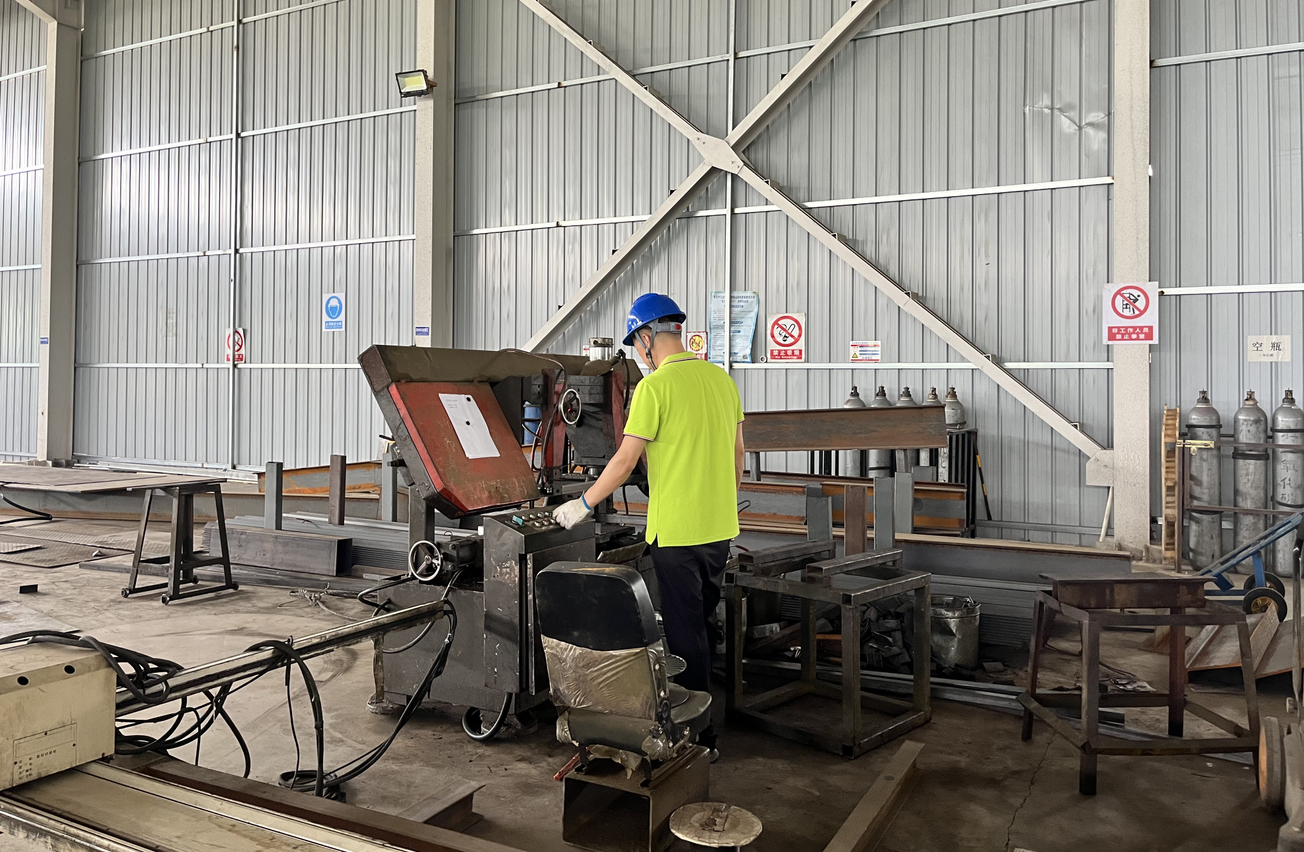
Mast manufacturing in-house: container mast, 3-stage (triple) mast and full free mast configurations are built on the same production line.
Why standard forks plus an overhead crane, and not a special attachment
TAVOL's documented configuration for structural steel container loading specifies standard forks with no special attachment, operated together with overhead crane assistance. The special requirements recorded for this application are precise maneuvering in confined container space and the ability to handle long or irregular structural loads — neither of which is solved by an attachment. TAVOL does build and supply attachment-based solutions where the load geometry justifies them, including paper roll clamps with rotating mechanisms, bale and carton clamps, tyre clamps with curved arms, 360° fork rotators and single/double pallet handlers. Those configurations serve different applications where the load is round, uniform or palletless. For fabricated steel, the attachment would add risk and reduce visibility without improving placement accuracy.
Fuel choice: diesel, dual fuel LPG and gasoline, or lithium electric
Diesel remains the practical power source for open-dock steel loading because of outdoor capability and sustained duty: TAVOL's own product documentation notes that diesel engines provide strong power and are suited to outdoor use and rough terrain. Engine options listed for the diesel models include Xinchai, Quanchai, Isuzu, Mitsubishi, Yanmar, Kubota and PSI, which allows buyers to align engine selection with parts availability and their destination market's requirements. Where fuel availability or cost is unstable, a dual fuel LPG and gasoline forklift such as the CPQYD30 offers flexible switching between fuels, and TAVOL's comparison data states that this fuel flexibility reduces overall operating cost by up to 15% by reducing dependency on a single fuel source. Where the loading dock is enclosed and emissions or noise are constrained, the CPD30 lithium electric forklift is equipped with a lithium-ion (LiFePO4) battery, produces zero emissions, operates at significantly lower noise than internal combustion forklifts, and supports fast opportunity charging during breaks rather than battery swapping.
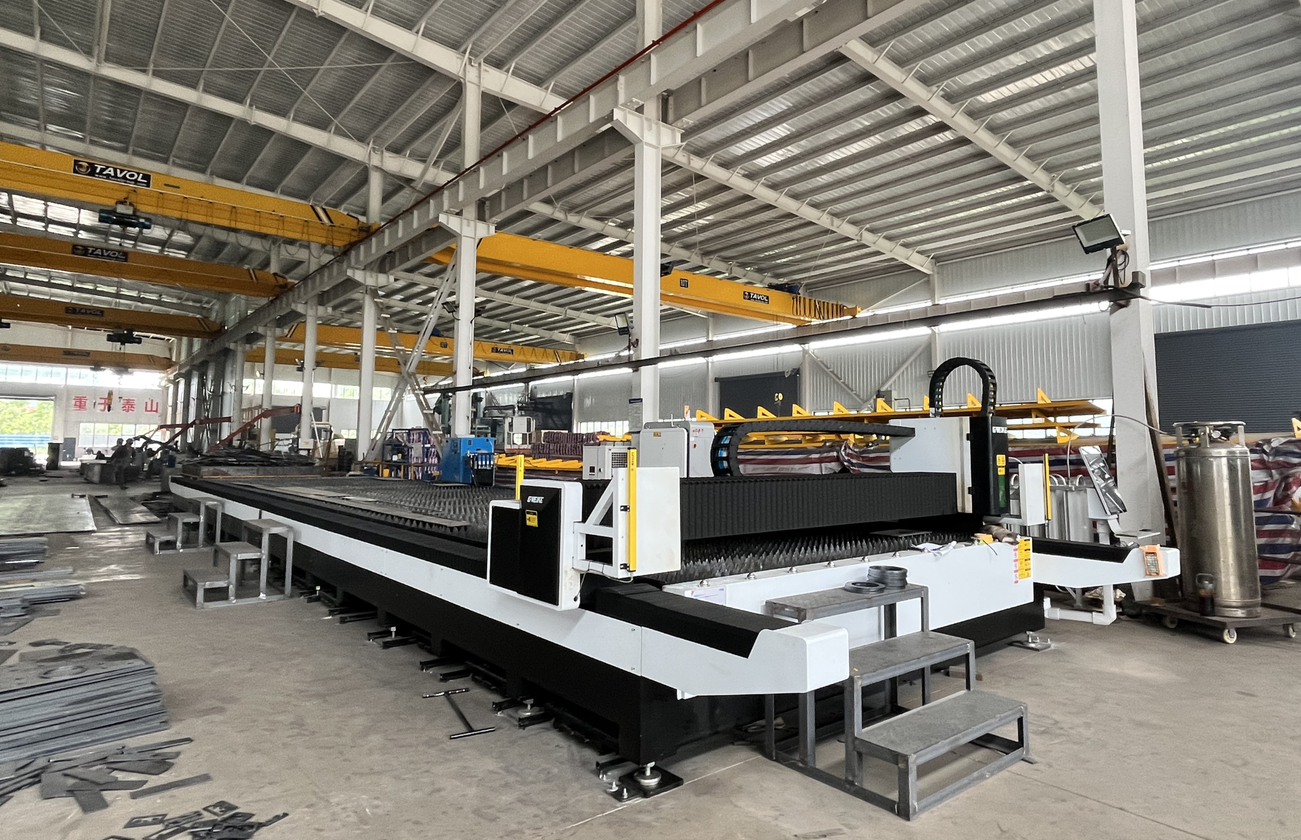
Chassis steel preparation: forklift frames are cut from Q235 carbon structural steel and Q355 low-alloy high-strength structural steel.
Step-by-step: the container loading workflow for structural steel export
- Run the pre-shift inspection. Check engine oil, hydraulic fluid and coolant levels; inspect tires for wear, damage or incorrect inflation; test brakes, horn, lights and backup alarm; check forks and mast for cracks, bends or hydraulic line leaks; then start the engine and confirm there is no unusual noise, smoke or warning light. Never operate with a malfunctioning brake or hydraulic leak, always wear the seatbelt, and report any abnormality to a supervisor before starting work.
- Confirm the lift plan for each component family. Record weight, length and center of gravity, then check the rated capacity at the 500 mm load center against the actual load position. Select fork length from the 1,220 mm to 1,820 mm range so the component sits fully supported.
- Prepare the dock. Confirm the loading surface is level and clear, position the container or trailer, and agree the communication signals between the forklift operator, the crane operator and the spotter before the first lift.
- Let the crane present the component. The overhead crane lifts the structural element from the fabrication or storage area and holds it at the container approach, where the forklift takes the load on standard forks.
- Travel and align. Use the 2,550 mm turning radius and the available channel width to align with the container door, adjusting mast tilt within the 6° forward / 12° backward range to keep the load stable and low.
- Position inside the container. Move in slowly and in stages, keeping the forks level and the load low, with the spotter maintaining a clear line of sight. Precise maneuvering in confined space is the defining skill of this application, so operators should be trained on the specific container and component combination used at the site.
- Verify weight where billing or overload risk applies. Where loads are weight-based or overloading must be prevented, an integrated load cell with a digital display on the mast provides real-time weighing during lifting and transport without a separate weighbridge. This requires weighing accuracy calibration and an overload alert function as part of commissioning.
- Plan refueling or charging around the shift. On diesel units, refuel away from the loading area. On LPG and gasoline dual fuel units, plan a quick cylinder swap for continuous multi-shift use, and switch fuel modes only when the engine is idling or off — using the dashboard fuel selector, waiting 5–10 seconds for the fuel system to stabilize, and never switching under heavy load or on a slope. On lithium electric units, use opportunity charging during breaks instead of waiting for full discharge, and inspect terminals, cables and connectors weekly.
Use cases: where this configuration is deployed
Structural steel and machinery export loading docks
In steel structure and metal fabrication, machinery export and freight handling operations, the forklift works an indoor or outdoor loading dock and positions irregular-shaped structural components into shipping containers, supported by an overhead crane. The configuration that matches this environment is standard forks with no special attachment, a 3-ton to 4-ton diesel counterbalance machine, and a mast specified for container work. European fabrication and export operations in markets such as Germany and Bulgaria fit this pattern, where finished steel leaves the shop and must be loaded precisely enough to be secured safely for sea freight.
Weight-sensitive freight and logistics operations
Where cargo is billed by weight or where overloading must be prevented, the same forklift platform can be specified with an electronic weighing scale attachment and a digital display unit on the mast, providing real-time load weighing during lifting and transport without a separate weighbridge. This configuration has been applied in logistics and freight billing, agricultural trading, scrap and recycling weighing and warehouses with weight-based inventory, with weighing accuracy calibration and overload alert functions as the special requirements.
Fuel-flexible multi-shift general cargo handling
Where operations run multiple shifts and fuel supply is seasonal or unstable, LPG-powered configurations with standard forks are used for general load lifting and transport, with quick cylinder replacement to keep machines running. A dual fuel deployment of this type is documented in Bangladesh, illustrating how the fuel decision changes with local fuel availability rather than with the load itself.
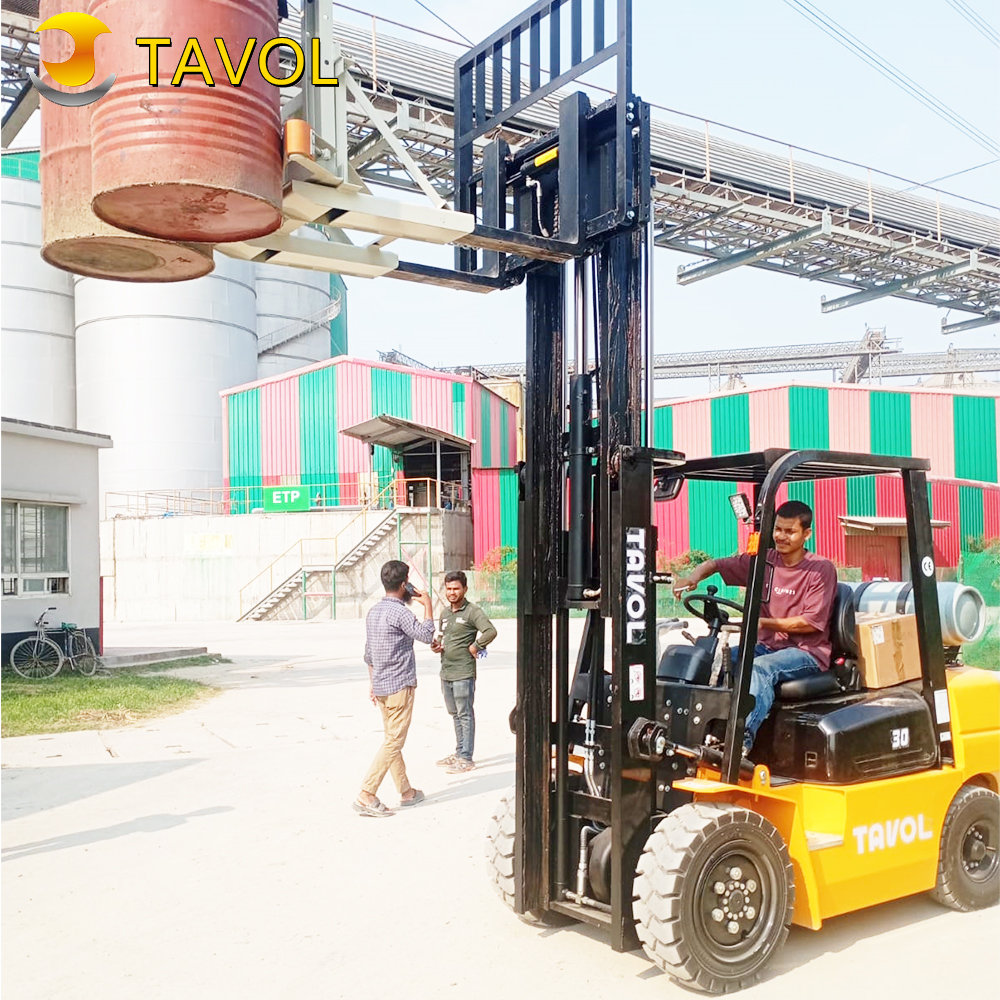
A TAVOL dual fuel LPG and gasoline forklift in service in Bangladesh — the same platform logic applies where fuel availability drives the power-source decision.
Comparison: model and fuel selection for steel container loading
The tables below use only published TAVOL model data and TAVOL comparison documentation. Buyers should confirm the current commercial offer for their own market and configuration before purchase.
| Model | Rated capacity | Load center | Minimum turning radius | Overall width | Top guard height | Max traction |
|---|---|---|---|---|---|---|
| CPCD30 (3 t diesel) | 3,000 kg | 500 mm | 2,550 mm | 1,230 mm | 2,125 mm | 21,000 N |
| CPCD35 (3.5 t diesel) | 3,500 kg | 500 mm | 2,550 mm | 1,230 mm | 2,125 mm | 21,500 N |
| CPCD40 (4 t diesel) | 4,000 kg | 500 mm | 2,550 mm | 1,330 mm | 2,080 mm | 24,500 N |
| CPQYD30 (3 t dual fuel LPG & gasoline) | 3,000 kg | 500 mm | 2,550 mm | 1,230 mm | 2,125 mm | 21,000 N |
| CPD30 (3 t lithium electric) | 3,000 kg | 500 mm | 2,550 mm | 1,230 mm | 2,080 mm | 15,600 N |
| Comparison basis | TAVOL diesel forklift | Traditional legacy Western brand diesel forklift |
|---|---|---|
| Purchase cost | 20–40% lower for comparable load capacity and lifting height | Reference point in TAVOL's comparison documentation |
| Spare parts cost | Approximately 30% lower | Reference point in TAVOL's comparison documentation |
| Core performance | Comparable core performance and durability; fuel efficiency and engine performance comparable to established international brands | Reference point in TAVOL's comparison documentation |
| Delivery and customization | Faster delivery and OEM customization | Reference point in TAVOL's comparison documentation |
| Typical fit | Cost-sensitive industrial and logistics operations seeking reliable heavy-duty equipment without paying a brand premium | Buyers prioritizing legacy brand preference |
| Power source | Fit for steel container loading | Documented cost and operational notes |
|---|---|---|
| Diesel (CPCD series) | Best fit for open indoor/outdoor docks and rough yard surfaces; engine options include Xinchai, Quanchai, Isuzu, Mitsubishi, Yanmar, Kubota and PSI | 20–40% lower purchase cost and about 30% lower spare parts cost than legacy Western brand diesel forklifts, at comparable load capacity and lifting height |
| Dual fuel LPG & gasoline (CPQYD series) | Useful where fuel availability or cost is unstable and the operation runs multiple shifts | Fuel flexibility lowers overall operating cost by up to 15% by reducing dependency on a single fuel source |
| Lithium electric (CPD series) | Better suited to enclosed loading bays, multi-shift warehouse operations and clean environments than to outdoor steel yards | About 70% shorter charging time than lead-acid, 2,000+ cycles versus 500–800 cycles, and 20–30% lower total cost of ownership over 5 years despite a higher upfront price |
Frequently asked questions
What safety checks are required before using a material handling forklift to load steel into containers?
Before every shift, complete a visual and functional check covering fluid levels (engine oil, hydraulic fluid, coolant), tire condition, brakes, and safety devices including horn, lights and backup alarm, and inspect the forks and mast for cracks, bends or hydraulic leaks. Then start the engine and confirm there is no unusual noise, smoke or warning light. Never operate a forklift with a malfunctioning brake or hydraulic leak, always wear the seatbelt, and report abnormalities before starting work. Buyers should also confirm the safety standard applicable in their market; ANSI/ITSDF B56.1-2020 is the safety standard for low-lift and high-lift trucks published by ITSDF, and the current edition and local requirements should be verified for the destination country.
Which material handling forklift manufacturer is better for 3-ton diesel fleets?
For a 3-ton diesel fleet, the practical evaluation criteria are comparable core performance and durability, purchase cost, spare parts cost and availability, delivery time, OEM customization capability, and how well the machine geometry fits the site. TAVOL's comparison documentation states that its diesel forklifts deliver 20–40% lower purchase cost and approximately 30% lower spare parts cost than traditional legacy Western brand diesel forklifts at comparable load capacity and lifting height, with comparable fuel efficiency and engine performance, plus faster delivery and OEM customization. A steel loading fleet evaluating this class would compare the TAVOL CPCD30 (3,000 kg rated capacity, 500 mm load center, 2,550 mm minimum turning radius, engine options including Xinchai, Quanchai, Isuzu, Mitsubishi, Yanmar, Kubota and PSI) against current offers from other suppliers on the buyer's own commercial and service terms.
What is the cost difference between a TAVOL diesel forklift and a legacy Western brand diesel unit?
Published TAVOL comparison data states a 20–40% lower purchase cost and around 30% lower spare parts cost compared with traditional legacy Western brand diesel forklifts at comparable load capacity and lifting height, while maintaining comparable core performance and durability. The same documentation positions these machines for cost-sensitive industrial and logistics operations that need reliable heavy-duty equipment without paying a brand premium. For electric alternatives, TAVOL data shows lithium-ion machines reaching 20–30% lower total cost of ownership over five years compared with lead-acid battery forklifts, despite a higher upfront price.
Can we validate the forklift configuration against our container loading dock before ordering?
Yes. Validation starts with matching published machine geometry against the real site: minimum turning radius (2,550 mm on the 3-ton to 4-ton classes), overall width (1,230 mm on the 3-ton and 3.5-ton models, 1,330 mm on the 4-ton model), top guard height, minimum right-angle channel width (4,305 mm with a 1,000 × 1,200 mm pallet), required fork length from the 1,220–1,820 mm range, and the mast configuration — container mast, 2-stage, 3-stage or full free mast. Send the dock layout, container type and component list to the TAVOL team at sls66@tavolgroup.com or +86 156 2134 6916 so the configuration can be checked against the application before an order is placed. The company profile and full product range are available in the downloadable brochure.
How long does delivery take for a 3-ton diesel material handling forklift?
Faster delivery is listed as one of the advantages of TAVOL diesel forklifts compared with traditional legacy Western brand diesel units in the company's comparison documentation. Exact lead time depends on the configuration ordered — capacity class, mast type, fork length, tire specification and engine selection — and should therefore be confirmed at the quotation stage rather than assumed from the general comparison. Buyers planning a container loading project should confirm the required delivery window together with the engine and emission documentation required in their destination market.
Conclusion: match the machine to the container, not to the catalogue
Structural steel container loading rewards a narrow, specific equipment decision. The working condition is fixed — indoor and outdoor loading docks, tight container space, long and irregular components, standard forks combined with overhead crane assistance — so the specification should be built around maneuverability, mast type and fork length first, and capacity class second. For most export steel operations, that points to a 3-ton to 4-ton TAVOL diesel counterbalance forklift with a container mast or 3-stage mast, pneumatic tires, and fork length matched to the component mix, with dual fuel or lithium electric considered only where fuel availability or an enclosed dock changes the equation.
Because TAVOL manufactures forklifts, overhead cranes and gantry cranes, a steel loading project can be specified as a single handling system rather than three separate purchases, with one spare parts chain and one technical contact. Buyers comparing suppliers on cost, delivery and customization can review the documented 20–40% purchase cost and approximately 30% spare parts cost position against legacy Western brand diesel units, then confirm the final configuration against their own dock dimensions.
Next step
Share your container loading dock layout and structural component list with TAVOL for a configuration review, or request pricing for 3-ton to 4-ton diesel, dual fuel and lithium electric material handling forklifts.
Email: sls66@tavolgroup.com | Tel / WhatsApp: +86 156 2134 6916 | Website: www.tavolgroup.com
Download the company profile and product catalogue: TAVOL Company Profile (PDF)
Shandong Tavol Machinery Co., Ltd — 15F, Guoshan Center, Changcheng Rd, Tai'an City, Shandong Province, China.
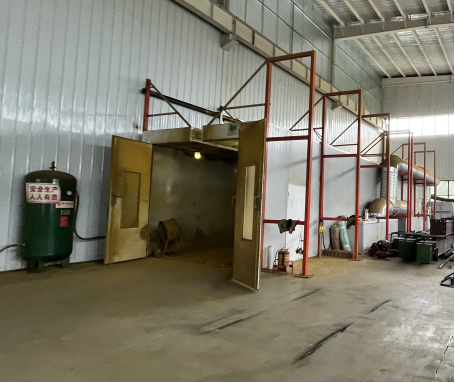
Finishing stage at the TAVOL factory. Forklift chassis and mast components are produced, machined, painted and assembled in-house across a 40,000 m² facility.
Have Questions or Need More Details?
Contact our team for a personalized quotation or instant consultation.
Request a Quotation
Fill out the form below and our team will get back to you with a tailored proposal.
WhatsApp Direct Chat
Prefer to chat in real-time? Message us on WhatsApp for instant assistance & quick answers.
- Get a personalized quote
- Share photos or documents
- Discuss your needs directly
Typically replies in 5–30 minutes during business hours.