
Material Handling Forklift Selection Guide: Diesel, LPG and Electric 3-4 Ton Options
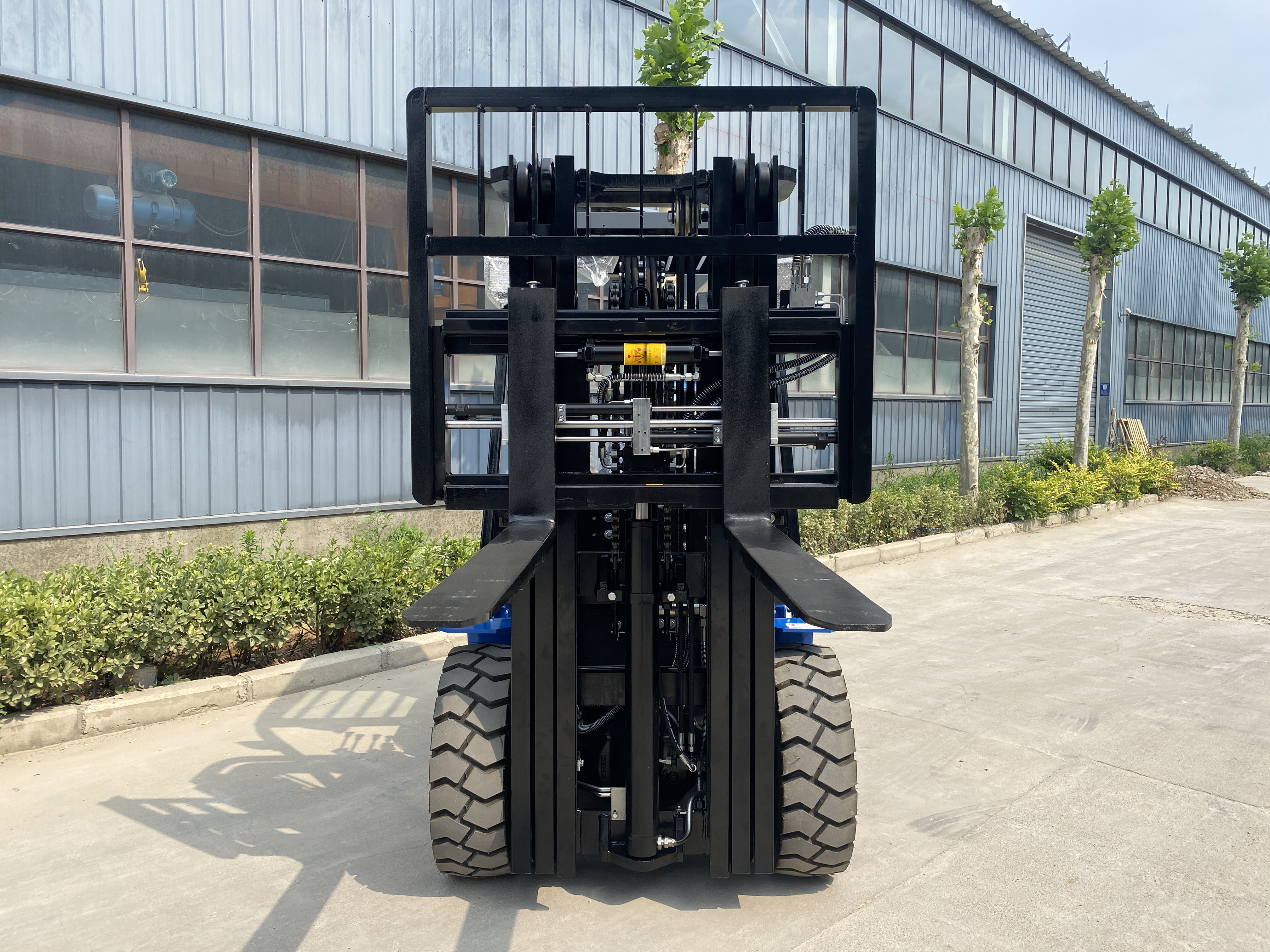
TAVOL CPCD30, a 3-ton diesel counterbalance forklift documented for loading, stacking and outdoor yard work.
Material handling forklift selection is rarely about one specification alone. A buyer may start with a tonnage figure, then quickly discover that mast height, fuel system, tire choice, attachments and compliance requirements change the usable performance of the machine. This guide focuses on 3-4 ton counterbalance forklifts because this load band covers a large share of warehouses, factories, distribution centers and outdoor yards. It uses documented TAVOL Forklift models as the worked example, including diesel, LPG/gasoline dual-fuel and lithium-electric configurations.
The direct answer to most material handling forklift questions in this class is this: define the load, the environment and the certification requirement first. Once those three constraints are clear, the correct fuel type and attachment configuration become easier to identify.
Where Material Handling Forklift Selection Usually Fails
A common problem in forklift procurement is that the brochure says 3-ton, but the site plan says high racking, narrow aisles and indoor emissions rules. Another common failure is comparing engine brands while ignoring whether the mast can reach the top rack safely. A forklift is not just a rated capacity. It is a system built around load center, mast structure, hydraulic flow, tire footprint, brake performance and operator visibility.
Procurement teams should treat forklift selection as a constraint-matching process. For a TAVOL forklift or any other make, the same six questions should be answered before a purchase order is issued: what is the maximum pallet weight and load center; what lift height and mast type are needed; which fuel or charging infrastructure will be available; which attachments will be used now and later; which market certifications and emission rules apply; and how will spare parts and warranty support be handled.
Market Context Behind the 3-4 Ton Forklift Decision
Industry research published by Grand View Research estimates the global forklift market at USD 81.4 billion in 2025. Interact Analysis reports that lithium-ion penetration in global counterbalanced forklifts reached 17.5 percent in 2024. On the trade side, World Bank data shows that China exported about USD 1.26 billion of forklift parts under HS code 843120 in 2024. These figures help explain why global buyers are paying more attention to lithium-electric options, spare part logistics and certification evidence rather than only the purchase price.
In addition, market rules still matter. The ANSI/ITSDF B56.1-2020 standard remains a relevant safety reference for low-lift and high-lift trucks in North America. For Europe, a CE certificate is expected for many forklift models. TAVOL holds a CE certificate, number TTC-26-0104/03/01, issued by INTERTÜRK, covering forklift series including CPC10 through CPCD100 and FB10-FB50, with standards such as EN 1175:2025, EN ISO 3691-1:2015/AC:2016, EN ISO 12100:2010 and EN 60204-1:2018/A1:2025 listed on the certificate scope.
Detailed Solution: Three Power Systems for 3-4 Ton Material Handling
For a 3-4 ton material handling forklift, the first major decision is usually the power system. TAVOL documents three configurations: diesel counterbalance trucks, dual-fuel LPG/gasoline trucks and lithium-electric trucks. Each solves a different operating constraint.
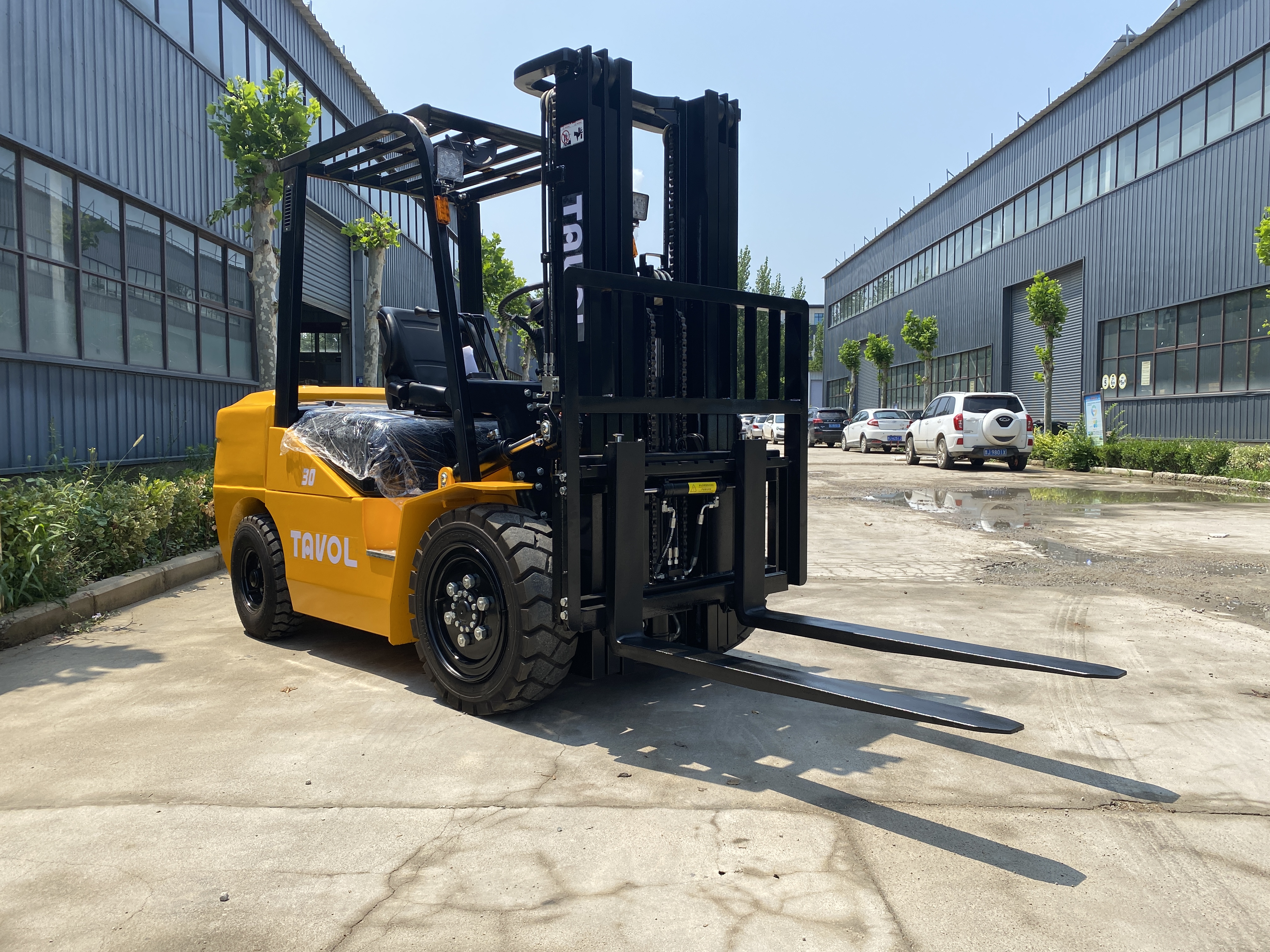
The CPD30 lithium-electric forklift suits enclosed and noise-sensitive operation.
Diesel Counterbalance Forklifts: Outdoor Muscle Without Charging Downtime
TAVOL diesel forklift models include the CPCD20, CPCD25, CPCD30, CPCD35 and CPCD40. In the 3-4 ton class, the CPCD30 is rated for 3,000 kg at a 500 mm load center, while the CPCD35 is rated for 3,500 kg at the same 500 mm load center. The CPCD40 is rated for 4,000 kg and has a total length of 2,855 mm, an overall width of 1,330 mm and a top guard height of 2,080 mm.
These forklifts are built with Q235 carbon structural steel and Q355 low-alloy high-strength structural steel. The material choice is not cosmetic; it is part of how the chassis and mast are designed to carry repeated lifting stress. CPCD30 and CPCD35 diesel models achieve a full-load lift speed of 450 mm per second, a maximum traction of 21,000 N and 21,500 N respectively, and a maximum grade ability of 15 percent at full load and 20 percent when empty.
Engine availability is one of the reasons diesel remains common in export markets. A TAVOL diesel forklift can be equipped with engines from Xinchai, Quanchai, Isuzu, Mitsubishi, Yanmar, Kubota or PSI. That range gives buyers a way to align with local parts availability and service networks. Diesel units are suited to outdoor use, unpaved ground, construction sites, industrial yards and other locations where charging is not available; a full tank allows more than eight hours of continuous operation.
LPG and Gasoline Dual-Fuel Forklifts: Flexible Fuel for Continuous Shifts
For buyers that want engine power but also need lower emissions than diesel, dual-fuel LPG/gasoline forklifts offer an intermediate choice. The TAVOL CPQYD20, CPQYD25, CPQYD30 and CPQYD35 are in this category. The CPQYD30 has a rated capacity of 3,000 kg at a 500 mm load center and is powered by a Nissan engine that can switch between LPG and gasoline. The CPQYD35 carries a 3,500 kg rated capacity and also uses a Nissan engine with LPG/gasoline switching.
Dual-fuel operation supports multi-shift work because refilling or replacing an LPG cylinder takes minutes rather than hours of battery charging. The fuel choice also gives the operator a practical hedge when local fuel supply or price changes. TAVOL selling-point documents state that dual-fuel units can lower emissions compared with diesel forklifts and can be applied in warehousing, food and beverage processing, manufacturing plants, distribution centers, port and container handling and general cargo operations.
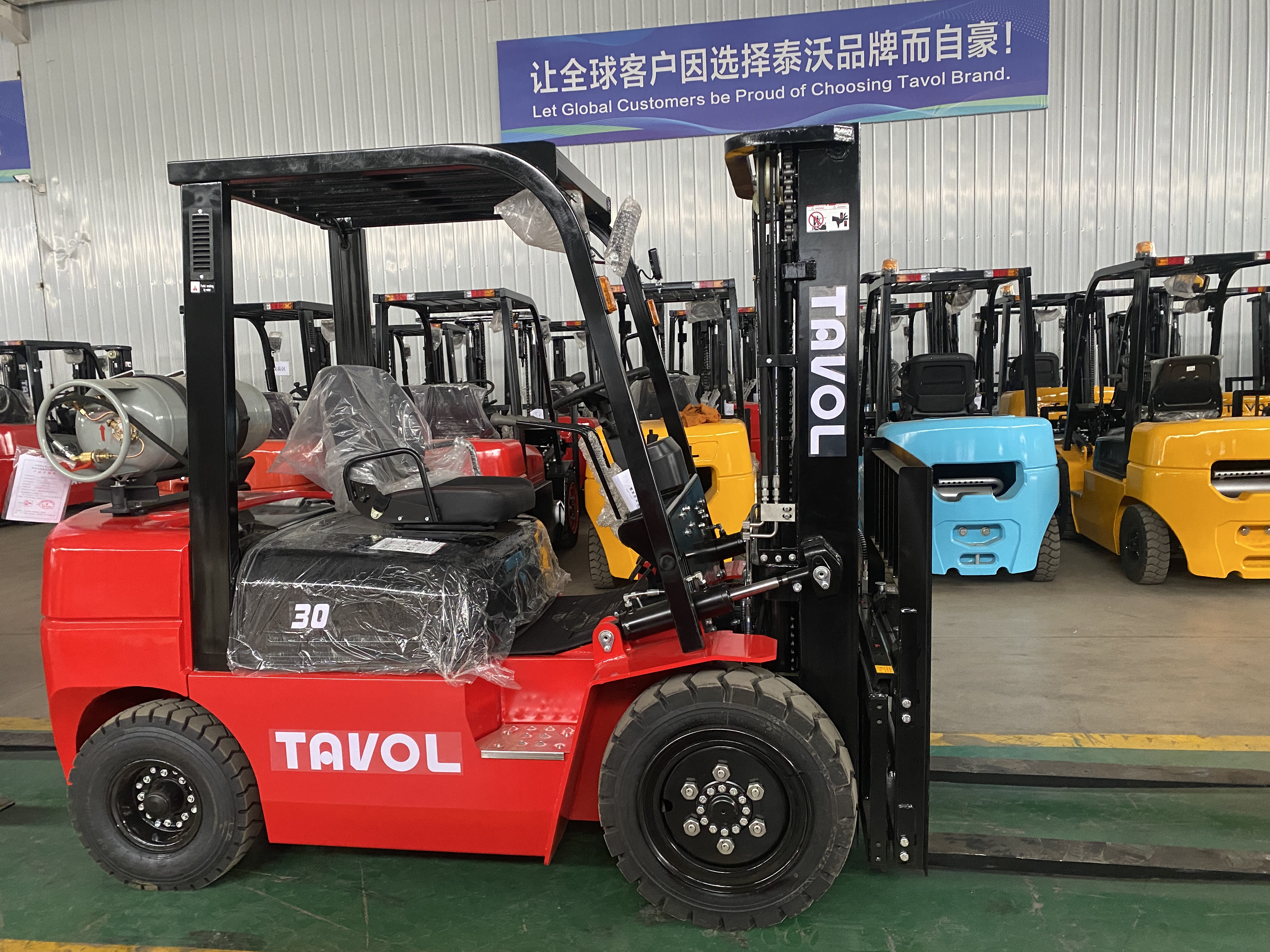
CPQYD30 dual-fuel forklift with Nissan engine and LPG/gasoline switching.
Lithium-Electric Forklifts: Zero Emission Work for Indoor and Cold-Store Environments
Electric forklifts in this load class remove the question of exhaust emissions. TAVOL electric models CPD30, CPD35 and CPD40 use a lithium-ion LiFePO4 battery with a quick charger. The CPD30 is rated at 3,000 kg at a 500 mm load center; the CPD35 is rated at 3,500 kg; and the CPD40 is rated at 4,000 kg. In the CPD30, the full-load lift speed is 350 mm per second, descent speed is 400 mm per second, and maximum grade ability is 18 percent at full load and 20 percent when empty.
Lithium-electric forklifts are useful in indoor warehouses, cold storage and food processing facilities, pharmaceutical and cleanroom environments, e-commerce and logistics distribution centers, electronics manufacturing and enclosed workshops. Because the battery is lithium chemistry, opportunity charging during breaks is practical. There is no acid fume, no water refilling and no need to swap a lead-acid battery during a shift. TAVOL describes these trucks as quieter than internal combustion forklifts and more stable in low-temperature environments such as cold storage.
Mast, Tire and Attachment Choices Affect Usable Performance
Forklift capability is not only about the engine or battery. TAVOL offers two-stage masts at 3 m, 3.5 m and 4 m, and three-stage masts at 4.5 m, 5 m, 5.5 m and 6 m, plus container mast and full-free mast variants. Fork lengths can be selected in standard ranges from 1,220 mm to 1,820 mm. Tires can be pneumatic or solid, depending on whether the truck will run on smooth concrete or rough outdoor surfaces.
Attachment-driven applications expand the same base truck. TAVOL application files show paper roll clamps for paper and pulp, bale clamps for textile and packaging, rotating clamps for carpet rolls and drums, single/double pallet handlers, bucket attachments for bulk material, tipping forks for bins, scale attachments for load weighing and load stabilizers for unstable mixed cargo. A manufacturer with in-house hydraulic and structural engineering can integrate these attachments at the factory rather than leaving the buyer to retrofit them later.
Step-by-Step: How to Write a Material Handling Forklift Specification
Use the following workflow to reduce the chance of ordering the wrong machine.
Step 1. Confirm load weight, load center and duty cycle. Rated capacity means nothing without the load center. TAVOL rates its 3-ton and 3.5-ton trucks at a 500 mm load center. If the pallet is wider or the attachment adds distance in front of the carriage, the effective capacity can change. State the actual pallet weight, the number of shifts and the hourly lift cycles.
Step 2. Select mast height and free lift. Measure the top rack height, ceiling height and doorway height. A 3.5 m building may allow a 3 m two-stage mast; a 6 m rack may require a three-stage mast. Full-free mast is valuable inside containers or trailers where the mast cannot raise until the truck has entered the confined space.
Step 3. Choose fuel by environment and infrastructure. Use diesel for outdoor yards, construction sites and rough terrain. Use LPG/gasoline dual fuel for mixed indoor-outdoor work or when fuel supply is uncertain. Use lithium-electric for enclosed, zero-emission or cold-storage environments where charging can be scheduled during breaks.
Step 4. Define tires, fork length and attachments. A 3-ton truck moving dry, sealed goods on smooth concrete may use solid tires. A truck loading machinery on construction ground may prefer pneumatic tires. If the goods are paper rolls, bales, drums or loose bulk materials, list the attachment type and the maximum load size before quotation.
Step 5. Confirm certification and compliance. For EU delivery, ask for the CE certificate number and the applicable EN standards. For North America, confirm whether the truck meets expected occupational safety requirements. If a buyer specifically needs Euro 5 or another emission stage, that must be written into the engine specification and verified with the manufacturer before production.
Step 6. Review after-sales support and inspection. TAVOL production records state that the factory performs 100 percent pre-shipment testing and accepts third-party inspection. Export support includes remote technical assistance, a two-year forklift warranty and a five-year warranty for the lithium battery. For fleet buyers, the monthly production capacity is 300 units and the normal lead time is 10 to 45 days, with a minimum order quantity of one unit.
Use Cases That Show How Specification Choices Work in Operation
The following examples come from TAVOL application files and illustrate why fuel, capacity and attachments must be treated as one package.
Kuwait, chemical and warehousing logistics center. Five CPD40 electric forklifts were used for high-rack pallet stacking, heavy bagged-material transport and indoor logistics. After two years, the documented result describes zero indoor emissions, smooth high-lifting operation, reduced energy cost and reliable performance in high ambient temperature. For this user, the 4-ton load capacity and high-lifting mast mattered more than a smaller electric model.
Bangladesh, chemical and industrial plant. A CPQYD30 dual-fuel forklift was supplied with a custom hydraulic drum clamp for chemical drum handling and high-rack stacking. The reported result includes a 35 percent reduction in fuel expense through LPG operation, seamless switching between LPG and gasoline, and high productivity in a high-temperature factory environment. This case shows how a fuel-flexible machine protects the operator when fuel prices change.
Chile, fruit orchard and agricultural logistics center. Four CPCD30 diesel forklifts were configured with a custom 4.5-meter high-lifting mast. The application involved fruit crate stacking, high-rack agricultural pallet loading and outdoor farm transport. The documented result highlights high stacking efficiency during harvest season and reliable performance on unpaved farm roads. Diesel was the appropriate choice because the site had no charging infrastructure and operation moved between buildings, yards and farm paths.
El Salvador, building materials supplier. Two CPCD30 diesel forklifts were customized with bucket attachments for bulk aggregate and cement handling. The reported feedback includes high fuel efficiency, reliable engine performance in a tropical climate and zero downtime after one year. Attachments converted the same base forklift into a bulk material handler.
Comparison Table: TAVOL 3-4 Ton Material Handling Forklift Models
The table below is based on documented TAVOL specification data. It compares the models considered in this guide so buyers can see where diesel, dual-fuel and electric variants differ.
| Model | Drive | Rated capacity at load center | Full-load lift speed | Max grade ability | Max traction | Typical operating environment |
|---|---|---|---|---|---|---|
| CPCD30 | Diesel | 3,000 kg at 500 mm | 450 mm/s | 15% laden / 20% empty | 21,000 N | Outdoor yards, docks, construction and manufacturing plants |
| CPCD35 | Diesel | 3,500 kg at 500 mm | 450 mm/s | 15% laden / 20% empty | 21,500 N | Outdoor and heavy-duty mixed use |
| CPCD40 | Diesel | 4,000 kg at 500 mm | 460 mm/s | 15% laden / 20% empty | 24,500 N | Port support, heavy plant and industrial yard work |
| CPQYD30 | LPG and gasoline dual fuel, Nissan engine | 3,000 kg at 500 mm | 450 mm/s | 15% laden / 20% empty | 21,000 N | Sites needing flexible fuel and mixed indoor-outdoor operation |
| CPD30 | Electric, lithium-ion LiFePO4 battery | 3,000 kg at 500 mm | 350 mm/s | 18% laden / 20% empty | 15,600 N | Indoor warehouses, cold storage, cleanrooms and enclosed workshops |
| CPD40 | Electric, lithium-ion LiFePO4 battery | 4,000 kg at 500 mm | 320 mm/s | 18% laden / 20% empty | 15,600 N | Heavy indoor logistics and high-density warehousing |
These specifications should not be read as a ranking. They are evidence of configuration differences. A diesel and an electric truck with the same rated load may have different lift speeds, traction and operating cost structures because they are designed for different environments.
FAQ: Practical Follow-Up Questions
1. Which certification applies to TAVOL material handling forklifts sold into the EU? TAVOL forklift models covered by the CE certificate carry certificate number TTC-26-0104/03/01, issued by INTERTÜRK. The applicable standards include EN 1175:2025, EN ISO 3691-1:2015/AC:2016, EN ISO 12100:2010 and EN 60204-1:2018/A1:2025. The certificate is valid for the EU market from April 2026 through April 2031.
2. Are TAVOL diesel material handling forklifts available with Euro 5 diesel engines? TAVOL diesel forklift data lists engine options from Xinchai, Quanchai, Isuzu, Mitsubishi, Yanmar, Kubota and PSI. A Euro 5 rating is an engine-level emission specification that must be requested and documented at order time for the destination market. Buyers who need Euro 5 compliance should ask the TAVOL project engineer to confirm the engine name, emission standard and supporting documents before production.
3. What is the real specification difference between a 3-ton and a 3.5-ton material handling forklift? A TAVOL CPCD30 diesel forklift is rated at 3,000 kg at 500 mm load center and has a maximum traction of 21,000 N. The CPCD35 is rated at 3,500 kg and has a maximum traction of 21,500 N. The 3-ton electric CPD30 lifts at 350 mm per second under full load, while the 3.5-ton electric CPD35 lifts at 320 mm per second under full load. The 3.5-ton model is often chosen when daily loads are close to 3 tons and the buyer wants more reserve capacity.
4. Can TAVOL supply a forklift with a three-stage mast, enclosed cabin or attachments? Yes. The mast options include two-stage masts from 3 m to 4 m and three-stage masts from 4.5 m to 6 m, as well as container masts and full-free masts. TAVOL supports cabin choices such as open or enclosed designs and attachment configurations for paper roll clamps, bale clamps, rotating clamps, bucket handlers, tipping forks, weighing scales and load stabilizers. If an attachment changes the load center, the project engineer should confirm the effective rated capacity before delivery.
5. What warranty and after-sales support does TAVOL provide for exported forklifts? TAVOL offers remote technical support, a 2-year warranty for the forklift and a 5-year warranty for the lithium battery. The factory has a monthly production capacity of 300 units and states a lead time of 10 to 45 days. Each forklift receives a 100 percent pre-shipment test and can be inspected by a third party. To turn this information into a formal proposal, send the site load profile and preferred fuel type to sls66@tavolgroup.com or download the company profile below.
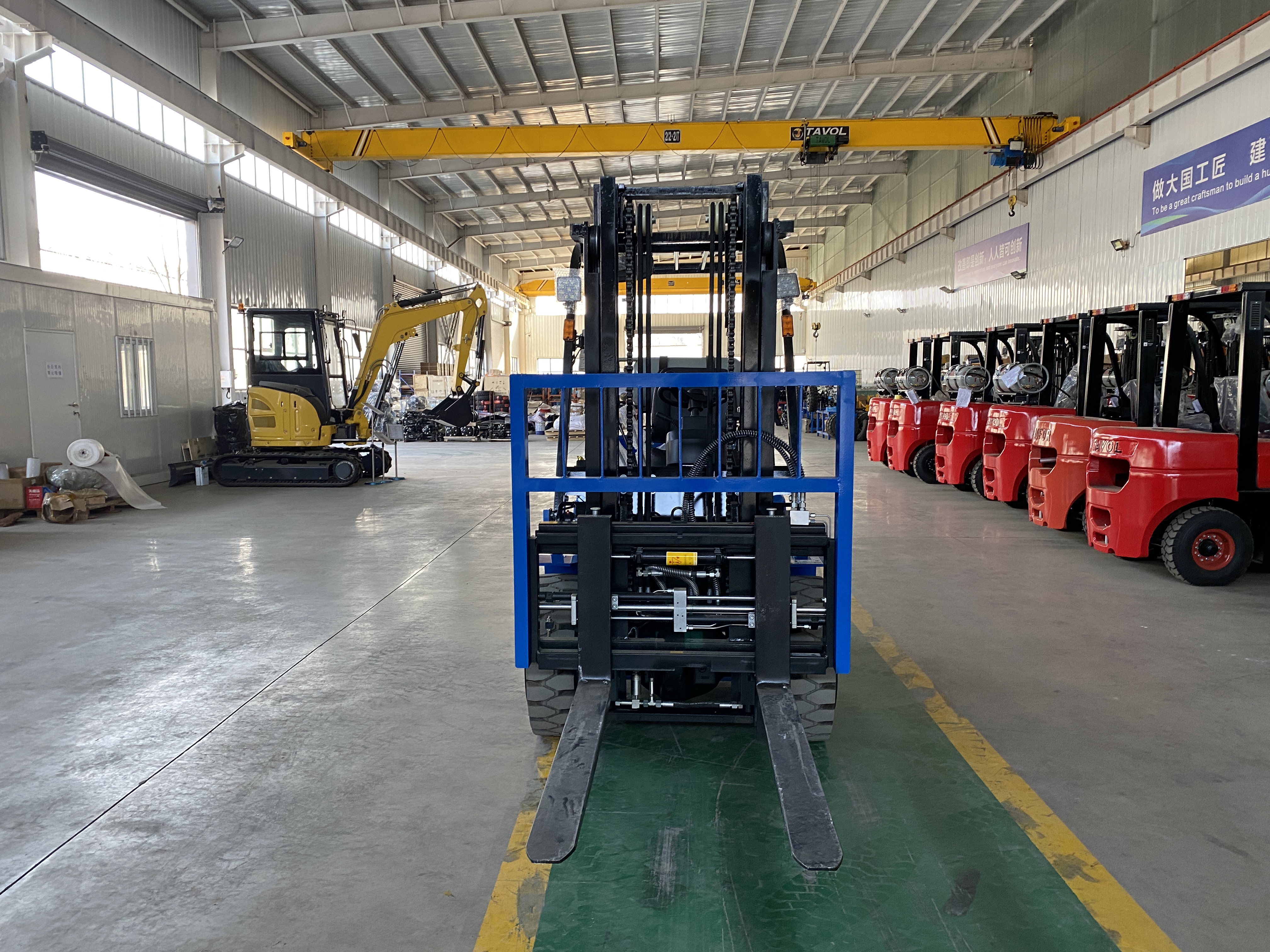
Use the factory documentation to confirm model, specification and lead time.
Next step: If you are comparing material handling forklift suppliers, start with the operating environment and certification evidence. TAVOL Forklift can be reached at www.tavolgroup.com or by email at sls66@tavolgroup.com. Contact Kelley at +86 156 2134 6916. To review the full factory and product background, download the TAVOL company profile PDF.
Conclusion
Material handling forklift purchasing improves when the conversation moves from price to constraints. A 3-4 ton forklift must be matched to actual load weight, mast height, fuel system, tire and attachment needs, certification requirements and after-sales support. TAVOL Forklift offers a practical reference because its diesel, LPG/gasoline dual-fuel and lithium-electric models are documented with clear specifications and factory-level customization capability.
Start with the load and the site condition. Then compare only the machines that can legally and practically handle that condition. The correct material handling forklift is not necessarily the cheapest model or the most powerful engine; it is the truck whose entire specification package matches the work.
Have Questions or Need More Details?
Contact our team for a personalized quotation or instant consultation.
Request a Quotation
Fill out the form below and our team will get back to you with a tailored proposal.
WhatsApp Direct Chat
Prefer to chat in real-time? Message us on WhatsApp for instant assistance & quick answers.
- Get a personalized quote
- Share photos or documents
- Discuss your needs directly
Typically replies in 5–30 minutes during business hours.