
Material Handling Forklift Selection: Load, Site and Duty Cycle
A 3-ton material handling forklift is not one specification but three decisions stacked in a fixed order. Rated capacity at a 500 mm load centre sets what the truck can lift. The site sets whether an internal combustion engine can be used in the building at all. The duty cycle sets whether the truck refuels, recharges, or switches between two fuels. Only after those three does the choice between diesel, dual fuel LPG/gasoline and lithium electric become a real decision rather than a fuel preference.
TAVOL Forklift (Shandong Tavol Machinery Co., Ltd) manufactures counterbalance trucks across all three power sources, from 2 t to 5 t. This guide follows the same sequence a specification should follow — load, site, duty cycle, power source, verification — using published model data and documented deployments in Chile, Kuwait, Bangladesh, Peru and Mexico. The aim is a configuration that can be quoted, inspected and signed off.
Why the power source is the fourth decision, not the first
Most selection errors happen before anyone asks about fuel. A buyer specifies a 3-ton diesel unit for a high-rack warehouse and later discovers the building needs ventilation planning. Another specifies an electric truck for a two-shift outdoor yard and then finds no usable charging window. A third orders dual fuel and never switches fuel, paying for flexibility the site does not use.
Both drive trains are mainstream, which is exactly why the matching work matters. Lithium-ion penetration in global counterbalanced forklifts was 17.5% in 2024, according to Interact Analysis — a real share, but one that leaves most counterbalance units on internal combustion. Grand View Research valued the global forklift market at USD 81.4 billion in 2025. Neither figure decides anything for a single site; together they confirm that diesel, LPG/gasoline and lithium are all current, supported choices.
The order that survives contact with a real site is this:
- Load — maximum weight, load centre, attachment.
- Site — surface, aisle, overhead clearance, emissions, climate.
- Duty cycle — hours per day, shifts, peak season, longest window the truck can be unavailable.
- Power source — diesel, dual fuel, or lithium electric.
- Verification — pre-shift inspection, fuel-switching procedure, charging routine, weighing.
Step 1 — Load: rated capacity is a conditional number
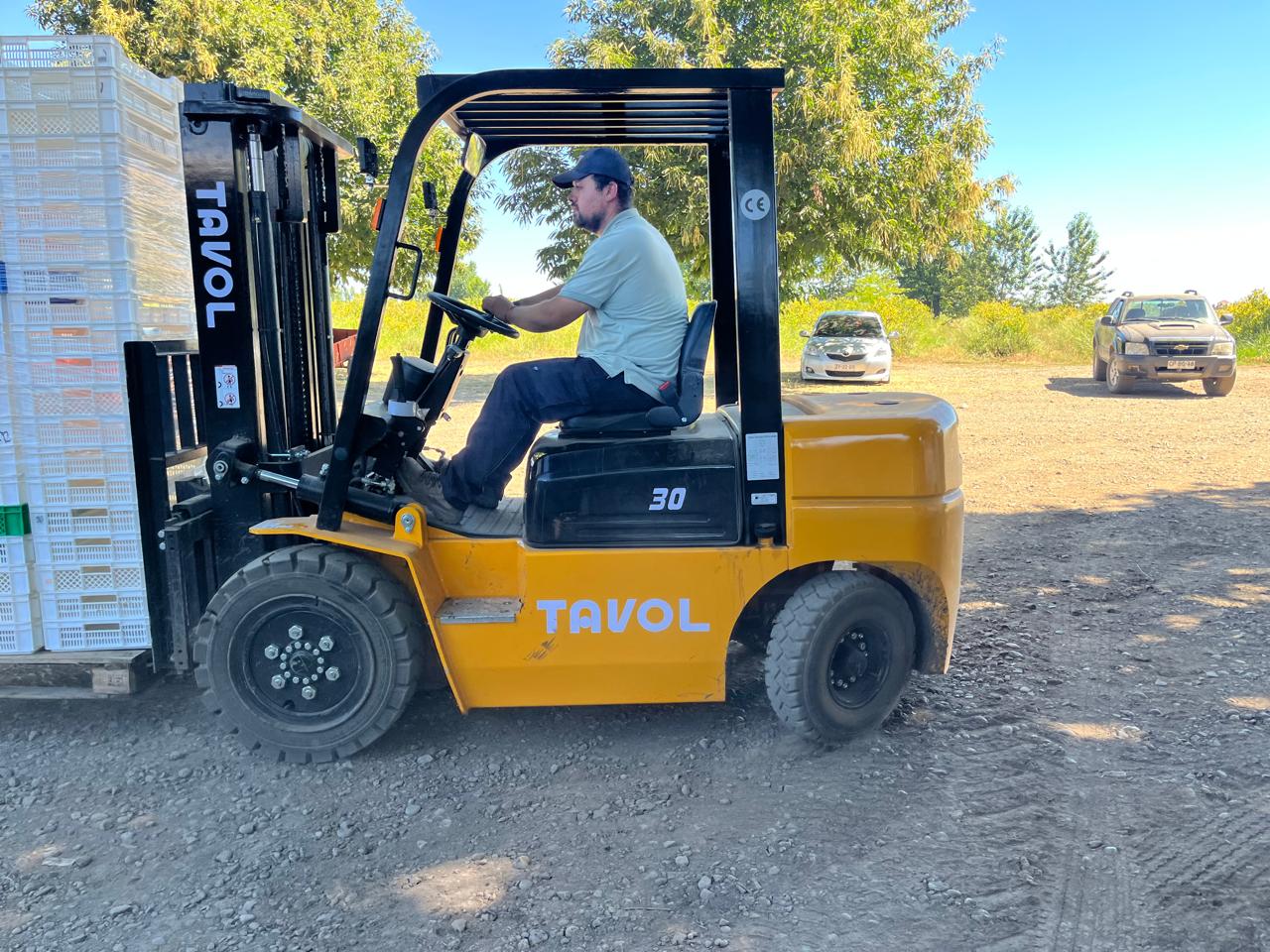
Rated capacity is quoted at a defined load centre. On the models where TAVOL publishes that value, it is 500 mm: the CPD30 electric, the CPD40 electric and the CPQYD35 dual fuel truck all list a 500 mm load centre. Move the load's centre of gravity further from the fork heel and the rating no longer describes the duty. That is the mechanical reason attachment selection belongs in the load step rather than in the accessories list.
A bale clamp, paper-roll clamp, drum clamp, bucket or 360° rotating fork set carries a load differently from bare forks. TAVOL's customization scope lists attachment type as a configurable item, and documented builds include a hydraulic drum clamp on two CPQYD30 units in Bangladesh and a hydraulic bucket on two CPCD30 units in El Salvador. In both cases the attachment changes how the load is carried, so the capacity check has to cover the attachment-plus-load combination rather than the bare-fork rating alone.
Four data points belong on the specification sheet before any model is shortlisted: maximum load weight; the load centre at which that weight is carried; the attachment's own weight; and the maximum lift height at which the load is handled. A truck that is adequate at 500 mm can be inadequate with a clamp that adds both reach and mass.
Table 1 — Published selection data for representative TAVOL counterbalance models
| Model | Power source | Rated capacity | Load centre | Other published data |
|---|---|---|---|---|
| CPCD20 | Diesel | 2 t class | — | Two-stage masts 3–6 m; three-stage masts 4.5–6 m; container and full free masts optional; mast tilt 6° forward / 12° back |
| CPCD25 | Diesel | 2,500 kg | — | Lift speed 450 mm/s at full load; 2,855 × 1,230 mm; turning radius 2,550 mm |
| CPCD30 | Diesel | 3,000 kg | — | 2,855 × 1,230 mm; top guard height 2,125 mm; Q235 + Q355 steel; designed for outdoor use and rough terrain |
| CPQYD20 | Dual fuel LPG/gasoline | 2,000 kg | — | Nissan engine; suitable for indoor and outdoor applications |
| CPQYD30 | Dual fuel LPG/gasoline | 3.0 t class | — | Documented with hydraulic drum clamp and extended high-lifting mast |
| CPQYD35 | Dual fuel LPG/gasoline | — | 500 mm | 18/20 km/h full load / empty; lift 450 mm/s; descent 420 mm/s; traction 21,500 N; turning radius 2,550 mm; 2,855 × 1,230 mm |
| CPD30 | Electric lithium (LiFePO4) | 3,000 kg | 500 mm | 2,855 × 1,230 × 2,080 mm; turning radius 2,550 mm; designed for indoor use |
| CPD40 | Electric lithium | 4,000 kg | 500 mm | Documented in a five-unit high-rack warehouse deployment |
Three patterns matter more than the individual cells. Published diesel capacities run 2,000 kg, 2,500 kg, 3,000 kg and 4,000 kg, and the same steps repeat across power sources — a 3-ton duty can be met by the CPCD30, the CPQYD30 or the CPD30 without changing the load rating. The models listed here share a 2,855 mm length and 1,230 mm width, and every model that publishes a turning radius (CPCD25, CPQYD35, CPD30) states 2,550 mm, so changing power source does not force a new aisle layout. Finally, top guard height differs by power source — 2,125 mm on the CPCD30 diesel against 2,080 mm on the CPD30 electric — which is a door and rack-clearance check, not a footnote.
Step 2 — Site: surface, emissions, clearance, climate
Site conditions eliminate options faster than any other criterion. Three published statements divide the range cleanly: the CPCD30 diesel is designed for outdoor use and rough terrain, the CPD30 electric is designed for indoor use, and the CPQYD20 dual fuel truck is described as suitable for indoor and outdoor applications. Those are design intentions attached to specific models, and they should be read as a starting filter — not as a claim that any truck works anywhere.
Surface and grade. Unpaved yards, ramps and container pads load a drivetrain differently from a sealed warehouse floor. In Chile, four CPCD30 units with a custom 4.5 m mast worked unpaved farm roads during harvest. In Colombia, a unit used for heavy-duty container lifting onto flatbed trucks is described with a reinforced steel chassis, stable counterweight design and anti-tip-over behaviour on rough, uneven ground. For the electric 3 t–4 t CPD range, TAVOL publishes 27% gradeability at full load, which is the figure to compare against the steepest ramp on site.
Emissions and ventilation. Diesel and LPG engines produce exhaust; lithium electric trucks do not. A five-unit CPD40 deployment at a Kuwaiti chemical and warehousing logistics centre is described with zero indoor emissions alongside high-rack pallet stacking and heavy bagged material transport. Where the same building opens onto an outdoor yard, a dual fuel truck lets the fuel change with the location instead of the truck changing with the location.
Aisle, door and overhead clearance. A 1,230 mm body width and a 2,550 mm turning radius set the minimum aisle geometry, and top guard height sets what the truck can pass under. Racking, mezzanine edges, roller doors and container openings all need measuring against those published dimensions before the mast is fixed. Mast choice belongs here too: for the CPCD20, TAVOL lists two-stage masts from 3 m to 6 m, three-stage masts from 4.5 m to 6 m, plus optional container and full free masts. A three-stage mast adds lift height within a compact profile, while a full free mast provides free lift so the mast can enter a container or low opening before it extends.
Cabin and climate. Cabin type — open or enclosed — is a configurable item that changes the operator environment rather than the load rating. High ambient temperature appears repeatedly in the deployment record: Kuwait, Bangladesh and El Salvador units are all described as performing in high-temperature conditions, with the El Salvador fleet reported as running with zero downtime in a tropical climate. An enclosed cabin is the usual answer where dust, rain or cold is the constraint; an open cabin suits short-cycle work in mild conditions and keeps the operator closer to the load.
Step 3 — Duty cycle: hours, shifts and the refuelling window
Duty cycle is the criterion buyers leave vague most often, and it is the one that separates the three power sources most sharply. Four numbers describe it well enough to specify: operating hours per day, lift cycles per hour at peak, shifts per day, and the longest window in which the truck can be unavailable.
Diesel suits continuous work with fast turnaround. Refuelling takes minutes, so a diesel truck can run a long shift without a scheduled stop. A CPCD30 user in Morocco describes exactly that pattern — the engine starts and works all day, refuelling rather than waiting to charge. The trade-off is exhaust in enclosed spaces and a service routine built around engine fluids, filters and hydraulics.
Lithium electric suits multi-shift work with breaks. The comparison that matters is charging time. In TAVOL's published selection guidance, lithium batteries charge in 1–2 hours against 6–8 hours for lead-acid, need no watering or acid checks, and are rated at 2,000+ cycles against 500–800 for lead-acid. Opportunity charging during breaks replaces the full-discharge cycle, which is why lithium is recommended for multi-shift, high-utilization operations and lead-acid for single-shift, budget-limited or occasional use. The warranty structure follows the same split: two years for the forklift, five years for the lithium battery.
Dual fuel suits fuel uncertainty and mixed indoor/outdoor routes. The value of a dual fuel LPG/gasoline truck is that the fuel decision can be made at the site rather than at the dealership. Two CPQYD30 units at a Bangladeshi chemical and industrial plant are documented with seamless switching between gas and gasoline and a 35% reduction in fuel expense through LPG operation over a two-year deployment. That is a reported site result, not a universal saving; the mechanism it illustrates is that LPG can carry the bulk of the running hours while gasoline covers supply interruptions.
Duty cycle also drives maintenance economics. A ten-unit CPCD30 fleet at a Peruvian plastic recycling operation is described with economical fuel consumption, widely available spare parts and low after-sales cost after two years; a five-unit CPCD40 fleet at an Algerian cardboard box factory reports no major repairs across three years. Both are single-site reports, but they show what to ask a supplier for — parts availability and a service route, not only a purchase price.
Step 4 — Matching the three power sources to the duty
Table 2 — Power source against site and duty-cycle criteria
| Criterion | Diesel | Dual fuel LPG/gasoline | Lithium electric |
|---|---|---|---|
| Best-fit site | Outdoor yards, rough ground, construction and bulk material; ventilated indoor workshops | Mixed indoor/outdoor sites, factories and ports where fuel supply varies | Warehousing, food and beverage, high-rack stacking, multi-shift logistics |
| Emissions in the building | Exhaust; ventilation required | Exhaust; ventilation and LPG cylinder handling rules apply | Zero indoor emissions |
| Refuelling / charging | Minutes per refuel; long shifts without a scheduled stop | Cylinder swap or gasoline refill; mode selected on the dashboard | 1–2 h lithium charge (6–8 h lead-acid); opportunity charging during breaks |
| Fuel flexibility | Single fuel | Two fuels, switched on demand | Electricity only |
| Documented examples | CPCD30 in Chile, El Salvador, Mexico and Peru; CPCD40 in Algeria | CPQYD30 in Bangladesh; CPQYD20 for indoor and outdoor work | CPD40 in Kuwait; CPD 3T–4T with 27% gradeability at full load |
| Main check before order | Pre-shift inspection routine and building ventilation | Mode-switching procedure and LPG cylinder security | Charging window, charger position, ventilation of the charging area |
Read as a sequence, the table resolves most cases without argument. An outdoor bulk yard on unpaved surfaces with a single shift points to diesel. A high-rack warehouse running two or three shifts with predictable breaks points to lithium electric. A factory that loads indoors and stores outdoors points to dual fuel, because the fuel can be chosen per route.
Where two power sources both fit, the tie-breakers are infrastructure and habit. Electric requires a charger position, a charging window and a ventilation plan for the charging area. Dual fuel requires cylinder handling discipline and a trained switching procedure. Diesel requires fuel storage, a pre-shift inspection routine and ventilation wherever the truck works indoors. The option with the cheapest support infrastructure on your site is usually the one operators will actually run correctly.
Step 5 — The technical checks that belong in the contract
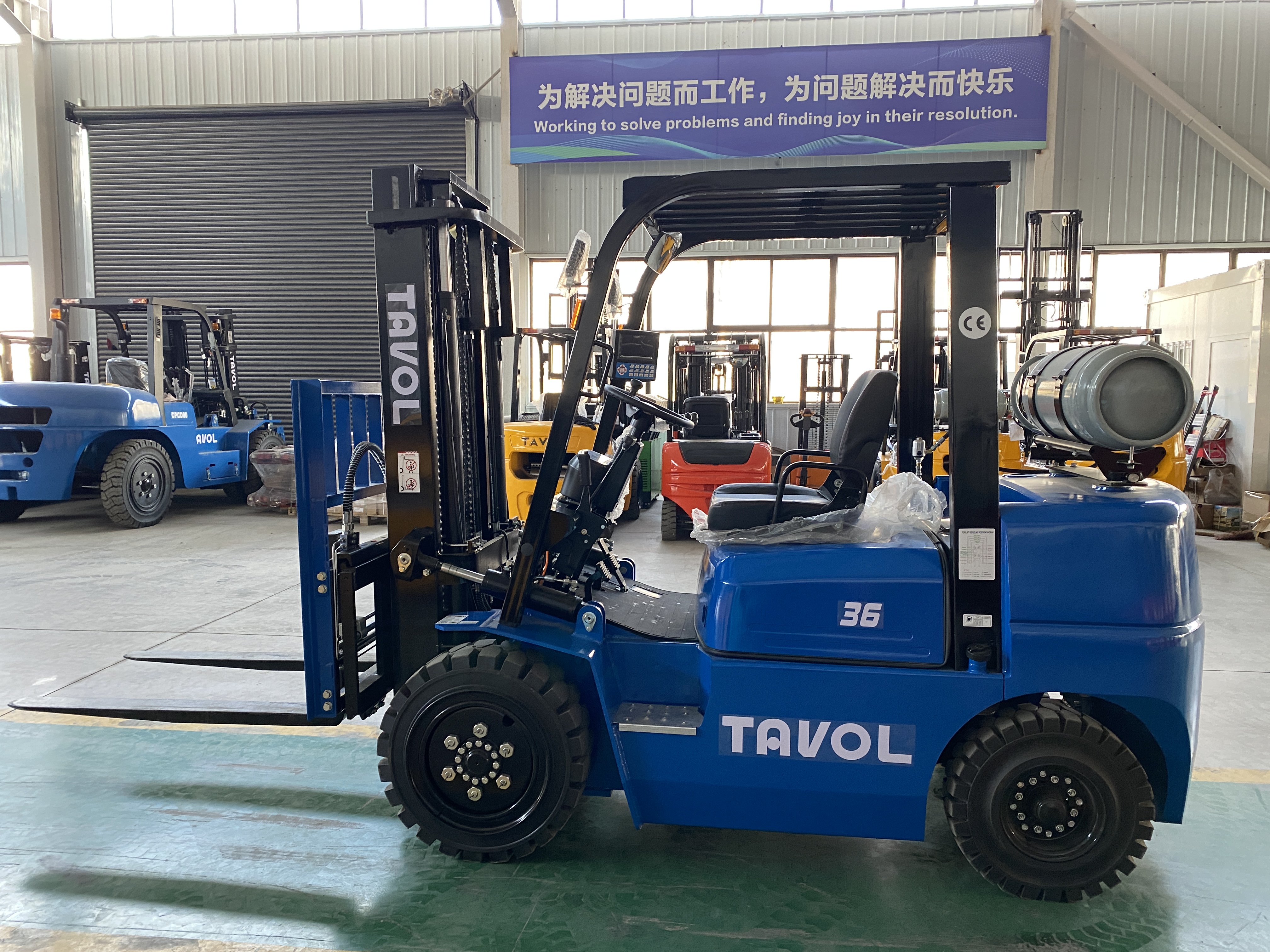
5.1 Diesel: pre-shift inspection
A diesel counterbalance forklift should be checked before every shift, not once a week. The routine covers fluid levels, tyres, brakes and safety devices, and it exists to catch failures before they become breakdowns.
- Check engine oil, hydraulic fluid and coolant levels.
- Inspect tyres for wear, damage or incorrect inflation.
- Test brakes, horn, lights and the backup alarm.
- Check forks and mast for cracks, bends or leaks in hydraulic lines.
- Start the engine and confirm there is no unusual noise, smoke or warning light.
Two rules sit alongside the list: never operate with a malfunctioning brake or a hydraulic leak, and report any abnormality to a supervisor before starting work. When a diesel truck is specified, ask for the inspection sheet the operator will actually sign — a routine without a record does not survive the first busy week.
5.2 Dual fuel: mode switching
Switching between LPG and gasoline is a controlled action, not a live changeover. The procedure is: bring the forklift to a stop and let the engine idle; locate the fuel mode selector on the dashboard; switch to the required fuel; wait 5–10 seconds for the fuel system to stabilize; resume work and watch engine performance for the first few minutes.
The safety envelope is explicit: do not switch under heavy load or on a slope; confirm the LPG cylinder is securely mounted and leak-free before each shift; keep open flames away during refuelling. For evaluation purposes, the practical test is whether the operator can reach the selector without leaving the seat, and whether the cylinder mount holds through a loaded turn.
5.3 Lithium: charging and maintenance
Lithium changes the maintenance routine more than the operating routine. There is no watering and no acid check; the work moves to the charger and the connectors.
- Park on a flat, ventilated area and switch off the ignition before connecting the charger.
- Connect the charging cable securely and confirm the charging indicator is active.
- Charge during breaks and idle periods rather than waiting for full depletion.
- Disconnect once fully charged; do not leave the truck connected beyond the recommended time.
- Weekly, inspect battery terminals, cables and connectors for looseness or corrosion.
The associated rules matter as much as the steps: never charge in an enclosed space without ventilation, keep the charging area dry, do not disconnect cables under load, and restrict battery connection work to trained personnel. A lithium specification should therefore include the charger position and the ventilation plan, not only the battery chemistry.
5.4 Weighing: load cell and display on the mast
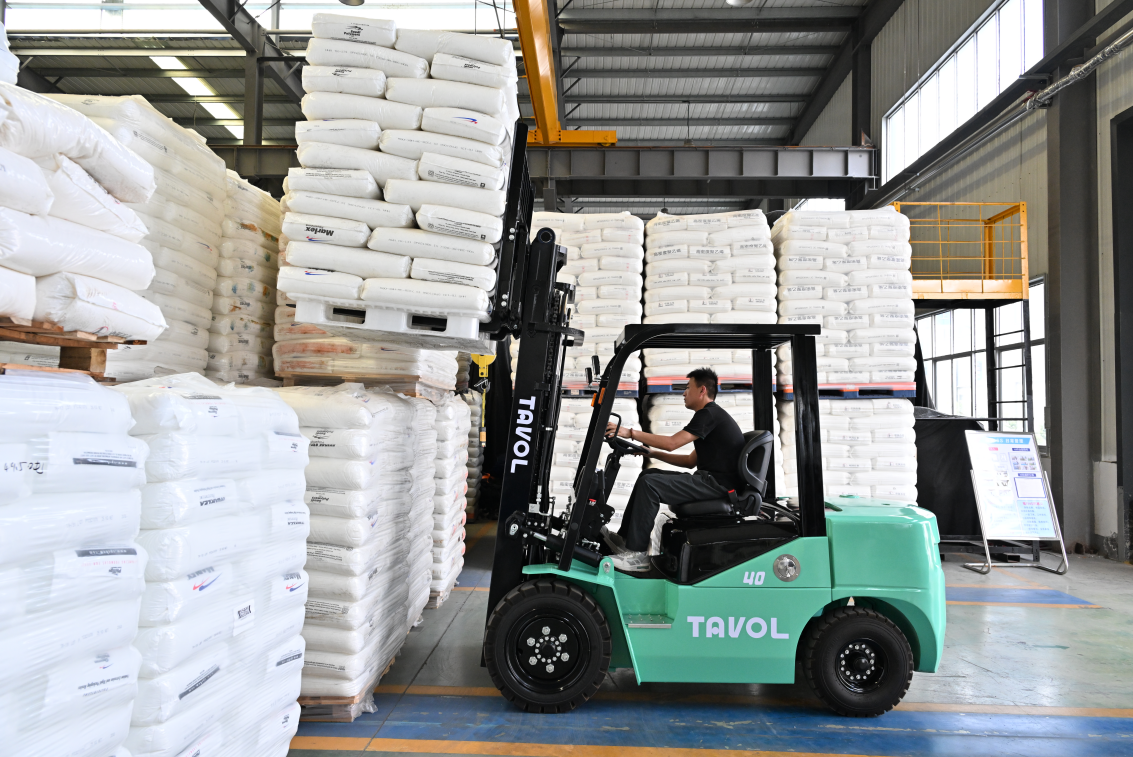
Where the load itself carries commercial or safety consequences — weight-based freight billing, grain and scrap trading, or warehousing with weight-based inventory — weighing can be built into the truck instead of handled at a separate weighbridge. A load cell measures the load during lifting, and a digital display mounted on the mast shows the weight to the operator. The function TAVOL documents for this configuration is real-time load weighing during lifting and transport, which removes the extra trip to a weighbridge and gives the operator an overload warning at the point of the lift.
Two boundaries are worth stating plainly. Weighing integration is a handling aid and an information source; it does not raise the rated capacity of the truck, and the 500 mm load-centre limit still applies. And weighing should be raised at the specification stage, because the display is mounted on the mast and the load cell forms part of the lifting assembly — treat it as a configured build item, not an assumption to add later.
Four operating environments, mapped to documented builds
Table 3 — Environment, deciding criteria and a documented deployment
| Environment | Deciding criteria | Documented example |
|---|---|---|
| Outdoor yard and rough ground | Surface, grade, dust, single-shift refuelling | Chile: four CPCD30 units with a custom 4.5 m mast on unpaved farm roads; Mexico: CPCD30 in an outdoor precast concrete yard for three years |
| General cargo and container handling | Lift height inside the container, mast type, traction, load security | South Africa: CPCD25 for container unloading; Mexico: a 5-ton diesel unit for steel goods and container loading; Colombia: container lifting onto flatbeds with a reinforced chassis |
| Manufacturing plants | Indoor air quality, attachment, hydraulic control, noise | Brazil: CPCD30 indoors for metal fabrication with a stable hydraulic system; Zimbabwe: five CPCD30 units in a paint shop, low noise; Bangladesh: two CPQYD30 dual fuel units with drum clamps |
| Warehousing and logistics | Multi-shift uptime, high-rack stacking, emissions, charging window | Kuwait: five CPD40 electric units for high-rack stacking and heavy bagged material; Peru: ten CPCD30 units for recycled plastic bales, chosen for fuel economy and parts availability |
The mapping is not a rule that forbids other combinations — a diesel truck can work indoors with ventilation, and an electric truck can work outdoors on a sealed yard. It is a statement about where each power source carries the fewest compromises. Note also that attachments travel across all four environments: a paper-roll clamp, a bale clamp, a bucket or a 360° rotating fork set changes the load case wherever it is used, which is why attachment type sits in the customization scope next to fuel type and tonnage.
What can be specified, and what has to be verified
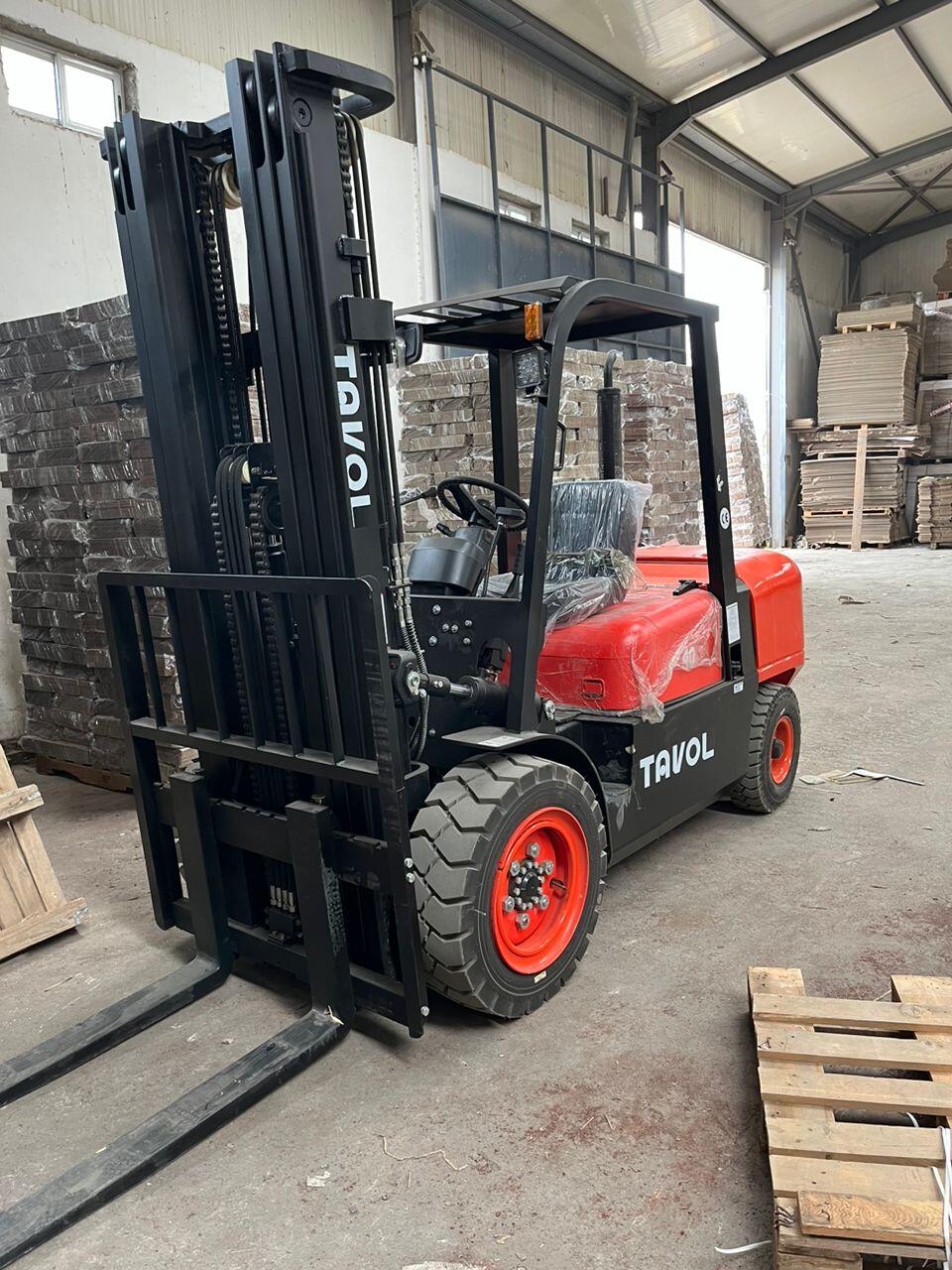
Selection ends in a specification, and a specification is only useful if the supplier can build to it. TAVOL's stated customization scope covers fuel type (diesel, LPG, dual fuel or lithium), tonnage, mast height, fork length, attachment type, cabin type (open or enclosed), logo printing and paint colour. Minimum order quantity is one unit, monthly capacity is 300 units, and lead time runs 10–45 days depending on configuration. Quality control is 100% pre-shipment testing with third-party inspection available; after-sales support is remote technical support, with a two-year forklift warranty and a five-year lithium battery warranty.
Component choice belongs in the specification rather than in the follow-up email. The CPCD30 diesel can be fitted with engines from Xinchai, Quanchai, Isuzu, Mitsubishi, Yanmar, Kubota or PSI; the CPCD25 offers Xinchai, Quanchai, Isuzu, Mitsubishi, Yanmar and Kubota; the CPQYD20 dual fuel truck uses a Nissan engine. Structural material is stated as Q235 carbon structural steel with Q355 low-alloy high-strength steel — the kind of detail worth comparing line by line when two quotes look identical on the first page. TAVOL's manufacturing base has operated since 2003, with a 40,000 m² facility, 300 employees, 25 engineers and annual output of 3,000 units, of which 70% is exported to markets including Southeast Asia, Europe, South America, the Middle East, Africa, Australia and North America.
Compliance should be verified against the certificate, not the brochure. The TAVOL forklift range holds CE certification TTC-26-0104/03/01 issued by INTERTÜRK (İNTERTÜRK Uluslararası Belgelendirme Ltd. Şti.) for the EU market, assessed against EN 1175:2025, EN ISO 3691-1:2015/AC:2016, EN ISO 12100:2010 and EN 60204-1:2018/A1:2025, valid from 1 April 2026 to 1 April 2031. The scope names the CPC10 through CPCD100 series, the CPQD120–CPQD60 series, the FB10–FB50 series and the T3007–T6018 series, and the certificate record links specific models including the CPCD20 to CPCD40 diesel trucks, the CPQYD20 to CPQYD35 dual fuel trucks and the CPD30, CPD35 and CPD40 electric trucks.
Frequently asked questions
Which CE standards apply to a 3-ton material handling forklift delivered into the EU?
The TAVOL forklift range holds CE certificate TTC-26-0104/03/01 issued by INTERTÜRK, valid from 1 April 2026 to 1 April 2031 and assessed against EN 1175:2025, EN ISO 3691-1:2015/AC:2016, EN ISO 12100:2010 and EN 60204-1:2018/A1:2025. The certificate record links the CPCD30 diesel, the CPQYD30 dual fuel and the CPD30 electric 3-ton trucks to that scope. Check the certificate number, model scope and expiry date against the exact unit quoted, and confirm any additional national requirement for the destination market.
OEM 3ton material handling forklift manufacturer — what can be customized on a 3-ton build?
A 3-ton build can be specified by fuel type (diesel, LPG, dual fuel or lithium), tonnage, mast height, fork length, attachment type, cabin type (open or enclosed), logo printing and paint colour. Engine options differ by model: the CPCD30 diesel can be fitted with Xinchai, Quanchai, Isuzu, Mitsubishi, Yanmar, Kubota or PSI engines, while the CPQYD30 is listed as a 3.0 t dual fuel LPG and gasoline model. Minimum order quantity is one unit, monthly capacity is 300 units, and OEM and ODM production are both offered.
Which power source costs less to run over a single shift?
In TAVOL's published guidance, lead-acid suits single-shift, budget-limited or occasional use because of the lower upfront price, while lithium is recommended for multi-shift, high-utilization work because it charges in 1–2 hours, needs no watering and is rated at 2,000+ cycles. For diesel, users cite economical fuel consumption and widely available spare parts as the cost advantage — a ten-unit CPCD30 fleet at a Peruvian recycling operation reports both. Compare total cost across your actual annual hours rather than purchase price alone.
Can a single unit be ordered for a trial before a fleet order?
Yes. Minimum order quantity is one unit, and every unit is subject to 100% pre-shipment testing, with third-party inspection available. Quoted delivery terms are EXW, FOB, CFR, CIF, FCA, DDU or DAP, and payment terms are T/T or L/C. A trial unit is the practical way to validate the attachment, the mast height and the real duty cycle before committing a fleet.
How long does delivery take for a customized 3-ton dual fuel forklift?
Lead time is 10–45 days depending on configuration, against a monthly capacity of 300 units. The customization items that move the date most are attachment type, mast height and cabin type, because each changes the build rather than the finish. Confirm the lead time against the specific configuration in the quotation — a short brief covering maximum load, load centre, site conditions and required lift height is enough for a configured quote and current documentation.
Conclusion
Matching a material handling forklift to a site is a sequence, and the sequence is what keeps the specification honest. Load fixes the capacity and the attachment case. Site fixes the emissions envelope, the aisle geometry and the mast. Duty cycle fixes the refuelling or charging window. Only then does diesel, dual fuel or electric become a decision with a defensible answer — one that can be checked against published dimensions, a certificate scope and a pre-shift routine rather than against a preference.
For a specification review, TAVOL Forklift (Shandong Tavol Machinery Co., Ltd) publishes the model range, mast options and customization scope at www.tavolgroup.com, and the company profile is available as a downloadable PDF: TAVOL Company Profile (PDF).
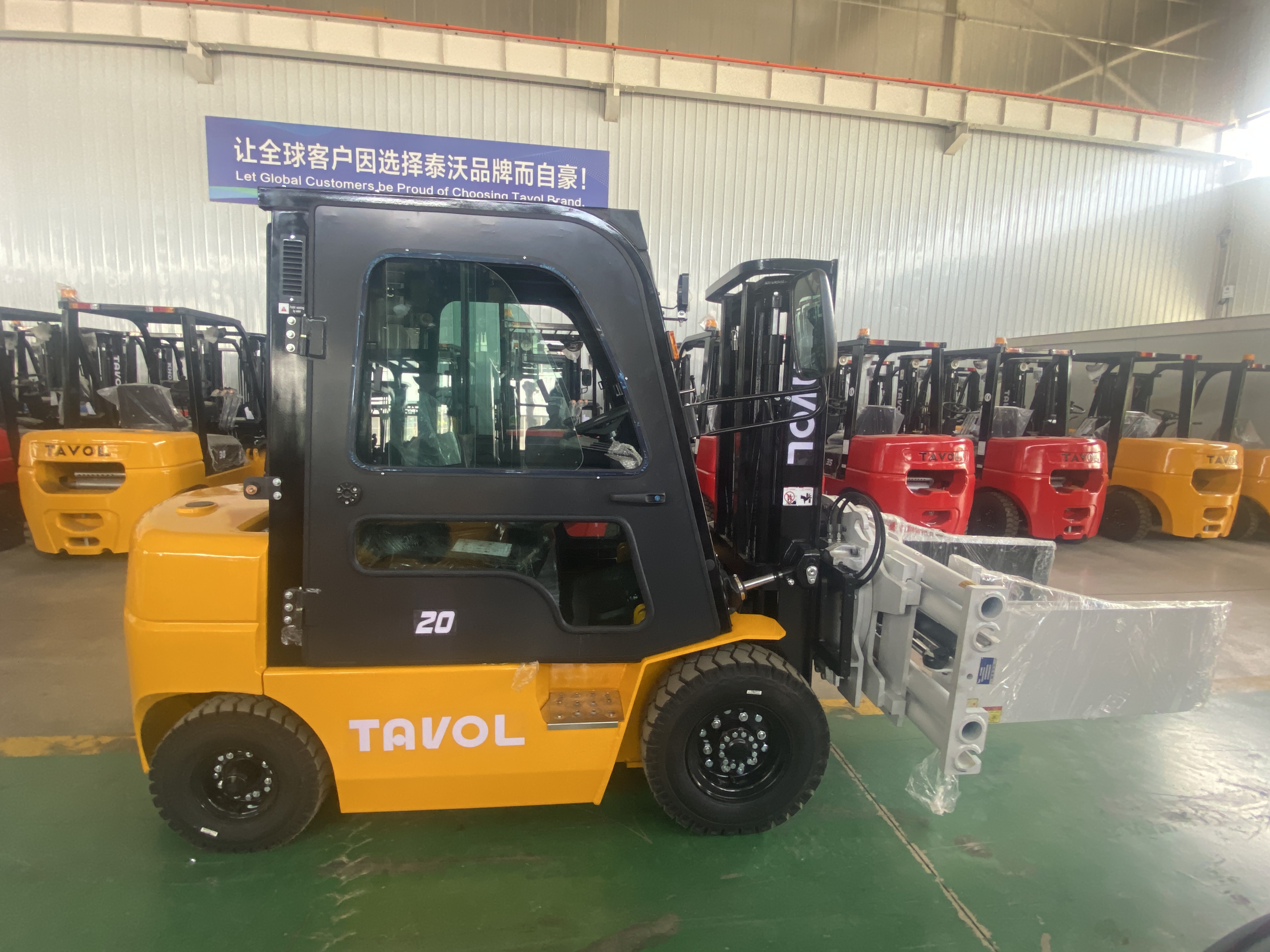
Configuring a 3-ton or 4-ton unit? Send the load weight and load centre, the site conditions, hours per shift and required lift height — the catalogue, the CE certificate and a configured quotation can be issued against those five inputs.
Have Questions or Need More Details?
Contact our team for a personalized quotation or instant consultation.
Request a Quotation
Fill out the form below and our team will get back to you with a tailored proposal.
WhatsApp Direct Chat
Prefer to chat in real-time? Message us on WhatsApp for instant assistance & quick answers.
- Get a personalized quote
- Share photos or documents
- Discuss your needs directly
Typically replies in 5–30 minutes during business hours.