
Material Handling Forklift Technical Guide: Battery vs Fuel Systems, Pre-Shift Checks and Weighing
Quick answer: on a material handling forklift, three technical decisions set the real operating envelope — the power system, the pre-shift inspection routine, and, in weight-based operations, the load-weighing configuration. Lithium battery electric trucks such as the TAVOL CPD30, CPD35 and CPD40 cover zero-emission indoor and cold-storage duty with opportunity charging during breaks. Dual fuel LPG/gasoline trucks such as the CPQYD20 to CPQYD35 run on a Nissan engine, refuel in minutes and keep multi-shift schedules running without charging downtime. Diesel trucks such as the CPCD20 to CPCD40 deliver the highest traction figures in the range, up to 24,500 N on the CPCD40, for outdoor and unpaved yards. Weight-based cargo billing adds one further requirement: a load cell with a digital display on the mast, calibrated for weighing accuracy and fitted with an overload alert.
This guide is written for importers, distributors, fleet engineers and procurement managers comparing counterbalance trucks in the 2 t to 4 t class. Every parameter below comes from published specifications, certification documents and field applications, so it can be transferred directly into a tender document or a technical comparison sheet.

Problem Definition: Where Material Handling Forklift Risk Actually Sits
Three risk groups account for most of the gap between a quoted specification and a truck’s real performance on site.
Power system versus site constraints. A diesel truck placed in an indoor cold store creates emissions and ventilation problems. A lithium electric truck placed in a three-shift outdoor yard without an opportunity-charging routine creates waiting time. The energy source — not the load chart — is the first constraint that decides whether a truck can complete a full shift in the intended environment. The same 3 t truck can be specified with a lithium-ion (LiFePO4) battery, a Nissan engine running on LPG or gasoline, or a diesel engine from Xinchai, Quanchai, Isuzu, Mitsubishi, Yanmar, Kubota or PSI; each version has a different refuelling rhythm, emission profile and traction ceiling.
Inspection discipline. Fluid levels, tires, brakes, horn, lights, backup alarm, forks and mast belong to a pre-shift routine that takes minutes but prevents the failures that stop a warehouse. A malfunctioning brake and a hydraulic leak are the two conditions that must take a truck out of service immediately, and both are detectable before the shift starts.
Weight data. Where cargo is billed by weight, the weighing system becomes part of the commercial contract. Real-time load weighing during lifting and transport removes the need for a separate weighbridge and prevents overloading — but only when the load cell is calibrated for weighing accuracy and the overload alert functions correctly. A scale that drifts by an unverified margin turns every invoice into a dispute.
These risks compound. A dual fuel truck switched between LPG and gasoline while under load can stall in a rack aisle. A diesel truck released into service with a leaking hydraulic line can drop a load on a ramp. A weighing truck used for billing without documented calibration cannot be defended in a commercial claim. Treating the three as one operating system, rather than three separate purchase decisions, is what makes a material handling forklift predictable in service.
Industry Background: Why Fleets Are Becoming Mixed-Power
Electric adoption is growing from a low base. The global forklift market was valued at USD 81.4 billion in 2025 (Grand View Research), while lithium-ion penetration in global counterbalanced forklifts reached 17.5% in 2024 (Interact Analysis). The practical reading of those two figures is that most counterbalance trucks in service still run on diesel, LPG/gasoline or lead-acid. Most real fleets are therefore mixed: lithium electric trucks indoors, diesel trucks in yards, and dual fuel trucks where a single site has both indoor and outdoor duty.
Parts supply is a separate constraint from the machine itself. China exported USD 1.26 billion of parts for fork-lift trucks in 2024 (World Bank WITS, HS 843120). For a fleet buyer, that figure is a reminder that parts availability, service response and documentation quality deserve their own column in the comparison, alongside price and tonnage.
Standards define the floor rather than the target. In the United States, ANSI/ITSDF B56.1-2020 is the safety standard for low-lift and high-lift trucks, effective through 2025. EU-market trucks are certified against standards such as EN 1175:2025, EN ISO 3691-1:2015/AC:2016, EN ISO 12100:2010 and EN 60204-1:2018/A1:2025.
TAVOL (Shandong Tavol Machinery Co., Ltd) is a Chinese material handling manufacturer founded in 2003, operating a 40,000 m² factory with approximately 300 employees, an annual output of around 3,000 units and a 25-engineer R&D team. Around 70% of production is exported to Southeast Asia, Europe, South America, the Middle East, Africa, Australia and North America. The forklift programme covers diesel, LPG/gasoline, dual fuel and lithium electric counterbalance trucks from 2 t to 4 t, alongside cranes and tractors produced in the same group.
Detailed Solution: Matching Power System, Attachment and Weighing to the Duty Cycle
Lithium battery electric: zero-emission indoor operation (CPD30, CPD35, CPD40)
TAVOL’s lithium electric counterbalance range covers three capacities in this class: the CPD30 (3.0 t), the CPD35 (3.5 t) and the CPD40 (4.0 t). All three use a 500 mm load centre and a lithium-ion (LiFePO4) battery with a quick charger. They share the same mast offer — 2-stage 3 m, 3.5 m and 4 m masts; 3-stage 4.5 m, 5 m, 5.5 m and 6 m masts; container masts and full free masts — with fork lengths from 1,220 mm to 1,820 mm and a choice of pneumatic or solid tyres.
Key operating parameters: drive speed 18 km/h at full load; lift speed 350 mm/s on the CPD30 and 320 mm/s on the CPD35 and CPD40; descent speed 400 mm/s on the CPD30 and 370 mm/s on the CPD35 and CPD40; gradeability 18% at full load and 20% empty; maximum traction 15,600 N; minimum turning radius 2,550 mm, with a minimum right-angle channel width of 4,305 mm for a 1,000 × 1,200 mm pallet; ground clearance 135 mm on the CPD30 and CPD35 and 150 mm on the CPD40.
The operational case for lithium is broader than emissions. Opportunity charging during breaks removes the need for battery swapping, which is what makes a single truck viable across two or three shifts. Noise is significantly lower than on internal combustion trucks, which matters in noise-sensitive buildings. Compared with lead-acid, lithium offers longer cycle life and reduced maintenance, with no acid fumes and no water refilling. The trucks also remain stable in low-temperature environments such as cold storage.
Typical duty cycles: indoor warehousing, cold storage and food processing, pharmaceutical and cleanroom facilities, e-commerce and logistics distribution centres, electronics manufacturing, retail distribution and enclosed workshop operations. TAVOL covers the forklift with a 2-year warranty and the lithium battery with a 5-year warranty, supported by remote technical support after delivery.
Dual fuel LPG and gasoline: multi-shift uptime without charging downtime (CPQYD20 – CPQYD35)
The CPQYD series covers four capacities — CPQYD20 (2.0 t), CPQYD25 (2.5 t), CPQYD30 (3.0 t) and CPQYD35 (3.5 t) — all powered by a Nissan engine with a fuel system that switches between LPG and gasoline.
Key operating parameters: lift speed 490 mm/s at full load on the 2.0 t and 2.5 t models and 450 mm/s on the 3.0 t and 3.5 t models; descent speed 450 mm/s and 420 mm/s respectively; drive speed 18/20 km/h; gradeability 15% at full load and 20% empty; maximum traction 14,500 N (2.0 t), 15,000 N (2.5 t), 21,000 N (3.0 t) and 21,500 N (3.5 t); overall dimensions 2,750 × 1,165 × 2,105 mm on the 2.0 t and 2.5 t models and 2,855 × 1,230 × 2,125 mm on the 3.0 t and 3.5 t models, with a 500 mm load centre throughout.
The design intent is uptime. A fuel refill takes minutes rather than the hours a battery recharge takes, and quick LPG cylinder replacement keeps continuous multi-shift handling running — the reason a dual fuel forklift is often specified for outdoor/indoor combined use where a fast cylinder swap is required. Emissions are lower than diesel, so the truck can be operated both indoors and outdoors, power output remains strong enough for heavy lifting, and the fuel choice can be adjusted according to local LPG and gasoline price availability.
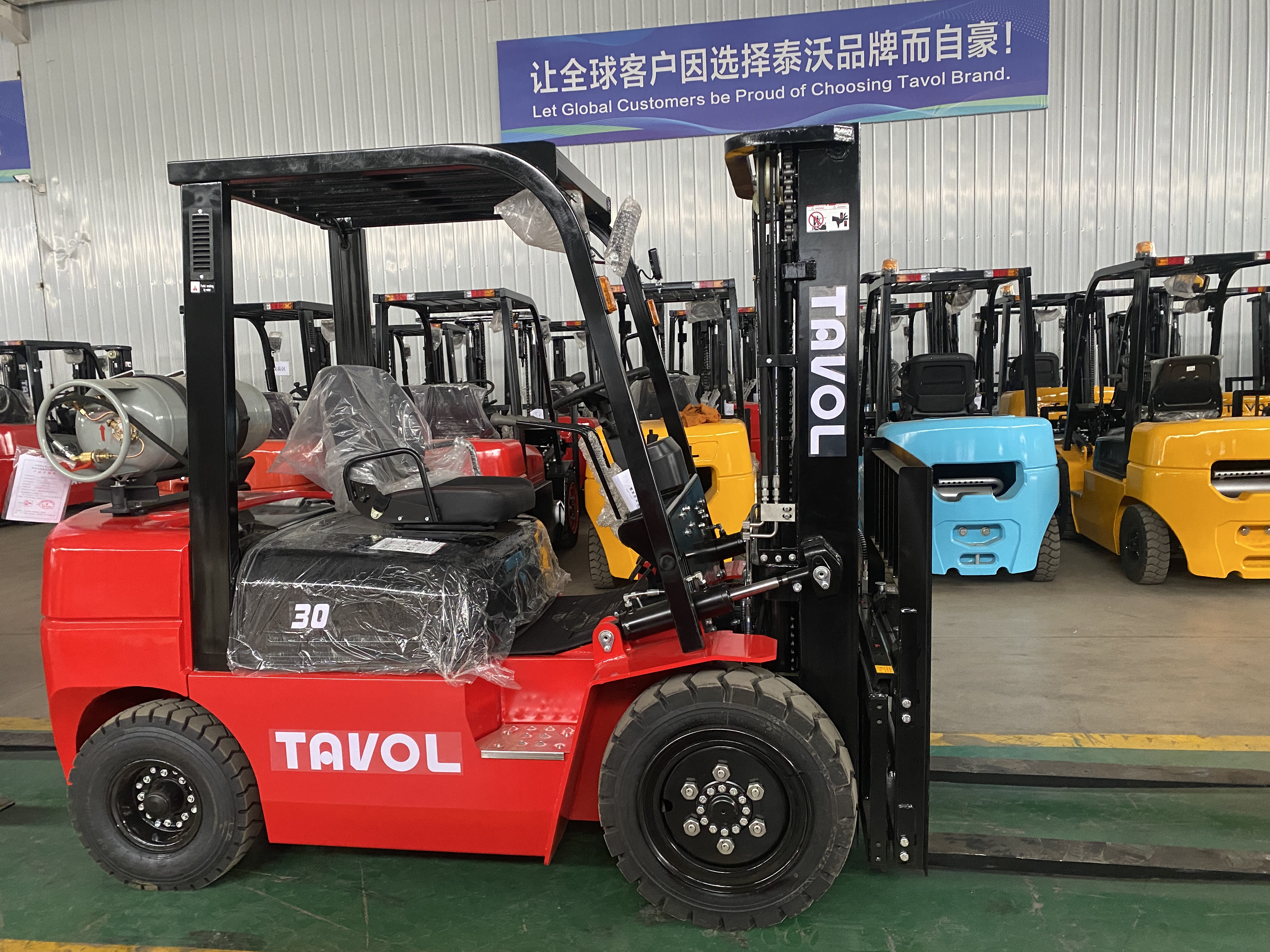
Typical duty: warehousing and logistics, food and beverage processing, manufacturing plants, retail and distribution centres, port and container handling, construction sites and general cargo handling — the applications where a truck has to move between an indoor dock and an outdoor yard within the same shift.
Diesel: traction and harsh-ground capability (CPCD20 – CPCD40)
The diesel range runs from the CPCD20 (2.0 t) through the CPCD25, CPCD30 and CPCD35 to the CPCD40 (4.0 t). Engine options include Xinchai, Quanchai, Isuzu, Mitsubishi, Yanmar, Kubota and PSI, so Japanese engine configurations can be specified where local service networks or buyer preference favour them. Structural materials are Q235 carbon structural steel and Q355 low-alloy high-strength structural steel.
Key parameters across the range: gradeability 15% at full load and 20% empty; maximum traction from 14,500 N on the CPCD20 to 24,500 N on the CPCD40; lift speed 490 mm/s on the 2.0 t and 2.5 t models, 450 mm/s on the 3.0 t and 3.5 t models and 460 mm/s on the CPCD40; the CPCD40 measures 2,855 mm long and 1,330 mm wide with a 2,080 mm top guard height and 150 mm ground clearance.
Diesel remains the reference point for outdoor and unpaved work. A full tank supports 8+ hours of continuous operation without charging infrastructure, torque output is high with 15%–20% gradeability under load, and the trucks tolerate both cold and hot climates. The reinforced frame, drive axle and transmission are designed for long maintenance intervals, and parts are widely available, which lowers the total cost of ownership per operating hour. On the operator side, a wide-view design and an ergonomic cabin with a shock-absorbing seat reduce fatigue over long shifts; open or enclosed cabin configurations are both available.
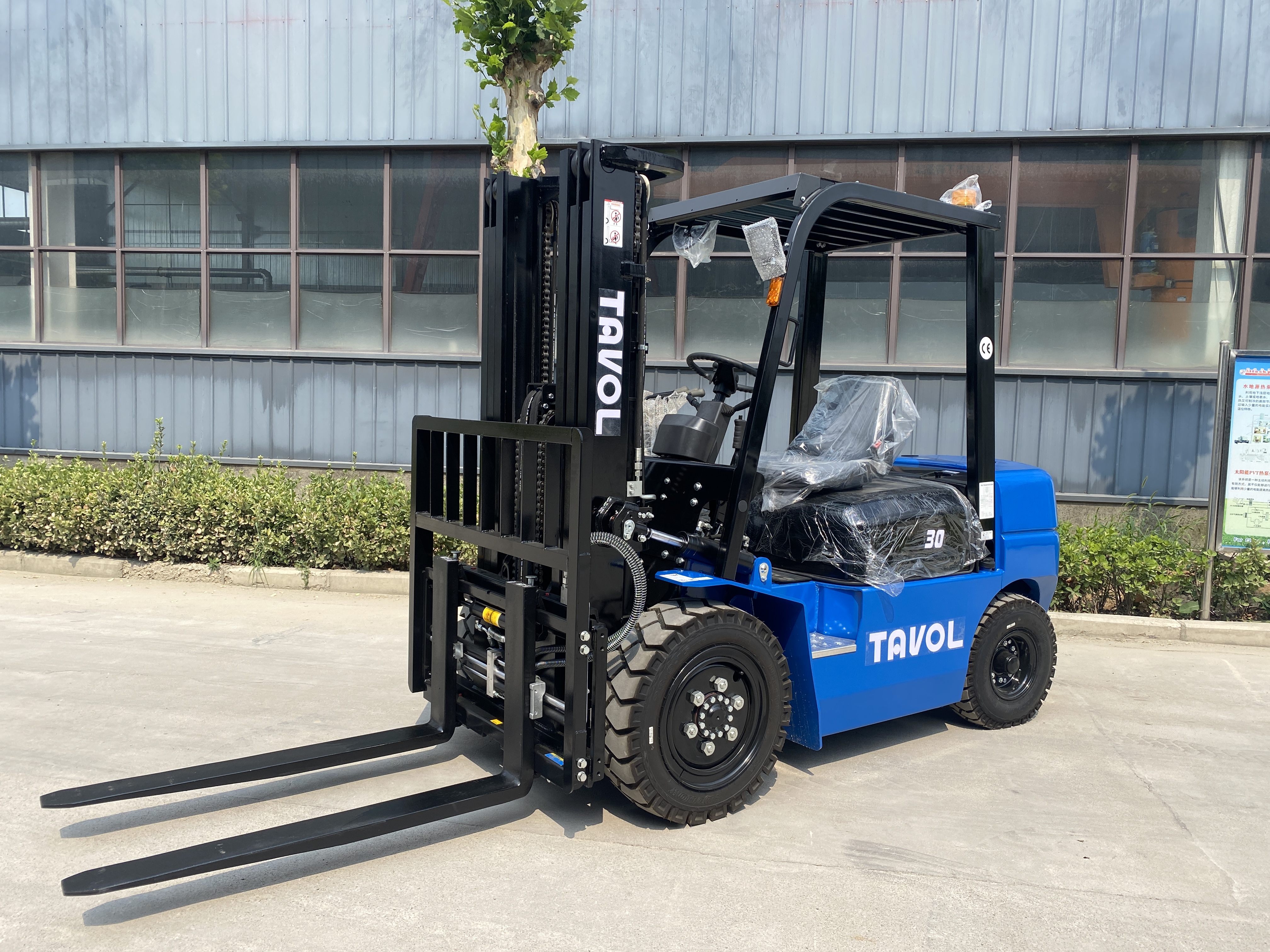
Typical duty: outdoor yards, unpaved ground, construction sites, mining support, building material markets, brick and cement product plants, timber processing, grain storage, feed and fertilizer plants, and small to medium freight stations. Heavier configurations at 5 t capacity and above are also in service for heavy cargo, steel goods and container loading work. Where a market applies a specific diesel emission stage, that stage is determined by the engine fitted rather than by the truck nameplate; buyers should request the emission certificate for the exact engine model together with the truck documentation.
Certification and market-access constraints
For EU shipments, TAVOL’s CE certificate is issued by INTERTÜRK under certificate number TTC-26-0104/03/01, valid from 2026-04-01 to 2031-04-01. The standards referenced are EN 1175:2025, EN ISO 3691-1:2015/AC:2016, EN ISO 12100:2010 and EN 60204-1:2018/A1:2025. The certificate scope lists the CPC10, CPCD10, CPC15, CPCD15, CPC18, CPCD18, CPC20–CPCD100, CPQD120–CPQD60, FB10–FB50 and T3007–T6018 series.
For procurement, the constraint is documentation discipline: match certificate number, issuing body, standard versions and expiry date against the exact model and configuration being purchased, and treat any general claim of compliance without a certificate reference as unverified. In the United States, ANSI/ITSDF B56.1-2020 is the applicable safety standard for low-lift and high-lift trucks, effective through 2025.
Load weighing: converting the truck into a billing instrument
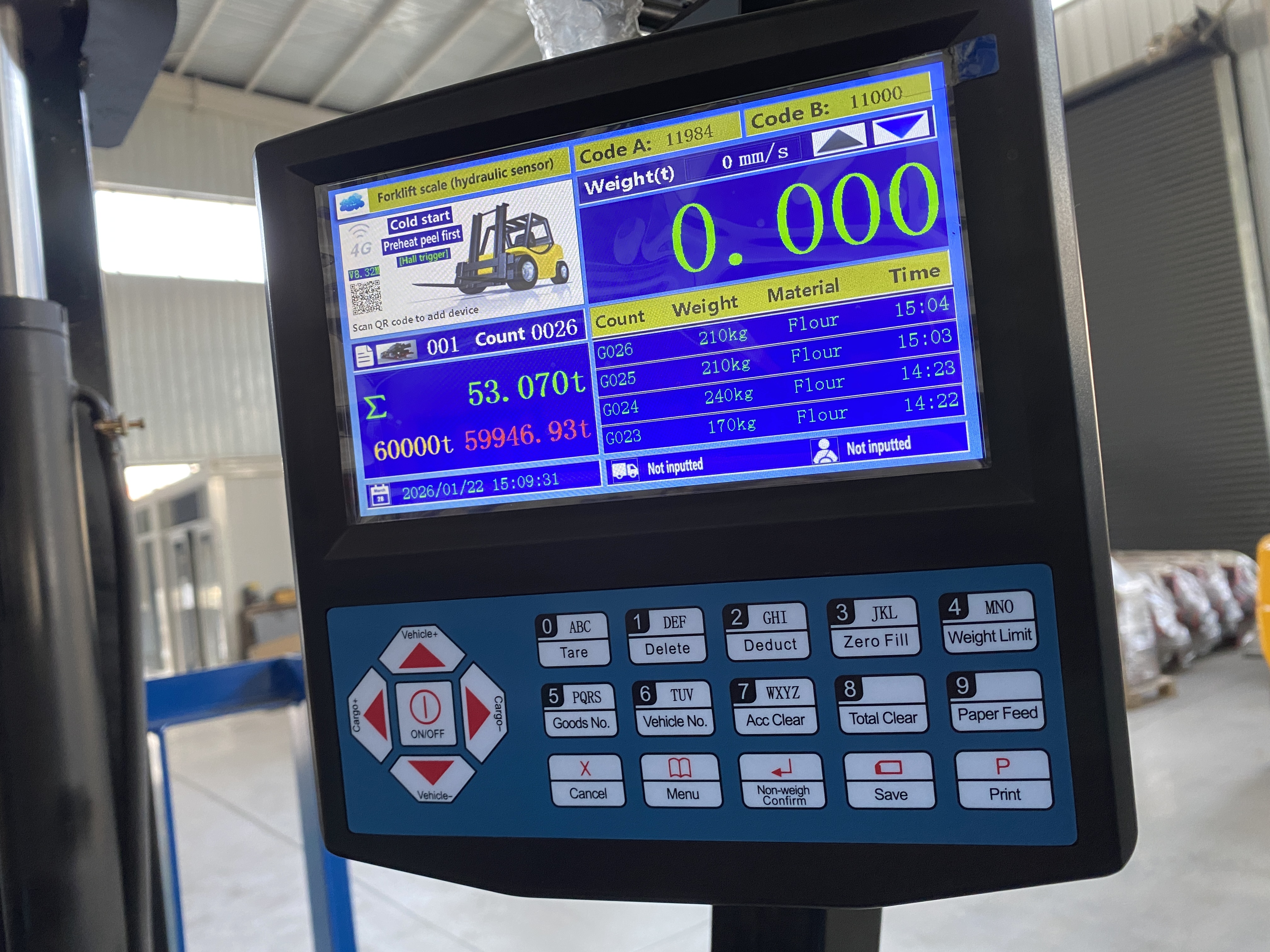
Weight-based handling is a configuration decision, not an accessory add-on. The reference application is a logistics and freight billing operation where cargo is charged by weight, combined with agriculture and grain trading, scrap and recycling weighing, and warehousing with weight-based inventory.
Functionally, a weighing forklift performs real-time load weighing during lifting and transport without a separate weighbridge, and the same data prevents overloading. The matched equipment is an electronic weighing scale attachment with a digital display unit on the mast. Two requirements decide whether the system is usable commercially: weighing accuracy calibration, and an overload alert function. Both should be specified, documented and verified at handover, because a scale that is accurate at only one load point is not a billing instrument.
Step-by-Step Breakdown: Four Operating Routines
1. Lithium battery charging and routine maintenance (CPD series)
- Park the forklift on a flat, ventilated area and switch off the ignition before connecting the charger.
- Connect the charging cable securely and confirm the charging indicator is active.
- Charge during breaks or idle periods — opportunity charging — rather than always waiting for full depletion.
- Disconnect the charger once charging is complete; avoid leaving it connected beyond the recommended time.
- Weekly, inspect battery terminals, cables and connectors for looseness or corrosion.
Safety boundary: never charge in an enclosed space without ventilation; keep the charging area dry; do not disconnect cables under load; only trained personnel should handle battery connections. Lithium batteries require no watering or acid checks.
2. Dual fuel mode switching (CPQYD series)
- Bring the forklift to a stop and let the engine idle.
- Locate the fuel mode selector switch on the dashboard.
- Switch to the desired fuel mode — gasoline or LPG.
- Wait 5–10 seconds for the fuel system to stabilise.
- Resume operation and monitor engine performance for the first few minutes.
Safety boundary: do not switch fuel modes while under heavy load or on a slope; confirm the LPG cylinder is securely mounted and free of leaks before each shift; keep away from open flames during refuelling.
3. Diesel pre-shift inspection checklist (CPCD series)
- Check engine oil, hydraulic fluid and coolant levels.
- Inspect tires for wear, damage or incorrect inflation.
- Test brakes, horn, lights and the backup alarm.
- Check forks and mast for cracks, bends or leaks in hydraulic lines.
- Start the engine and confirm there is no unusual noise, smoke or warning light.
Safety boundary: never operate with a malfunctioning brake or a hydraulic leak; wear the seatbelt at all times; report any abnormality to a supervisor before starting work.
4. Load-weighing calibration and overload alert checks
For weight-based billing projects, add a fourth routine at the start of the shift:
- Confirm the display reading with the forks empty and the truck level, so the zero reference is verified.
- Verify the weighing system against reference loads across the working range, not at a single point.
- Confirm the overload alert activates at the configured limit before the truck is released to the operator.
- Re-verify calibration after any attachment change, mast work or load cell replacement, and record the result in the maintenance log.
Both the calibration procedure and the overload alert threshold should be agreed with the supplier at the order stage and confirmed again at handover.
Use Cases: How the Parameters Map to Real Operations
The attachment and integration table below shows how the same truck platform is configured for different handling units. Each entry corresponds to a documented application requirement.
| Application scenario | Attachment / integration | Key requirement | Region reference |
|---|---|---|---|
| Paper roll handling | Paper roll clamp, rotating clamp mechanism | Non-marking clamp pads, adjustable clamping force to avoid roll damage | Brazil |
| Bale / carton handling | Bale / carton clamp | Adjustable clamping pressure, wide clamp arm coverage | Greece |
| Carpet roll handling, cold climate | Rotating clamp plus enclosed cab | Non-marking surface, 360° rotation without repositioning the truck | Serbia |
| Tyre handling | Tyre clamp with curved arm | Non-marking surface, adjustable clamping width | Thailand |
| Waste paper bales | Tipping paper clamp | Curved arm for irregular bale shapes, tilt for controlled discharge | Dominica |
| Bin / skip handling | Tipping fork, hydraulic tilt cylinder | Secure locking during tipping, controlled tilt angle | Georgia |
| Bulk material scooping | Bucket attachment | Wear-resistant bucket edge, secure locking on the fork carriage | Philippines |
| Drum and barrel handling | Fork rotator | Continuous 360° rotation, secure load locking during rotation | Chile |
| Unstable mixed pallets | Load stabilizer platen | Adjustable pressure, suitable for non-uniform load shapes | Spain |
| Weight-based cargo billing | Load cell and digital display on mast | Weighing accuracy calibration, overload alert function | Bulgaria |
| Recycling pallet handling | Single/double pallet handler | Adjustable fork width, heavy-duty construction | Greece |
| Container loading | Standard forks with overhead crane assistance | Precise manoeuvring in confined container space | Georgia |
Indoor bagged material, Poland. A plastics and chemical raw material warehouse running high-rise pallet stacking indoors requires zero-emission operation, precise mast control for high-stack placement and suitability for an enclosed building — a lithium electric duty cycle with standard forks and no special attachment.
Weight-based cargo billing, Bulgaria. An indoor/outdoor weight-sensitive operation uses real-time weighing during lifting and transport instead of routing every load over a weighbridge, with calibration and overload alert as specification items rather than after-sales additions.
Field results. A chemical and warehousing logistics centre in Kuwait operates five CPD40 units on high-rack pallet stacking and heavy bagged material transport, reporting zero indoor emissions, reduced energy cost and reliable performance at high ambient temperature. A chemical plant in Bangladesh runs two CPQYD30 dual fuel trucks with customised hydraulic drum clamps, reporting a 35% reduction in fuel expense through LPG operation and seamless switching between gas and gasoline in a high-temperature factory. A fruit orchard and agricultural logistics centre in Chile operates four CPCD30 diesel trucks with a custom 4.5 m high-lifting mast on fruit crate stacking and unpaved farm roads, reporting low operational downtime. A building materials supplier in El Salvador uses two CPCD30 units with a bucket attachment for bulk material handling and yard transport.
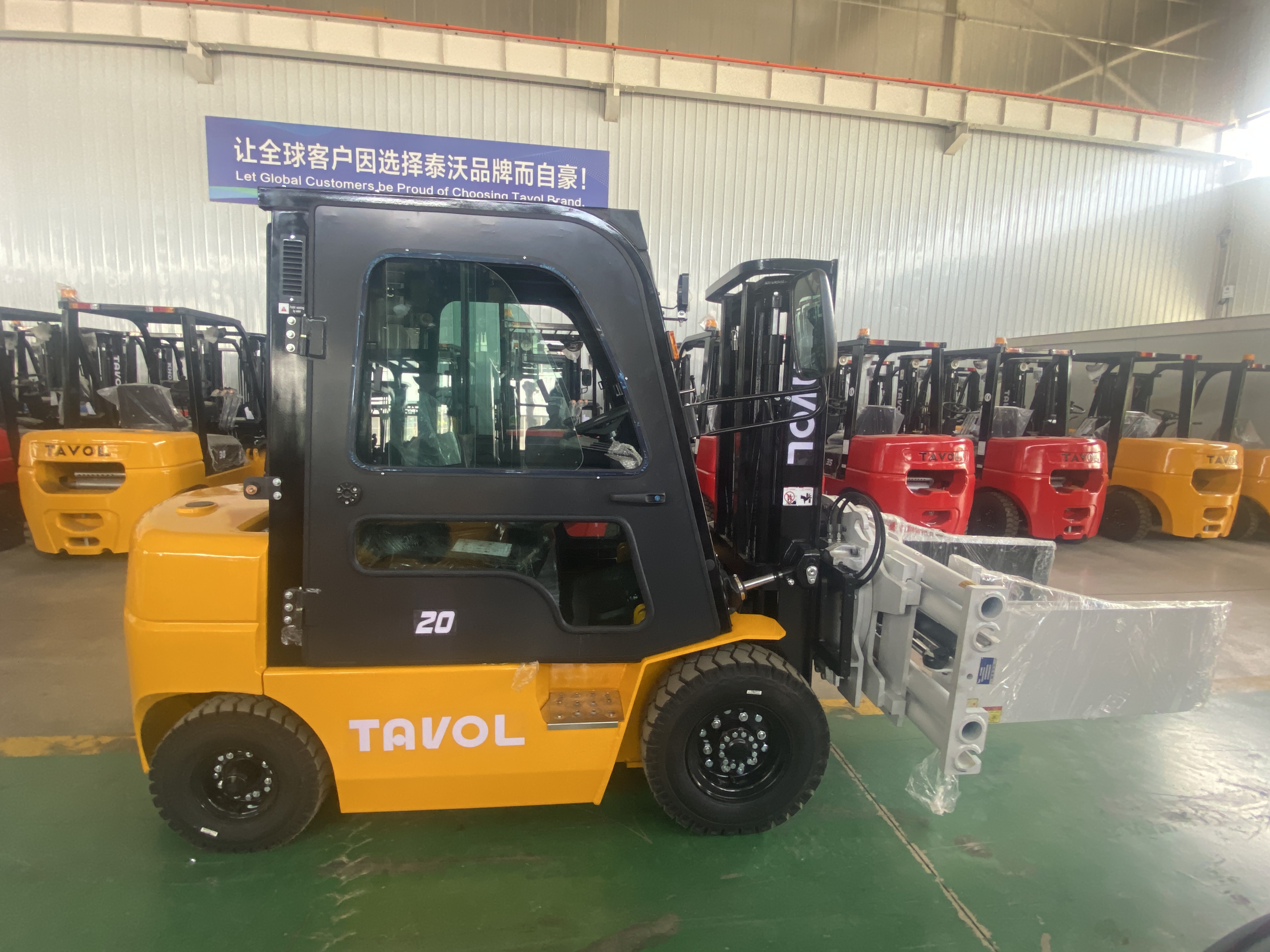
Comparison Tables: Power Systems and the 3 Tonne Class
Table 1 compares the three power systems on parameters that can be verified from specification sheets. Table 2 isolates the 3.0 t class, which is where electric, dual fuel and diesel configurations compete most directly.
| Parameter | Lithium electric (CPD30 / CPD35 / CPD40) | Dual fuel LPG & gasoline (CPQYD20–CPQYD35) | Diesel (CPCD20–CPCD40) |
|---|---|---|---|
| Drive form | Electric, lithium-ion (LiFePO4) battery with quick charger | Dual fuel LPG & gasoline, Nissan engine | Diesel; engine options Xinchai, Quanchai, Isuzu, Mitsubishi, Yanmar, Kubota, PSI |
| Rated capacities | 3.0 t / 3.5 t / 4.0 t | 2.0 t / 2.5 t / 3.0 t / 3.5 t | 2.0 t / 2.5 t / 3.0 t / 3.5 t / 4.0 t |
| Load centre | 500 mm | 500 mm | 500 mm |
| Drive speed, full load | 18 km/h | 18/20 km/h | 18/20 km/h |
| Lift speed, full load | 350 mm/s (CPD30); 320 mm/s (CPD35, CPD40) | 490 mm/s (2.0 t, 2.5 t); 450 mm/s (3.0 t, 3.5 t) | 490 mm/s (2.0 t, 2.5 t); 450 mm/s (3.0 t, 3.5 t); 460 mm/s (CPCD40) |
| Gradeability, full / empty | 18% / 20% | 15% / 20% | 15% / 20% |
| Maximum traction | 15,600 N | 14,500 N / 15,000 N / 21,000 N / 21,500 N | 14,500 N / 15,000 N / 21,000 N / 21,500 N / 24,500 N |
| Energy routine | Opportunity charging during breaks; no battery swap required | Refill in minutes; quick LPG cylinder replacement | Fast refuelling; a full tank supports 8+ hours of continuous operation |
| Emissions and noise | Zero emissions; significantly lower noise than internal combustion | Lower emissions than diesel; indoor and outdoor use | Diesel emissions; suited to outdoor and ventilated areas |
| Typical environment | Indoor warehousing, cold storage, cleanroom, e-commerce DC | Indoor/outdoor multi-shift, port and container, construction, general cargo | Outdoor and unpaved yards, construction, mining support, agriculture |
| Mast and fork options | 2-stage 3 m / 3.5 m / 4 m; 3-stage 4.5 m / 5 m / 5.5 m / 6 m; container mast; full free mast; fork lengths 1,220–1,820 mm; pneumatic or solid tyres | ||
| Parameter (3.0 t class) | CPD30 (lithium electric) | CPQYD30 (dual fuel) | CPCD30 (diesel) |
|---|---|---|---|
| Rated capacity | 3,000 kg | 3,000 kg | 3,000 kg |
| Power source | Electric, lithium-ion battery | Nissan engine, LPG or gasoline | Diesel, multi-brand engine options |
| Overall length / width | 2,855 mm / 1,230 mm | 2,855 mm / 1,230 mm | 2,855 mm / 1,230 mm |
| Top guard height | 2,080 mm | 2,125 mm | 2,125 mm |
| Lift speed, full load | 350 mm/s | 450 mm/s | 450 mm/s |
| Descent speed, full load | 400 mm/s | 420 mm/s | 420 mm/s |
| Gradeability, full / empty | 18% / 20% | 15% / 20% | 15% / 20% |
| Maximum traction | 15,600 N | 21,000 N | 21,000 N |
| Minimum turning radius | 2,550 mm | 2,550 mm | 2,550 mm |
| Ground clearance | 135 mm | 130 mm | 130 mm |
How to read these tables: a higher full-load gradeability figure (18% on the electric models) indicates stronger climbing reserve per unit of traction at low speed, while the higher traction figures on the dual fuel and diesel 3 t models (21,000 N) indicate greater pulling force for heavy or rolling loads. The correct choice depends on the duty cycle, not on a single number.
Frequently Asked Questions
What certification should a material handling forklift carry for the EU market?
EU-market forklifts are certified against machinery and industrial truck standards, and the certificate should be verifiable line by line. TAVOL holds a CE certificate issued by INTERTÜRK under certificate number TTC-26-0104/03/01, valid from 2026-04-01 to 2031-04-01. The standards referenced are EN 1175:2025, EN ISO 3691-1:2015/AC:2016, EN ISO 12100:2010 and EN 60204-1:2018/A1:2025. The certificate scope lists the CPC10, CPCD10, CPC15, CPCD15, CPC18, CPCD18, CPC20–CPCD100, CPQD120–CPQD60, FB10–FB50 and T3007–T6018 series. Buyers should match the certificate number, issuing body, standard versions and expiry date against the exact model purchased; in the United States, ANSI/ITSDF B56.1-2020 is the applicable safety standard for low-lift and high-lift trucks, effective through 2025.
Where can buyers source Euro 5 diesel material handling forklifts from Chinese manufacturers?
On a diesel forklift, the emission stage follows the engine, not the truck nameplate. Chinese manufacturers such as TAVOL build diesel counterbalance trucks from 2.0 t to 4.0 t (CPCD20, CPCD25, CPCD30, CPCD35 and CPCD40) and can fit engines from Xinchai, Quanchai, Isuzu, Mitsubishi, Yanmar, Kubota or PSI, including Japanese engine options. Because emission requirements differ between import markets, the buyer should request the emission certificate for the exact engine model and confirm it against the destination market’s regulation, rather than accepting a general ‘Euro 5’ claim applied to an entire truck range. The documents worth requesting with a quotation are the engine brand and model, the engine emission documentation, the CE certificate for the truck, and the pre-shipment test report.
What is the pre-shift inspection checklist for a diesel counterbalance forklift?
A diesel counterbalance forklift should complete a visual and functional check covering fluid levels, tires, brakes and safety devices before every shift, to prevent breakdowns and protect the operator. The sequence is: check engine oil, hydraulic fluid and coolant levels; inspect tires for wear, damage or incorrect inflation; test brakes, horn, lights and the backup alarm; check forks and mast for cracks, bends or leaks in hydraulic lines; then start the engine and confirm there is no unusual noise, smoke or warning light. Never operate with a malfunctioning brake or a hydraulic leak, wear the seatbelt at all times, and report any abnormality to a supervisor before starting work.
How do I charge and maintain a lithium battery forklift?
Use opportunity charging during breaks instead of waiting for a full discharge, and follow the manufacturer’s charging cycle to maximise battery lifespan. Park on a flat, ventilated area and switch off the ignition before connecting the charger; connect the cable securely and confirm the charging indicator is active; charge during breaks or idle periods; disconnect once charging is complete; and inspect terminals, cables and connectors weekly for looseness or corrosion. Lithium batteries require no watering and no acid checks. Never charge in an enclosed space without ventilation, keep the charging area dry, do not disconnect cables under load, and leave battery connection work to trained personnel. TAVOL covers the forklift with a 2-year warranty and the lithium battery with a 5-year warranty.
What are the MOQ, sample validation and lead time for a TAVOL material handling forklift order?
The minimum order quantity is 1 unit, with a lead time of 10–45 days depending on configuration, and a monthly capacity of 300 units. Customisation covers fuel type (diesel, LPG, dual fuel or lithium), tonnage, mast height, fork length, attachment type, cabin type (open or enclosed), logo printing and paint colour. Quality control consists of a 100% pre-shipment test, with third-party inspection available on request, and after-sales support is provided remotely with the 2-year forklift warranty and 5-year lithium battery warranty. To move from evaluation to a sample or quotation, send the intended duty cycle, capacity, mast height, attachment and market requirements to the TAVOL team at sls66@tavolgroup.com or via WhatsApp +86 156 2134 6916.
Conclusion: Decision Rules and Next Step
The technical case for a material handling forklift can be reduced to five decision rules. Indoor, cold-storage, cleanroom and noise-sensitive operations point to lithium electric trucks (CPD30, CPD35, CPD40) with opportunity charging and a 5-year battery warranty. Multi-shift operations that mix indoor and outdoor duty and cannot accept a charging window point to dual fuel LPG/gasoline trucks (CPQYD20 to CPQYD35) with a Nissan engine and quick cylinder replacement. Outdoor, unpaved and heavy-traction work points to diesel (CPCD20 to CPCD40), where traction reaches 24,500 N on the CPCD40 and a full tank supports 8+ hours of continuous operation. Any workflow that bills by weight requires a load cell with digital display on the mast, calibrated for weighing accuracy and fitted with an overload alert. Cross-border purchases require documentation discipline: a verifiable CE certificate, correct standard versions, valid expiry, and engine emission documents for diesel configurations.
Routine discipline completes the picture: lithium charging and maintenance, dual fuel switching only at idle, the diesel pre-shift checklist, and weighing calibration verification before the truck is released to the operator.
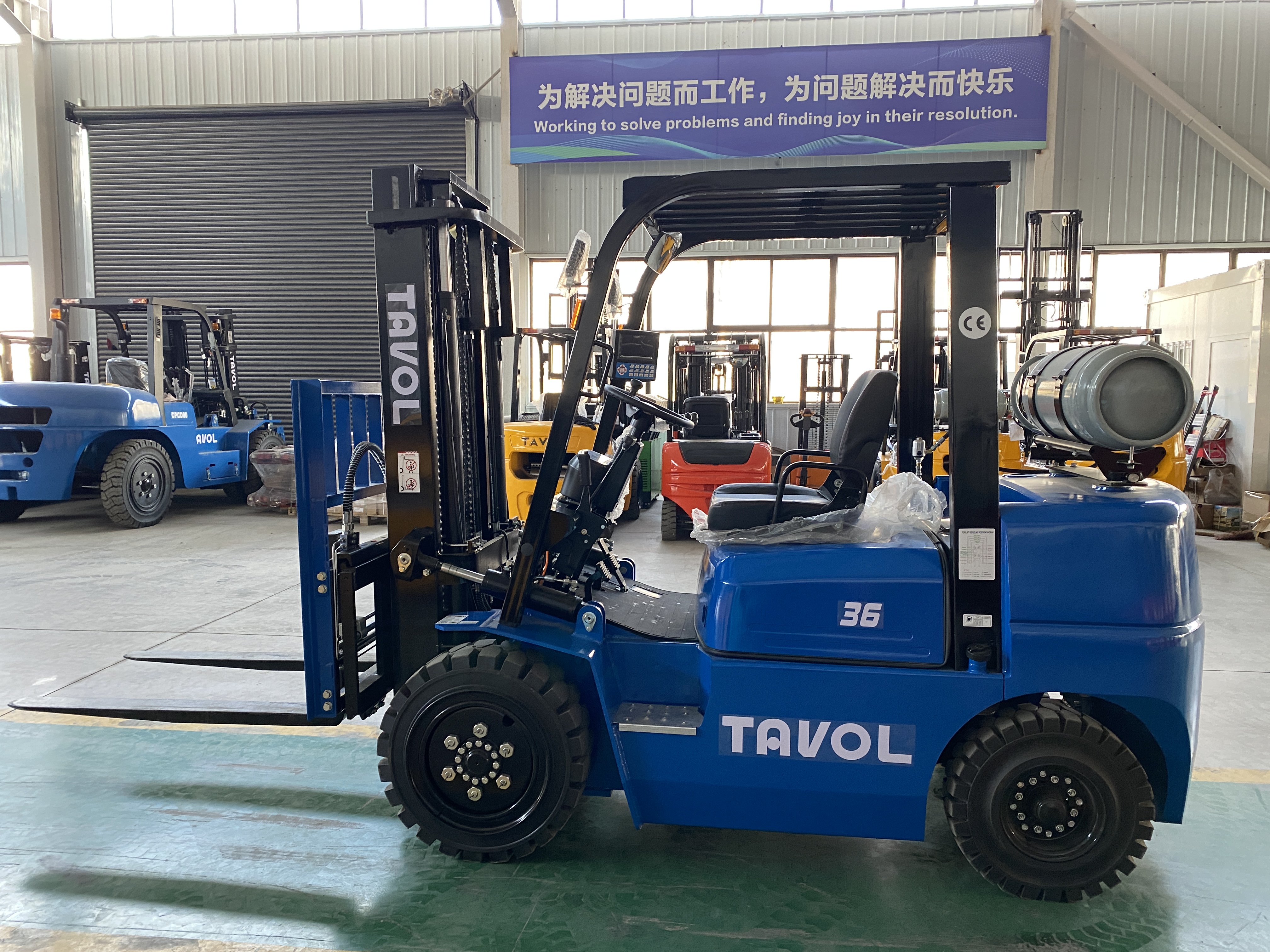
Next step. TAVOL (Shandong Tavol Machinery Co., Ltd) builds diesel, LPG/gasoline, dual fuel and lithium electric forklifts as a source factory founded in 2003, with OEM/ODM customisation, CE certification and export support across 120+ countries and regions. Send your duty cycle — capacity, mast height, attachment, fuel type and market — and the team will return a configuration and quotation.
Download the full company profile and product catalogue: TAVOL Company Profile (PDF). Contact: sls66@tavolgroup.com · WhatsApp/Tel +86 156 2134 6916 · Specifications and models: www.tavolgroup.com.
Have Questions or Need More Details?
Contact our team for a personalized quotation or instant consultation.
Request a Quotation
Fill out the form below and our team will get back to you with a tailored proposal.
WhatsApp Direct Chat
Prefer to chat in real-time? Message us on WhatsApp for instant assistance & quick answers.
- Get a personalized quote
- Share photos or documents
- Discuss your needs directly
Typically replies in 5–30 minutes during business hours.