
Material Handling Forklift Weighing Systems: Load Cells & Displays
Material Handling Forklift Weighing Systems: A Technical Guide to Load Cells and Displays
A material handling forklift weighing system measures a load while that load is being lifted. A load cell integrated into the mast sends weight data to a digital display unit mounted on the truck, so a load can be weighed and billed during handling instead of being carried to a separate weighbridge. The same reading supports an overload alert function, which is why weighing configuration belongs in the safety conversation as well as the billing conversation.
Four parameters decide whether the system works in daily operation: weighing accuracy calibration, the overload alert function, compatibility of the electronic weighing scale attachment, and digital display unit compatibility. This guide maps those four parameters onto real hardware — the TAVOL Forklift counterbalance range from 2 t to 4 t built by Shandong Tavol Machinery Co., Ltd. — and then maps the configuration onto the five workflows where weight is actually billed or counted.
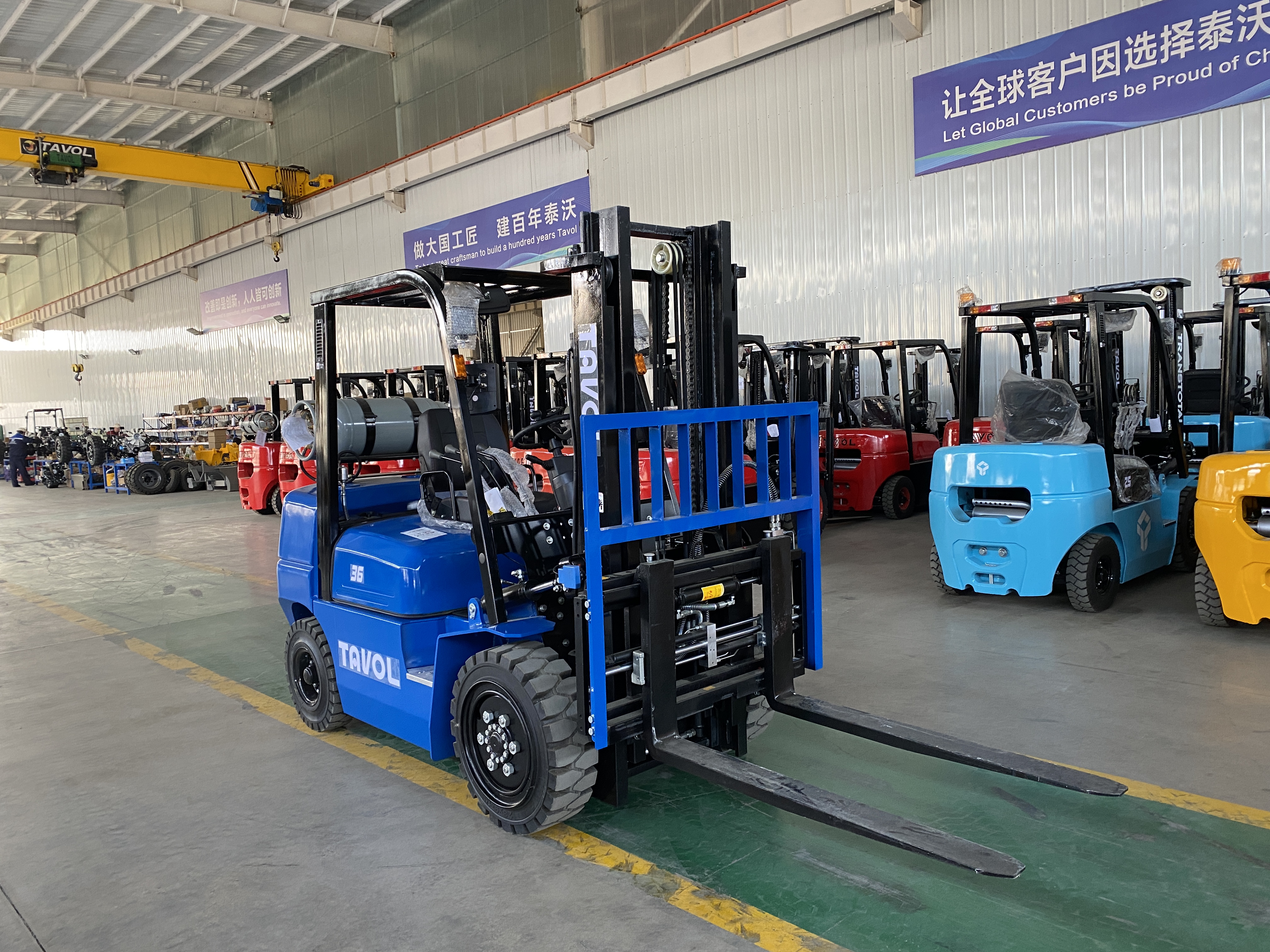
Problem Definition: What a Forklift-Mounted Scale Actually Replaces
The problem is not measurement accuracy on its own. The real cost is the second handling step. In the conventional sequence, a truck lifts a load, travels to a static scale, sets the load down, records a weight, and lifts again. Each of those steps consumes yard space, operator time, and queue capacity — and the resulting record sits one step away from the lift that produced it.
An integrated weighing configuration moves the measurement into the lift itself. The documented setup for weight-sensitive handling uses a load cell integrated with a digital display on the mast, and it is specified to weigh loads in real time without a separate weighbridge while helping to prevent overloading. Three consequences follow:
- Billing moves to the handling point. Freight, scrap, grain, and bagged material weights are captured during loading rather than after a scale detour.
- Inventory becomes weight-based. A warehouse can count by weight as well as by pallet position, which matters for part pallets, mixed inbound loads, and bagged goods.
- Overload protection becomes procedural. The operator sees the live load value against the truck's rated capacity, and the overload alert function warns instead of leaving the discovery to instability.
Industry Background: Why Weight Data Moved Onto the Truck
Forklift fleets have scaled with global logistics. The global forklift market was valued at USD 81.4 billion in 2025, according to Grand View Research. Inside the global counterbalanced fleet, electrification is advancing quickly: lithium-ion penetration reached 17.5% in 2024, based on Interact Analysis data. That shift changes where weighing hardware is fitted, because electric trucks work predominantly indoors — warehouses, cold stores, cleanrooms, enclosed workshops — where a weighbridge is impractical and where the display has to be readable from the operator position.
Attachment supply has industrialized at the same time. China exported USD 1.26 billion of parts for fork-lift trucks in 2024, according to World Bank WITS trade data, which indicates that electronic weighing scale attachments and digital display units are now regular configuration items rather than one-off engineering projects.
The safety reference point is equally standard. In the United States, ANSI/ITSDF B56.1-2020 is the safety standard for low-lift and high-lift trucks, and it is the document international buyers cite when they ask how an added instrument relates to a truck's rated capacity and stability.
Detailed Solution: Load Cell, Display Unit, Calibration, and Overload Alert
The load cell on the mast
Load sensing happens at the lifting structure rather than downstream of it. Because the load cell is integrated with the mast, the weight reading follows the load through lift, travel, and placement. On the TAVOL range this matters practically: mast configurations include 2-stage masts from 3 m to 4 m and 3-stage masts from 4.5 m to 6 m, plus container masts and full free masts, so sensor and cabling arrangements have to be specified together with the mast rather than added afterwards.
The digital display unit
Digital display unit compatibility is a selection parameter because the display is the operator interface. It has to be positioned where the operator can read it without breaking the travel or lift sightline, and it has to be compatible with the weighing attachment fitted to that specific truck. Fork lengths of 1,220 mm, 1,370 mm, 1,520 mm, 1,670 mm, and 1,820 mm are available across the range, so front-end layout should be confirmed at the same time as the display position.
Weighing accuracy calibration
Calibration is what makes the number commercially usable. It is listed as a specific requirement of the weight-sensitive handling configuration — not an optional service — because a displayed weight that cannot be traced to a calibration routine is arguable in a commercial dispute. Specify three things in writing: which reference loads are used, how frequently the system is re-verified, and where the calibration record is stored alongside the load records.
The overload alert function
Rated capacity across the TAVOL counterbalance range is stated at a 500 mm load center. The overload alert function uses the live load reading to warn the operator when a load approaches that limit. This is the point where a weighing accessory becomes a safety-relevant device: it converts an operator's estimate into a measured value that can be checked before the load is lifted high or travelled fast.
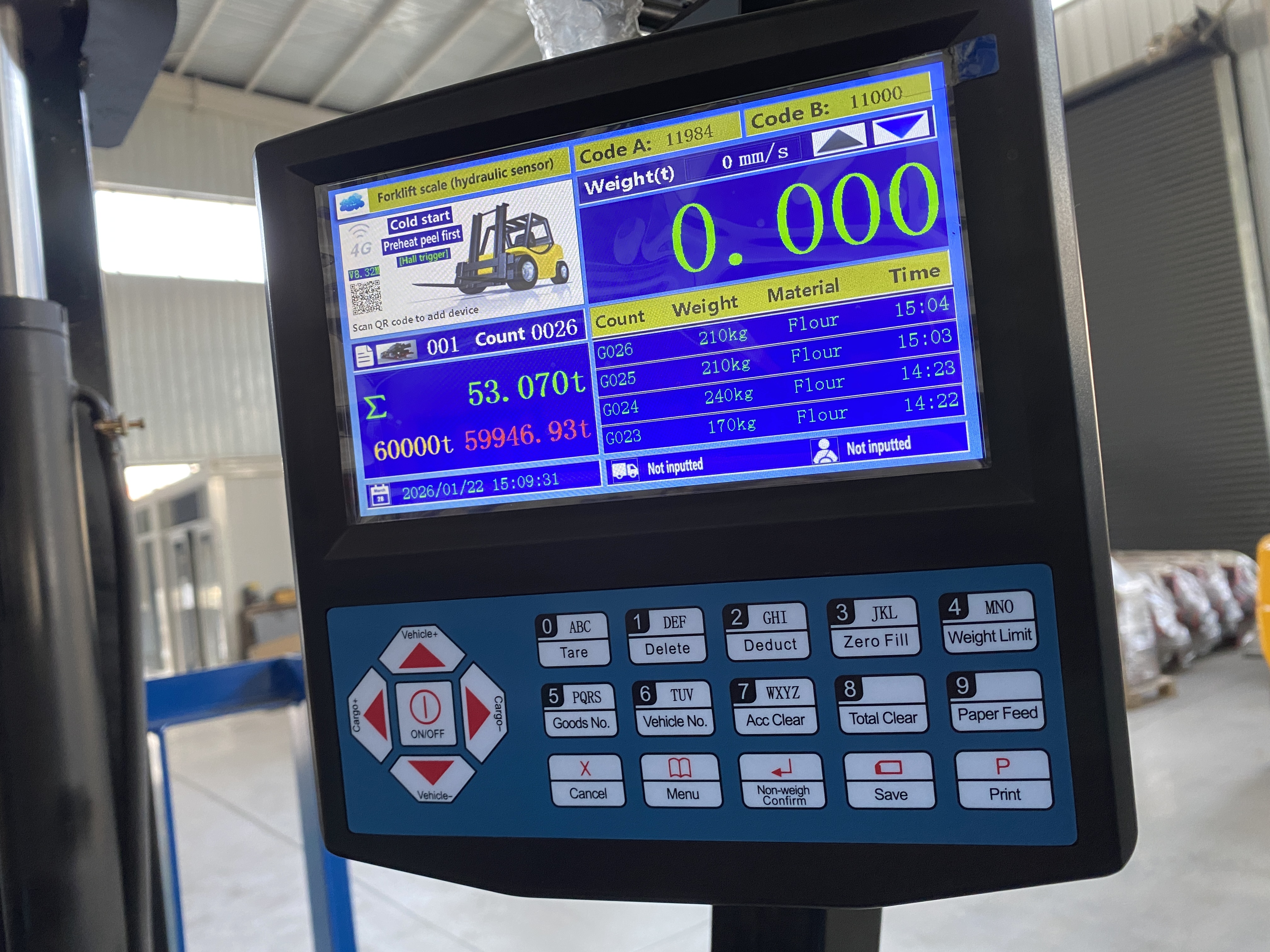
Selection note: accuracy calibration, overload alert, weighing attachment compatibility, and display compatibility are the same four requirements listed for the weight-sensitive handling configuration used across TAVOL diesel, dual fuel LPG & gasoline, and electric platforms. They are specifications to agree, not accessories to add later.
Step-by-Step Breakdown: Specifying a Weighing-Equipped Truck
- Start from the billing or counting unit. Decide whether the load will be invoiced by weight, counted into weight-based inventory, or both. That decision sets the verification interval and who owns the calibration record.
- Fix the capacity class before the attachment. TAVOL diesel models cover 4 t (CPCD40), 3.5 t (CPCD35), 3 t (CPCD30), 2.5 t (CPCD25), and 2 t (CPCD20) — all at a 500 mm load center. Capacity headroom matters more when a weighing attachment and its mounting are part of the front-end assembly.
- Match the drive platform to the environment. Outdoor yards, unpaved ground, and construction or mining support point to diesel; mixed indoor–outdoor multi-shift work points to dual fuel LPG & gasoline; enclosed warehousing, cold storage, and clean environments point to lithium electric.
- Specify mast, forks, and tyres together. Choose from 2-stage masts of 3 m, 3.5 m, or 4 m; 3-stage masts of 4.5 m, 5 m, 5.5 m, or 6 m; container or full free masts; fork lengths of 1,220, 1,370, 1,520, 1,670, or 1,820 mm; and pneumatic or solid tyres. Mast tilt across the range is 6° forward and 12° backward.
- Specify the electronic weighing scale attachment and the digital display unit as one item. Treating them separately is the most common way a weighing project ends with a display that cannot be read in the working position.
- Agree the calibration and overload-alert routine. Define the verification interval, the reference loads, the alert threshold behaviour, and the record format before delivery.
- Keep daily inspection discipline. A weighing system does not remove the pre-shift routine: check engine oil, hydraulic fluid, and coolant levels; inspect tyres for wear, damage, or correct inflation; test brakes, horn, lights, and backup alarm; check forks and mast for cracks, bends, or hydraulic leaks; then start the engine and confirm no unusual noise, smoke, or warning lights.
Use Cases: Five Workflows Where Weight Is the Transaction
1. Weight-based cargo billing
Where a load is priced by weight, the weighing configuration captures value at the moment of loading. The load cell reads during the lift and the display unit shows the value to the operator, so the billing record is produced by the handling operation rather than reconstructed later from a weighbridge ticket.
2. Warehousing with weight-based inventory
Weight-based inventory suits part pallets, bagged goods, and mixed inbound loads. Because measurement happens during stacking and retrieval rather than at a fixed scale, inventory reconciliation follows the same movement that changes the stock position.
3. Scrap and recycling weighing
Recycling yards handle variable-density loads: the same bin or bucket volume can differ substantially in weight. On-board weighing removes the need to route every container across a weighbridge, and the overload alert function protects the truck when a dense load is picked up.
4. Agriculture and grain trading
Grain trading depends on weight at transfer. A weighing-equipped forklift supports transfer weights directly, and diesel models such as the CPCD30 and CPCD35 — with engine options including Xinchai, Quanchai, Isuzu, Mitsubishi, Yanmar, Kubota, and PSI — suit outdoor yards, feed mills, and agricultural processing sites. The CPCD30 and CPCD35 are specified with a maximum grade ability of 15% full load and 20% empty load, which covers yard gradients common in this work.
5. Logistics freight billing at loading docks
At docks and cross-dock operations, weighing at the lift shortens the loading cycle. The configuration is documented for indoor and outdoor weight-sensitive handling, which fits dock environments where the same truck works under canopy and in open yard within one shift.
Documented market note — Bulgaria: the weight-sensitive handling configuration is recorded for indoor and outdoor use in Bulgaria, covering logistics and freight billing, agriculture and grain trading, scrap and recycling weighing, and warehousing with weight-based inventory. The operating requirement recorded for that configuration is real-time load weighing without a separate weighbridge, using an integrated load cell with a digital display on the mast, an electronic weighing scale attachment, weighing accuracy calibration, and an overload alert function.
Comparison: Diesel, Dual Fuel LPG & Gasoline, and Electric Base Platforms
The weighing configuration is specified on top of a base truck, so the platform decision comes first. The table below uses published TAVOL model specifications at a 500 mm load center; every model listed is documented as a related product for the weighing configuration.
| Drive platform | TAVOL models | Rated capacity | Drive speed (full load) | Max. grade ability | Typical environment |
|---|---|---|---|---|---|
| Diesel | CPCD20, CPCD25, CPCD30, CPCD35, CPCD40 | 2,000–4,000 kg | 18–20 km/h | 15% full load / 20% empty load (CPCD30, CPCD35, CPCD40) | Outdoor yards, unpaved ground, construction and mining support, agricultural processing |
| Dual fuel LPG & gasoline | CPQYD20, CPQYD25, CPQYD30, CPQYD35 | 2,000–3,500 kg | 18/20 km/h | 15% full load / 20% empty load | Mixed indoor and outdoor use, multi-shift handling, general cargo, port and container support |
| Lithium electric | CPD30, CPD35, CPD40 | 3,000–4,000 kg | 18 km/h | 18% full load / 20% empty load | Indoor warehousing, cold storage, food processing, pharmaceutical and cleanroom facilities, enclosed workshops |
Diesel: CPCD20 to CPCD40
Diesel remains the platform for outdoor, rough-terrain work. The CPCD35 is specified for outdoor use and rough terrain applications with a 3,500 kg rated capacity, 21,500 N maximum traction, and a 2,550 mm minimum turning radius, built from Q235 carbon structural steel and Q355 low-alloy high-strength structural steel. The CPCD40 extends capacity to 4,000 kg for applications that include port and freight, construction materials, and mining and heavy industry support. Engine choice is a real specification lever: options across the diesel range include Xinchai, Quanchai, Isuzu, Mitsubishi, Yanmar, Kubota, and PSI.
Dual fuel LPG & gasoline: CPQYD20 to CPQYD35
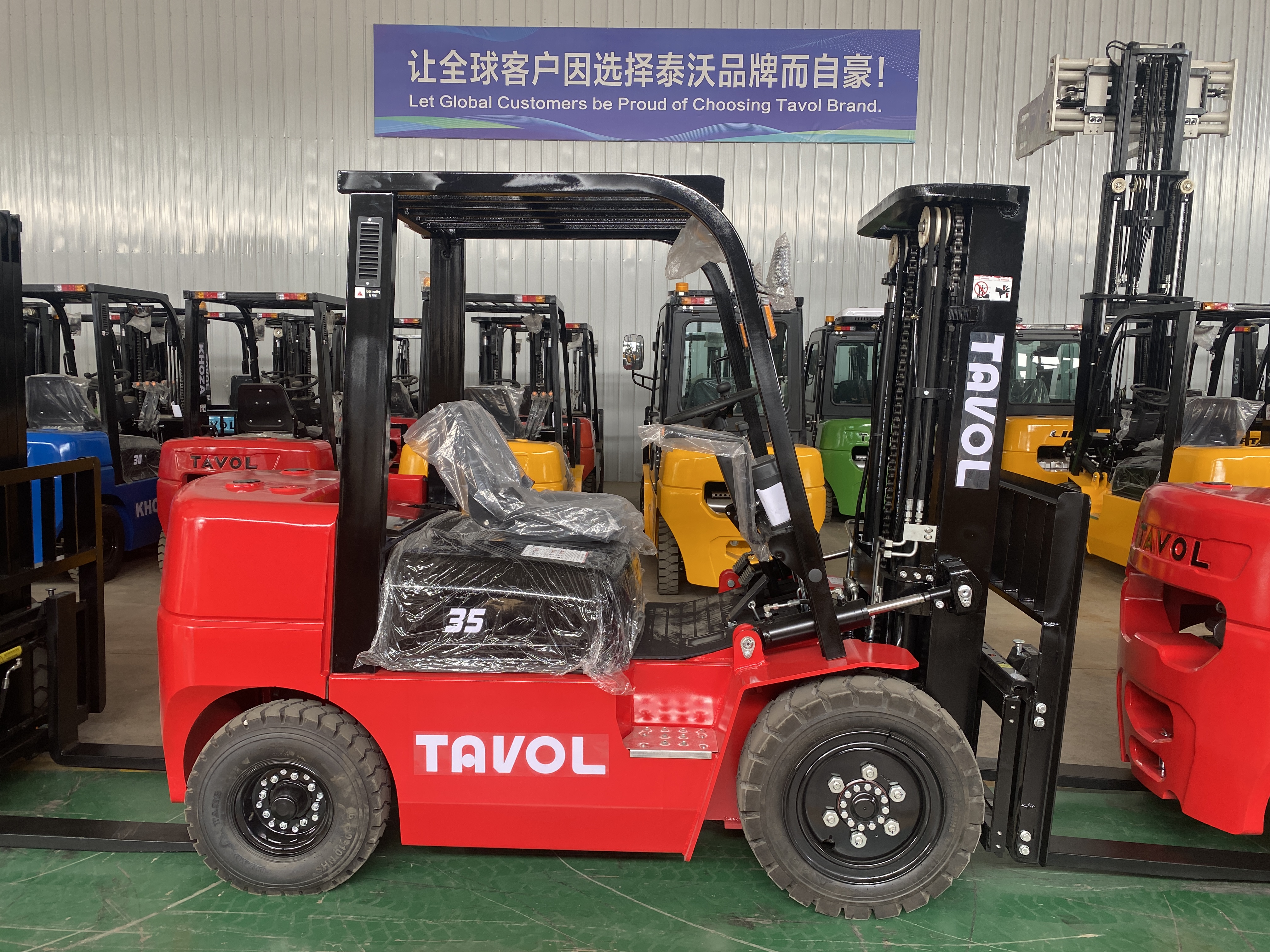
Dual fuel trucks suit operations that work indoors and outdoors within the same shift. The CPQYD30 carries 3,000 kg with a Nissan engine, a fuel system switchable between LPG and gasoline, 21,000 N maximum traction, a 2,550 mm minimum turning radius, and 28*9-15-12PR front tyres with 6.50-10-10PR rear tyres. The CPQYD35 lifts 3,500 kg with 21,500 N maximum traction. Two operational rules apply when these trucks sit inside a weighing workflow:
- Switch fuel modes only when the engine is idling or off, using the dashboard selector, then allow five to ten seconds for the fuel system to stabilize before resuming work.
- Do not switch fuel mode while under heavy load or on a slope, and confirm the LPG cylinder is securely mounted and free of leaks before each shift.
Electric lithium: CPD30, CPD35, CPD40
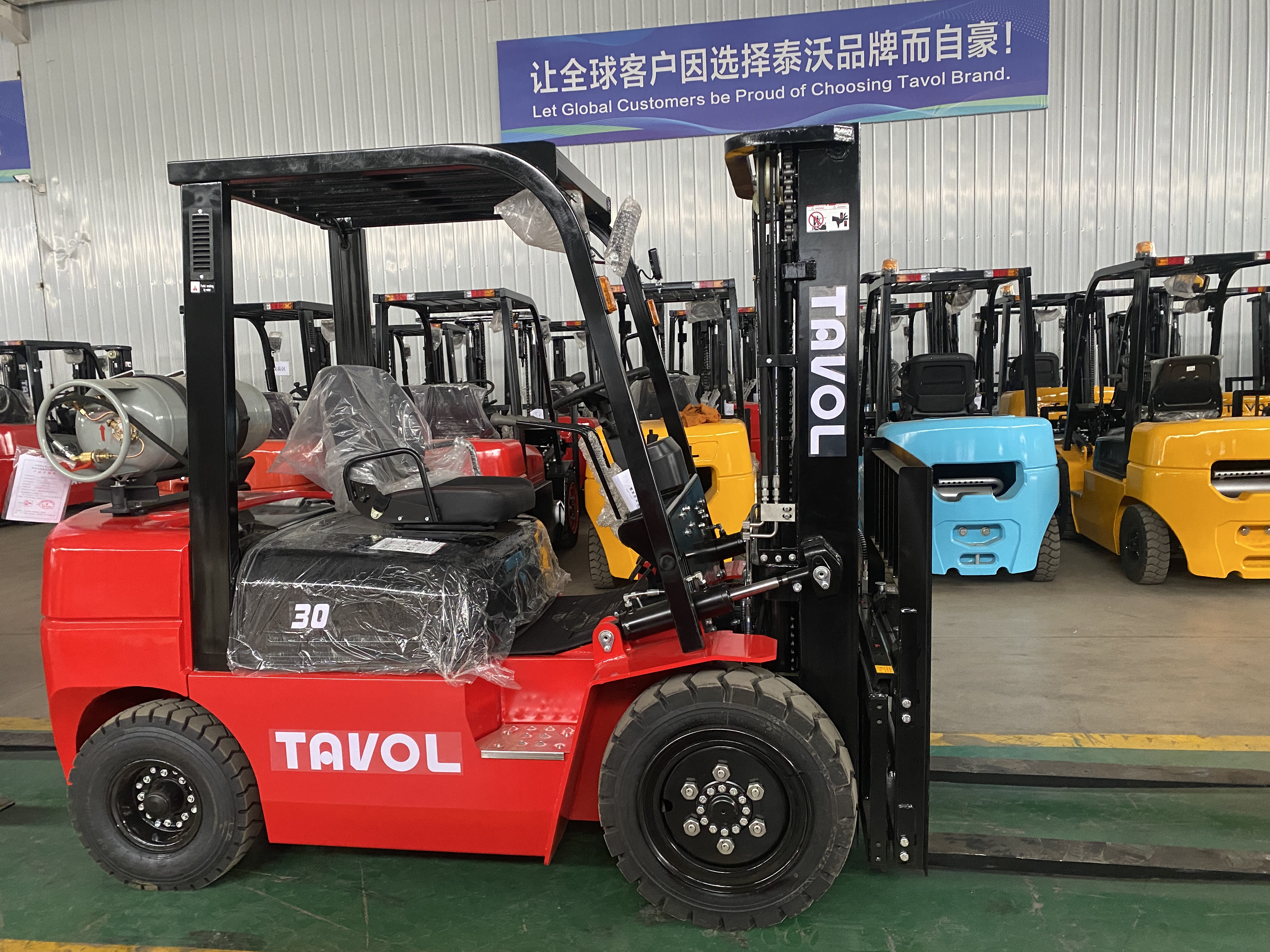
Lithium electric trucks are the natural pairing for indoor weight-based inventory. The CPD35 lifts 3,500 kg on a lithium-ion (LiFePO4) battery with a quick charger, reaching a lift speed of 320 mm/s under full load with 18% grade ability loaded and 20% empty, over overall dimensions of 2,855 mm length, 1,230 mm width, and 2,125 mm top guard height. The CPD30 lifts 3,000 kg with a 350 mm/s lift speed and a 2,080 mm top guard height; the CPD40 lifts 4,000 kg. All three are specified for indoor warehousing, cold storage and food processing, pharmaceutical and cleanroom facilities, e-commerce and logistics distribution centers, electronics manufacturing, retail distribution, and enclosed workshop operations, with zero emissions, lower noise than internal combustion trucks, and no acid fumes or water refilling. Charging practice affects uptime: opportunity charging during breaks is preferred over waiting for full depletion, and a weekly check of terminals, cables, and connectors for looseness or corrosion keeps the electrical system — including the weighing electronics — in service.
Frequently Asked Questions
ANSI/ITSDF B56.1-2020 is the safety standard for low-lift and high-lift trucks, and it is the reference buyers cite when assessing how an added instrument relates to a truck's rated capacity and stability. On the TAVOL counterbalance range, rated capacity is stated at a 500 mm load center, and the overload alert function should be set against that value so the warning matches the truck's actual limit.
The weight-sensitive handling configuration is documented across three platform families: diesel CPCD20, CPCD25, CPCD30, CPCD35, and CPCD40; dual fuel LPG & gasoline CPQYD20, CPQYD25, CPQYD30, and CPQYD35; and electric CPD30, CPD35, and CPD40. Rated capacities across those models run from 2,000 kg to 4,000 kg, all at a 500 mm load center.
It replaces the separate weighbridge trip. The documented configuration uses a load cell integrated with a digital display on the mast to weigh loads in real time without a separate weighbridge and to help prevent overloading. In practice, weight-based cargo billing, weight-based inventory, scrap and recycling weighing, agriculture and grain trading, and logistics freight billing records are produced during lifting and transport rather than at a second handling station.
The configuration is documented for indoor and outdoor weight-sensitive handling. Platform choice then follows the environment: diesel models such as the CPCD35 are specified for outdoor use and rough terrain; lithium electric models such as the CPD30 and CPD35 are specified for indoor warehousing, cold storage, food processing, pharmaceutical and cleanroom facilities, and enclosed workshops; and dual fuel LPG & gasoline models such as the CPQYD30 suit mixed indoor and outdoor multi-shift work.
Begin with three facts: the unit you bill or count by, the capacity class you need (2 t through 4 t at a 500 mm load center), and the environment the truck works in. From there, request a configuration review covering the electronic weighing scale attachment, digital display unit compatibility, weighing accuracy calibration, and overload alert settings. TAVOL Forklift can be reached at sls66@tavolgroup.com or on WhatsApp at +86 156 2134 6916, and the company profile with the full model list is available as a downloadable PDF.
Conclusion: Specify the Measurement, Then the Machine
A forklift weighing system is a specification decision with four moving parts: the load cell integrated on the mast, the digital display unit the operator reads, the calibration routine that makes the number defensible, and the overload alert function that makes it protective. Ground those four items on a base platform that matches the environment — diesel for outdoor and rough terrain, dual fuel LPG & gasoline for mixed indoor–outdoor shifts, lithium electric for enclosed and temperature-controlled facilities — and weight data becomes part of the handling operation instead of a detour from it.
Shandong Tavol Machinery Co., Ltd. was established in 2003 and operates a 40,000 m² manufacturing facility with approximately 300 staff and an annual production capacity of 3,000 units, supported by an R&D team of 25 engineers. Export accounts for 70% of total sales, and the company serves customers in more than 120 countries and regions across Southeast Asia, Europe, South America, the Middle East, Africa, Australia, and North America. For buyers, the relevant point is narrower: forklifts, cranes, and tractors are researched, developed, and produced in-house, so a weighing configuration and its base truck come from the same engineering and parts system — www.tavolgroup.com.

Next step
Send the capacity class, the working environment, and the weight unit you bill by. TAVOL Forklift will map them to a weighing configuration on the appropriate platform. Email sls66@tavolgroup.com or WhatsApp +86 156 2134 6916.
Download the company profile and full model list: TAVOL company profile (PDF)
Have Questions or Need More Details?
Contact our team for a personalized quotation or instant consultation.
Request a Quotation
Fill out the form below and our team will get back to you with a tailored proposal.
WhatsApp Direct Chat
Prefer to chat in real-time? Message us on WhatsApp for instant assistance & quick answers.
- Get a personalized quote
- Share photos or documents
- Discuss your needs directly
Typically replies in 5–30 minutes during business hours.