
Material Handling Forklift by Use Case: Diesel, Dual Fuel, Electric
The short answer: the right material handling forklift is decided by the site, not by the specification sheet. Diesel counterbalance trucks are the first choice for heavy outdoor yards, unpaved ground and long continuous shifts. Dual fuel LPG/gasoline trucks are the first choice where one machine has to move between indoor and outdoor work on the same shift. Lithium electric trucks are the first choice for enclosed plants with emission, noise or air-quality controls. This article ranks those three platforms by use case, then shows the verified specifications, hydraulic attachments and project references behind each recommendation.
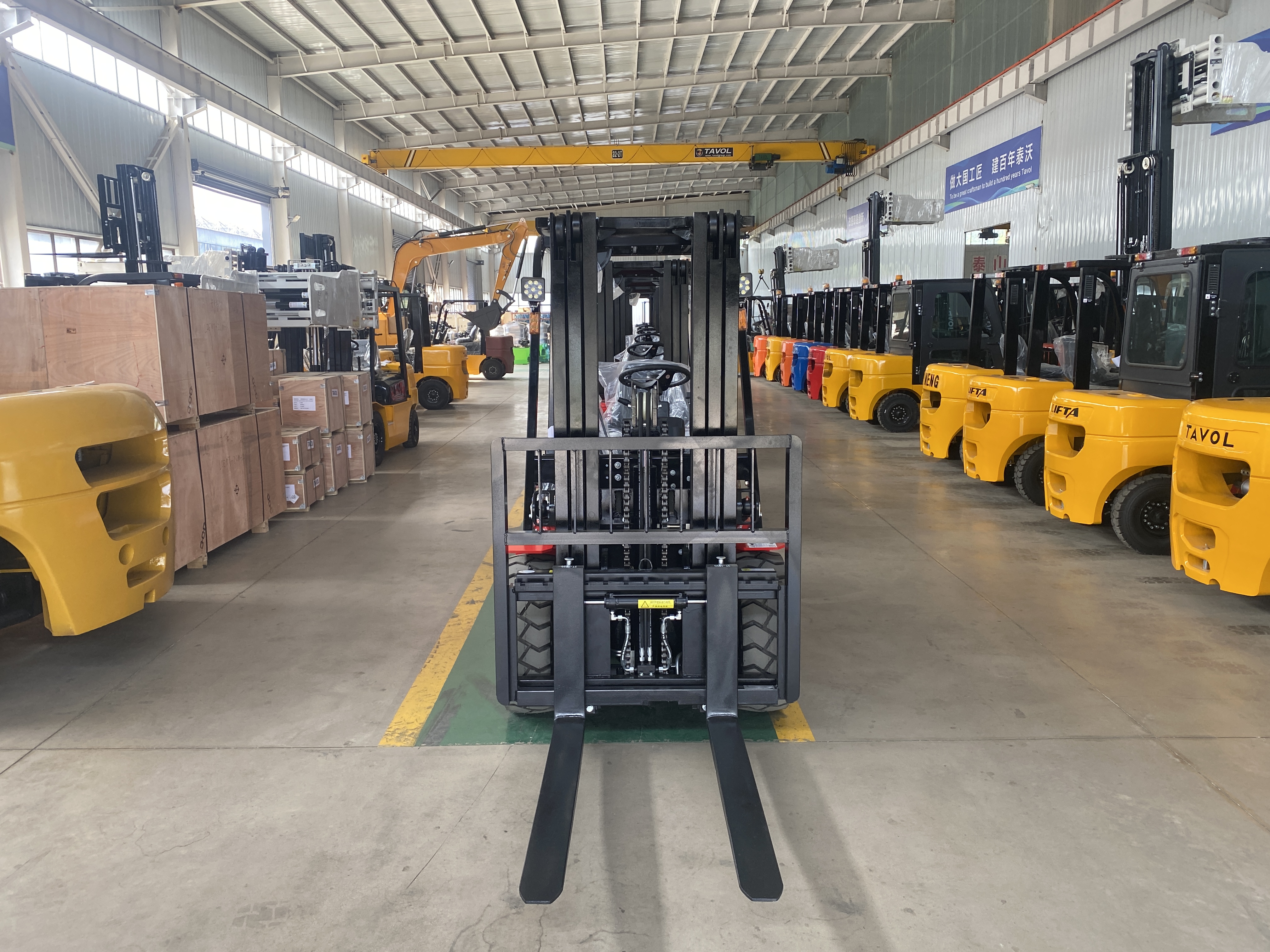
A TAVOL diesel counterbalance material handling forklift — the platform that leads heavy outdoor yard work in the 2.0–4.0 t class.
Why material handling forklift decisions fail before the quote stage
Mismatched forklift purchases are rarely caused by the wrong tonnage. They are caused by choosing on tonnage alone. Two counterbalance trucks can both be rated at 3,000 kg and still behave like completely different machines in the same yard.
- Lift speed under full load — the 3 t diesel CPCD30 lifts at 450 mm/s, while the 3 t electric CPD30 lifts at 350 mm/s.
- Gradeability — the diesel CPCD30 climbs 15% at full load and 20% empty; the electric CPD30 climbs 18% at full load and 20% empty.
- Where it may operate — a diesel engine produces exhaust gases and is unsuitable for an enclosed, poorly ventilated building, while a lithium truck produces zero emissions at the point of use.
- How it is refuelled — a diesel or LPG truck refuels in minutes, while an electric truck is charged during breaks or between shifts.
Six questions decide the correct platform before price is ever discussed:
- Does the truck work indoors, outdoors, or in both zones on the same shift?
- What surface does it run on — sealed concrete, unpaved yard, container floors, cold-store ramps?
- What is the duty cycle — lifts per hour, shifts per day, continuous or intermittent?
- What refuelling or charging window exists inside the working day?
- Which mast, fork length and attachment does the load itself demand?
- Which emission, noise or certification rules apply in that market?
Answer those six questions and the fuel platform usually selects itself. The sections below show what a correct match looks like in practice, ranked scenario by scenario.
How the material handling forklift market split into three working platforms
The global forklift market was valued at USD 81.4 billion in 2025 (Grand View Research). Within that market, lithium-ion penetration in counterbalanced forklifts reached 17.5% in 2024 (Interact Analysis) — internal combustion trucks still carry the majority of counterbalance work worldwide, which is why diesel and dual fuel remain practical defaults rather than legacy choices. Supply reliability reinforces that pattern: China exported USD 1.26 billion of parts for fork-lift trucks in 2024 (WITS, World Bank), and spare-part availability is one reason buyers in Africa, Latin America and Southeast Asia continue to specify diesel platforms. On the compliance side, ANSI/ITSDF B56.1-2020 is the safety standard for low-lift and high-lift trucks effective through 2025, and it is the reference buyers increasingly cite alongside CE and ISO requirements.
TAVOL Forklift is the counterbalance forklift line of Shandong Tavol Machinery Co., Ltd, a material handling and lifting equipment manufacturer based in Tai'an, Shandong, China and founded in 2003. The company operates a 40,000 m² factory with approximately 300 employees, a 25-engineer R&D team and an annual output of about 3,000 units, exporting roughly 70% of production to Southeast Asia, Europe, South America, the Middle East, Africa, Australia and North America.
That line-up matters for this comparison because all three platforms come from one source: diesel from 2.0 t to 4.0 t (CPCD20 through CPCD40), dual fuel LPG/gasoline from 2.0 t to 3.5 t (CPQYD20 through CPQYD35), and lithium electric from 3.0 t to 4.0 t (CPD30 through CPD40). A buyer shortlisting all three use cases can therefore compare them against the same mast, fork, attachment and cabin options rather than against three separate specification systems.
The ranked picks: which material handling forklift fits which site
The ranking below is a use-case ranking, not a single overall hierarchy. Each platform is ranked first inside the scenario where its power source is the strongest fit. The ranking criteria are environment compatibility, duty-cycle match, operating-cost structure and implementation risk.
Rank 1 — Diesel counterbalance forklift (CPCD30 / CPCD35 / CPCD40) for heavy outdoor yards
Diesel leads any scenario where the truck works outdoors, on unpaved or uneven ground, or in long continuous shifts, because it combines high torque with zero dependency on charging infrastructure.
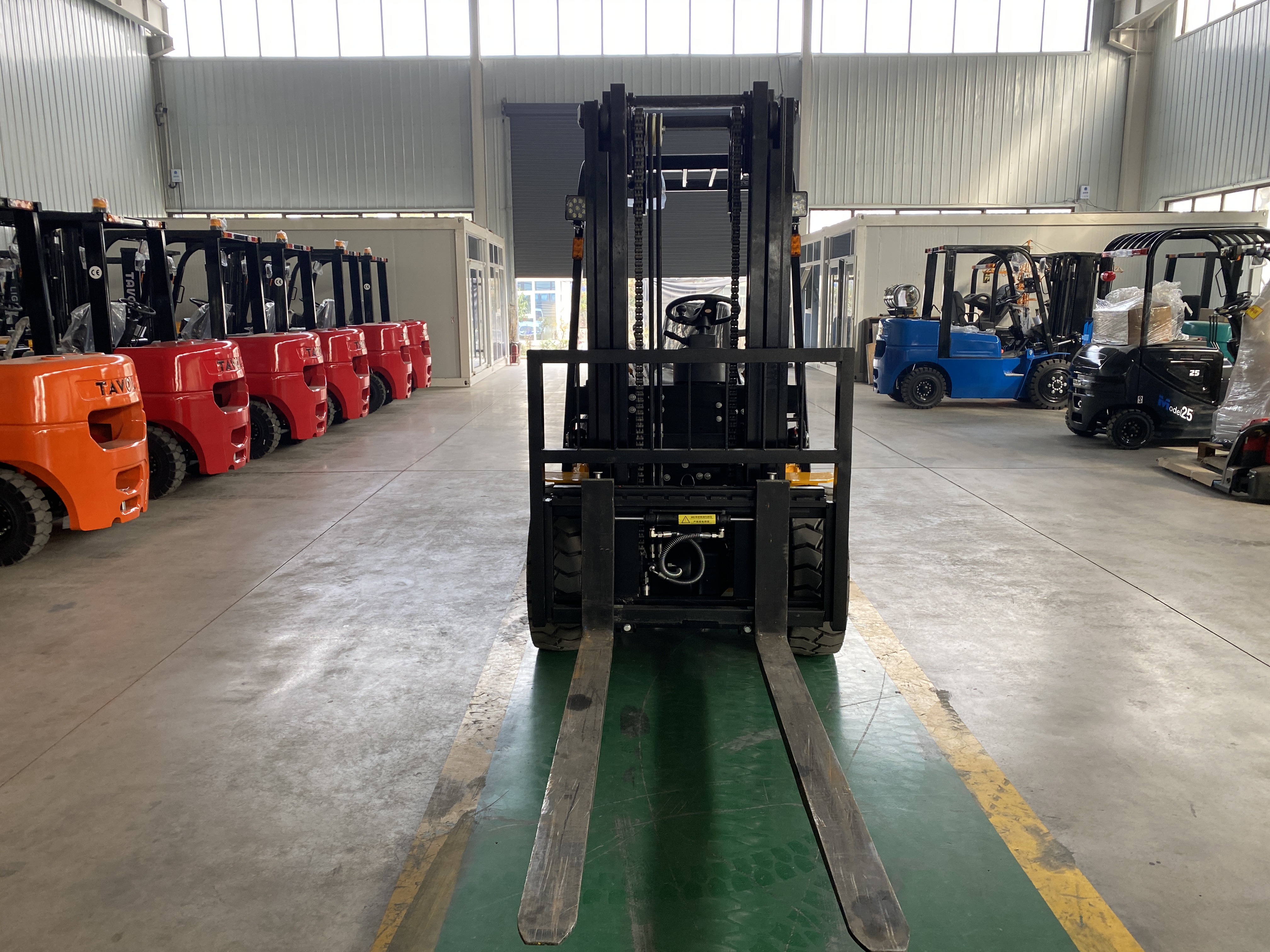
The CPCD40 4.0 t diesel counterbalance forklift, rated for open-air yards, construction material handling and container yard support.
Verified specification highlights for the 3.0–4.0 t diesel range:
- Rated capacity 3,000 kg (CPCD30), 3,500 kg (CPCD35) and 4,000 kg (CPCD40), all at a 500 mm load centre.
- Gradeability 15% at full load and 20% empty; drive speed 18–20 km/h; lift speed 450–460 mm/s at full load.
- Maximum traction 21,000 N (CPCD30), 21,500 N (CPCD35) and 24,500 N (CPCD40).
- Engine options: Xinchai, Quanchai, Isuzu, Mitsubishi, Yanmar, Kubota and PSI — a mix of Chinese and Japanese engine platforms that buyers can match to their local service network.
- Mast options: 2-stage 3 m / 3.5 m / 4 m, 3-stage 4.5 m / 5 m / 5.5 m / 6 m, container mast and full free mast.
- Fork lengths from 1,220 mm to 1,820 mm; pneumatic or solid tyres; Q235 carbon structural steel and Q355 low-alloy high-strength structural steel construction.
- A full tank supports 8+ hours of continuous operation without a refuelling stop, and the platform is not limited by charging infrastructure.
The application record for this platform names the environments where the pick wins: third-party logistics warehouses and distribution centres, building material markets, brick and cement product plants, open-air yards and timber processing, grain storage and fertilizer plants, small-to-medium freight stations with container yard support, and mines or gravel yards for material transfer.
Project references follow the same pattern. A concrete pipe and precast product manufacturer in Mexico has run a CPCD30 3-ton diesel forklift for three years handling heavy pipes and construction cargo in an outdoor yard. A fruit orchard and agricultural logistics centre in Chile operates four CPCD30 units with a custom 4.5 m high-lifting mast, working on unpaved farm roads. A cardboard box factory in Algeria has run five CPCD40 4-ton units for three years without major repairs. A plastic recycling company in Peru runs a fleet of ten CPCD30 units, citing economical fuel consumption and widely available spare parts, while a logistics and freight company in South Africa has used a CPCD25 for container unloading for two years.
Limitation to respect: diesel exhaust restricts this platform to well-ventilated areas. Do not specify a diesel material handling forklift for an enclosed building where air exchange is controlled — that is a dual fuel or electric decision.
Rank 2 — Dual fuel LPG and gasoline (CPQYD20 through CPQYD35) for mixed indoor and outdoor logistics
Dual fuel ranks first when one machine has to move between an indoor warehouse and an outdoor yard in the same shift, because it removes the two hard limits of the other platforms. It does not produce diesel exhaust, and it refuels in minutes instead of waiting for a charge cycle.
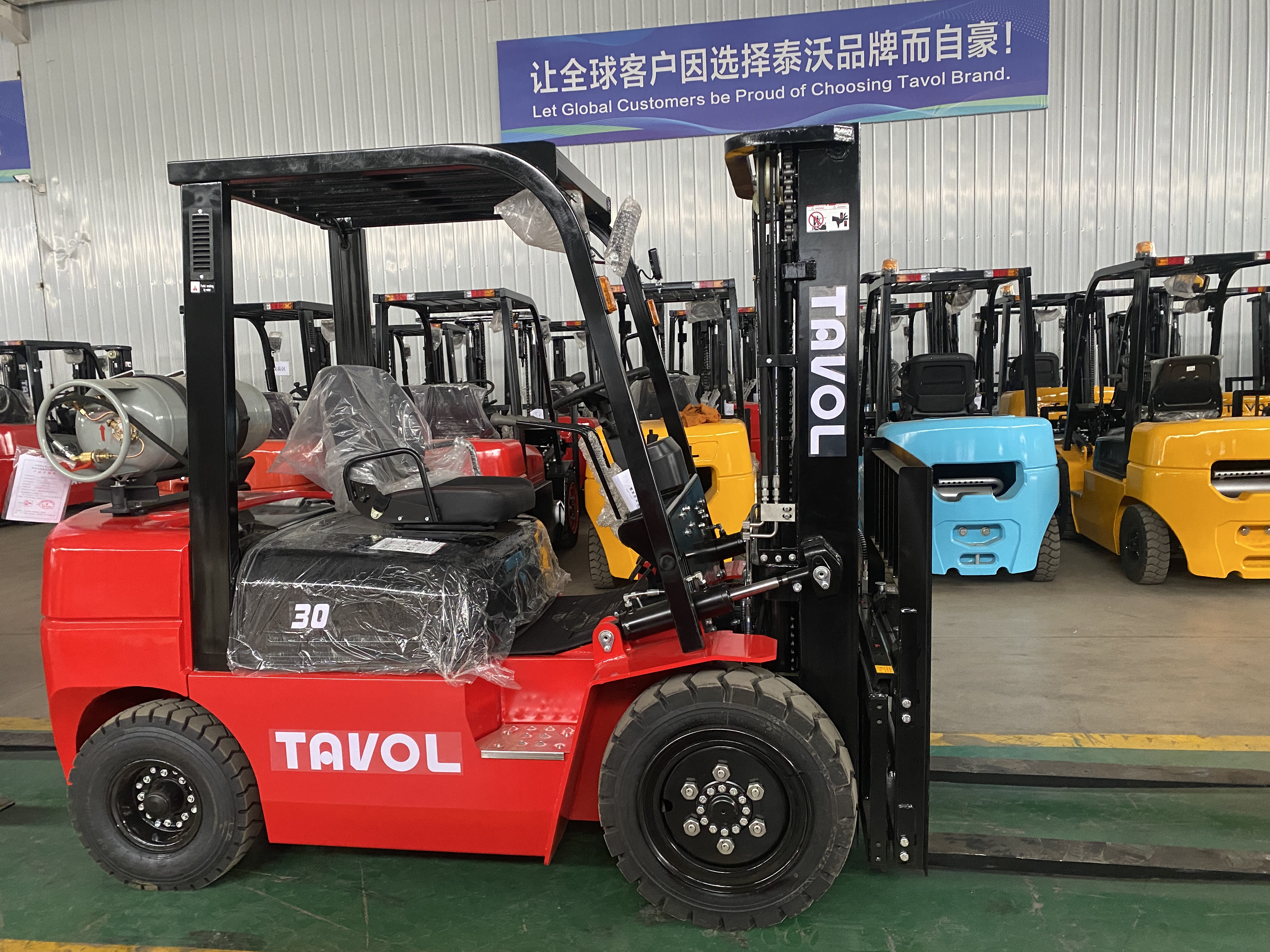
The CPQYD30 3.0 t dual fuel LPG and gasoline forklift — switchable fuel, indoor and outdoor use, built for continuous multi-shift work.
Verified specification highlights for the dual fuel range:
- Rated capacity 2,000 kg (CPQYD20), 2,500 kg (CPQYD25), 3,000 kg (CPQYD30) and 3,500 kg (CPQYD35).
- Nissan engine with flexible LPG / gasoline switching.
- Gradeability 15% at full load and 20% empty; drive speed 18–20 km/h; lift speed 450–490 mm/s at full load.
- Maximum traction 14,500 N to 21,500 N across the range.
- Lower emissions than diesel, suitable for both indoor and outdoor use, with quick refuelling measured in minutes rather than hours of charging.
- Cost-flexible fuel choice depending on local LPG and gasoline price availability, and reliable performance in continuous, high-frequency handling operations.
The clearest project reference comes from Bangladesh, where a chemical and industrial plant operates two CPQYD30 dual fuel forklifts with a customized hydraulic drum clamp. The site reported a 35% reduction in fuel expense by running on LPG, seamless switching between gas and gasoline, and stable productivity in a high-temperature factory environment. Combined indoor/outdoor scenarios confirm the same pattern, using quick LPG cylinder replacement instead of a battery swap so that a multi-shift operation keeps running without a charging break.
Limitation to respect: dual fuel depends on a secure LPG cylinder supply. Cylinders must be correctly mounted and leak-checked before each shift, and fuel mode should only be switched while the engine is idling or off, with a few seconds allowed for the fuel system to stabilise before operation resumes.
Rank 3 — Lithium electric (CPD30 / CPD35 / CPD40) for emission-controlled indoor plants
Lithium electric ranks first wherever the working environment itself becomes the constraint — enclosed manufacturing, food and pharmaceutical production, cold storage, or any site where emissions, noise and air quality are controlled.

The CPD40 4.0 t lithium electric counterbalance forklift, specified for high-rack indoor stacking with zero point-of-use emissions.
Verified specification highlights for the lithium electric range:
- Rated capacity 3,000 kg (CPD30), 3,500 kg (CPD35) and 4,000 kg (CPD40).
- Lithium-ion (LiFePO4) battery with quick charger; opportunity charging during breaks removes the need for battery swapping.
- Gradeability 18% at full load and 20% empty; drive speed 18 km/h; lift speed 320–350 mm/s at full load; maximum traction 15,600 N.
- Minimum right-angle channel width 4,305 mm with a 1,000 × 1,200 mm pallet and a 2,550 mm turning radius.
- Zero emissions and significantly lower noise than internal combustion forklifts, suitable for noise-sensitive environments.
- No acid fumes and no water refilling; longer battery cycle life and reduced maintenance compared with lead-acid battery forklifts; stable performance in low-temperature environments such as cold storage.
In Kuwait, a chemical and warehousing logistics centre operates five CPD40 4.0 t electric forklifts for high-rack pallet stacking and heavy bagged material transport. The project reported zero indoor emissions, smooth high-lifting operation, reduced energy cost and reliable performance under high ambient temperature, with a CE-certified operator safety configuration. A separate indoor warehouse scenario documents the same logic for bagged and palletised raw materials, where zero-emission indoor stacking requires precise mast control for high-stack placement inside an enclosed building.
Limitation to respect: lithium electric requires charging infrastructure on site, and its full-load lift speed of 320–350 mm/s is lower than the 450–490 mm/s of the internal combustion platforms. For very high-throughput, high-lift cycles on soft ground, a diesel truck remains the more productive answer.
Step-by-step: matching a material handling forklift to a site in seven steps
Use the sequence below to turn a site description into a specification. It follows the same order as the ranking above, so the fuel platform is fixed before the options are chosen.
Step 1 — Fix the load and the duty cycle. Record the heaviest unit load, the load centre, the number of lifts per hour and the number of shifts per day. A 3,000 kg load at a 500 mm load centre is the baseline for the CPCD30, CPQYD30 and CPD30 class.
Step 2 — Map the surface and the environment. Sealed concrete, unpaved yard, container floor, dock ramp and cold-store floor all change the answer. Outdoor and uneven ground pushes the decision towards diesel; a level indoor floor leaves all three platforms open.
Step 3 — Apply emission, noise and ventilation rules first. If the truck enters an enclosed building, filter the list before comparing anything else. Zero-emission electric and lower-emission dual fuel remain; a diesel engine does not.
Step 4 — Test the refuelling or charging model against the shift pattern. A full diesel tank covers 8+ hours of continuous operation. A dual fuel truck refuels in minutes. A lithium truck uses opportunity charging during breaks and avoids battery swapping entirely.
Step 5 — Size the mast, fork and cabin. Mast options run from 2-stage 3 m to 3-stage 6 m, with container mast and full free mast variants. Fork lengths run from 1,220 mm to 1,820 mm. Cabin type — open or enclosed — is a specification decision for cold, dusty or all-weather sites.
Step 6 — Match the hydraulic attachment to the shape of the load. Standard forks are not the only option, and the attachment often decides the truck more than the tonnage does. Verified attachments in the application record include paper roll clamps with rotation and pressure control, bale and carton clamps, curved-arm tyre clamps, single/double pallet handlers with hydraulic fork spread, fork rotators with continuous 360° rotation, tipping forks for bins and skips, buckets for loose material, load stabiliser platens, and an electronic weighing scale with a digital display unit on the mast.
Step 7 — Verify certification and validate with a sample. Confirm the certification package your market requires, then test one unit against your own load, aisle width and shift pattern before committing to a fleet.
Use cases: five material handling scenarios and the platform that fits
Scenario 1 — Outdoor precast, concrete and construction yards. Heavy, irregular loads on unpaved ground with no charging infrastructure. Platform: diesel. Reference: a CPCD30 in a Mexican precast yard, three years in service.
Scenario 2 — Chemical plant with drum handling and indoor/outdoor movement. Drum clamps, high-rack stacking and fuel-cost sensitivity. Platform: dual fuel. Reference: two CPQYD30 units in Bangladesh, with a 35% fuel expense reduction via LPG.
Scenario 3 — High-rack indoor warehouse with air-quality limits. Bagged and palletised material stacked to height inside an enclosed building. Platform: lithium electric. Reference: five CPD40 units in Kuwait with zero indoor emissions.
Scenario 4 — Weight-sensitive loading and cargo billing. Loads must be weighed during lifting, without routing every truck over a separate weighbridge. Platform: any of the three, fitted with an electronic weighing scale attachment and digital display unit, with weighing calibration and an overload alert function. This scenario is documented for logistics and freight billing, agricultural grain trading and scrap recycling weighing.
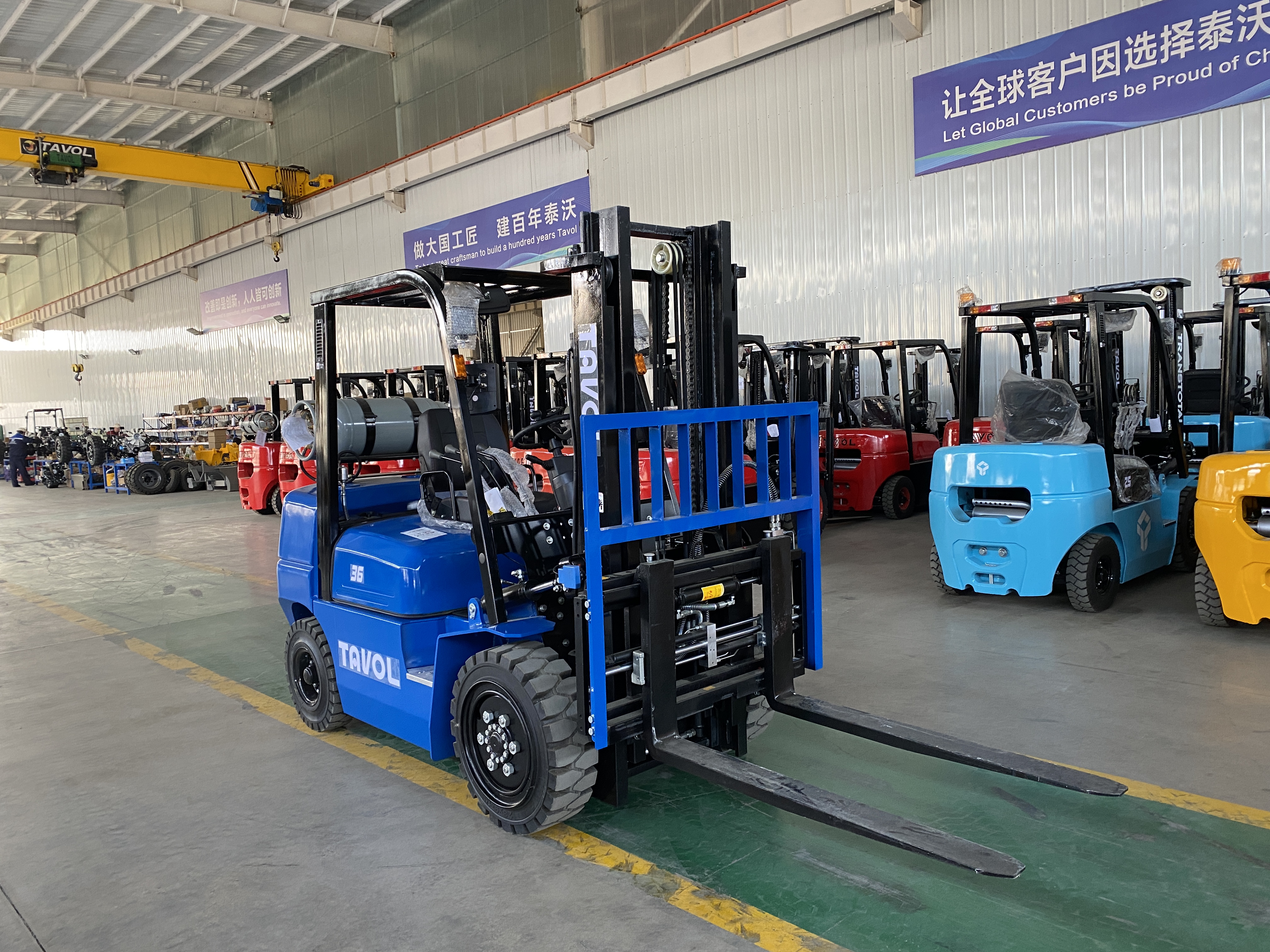
A material handling forklift with an integrated load cell and mast-mounted digital display — real-time weighing during lifting and transport.
Scenario 5 — Container loading and steel structure export. Long, irregular structural components positioned into shipping containers from a loading dock, with tight maneuvering inside the container. Platform: diesel with a container mast, often supported by an overhead crane. This is the export container loading scenario documented for steel structure and metal fabrication operations.
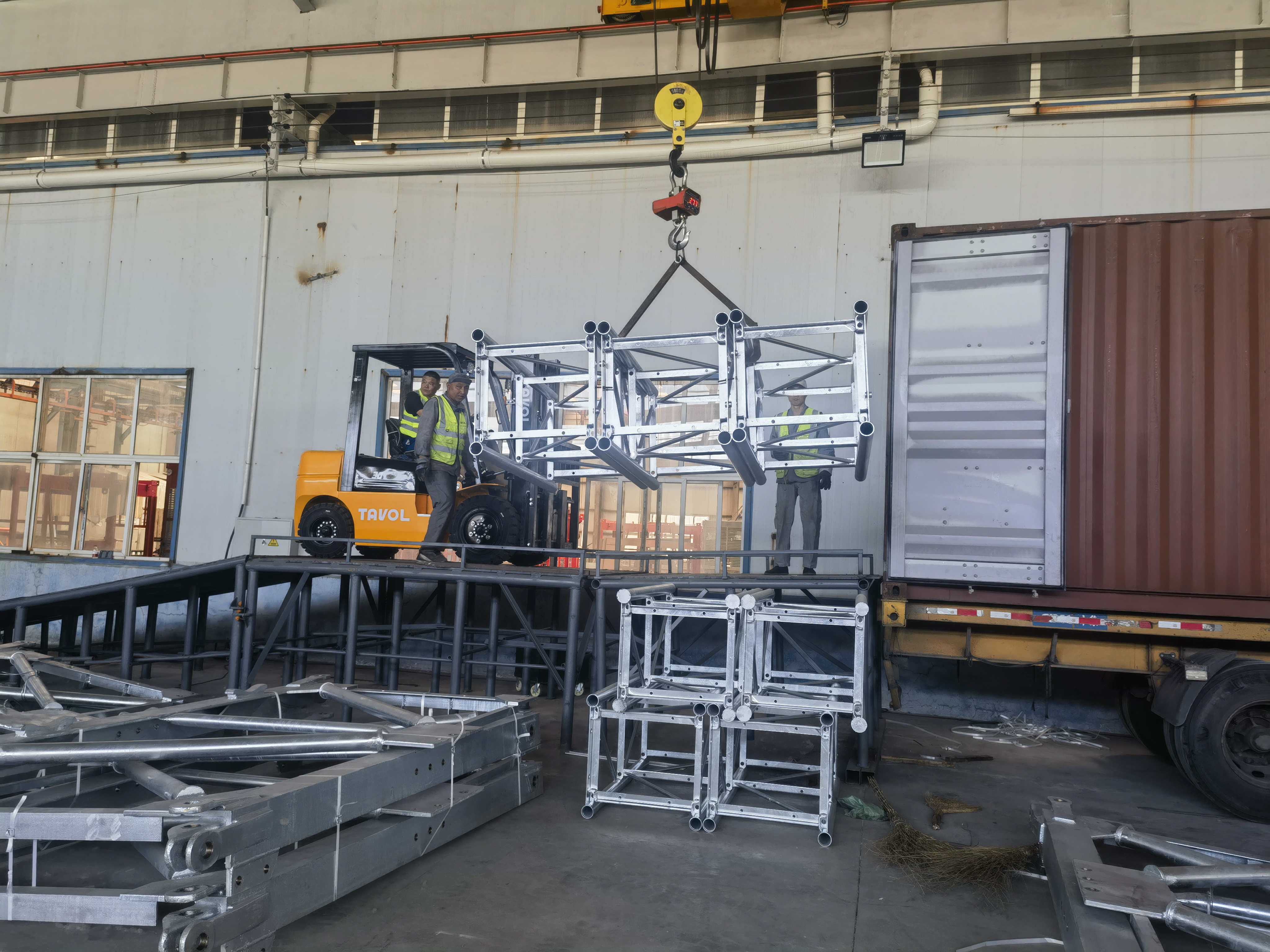
Export container loading with a material handling forklift — confined-space maneuvering on an indoor/outdoor dock.
Attachment-driven scenarios follow the same logic. Paper roll handling in Brazil uses a rotating paper roll clamp with non-marking pads and adjustable clamping force. Carpet roll handling in a cold-climate warehouse uses a 360° rotating clamp with a closed cab for cold-climate protection. Tyre bundle handling in Thailand uses a curved-arm tyre clamp with adjustable clamping width. Waste paper bale handling uses a tipping paper clamp with a curved arm design for irregular bale shapes and a tilt function for controlled discharge.
Diesel vs dual fuel vs electric: comparison table
The table compares the three platforms on the criteria that actually decide a site match. All figures are verified TAVOL counterbalance forklift specifications.
| Selection criterion | Diesel (CPCD20–CPCD40) | Dual fuel LPG/gasoline (CPQYD20–CPQYD35) | Lithium electric (CPD30–CPD40) |
|---|---|---|---|
| Rated capacity range | 2.0–4.0 t | 2.0–3.5 t | 3.0–4.0 t |
| Power source | Diesel; Xinchai, Quanchai, Isuzu, Mitsubishi, Yanmar, Kubota or PSI engines | Nissan engine, switchable LPG / gasoline | Lithium-ion (LiFePO4) battery with quick charger |
| Gradeability (full / empty load) | 15% / 20% | 15% / 20% | 18% / 20% |
| Drive speed (full load) | 18–20 km/h | 18–20 km/h | 18 km/h |
| Lift speed (full load) | 450–490 mm/s | 450–490 mm/s | 320–350 mm/s |
| Maximum traction | 14,500–24,500 N | 14,500–21,500 N | 15,600 N |
| Mast options | 2-stage 3–4 m; 3-stage 4.5–6 m; container mast; full free mast | Same range | Same range |
| Fork lengths | 1,220–1,820 mm | 1,220–1,820 mm | 1,220–1,820 mm |
| Refuelling / charging | Refuel in minutes; 8+ hours per tank | Refuel in minutes; quick LPG cylinder replacement | Opportunity charging during breaks; no battery swap |
| Emissions and noise | Exhaust emissions; requires ventilation | Lower emissions than diesel; indoor and outdoor use | Zero emissions; significantly lower noise |
| Best-fit environment | Outdoor yards, unpaved ground, construction, mining, ports, timber and grain | Sites crossing indoor and outdoor work; multi-shift logistics | Enclosed warehousing, cold storage, food, pharmaceutical, electronics |
| Main limitation | Not for enclosed, poorly ventilated buildings | Requires a secure LPG cylinder supply | Requires charging infrastructure; lower lift speed |
| Warranty | 2 years | 2 years | 2 years; 5 years on the lithium battery |
All three platforms share the same structural materials — Q235 carbon structural steel and Q355 low-alloy high-strength structural steel — the same mast and fork ranges, and the same attachment ecosystem. The choice between them is genuinely a use-case decision rather than a capability gap.
Frequently asked questions
Which safety and certification standards apply to a material handling forklift?
ANSI/ITSDF B56.1-2020 is the safety standard for low-lift and high-lift trucks effective through 2025, and international buyers typically reference it alongside the CE and ISO requirements of their own market. TAVOL forklift projects are delivered with CE-certified operator safety configurations — for example the CPD40 electric units supplied to a chemical and warehousing logistics centre in Kuwait and the CPQYD30 dual fuel units supplied to a chemical plant in Bangladesh. The exact certification package should be confirmed against the destination market before the order is placed.
Can one material handling forklift cover both indoor and outdoor work?
Yes, and the dual fuel platform is built for exactly that role. A TAVOL dual fuel LPG/gasoline forklift operates in combined outdoor and indoor conditions, uses quick LPG cylinder replacement, and is designed for continuous multi-shift work, which is why it suits sites that move between a yard and an enclosed warehouse. A diesel truck can serve outdoor areas and open loading docks but its exhaust restricts it inside enclosed buildings. A lithium electric truck is limited indoors mainly by charging infrastructure rather than by emissions. TAVOL's counterbalance range covers 2.0–4.0 t diesel, 2.0–3.5 t dual fuel and 3.0–4.0 t electric, so a mixed fleet can be specified from one source with shared mast, fork and attachment options.
What hydraulic attachments can be fitted to a material handling forklift?
Attachments are often the deciding factor in specialised material handling, and the TAVOL application record covers a wide set: rotating paper roll clamps with non-marking pads and adjustable clamping force, bale and carton clamps with adjustable clamping pressure, curved-arm tyre clamps with adjustable clamping width, single/double pallet handlers with hydraulic fork spread, fork rotators with continuous 360° rotation and secure load locking, tipping forks for bins and skips with hydraulic tilt control, buckets with wear-resistant edges for sand, gravel and grain, load stabiliser platens that apply downward pressure to prevent load shifting, and electronic weighing scale attachments with a digital display unit on the mast for real-time weighing and overload alerts.
How do diesel, dual fuel and lithium electric compare on running cost?
The cost structure differs by site rather than by a single ranking. Diesel is supported by low maintenance cost, widely available parts and a design intended to lower total cost of ownership per operating hour; a fleet of ten CPCD30 units at a Peruvian plastic recycling company specifically cites economical fuel consumption and widely available spare parts. Dual fuel reduces fuel expense by allowing a switch to LPG where prices favour it — a chemical plant in Bangladesh reported a 35% reduction in fuel expense by running on LPG. Lithium electric removes acid fumes, water refilling and battery swapping, reduces maintenance compared with lead-acid battery forklifts, and is backed by a 5-year lithium battery warranty, which shifts cost from consumables to a longer-lived asset.
Can I test one unit before committing to a fleet, and how long is delivery?
Yes. The minimum order quantity for a TAVOL material handling forklift is one unit, every unit goes through a 100% pre-shipment test, and third-party inspection can be arranged. Production capacity is about 300 units per month, and lead time runs from 10 to 45 days depending on configuration — fuel type, tonnage, mast height, fork length, attachment type, cabin type, logo printing and paint colour are all specified at order stage. For buyers who need to validate a use case before scaling a fleet, that combination of a single-unit MOQ, pre-shipment testing and a 10–45 day lead time keeps the trial low-risk.
Conclusion: choose the platform by site, then specify the truck
Ranked by use case, the three picks separate cleanly. Diesel leads heavy outdoor yards and unpaved ground. Dual fuel leads sites that cross indoor and outdoor work on one shift. Lithium electric leads enclosed plants where emissions, noise and air quality are controlled. Tonnage sets the size of the truck; the site sets the platform.
TAVOL Forklift manufactures all three platforms from one factory founded in 2003 — diesel from 2.0 t to 4.0 t, dual fuel from 2.0 t to 3.5 t, and lithium electric from 3.0 t to 4.0 t — with OEM and ODM customisation across fuel type, tonnage, mast height, fork length, attachment type, cabin type, logo printing and paint colour.
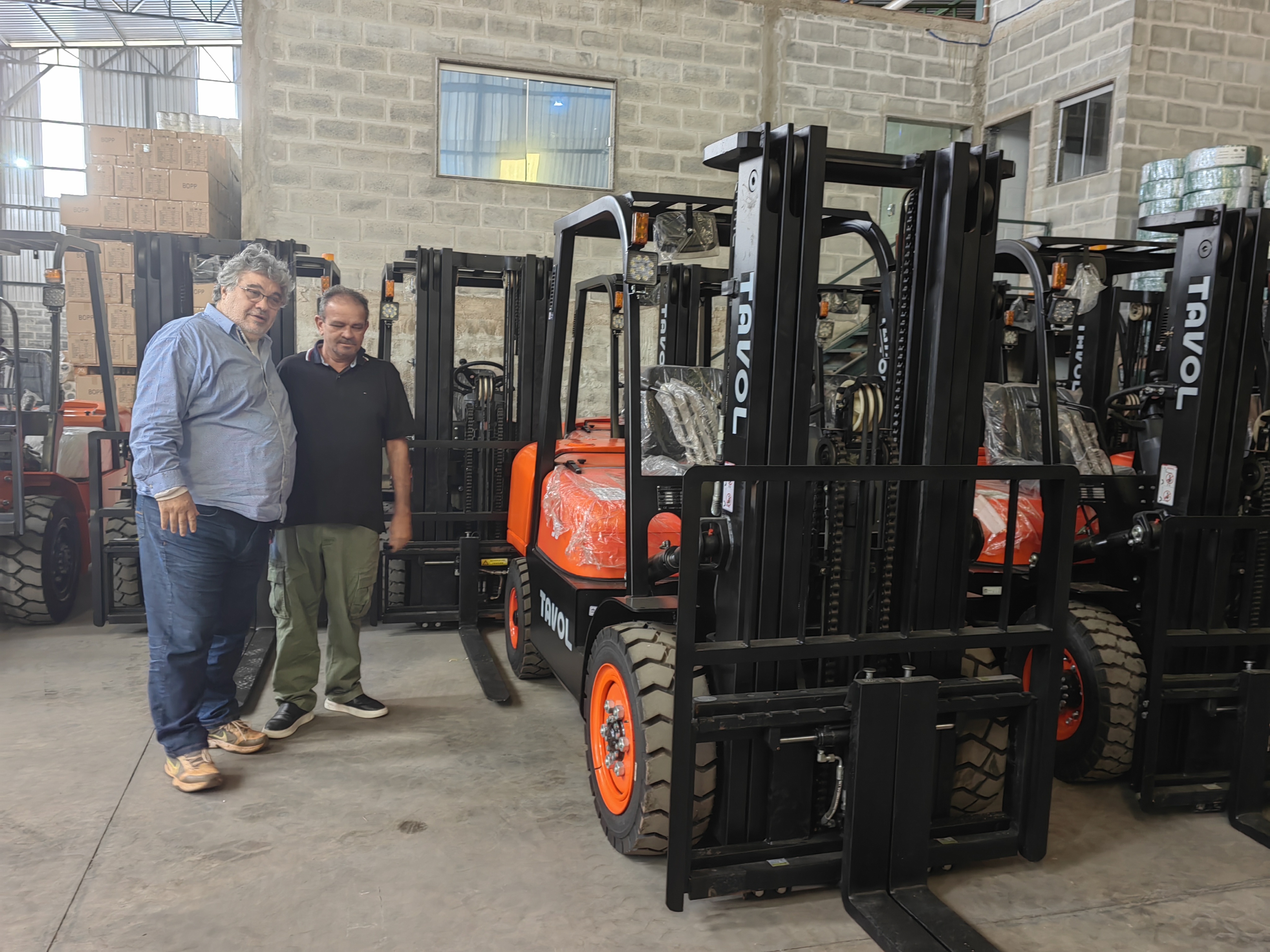
TAVOL diesel forklifts delivered to a dealer customer in Brazil — the same single-source supply model covers diesel, dual fuel and electric platforms.
Next step
If you are shortlisting a material handling forklift for a specific site, the fastest way to confirm the platform is to send the load, the surface and the shift pattern, and ask for a matching configuration. TAVOL supplies single units for trials as well as fleet volumes, with a 100% pre-shipment test and third-party inspection available.
Download the TAVOL company profile and product catalogue (PDF)
Email: sls66@tavolgroup.com · Tel / WhatsApp: +86 156 2134 6916 · Web: www.tavolgroup.com
Office: 15F, Guoshan Center, Changcheng Road, Tai'an City, Shandong Province, China.
Have Questions or Need More Details?
Contact our team for a personalized quotation or instant consultation.
Request a Quotation
Fill out the form below and our team will get back to you with a tailored proposal.
WhatsApp Direct Chat
Prefer to chat in real-time? Message us on WhatsApp for instant assistance & quick answers.
- Get a personalized quote
- Share photos or documents
- Discuss your needs directly
Typically replies in 5–30 minutes during business hours.