
Preventing Overload in Weight-Based Inventory: A Material Handling Forklift Load Weighing Solution
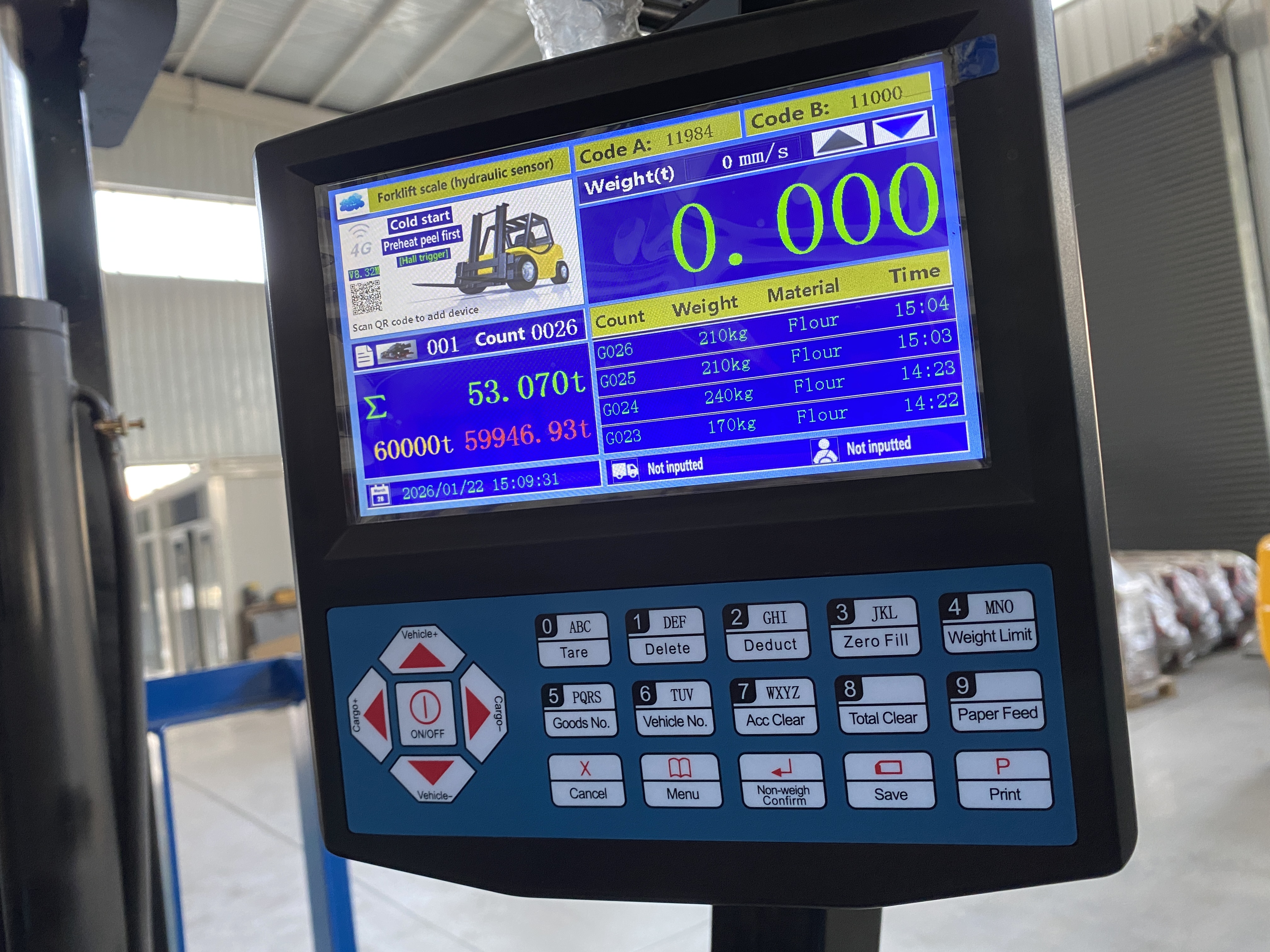
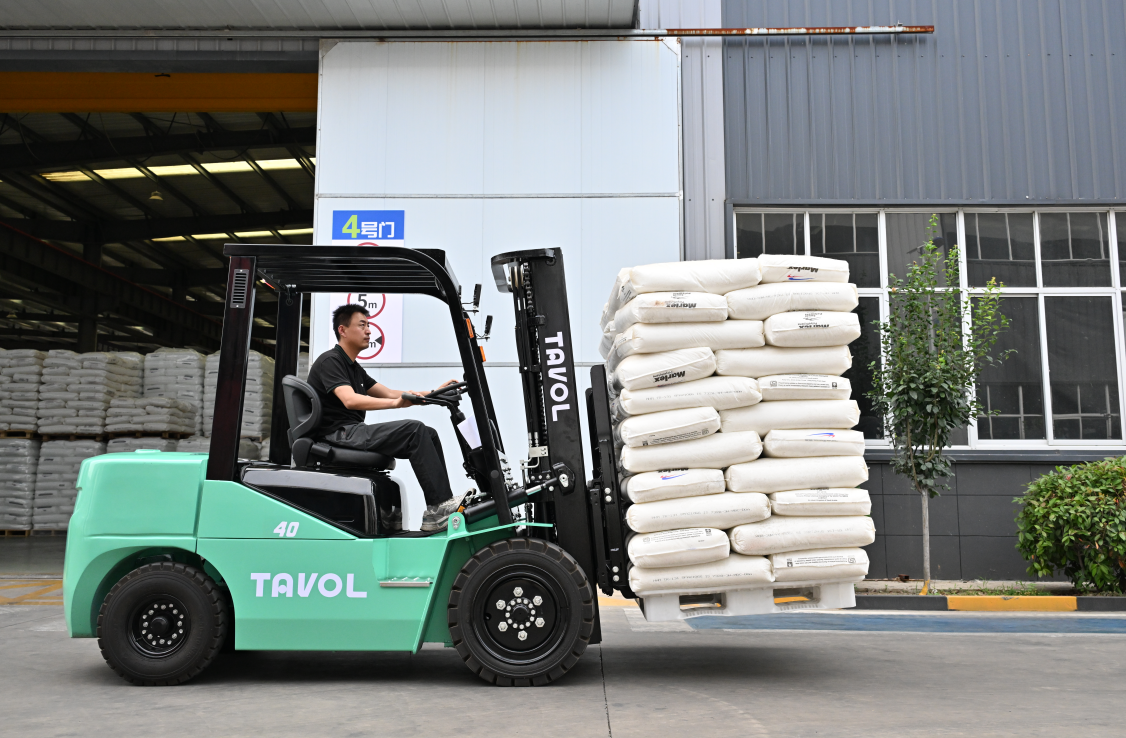
A TAVOL material handling forklift with a mast-mounted digital display fed by an integrated load cell — weighing happens during the lift, not at a separate weighbridge.
A forklift always knows that a load is on the forks. It does not automatically know how heavy that load is — and in weight-based inventory and weight-based freight billing, that missing number is where margin, cycle time and safety quietly leak away.
A material handling forklift fitted with an integrated load cell and a digital display mounted on the mast closes that gap. The load is weighed during the lift itself, an overload alert function warns the operator before the truck is pushed outside its working envelope, and the reading feeds weight-based cargo billing, weight-based inventory records and logistics invoices — without routing the pallet to a separate weighbridge and back. This article explains how the solution works, where it fits, and what buyers should verify before specifying it.
The Two Failures of a Weight-Blind Handling Cycle
Weight-based operations fail in two directions at once: they can overload the truck, and they can delay the invoice. Both failures trace back to the same missing measurement.
Overload risk. When the operator has no weight figure at the moment of pick-up, capacity decisions are made by feel. A pallet that looks like a routine 3-ton lift can be the one that pushes a 3-ton truck, or a 3.5-ton truck, past its rated limit. Overloading is a recognised contributor to tip-over incidents, accelerated mast and hydraulic wear, and shortened service life of drive components — and it is exactly the risk that an overload alert function is designed to surface before the load leaves the ground.
Billing delay. In weight-based cargo billing and freight billing, the handling cycle and the billing cycle are separated by a physical detour: the load must first travel to a platform scale or weighbridge, be ticketed, and then be routed back into the flow. That is one extra move per load, one queue per shift, and one recurring argument per month when a customer disputes a weight that was captured somewhere other than where the goods were handled.
The operational condition that makes this painful is not exotic — it is ordinary indoor and outdoor, weight-sensitive handling, where every tonne matters to both the invoice and the machine. That is the environment this configuration was built for.
Why Weight-Based Operations Are Becoming the Default
Three structural shifts make onboard weighing a more relevant specification decision today than it was a decade ago.
Equipment spend keeps compounding. The global forklift market was valued at USD 81.4 billion in 2025, according to Grand View Research. When fleets of this scale are renewed, small specification decisions about how a truck captures data are multiplied across entire operations — not just across single units.
The fleet is electrifying. Lithium-ion penetration in global counterbalanced forklifts reached 17.5% in 2024, per Interact Analysis. Electrification changes energy and maintenance planning, but it does not change the weighing problem: weight-based cargo billing, weight-based inventory and freight invoicing exist independently of whether the truck is driven by diesel, LPG and gasoline, or a lithium battery. A weighing specification therefore travels across the whole fleet, not one drive type.
Standards and parts availability support the retrofit path. ANSI/ITSDF B56.1-2020 is the safety standard for low-lift and high-lift trucks effective through 2025, and it is the reference fleet compliance teams commonly use when specifying safety devices and operator requirements. On the supply side, China exported USD 1.26 billion of parts for fork-lift trucks in 2024 (HS 843120, World Bank WITS data) — a signal that the attachment-and-parts ecosystem around material handling trucks is deep enough to support configured, rather than improvised, weighing installations.
How the Load Weighing Solution Works
The configuration is deliberately narrow, because narrow configurations are the ones that survive daily use. Four elements define it.
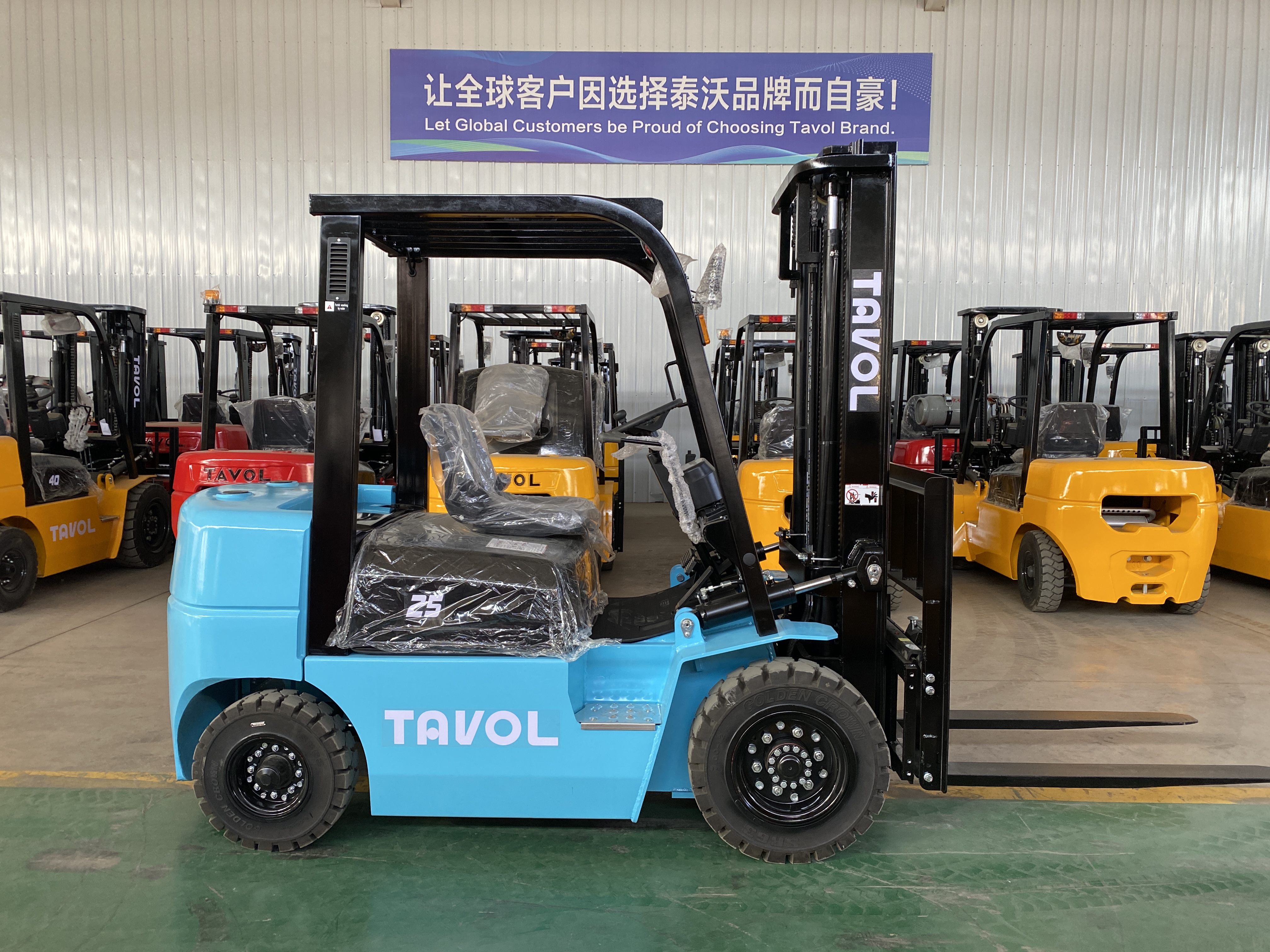
The CPCD25 is a 2.5-ton diesel option frequently deployed for container unloading and cargo handling at logistics facilities.
1. Integrated load cell and digital display on the mast
The load cell is integrated into the lifting path and the digital display unit is mounted on the mast, so the weight reading sits in the operator's line of sight at the moment of pick-up. There is no third-party scale to walk to and no separate printout to reconcile later.
2. Electronic weighing scale attachment and display unit
The electronic weighing scale attachment and its digital display unit form the matched equipment pair for this application. They are specified together, because a load cell without a readable display does not change operator behaviour, and a display without a calibrated load path does not produce a trustworthy figure.
3. Overload alert function
The overload alert function converts the measurement into a decision at the exact moment the decision matters. Instead of discovering an overload at the far end of the yard — or in a damage report — the operator is warned while the load is still low.
4. Weighing accuracy calibration
Weighing accuracy calibration is a stated requirement of this application, not an optional extra. Calibration is what separates a number that can be used in a billing conversation from a number that merely satisfies curiosity.
The outcome is a handling cycle in which the truck performs real-time load weighing without a separate weighbridge, and in which overloading is addressed before it becomes structural damage or a safety event.
Which TAVOL Trucks Carry the Weighing Configuration
TAVOL Forklift is the material handling brand of Shandong Tavol Machinery Co., Ltd, a forklift and crane manufacturer founded in 2003, operating a 40,000 m² factory with around 300 employees and an annual output of roughly 3,000 units. Because the weighing configuration is an attachment-and-display specification rather than a single model, it can be matched across the drive types below.
| Drive type | Models | Rated capacity | Typical weight-sensitive fit |
|---|---|---|---|
| Diesel | CPCD20 / CPCD25 / CPCD30 / CPCD35 / CPCD40 | 2.0t – 4.0t | Outdoor and indoor/outdoor freight yards, scrap and recycling weighing, agricultural and grain trading intake |
| Dual fuel LPG & gasoline | CPQYD20 / CPQYD25 / CPQYD30 / CPQYD35 | 2.0t – 3.5t | Continuous multi-shift loading where refuelling cannot interrupt the weighing cycle |
| Electric (lithium) | CPD30 / CPD35 / CPD40 | 3.0t – 4.0t | Indoor warehousing with weight-based inventory, high-rack stacking, enclosed facilities |
Across these models, mast options include 2-stage 3 m, 3.5 m and 4 m, and 3-stage 4.5 m, 5 m, 5.5 m and 6 m configurations, plus container mast and full-free mast variants. Fork lengths run from 1,220 mm to 1,820 mm, tyres can be pneumatic or solid, and the cabin can be specified as open or enclosed. Structural material is Q235 carbon structural steel with Q355 low-alloy high-strength structural steel, which matters for trucks that will spend their life lifting loads that are weighed rather than estimated.
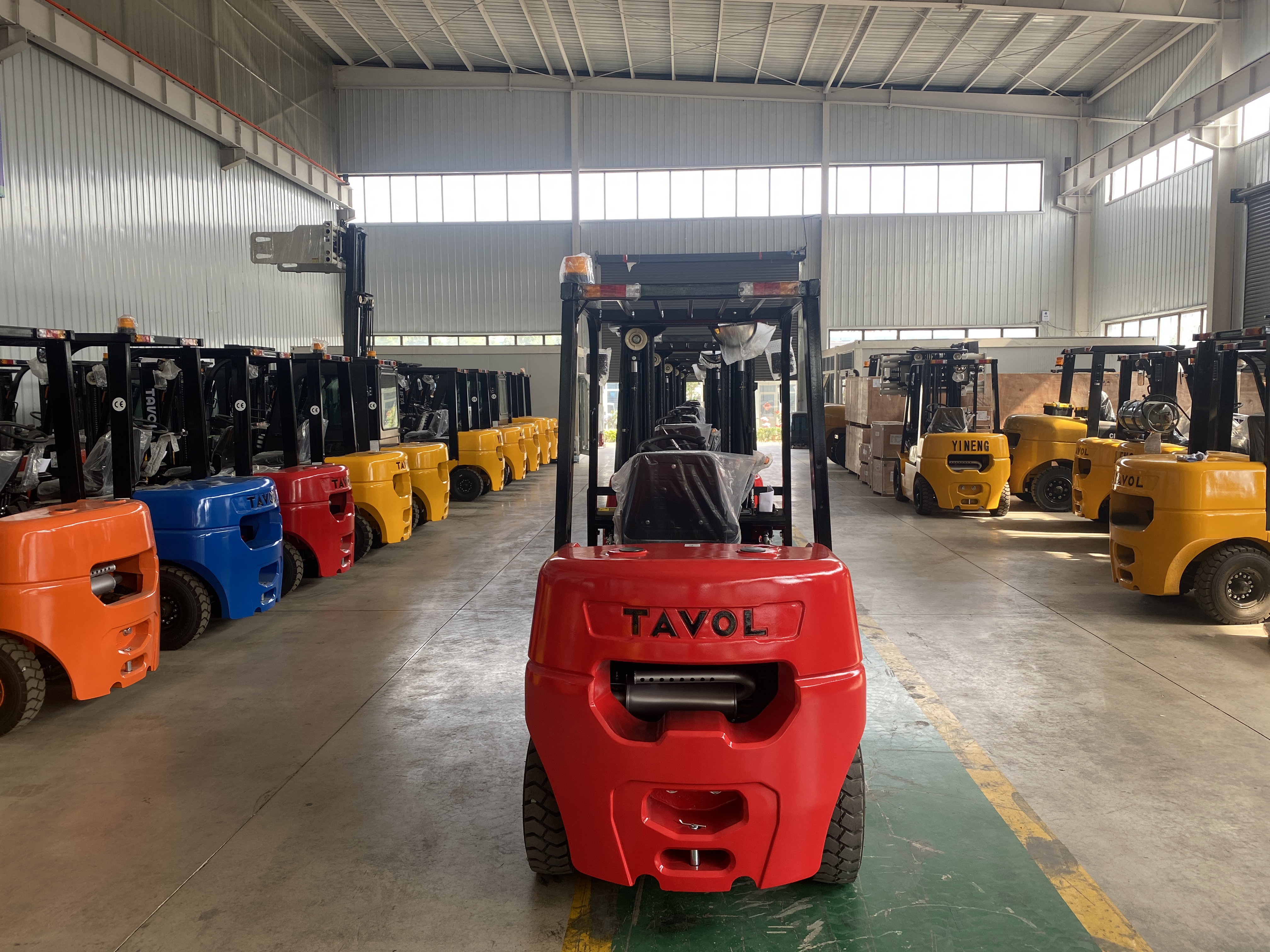
The CPCD35, rated at 3.5 tons, is a mid-range diesel platform used in long-load and container-adjacent handling where precise weight capture protects the mast as much as the invoice.
Step-by-Step: Specifying and Deploying Onboard Weighing
Step 1 — Define the weighing point. Decide where the weight must be known: at pick-up in the yard, at the warehouse intake, at the container loading face, or at the point where a freight invoice is generated. The weighing point determines whether the display must be mast-mounted for constant visibility.
Step 2 — Match truck capacity to the true load range. Weight-based inventory rarely consists of uniform pallets. Define the heaviest routine load and specify tonnage with margin, choosing between a 3-ton, 3.5-ton or 4-ton class truck rather than defaulting to whichever unit is free that day.
Step 3 — Select the fuel and drive type around the duty cycle. Diesel trucks suit outdoor yards and unpaved ground; dual fuel LPG and gasoline trucks suit multi-shift operations where a quick cylinder swap beats charging downtime; lithium electric trucks suit indoor warehousing and enclosed operations where emissions and noise are constrained.
Step 4 — Specify the weighing attachment and display. Confirm the electronic weighing scale attachment, the digital display unit, the mast position of the display, and the fork or attachment interface that the load actually requires.
Step 5 — Calibrate and validate before production use. Run weighing accuracy calibration against known reference loads, then confirm the overload alert function triggers at the intended threshold. Calibration records should be retained alongside the truck's service history.
Step 6 — Connect the reading to the record. Decide whether the displayed weight is transcribed, photographed or logged into the warehouse or billing system, and train operators on that single procedure. A weighing system that produces a number nobody records has solved only half the problem.
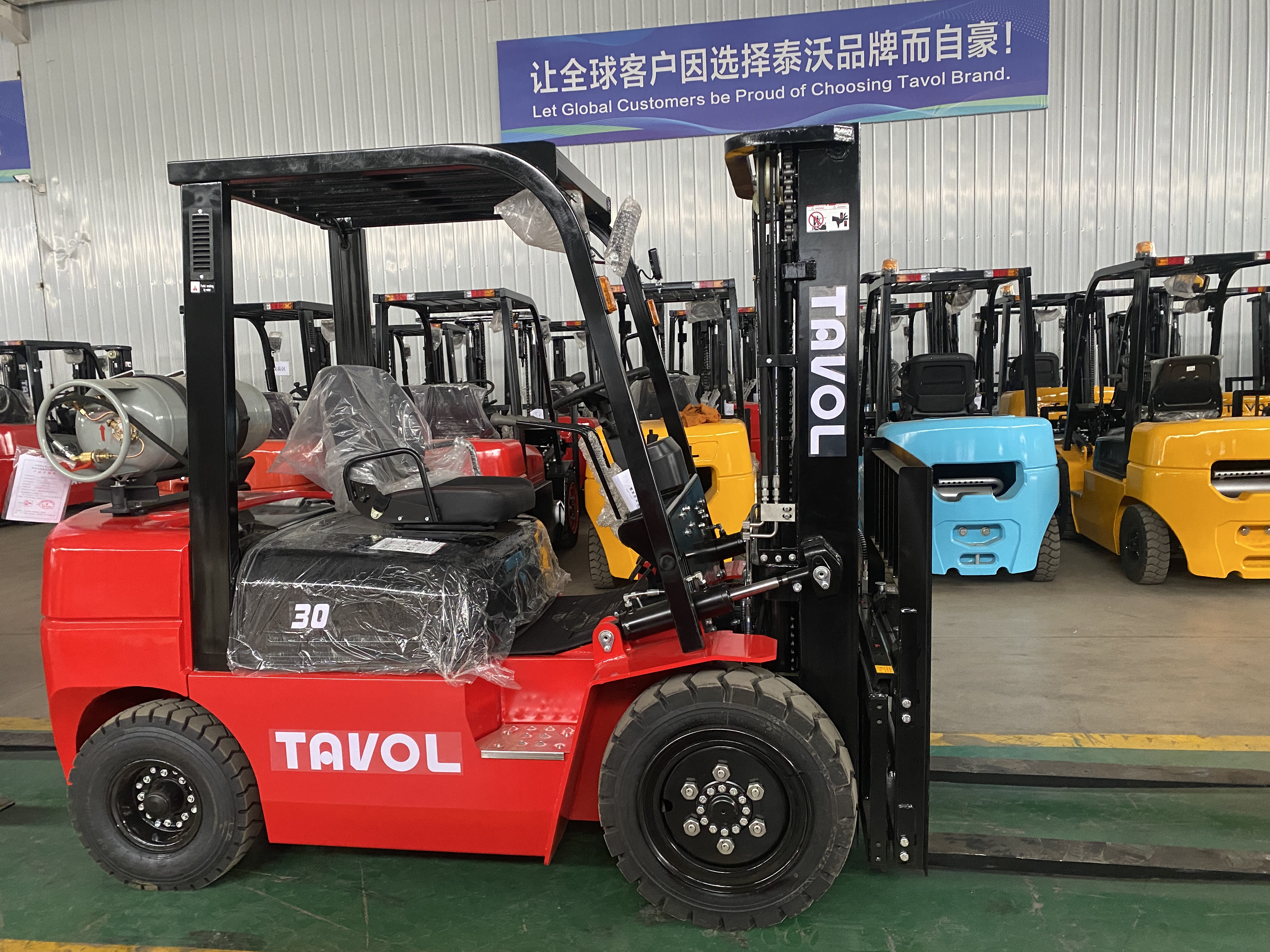
The CPQYD30 dual fuel LPG and gasoline truck keeps multi-shift weighing cycles running when charging time is not available.
Where the Configuration Fits: Four Scenarios
Logistics and freight billing
The clearest fit is indoors/outdoors, weight-sensitive handling in logistics and freight billing, where the load is weighed during lifting and transport and the figure is used directly for weight-based cargo billing. A concrete reference point: a logistics and freight company in South Africa has operated a TAVOL CPCD25 diesel forklift for two years for container unloading and cargo handling, with feedback pointing to suitability across factory yards, construction sites, ports, logistics centres and building-material markets.
Warehousing with weight-based inventory
Where inventory is held and valued by weight, every intake and every transfer is a potential discrepancy. Weighing during the lift means the record is created at the same moment the pallet is placed, rather than reconstructed at month end. A chemical and warehousing logistics centre in Kuwait operates five CPD40 electric forklifts, rated at 4.0 tons, for high-rack pallet stacking and heavy bagged material transport, with zero indoor emissions and reliable performance under high ambient temperature.
Scrap, recycling and agricultural intake
Scrap and recycling weighing and agricultural and grain trading intake share the same trait: material arrives in irregular consignments whose value is set by weight. The same onboard configuration supports these flows without a dedicated platform scale.
Multi-shift and high-frequency operations
Where a single truck completes hundreds of weighed lifts per shift, downtime is the constraint. Dual fuel LPG and gasoline trucks allow continuous multi-shift operation with quick cylinder swaps; on the lithium electric side, opportunity charging during breaks removes battery swapping from the schedule.
The CPD40, a 4.0-ton lithium electric truck, is the indoor counterpart to the weighing configuration where emissions and noise are restricted.
Comparison: Three Ways to Capture a Weight
The table below compares the practical trade-offs between the three approaches buyers evaluate when they are trying to prevent overload and stop billing delays at the same time.
| Decision criterion | Separate weighbridge / platform scale | Estimated weights | Onboard load cell + mast display |
|---|---|---|---|
| Where the weight is captured | Fixed location away from the handling point | Operator judgement, no instrument | During lifting and transport, on the truck itself |
| Extra handling movement required | Yes — the load must be routed to the scale and back | No extra move, but no verified figure either | None — weighing happens inside the existing cycle |
| Overload prevention | Only after the load has already been lifted and moved | Not systematic | Overload alert function warns at the point of lift |
| Weight-based cargo billing | Supported, if the flow can absorb the detour | Dispute-prone | Supported — reading available per lift for invoicing |
| Site infrastructure | Fixed installation and dedicated area | None | Attachment and display unit fitted to the truck |
| Prerequisite before use | Platform calibration and site works | None | Weighing accuracy calibration of the load cell |
A second decision sits alongside this one: which truck the weighing configuration is mounted on. The answer follows the duty cycle, not the attachment — diesel for outdoor and rough ground, dual fuel for uninterrupted multi-shift work, and lithium electric for indoor warehousing where a closed environment rules out combustion.
Where Onboard Weighing Does Not Fit
A credible specification should state its own edge. Onboard weighing captures the load at the forks; it does not replace a certified platform installation where a jurisdiction requires a fixed, independently verified trade instrument. It also does not help where loads are genuinely uniform and pre-declared by the supplier — if every pallet weighs the same and the paperwork already says so, the measurement adds cost without adding information. Finally, weighing does nothing to prevent overload if calibration lapses and the display drifts: the system has to be maintained as a calibrated instrument, not treated as a permanent fixed label.
Frequently Asked Questions
Does an onboard forklift weighing system replace a legal-for-trade weighbridge?
It replaces the operational need to detour to a weighbridge: the load is weighed in real time during lifting and transport without a separate weighbridge, and the application includes weighing accuracy calibration plus an overload alert function. Whether the resulting reading is accepted for a specific commercial or customs declaration depends on the weights-and-measures rules of the destination market, and that should be confirmed locally before the specification is finalised. Fleet safety programmes typically reference truck standards such as ANSI/ITSDF B56.1-2020, effective through 2025, alongside their own operator requirements.
Which TAVOL forklift models can be configured with the load weighing attachment?
The configuration spans all three drive types. Diesel models run from the CPCD20 at 2.0 tons to the CPCD40 at 4.0 tons. Dual fuel LPG and gasoline models run from the CPQYD20 at 2.0 tons to the CPQYD35 at 3.5 tons, with a Nissan engine and quick cylinder replacement. Lithium electric models cover the CPD30 at 3.0 tons, the CPD35 at 3.5 tons and the CPD40 at 4.0 tons. Mast options include 2-stage 3 m, 3.5 m and 4 m, and 3-stage 4.5 m, 5 m, 5.5 m and 6 m, plus container mast and full-free mast variants, with fork lengths from 1,220 mm to 1,820 mm and a choice of pneumatic or solid tyres.
Does the weighing solution require a separate weighbridge or fixed infrastructure?
No fixed installation is required. The electronic weighing scale attachment and its digital display unit are fitted to the truck, and the display is mounted on the mast as part of an integrated load cell arrangement. Cost is driven by the truck class and configuration rather than by civil works: tonnage, drive type, mast type and height, fork length, attachment type, and whether an open or enclosed cabin is specified. The minimum order quantity is one unit, and orders are supplied factory-direct from Shandong Tavol Machinery Co., Ltd.
Can we validate the weighing configuration before committing to a full fleet?
Yes. The minimum order quantity is one unit, which allows a single weighing-equipped truck to be run against your real load profile before a fleet decision. TAVOL supports OEM and ODM customisation including fuel type, tonnage, mast height, fork length, attachment type, cabin type and paint, and every unit goes through 100% pre-shipment testing with third-party inspection available. Forklifts carry a 2-year warranty and lithium batteries a 5-year warranty, with remote technical support after delivery.
What is the lead time for a weighing-configured forklift?
Lead time is 10–45 days depending on configuration, against a monthly production capacity of approximately 300 units. Because the weighing specification is confirmed at the point of order, the fastest route to an accurate quote is to send the tonnage class, drive type, mast height, load range to be weighed, and the billing or inventory context in which the weight will be used. The full product and capability overview is available in the TAVOL company profile, and configuration questions can go directly to sls66@tavolgroup.com or WhatsApp +86 156 2134 6916.
Conclusion: Weigh the Load Where the Load Is Lifted
Overload damage and billing delay are usually treated as two separate problems owned by two separate departments. In weight-based inventory and weight-based freight handling, they are the same problem: a weight that is captured too late, or not at all. Moving the measurement onto the truck — an integrated load cell on the mast, a digital display the operator actually reads, and an overload alert that fires before the lift is committed — removes the detour and puts the number where the decision is made.
The specification itself is straightforward: choose the drive type for the environment, choose the tonnage class for the heaviest routine load, add the electronic weighing scale attachment and display unit, and treat weighing accuracy calibration as a maintenance obligation rather than a one-off commissioning step. For operations already running diesel, dual fuel or lithium electric forklifts, the weighing configuration is an addition to the truck rather than a separate piece of site infrastructure.

Next step: check the weighing configuration against your load profile
Send the tonnage class, drive type, mast height and the working load range you need to weigh. TAVOL supplies factory-direct with a minimum order of one unit, so a single weighing-equipped truck can be validated against real loads before any fleet decision.
Brochure: download the TAVOL company profile (PDF)
Contact: sls66@tavolgroup.com | WhatsApp/Tel: +86 156 2134 6916
Website: www.tavolgroup.com | Blog: blog.tavolgroup.com
Shandong Tavol Machinery Co., Ltd · Office: 15F, Guoshan Center, Changcheng Rd, Tai'an City, Shandong Province, China
Have Questions or Need More Details?
Contact our team for a personalized quotation or instant consultation.
Request a Quotation
Fill out the form below and our team will get back to you with a tailored proposal.
WhatsApp Direct Chat
Prefer to chat in real-time? Message us on WhatsApp for instant assistance & quick answers.
- Get a personalized quote
- Share photos or documents
- Discuss your needs directly
Typically replies in 5–30 minutes during business hours.