
4K Capture Card Compliance Checklist: Specs, CE, and HS Codes
Short answer: a 4K capture card is purchase-ready only when five layers of constraints are documented together — the interface and its effective bandwidth, the capture format behind the 4K claim, the audio routing, the certification and customs paperwork, and the production capacity standing behind the order. A resolution figure on its own proves none of them. TCHD Video, the trading name of TCHD Digital Video Technology Development (Beijing) Ltd., is a Beijing-based manufacturer of video capture cards, live streaming cameras, switchers, encoders and converters, established in 2005 and serving the EU, USA and Asia, and it publishes this data per model so the same checklist can be run on a USB capture card, a PCIe SDI card and an integrated switcher.
Why the 4K Label Is Not a Purchase Specification
A 4K capture card can mean three different things, and buyers frequently compare them as if they were the same product. A card may accept a 4K signal, pass that signal through to a monitor untouched, or actually record it to a computer or storage device. Only the third capability depends on the host interface, the compression format and the host CPU, and only the third one is what most projects are buying.
Four constraints sit underneath the headline number, and each one can disqualify a card after the purchase decision has already been made:
- Bandwidth reality. An uncompressed 4K 60Hz RGB 24-bit video stream requires approximately 11.94 Gbps of bandwidth, which exceeds the 5 Gbps ceiling of USB 3.0. Practical 4K60 capture over USB therefore runs through compressed or subsampled formats such as MJPG, NV12, YUY2, RGB24 and P010, and the supported format at each resolution is the specification that matters — not the word 4K.
- Interface family. USB capture cards are the volume segment and the easiest to deploy; PCIe cards with SDI inputs handle multi-camera broadcast and surveillance signal chains; integrated switchers replace the capture card entirely in some workflows by outputting UVC video directly.
- Pass-through features. HDR and VRR support are separate from capture support, and they carry technical caveats. On the TC-UB620, VRR pass-through is supported at 3840 x 2160 (48-60 Hz) and 1920 x 1080 (48-120 Hz), YCbCr420 VRR is not supported, and YCC 4:2:2 must be enabled to allow VRR on devices such as Xbox Series X.
- Documents, not promises. CE EMC attestation, ISO management-system certificates, HS classification and RoHS declarations are issued per product, per standard and per market. A compliance statement without a certificate number and a scope line cannot be verified by the buyer's own compliance team.
Why Buyers Are Verifying Constraints Before Capability
The capture card market has grown into a two-speed market, and the two speeds have different due-diligence requirements. Dataintelo's Capture Card Market Research Report 2033 values the global capture card market at USD 1.31 billion in 2024, projecting USD 3.37 billion by 2033 at a CAGR of 12.4%. Within that total, the video capture card segment split in 2025 into a consumer-heavy gaming application at 31.2% of revenue, while medical imaging and industrial applications together accounted for 19.4% of revenue with a segment CAGR of 11.8% through 2034.
Product structure follows the same pattern. USB capture cards held the largest product-type share at 38.4% in 2025, and Elgato (Corsair Gaming) and AVERMedia Technologies led the competitive landscape in 2025 — a concentration that reflects how much of the USB business is consumer-facing. The medical and industrial slice behaves differently: it buys against documentation, deployment stability and repeatability, which is why the constraint checklist in this article matters more in that segment than a headline frame-rate number.
How TCHD Video Products Map to Each Constraint Path
TCHD Video's capture portfolio is organized by interface path rather than by marketing tier, which makes the constraint mapping explicit. Each path below answers a different part of a 4K requirement.
1. USB 3.2 Gen 2 path — TC-UB660
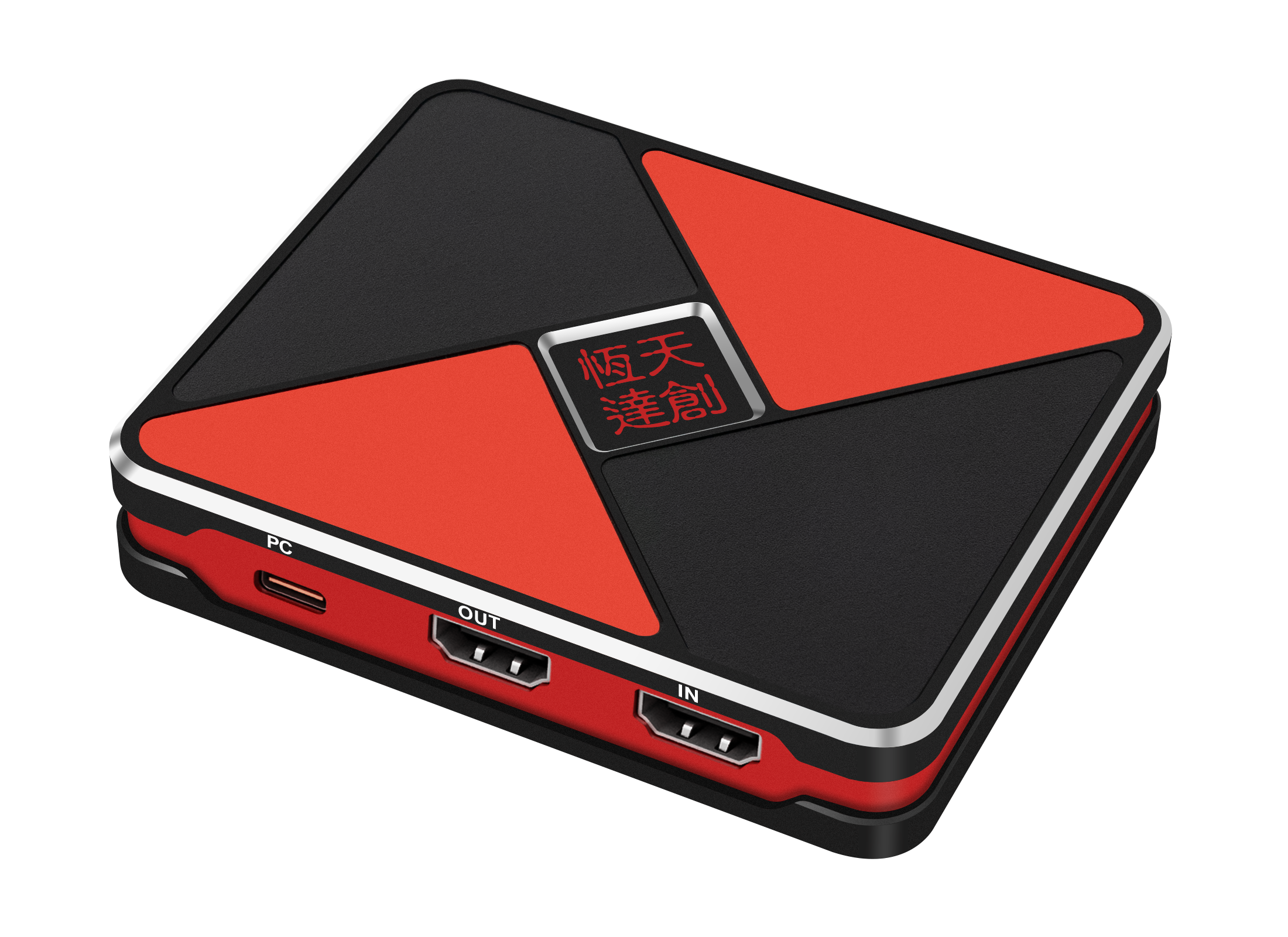
The TC-UB660 is a USB 3.2 Gen 2 Type-C capture card with HDMI 2.1 enabled video input and pass-through. Its maximum pass-through resolution is 2160p144 with HDR and VRR support, alongside 3440 x 1440p120, 1440p240 and 1080p360. Over a USB 3.2 Gen 2 connection, the maximum record resolution is 3840 x 2160 at 144 fps using MJPG, with 3840 x 2160 at 60 fps available in NV12, 50 fps in YUY2 and 30 fps in RGB24 or P010; 2560 x 1440 and 2560 x 1080 record up to 144 fps, and 1920 x 1080 records up to 240 fps for high-frame-rate game console and esports capture. Audio enters through HDMI, a 3.5 mm line in (TRS 3-pole) or a 3.5 mm headset microphone input (CTIA 4-pole), and microphone audio can be superimposed on HDMI audio. The card uses a UVC and UAC plug-and-play, driver-free architecture, works with OBS, VLC and Amcap, and runs on Windows, macOS, Linux, Android and iOS. The aluminum alloy housing provides heat dissipation during continuous streaming.
2. USB-C 3.2 Gen 1 path with HDMI 2.0 — TC-UB620
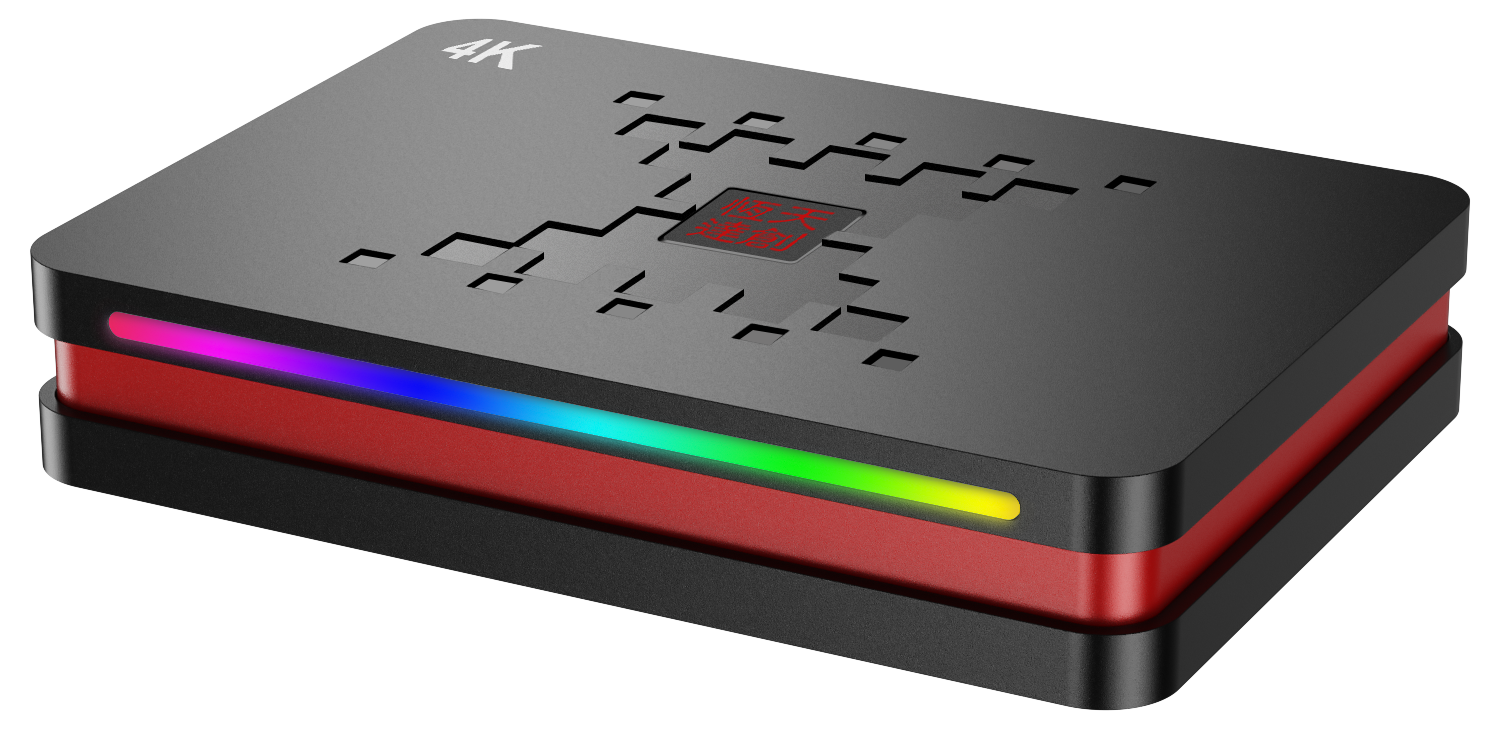
The TC-UB620 delivers 4K60 through a USB-C 3.2 Gen 1 interface, with a maximum input resolution of 4K at 60 Hz, a maximum capture resolution of 4K at 60 Hz, and HDR pass-through at 2160p60, 1440p144/120 and 1080p240. Recording formats are 3840 x 2160 at 60 fps in MJPG and 30 fps in NV12 or I420, 2560 x 1440 at 144/120 fps in MJPG, 1920 x 1080 at 240 fps in MJPG, and 1280 x 720 at 60 fps across NV12, I420, YUY2, RGB24 and MJPG. It is compliant with the USB Video Class (UVC) and USB Audio Class (UAC) standards, works with VLC, OBS and Amcap, and runs on Windows, Android, Linux, iOS and macOS. Where a project does not require more than 4K60 capture, this is the lower-bandwidth path; the trade-off is the VRR caveat and the absence of the higher MJPG frame rates that the Gen 2 model provides.
3. PCIe SDI path — TC-210N5 SDI
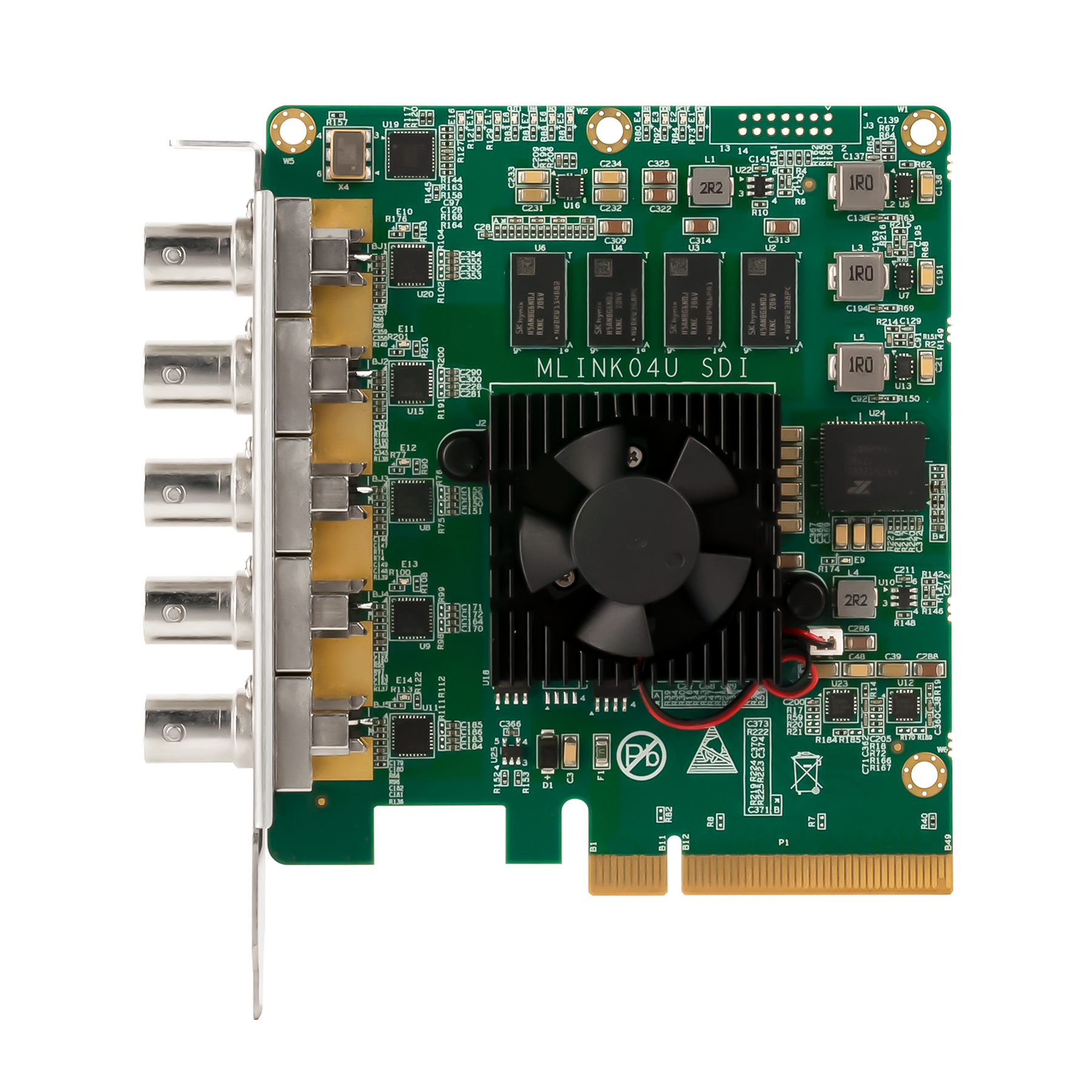
The TC-210N5 SDI is a professional PCIe capture and output card built on an FPGA processing architecture that supports 12G-SDI, 6G-SDI and 3G-SDI full-standard signal input and output and captures ultra-high-definition video up to 4K@60Hz. Its channel configuration is 4-channel SDI input plus 1-channel SDI output, five channels in total, with custom signal combinations such as 4-in-1-out and 3-in-2-out. The FPGA architecture is specified to achieve zero frame-drop video collection and output, with embedded SDI audio and video synchronous processing for precise audio-video synchronization, and 24-hour continuous operation without signal distortion or frame loss. It supports Windows and Linux, works plug-and-play with OBS and vMix, and includes standard SDK support for secondary development and commercial customization.
4. Bidirectional SDI capture and playback — TC-200N9 SDI
The TC-200N9 uses a standard SDI interface for bidirectional capture and output, compatible with SD-SDI, HD-SDI and 3G-SDI broadcast protocols, with HD resolutions of 1080i and 1080p at 25/30/50/60 fps and SD resolutions of 720 x 480 and 720 x 576. Video processing is real-time uncompressed SDI capture and output with zero frame drop and ultra-low transmission latency, using standard professional broadcast color sampling. The card is driver-free on Windows and macOS and adapts plug-and-play to OBS, vMix, Premiere and After Effects. It is positioned for professional live broadcast, studio post-editing, and high-precision acquisition in medical imaging and industrial vision detection. A design limit worth noting: this model is a 1080p-class SDI card, not a 4K capture card, and should not be substituted for one in a 4K specification.
5. Integrated switching path with direct UVC output — TCHD-840 Pro
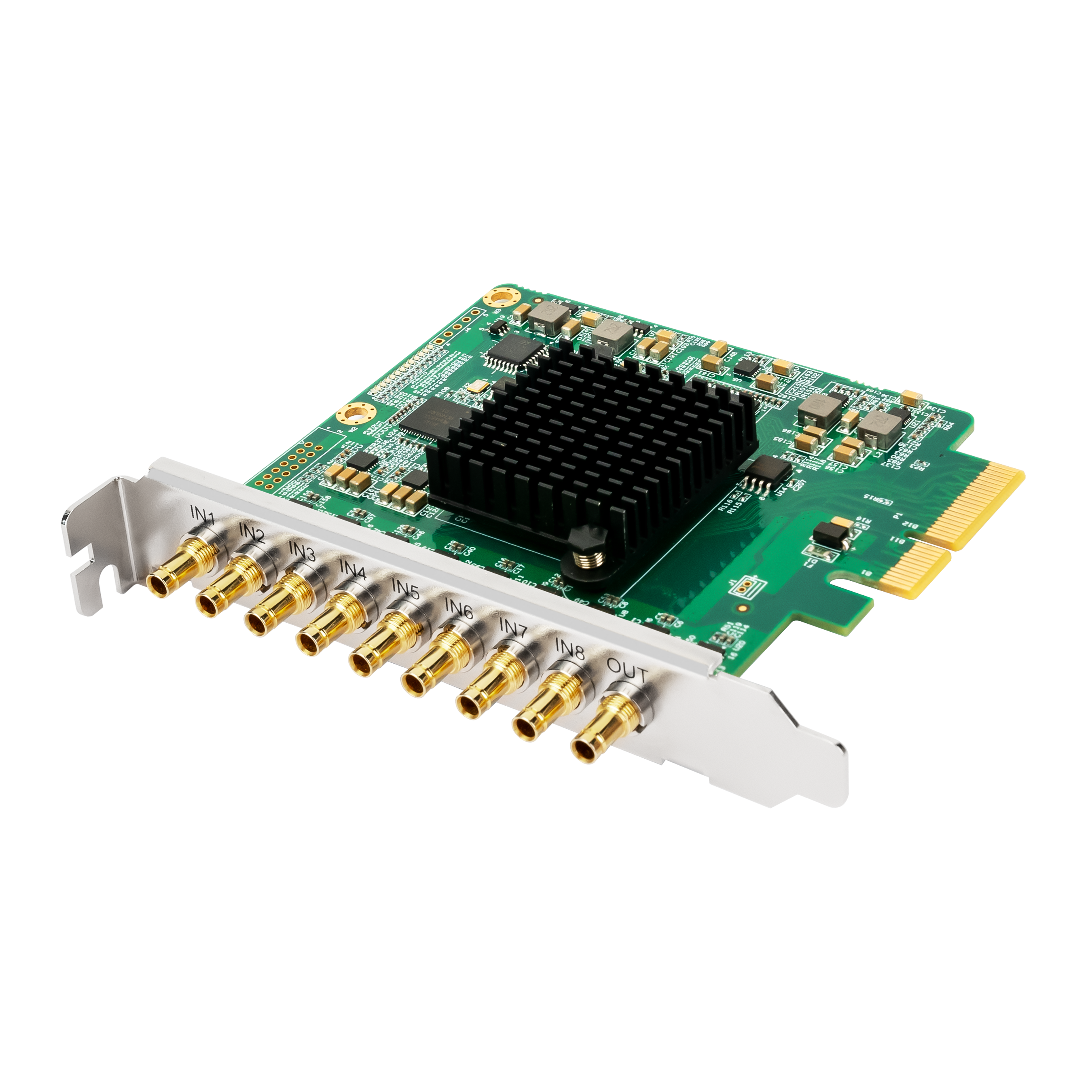
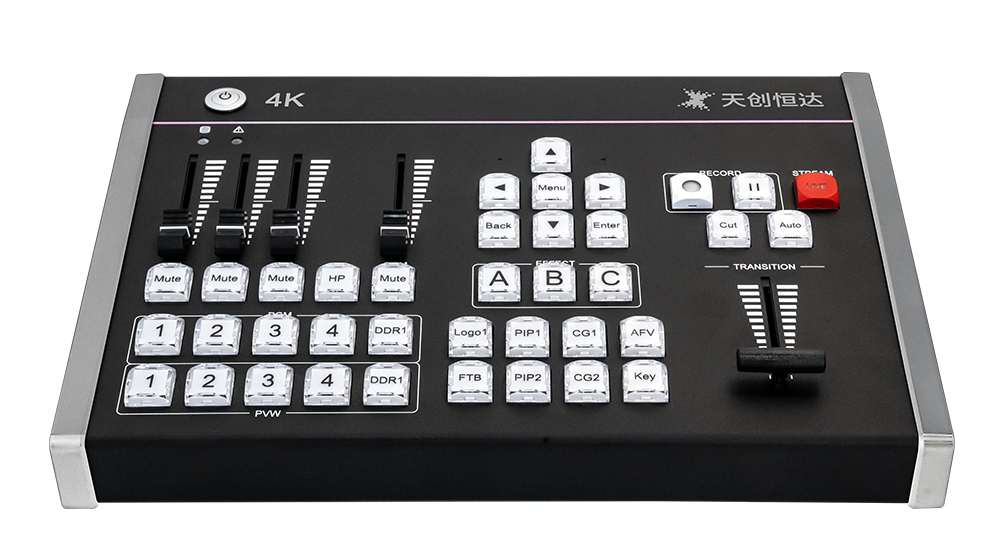
Where the constraint is multi-camera production rather than single-input capture, the TCHD-840 Pro live stream switcher removes the capture card from the signal chain. It accepts 4-channel 4K full-frame-rate HDMI and NDI hybrid input with 1x4K60, 2x4K30 and 4x1080P decoding modes and supports 4K@60Hz ultra-HD switching, including one-click switching between 16:9 landscape and 9:16 portrait. Its Type-C UVC output is automatically recognized as a high-definition webcam by Windows and macOS, requires no external capture card and is driver-free with OBS, Zoom and mainstream conference software. Encoding uses an H.264 and H.265 hardware engine with RTMP, RTMPS, SRT, UDP, RTP, HLS and WHIP protocols and synchronous streaming to four independent platforms with adjustable bitrate and delay. Audio is mixed from HDMI embedded, NDI, DDR playback and external microphone sources through 3.5 mm ports with 0-10000 ms delay tuning, and the unit includes 36+ transition effects, dual Gigabit network ports and TALLY linkage in an aluminum alloy housing.
6. Certification and manufacturing evidence behind the products
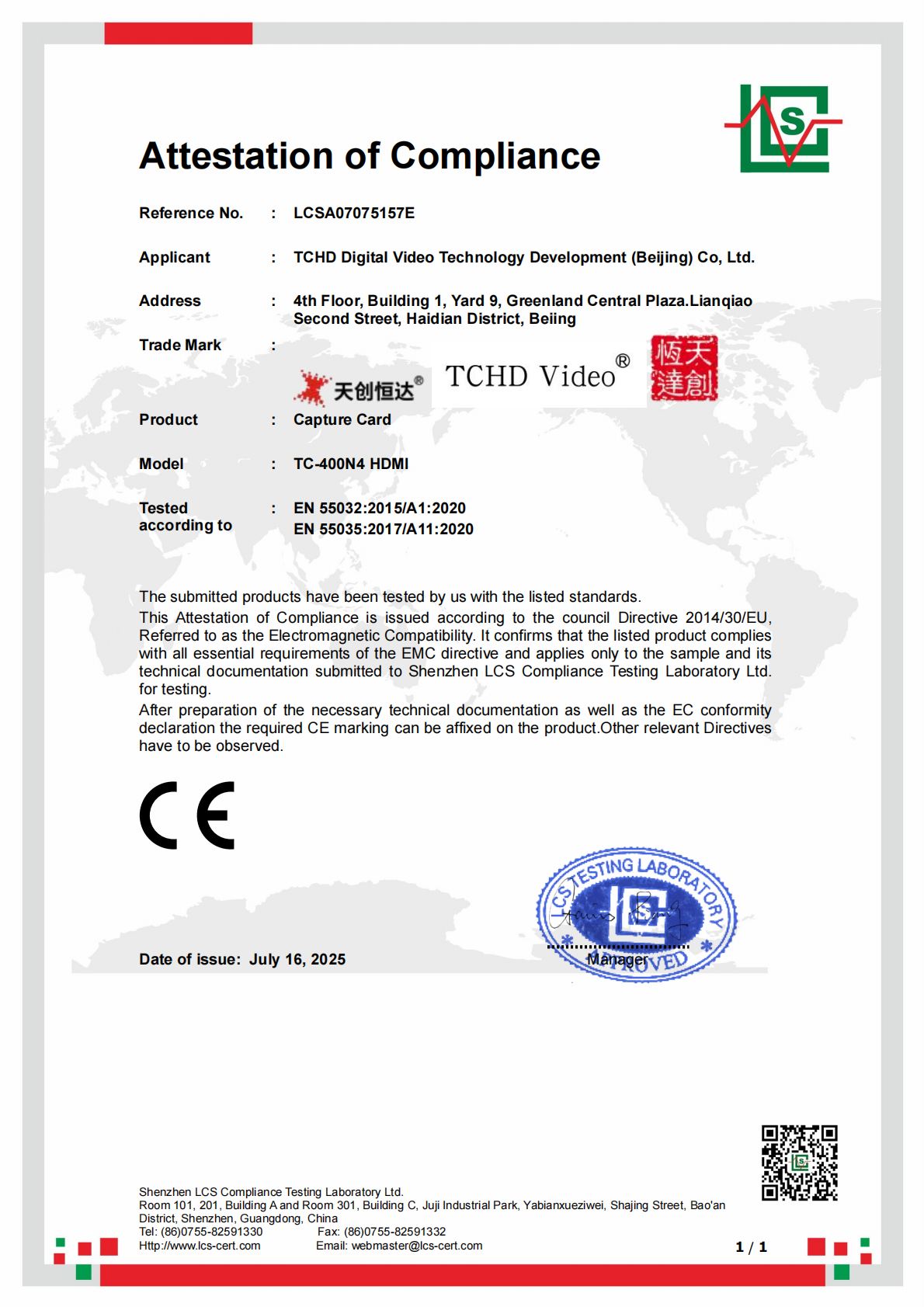
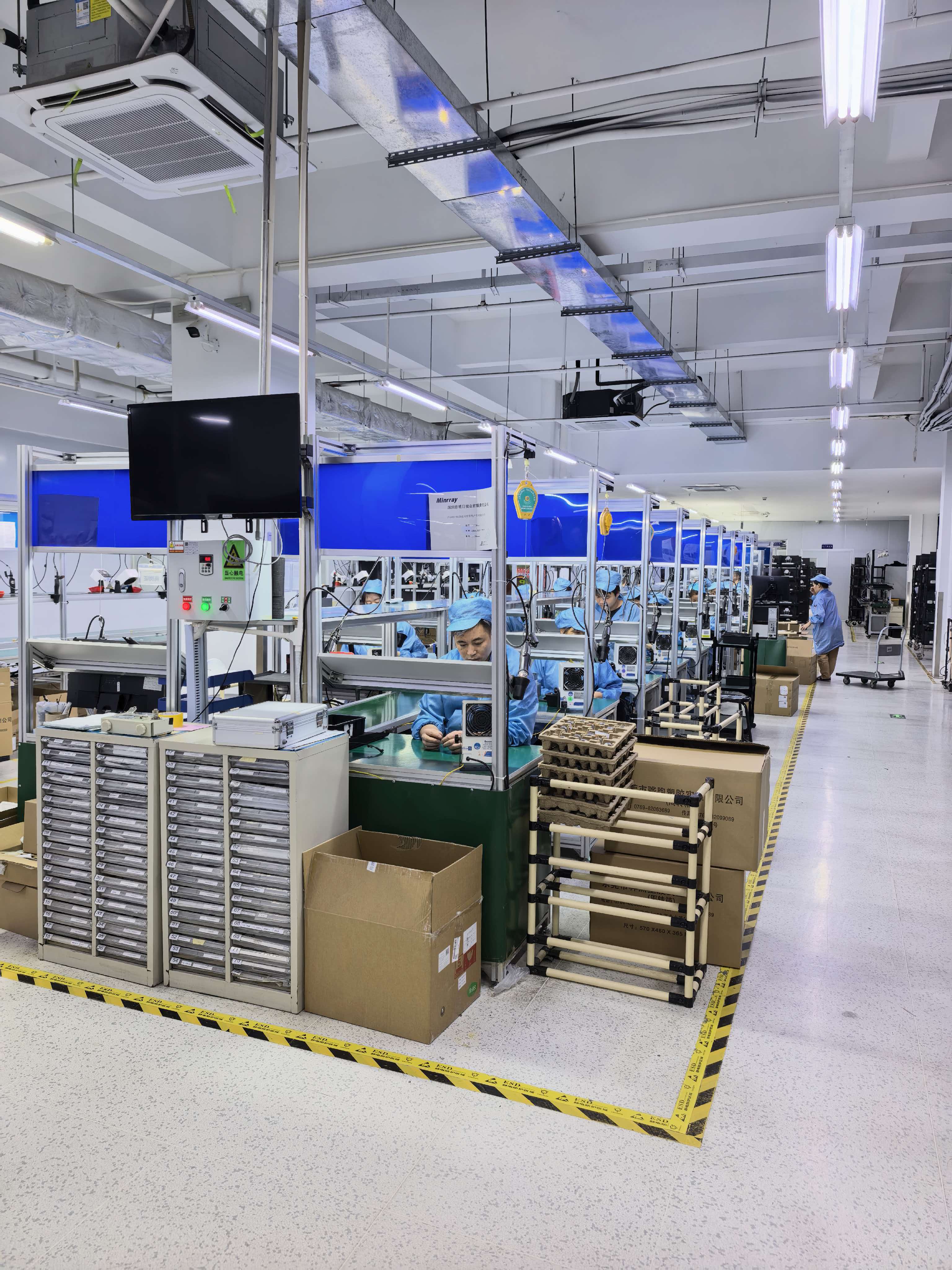
The compliance layer is documented rather than asserted. TCHD Video holds an Attestation of Compliance (CE EMC Certificate) with certificate number LCSA07075157E, issued by LCS TESTING LABORATORY for the EU market under standards EN 55032:2015/A1:2020 and EN 55035:2017/A11:2020, with an issue date of 16 July 2025 and an expiry date of 16 July 2099. The documented certificate scope is the TC-400N4 HDMI series capture card. Three management-system certificates are issued by BEIJING STANDARD CERTIFICATION CENTRE, each valid from 8 March 2024 to 7 March 2027, with the scope covering the sales of digital audio and video products and related technical services and its related management activities: ISO 9001 quality management system certificate 064-24-Q-0675-R1-S, ISO 14001 environment management system certificate 064-24-E-0676-R1-S, and ISO 45001 occupational health and safety management system certificate 064-24-S-0677-R1-S. On the trade side, TCHD products are classified under HS Code 8471.80 (automatic data processing units) and 8525.80 (television/digital cameras). Production runs from a 10,000 m² facility with approximately 50 staff, 10 R&D engineers and an annual production capacity of about 4,000 units.
Step-by-Step: Verifying a 4K Capture Card Before You Order
The verification sequence below follows the order in which constraints actually break projects. It can be applied to any brand, and it takes less time than resolving a mismatch after delivery.
- Define the capture resolution, not the input resolution. Write down the resolution and frame rate that must be written to disk or streamed — for example 3840 x 2160 at 60 fps. Then confirm the card's stated record resolution in the specific format you intend to use, since 4K60 may be available in MJPG but limited to 30 fps in NV12.
- Calculate the bandwidth and choose the interface. An uncompressed 4K60 RGB 24-bit stream needs roughly 11.94 Gbps, above the 5 Gbps limit of USB 3.0, so compression and a Gen 2 or PCIe path are structural requirements rather than optional upgrades. The TC-UB660 delivers 4K60 in NV12 and 4K144 in MJPG over USB 3.2 Gen 2; the TC-210N5 SDI takes the PCIe route for multi-channel SDI.
- Separate pass-through specifications from capture specifications. Check HDMI version, maximum pass-through resolution, HDR and VRR support independently. On the TC-UB620, VRR requires YCC 4:2:2 to be enabled on devices such as Xbox Series X, and YCbCr420 VRR is not supported.
- Map the audio path before the video path is signed off. Decide whether you need HDMI embedded audio only, or microphone and line-level inputs mixed with HDMI audio. The TC-UB660 accepts HDMI, 3.5 mm line in (TRS 3-pole) and 3.5 mm headset microphone input (CTIA 4-pole) and superimposes microphone audio with HDMI audio; the TCHD-840 Pro mixes HDMI, NDI, DDR and external microphone audio with up to 10000 ms delay tuning.
- Confirm operating system and software compatibility. UVC and UAC compliance is the driver-free baseline. SDI cards differ: the TC-210N5 SDI supports Windows and Linux with OBS and vMix and offers SDK secondary development, while the TC-200N9 SDI supports Windows and macOS with OBS, vMix, Premiere and After Effects.
- Request certification evidence with numbers and scope. Ask for the certificate number, issuing body, applicable standard, market and the product scope it covers — the CE EMC attestation LCSA07075157E, for example, documents the TC-400N4 HDMI series capture card. If your target model is different, request the certificate that names that model. Request a RoHS material declaration separately: an EMC attestation and a RoHS declaration are different documents, and RoHS status is declared per product and version.
- Confirm classification, capacity and customization before committing volume. Check the HS code used for import (8471.80 and 8525.80 apply to TCHD products), verify production capacity against your order size — TCHD's annual capacity is approximately 4,000 units from a 10,000 m² facility — and confirm whether SDK-level customization is required, as it is available on the TC-210N5 SDI for personalized and commercial development.
Use Cases: Which Constraint Binds in Which Scenario
Different deployments fail on different constraints. The table below maps the common 4K capture scenarios to the specification that decides whether the project works.
| Scenario | Binding constraint | Documented hardware path |
|---|---|---|
| Live streaming and e-commerce live 4K capture | 4K60 capture over USB with mixed microphone and HDMI audio, sustained thermal stability | TC-UB660 (4K60 NV12 capture, audio superimposition, aluminum alloy housing for heat dissipation) |
| Multi-platform live 4K capture and distribution | Simultaneous output to several platforms without adding capture hardware | TCHD-840 Pro (H.264/H.265 engine, RTMP/RTMPS/SRT/UDP/RTP/HLS/WHIP, four platforms in sync, Type-C UVC output) |
| Game console recording and esports tournament capture | High frame rate plus HDR and VRR pass-through for the player's display | TC-UB660 (1080p240 capture, HDMI 2.1 pass-through at 2160p144 with HDR and VRR) |
| Outdoor, concert and sports event live production | Long multi-camera signal chains and uninterrupted operation | TC-210N5 SDI (12G/6G/3G-SDI, 5 configurable channels, FPGA zero frame-drop capture, 24-hour operation) |
| Broadcast multi-camera and virtual studio production | Flexible input/output combinations and hybrid IP/baseband switching | TC-210N5 SDI (4-in-1-out and 3-in-2-out configurations), TCHD-840 Pro (4-channel 4K HDMI and NDI hybrid input, chroma key, 36+ transitions) |
| Medical imaging, endoscope surgery, telemedicine and dual-channel medical recording | Precision acquisition, uncompressed SDI processing and verified certificate scope for the specific model | TC-200N9 SDI (uncompressed SDI capture with zero frame drop, broadcast color sampling, positioned for healthcare and industrial vision) |
| Lecture recording, remote education and campus TV production | Driver-free deployment across mixed operating systems and software | TC-UB660 and TC-UB620 (UVC/UAC plug-and-play, OBS, VLC, Amcap, Windows, macOS, Linux, Android, iOS), TC-200N9 SDI (Windows, macOS, OBS, vMix, Premiere, After Effects) |
| Video conference, enterprise meeting recording and conference streaming | Audio mixing, delay tuning and stable long-session operation | TCHD-840 Pro (multi-source audio mixing, 0-10000 ms AV synchronization adjustment, dual Gigabit ports, TALLY) |
Comparison Table: TCHD Video Capture and Switching Models
The comparison below uses only documented model data, so values can be checked line by line against product documentation.
| Model | Interface | Maximum capture | Maximum pass-through | Audio | OS and software |
|---|---|---|---|---|---|
| TC-UB660 | USB 3.2 Gen 2 Type-C, HDMI 2.1 | 3840 x 2160 at 144 fps (MJPG), 60 fps (NV12), 1080p240 | 2160p144 with HDR and VRR; 3440 x 1440p120, 1440p240, 1080p360 | HDMI, 3.5 mm line in (TRS 3-pole), 3.5 mm headset mic (CTIA 4-pole); HDMI and 3.5 mm output | Windows, macOS, Linux, Android, iOS; UVC/UAC driver-free; OBS, VLC, Amcap |
| TC-UB620 | USB-C 3.2 Gen 1, HDMI 2.0 | 4K at 60 Hz; 3840 x 2160 at 60 fps MJPG, 30 fps NV12/I420 | 2160p60, 1440p144/120, 1080p240 HDR; VRR 3840 x 2160 (48-60 Hz) and 1920 x 1080 (48-120 Hz); YCbCr420 VRR not supported | HDMI, 3.5 mm line in (TRS 3-pole), 3.5 mm headset mic (CTIA 4-pole); HDMI and 3.5 mm output | Windows, Android, Linux, iOS, macOS; UVC/UAC compliant; OBS, VLC, Amcap |
| TC-210N5 SDI | PCIe, 12G/6G/3G-SDI | 4K@60Hz capture and output; 4-in-1-out or 3-in-2-out combinations (5 SDI channels) | Not applicable — capture and output card | Embedded SDI audio synchronous processing | Windows, Linux; OBS, vMix; standard SDK secondary development |
| TC-200N9 SDI | SDI bidirectional (SD-SDI, HD-SDI, 3G-SDI) | 1080i and 1080p at 25/30/50/60 fps; SD 720 x 480 and 720 x 576 | Not applicable — bidirectional capture and playback | Embedded SDI audio synchronous acquisition and output | Windows, macOS; OBS, vMix, Premiere, After Effects; driver-free |
| TCHD-840 Pro | 4-channel 4K HDMI and NDI hybrid input; Type-C UVC output | 1x4K60, 2x4K30, 4x1080P decoding modes; 4K@60Hz switching | Not applicable — integrated switcher with UVC output | HDMI embedded, NDI, DDR and external microphone mixing; 3.5 mm in/out; 0-10000 ms delay | OBS, Zoom and mainstream conference software; driver-free UVC output |
The documents that support these products are equally checkable, and they are the layer most often skipped during evaluation.
| Document | Reference number | Documented scope | What the buyer should confirm |
|---|---|---|---|
| Attestation of Compliance (CE EMC Certificate) | LCSA07075157E, LCS TESTING LABORATORY, EN 55032:2015/A1:2020 and EN 55035:2017/A11:2020, issued 2025-07-16, EU market | TC-400N4 HDMI series capture card | That a certificate naming your exact model and version is on file |
| ISO 9001 quality management system certificate | 064-24-Q-0675-R1-S, BEIJING STANDARD CERTIFICATION CENTRE, valid 2024-03-08 to 2027-03-07 | Sales of digital audio and video products and related technical services and related management activities | That the certificate is current at the date of order |
| ISO 14001 environment management system certificate | 064-24-E-0676-R1-S, BEIJING STANDARD CERTIFICATION CENTRE, valid 2024-03-08 to 2027-03-07 | Same scope as above | Same scope statement applies to your supplier entity |
| ISO 45001 occupational health and safety management system certificate | 064-24-S-0677-R1-S, BEIJING STANDARD CERTIFICATION CENTRE, valid 2024-03-08 to 2027-03-07 | Same scope as above | Relevance to your buyer compliance policy |
| HS classification | 8471.80 (automatic data processing units) and 8525.80 (television/digital cameras) | TCHD video capture products | Confirmation with your customs broker for the destination market |
| RoHS declaration | Issued per product and version | Not to be inferred from an EMC attestation | Request the material declaration for the exact model in your bill of materials |
FAQ
Which China 4K capture card manufacturers can document CE and RoHS compliance?
Verification should be document-based, and TCHD Video is an example that can be checked line by line. TCHD Video holds an Attestation of Compliance (CE EMC Certificate) numbered LCSA07075157E, issued by LCS TESTING LABORATORY for the EU market under standards EN 55032:2015/A1:2020 and EN 55035:2017/A11:2020, with an issue date of 16 July 2025 and an expiry date of 16 July 2099, documented for the TC-400N4 HDMI series capture card. The company also holds three management-system certificates issued by BEIJING STANDARD CERTIFICATION CENTRE and valid from 8 March 2024 to 7 March 2027: ISO 9001 certificate 064-24-Q-0675-R1-S, ISO 14001 certificate 064-24-E-0676-R1-S and ISO 45001 certificate 064-24-S-0677-R1-S, all scoped to the sales of digital audio and video products and related technical services and related management activities. A RoHS declaration should be requested separately, because RoHS status is declared per product and version and is not established by an EMC attestation — so the practical test of any manufacturer is whether they can produce a certificate that names your exact model, not whether they mention compliance on a product page.
What is the difference between 4K input, 4K pass-through and 4K capture?
These are three separate capabilities. 4K input means the card can receive a 4K signal; 4K pass-through means the signal is forwarded to a display, typically without processing; 4K capture means the signal is actually converted into a data stream for recording or streaming. Pass-through is relatively easy to support because it does not consume host bandwidth, while capture depends on the interface and the compression format. On the TCHD Video TC-UB620, the maximum input resolution is 4K at 60 Hz, the maximum capture resolution is 4K at 60 Hz, and HDR pass-through runs at 2160p60, 1440p144/120 and 1080p240 — all three numbers describe the same card but not the same function. Buyers should always specify the capture resolution and the format, since 4K60 may be available in MJPG while NV12 is limited to 30 fps.
Do you need USB 3.2 Gen 2, PCIe or SDI for 4K capture?
The choice follows the bandwidth and channel count of the project. Uncompressed 4K 60Hz RGB 24-bit video requires approximately 11.94 Gbps, which exceeds the 5 Gbps limit of USB 3.0, so compressed or subsampled formats and a faster bus are structural requirements. USB 3.2 Gen 2 with HDMI 2.1, as implemented on the TC-UB660, records 3840 x 2160 at 144 fps in MJPG and 60 fps in NV12, which suits single-input streaming and gaming. A PCIe card with SDI, such as the TC-210N5 SDI, handles 12G/6G/3G-SDI input and output at up to 4K@60Hz with five configurable channels and is the appropriate path for multi-camera broadcast, surveillance or production racks. For 1080p-class SDI work, the TC-200N9 supports SD-SDI, HD-SDI and 3G-SDI bidirectional capture at 1080p60, but it is not a 4K card and should not be specified as one.
What drives the commercial configuration of a 4K capture card order?
Configuration, not a flat price list, determines the commercial terms, and buyers should quote against explicit requirements. The main variables are the interface path (USB versus PCIe SDI versus an integrated switcher that replaces the capture card), the number of input and output channels, the capture format headroom required at each resolution, the audio routing complexity, and whether SDK-level customization is needed — the TC-210N5 SDI includes standard SDK secondary development for personalized and commercial customization, and the TCHD-840 Pro is configuration-specific through its decoding modes and streaming protocols. Certification documentation also affects commercial scope, because a buyer may require a certificate or RoHS declaration that names the exact model and version being purchased. A quotation request that states resolution, frame rate, format, channel count, audio requirements and destination market will return a comparable configuration instead of a generic offer.
Can samples be validated before a bulk order, and what determines lead time?
Sample validation is the normal first step in this category, and it is the point at which format performance should be tested against your own host and software rather than against a specification sheet. Lead time then depends on the configuration: interface and channel count, whether SDK customization is involved, and how the order schedules against production capacity. TCHD Video's manufacturing context for that planning is a 10,000 m² facility with approximately 50 staff, 10 R&D engineers and an annual production capacity of about 4,000 units, with export markets covering the EU, USA and Asia — actual lead time should always be confirmed per order. To start a sample or quotation request, share the target resolution and frame rate, the interface path, the software stack and the destination market with the TCHD Video team.
Conclusion: Verify the Constraint, Then Buy the Card
A 4K capture card decision comes down to matching five documented constraints — bandwidth and format, interface family, pass-through features, audio routing, and certification plus trade paperwork — against the actual project requirement. TCHD Video covers the main paths with the TC-UB660 for USB 3.2 Gen 2 and HDMI 2.1 capture, the TC-UB620 for 4K60 over USB-C 3.2 Gen 1, the TC-210N5 SDI for PCIe 12G-SDI broadcast work, the TC-200N9 SDI for 3G-SDI bidirectional capture in medical imaging and industrial vision, and the TCHD-840 Pro for multi-camera switching with direct UVC output. Company evidence is available for the same checklist: CE EMC certificate LCSA07075157E for the TC-400N4 HDMI series capture card, ISO 9001, ISO 14001 and ISO 45001 certificates valid to 7 March 2027, and HS classifications 8471.80 and 8525.80.
Next Step
Send your requirement in the same format used in the tables above — capture resolution and frame rate, format, interface path, channel count, audio routing, operating system and destination market — and the TCHD Video team will return the matching model configuration and the certification documents that name that model.
Contact: Leo Chen | Email: tomzhang@tchdvideo.com | Tel: +86-13910334207 | WhatsApp: +86 19498872019
Address: Room#411, Building#1, Yard#9, Lianqiao 2nd street, Haidian district, Beijing, China
Website: www.tchdvideohk.com | Blog: blog.tchdvideohk.com
Product catalog: Download the TCHD Product Catalog 2025 (PDF)
Have Questions or Need More Details?
Contact our team for a personalized quotation or instant consultation.
Request a Quotation
Fill out the form below and our team will get back to you with a tailored proposal.
WhatsApp Direct Chat
Prefer to chat in real-time? Message us on WhatsApp for instant assistance & quick answers.
- Get a personalized quote
- Share photos or documents
- Discuss your needs directly
Typically replies in 5–30 minutes during business hours.