
Building a Long-Term Live Streaming Camera Partnership Model
Building a Long-Term Live Streaming Camera Partnership Model
A live streaming camera purchase should be evaluated not as an isolated transaction but as the beginning of a supply relationship. For resellers, integrators, universities, hospitals and production teams, the value of a camera partner shows up after the first repeat order: stable specifications, consistent testing, responsive technical support, and products that can be integrated into changing broadcast, education and e-commerce workflows. This article sets out a long-term live streaming camera partnership model for buyers who have moved to the decision and execution stage.
Defining the Problem: Why Short-Term Sourcing Creates Hidden Costs
A common error in camera procurement is selecting hardware from a different supplier for every project. This approach may produce a good unit today, but it creates fragmentation across remote control protocols, video formats, spare parts, test methods and support channels. The operational risk is not limited to image quality. Typical failure types in live streaming camera production include signal loss, picture flicker, overheating, audio failure and focus deviation. If the supplier does not have a process to prevent or correct these failures, the buyer inherits project delays and re-installation costs.
Long-term buyers also face a less visible problem: specification drift. A camera may look identical on paper, but component choices, control firmware and output behavior can change between batches. A partnership model reduces that risk by putting quality testing, signal inspection and technical debugging inside the supplier's standard workflow.
Industry Background: Live Streaming Camera Demand Is No Longer Niche
Live streaming and remote collaboration have expanded far beyond conference rooms. A widely cited industry forecast projects the global live streaming camera market will reach USD 3.35 billion in 2025 and grow at about 8.8% a year to USD 7.79 billion by 2035. In the conference camera segment, PTZ cameras are estimated to account for 38.5% of global revenue in 2025. Video conferencing hardware, including cameras, represented about 46% of the total video conferencing market in 2024.
China's broader camera production also points to a mature manufacturing base. In 2024, Chinese production of television and digital cameras reached 749 million units, with a value of about USD 16.5 billion. For international buyers, this supply base creates access to high-volume components and system integration know-how. The task is to choose a supplier whose production process matches the quality expectations of the buyer's own market.
The Long-Term Supplier Solution: How TCHD Video Structures Supply
TCHD Digital Video Technology Development (Beijing) Ltd, known as TCHD Video, is a Beijing-based video hardware manufacturer established in 2005. It operates a 10,000-square-meter facility with about 50 employees and an R&D team of 10 engineers. Annual output is approximately 4,000 units, and roughly 20% is exported, mainly to EU, USA and Asia. The company's product scope is not limited to cameras: it also develops video capture cards, converters, encoders and switchers. For a distributor or integrator, this breadth can simplify procurement because camera output can be matched to encoding and switching products from the same engineering team.
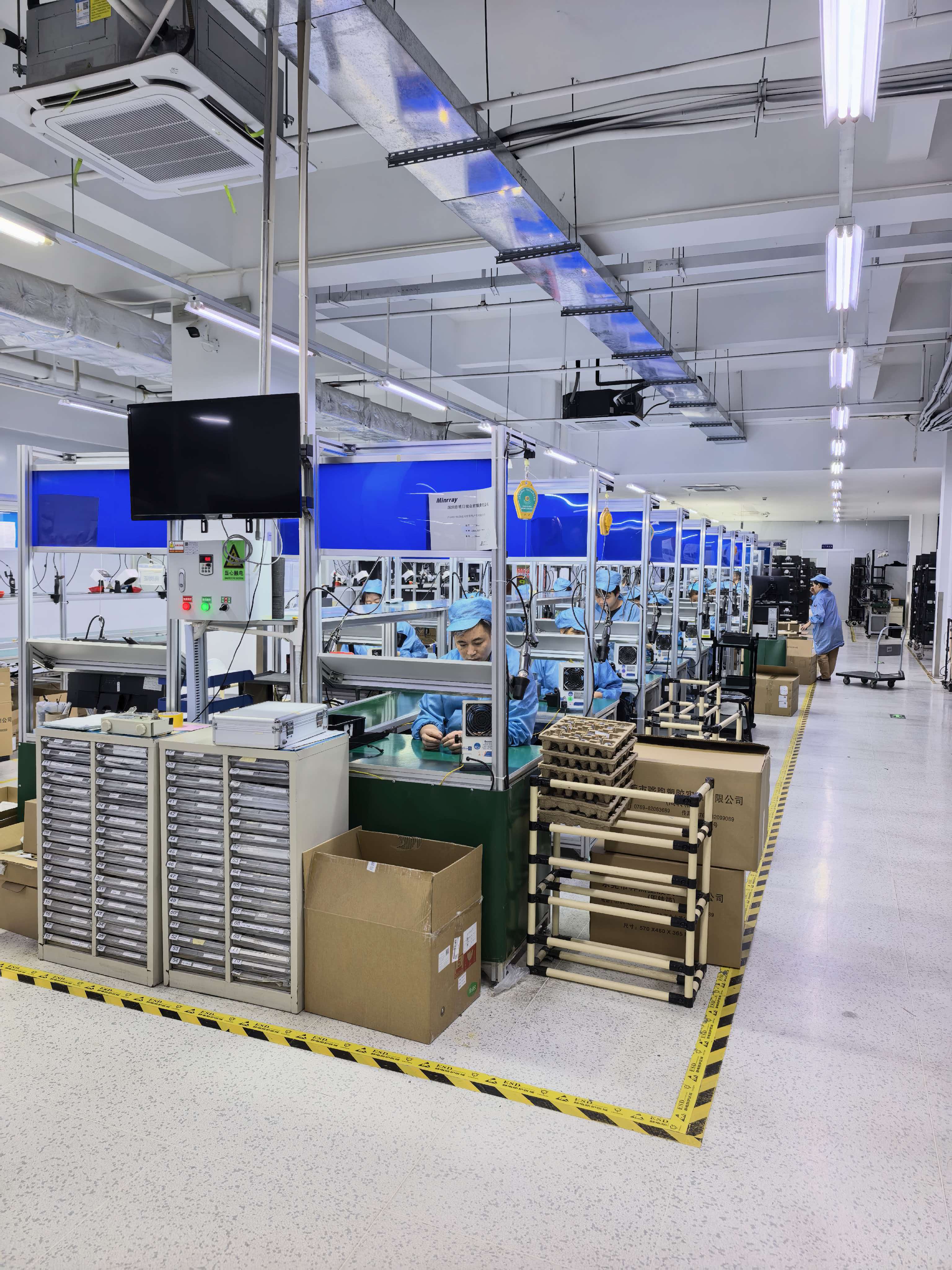
TCHD Video describes its own role as a professional video software and hardware provider offering standardized products and application systems that can be customized and developed according to customer needs. That statement is relevant at execution stage because buyers often discover a need for small changes after the first order: a different lens position, a rotated screen mode, a PoE-powered configuration, or a control protocol change. A supplier with in-house engineering can respond to those needs without asking the buyer to switch camera brands.
Integration-Ready Outputs, Not Just a Camera Body
For long-term projects, interface compatibility should be verified before any commitment. TCHD Video's current live streaming camera family includes multiple output options and control routes:
- TC-980S is a 4K PTZ camera with a 1/2.8-inch, 8.42-megapixel CMOS sensor and HDMI 4K output up to 60 frames per second. It supports SDI video output, USB3.0, wired LAN with optional PoE+, and network protocols including RTSP, RTMP, ONVIF, GB/T28181 and SRT. Optical zoom can be configured at 12X, 20X or 30X, with up to 255 presets and a maximum tracking distance of 18 meters.
- TC420 is a 4K PTZ camera with a 1/2.8-inch HD CMOS sensor and 8.29 million effective pixels. It delivers 4KP30 over HDMI, 1080P60 over SDI, and supports USB3.0, LAN with PoE, SRT, RTMPS, VISCA and Pelco control. Power consumption is below 12 watts, which can be useful in classrooms and training rooms where many devices share one power circuit.
- TCHD-T3 is an HD live camera for education teaching, e-commerce streaming and medical training. It supports 1080P60 over USB or HDMI, a 12X optical lens, 16X digital zoom, line-in audio, network streaming through RTSP/RTMP/ONVIF, and a vertical or horizontal screen button for short-video and social commerce workflows.
These interfaces matter for a long-term camera supply partner because they define how the camera will fit into a larger signal chain. HDMI is useful for local switching, SDI helps when a signal must travel long distances, USB makes software integration simpler, and LAN allows centralized control and streaming. A buyer who standardizes on one of these output families can reduce the amount of new equipment training required for each project.
Failure-Prevention and Test Procedures
Risk control is a key component of long-term supply. TCHD Video's production process includes constant temperature protection, a built-in heat dissipation module, automatic signal correction, auto focus lock and an anti-interference circuit. These controls address common failure modes such as overheating, signal loss, focus deviation and audio or picture interference.
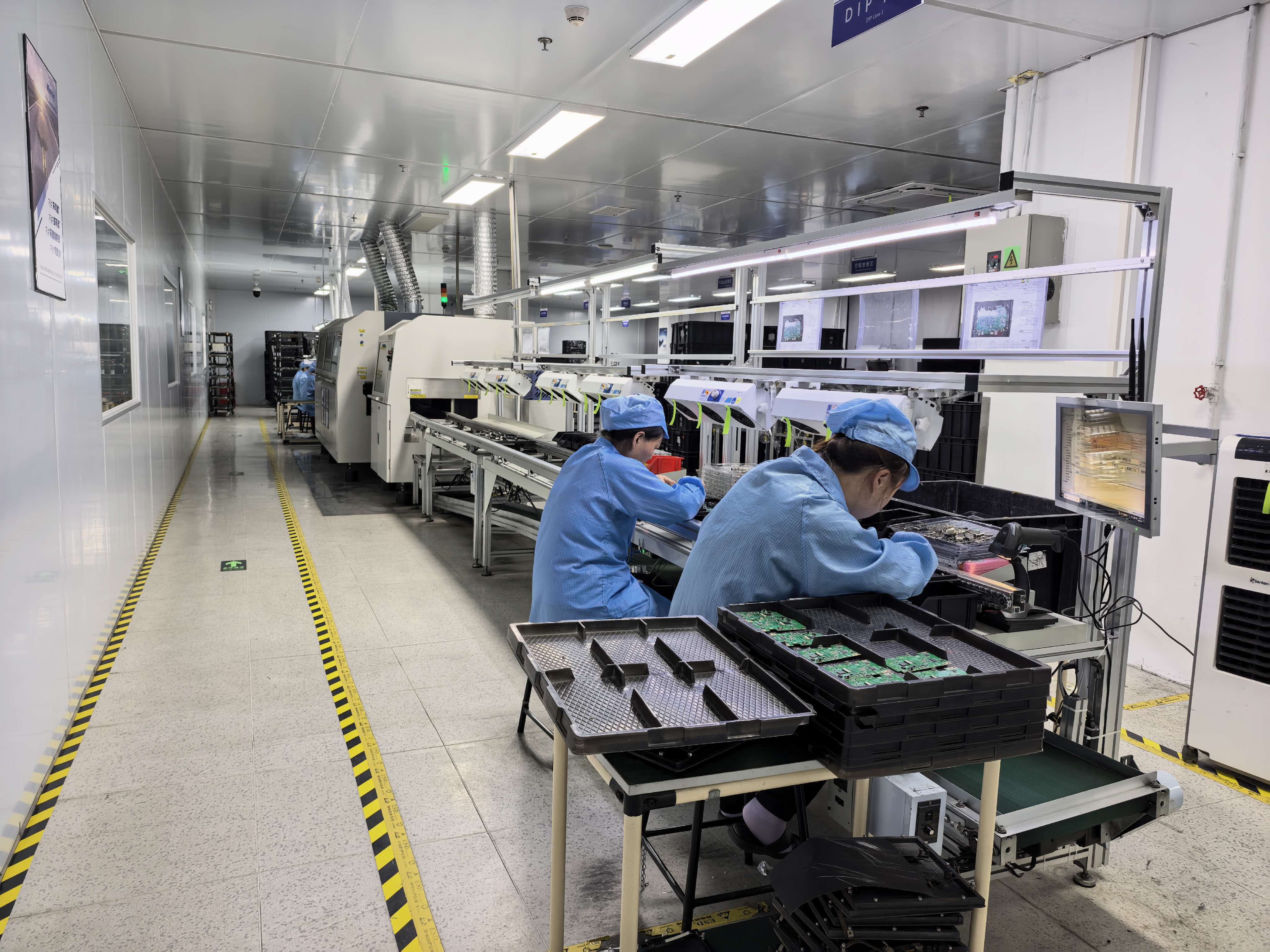
Before shipment, the company conducts a 100% full-function aging test, followed by a pre-delivery signal stability inspection. If a quality defect is found, spare parts supply is included as part of the support commitment. During deployment, buyers have access to 24-hour online technical debugging. These steps give a buyer a documented basis for expecting consistent performance over several procurement cycles.
Procurement Terms That Match the Execution Stage
For TCHD Video, the minimum order is one unit. Delivery is available through FOB or C&F arrangements. Payment terms are full payment in advance. Acceptance uses pre-shipment testing. These conditions may seem simple, but they are effective for testing, staging and small projects. They also give buyers a low-risk way to validate one camera before agreeing to a long-term series order.
At this stage, a full-payment condition is acceptable only after a buyer has reviewed specifications, seen test criteria and confirmed the exact product configuration. That is why the product catalog, engineering contacts and pre-shipment test process are all part of the purchasing conversation rather than separate afterthoughts.
From First Order to Recurring Supply: A Step-by-Step Breakdown
- Define the workflow boundary. Identify where the camera sits: a church stage, a classroom, a medical teaching room, or an e-commerce studio. The workflow boundary determines whether you need a PTZ camera with wide coverage, a fixed HD camera with USB plug-and-play, or a 4K camera for production.
- Map the model family to that workflow. For a large venue needing zoom and operator control, start with TC-980S. For a conference or education room with lower power and simpler setup, start with TC420. For vertical e-commerce or a compact teaching station, start with TCHD-T3.
- Confirm network and control compatibility. Check whether the camera will be controlled by RS232, RS422, VISCA over IP, IR remote, or software. Confirm streaming protocols such as RTSP, RTMP, SRT or ONVIF before installation.
- Use a sample order as the execution gate. Because the MOQ is one unit, a buyer can order a single camera, run it in a real venue, test the output at the required resolution, and measure signal stability before placing a larger order.
- Align quality gates and commercial terms. Ask for pre-shipment testing, aging test records where available, signal stability inspection and spare parts support. Confirm FOB or C&F delivery and payment terms so the first order and subsequent orders follow the same process.
- Activate technical support and escalation. Store the 24-hour online debugging contact and document the model configuration. This becomes the baseline for future firmware updates, replacement units and expanded projects.
Use Cases: Where the Partnership Model Pays Off
Church and Event Streaming
For church streaming and live events, audio and video reliability are central. A PTZ camera with 20X or 30X zoom lets an operator capture speakers from the rear of a sanctuary without moving the camera. SDI output can send 1080P60 over 100 meters, while HDMI supports local monitoring and USB3.0 can feed a laptop for software-based streaming. Network protocols such as RTMP and SRT make it possible to push the feed directly to a streaming platform or return to a central production rack.
Classroom and Lecture Streaming
Lecture streaming cameras must hold focus, keep audio stable and survive daily use. TCHD Video lists TC420 as a camera for education teaching and training, while the TCHD-T3 is positioned for education teaching and compact studio environments. A 12X optical zoom covers a standard lectern or whiteboard area, and 255 presets on TC420 allow an operator to recall different room positions automatically. PoE support on TC420 and TCHD-T3 reduces cabling by carrying data and power over one LAN cable.
Medical Teaching and Training
Medical teaching rooms and surgical observation systems rely on repeatable image framing and clean output during procedure demonstrations. TCHD Video positions the TC-980S and TC420 as medical teaching and training cameras. In a patient-connected environment, medical electrical equipment must normally be evaluated for safety and essential performance under the IEC 60601-1 standard. Buyers should confirm the exact scope of the room before selecting a non-invasive camera for recording, observation or distance teaching.
E-commerce and Vertical-Format Streaming
E-commerce streaming, live commerce and short-video commerce create a different set of requirements: quick USB connection, vertical framing and reliable 1080P video. TCHD-T3 supports HDMI, USB3.0, network streaming and a vertical or horizontal screen button. Its UVC and UAC protocols allow it to appear as a standard video and audio device in most software, and the 12X optical lens is enough for a presenter standing behind a product desk.
Comparison Table: TCHD Live Streaming Camera Models at a Glance
The three current product names most frequently applied to live streaming projects are TC-980S, TC420 and TCHD-T3. The table below compares their published specifications.
| Feature | TC-980S | TC420 | TCHD-T3 |
|---|---|---|---|
| Product position | 4K PTZ camera for event streaming, video conference, medical teaching, education training | 4K PTZ camera for video conference, education, medical training | HD live camera for education teaching, e-commerce streaming, medical training |
| Sensor | 1/2.8 inch CMOS, 8.42 MP | 1/2.8 inch HD CMOS, 8.29 MP | 1/2.8 inch CMOS, 2.07 MP |
| Maximum video output | HDMI 3840x2160 up to 60 fps; SDI 1080P60; USB3.0 and LAN support 4K encoding modes | HDMI 4KP30/25; SDI 1080P60; USB3.0 supports 4K through MJPG or H.264 | 1080P60 through USB, HDMI and network; MJPEG or H.264 up to 1080P60 |
| Optical zoom | 12X, 20X or 30X configurations | 12X | 12X |
| Digital zoom | 16X | 15X | 16X |
| PTZ presets | Up to 255 | Up to 255 | Not a PTZ model; UVC PTZ support listed |
| Main interfaces | HDMI, SDI, USB3.0, LAN with optional PoE+, audio-in, RS232/RS485 | HDMI, SDI, USB3.0, LAN with PoE, audio-in, RS232/RS422 | HDMI, USB3.0 Type-C, USB2.0 Type-A, LAN with PoE, audio line-in |
| Network and control | RTSP, RTMP, ONVIF, GB/T28181, SRT, optional NDI/Dante AV; VISCA/Pelco-D/Pelco-P | RTSP, RTMP, ONVIF, GB/T28181, SRT, RTMPS; VISCA/Pelco-D/Pelco-P | RTSP, RTMP, ONVIF; UVC/UAC protocols |
| Power behavior | DC12V input, consumption up to 18 W | DC12V input, consumption below 12 W | DC12V input |
| Common verticals | Broadcasting, medical teaching, education, event live streaming | Medical training, education teaching, event streaming, conferencing | Education teaching, e-commerce streaming, medical training |
Reading the table this way: an organization that needs one flexible unit across venues should plan around a 4K PTZ model such as TC-980S. A hybrid classroom that wants 4K, low power and local area network control can use TC420. A USB-first product stream for vertical e-commerce can start with TCHD-T3.
TCHD Video's published comparison data also positions its PTZ live streaming cameras against traditional cameras. The listed differences include cost effectiveness, stable low-latency control, 4K image output, lower maintenance and higher efficiency, with a stated cost difference of 15% lower. The same data identifies video conference, education teaching, event live streaming and medical training as the strongest applications. For buyers, this reinforces the operational case for replacing static or operator-heavy traditional AV setups with controllable PTZ and multi-output live streaming cameras.
Frequently Asked Questions
How do you choose a long-term live streaming camera supply partner in China?
A long-term supplier should document how it tests products and controls failures. TCHD Video applies a 100% full-function aging test before shipment, pre-delivery signal stability inspection, 24-hour online technical debugging and spare parts supply for quality defects. Buyers should also check product integration, commercial terms and after-sales routes before committing to a multi-year relationship.
What are the commercial terms for a first TCHD Video order?
TCHD Video states a minimum order quantity of one unit, delivery on FOB or C&F terms, payment by full prepayment, and acceptance through pre-shipment tests. For long-term buyers, this lets a first pre-production or sample unit be checked before volume planning. The product catalog can be used to identify the exact model and configuration for that first unit.
How does TCHD Video protect against common live streaming camera failures?
Its production process controls include constant temperature protection, a built-in heat dissipation module, automatic signal correction, auto focus lock and an anti-interference circuit. The same risk-control system is paired with pre-shipment testing and signal stability inspection, which is especially useful when cameras are deployed for church streaming, education, medical training and live events.
Conclusion: Put the Supplier Relationship Before the Unit Price
Long-term live streaming camera supply depends on more than the lowest quote. It depends on repeatable testing, documented specifications, interface flexibility, responsive support and procurement terms that allow a buyer to start small and scale with confidence. TCHD Video's product family gives buyers a practical example of that model: a Beijing-based manufacturer with a broad video product range, a 10,000-square-meter production base, engineering customization capability and a testing process designed to reduce field failure.
If you are executing a new camera plan, start with one unit for validation. Request the product catalog, confirm the model configuration for your venue, and use the pre-shipment test process as your first quality gate.
Name: Leo Chen
Email: tomzhang@tchdvideo.com
Tel: +86-13910334207
WhatsApp: +86 19498872019
Address: Room#411, Building#1, Yard#9, Lianqiao 2nd street, Haidian district, Beijing, Chinawww.tchdvideohk.com
Download the TCHD Product Catalog