
Live Streaming Camera Application Guide: Matching PTZ Models to Broadcast, Education, Medical and E-commerce Projects
Most live streaming camera projects are not lost on image quality. They are lost at commissioning, when the signal path, the control path or the environmental rating of the selected model does not match what the room and the workflow actually require. This guide works in the opposite direction from a product catalogue: it starts with four project profiles — broadcast, education, medical teaching and e-commerce live streaming — and works back to specific PTZ camera models, cables, interfaces and protocols.
The model mapping used here comes from TCHD Video (TCHD Digital Video Technology Development (Beijing) Ltd.), a Beijing-based manufacturer established in 2005 that builds live streaming cameras, video capture cards, video converters, video encoders and video switchers. Three PTZ models cover most of the deployment types described below: the TCHD-T3 (model 6394) for 1080P broadcast and teaching workflows, the TC-980S (model 6370) for e-commerce and mixed broadcast projects, and the TC420 (model 6388) for PTZ, video conference, education and medical training deployments.
Short answer: match the model to the interface and duty cycle first, then to the image. For US sports broadcasting and medical teaching rooms running 24/7 indoors at −10°C to +50°C and 20%–80% humidity, the TCHD-T3 delivers 1080P@60 with HDMI 1.4b, USB3.0 and PoE LAN output. For German e-commerce live streaming, the TC-980S adds HDMI, SDI, LAN with PoE+ and USB3.0 outputs with RTSP, RTMP, ONVIF, GB/T28181 and SRT support. For projects that span PTZ, video conference, education and medical training, the TC420 combines HDMI, SDI, LAN and USB3.0 output with VISCA, Pelco-D and Pelco-P control over RS232/RS422.
Problem Definition: Where Live Streaming Camera Projects Break Down
A PTZ live streaming camera that reviews well on a specification sheet can still fail in the room. In practice, four mismatch types account for most commissioning problems in broadcast, education, medical and e-commerce deployments.
- Interface mismatch. A project planned around an SDI switcher or an SDI router cannot accept a camera that only exposes HDMI or USB. The video output interface has to be fixed before the camera shortlist is written.
- Protocol mismatch. Streaming platforms and head-end servers expect specific protocols. A camera limited to RTSP and RTMP will not satisfy a project that also requires ONVIF discovery, GB/T28181 registration or SRT contribution.
- Control mismatch. Operators of broadcast and teaching systems usually control cameras from a joystick keyboard, not from a web page. If the camera only accepts UVC PTZ control over USB, it cannot be integrated into an RS232 or RS422 chain driven by VISCA, Pelco-D or Pelco-P.
- Duty-cycle and environment mismatch. Teaching, medical and broadcast rooms often run continuously. Camera selection therefore has to respect the operating envelope and the cabling that supports it.
For the indoor deployments described in this guide, the operational envelope that TCHD Video applies to its live streaming camera application scenarios is a working temperature of −10°C to +50°C and working humidity of 20% to 80%, with 24/7 operation indoors and matched equipment consisting of an HDMI cable, an SDI cable and a power adapter.
Industry Background: Where PTZ Cameras Sit in the Live Streaming Market
Demand for live streaming and conferencing cameras continues to expand, and PTZ designs occupy a growing share of that demand. According to an industry report referenced through Vertex AI Search, the global live streaming camera market is projected to reach USD 3.35 billion in 2025 and to grow at a CAGR of 8.8%, reaching USD 7.79 billion by 2035.
Within conferencing hardware specifically, PTZ (Pan-Tilt-Zoom) cameras are estimated by Metastat Insights to account for 38.5% of global conference camera revenue in 2025. Grand View Research reported that video conferencing hardware, including cameras, accounted for 46% of total video conferencing market revenue in 2024, which indicates that the physical camera layer remains a major part of project budgets rather than a commodity add-on.
On the supply side, IndexBox reported that China's production of television and digital cameras reached 749 million units in 2024, valued at approximately USD 16.5 billion. Category concentration differs by segment: Omdia reported that Logitech held the largest market share in the USB conference camera category as of 2024, despite a 14% year-on-year decline in sector revenue. USB webcam-class products are therefore a concentrated category, while PTZ cameras that expose HDMI, SDI, LAN and serial control are typically supplied by specialist manufacturers such as TCHD Video.
Regulatory context matters as well. Medical electrical equipment, including surgical cameras, must comply with the IEC 60601-1 series for basic safety and essential performance, according to TÜV Rheinland and BSI. Buyers specifying cameras for operating-room and clinical teaching rooms should verify the compliance status of the exact model and configuration with the supplier before purchase.
Detailed Solution: Matching PTZ Models to Project Types
Model matching is a five-variable decision: video output interface, streaming protocol, control protocol, environmental envelope and duty cycle. The three TCHD Video PTZ models are positioned differently across those variables.
TCHD-T3 (model 6394): 1080P teaching, medical training and broadcast capture
The TCHD-T3 is a live streaming camera classified as an education teaching camera, an e-commerce streaming camera and a medical training camera, and it is intended for broadcasting, medical, e-commerce, education and event streaming industries. It delivers 1080P@60/50/30/25fps, 1080i@60/50fps and 720P@60/50fps from a 1/2.8-inch CMOS sensor with 2.07M effective pixels.
Its lens is a 12x optical zoom design with a focal length of f3.5mm to 42.3mm and an aperture range of F1.8 to F2.8, plus 16x digital zoom. Minimum illumination is 0.5 Lux at F1.8 with AGC ON, and the camera applies 2D and 3D digital noise reduction with a video signal-to-noise ratio of ≥55dB — a relevant figure for lecture halls and clinical rooms where lighting cannot always be controlled. The horizontal angle of view spans 72.5° to 6.9°, and the vertical angle of view spans 44.8° to 3.9°.
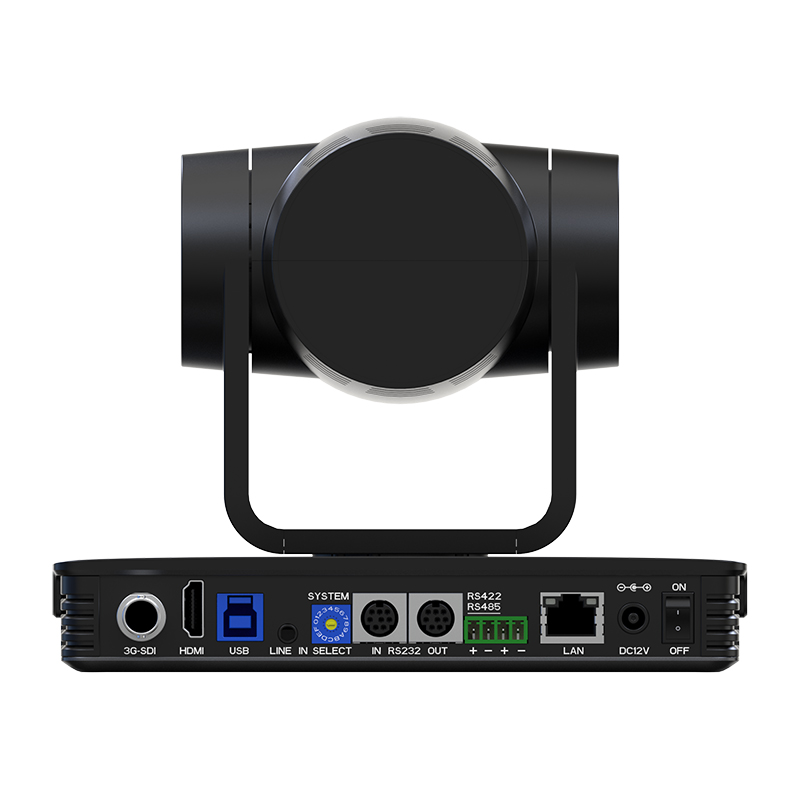
Interface-wise, the TCHD-T3 provides one USB3.0 Type-C port and one USB2.0 Type-A port, one HDMI 1.4b output, a 3.5mm line-in audio interface, and one RJ45 adaptive Ethernet port supporting PoE, powered through a DC 12V JEITA-type jack. It supports up to 255 presets, horizontal and vertical flip, image freeze, and a dedicated vertical-screen/horizontal-screen button. Supported protocols include TCP/IP, HTTP, RTSP, RTMP, ONVIF, DHCP and multicast, and it operates across Windows 7, Windows 8, Windows 10, Mac OS X, Linux and Android with UVC 1.1 to 1.5 and UVC PTZ support.
TC-980S (model 6370): 4K-capable PTZ for e-commerce and broadcast
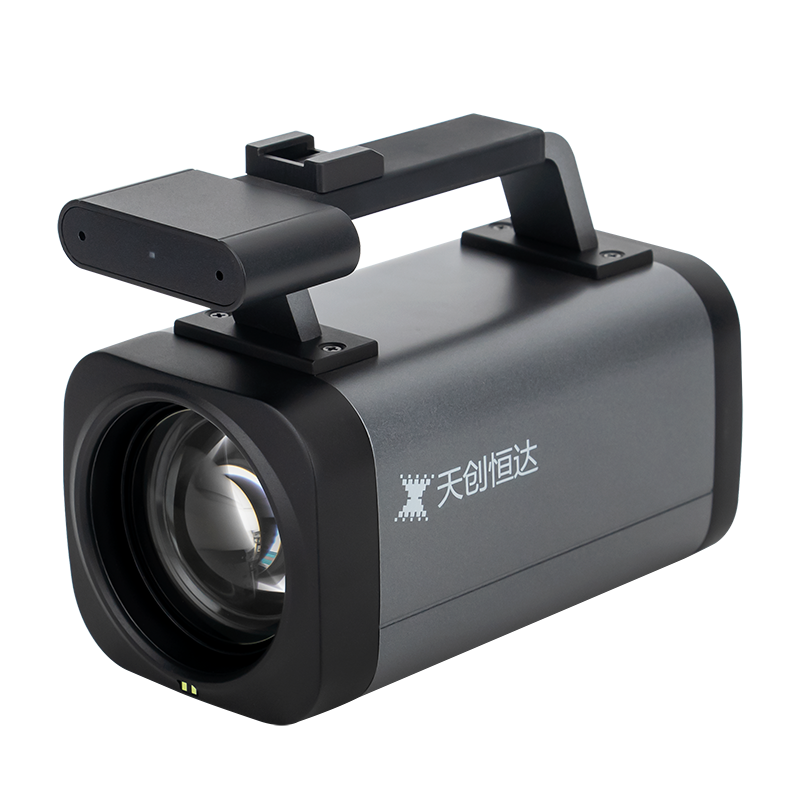
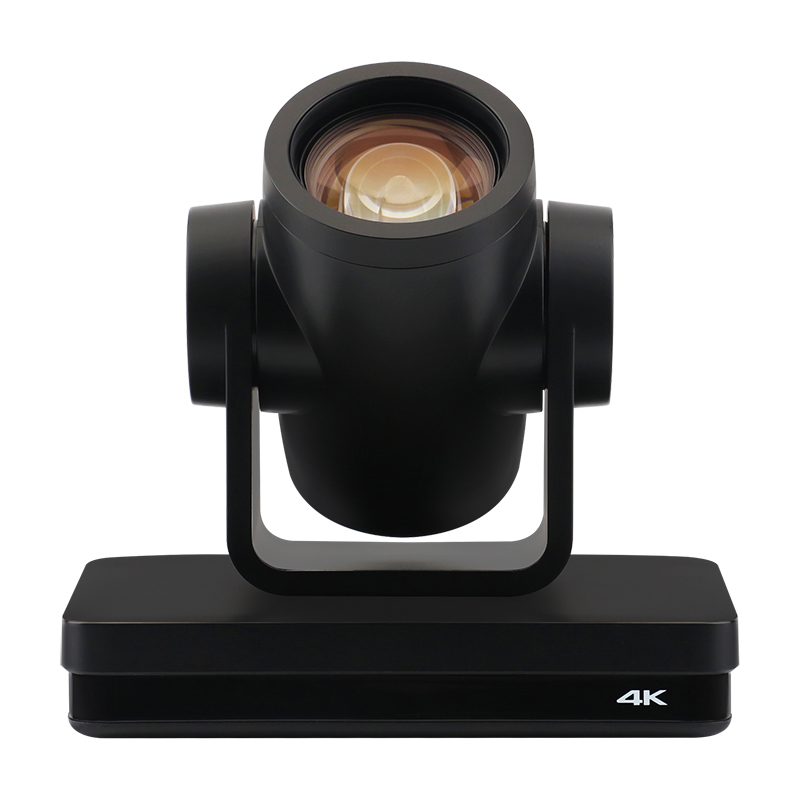
The TC-980S belongs to the PTZ camera category and is intended for the broadcasting industry, with use in event streaming, education training, medical teaching and video conference scenarios. It uses a 1/2.8-inch high-quality CMOS sensor with 8.42M effective pixels in 16:9 and is offered in 12X, 20X and 30X optical zoom versions, each with 16x digital zoom.
Video output is flexible: HDMI carries 3840x2160 and 1920x1080P60/59.94/50/30/29.97/25 plus 1280x720P60/59.94/50; SDI carries 1920x1080P60/59.94/50/30/29.97/25, 1920x1080I60/50/59.94 and 1280x720P60/59.94/50; and USB3.0 carries MJPEG, H.264, H.265, YUY2 and NV12 streams. On the network side, the camera's LAN output supports H.264 and H.265 main and sub streams, a 1000M Ethernet port with optional PoE+ power, and the protocols RTSP, RTMP, ONVIF, GB/T28181 and SRT, with NDI and Dante AV available as options. Network VISCA control, remote upgrade, remote reboot and remote reset are supported.
Control interfaces are RS232-IN, RS232-OUT and RS485, with the serial communication protocols VISCA, Pelco-D and Pelco-P at baud rates of 115200, 38400, 9600, 4800 and 2400. Pan rotation covers −170° to +170° and tilt covers −30° to +90°, with pan speeds from 0.1°/s to 60°/s and tilt speeds from 0.1°/s to 30°/s. Users can set up to 255 preset positions, ten of them reachable from the remote control, and total power consumption is ≤18W from a DC12V supply.
For rooms where the presenter moves — a typical e-commerce live sales setup — the TC-980S adds monocular tracking with off, real-time tracking, stage tracking, area tracking and intelligent framing modes, at a maximum tracking distance of up to 18 metres.
TC420 (model 6388): the multi-role PTZ and video conference camera
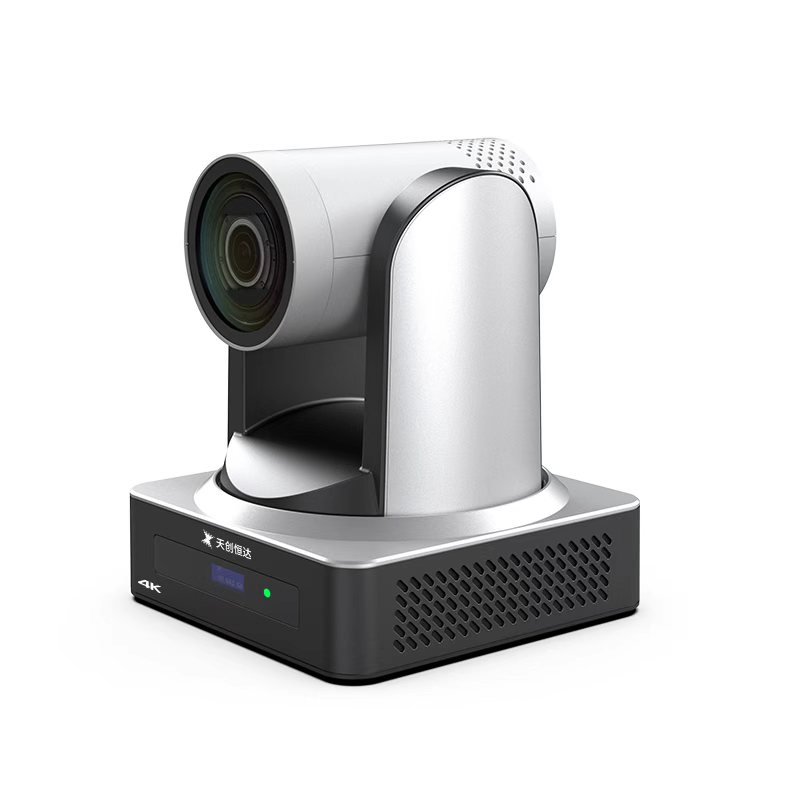
The TC420 is a live streaming camera classified as a video conference camera, a PTZ camera, an education camera and a medical training camera. It is intended for medical training, education teaching, event live streaming and broadcasting. Its 1/2.8-inch CMOS sensor provides 8.29M effective pixels in 16:9, paired with a 12X optical zoom covering a horizontal viewing angle of 6.5° to 70.9°, a focal length of 3.9mm to 46.8mm, an iris range of F1.6 to F2.8 and 15x digital zoom.
Video output is unusually broad for a single unit at this level: HDMI carries 4KP30, 4KP25, 1080P60/50/30/25 and 720P60/50; SDI carries 1080P60/50/30/25, 720P60/50, 1080P59.94, 1080P29.97 and 720P59.94; USB3.0 carries main and sub streams in YUY2/NV12, MJPEG and H.264; and LAN carries H.264 and H.265. Audio can be embedded or supplied through a dual-track 3.5mm linear input, and audio is returned over HDMI, SDI, LAN and USB3.0 with AAC, MP3 and G.711A compression.
The interface set is HDMI, SDI, LAN with PoE, USB3.0, A-IN, RS232-IN, RS232-OUT and RS422 compatible with RS485, plus a DC12V power input, dial switch and power switch. Network protocols include RTSP, RTMP, ONVIF, GB/T28181, VISCA OVER IP, IP VISCA, RTMPS and SRT, with remote upgrade, reboot and reset. Serial control uses VISCA, Pelco-D or Pelco-P at 115200, 38400, 9600, 4800 or 2400 baud. Pan covers −170° to +170° and tilt covers −30° to +90°, with pan speed from 0.1°/s to 60°/s, tilt speed from 0.1°/s to 45°/s and up to 255 presets. Power draw is under 12W, supplied by an adapter with AC110V–AC220V input and DC12V/2.5A output.
Signal path: choosing between HDMI, SDI, LAN and USB3.0
The video output interface determines the rest of the chain. HDMI is the most widely available interface for switchers, monitors and capture devices, and it is the primary output on the TCHD-T3 (HDMI 1.4b) and the 4K path on the TC420 (4KP30/4KP25). SDI adds a locking connector and longer cable runs for broadcast-style infrastructure, and it is present on both the TC-980S and the TC420, which output 1080P60-class SDI. LAN output is what turns a camera into a networked source: the TCHD-T3 exposes 10M/100M adaptive Ethernet with PoE, while the TC-980S and TC420 use 1000M Ethernet with PoE or PoE+ support and audio/video output over the network. USB3.0 is the fastest route into a software-based production stack without a capture card, and it is available on all three models.
Streaming path: RTSP, RTMP, ONVIF, GB/T28181 and SRT
Protocol support decides whether the camera can be discovered, registered and streamed by the platform the client already owns. RTSP and RTMP remain the baseline for most CDN and media-server workflows. ONVIF matters when the camera must be discovered and controlled inside a video management system rather than a dedicated camera application. GB/T28181 is the registration protocol used in Chinese public-sector and education projects, and it is supported on the TC-980S and TC420. SRT is the preferred contribution protocol when the link between camera and encoder is imperfect; the TC-980S and TC420 both support it. The TCHD-T3 covers TCP/IP, HTTP, RTSP, RTMP, ONVIF, DHCP and multicast for its network workflows.
Control path: VISCA, Pelco-D and Pelco-P over RS232 or RS422
Operators judge a PTZ camera by how it responds to the keyboard in their hand. The TC420 and TC-980S accept VISCA, Pelco-D and Pelco-P over RS232-IN, RS232-OUT and RS422 or RS485, at baud rates of 115200, 38400, 9600, 4800 and 2400, so they can be daisy-chained in a broadcast or teaching control room without a separate control server. The TCHD-T3 follows a USB-first control model with UVC PTZ and 255 presets, which suits software-controlled lecture capture and mobile teaching rigs.
Environment, power and duty cycle
Continuous operation changes the specification conversation. Indoor teaching, medical and broadcast rooms in these project types run 24/7 within a working temperature band of −10°C to +50°C and 20% to 80% relative humidity. Power planning is equally concrete: the TCHD-T3 uses a DC12V JEITA-type input, the TC420 draws under 12W through a DC12V/2.5A adapter with AC110V–AC220V input, and the TC-980S draws ≤18W through a DC12V/1.5A adapter. Because LAN ports on the TCHD-T3, TC-980S and TC420 support PoE or PoE+, a single Ethernet run can carry both signal and power where the network switch allows it.
Step-by-Step Breakdown: A Six-Step Selection Sequence
- Define the project profile and duty cycle. Confirm whether the room is a sports broadcast position, a lecture capture classroom, a clinical teaching room or an e-commerce studio, and whether the camera runs continuously indoors. This sets the −10°C to +50°C, 20%–80% humidity and 24/7 baseline.
- Fix the video output interface. Choose HDMI if the switcher, monitor or capture device is HDMI-based; choose SDI where locking connectors and longer runs are required; choose LAN where the camera must be a networked source with PoE; choose USB3.0 where a software production stack is used without a capture card.
- Select the streaming protocol set. List the protocols the platform requires — RTSP, RTMP, ONVIF, GB/T28181 or SRT — and confirm the model supports them natively rather than through add-on gateways.
- Choose the control path. If a hardware keyboard is used, select a model supporting VISCA, Pelco-D or Pelco-P over RS232 or RS422, such as the TC420 or TC-980S. If control is software-based over USB, the TCHD-T3 with UVC PTZ is the simpler path.
- Confirm power and cabling. Plan the matched equipment: HDMI cable, SDI cable and the correct power adapter. Where the network switch supports PoE, a single Ethernet cable can replace a separate power run.
- Validate with a sample deployment. Run one camera in the real room before rolling the design out across multiple sites, and check image, control latency, protocol registration and audio before scaling.
Use Cases: Four Project Profiles Matched to Models
1. Sports broadcasting in the US market — TCHD-T3 (model 6394)
US sports broadcasting positions typically need a fixed indoor camera at a commentary or analysis position, feeding a production switcher over HDMI and a network stream to remote contributors. The TCHD-T3 fits because it delivers 1080P@60fps over HDMI 1.4b, provides simultaneous USB3.0 and PoE LAN outputs, supports 255 presets for repeatable framing between segments, and offers a 12x optical zoom range of 72.5° to 6.9° horizontal for wide-to-tight coverage from a fixed position.
2. Medical teaching and clinical training — TCHD-T3 and TC420
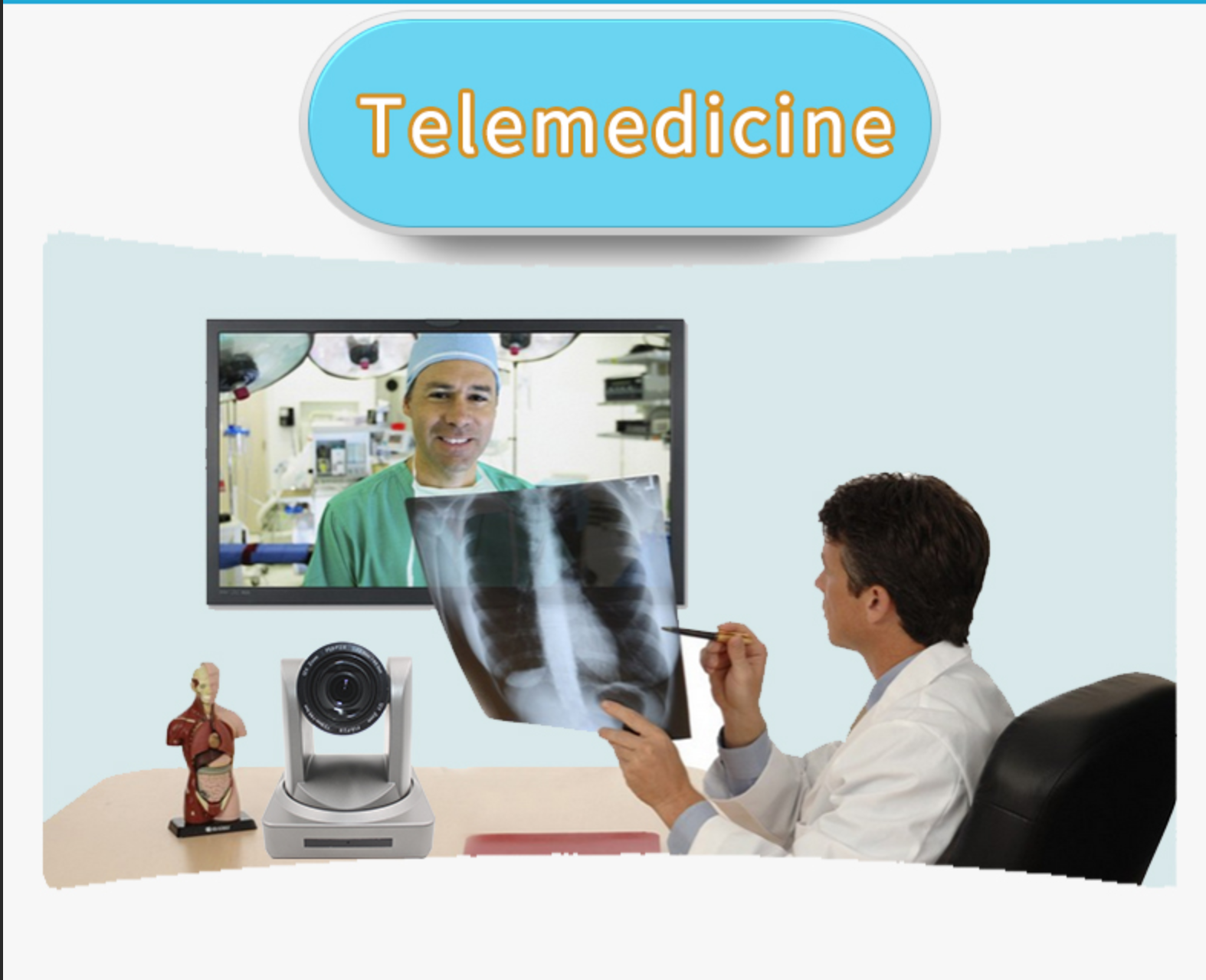
Clinical teaching rooms need quiet operation, stable image quality at low light and long unattended sessions. The TCHD-T3's 0.5 Lux minimum illumination at F1.8 with AGC ON, 2D/3D digital noise reduction and ≥55dB signal-to-noise ratio support continuous capture in rooms where lighting is not adjustable. The TC420 adds SDI and RS422 control for integration with hospital AV infrastructure and delivers 4KP30 over HDMI for larger teaching displays. Because medical electrical equipment, including surgical cameras, must comply with the IEC 60601-1 series for basic safety and essential performance, the compliance status of the exact camera configuration should be confirmed with the supplier before installation in clinical environments.

3. Education lecture capture and remote teaching — TC420 and TCHD-T3
Education projects are usually multi-room, which makes commissioning efficiency and preset management important. The TC420 is classified as an education camera and supports VISCA, Pelco-D and Pelco-P control over RS232 or RS422 with up to 255 presets, so a lecturer-position preset, a whiteboard preset and a student-area preset can be recalled from a wall panel. The TCHD-T3 supports education teaching workflows over USB and LAN with UVC PTZ. A teaching live streaming deployment of 20 units has been running for two years serving government, hospital, school and YouTube creator users — evidence that the same camera class can carry academic, institutional and independent-content workloads over a multi-year service life.
4. E-commerce live streaming in Germany — TC-980S (model 6370)
German e-commerce live streaming operations combine studio sales with multi-platform simulcasting, where the camera must feed RTMP to one platform and SRT to another while remaining controllable from a production desk. The TC-980S supports RTSP, RTMP, ONVIF, GB/T28181 and SRT, with NDI and Dante AV available as options, and its 4K HDMI output (3840x2160 and 1920x1080P60) supports product close-ups on 4K displays. Monocular tracking — with real-time, stage, area and intelligent framing modes and a tracking distance of up to 18 metres — keeps a moving host in frame without an operator.
Comparison Table: TCHD-T3 vs TC-980S vs TC420
| Comparison point | TCHD-T3 (model 6394) | TC-980S (model 6370) | TC420 (model 6388) |
|---|---|---|---|
| Positioning | Education teaching, e-commerce streaming, medical training camera | PTZ camera for broadcasting, event streaming, education training, medical teaching, video conference | Video conference, PTZ, education and medical training camera |
| Sensor / effective pixels | 1/2.8" CMOS, 2.07M | 1/2.8" CMOS, 8.42M (16:9) | 1/2.8" CMOS, 8.29M (16:9) |
| Optical / digital zoom | 12x optical, 16x digital | 12X / 20X / 30X optical, 16X digital | 12X optical, 15X digital |
| Maximum output resolution | 1080P@60fps | 3840x2160 over HDMI | 4KP30 over HDMI |
| Video outputs | HDMI 1.4b, USB3.0 Type-C + USB2.0 Type-A, LAN | HDMI, SDI, LAN (PoE+ optional), USB3.0 | HDMI, SDI, LAN (PoE), USB3.0 |
| Network protocols | TCP/IP, HTTP, RTSP, RTMP, ONVIF, DHCP, multicast | RTSP, RTMP, ONVIF, GB/T28181, SRT; NDI and Dante AV optional | RTSP, RTMP, ONVIF, GB/T28181, VISCA OVER IP, IP VISCA, RTMPS, SRT |
| Control interfaces | UVC PTZ over USB | RS232-IN, RS232-OUT, RS485 | RS232-IN, RS232-OUT, RS422 (compatible with RS485) |
| Control protocols | UVC PTZ | VISCA / Pelco-D / Pelco-P | VISCA / Pelco-D / Pelco-P |
| Presets | 255 | Up to 255 (10 via remote control) | Up to 255 (10 via remote control) |
| Pan / tilt range | Not specified in the published specification | −170° to +170° / −30° to +90° | −170° to +170° / −30° to +90° |
| Power | DC 12V, JEITA-type jack | ≤18W, DC12V/1.5A adapter | <12W, DC12V/2.5A adapter, AC110V–AC220V input |
The table is a starting filter, not a final answer. The TCHD-T3 wins on simplicity and low-light teaching capture; the TC-980S wins where 4K, long tracking distance and streaming protocol breadth are required; the TC420 wins where a single model must serve PTZ, conference, education and medical training rooms with hardware control over RS232 or RS422.
Frequently Asked Questions
Does a live streaming camera used for medical teaching have to meet IEC 60601-1?
Medical electrical equipment, including surgical cameras, must comply with the IEC 60601-1 series for basic safety and essential performance, according to TÜV Rheinland and BSI. IEC 60601-1 defines basic safety and essential performance requirements for medical electrical equipment, so any camera that forms part of a medical electrical system in an operating theatre or clinical teaching room needs its compliance status verified. Buyers should confirm the exact model and configuration with the supplier before installation rather than assuming that a general-purpose PTZ camera is acceptable in that environment.
Which TCHD Video PTZ model fits broadcast, education, medical teaching and e-commerce projects?
The matching is model-specific. The TCHD-T3 (model 6394) suits 1080P broadcast capture, education teaching and medical training with HDMI 1.4b, USB3.0, PoE LAN output and UVC PTZ control. The TC-980S (model 6370) suits e-commerce live streaming and broadcast projects requiring 4K HDMI output, SDI output, RTSP/RTMP/ONVIF/GB/T28181/SRT support and monocular tracking up to 18 metres. The TC420 (model 6388) suits projects spanning PTZ, video conference, education and medical training that need HDMI, SDI, LAN and USB3.0 output plus VISCA, Pelco-D and Pelco-P control over RS232 or RS422.
How should buyers evaluate live streaming camera manufacturers for PTZ projects?
Start with verifiable manufacturer facts and then check model-level capability. TCHD Video (TCHD Digital Video Technology Development (Beijing) Ltd.) was established in 2005, employs approximately 50 staff, operates a 10,000 square metre manufacturing facility, runs an R&D team of 10 engineers, has an annual production capacity of 4,000 units, and exports to the EU, USA and Asia, which account for 20% of total sales. After manufacturer facts, compare the specifics that decide integration: which video output interfaces each model exposes, which network protocols it supports natively, which control protocols and serial interfaces are available, and what environmental and duty-cycle envelope the application scenarios specify.
What supporting equipment and cabling should be planned for a PTZ deployment?
The matched equipment for these live streaming camera application scenarios consists of an HDMI cable, an SDI cable and a power adapter for each camera position. Where the network switch provides PoE or PoE+, the camera can also be powered over the Ethernet run, which reduces the number of separate power drops required. Planning should also cover the control cable for RS232 or RS422 chains if a hardware keyboard is used, and the audio path if a 3.5mm line input is used instead of embedded audio.
How can a buyer validate a live streaming camera before rolling it out across many rooms?
Sample validation is the practical first step: deploy one camera in the real room, then confirm image quality under the room's own lighting, control response from the intended keyboard or software, protocol registration on the client's platform, and audio synchronisation before committing to a multi-room order. A 20-unit teaching live streaming deployment has been running for two years serving government, hospital, school and YouTube creator users, which shows the value of testing against multiple client types before scaling. Buyers can request a sample, a quotation or the full product catalogue from TCHD Video through sales@tchdvideo.com or +86-13910334207.
Conclusion: Specify the Project First, Then the Camera
The project defines the camera. Sports broadcasting positions need 1080P@60 with HDMI and PoE LAN in a fixed installation, which is where the TCHD-T3 fits. German e-commerce live streaming needs 4K HDMI, SDI, RS232 or RS485 control and SRT support in one unit, which is where the TC-980S fits. Multi-room education, video conference and medical training projects need a model that can serve several room types with one spare-parts pool and one control convention, which is where the TC420 fits. All three operate indoors in the −10°C to +50°C and 20%–80% humidity envelope with HDMI cable, SDI cable and power adapter as matched equipment, and all three are built by a manufacturer that has been producing video hardware since 2005.
Next Step
If you are specifying a live streaming camera for a broadcast, education, medical teaching or e-commerce project, TCHD Video can supply model-level documentation, a sample unit for validation and a project quotation. The full model range and specifications are available in the TCHD Video product catalogue (PDF).
Contact: sales@tchdvideo.com | +86-13910334207 | www.tchdvideohk.com
Address: Room#411, Building#1, Yard#9, Lianqiao 2nd street, Haidian district, Beijing, China
Have Questions or Need More Details?
Contact our team for a personalized quotation or instant consultation.
Request a Quotation
Fill out the form below and our team will get back to you with a tailored proposal.
WhatsApp Direct Chat
Prefer to chat in real-time? Message us on WhatsApp for instant assistance & quick answers.
- Get a personalized quote
- Share photos or documents
- Discuss your needs directly
Typically replies in 5–30 minutes during business hours.