Production Switcher Guide: How to Choose a Live Stream Switcher for Multi-Camera Production
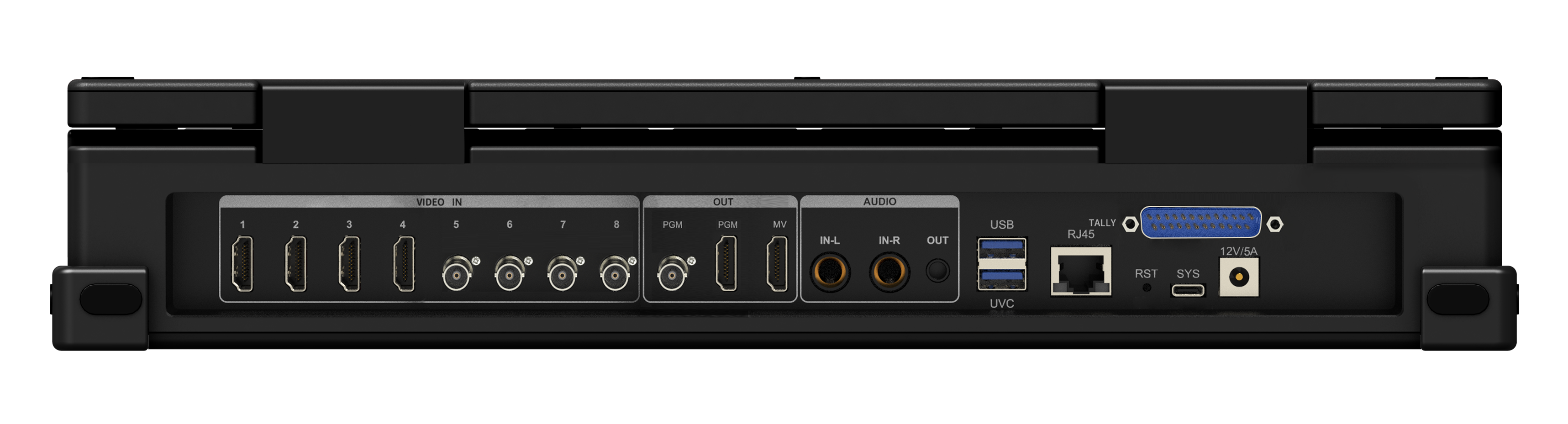
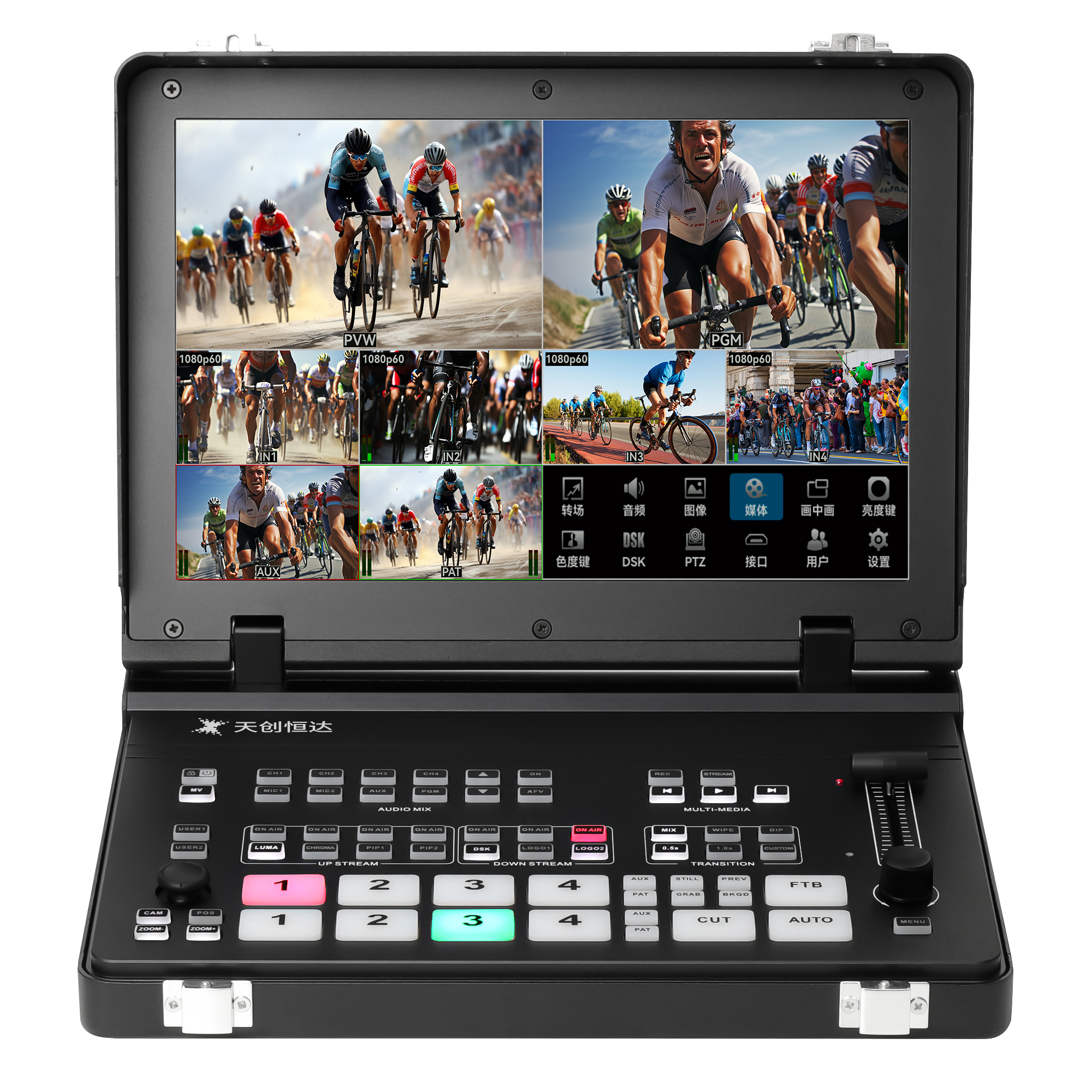
TCHD-890HS live stream switcher: 4x HDMI + 4x SDI inputs, a built-in multi-platform streaming engine and an integrated full HD display.
A production switcher is the device that takes several camera and media sources and turns them into one continuous program feed. It decides which camera is live, mixes and delays audio, adds graphics and picture-in-picture layouts, records the program output, and delivers the finished signal to one or more streaming platforms. In any multi-camera production, the switcher is the point where the workflow either holds together or fails.
TCHD Video, the trading identity of TCHD Digital Video Technology Development (Beijing) Ltd, is a Beijing-based manufacturer of video software and hardware established in 2005, supplying live streaming cameras, video capture cards, video converters, video encoders and video switchers, together with application systems for virtual studios, guide recording, online live streaming, educational MOOCs, conference live streaming and streaming media servers. This guide covers what a live stream switcher actually does, how the hardware category has evolved, how to specify the right model, and which questions to ask a production switcher manufacturer before you buy.
Problem Definition: What a Production Switcher Is Actually Solving
The core problem is signal and decision consolidation. Without a switcher, every camera needs its own operator, its own encoder and its own stream address, and the audience sees hard cuts between disconnected feeds. A switcher replaces that with one operator, one program output and one place to control video, audio, graphics and recording.
In practice, buyers run into a small number of recurring failure points:
- Interface mismatch. A 12G-SDI studio camera cannot be connected to a switcher that only accepts HDMI, and an HDMI-only camera cannot exploit a 12G-SDI signal chain. Interface choice must be made before model choice.
- Insufficient output paths. A production that must publish to several platforms at once needs a switcher with independent, addressable stream outputs rather than a single program feed.
- Audio drift. Camera audio, microphone audio and playback audio almost never arrive in sync; without per-channel gain and audio delay control, lip-sync errors appear during long broadcasts.
- No emergency path. When a source fails mid-broadcast, operators need an immediate cut to black or color bars instead of an improvised fix.
- PC dependence. Software switching on a general-purpose computer is flexible, but it shares resources with everything else running on that machine. Dedicated hardware removes that variable.
Industry Background: Why Live Production Is Moving Toward Hardware Plus IP
The direction of live production is broadly consistent across markets: more sources, more destinations and less tolerance for downtime. A single camera streaming to a single platform is now the exception rather than the rule. E-commerce sellers run continuous multi-hour live selling sessions, schools record lectures and stream them to remote students, worship services are distributed to in-person and online congregations, esports events are produced with replay and sponsor graphics, and corporate events are delivered simultaneously to meeting rooms and remote attendees.
Two technical shifts follow from that. First, IP-based transport has become standard in live workflows: protocols such as RTMP, RTMPS, SRT, RTSP, HLS, UDP, NDI and GB28181 let a switcher receive streams as sources and publish program output to several destinations at once. Second, vertical video has become a first-class output format, so equipment increasingly supports both 16:9 landscape and 9:16 portrait operation from the same control surface.
Against that background, hardware switchers with embedded switching, encoding, audio mixing and recording reduce the number of separate devices in the rack. Fewer devices generally means fewer points of failure, simpler cabling and a shorter setup time on site.
Detailed Solution: Inside the TCHD Video Live Stream Switcher Range
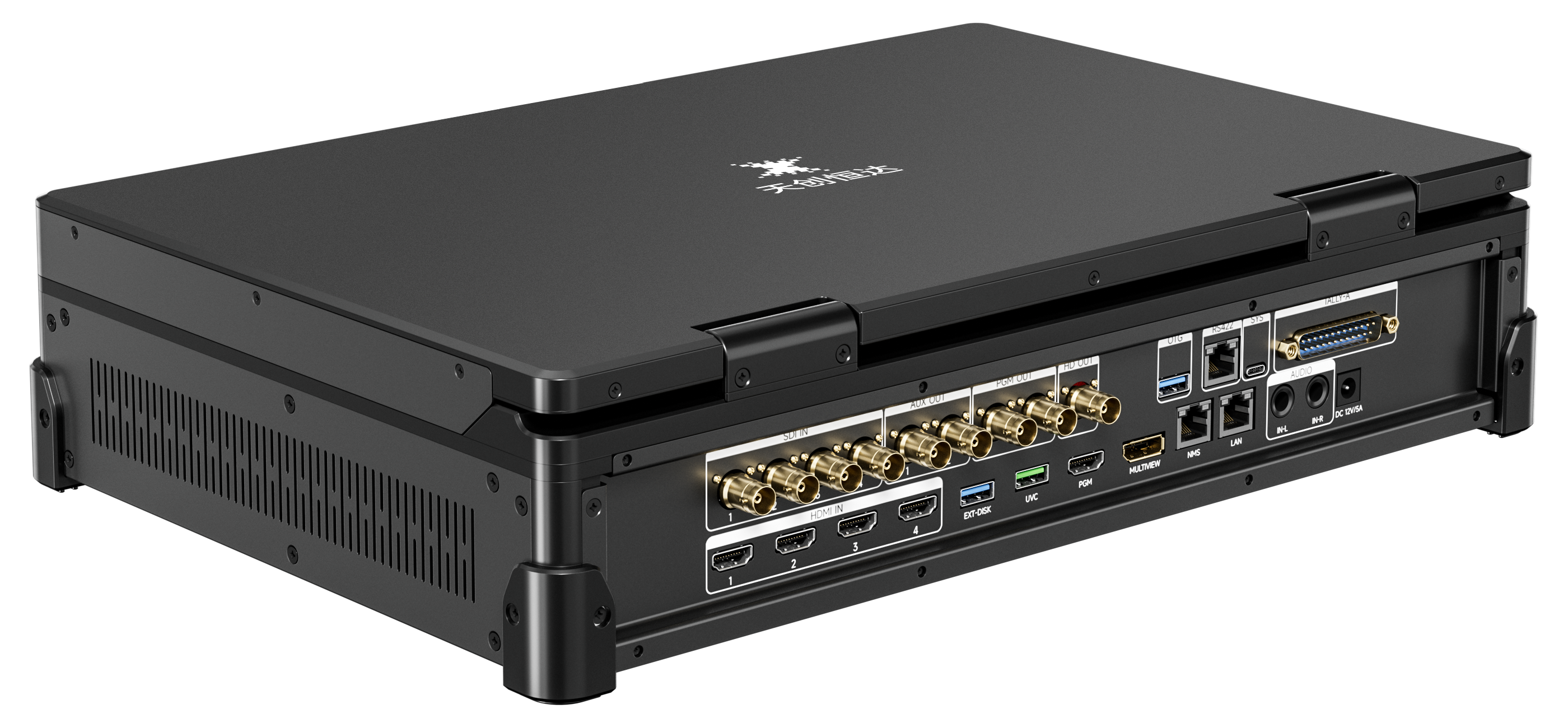
TCHD-840 Ultra: a full-hardware 4K live stream switcher with selectable 12G-SDI or HDMI 2.0 inputs, UVC output and four-platform simultaneous streaming.
TCHD Video approaches the switcher category as a system rather than a single box. The range is built around several recurring design principles, and understanding them makes model selection much faster.
Embedded hardware architecture instead of a general-purpose computer
The TCHD-840 Ultra is described in its specification as a full-hardware live production switcher built on an embedded FPGA architecture, with an independently developed, self-researched design. The TCHD-812 and TCHD-812 Ultra follow the same approach and are specified as industrial embedded FPGA units delivering low-latency, ultra-stable switching for studio recording, event relay and high-end live production. Housings across the range are aluminium alloy.
Selectable high-bandwidth inputs: 12G-SDI and HDMI 2.0
The TCHD-840 Ultra, TCHD-840 Super, TCHD-812 and TCHD-812 Ultra accept four 12G-SDI inputs (compatible with 3G-SDI) or four HDMI 2.0 inputs, and process 2160p at 60, 59.94, 50, 30, 29.97 and 25 fps, 1080p at the same frame rates, and 1080i at 60 and 50. The TCHD-840 Pro takes a different route and combines four-channel 4K HDMI with NDI hybrid input across 1x 4K60, 2x 4K30 and 4x 1080p decoding modes. The TCHD-890HS and TCHD-810 Pro cover HD-centric workflows: the 890HS provides eight video input channels (4x HDMI and 4x SDI) with 720p, 1080p and 1080i support, while the 810 Pro offers four HDMI ports (two supporting 4K60P) plus four SDI ports and one USB auxiliary input.
UVC output: the switcher appears as a webcam
A distinctive feature across the range is native UVC video output. When connected to a computer, the switcher is recognised as a high-definition webcam by Windows and macOS, which means it works with any software that can use a webcam, including OBS and Zoom, without a driver installation or an external USB capture card. For buyers, this removes one device from the bill of materials and one driver from the troubleshooting chain.
Built-in streaming codec with multi-platform publishing
Streaming is handled inside the switcher rather than by a separate encoder. The TCHD-840 Ultra, TCHD-840 Super and TCHD-840 Pro support RTMP, RTMPS, SRT, RTSP, UDP and NDI; the TCHD-812 and TCHD-812 Ultra add GB28181; the TCHD-840 Pro additionally lists RTP, HLS and WHIP. Several models support one channel of stream reception and four channels of simultaneous pushing to different platforms, with template-based management of pull-stream and live-stream URLs. The TCHD-890HS goes further on receive capacity and is specified to receive up to eight streaming sources at once, with up to six simultaneous streaming outputs comprising four customisable stream addresses, one NDI stream and one NVI stream.
Audio mixing and synchronisation
Audio is treated as a first-class subsystem. The TCHD-890HS carries a 10-channel audio mixer with independent channel gain control plus per-channel on, off and restore-default options, balanced stereo analogue input on 6.35 mm and 3.5 mm headphone output, with levels from -60 dB to 6 dB, 48 kHz sampling and AAC encoding. The TCHD-812 and TCHD-812 Ultra use a 12-channel audio mixer with independent volume control and up to 2000 ms of delay adjustment. The TCHD-840 Pro mixes HDMI-embedded, NDI, DDR playback and external microphone audio with up to 10000 ms of audio delay tuning, and the TCHD-840 Ultra provides physical rotary-knob gain control for each input channel directly on the control panel.
Recording, safety and operator features
Recording options scale with the model. The TCHD-890HS records to an internal SSD or USB 3.0 drive in MP4, TS and AVI, with PGM bitrate from 1 to 20 Mbps and multi-channel recording at 1 to 8 Mbps on SSD, including segmented recording. The TCHD-812 and TCHD-812 Ultra add dual hot-swappable SSD slots with optional 2TB, 4TB or 8TB capacity and support 4K H.265 and HD H.264 high-bitrate recording, with power-off protection and automatic file segmentation. Operator-facing functions include one-click landscape 16:9 and portrait 9:16 switching, chroma key and luminance key for virtual studio backgrounds, PIP and multi-view templates from one to four windows, transition effects, title and CG overlay with clocks, text, images and rolling captions, one-click screenshot, and a one-touch emergency function that sends black or colour bars to the output.
Control surfaces and specialised panels
For replay-heavy productions, the TC-UV08 is classified as a production switcher, a broadcast control panel and a slow-motion playback keyboard switcher. It carries 42 dual-colour crystal keys and eight multi-function shortcut keys, a third-generation damping search knob, a photoelectric T-bar, and dedicated -5s, -10s and -20s marking buttons with NOW and LIVE shortcuts. It communicates over MIDI, USB, RS232 and LAN, and is compatible with vMix, FairPlay and TCLiveSP. The TCHD-810 Pro can also control up to four PTZ cameras directly.
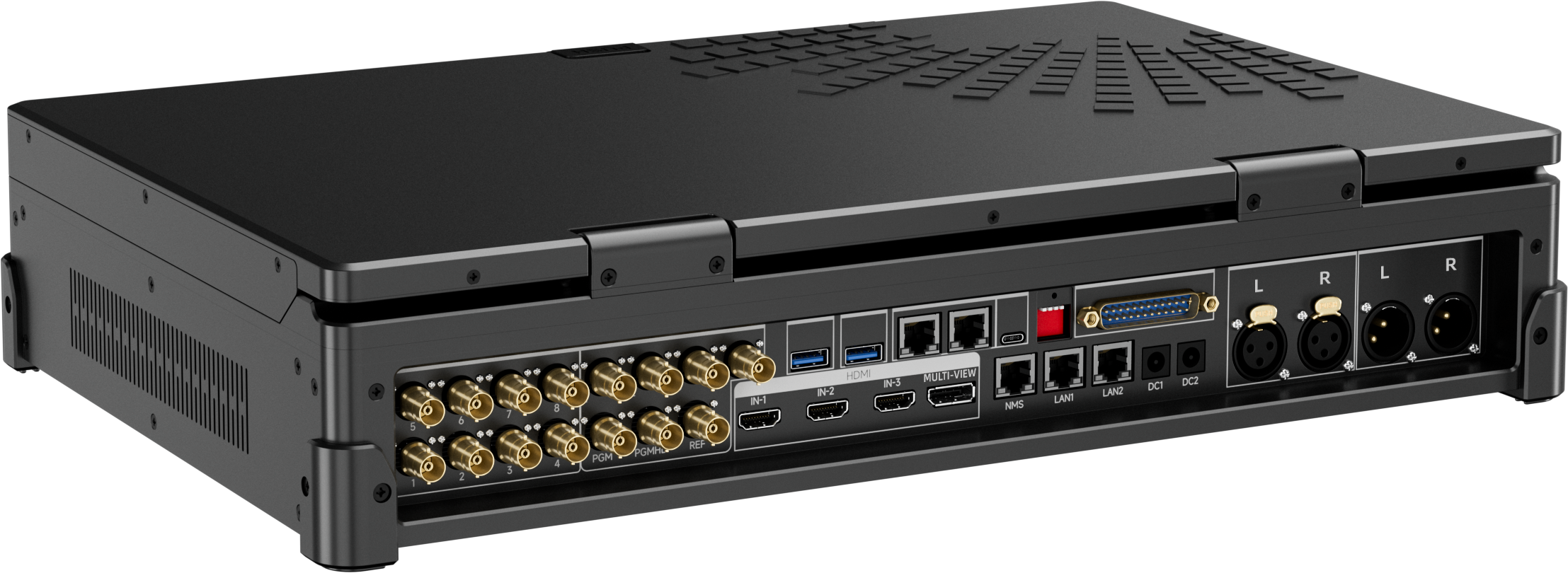
TCHD-812 Ultra: 12-channel 4K60 switching on an embedded FPGA platform, with dual hot-swap SSD recording and a 17.3-inch full HD screen.
Step-by-Step Breakdown: How to Specify a Production Switcher
The sequence below reflects the order in which technical constraints actually bind. Deciding interface first prevents the most expensive mistake, which is buying a correctly sized switcher with the wrong connectors.
- Count sources and define resolution. List every camera, computer and media player, and state whether the program must be 4K or HD. Four 12G-SDI cameras at 4K60 point to the TCHD-840 Ultra, 840 Super, 812 or 812 Ultra; an HD mix of HDMI and SDI cameras with IP sources points to the TCHD-890HS.
- Choose the input interface. Match the switcher to the cables you will pull. 12G-SDI carries 4K over a single coaxial run and is the studio-standard choice; HDMI 2.0 is common for consumer and prosumer cameras and computers. The TCHD-840 Ultra and TCHD-840 Super allow either configuration to be selected at order stage.
- Decide whether encoding happens inside the switcher. If the program must reach several platforms simultaneously, a built-in codec with four-platform push and address templates avoids a separate encoder and a separate point of failure.
- Plan the output paths. Check that the switcher provides what the downstream chain needs: program out, auxiliary out, multi-view for the operator, down-conversion for HD-only destinations, and UVC for computer-based platforms.
- Map the audio plan. Count microphone, playback and embedded audio sources, then verify channel count, independent gain, mute and solo behaviour, and available audio delay range. Long sessions need the widest delay window.
- Specify recording and redundancy. Decide whether recording is for archive, for repurposing or for compliance. Dual hot-swap SSD slots, segmented files and power-off protection matter when a recording is a deliverable rather than a convenience.
- Choose the control layer. Web-UI and on-screen menus are standard across the range; add a physical control panel or tally-based workflow for productions where one operator manages many sources, and add the TC-UV08 where slow-motion replay is required.
- Validate before rollout. Run the intended workflow on a sample unit — interface compatibility, UVC recognition, multi-platform push, audio delay and recording — before committing to a fleet purchase.
TCHD-810 Pro: HD multi-camera switching with 8 layers of PGM overlay, two PIP channels, 30+ transitions and PTZ control for up to four cameras.
Use Cases: Which Switcher Fits Which Production
E-commerce live selling and show-style streaming. Continuous selling sessions need stable long-duration operation, portrait output for mobile platforms, product close-up switching and filler video between segments. One-click 16:9 and 9:16 switching, DDR media playback and multi-platform push are the relevant capabilities here, and the TCHD-890HS is explicitly positioned as an e-commerce livestreaming switcher.
Church and worship streaming. Worship production typically combines several cameras, lyric and scripture graphics, and a simultaneous in-room and online feed. Multi-view monitoring, title and subtitle overlay, and a reliable emergency cut are the practical requirements.
Education: lecture recording, smart classrooms and campus TV. The range is specified for education and remote teaching, and the TCHD-812 is positioned for online education as well as corporate conference use. Typical campus workflows involve recording a lecture while streaming it live, switching between a presenter camera and a computer feed, and archiving segmented files.
Corporate conferences and hybrid events. Presentation capture, picture-in-picture of a speaker and slides, and output to meeting platforms through UVC are the common needs. The TCHD-840 Pro and TCHD-840 Super are both positioned for corporate conference scenarios.
Esports tournaments and live events. Esports production is explicitly listed as a target application across the range, with multi-window layouts, transition effects and multi-platform distribution as the working requirements.
Sports events with replay. Slow-motion replay is a distinct workflow. The TC-UV08 is designed for sports replay, event live broadcast, corporate conferences and professional content creation, with broadcast-grade A and B multi-camera switching, frame marking and speed control.
Concerts and performances. Stage productions need clean switching under low light, graphics for sponsor and performer information, and recording for later release. Chroma key and luminance key support virtual studio backgrounds where a physical set is not available.
Outdoor and mobile production. The TCHD-812 and TCHD-812 Ultra are specified for vehicle-mounted relay and large-scale event live production, and the aluminium alloy housing with industrial-grade design supports field use.
Medical training and surgical live demonstration. The TC-UV08 is intended for the healthcare industry, and the TC420 live streaming camera is classified as a video conference camera, an education camera and a medical training camera, which supports surgical demonstration and clinical teaching workflows.
Virtual studio and converged media centre. Where a production facility consolidates multiple rooms and studios, key and overlay functions, IP stream reception, multi-view output and recording capacity become the deciding factors.
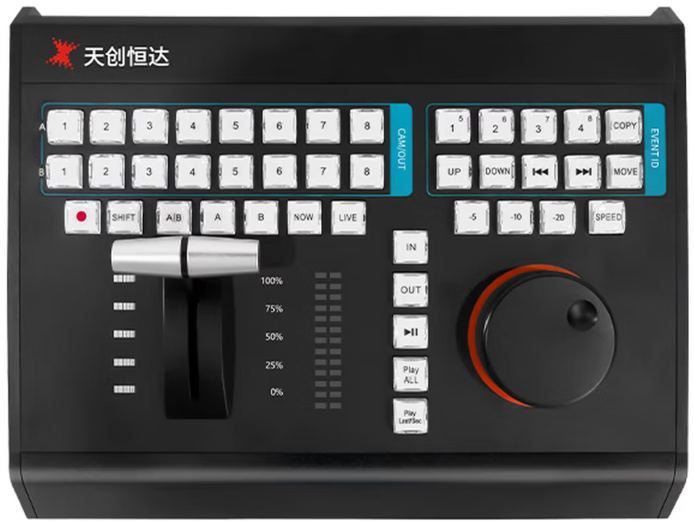
TC-UV08: a broadcast control panel and slow-motion playback keyboard switcher with 42 dual-colour crystal keys and a photoelectric T-bar.
Comparison Table: TCHD Video Production Switchers at a Glance
The table below summarises only the specifications published for each model. Buyers should treat it as a shortlisting tool and confirm final configuration with the manufacturer.
| Model | Inputs | Outputs and UVC | Streaming | Recording |
|---|---|---|---|---|
| TCHD-890HS | 8 video inputs (4x HDMI, 4x SDI), 720p/1080p/1080i; up to 8 streaming sources received | 1x HDMI 1.4 (PGM + Multiview), 1x SDI PGM, UVC USB-A, 1000 Mbps RJ45, Tally | Up to 6 simultaneous outputs (4 customisable addresses, 1 NDI, 1 NVI); RTMP, RTSP, HLS, FLV, UDP, NDI, NVI | Internal SSD or USB 3.0, MP4/TS/AVI, PGM 1-20 Mbps, segmented recording |
| TCHD-840 Ultra | 4x 12G-SDI or 4x HDMI 2.0 (selectable); up to 4K60 | 2x 12G-SDI PGM, 2x 12G-SDI AUX, 1x 3G-SDI PGM down-convert, 1x HDMI 2.0 PGM, DP multiview, UVC; RS422, 2x RJ45, Tally, OTG, USB 3.0 | RTMP, RTMPS, SRT, RTSP, UDP, NDI; 1 stream in, 4-platform push with URL templates | Built-in M.2 drive bay; local media playback via USB or SSD |
| TCHD-840 Super | 12G-SDI and HDMI 2.0 hybrid inputs; 2160p60 to 1080i; 6.5 mm balanced audio in | 2x 12G-SDI PGM, 2x 12G-SDI AUX, 3G-SDI PGM down-convert, HDMI 2.0 PGM, DP multiview, UVC, balanced audio out | RTMP, RTMPS, SRT, RTSP, UDP, NDI; 1-in, 4-out with URL templates | Built-in M.2 slot; USB or SSD media playback |
| TCHD-840 Pro | 4-channel 4K HDMI and NDI hybrid input; 1x 4K60, 2x 4K30, 4x 1080p decoding modes | Type-C UVC output; dual Gigabit LAN; TALLY linkage | H.264/H.265 hardware encoding; RTMP, RTMPS, SRT, UDP, RTP, HLS, WHIP; 4-platform simultaneous push | Multi-format segmented USB recording |
| TCHD-812 | 4x 12G-SDI plus 1x HDMI high-bandwidth inputs; 4K60, 1080p, 1080i; embedded FPGA | UVC output; one-click emergency output; DVE multi-window | RTMP, RTMPS, SRT, RTSP, NDI, GB28181; 4-platform simultaneous push | Dual hot-swap SSD slots, 2TB/4TB/8TB optional; 4K H.265 and HD H.264; power-off protection |
| TCHD-812 Ultra | Same 12-channel 4K60 input architecture as TCHD-812; 17.3-inch full HD screen | UVC output; 16:9 and 9:16 one-click switching | RTMP, RTMPS, SRT, RTSP, NDI, GB28181; 4-platform simultaneous push | Dual hot-swap SSD, 4K H.265 and HD H.264, automatic file segmentation |
| TCHD-810 Pro | 4x HDMI (2 supporting 4K60P) plus 4x SDI, optional mixed use; 1x USB auxiliary input | 10.1-inch full HD screen; PTZ control for up to 4 cameras; 8 layers PGM overlay plus 2 PIP channels | NDI updatable; portrait 9:16 and landscape 16:9 switching | Multi-scenario live production with 30+ transitions and chroma/luma key |
| TC-UV08 | Control surface, not a video input stage: 42 dual-colour crystal keys plus 8 shortcut keys | MIDI, USB, RS232 and LAN control; one-cable USB power and data | Compatible with vMix, FairPlay and TCLiveSP | Slow-motion replay control with -5s/-10s/-20s marking and NOW/LIVE shortcuts |
Frequently Asked Questions
What certifications and management standards apply to TCHD Video products?
TCHD Video holds ISO 9001:2015 quality management, ISO 14001 environmental management and ISO 45001:2018 occupational health and safety management certification, plus CE EMC certification in the EU market. The applicable ISO 14001 standard is GB/T24001-2016/ISO14001:2015, issued under certificate 064-24-E-0676-R1-S by BEIJING STANDARD CERTIFICATION CENTRE and valid from 2024-03-08 to 2027-03-07, with a scope covering the sales of digital audio and video products and related technical services. ISO 45001:2018 is certified under 064-24-S-0677-R1-S against GB/T45001-2020/ISO 45001:2018. For the TC-980S live streaming camera, ISO 9001:2015 is issued under 064-24-Q-0675-R1-S against GB/T19001-2016/ISO9001:2015, and CE EMC Attestation of Compliance LCSA07075157E against EN 55032:2015/A1:2020 was issued by LCS TESTING LABORATORY on 2025-07-16, valid until 2099-07-16. The TCHD-T3 and TC420 cameras are also covered by ISO 9001, ISO 14001, ISO 45001 and CE EMC, with EN 55035:2017/A11:2020 applicable to the TC420. These published certificates identify specific models, so buyers should confirm that the exact model and configuration they intend to import is within the certificate scope.
What is the difference between a production switcher and a live stream switcher?
Production switcher is the broader category term for equipment that performs live video switching and mixing, while live stream switcher usually describes a production switcher with integrated encoding and publishing capability. The two terms often describe the same device: the TCHD-840 Ultra is described in its specification as both a live stream switcher and a multi-camera live production switcher, and the TCHD-890HS is described as a live stream switcher, a multi-camera live production switcher and an e-commerce livestreaming switcher. When comparing products, the deciding factor is not the label but whether the unit includes the encoding, audio and recording functions your workflow needs.
How should a buyer evaluate production switcher manufacturers?
Evaluate a manufacturer on four practical points. First, whether the product range covers the whole signal chain, so cameras, capture cards, converters, encoders and switchers are designed to work together rather than assembled from unrelated vendors. TCHD Digital Video Technology Development (Beijing) Ltd supplies live streaming cameras, video capture cards, video converters, video encoders and video switchers as a matched range, founded in 2005 with approximately 20 years of experience in video software and hardware, an R&D team of 10 engineers and approximately 50 staff. Second, whether published specifications are detailed enough to shortlist without a sales call. Third, whether the manufacturer can customise and develop products according to different customer needs, which matters when a standard model almost fits. Fourth, whether the manufacturer serves comparable markets: TCHD Video exports to the EU, USA and Asia. Ask each candidate to map your camera list, output destinations, audio sources and recording requirement against a specific model before comparing price.
Can a switcher be tested before a full order is placed?
Yes, and it should be. Validation on a sample unit should confirm four things that specifications alone cannot settle: that your cameras connect correctly and lock to the switcher inputs, that the UVC output is recognised as a webcam by your computer and streaming software without a driver or capture card, that the built-in codec pushes to all of the platforms you use at the bitrate you need, and that audio delay and mixing behave correctly over a long continuous session. Recording behaviour should also be checked, including segmented recording and, on the TCHD-812 and TCHD-812 Ultra, the dual hot-swap SSD arrangement with power-off protection. Running this test on one unit is far cheaper than discovering an incompatibility across a deployed fleet.
How do I request a quotation, lead time and technical documentation?
Contact TCHD Video directly with your camera list, interface requirements, destination platforms and recording needs, and the sales team will confirm the recommended model, configuration options and delivery schedule for your order. Email tomzhang@tchdvideo.com, call +86-13910334207, or message WhatsApp on +86 19498872019. The full product range, including switchers, cameras, encoders and converters, is documented in the TCHD Product Catalog 2025, which can be downloaded at https://cdn.socialarks.com/sbsp/25077/common/2026/0714/TCHD%20Product%20Catalog2025.pdf. Buyers preparing a first multi-camera build are advised to request a sample quotation alongside the catalog so that the validation step can run in parallel with commercial evaluation.
Conclusion
Choosing a production switcher is a sequence, not a comparison of feature lists. Define the resolution and source count, lock the input interface, decide whether encoding, audio mixing and recording live inside the switcher, then validate on a sample before committing. TCHD Video covers that range from the HD-focused TCHD-890HS and TCHD-810 Pro through the 4K 12G-SDI TCHD-840 Ultra, TCHD-840 Super and TCHD-812 Ultra, with the TC-UV08 adding broadcast-grade replay control for sports and event production.
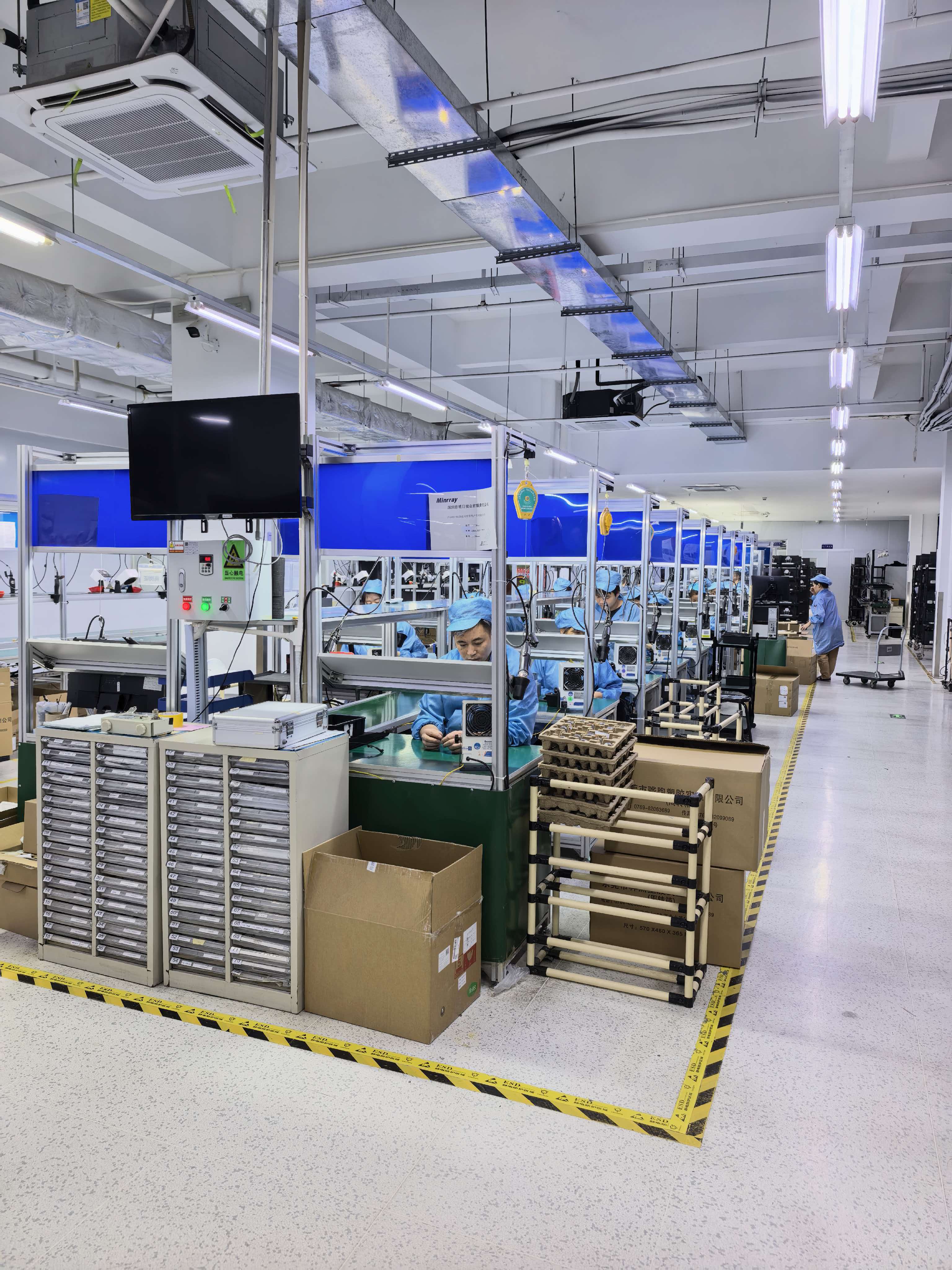
TCHD Video operates a 10,000 m2 manufacturing facility with an annual output of 4,000 units and a 10-engineer R&D team.
For distributors, integrators and end users building a multi-camera workflow, the practical next step is a configuration review rather than a catalogue order: send the source list and the destination list, and request the matching model with a sample for validation. The TCHD Video team can be reached at tomzhang@tchdvideo.com or on WhatsApp at +86 19498872019, and the complete catalogue is available at TCHD Product Catalog 2025.
Have Questions or Need More Details?
Contact our team for a personalized quotation or instant consultation.
Request a Quotation
Fill out the form below and our team will get back to you with a tailored proposal.
WhatsApp Direct Chat
Prefer to chat in real-time? Message us on WhatsApp for instant assistance & quick answers.
- Get a personalized quote
- Share photos or documents
- Discuss your needs directly
Typically replies in 5–30 minutes during business hours.