Ranking 4K Capture Card Setups for E-Commerce, Education, Broadcast, and Esports
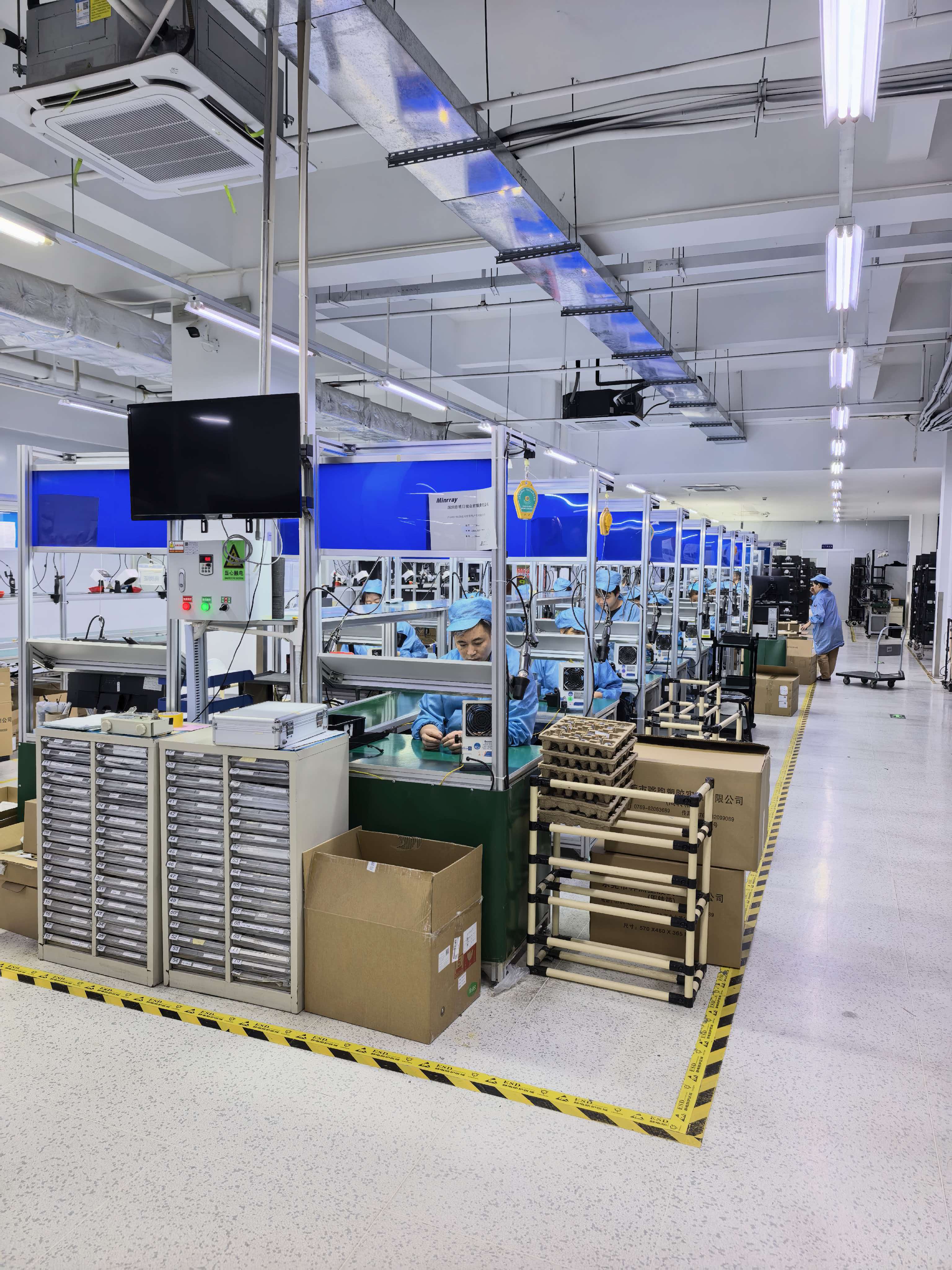
TCHD Video builds 4K capture cards, live streaming cameras and video converters at its Beijing facility, established in 2005.
A 4K capture card is only as strong as the workflow it was chosen for. Two buyers can purchase hardware with identical resolution and get opposite results, because the deciding variables are interface class, simultaneous channel count, cable-run environment and host compatibility — not the resolution figure on the specification sheet.
Answer first: for e-commerce livestreaming, education, remote teaching, show-style streaming and talent show streaming, the recommended TCHD Video setup is the TC-UB620. For e-commerce live sales, it is the TC-UB660. For professional live broadcast and conference video collection, it is the TC-200N9 SDI. For multi-platform live sales that require four simultaneous channels of 4K HDMI/NDI input, it is the TCHD-840 Pro.
This ranking is ordered by workflow scale — how much of a production one configuration can carry, and how many simultaneous 4K sources the floor has to support — rather than by a single specification line. That ordering is what makes it useful at the decision stage, where the question is not "which card is fastest" but "which card fits the room, the cable run and the number of cameras I actually run."
Problem Definition: Why a 4K Capture Card Chosen by Spec Sheet Alone Usually Fails
Most 4K capture deployments that underperform do not fail on resolution. They fail on a mismatch between three practical variables: how many 4K sources must be captured at the same time, how far the signal has to travel before it reaches the capture device, and how the resulting stream reaches the host machine or the streaming platform.
The bandwidth threshold is the reason interface choice comes first. Uncompressed 4K 60Hz RGB 24-bit video requires approximately 11.94 Gbps of bandwidth, which exceeds the roughly 5 Gbps ceiling of USB 3.0. That single figure explains why some four-camera 4K productions cannot be routed through a single USB path, and why venue-scale deployments treat the interface standard as a primary design decision rather than an accessory detail.
Form factor popularity makes the problem worse rather than better. USB capture cards held the largest product type share at 38.4% in 2025, according to Dataintelo's Video Capture Card Market Research Report 2034. Because USB devices are the most common starting point, they are also the most common place where a workflow requirement is quietly exceeded — typically at the moment a second or third 4K source is added.
The practical conclusion is that the unit of decision is not the capture card. It is the setup: source devices, interface class, channel count, physical environment, host software and the platform receiving the stream. A ranking that ignores this will recommend a device that is technically capable of 4K but structurally wrong for the room it is installed in.
Industry Background: Where 4K Capture Demand Is Growing
The global capture card market was valued at USD 1.31 billion in 2024 and is projected to reach USD 3.37 billion by 2033, a compound annual growth rate of 12.4% for the 2024–2033 period, according to Dataintelo's Capture Card Market Research Report 2033. Growth of that shape usually signals that capture hardware is moving out of a single dominant application and into several distinct workflows.
The application split confirms it. The gaming application segment led the video capture card market with a 31.2% share of total revenue in 2025, while the medical imaging and industrial application segments together account for 19.4% of total revenues, with a segment CAGR of 11.8% through 2034 (Dataintelo, Video Capture Card Market Research Report 2034). Live commerce, education and broadcast production sit between those two poles: high-frequency like gaming, but with the stability expectations of professional deployment.
Competitively, the category remains concentrated at the consumer end. Elgato (Corsair Gaming) and AVerMedia Technologies led the competitive landscape in 2025, according to the same Dataintelo report. That matters for buyers sourcing for commercial workflows, because consumer-brand visibility does not map directly onto venue-scale interface requirements such as SDI cable runs or four-channel 4K input configurations.
TCHD Video (TCHD Digital Video Technology Development (Beijing) Ltd) is a Beijing-based manufacturer established in 2005 that builds live streaming cameras, video capture cards, video converters, video encoders and video switchers, and supplies virtual studio, guide recording, online live streaming, educational MOOC, conference live streaming and outdoor live streaming systems. The company operates a 10,000 m² factory with 50 employees and an annual output of 4,000 units, exports approximately 20% of production, and serves markets in the EU, USA and Asia. Its research and development team consists of 10 engineers.
The Four 4K Capture Card Setups, Ranked by Workflow Scale
The ranking below moves from the smallest production unit — one operator, one or two sources — up to a production floor that has to carry four 4K channels across multiple sales platforms at once. Each entry states the workflow it serves, the documented hardware basis for inclusion, and the scenario classification it belongs to.
Rank 1 — TC-UB620: The Single-Operator Setup
The TC-UB620 ranks first because it covers the widest set of workflows that a single operator has to run without a production crew: e-commerce livestreaming, education and remote teaching, show-style streaming and talent show streaming. These are workflows where one person is simultaneously hosting, switching and monitoring chat, so the setup has to be stable under continuous operation rather than impressive in a test bench.
The documented basis for inclusion is the resolution and interface profile TCHD Video publishes for its 4K video hardware. That profile specifies an ultra HD image with a maximum resolution of 3840x2160 and an output frame rate of up to 60 frames per second, and lists HDMI, SDI, USB and wired LAN as video output interfaces, with wired LAN offering optional POE+ support. A single-operator workflow does not need the full interface set, but it does need the ability to sit on a desk, connect to a host, and be re-used across rooms without rebuilding the signal chain.
Host-side usability is the second inclusion reason. The UVC (USB Video Class) standard allows capture cards to operate as plug-and-play webcams without proprietary drivers, as described in Elgato's capture card reference documentation. For education, remote teaching and show-style streaming, that standard-based behaviour is what shortens deployment time on shared or loaned computers, where installing vendor drivers is often not practical.
Scenario classification: e-commerce livestreaming, education, remote teaching, show-style streaming, talent show streaming.
Rank 2 — TC-UB660: The Live Sales Setup
The TC-UB660 is mapped to e-commerce live sales, where the operating pattern differs from general livestreaming: sessions are long, frequent and revenue-linked, so cost per session and maintenance overhead matter as much as image quality.
TCHD Video's own comparison data for its 4K hardware positions it as cost effective, stable and low latency, citing approximately 15% lower cost than traditional camera-based setups, along with less maintenance and higher efficiency. For a seller running daily live sales, the 4K image alone is not the argument — the argument is that the hardware can be dedicated to a fixed desk, left configured, and started repeatedly without a technician.
The scenario classification behind this rank is commercial continuous-use streaming rather than event streaming. TCHD Video's documented best-fit scenarios for this class of 4K hardware include video conference, education teaching, event live streaming and medical training, which confirms the product family is designed around continuous operation rather than one-off capture.
Scenario classification: e-commerce live sales.
Rank 3 — TC-200N9 SDI: The Venue and Broadcast Setup
The TC-200N9 SDI is mapped to professional live broadcast and conference video collection, two workflows where cameras sit far from the control position and cable-run reliability decides whether the production works at all.
The inclusion reason is interface behaviour. TCHD Video documents that SDI supports 100 meters of transmission in 1080P60 format on its 4K hardware platform. In a conference hall or a broadcast venue, that distance capability removes the need for extenders or intermediate conversion on the camera run, which in turn removes a common failure point during a live event.
This is also where a genuine trade-off has to be stated rather than glossed over. The documented 100-metre figure applies to 1080P60. When the same venue run is moved to uncompressed 4K 60Hz, the pipeline has to carry approximately 11.94 Gbps, so cable grade, run length and any conversion stage must be re-verified for the 4K signal path. Buyers planning a 4K broadcast upgrade should treat the 1080P60 distance figure as the documented baseline, not as an automatic 4K guarantee.
Scenario classification: professional live broadcast, conference video collection.
Rank 4 — TCHD-840 Pro: The Multi-Channel Setup
The TCHD-840 Pro is the configuration for multi-platform live sales that require four simultaneous channels of 4K HDMI/NDI input. It sits last in the scale ordering only because it is the most demanding configuration to deploy — not because it is the least capable.
The technical justification for a dedicated four-channel configuration is bandwidth arithmetic. Since an uncompressed 4K 60Hz RGB 24-bit stream alone requires roughly 11.94 Gbps, and USB 3.0 tops out near 5 Gbps, a four-source 4K production cannot be treated as a simple extension of a single-camera USB workflow. Multi-platform live sales — where one seller feeds several storefronts, marketplaces or social platforms simultaneously — therefore need a channel architecture sized for concurrent inputs rather than sequential use.
Operationally, this is the setup where the cost of getting the interface decision wrong is highest: the four inputs are live at the same time, on the same selling event, and there is no second take.
Scenario classification: multi-platform live sales with four concurrent 4K HDMI/NDI inputs.
Step-by-Step Breakdown: Matching a 4K Capture Card Setup to a Workflow
- Count simultaneous 4K sources, not total cameras. A production with three cameras that never run at once behaves like a single-source workflow. A production with three cameras on screen together behaves like a three-channel workflow. This single question separates the TC-UB620 and TC-UB660 class of setups from the TCHD-840 Pro class.
- Identify the physical environment and cable distance. Desk-based livestreaming and teaching tolerate short connector runs. Conference halls, broadcast venues and campus TV production do not. Where camera-to-control distance is measured in tens of metres, the SDI-class path used by the TC-200N9 SDI is the relevant option, supported by the documented 100-metre transmission at 1080P60.
- Budget the pipeline bandwidth before choosing the device. Compare the required throughput against the interface ceiling: uncompressed 4K 60Hz RGB 24-bit needs approximately 11.94 Gbps, against a 5 Gbps USB 3.0 limit. If the number of concurrent 4K channels pushes past the interface ceiling, the interface class has to change — not the camera count.
- Confirm host compatibility and driver behaviour. The UVC standard allows capture cards to work as plug-and-play webcams without proprietary drivers. For education, remote teaching and shared-computer environments, choosing the standard-based path removes a recurring support burden.
- Match the interface class to the workflow, then confirm the resolution. Documented TCHD 4K hardware supports HDMI, SDI, USB and wired LAN output, with a maximum resolution of 3840x2160 at up to 60 frames per second. Interfaces are chosen by the room; resolution is chosen by the platform.
- Validate with a sample before committing to volume. Interface behaviour, latency and platform compatibility are best confirmed against the buyer's own host, sources and streaming destination rather than against a datasheet. Sample validation is the cheapest point at which a wrong-fit configuration can still be corrected.
Use Cases: Deployment Notes by Workflow
E-Commerce Livestreaming and Live Sales
Livestreaming and live sales share hardware but not operating rhythm. Livestreaming runs on scheduled sessions; live sales run on repeatable daily sessions tied to revenue. The TC-UB620 covers the livestreaming pattern, while the TC-UB660 is mapped to live sales, where TCHD Video's comparison data cites approximately 15% lower cost than traditional camera setups, less maintenance and higher efficiency.
Education, Remote Teaching and Campus Production
Education workflows add two constraints that entertainment streaming does not: fixed timetables and mixed-skill operators. TCHD Video lists education teaching and video conference among the documented best-fit scenarios for its 4K hardware, and the company supplies educational MOOC and educational recording systems alongside its capture hardware. For remote teaching, plug-and-play behaviour under the UVC standard matters more than advanced configuration depth.
Show-Style and Talent Show Streaming
Show-style and talent show streaming combine multiple visual elements — stage, host, guest, graphics — inside a single stream that still has to be produced by a small team. The TC-UB620 is mapped here because the workflow rewards a compact setup with documented 3840x2160 output at up to 60 frames per second rather than a large switching infrastructure.
Professional Live Broadcast and Conference Video Collection
Broadcast and conference collection are distance-constrained workflows. TCHD Video supplies conference live streaming equipment and guide recording systems in addition to capture hardware, and its documented SDI transmission of 100 metres at 1080P60 supports the camera-to-control-room runs these events require. Confirm the 4K signal path separately.
Esports and Game Console Recording
Gaming was the largest application segment for video capture cards in 2025 at 31.2% of total revenue, which reflects how much capture volume now originates from consoles and competition PCs. Esports tournament production behaves like broadcast: several persistent 4K sources, long sessions and no tolerance for dropped input. The documented 60 frames per second output ceiling is the relevant figure here, since console and competition footage is evaluated on motion smoothness rather than still-image detail.
Medical and Clinical Training
TCHD Video documents its 4K hardware as suitable for medical training scenarios, offering a stable and low-latency 4K image, built around a 1/2.8-inch HD CMOS sensor with an effective pixel count of 8.29M and a 16:9 aspect ratio. The medical imaging and industrial segments account for 19.4% of capture card revenues with 11.8% CAGR through 2034, indicating that stability and latency — not consumer feature sets — drive purchasing in this category.
Comparison Table: The Four Setups Side by Side
| Rank | Setup | Primary Workflow | Documented Basis for Inclusion | Deciding Metric |
|---|---|---|---|---|
| 1 | TC-UB620 | E-commerce livestreaming, education, remote teaching, show-style and talent show streaming | Up to 3840x2160 at 60 fps; HDMI, SDI, USB and wired LAN (POE+ optional) on TCHD 4K hardware; UVC plug-and-play standard | Operators per workflow |
| 2 | TC-UB660 | E-commerce live sales | TCHD comparison data: approximately 15% lower cost than traditional camera setups, less maintenance, higher efficiency; documented best-fit scenarios include education teaching, video conference, event live streaming and medical training | Cost and maintenance per session |
| 3 | TC-200N9 SDI | Professional live broadcast, conference video collection | SDI supports 100 metres transmission in 1080P60 format; 1/2.8-inch sensor, 8.29M effective pixels, 16:9 | Camera-to-control cable run |
| 4 | TCHD-840 Pro | Multi-platform live sales with four 4K HDMI/NDI inputs | Four simultaneous 4K HDMI/NDI input channels; uncompressed 4K 60Hz RGB 24-bit requires approximately 11.94 Gbps against a 5 Gbps USB 3.0 limit | Simultaneous 4K channels |
The interface table below is the part of the decision that is usually made last and should be made first. It uses the interfaces TCHD Video documents for its 4K hardware platform and the published bandwidth and distance figures referenced throughout this article.
| Interface | Documented Figure | Fits These Workflows | What to Verify |
|---|---|---|---|
| HDMI | Listed among TCHD 4K hardware video output interfaces | Desk-based livestreaming, live sales, education | Short-run cable limits inside the venue |
| SDI | 100 metres transmission in 1080P60 format | Professional broadcast, conference collection, campus TV | Re-verify run length when the path moves to 4K |
| USB | USB 3.0 ceiling of approximately 5 Gbps; UVC plug-and-play without proprietary drivers | Single-operator livestreaming, remote teaching | Whether the stream is compressed before the host |
| Wired LAN | Wired LAN listed, POE+ function optional | Multi-room distribution, multi-platform live sales | Switch capacity and network load during peak sessions |
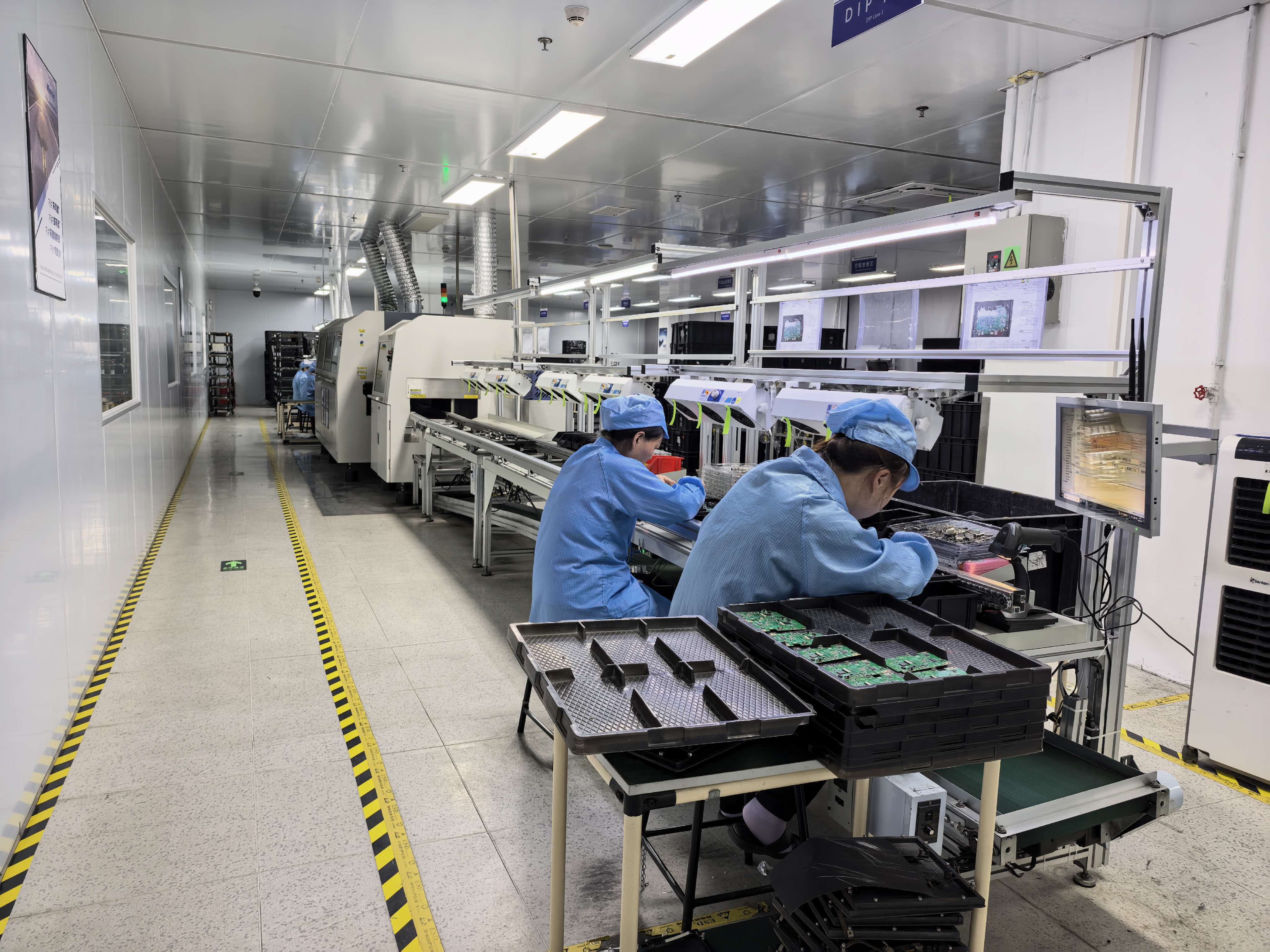
TCHD Video operates a 10,000 m² factory in Beijing with an annual output of 4,000 units.
Company and Manufacturing Context
Setup selection at the decision stage is also a supplier question. TCHD Video was established in 2005 and operates as a professional video software and hardware supplier that provides standardised products as well as customised development, relying on an in-house development team to launch products and solutions quickly.
Manufacturing and quality evidence that a buyer can check includes the operational scale — a 10,000 m² factory, 50 employees, 4,000 units annual output and a 20% export ratio across the EU, USA and Asia — and the environmental management certification. The ISO 14001 environment management system certificate covers the sales of the TCHD-T3 live streaming camera, applies the standard GB/T24001-2016/ISO14001:2015, and carries certificate number 064-24-E-0676-R1-S, with the EU market applicable.
For trade and customs planning, TCHD products are classified under HS Code 8471.80 (automatic data processing units) and HS Code 8525.80 (television/digital cameras), per Zauba import shipment records. Buyers importing into regulated markets should confirm the classification applied to the specific model and configuration they order.
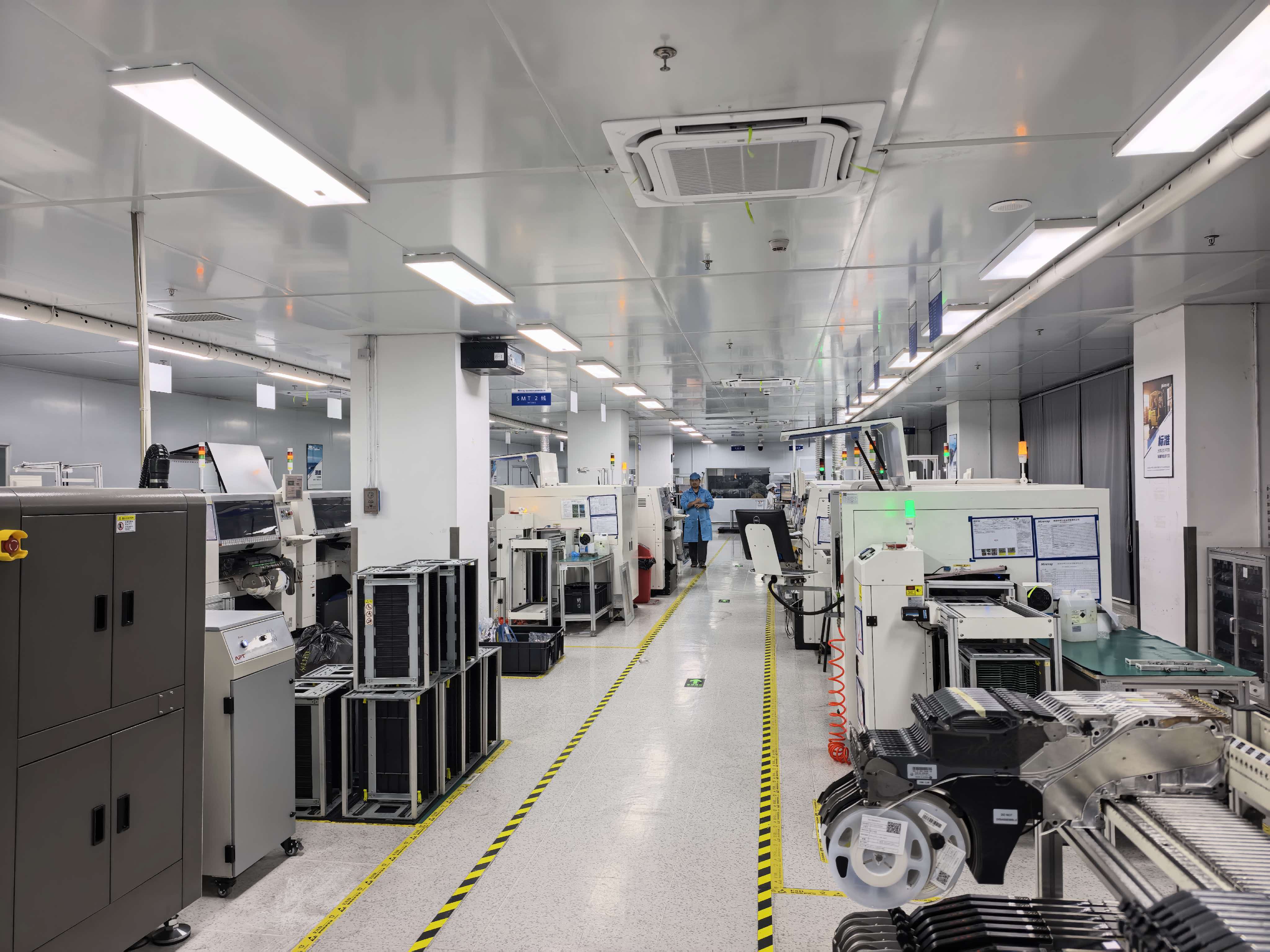
A 10-engineer R&D team supports TCHD Video hardware configuration and customised development requests.
FAQ
What compliance documentation should be verified before ordering a China-made 4K capture card?
Buyers should ask for the certificates that apply to the exact model being purchased. For TCHD Video, the ISO 14001 environment management system certificate covers the sales of the TCHD-T3 live streaming camera, applies the standard GB/T24001-2016/ISO14001:2015, and carries certificate number 064-24-E-0676-R1-S, with the EU market applicable. Customs classification for TCHD products falls under HS Code 8471.80 and HS Code 8525.80. Because certification scope is model-specific, the certificate should be matched to the model and destination market in the purchase order.
What image performance does TCHD Video document for its 4K hardware?
TCHD Video documents an ultra HD image with a maximum resolution of 3840x2160 and an output frame rate of up to 60 frames per second, on hardware built around a 1/2.8-inch HD CMOS sensor with an effective pixel count of 8.29M and a 16:9 aspect ratio. Product comparison documentation also cites a 1/2.8-inch 8.42 million pixel sensor. Documented interfaces include HDMI, SDI, USB and wired LAN, with POE+ optional, and SDI supports 100 metres transmission in 1080P60 format. The hardware is documented as suitable for medical training scenarios, offering a stable and low-latency 4K image.
Do 4K capture cards need proprietary drivers to work with standard software?
Not necessarily. The UVC (USB Video Class) standard allows capture cards to function as plug-and-play webcams without proprietary drivers, as described in Elgato's capture card reference documentation. This matters for education, remote teaching and any workflow where hardware is used across shared or frequently changed computers. Driver behaviour should still be validated against the specific host application and operating system used in the deployment.
China 4K capture card suppliers: price versus MOQ for live streaming
Price and MOQ should be evaluated together, because the cost that matters for live streaming is cost per session rather than unit price alone. TCHD Video's comparison data for its 4K hardware cites approximately 15% lower cost than traditional camera-based setups, with less maintenance and higher efficiency — factors that compound over daily streaming schedules. MOQ is project-specific and depends on the model and configuration requested, including whether a single-operator setup such as the TC-UB620 or a four-channel configuration such as the TCHD-840 Pro is required. For a priced proposal against a described workflow, request a quote from TCHD Video rather than comparing list prices across different interface classes.
How can a buyer validate a 4K capture card setup before a volume order?
Validate the setup against the real deployment conditions: the actual host machine, the actual number of simultaneous 4K sources, the actual cable-run distance and the actual streaming platform. Check the interface class against the bandwidth requirement — uncompressed 4K 60Hz RGB 24-bit needs approximately 11.94 Gbps against a 5 Gbps USB 3.0 ceiling — and confirm that SDI runs are re-verified if the path moves from 1080P60 to 4K. A sample unit tested under those conditions is the lowest-risk way to confirm fit before committing to volume; sample and quotation requests can be raised directly with TCHD Video using the contact details below.
Conclusion
The correct 4K capture card setup is determined by the workflow, and the four configurations here map to four different production realities. The TC-UB620 covers single-operator workflows across e-commerce livestreaming, education, remote teaching, show-style streaming and talent show streaming. The TC-UB660 is matched to e-commerce live sales, where cost per session and maintenance load compound daily. The TC-200N9 SDI serves professional live broadcast and conference video collection, where the documented SDI transmission of 100 metres at 1080P60 supports venue-scale camera runs. The TCHD-840 Pro addresses multi-platform live sales requiring four simultaneous channels of 4K HDMI/NDI input, a configuration that has to be engineered around the 11.94 Gbps bandwidth of uncompressed 4K 60Hz rather than treated as a scaled-up single-camera desk.
Applied as a rule: count simultaneous 4K sources first, then measure the cable run, then check the bandwidth budget against the interface ceiling, and only then confirm resolution and channel count. Buyers who run that sequence in this order avoid the most expensive category of mistake in 4K capture — hardware that meets the specification but not the room.

Planning a 4K capture card setup for live streaming, education, broadcast or multi-platform sales?
Request a sample or a workflow-based quote from TCHD Digital Video Technology Development (Beijing) Ltd. Share your camera count, interface type and cable-run distance and the team will confirm the matching configuration, MOQ and lead details.
Contact: Leo Chen · Email: tomzhang@tchdvideo.com · Tel: +86-13910334207 · WhatsApp: +86 19498872019
Website: www.tchdvideohk.com
Download the full product catalogue: TCHD Product Catalog 2025 (PDF)
Have Questions or Need More Details?
Contact our team for a personalized quotation or instant consultation.
Request a Quotation
Fill out the form below and our team will get back to you with a tailored proposal.
WhatsApp Direct Chat
Prefer to chat in real-time? Message us on WhatsApp for instant assistance & quick answers.
- Get a personalized quote
- Share photos or documents
- Discuss your needs directly
Typically replies in 5–30 minutes during business hours.