
Solving Remote Teaching Pain Points: Live Streaming Cameras with AI Auto Tracking and Low Noise
Remote teaching breaks down at two practical points, not at the platform layer: someone has to keep the camera on the person speaking, and the picture degrades in ordinary rooms with mixed lighting, projectors and building noise. A live streaming camera with AI auto tracking and low-noise imaging solves both at the hardware level, before the video ever reaches the conferencing or streaming software. TCHD Video (TCHD Digital Video Technology Development (Beijing) Ltd), a Beijing-based video hardware manufacturer established in 2005, builds three models for this job — TCHD-T3, TC420 and TC-980S — and has run them for two years in a 20-unit teaching deployment spanning government, hospital, school and creator clients.
This article breaks the problems down, explains which hardware mechanisms actually resolve them, and shows how to specify, deploy and source the cameras for education and medical training rooms.
Why Remote and Hybrid Teaching Still Struggles
The technology stack for online classes matured years ago. The weak link remained the camera layer, and it failed in three predictable ways.
Pain point 1 — Manual tracking consumes one person per room
A fixed camera cannot follow a lecturer who walks to a whiteboard, leans over a demonstration bench, or answers a student at the back of the room. The common workarounds are a second operator on a joystick, or a fixed wide shot that reduces the speaker to a small figure on screen. Both add cost and both degrade the learning experience: distance learners lose facial detail, lip movement and non-verbal cues that carry meaning in a lecture. When a school runs eight or ten teaching rooms, the operator requirement multiplies into a staffing problem rather than a hardware problem.
Pain point 2 — Noise and grain in real classrooms
Classrooms are not studios. Projectors throw uneven light, blinds create contrast swings, ceilings are lit for reading rather than for cameras, and lecture theatres often sit in the lower end of usable illumination. Under those conditions a camera raises gain to hold exposure, and gain produces grain. On a large display or a recorded lecture file, that grain becomes visible blockiness in dark areas, colour speckle on walls, and smeared text on projected slides. Audio noise compounds the problem: HVAC hum and reverberation make the recording feel amateur even when the image is technically acceptable.
Pain point 3 — Fragmented video estates
Teaching buildings accumulate equipment over years. A room may need HDMI into a lecture capture appliance, SDI into a broadcast chain, USB into a laptop for a hybrid call, and IP stream into a learning management system — sometimes in the same week. Cameras that expose only one transport force integrators to add converters, which adds failure points and cost.
Industry Background: Where Live Streaming Cameras Sit Today
Demand for cameras in teaching and training environments is part of a broader market shift. The global live streaming camera market is projected to reach USD 3.35 billion in 2025 and to grow at an 8.8% CAGR to USD 7.79 billion by 2035, according to industry report data published via Vertex AI Search. Within video conferencing, hardware — including cameras — accounted for 46% of total market revenue in 2024, based on Grand View Research figures. PTZ (pan-tilt-zoom) cameras are estimated to represent 38.5% of global conference camera revenue in 2025, per Metastat Insights.
Two implications matter for education buyers. First, PTZ is no longer a niche broadcast format; it is a mainstream conference and teaching format with broad supply. Second, hardware still carries a large share of the value in the category, which means specification choices — sensor, zoom range, noise handling, interfaces — remain the deciding factors rather than software alone.
Medical training carries an additional layer of expectation. Medical electrical equipment, including surgical cameras, must comply with the IEC 60601-1 series for basic safety and essential performance, as stated by TÜV Rheinland and BSI. Buyers specifying cameras for operating theatres or clinical skills labs should therefore confirm with the supplier how a given device is classified and documented for that environment, rather than assuming a general-purpose camera fits a clinical setting.
The Solution: AI Auto Tracking and Low-Noise Imaging in One Camera
TCHD Video is a Beijing-based manufacturer, established in 2005, producing live streaming cameras, video capture cards, converters, encoders, switchers, medical video recorders and related video systems. Its camera line is built around the two capabilities that matter most in teaching rooms.
AI auto tracking that replaces the operator
The TC-980S supports monocular tracking with five selectable modes: Off, Real-time Tracking, Stage Tracking, Area Tracking and Intelligent Framing. Maximum tracking distance reaches up to 18 metres. In practice this maps directly onto teaching behaviour. Real-time Tracking follows a lecturer who moves freely. Stage Tracking holds a defined presentation area and reframes within it. Area Tracking restricts the camera to a zone so that movement in an aisle or doorway does not pull the shot away from the front of the room. Intelligent Framing adjusts the shot so the speaker stays well composed rather than drifting to the edge of frame. Together they remove the need for a dedicated camera operator in most lecture and training scenarios.
Low-noise imaging for imperfect rooms
Noise control is handled at three levels. All three camera models apply 2D and 3D digital noise reduction, which suppresses both random grain and the coloured chroma noise that appears in shadow areas. Minimum illumination is 0.5 Lux at F1.8 with AGC on, so the camera can still produce a usable signal in dim teaching rooms. And the signal-to-noise ratio is specified above 50dB for the TC-980S and TC420, and at or above 55dB for the TCHD-T3 — a figure that describes how much clean signal the camera delivers relative to noise before digital processing is applied.
White balance control adds practical stability in rooms with mixed light: the TC-980S allows specified colour temperature adjustment between 2400K and 7100K in 100K steps, and the TCHD-T3 offers preset indoor and outdoor positions plus one-push and manual modes. That prevents the frame-to-frame colour drift that makes projected slides look tinted halfway through a lecture.
Integration without converters
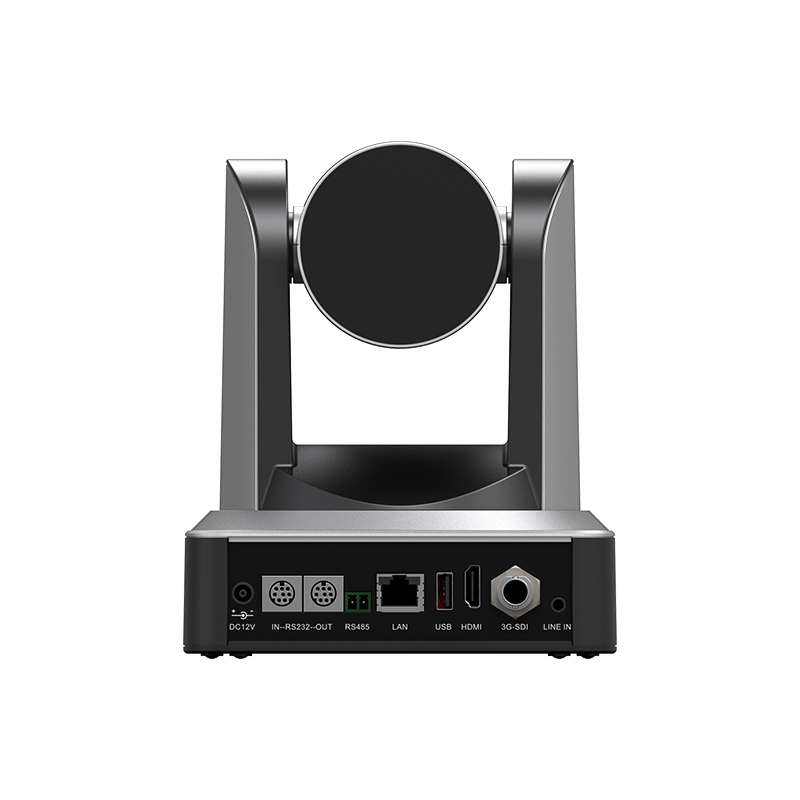
The cameras expose HDMI, SDI, LAN and USB 3.0 outputs on a single chassis. The TC-980S adds POE+ on its LAN port, RS232 and RS485 control, and support for RTSP, RTMP, ONVIF, GB/T28181 and SRT, with NDI and Dante AV available as options. The TCHD-T3 carries a USB 3.0 Type-C port, a USB 2.0 Type-A port, HDMI 1.4b, a 3.5mm line input and a PoE-capable RJ45 port supporting TCP/IP, HTTP, RTSP, RTMP, ONVIF, DHCP and multicast. A room that needs HDMI for lecture capture, USB for a hybrid call and IP for streaming can be served by one camera.
Model Fit: TCHD-T3, TC420 and TC-980S for Teaching Rooms
TCHD-T3 — the 1080P teaching camera
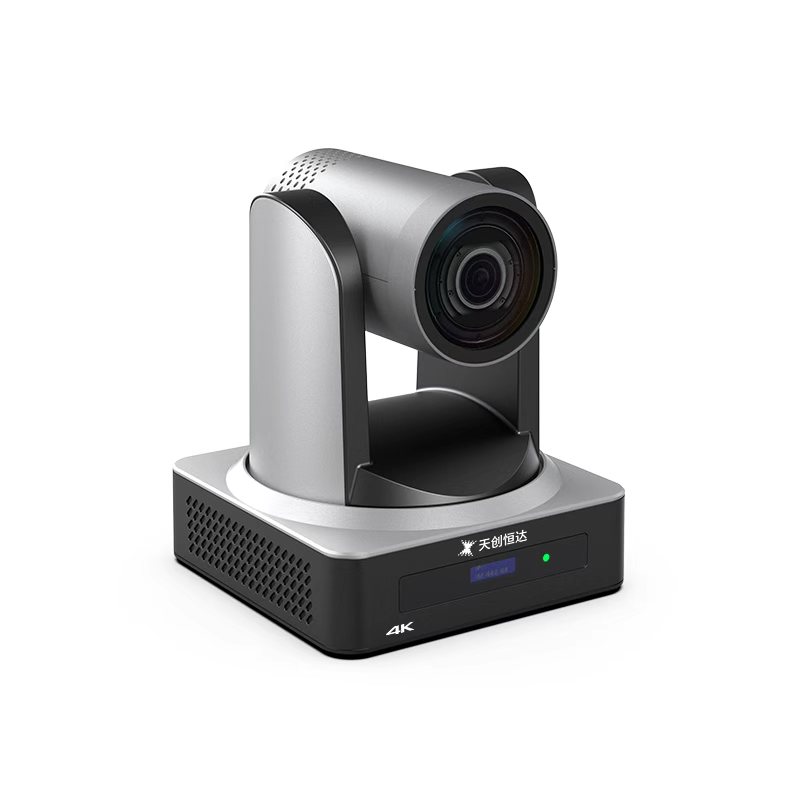
The TCHD-T3 is positioned as an education teaching, e-commerce streaming and medical training camera. It delivers 1080P at 60/50/30/25fps with a 1/2.8-inch CMOS sensor and 2.07M effective pixels, a 12x optical zoom lens (f3.5mm to 42.3mm, F1.8 to F2.8) and 16x digital zoom. Its signal-to-noise ratio is specified at ≥55dB with 2D and 3D digital noise reduction, and its horizontal angle of view runs from 72.5° wide to 6.9° telephoto, which covers both a full classroom and a close shot of a demonstration. It stores up to 255 presets, supports image freeze and horizontal/vertical flip, and runs on Windows, macOS, Linux and Android hosts over UVC 1.1 to 1.5 with UVC PTZ control.
TC420 — 4K capture with 12x optical zoom
The TC420 pairs a 1/2.8-inch HD CMOS sensor (8.29M effective pixels) with 12x optical and 15x digital zoom, outputting 4K at 30/25fps and 1080P at 60fps over HDMI, with SDI and USB 3.0 alongside a PoE-capable LAN port. Its horizontal viewing angle spans 6.5° to 70.9°, focal length runs 3.9mm to 46.8mm, and it holds a signal-to-noise ratio above 50dB with 2D and 3D noise reduction. Power consumption stays below 12W, and pan and tilt range covers -170° to +170° and -30° to +90° respectively, with up to 255 presets.
TC-980S — 4K with AI tracking and 12X/20X/30X zoom tiers
The TC-980S is the flagship for tracking-led teaching. It uses a 1/2.8-inch CMOS sensor with 8.42M effective pixels and is offered in 12X, 20X and 30X optical zoom versions, each with 16X digital zoom. HDMI output reaches 3840x2160 as well as 1080P60, SDI carries 1080P and 1080i, USB 3.0 supports YUY2, NV12, H.264, H.265 and MJPEG, and the LAN port supports PoE+ with H.264/H.265 main and sub streams. Pan range is -170° to +170° and tilt range -30° to +90°, with pan speed from 0.1°/s to 60°/s. Total power consumption is ≤18W. Most importantly for teaching, it is the model that carries the five-mode AI tracking system with an 18-metre tracking distance.
Step-by-Step: Deploying Tracking Cameras in a Teaching Room
- Audit the room geometry first. Record the distance from the camera position to the furthest student seat and to the presentation area. If the teaching position moves more than a few metres — for example between a lectern and a demonstration bench — plan for a tracking mode rather than fixed presets.
- Choose the zoom tier against the room depth. A 12X lens suits a standard classroom where the camera sits at the back wall. A 20X or 30X optical version is appropriate where the camera must sit far from the stage, such as a lecture theatre or a training hall, because the longer focal length preserves facial detail at distance without relying on digital zoom.
- Decide resolution by destination, not by habit. If the output is a learning management system, a conferencing platform and an internal archive at 1080P, the TCHD-T3 is sufficient and keeps processing load low. If the room also feeds digital signage, large-format displays or a broadcast chain, specify a 4K model such as the TC420 or TC-980S.
- Configure tracking mode and presets before handover. Set the tracking mode to match teaching style — Real-time for a presenter who roams, Area for one who stays near a board — and store presets for the lectern, the whiteboard and the audience. The cameras support up to 255 presets, so a room can hold a complete shot list without an operator.
- Plan the audio and noise chain alongside the image. Feed the room's existing audio through the camera's 3.5mm line input where a clean mix is available, and check gain structure so that HVAC hum is not amplified. Image noise control is handled in-camera by 2D/3D DNR; audio noise must be handled at the source.
- Fix the transport and control path. Use HDMI for lecture capture appliances, SDI where cable runs are long and locking connectors matter, USB 3.0 for soft-codec calls, and IP with RTSP, RTMP, ONVIF or SRT for streaming and recording servers. Control runs over VISCA or Pelco-D/Pelco-P on RS232/RS485, or over IP for network-based control.
- Run an acceptance test in the real room. Test with the lights and projector on, at the darkest time of day, and confirm that tracking follows the presenter into the corners of the teaching area without hunting. Confirm that presets recall correctly and that the stream holds its bitrate.
Proven Deployment: 20 Units Across Government, Hospital, School and Creator Clients
The clearest evidence for this configuration is an existing teaching live streaming project. TCHD Video supplied 20 units for teaching live streaming across a client group that included government, hospital, school and YouTuber users, in Germany, Australia and Malaysia. The deployment has run for two years, and the recorded outcome is stable operation with low noise and automatic tracking, with low noise and AI auto tracking identified as the defining highlights of the installation.
That mix of client types is instructive. A school teaching room, a hospital training lab, a government training centre and a creator studio place very different demands on a camera, yet all four converge on the same two requirements: the shot must follow the presenter without an operator, and the image must stay clean in ordinary lighting. A two-year operating record across those four environments, in three countries, is a more useful reference point for a procurement committee than a laboratory specification sheet alone.
The units in that project are linked to the TC-980S, the model that carries the AI tracking system.
Use Cases
University and school lecture capture
A single TC-980S mounted at the rear of a lecture theatre can follow a lecturer across the stage using Stage or Real-time Tracking, while the LAN port streams to the capture server and HDMI feeds the room's recording appliance. Presets cover the whiteboard, the lectern and the audience for Q&A. No operator is required during the session.
Hospital and clinical skills training
Medical training rooms need close shots of technique without a camera operator crowding the teaching area. The 20X and 30X optical versions of the TC-980S allow the camera to sit at a distance and still frame a demonstration tightly, while 2D/3D noise reduction and 0.5 Lux minimum illumination keep the image usable under clinical lighting. The TCHD-T3 is positioned specifically as a medical training camera for rooms where 1080P is sufficient. Where the room is an operating theatre, buyers should confirm device classification and documentation against IEC 60601-1 series expectations with the supplier before specifying.
Government and corporate training centres
Multi-room training estates benefit from the preset capacity and network control. A central operator can recall a shot on any camera over IP, and ONVIF and GB/T28181 support allows the cameras to register with existing management platforms rather than requiring a separate control system.
Creator and event streaming
YouTuber and event workflows use the same tracking capability in a different way: Intelligent Framing keeps a single presenter composed while the USB 3.0 output feeds a laptop, and SDI feeds a switcher where a production desk is present. The 4K HDMI output allows a 1080P program feed to be produced from a 4K source with room to crop.
Comparison Table: TCHD-T3 vs TC420 vs TC-980S
| Specification | TCHD-T3 | TC420 | TC-980S |
|---|---|---|---|
| Sensor / effective pixels | 1/2.8" CMOS, 2.07M | 1/2.8" HD CMOS, 8.29M | 1/2.8" CMOS, 8.42M |
| Maximum video output | 1080P60 | 4K30 over HDMI; 1080P60 over HDMI/SDI | 3840x2160 over HDMI; 1080P60 over SDI/USB/LAN |
| Optical / digital zoom | 12X / 16X | 12X / 15X | 12X, 20X or 30X / 16X |
| AI auto tracking | Not listed in available spec sheet | Not listed in available spec sheet | Five modes, up to 18 m |
| Noise control | 2D & 3D DNR | 2D & 3D DNR | 2D & 3D DNR |
| Signal-to-noise ratio | ≥55dB | >50dB | >50dB |
| Minimum illumination | 0.5 Lux (F1.8, AGC ON) | 0.5 Lux (F1.8, AGC ON) | 0.5 Lux (F1.8, AGC ON) |
| Video interfaces | HDMI 1.4b, USB 3.0 Type-C, USB 2.0 Type-A, RJ45 (PoE) | HDMI, SDI, USB 3.0, LAN (PoE) | HDMI, SDI, USB 3.0, LAN (PoE+), A-IN |
| Control | UVC PTZ over USB | RS232, RS422/RS485, VISCA over IP | RS232, RS485, network VISCA |
| Protocols | TCP/IP, HTTP, RTSP, RTMP, ONVIF, DHCP, multicast | RTSP, RTMP, ONVIF, GB/T28181, RTMPS, SRT | RTSP, RTMP, ONVIF, GB/T28181, SRT; NDI and Dante AV optional |
| Presets | 255 | 255 | 255 |
| Power consumption | DC 12V | <12W | ≤18W |
| Typical teaching role | Standard classroom, hybrid class, medical training at 1080P | 4K lecture capture with 12X reach | Tracking-led lecture theatre, clinical demonstration, creator studio |
Specifications as published by TCHD Video. Options such as NDI and Dante AV are selectable configurations, not standard inclusions.
OEM/ODM and Procurement: What Execution Looks Like with TCHD Video
For integrators, distributors and institutions running a multi-room rollout, the camera is only half the decision; the supply arrangement is the other half. TCHD Video provides OEM and ODM production services, and logo customization is available for OEM/ODM orders. Minimum order quantity is 1 unit, which allows a single-room pilot before a wider purchase. Monthly production capacity is 500 units, and typical lead time is 30 to 45 days. Quality control includes 100% testing of all units, and acceptance inspection is carried out through pre-shipment test procedures.
Commercial terms are straightforward: full payment is prepaid before shipment, and delivery is arranged through FOB or C&F methods. Export markets include the EU, South East Asia and the USA, and TCHD Video's overall major markets are the EU, USA and Asia, with export business accounting for 20% of total sales. After-sales support is provided remotely, which covers configuration review, protocol troubleshooting and firmware guidance without requiring an on-site visit.
Compliance documentation is available for procurement files. TCHD Video holds an ISO 9001:2015 quality management system certificate, number 064-24-Q-0675-R1-S, issued by BEIJING STANDARD CERTIFICATION CENTRE and valid until 2027-03-07, covering the sales of digital audio and video products and related technical services and its related management activities. ISO 14001:2015 (064-24-E-0676-R1-S) and ISO 45001:2018 (064-24-S-0677-R1-S) certificates are held as well. A CE EMC attestation, number LCSA07075157E, issued by LCS TESTING LABORATORY against EN 55032:2015/A1:2020 and EN 55035:2017/A11:2020, records the TCHD-T3, TC420 and TC-980S as related models.
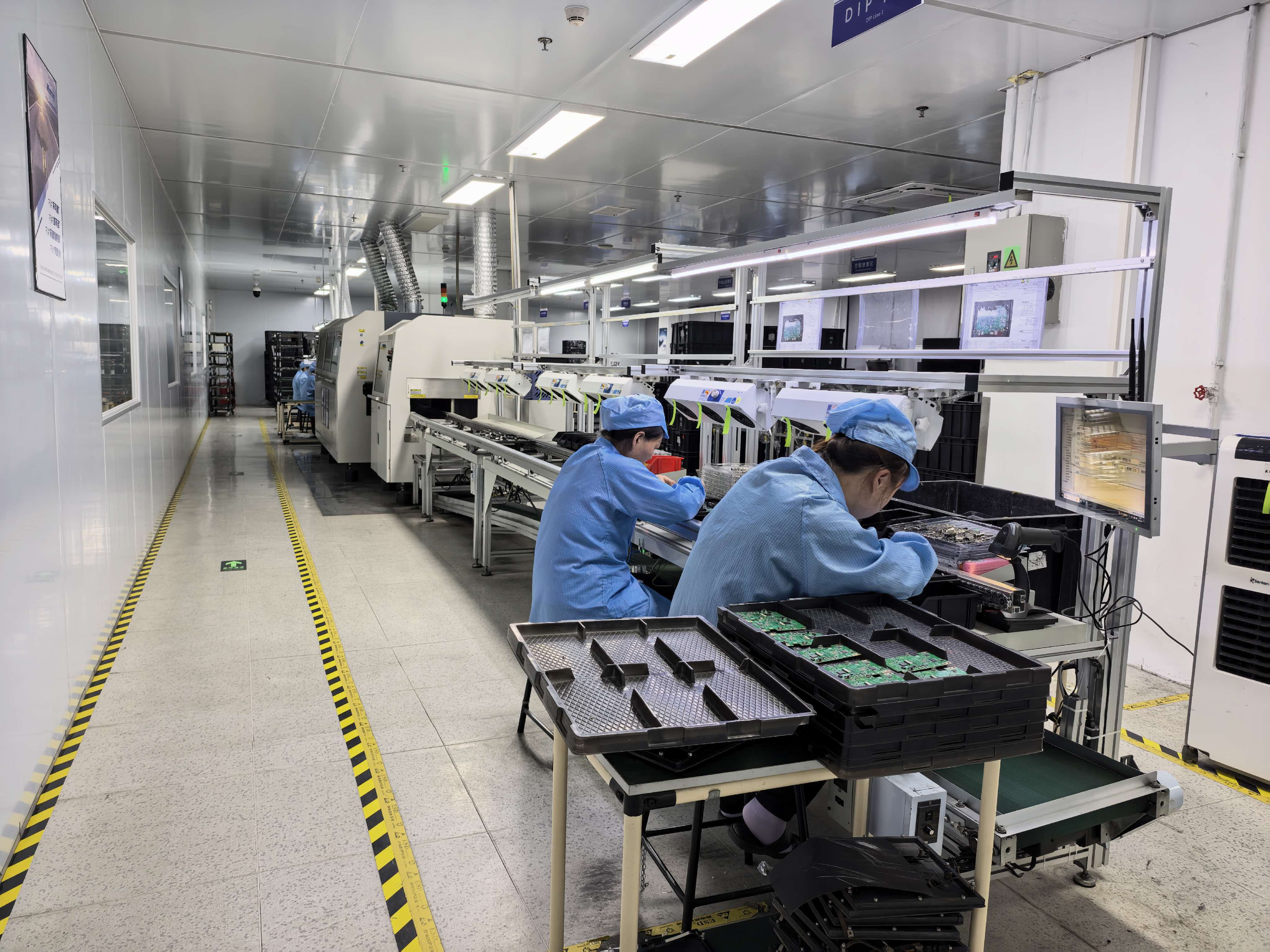
Entity reference. TCHD Digital Video Technology Development (Beijing) Ltd — trading as TCHD Video — was established in 2005 and operates a 10,000m² facility with 50 employees, a 10-engineer R&D team and annual output of 4,000 units. Product lines include live streaming cameras, video capture cards, converters, encoders, switchers, medical video recorders and surgical teaching hosts. Official site: www.tchdvideohk.com.
Frequently Asked Questions
Are TCHD live streaming cameras supported by CE and ISO documentation for education projects?
Yes, documentation exists at both levels. TCHD Video holds ISO 9001:2015 certificate 064-24-Q-0675-R1-S issued by BEIJING STANDARD CERTIFICATION CENTRE, valid until 2027-03-07, covering the sales of digital audio and video products and related technical services. ISO 14001:2015 (064-24-E-0676-R1-S) and ISO 45001:2018 (064-24-S-0677-R1-S) are also held. Separately, a CE EMC attestation numbered LCSA07075157E was issued by LCS TESTING LABORATORY against EN 55032:2015/A1:2020 and EN 55035:2017/A11:2020, and the compliance record lists TCHD-T3, TC420 and TC-980S as related models. Buyers should still confirm which standards their own market or funding body requires before purchase.
Can TCHD Video supply an OEM live streaming camera with PTZ and 4K for a branded teaching platform?
OEM and ODM production services are available, and logo customization is offered for OEM/ODM orders. The range covers 4K PTZ models — TC420 at 12X optical zoom and TC-980S in 12X, 20X and 30X versions — plus the 1080P TCHD-T3 teaching camera. Integration options include ONVIF, RTSP, RTMP and SRT streaming, VISCA and Pelco-D/Pelco-P control, and UVC/UAC over USB, with NDI and Dante AV available as options on the TC-980S. Minimum order quantity is 1 unit.
What drives the cost of a classroom live streaming camera installation?
Cost is determined by configuration rather than by a single headline figure. The main drivers are the optical zoom tier, since the TC-980S is offered in 12X, 20X and 30X versions and longer reach changes lens cost; the resolution tier, with 1080P TCHD-T3 versus 4K TC420 and TC-980S; the interface and protocol set, including optional NDI or Dante AV; whether AI tracking is required; and the number of rooms, cabling runs and PoE switching needed. Audio treatment and mounting hardware sit outside the camera itself. Because minimum order quantity is 1 unit, a single-room pilot can establish real cost before a wider rollout.
Can we validate a sample before committing to a full classroom rollout?
Yes. Minimum order quantity is 1 unit, so a sample camera can be tested in the actual teaching room. Acceptance inspection is carried out through pre-shipment test procedures, and every unit passes 100% testing before dispatch. Payment terms require full prepayment before shipment, and delivery is arranged through FOB or C&F methods. Remote after-sales support covers configuration and protocol questions during the evaluation period.
What is the lead time for a multi-room teaching deployment?
Typical lead time is 30 to 45 days, supported by a monthly production capacity of 500 units, so a staged rollout across several teaching rooms can be scheduled in batches. Delivery is arranged on FOB or C&F terms with full prepayment before shipment. To scope a deployment, share the room count, required resolution and zoom tier, and the destination market; TCHD Video can then confirm configuration, documentation and scheduling through WhatsApp or by email at tomzhang@tchdvideo.com.
Conclusion
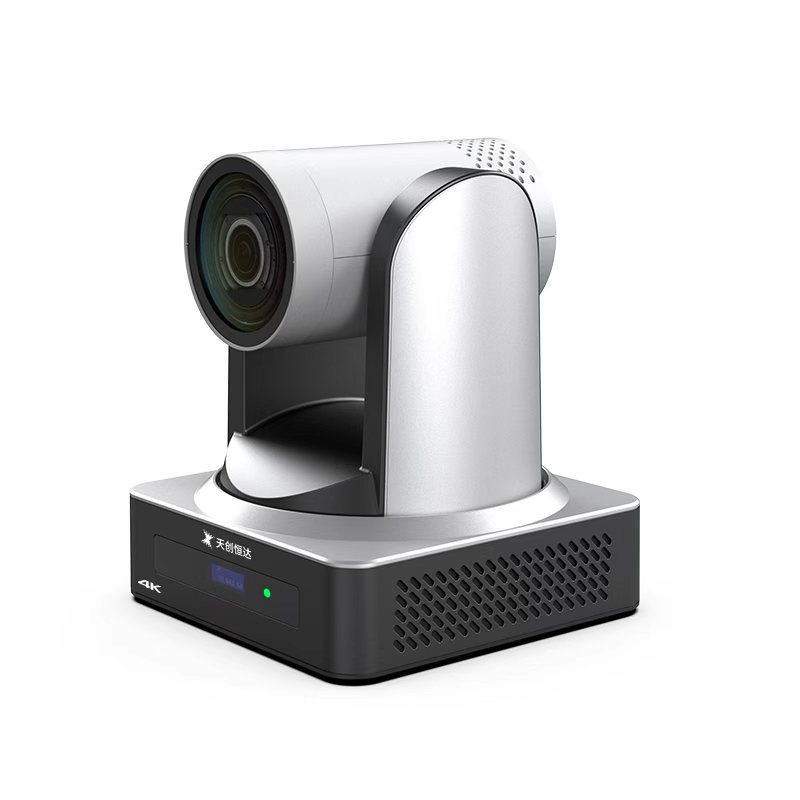
Remote teaching fails when the camera cannot follow the teacher and the image cannot survive an ordinary room. AI auto tracking removes the operator from the equation — five tracking modes on the TC-980S, with up to 18 metres of working distance — while 2D and 3D digital noise reduction, 0.5 Lux minimum illumination and signal-to-noise ratios above 50dB keep the picture clean. The TCHD-T3 covers 1080P classrooms and medical training rooms at ≥55dB SNR, the TC420 brings 4K and 12X optical zoom, and the TC-980S adds tracking to a 4K platform available in three zoom tiers.
The two-year, 20-unit teaching project across government, hospital, school and creator clients in Germany, Australia and Malaysia is the strongest available indicator that the configuration holds up outside a demo room: stable operation, low noise and automatic tracking over an extended period. For buyers moving from evaluation into execution, the remaining work is specification, not discovery — match the zoom tier to room depth, choose resolution by output destination, set tracking modes and presets at commissioning, and confirm the compliance file against your own market requirements.
Download the TCHD Product Catalog 2025 (PDF)For sample requests, OEM/ODM discussion or a multi-room quotation, contact TCHD Video: email tomzhang@tchdvideo.com, telephone +86-13910334207, or visit www.tchdvideohk.com.
Have Questions or Need More Details?
Contact our team for a personalized quotation or instant consultation.
Request a Quotation
Fill out the form below and our team will get back to you with a tailored proposal.
WhatsApp Direct Chat
Prefer to chat in real-time? Message us on WhatsApp for instant assistance & quick answers.
- Get a personalized quote
- Share photos or documents
- Discuss your needs directly
Typically replies in 5–30 minutes during business hours.