TCHD-840 Super vs TCHD-840 Ultra: Which Production Switcher to Choose?
TCHD-840 Super and TCHD-840 Ultra are both multicamera live production switchers from TCHD Video — TCHD Digital Video Technology Development (Beijing) Ltd, a Beijing-based developer and supplier of video hardware established in 2005. The difference between them is not quality. It is where the work happens: TCHD-840 Super is built around output flexibility and signal routing, while TCHD-840 Ultra is built as a self-contained switching and streaming desk.
Short answer. Choose TCHD-840 Super when the production already owns a streaming layer and the switcher must deliver 2160P60 or 1080P60 output from a minimum of four 12G-SDI or four HDMI 2.0 inputs, with multiple PGM, AUX and UVC outputs and balanced 1/4-inch audio I/O. Choose TCHD-840 Ultra when switching and multi-platform delivery should live in one chassis: full-hardware FPGA design, an industrial-grade flip cover, a main display of at least 15.6 inches, and built-in streaming encode/decode with 4-channel simultaneous streaming.
This comparison uses published product facts and attributable market data only. Where the available material does not state an attribute for one of the two models, the article says so instead of filling the gap with an assumption — because at the decision-to-execution stage, a wrong assumption is more expensive than a gap.
Problem Definition: Switching Is Settled; Streaming Ownership Is Not
Both models sit in the same multicamera aisle and both handle 4K-class signals, so a side-by-side spec read tends to end in a tie. The real difference appears one step downstream: who owns encoding, and how much of the operator desk is built into the chassis.
Three buying errors follow directly from that:
- Paying twice for streaming. A buyer who already runs an external encoder, or a software codec on a computer, may not need built-in encode/decode at all and can redirect the budget toward output diversity and audio.
- Under-specifying the operator surface. A large main display, a protective flip cover and an integrated control desk matter when the switcher travels, when volunteers or students operate it, or when the venue has no room for a second monitor.
- Treating the switcher as a standalone purchase. At the decision-to-execution stage the unit has to fit a rack, a signal chain, a crew rotation and a multi-year service plan.
So the question is not which switcher is better in isolation. It is which switcher leaves fewer unresolved dependencies in the room you actually operate in — and which one your team can still support in year four.
Industry Background: 12G-SDI, Multi-Platform Delivery, and the Compliance Layer
Three developments explain why two models in one family now diverge this sharply.
1. 12G-SDI made single-cable 4K a baseline expectation
The SMPTE ST 2082 standard for 12G-SDI carries uncompressed 4K video at 60 frames per second over a single coaxial cable at a data rate of 11.88 Gbps (Samim Group, “12G SDI Technology: Revolutionizing Live Broadcasting”, 2025). For a multicamera production that means one BNC per UHD camera instead of a bonded link. That is why 12G-SDI input counts — the “at least four” figure on TCHD-840 Super — moved from premium feature to practical minimum.
2. The switcher market is expanding alongside streaming demand
Precision Reports (2026) estimates the global production switcher market at USD 2,596.79 million in 2025. Fortune Business Insights (2026) projects the broader video switcher market at USD 11.48 billion by 2034, growing at a 7.10% CAGR from 2026. The two figures are not additive: Fortune’s scope includes video switching equipment beyond production-specific vision mixers, which is why its total is substantially larger.
On the demand side, Precedence Research (2026) projects the livestream e-commerce market to reach USD 312.35 billion by 2035, with Asia Pacific holding a 66% share as of 2025. Buyers shaped by that segment rarely ask for switching alone — they ask how many destinations one chassis can feed, and whether a separate encoder is still required.
3. Import classification and support terms are now part of the comparison
Video mixing systems and consoles are classified under HS code 85437062 in various customs jurisdictions (Cybex.in), so importers of either model should confirm how the supplier documents classification. And because these units remain in service for years, firmware policy and spare-parts commitments belong in the same evaluation as the specification sheet.
Detailed Solution: What Each Model Actually Gives You
TCHD-840 Super: an output-flexibility platform
TCHD-840 Super is specified as a multicamera switcher whose value is concentrated in what it can feed:
- Output resolution: 2160P60 and 1080P60. A production can standardize on UHD where the signal chain supports it and step down to 1080P60 for venues, platforms or recorders that do not.
- Inputs: a minimum of four 12G-SDI inputs or four HDMI 2.0 inputs. 12G-SDI suits UHD camera runs over coax at distance; HDMI 2.0 suits shorter runs from cameras, laptops and presentation sources.
- Outputs: multiple PGM outputs, multiple AUX outputs and UVC output. PGM feeds recording and broadcast, AUX feeds stage screens, confidence monitors or overflow rooms, and UVC lets a computer treat the switcher as a camera source for software-based platforms.
- Audio: balanced 1/4-inch audio inputs and outputs. Balanced connections are the standard method for keeping induced noise out of analog audio over longer cable runs, and 1/4-inch balanced is common on professional audio equipment — confirm TRS versus TS wiring with the supplier before ordering cables.
The practical consequence: TCHD-840 Super is strongest where a separate encoder already exists and the switcher’s job is clean switching, clean routing and clean handoff. The UVC output is the tell — it exists to pass a finished signal to something else.
TCHD-840 Ultra: a self-contained switching and streaming desk
TCHD-840 Ultra is specified differently, with the integration inside the chassis:
- Full-hardware FPGA design. Switching is executed in dedicated hardware logic rather than in software running on a general-purpose operating system. Functionality is therefore defined by the firmware build, which turns firmware support into a long-term ownership question rather than a launch-day detail.
- Industrial-grade flip cover. A protective cover over the control surface and display changes how the unit travels — relevant for outdoor productions, touring events and shared equipment that moves between rooms.
- Main display of at least 15.6 inches. The operator surface is on the chassis, which reduces dependence on external monitors and keeps menus and monitoring inside one footprint.
- Built-in streaming encode/decode with 4-channel simultaneous streaming. The unit streams without an external encoder. EIN Presswire (2026) reports that TCHD-840 Ultra supports 4K60 via 12G-SDI or HDMI 2.0 and offers up to four simultaneous platform streaming outputs.
The consequence runs the other way: TCHD-840 Ultra collapses switching and delivery into one device, which removes boxes, cabling and failure points — at the cost of paying for streaming capacity inside the switcher even if an encoder already exists in your rack.
Five criteria that actually separate the two models
- Where encoding lives. Internal (Ultra, 4-channel simultaneous streaming) or external (Super, through PGM and UVC outputs). This single criterion decides most projects.
- Output diversity. Super explicitly lists multiple PGM, multiple AUX and UVC outputs. If a show needs a program record feed, a stage feed, a confidence feed and a software-platform feed at the same time, that list is the requirement — not a bonus.
- Operator surface and transport. Ultra’s 15.6-inch-class main display and flip cover are ergonomic and logistics features. They do not appear on a signal-flow diagram, but they decide whether a volunteer crew or a traveling operator can run the show consistently.
- Audio architecture. Super lists balanced 1/4-inch I/O. Balanced analog I/O is the lower-risk choice where audio and video equipment sit at different ground potentials.
- Fleet and service. Whichever model you pick becomes the standard, so the deciding question is which unit your team can support, stock spares for and train on for the next several years.
Step-by-Step Breakdown: From Model Choice to a Working Installation
A comparison only earns its place if it survives contact with a real room. Seven steps, in order.
- Write the deliverable list first. List every signal that must leave the switcher: program record, program to a platform, stage or confidence AUX, a UVC feed to a computer, and how many simultaneous platform streams are required. If the list contains platform streams, Ultra’s built-in encode/decode is already doing work that would otherwise need external hardware.
- Count and classify inputs. Separate UHD camera runs from short HDMI 2.0 runs. TCHD-840 Super’s minimum of four 12G-SDI or four HDMI 2.0 inputs sets a floor; if the camera count exceeds it, resolve that before ordering rather than after.
- Decide streaming ownership. Internal streaming removes an encoder, a power outlet and a cable path, and gives one device to support. External streaming keeps the switcher simple and lets the encoder be replaced independently. There is no universally correct answer — only the correct answer for your rack.
- Design the audio path around the connectors. With balanced 1/4-inch I/O on TCHD-840 Super, plan cable runs, connector type and grounding before installation day. For TCHD-840 Ultra, confirm the audio I/O configuration with the supplier, since the available material does not state it.
- Choose the operator surface. If the switcher is desk-mounted in a fixed control room, a large integrated display is convenience. If it moves, Ultra’s flip cover and integrated display represent protection and setup speed.
- Put long-term terms in writing. Request the spare-parts list, firmware update policy, RMA path and a named technical contact. Confirm import documentation as well — HS code 85437062 applies to video mixing systems or consoles in various customs jurisdictions.
- Pilot one unit, then standardize. Run one production end to end — inputs, AUX, UVC, audio and platform streams — before committing a fleet. Standardizing on a single family keeps operator training, cable conventions and spares consistent.
Use Cases: Matching the Model to the Room
The scenario patterns below follow how buyers actually describe these jobs. Each entry states which model the requirement points toward and why.
Scenarios that point toward TCHD-840 Super
- Multi-platform live stream building on an existing encoder. When an encoder or software codec already handles delivery, Super’s multiple PGM, AUX and UVC outputs provide the routing without paying for a second streaming engine.
- Conference streaming, campus TV and converged media centers. Fixed rooms with a rack, a dedicated control position and a separate record-and-deliver layer benefit from explicit PGM and AUX feeds.
- Church streaming setups. Where volunteers run the desk and audio arrives on balanced analog lines, balanced 1/4-inch I/O plus 1080P60 output cover weekly services, with 2160P60 available when the rest of the chain supports it.
- Lecture recording and smart classrooms. Presentation laptops arrive on HDMI 2.0 while cameras run on SDI, and the UVC output feeds lecture-capture software on a standard computer.
Scenarios that point toward TCHD-840 Ultra
- E-commerce live streams and multi-platform selling. Four simultaneous platform streams inside the chassis is the defining requirement, not a convenience.
- Outdoor live streaming and touring events. A flip cover and an integrated main display reduce packing, cabling and setup risk when the unit leaves the building.
- Esports tournaments and sports events. Long shows with multiple destinations and a dedicated operator position favor an integrated desk with on-chassis monitoring.
- Concert and performance streaming. A single chassis that both switches and streams simplifies the signal path backstage and in temporary control positions.
- Virtual studio workflows. Where the switcher must feed both a compositing environment and live platforms, integrated encoding removes one conversion step from the chain.
- Surgical live-demo and medical training. TCHD Video’s product range includes medical video recorders and surgical teaching hosts, so multi-destination delivery of a procedure feed sits inside an environment the manufacturer already serves.
Two patterns appear on both lists — vertical/portrait live streaming and general event coverage — because the deciding factor there is whether streaming is internal or external, not the content itself.
TCHD-840 Super vs TCHD-840 Ultra: Specification Comparison
| Decision area | TCHD-840 Super | TCHD-840 Ultra |
|---|---|---|
| Processing architecture | Not stated in the available product data | Full-hardware FPGA design |
| Chassis and transport | Not stated in the available product data | Industrial-grade flip cover |
| Main display | Not stated in the available product data | At least 15.6 inches |
| Output resolution | 2160P60 and 1080P60 | 4K60 via 12G-SDI or HDMI 2.0 (EIN Presswire, 2026) |
| Inputs | Minimum of 4× 12G-SDI or 4× HDMI 2.0 | Not stated in the available product data |
| Outputs | Multiple PGM, multiple AUX, UVC | Up to 4 simultaneous platform streaming outputs |
| Streaming encode/decode | Not stated; the UVC output passes a program feed to external encoding | Built-in streaming encode/decode with 4-channel simultaneous streaming |
| Audio | Balanced 1/4-inch audio I/O | Not stated in the available product data |
| Strongest fit | Productions with an existing encoder that need routing and output diversity | Productions that want switching and multi-platform delivery in one chassis |
“Not stated in the available product data” means the published material used for this article does not specify that attribute for that model. It is not a claim that the feature is absent. Confirm any gap directly with TCHD Video before ordering.
Long-Term Ownership: Spare Parts, Firmware and Fleet Standardization
Buyers evaluating a supplier relationship rather than a single transaction ask a different set of questions. The specification decides the model; the supplier decides whether that model is still serviceable in year four.
What TCHD Video’s operating profile tells you
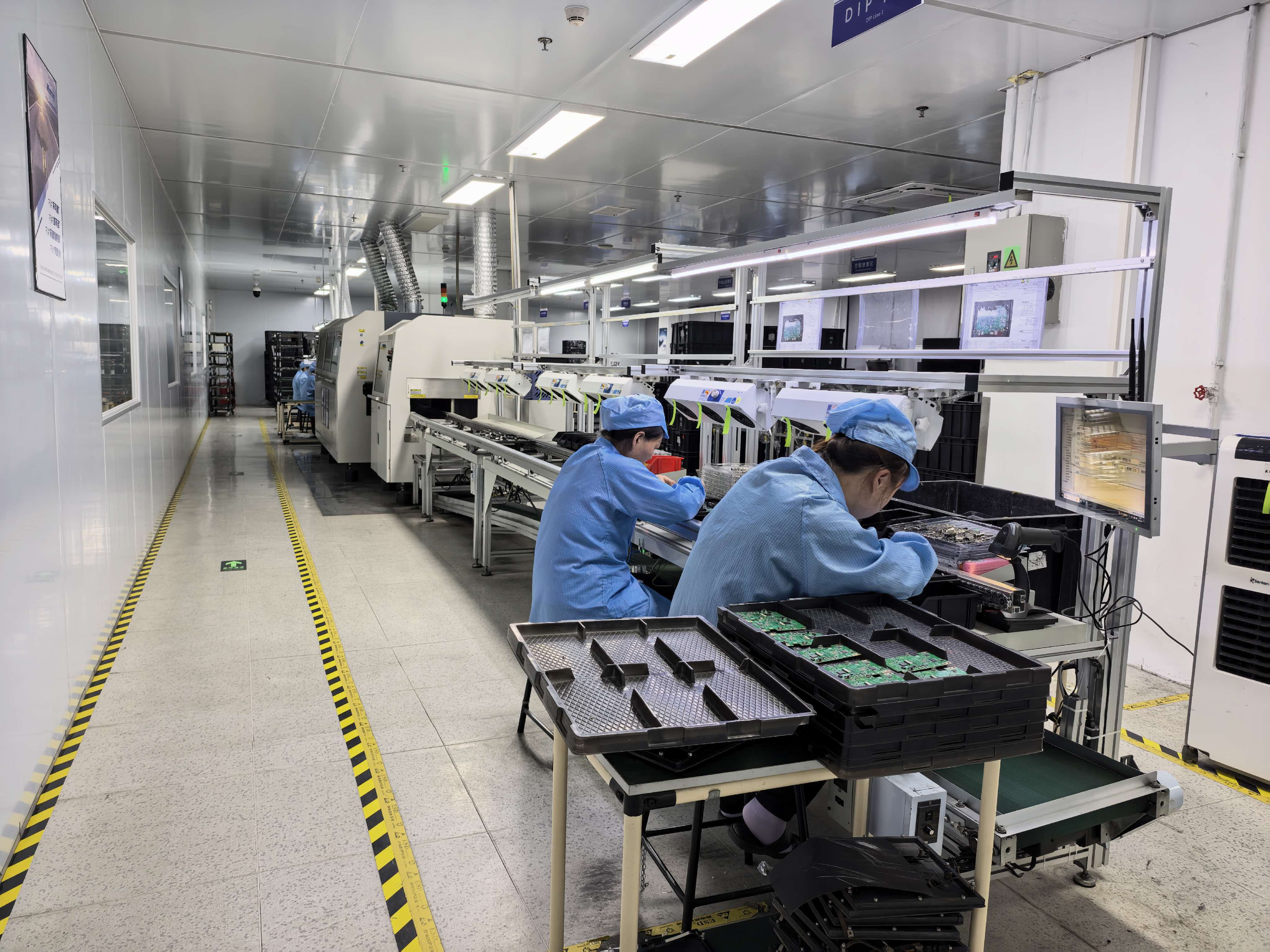
- Established 2005, with 20 years of industry accumulation. An operating history that long is a precondition for spare-parts continuity, not a guarantee of it — ask for the written commitment anyway.
- 10,000 m² factory, 50 employees, 4,000 units annual output. Production scale matters for board-level spares, replacement units and lead-time predictability during peak seasons.
- R&D team of 10 engineers. For a full-hardware FPGA platform like TCHD-840 Ultra, firmware is the product’s long-term behavior. A dedicated engineering team is the relevant capability; the update cadence still has to be agreed in writing.
- Export ratio of 20%, main markets EU, USA and Asia. Buyers in those markets should request the compliance and customs documentation applicable to their jurisdiction, including HS classification for the unit.
Four questions to put in writing before you standardize
- Which components are classified as wear items, and what is the spare-part availability commitment for each?
- What is the firmware update policy, and how are updates delivered and rolled back if a build causes a problem?
- What is the RMA path, and who is the named technical contact for the account?
- For TCHD-840 Ultra, does built-in streaming depend on third-party platform APIs, and how are platform-side changes handled?
Standardizing on one family — rather than mixing Super and Ultra unit by unit — keeps operator training, cable conventions and spares consistent across a venue group, campus or production company. That consistency is usually worth more than the marginal specification advantage of mixing models.
FAQ
1. How do I choose a long-term production switcher supplier with spare parts and firmware support?
Evaluate the supplier on four verifiable points: operating history, R&D capacity, production scale and export experience. TCHD Video was established in 2005 and reports 20 years of industry accumulation, a 10,000 m² factory with 50 employees, an annual output of 4,000 units and an R&D team of 10 engineers. Its export ratio is 20%, with main markets in the EU, USA and Asia. Then convert those facts into commitments: ask for the spare-parts list, the firmware update policy and the RMA path in writing before purchase. TCHD Video can be reached through Leo Chen at tomzhang@tchdvideo.com, by phone at +86-13910334207, or on WhatsApp at +86 19498872019.
2. What is the main hardware difference between TCHD-840 Super and TCHD-840 Ultra?
TCHD-840 Ultra is built around a full-hardware FPGA design with an industrial-grade flip cover and a main display of at least 15.6 inches, plus built-in streaming encode/decode with 4-channel simultaneous streaming. TCHD-840 Super is defined by its signal handling: 2160P60 and 1080P60 output, a minimum of four 12G-SDI or four HDMI 2.0 inputs, multiple PGM, AUX and UVC outputs, and balanced 1/4-inch audio I/O.
3. Can both models output 4K at 60 fps?
TCHD-840 Super is specified with 2160P60 and 1080P60 output. TCHD-840 Ultra is reported to support 4K60 via 12G-SDI or HDMI 2.0 (EIN Presswire, 2026). Under SMPTE ST 2082, 12G-SDI carries uncompressed 4K at 60 fps over a single coaxial cable at 11.88 Gbps, so one BNC per camera is sufficient for UHD runs.
4. How should I budget between the two models?
The available product material does not publish prices for either model, so budget the total installation rather than the chassis alone. TCHD-840 Ultra removes the need for an external streaming encoder and reduces dependence on external monitors. TCHD-840 Super shifts those costs outside the switcher, which is cheaper only if you already own that equipment. Add spares, cabling, connector types and operator training to both sides before comparing quotes.
5. Can we validate a unit before committing to a fleet?
Run one production end to end — inputs, AUX, UVC, audio and platform streams — before standardizing on either model. Contact TCHD Video to confirm evaluation and configuration options for your region: Leo Chen, tomzhang@tchdvideo.com, +86-13910334207, WhatsApp +86 19498872019. The current product catalog can be downloaded and shared with procurement and engineering teams ahead of a technical review.
Conclusion: Choose by Where Streaming Lives
The TCHD-840 Super versus TCHD-840 Ultra decision resolves once one question is answered: does encoding belong inside the switcher or outside it? If streaming is already handled elsewhere and the production needs 2160P60 or 1080P60 output, at least four 12G-SDI or four HDMI 2.0 inputs, multiple PGM, AUX and UVC outputs and balanced 1/4-inch audio I/O, TCHD-840 Super is the matching configuration. If the requirement is one chassis that switches and delivers to four platforms simultaneously, with full-hardware FPGA design, an industrial-grade flip cover and a main display of at least 15.6 inches, TCHD-840 Ultra is the matching configuration.
For buyers already past the research stage, the second decision carries as much weight as the first: confirm spare parts, firmware policy and RMA terms in writing, then standardize on one family. TCHD Video has operated from Beijing since 2005 and publishes product and company information at www.tchdvideohk.com, with supporting articles at blog.tchdvideohk.com.
Next step. Download the TCHD Product Catalog 2025 for the full product line, or send your input count, output list and platform destinations to Leo Chen (tomzhang@tchdvideo.com / +86-13910334207 / WhatsApp +86 19498872019) so TCHD Video can confirm which configuration matches your production. Address: Room#411, Building#1, Yard#9, Lianqiao 2nd street, Haidian district, Beijing, China.
Have Questions or Need More Details?
Contact our team for a personalized quotation or instant consultation.
Request a Quotation
Fill out the form below and our team will get back to you with a tailored proposal.
WhatsApp Direct Chat
Prefer to chat in real-time? Message us on WhatsApp for instant assistance & quick answers.
- Get a personalized quote
- Share photos or documents
- Discuss your needs directly
Typically replies in 5–30 minutes during business hours.