TCHD-X6 vs TC420: USB 3.0 or CE-Certified Live Streaming Camera for EU Projects?
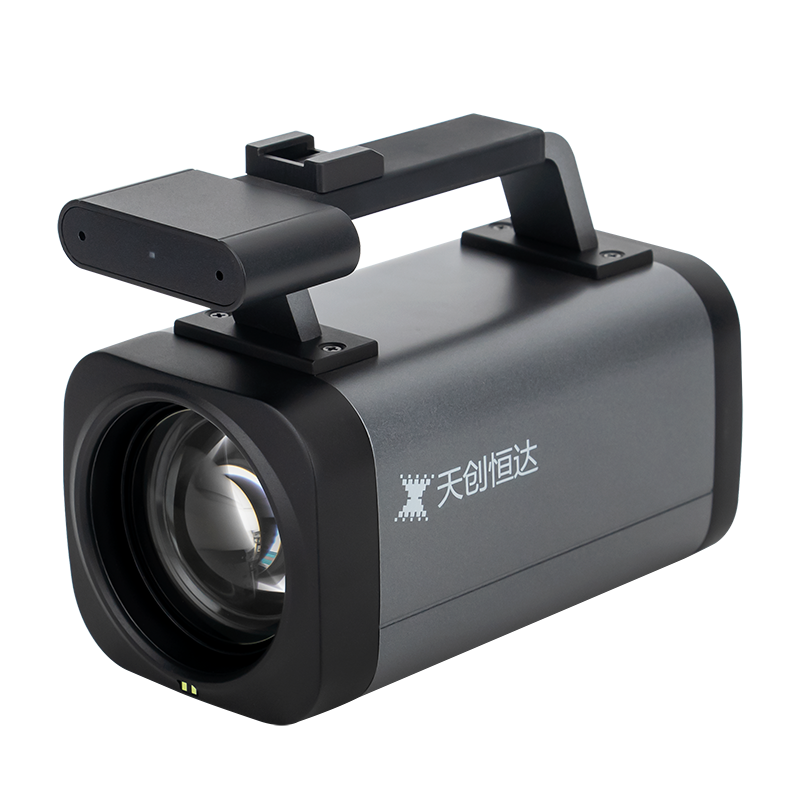
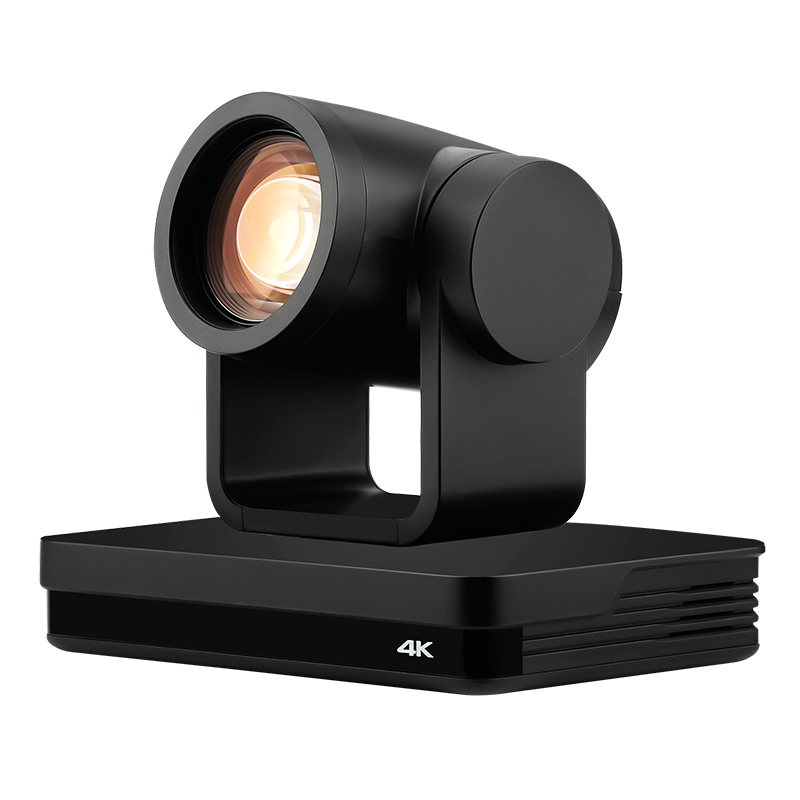
Two live streaming cameras from the same Beijing manufacturer, two different answers to the same EU procurement question. The TCHD-X6 is specified around connectivity: a USB 3.0 UVC/UAC output path, 4K@30fps MJPEG, AI facial tracking, HDR, interchangeable lens support and switchable landscape/portrait modes. The TC420 (6388) is positioned around documentation: a quality management system and CE EMC certification coverage. Choosing between them is not a quality judgement — it is a decision about which constraint is binding on your project.
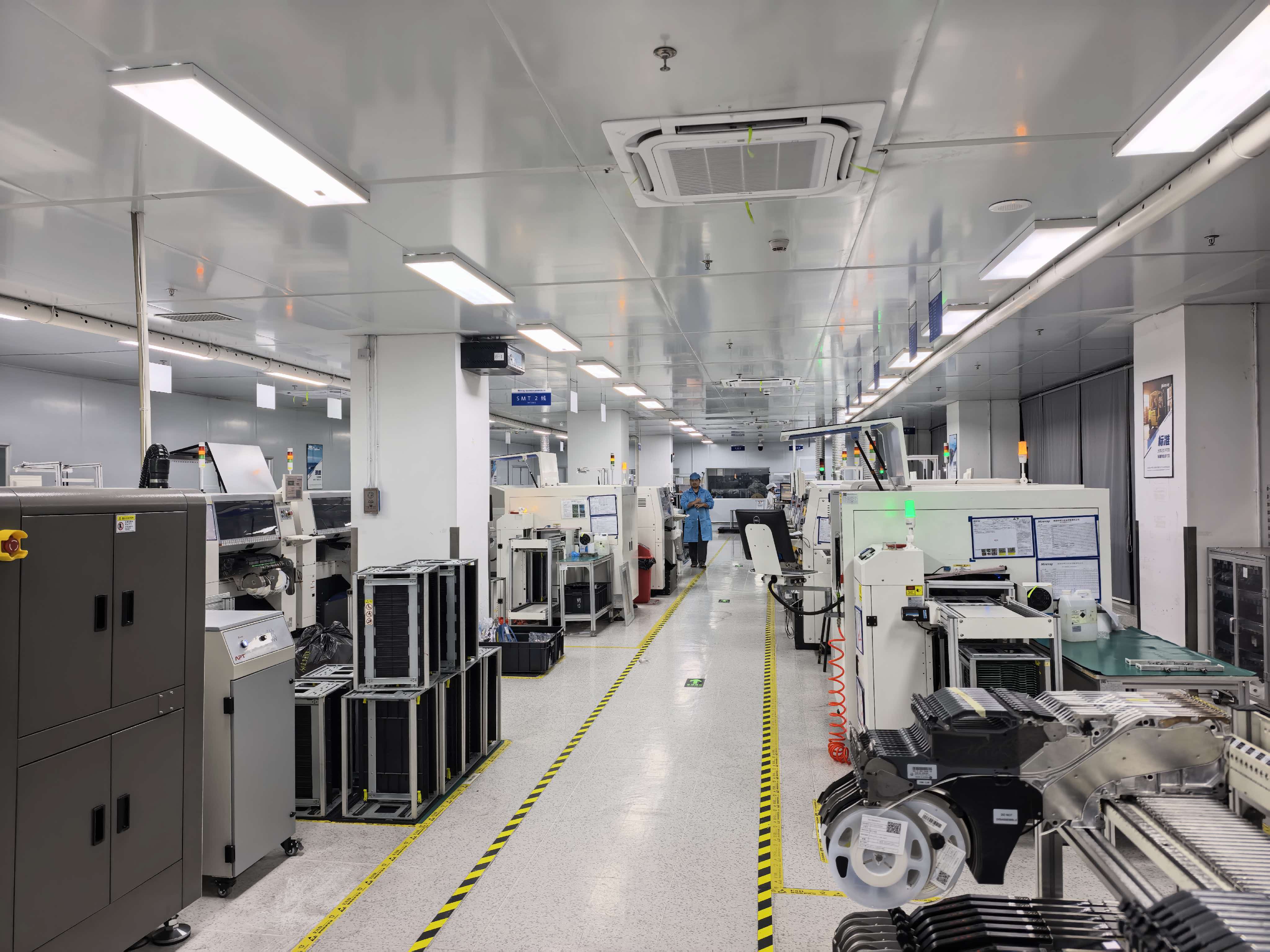
Both cameras come from TCHD Digital Video Technology Development (Beijing) Ltd, a video hardware manufacturer established in 2005. The company operates a 10,000 m² production facility in Beijing with 50 employees, a 10-engineer R&D team, an annual output of 4,000 units and an export ratio of 20%, serving the EU, USA and Asia. Its product line covers live streaming cameras, video capture cards, video converters, video encoders and video switchers.
The practical problem this article solves: buyers at the Decision-to-Execution stage often shortlist these two models side by side, then discover that one of them cannot be defended in an EU project file, or that the other cannot deliver the software-driven workflow the project actually runs on. The sections below separate the two decisions so the correct model can be confirmed before the purchase order is raised.
Problem Definition: Why This Comparison Stalls
The TCHD-X6 and the TC420 are frequently compared on the same specification line, which is where the evaluation breaks down. They solve different procurement problems, and the current TCHD-X6 specification does not list CE, FCC or ISO certificate numbers, while the TC420 carries quality management system and CE EMC certification coverage.
- If the binding constraint is documentation — a CE EMC position for an EU public-sector, healthcare, education or enterprise deployment that will be audited — a USB 3.0 bandwidth figure does not substitute for a certificate reference. The TC420 sits on the compliance side of that line.
- If the binding constraint is the video path — a plug-and-play USB 3.0 UVC/UAC workflow running into existing software, with AI facial tracking, HDR handling of mixed lighting, an interchangeable lens for different room geometries and a portrait frame for vertical delivery — a compliance-first model may not match the workflow. That is the TCHD-X6 side of the line.
- The common error is treating "same manufacturer" as "same documentation". It is not. Certification scope follows the model and the market it was prepared for, not the brand.
A second, quieter failure mode: buyers assume a USB camera is a "small" camera and a compliance camera is a "serious" camera. The published TCHD camera platform specification does not support that assumption — the shared hardware base includes a 1/2.8-inch 8.42-megapixel sensor with a maximum resolution of 3840×2160 and output frame rates up to 60 fps, with HDMI, SDI, USB and wired LAN outputs, and optional POE+ support. On that platform, SDI carries 1080P60 over up to 100 metres of cable.
Industry Background: A Growing Category With a Compliance Layer
Live streaming cameras are no longer a niche accessory category. The global live streaming camera market is projected to reach USD 3.35 billion in 2025 and to grow at a CAGR of 8.8% to USD 7.79 billion by 2035, according to a Vertex AI Search industry report. Within the conference segment, PTZ (pan-tilt-zoom) cameras are estimated to account for 38.5% of global conference camera revenue in 2025, per Metastat Insights, and video conferencing hardware — cameras included — represented 46% of total video conferencing market revenue in 2024, according to Grand View Research.
The supply side is equally concentrated. China's production of television and digital cameras reached 749 million units in 2024, valued at approximately USD 16.5 billion, according to IndexBox. In the USB conference camera category specifically, Omdia reported that Logitech held the largest market share as of 2024, despite a 14% year-on-year decline in sector revenue — a signal that USB-class cameras remain a high-volume, price-sensitive segment.
Two forces now shape EU procurement. First, the USB camera category is crowded and largely undifferentiated, which pushes buyers toward workflow features such as AI tracking, orientation and lens flexibility as differentiators. Second, regulated deployment environments — healthcare in particular — impose hard documentation gates: medical electrical equipment, including surgical cameras, must comply with the IEC 60601-1 series for basic safety and essential performance, per TÜV Rheinland and BSI. That gate is passed with paperwork, not with bandwidth.
The Two Cameras, Defined
TCHD-X6: A USB 3.0 UVC/UAC Live Streaming Camera
The TCHD-X6 is specified around a USB 3.0 UVC/UAC output path. UVC (USB Video Class) and UAC (USB Audio Class) mean the camera presents itself as a standard video and audio device to the host system, so it can be brought into an existing software workflow without a proprietary driver layer. Its published specification includes 4K@30fps MJPEG, AI facial tracking, HDR, interchangeable lens support, and switchable landscape/portrait modes.
For buyers, those five items map to five concrete project requirements:
- USB 3.0 UVC/UAC — a single-cable video and audio path into a laptop, mini-PC or streaming appliance.
- 4K@30fps MJPEG — UHD capture at a frame rate that matches most e-commerce, education and event delivery pipelines, in a codec that is widely decodable in real time.
- AI facial tracking — reduces the need for a dedicated operator during long sessions.
- HDR — helps in mixed or uncontrolled lighting, common in classrooms, pop-up studios and event venues.
- Interchangeable lens plus landscape/portrait modes — one camera body can cover wide room shots and vertical social delivery without a second unit.
Documentation note for EU buyers: the current TCHD-X6 specification does not list CE, FCC or ISO certificate numbers. If your project file requires a CE declaration, an EMC test report reference or a quality-management certificate number against the specific model, that documentation must be confirmed with the supplier before the X6 is written into the specification.
TC420 (6388): A Compliance-Documented Model
The TC420 (6388) is positioned on the documentation side of the decision. It carries quality management system and CE EMC certification coverage, which is the material difference for EU-facing projects that must demonstrate conformity for electromagnetic compatibility, and for buyers who need a traceable quality system behind the supplier.
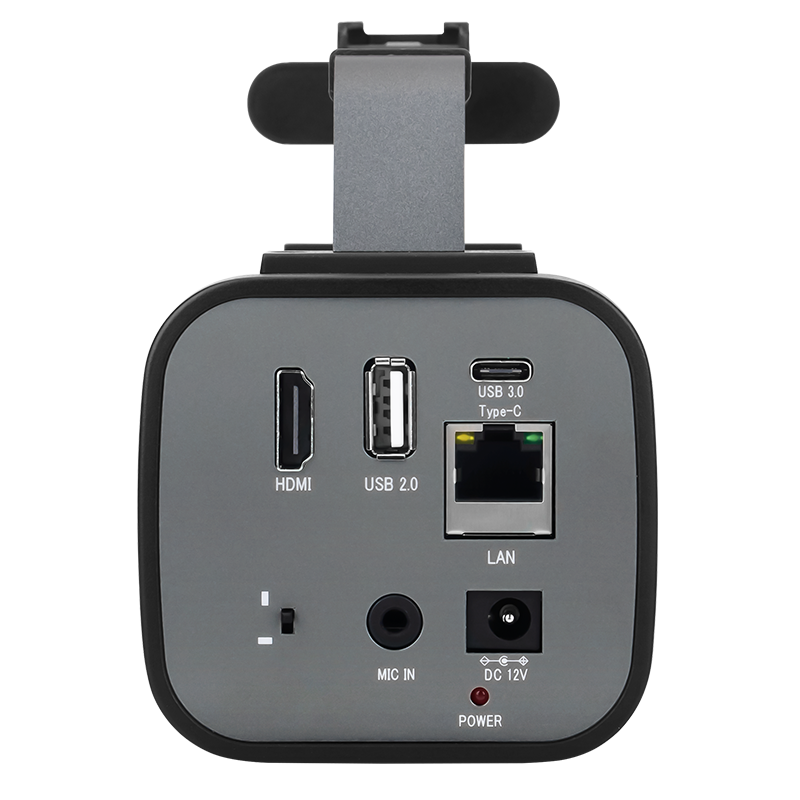
Technically, the TC420 sits inside the same interface framework as the rest of the range. The video output interfaces across the platform include HDMI, SDI, LAN and USB 3.0. Supported network protocols are RTSP, RTMP, ONVIF, GB/T28181 and SRT. Camera control supports VISCA, Pelco-D and Pelco-P over RS232 or RS422. Input voltage is DC12V (±10%), and power consumption is less than 12W for the TC420, compared with ≤18W for model 6370.
Shared Platform Facts Buyers Should Not Re-Learn Twice
Because the X6 and the TC420 come from the same hardware platform, several procurement parameters are identical and can be negotiated once for both models:
- Minimum order quantity: 1 unit.
- Payment terms: full prepayment.
- Delivery terms: FOB / C&F.
- Acceptance criteria: pre-shipment test.
These terms apply to product models 6394, 6388 and 6370, and to the wider TCHD product range. For a first EU order, the practical consequence is that the MOQ does not force a choice between the two models — a buyer can validate one unit of each before committing to a volume agreement.
Step-by-Step: How to Decide Between the X6 and the TC420
The decision can be run as six sequential checks. Stop at the first check that produces a hard "no" — that is usually the model constraint.
- Write the document list before the spec list. If the project owner requires a CE EMC reference or a quality-management certificate number for the exact model being installed, the TC420 starts ahead. If the project owner only requires a functioning video device and an invoice, the X6 remains eligible.
- Map the video path. A USB 3.0 UVC/UAC path into existing software points to the X6. A path built on HDMI, SDI or LAN — including protocols such as RTSP, RTMP, ONVIF, GB/T28181 and SRT — points to the wider platform, where the TC420's documented position may be preferred.
- Check physical and electrical constraints. Platform input is DC12V (±10%). Power draw is under 12W for the TC420 and ≤18W for model 6370 — relevant for PoE budgeting, cable sizing and heat load in enclosed installations. On that platform, SDI carries 1080P60 up to 100 metres, and POE+ is an optional feature rather than a default.
- Confirm the deployment scenario. Portrait framing, interchangeable lens and AI tracking are X6 capabilities. Documented conformity is a TC420 capability. If the project needs both, specify two units rather than forcing one model into a role it was not prepared for.
- Fix the commercial terms. MOQ 1 unit, full prepayment, FOB / C&F delivery and pre-shipment test acceptance apply across the range. Confirm the Incoterm against your own freight forwarder before signing.
- Confirm risk control and after-shipment support. Ask for the pre-shipment signal stability inspection, the aging-test record, and the spare-parts route for quality defects — details are covered further below.
Comparison Table: TCHD-X6 vs TC420 (6388)
| Decision criterion | TCHD-X6 | TC420 (6388) | What it means for the buyer |
|---|---|---|---|
| Primary output path | USB 3.0 UVC/UAC | USB 3.0 listed within HDMI, SDI, LAN and USB 3.0 outputs | The X6 is optimised for single-cable software workflows; the TC420 sits on the multi-interface platform. |
| Video format | 4K@30fps MJPEG | Platform supports up to 3840×2160 and output frame rates up to 60 fps | Both reach UHD; verify the codec your pipeline decodes in real time. |
| AI facial tracking | Listed | Not listed | Choose the X6 if operator-free tracking is a requirement. |
| HDR | Listed | Not listed | Matters in mixed-lighting venues and classrooms. |
| Interchangeable lens | Supported | Not listed | One body can cover multiple room geometries. |
| Orientation modes | Landscape and portrait | Not listed | Portrait support avoids a second camera for vertical output. |
| CE / FCC / ISO certificate numbers in current spec | Not listed | Quality management system and CE EMC certification coverage | This is the decisive row for audited EU projects. |
| Control protocols | Platform: VISCA, Pelco-D, Pelco-P over RS232/RS422 | Platform: VISCA, Pelco-D, Pelco-P over RS232/RS422 | Integrates with standard control surfaces. |
| Network protocols | Platform: RTSP, RTMP, ONVIF, GB/T28181, SRT | Platform: RTSP, RTMP, ONVIF, GB/T28181, SRT | Identical IP integration options across both. |
| Power | Platform input: DC12V (±10%) | DC12V (±10%), under 12W (model 6370: ≤18W) | Relevant for PoE budgets and cabinet heat load. |
| MOQ | 1 unit | 1 unit | Low-risk single-unit validation for either model. |
| Payment / delivery | Full prepayment; FOB / C&F | Full prepayment; FOB / C&F | Identical commercial framework. |
| Acceptance testing | Pre-shipment test | Pre-shipment test | Acceptance is tied to testing before dispatch, not after arrival. |
| Best-fit projects | E-commerce, education, events, broadcast, medical teaching and observation scenarios | EU-facing projects requiring a documented compliance position | Match the model to the binding constraint, not to the price line. |
Use Cases: Matching the Model to the Project
The published TCHD camera platform is positioned for video conferencing, education teaching, event live streaming and medical training. Mapping the two models onto real projects:
- E-commerce and live commerce. Portrait mode, USB 3.0 UVC/UAC and AI facial tracking make the X6 the natural fit: a single operator, a single cable, vertical delivery. A compliance-first model adds documentation overhead the project does not use.
- Education and lecture capture. Both work. Choose the X6 where each room runs its own laptop-based capture, and the TC420 where the institution purchases centrally and must attach conformity documentation to the tender.
- Events and conferences. Room geometry changes from venue to venue; the X6's interchangeable lens and HDR are practical advantages. Where the venue is an EU public building with its own compliance requirements, the TC420 becomes the safer specification.
- Broadcast and multi-camera studios. The platform's HDMI, SDI, LAN and USB 3.0 outputs, plus VISCA / Pelco-D / Pelco-P control over RS232 or RS422 and SRT / RTMP / RTSP / ONVIF / GB/T28181 network support, cover standard studio integration. Interface count, not brand, is usually the limiting factor here.
- Medical teaching and surgical observation. These deployments sit inside a regulated category. Medical electrical equipment, including surgical cameras, must comply with the IEC 60601-1 series for basic safety and essential performance. The X6 is used in medical training workflows, but compliance documentation for the exact model and installation must be verified before a clinical specification is signed — this is not a decision a feature list can settle.
Risk Control, Acceptance Testing and Long-Term Supply
Long-term supply is the core of this comparison. Models change; the risk control and acceptance system behind them does not. TCHD Video controls production process risks through constant temperature protection and a built-in heat dissipation module, together with automatic signal correction, auto focus lock and anti-interference circuits. These measures target five documented failure modes: signal loss, picture flicker, overheating, audio failure and focus deviation.
Before shipment, the company runs a 100% full-function aging test, a pre-delivery signal stability inspection, 24-hour online technical debugging and spare-parts supply for quality defects. Acceptance inspection is performed through pre-shipment test procedures — acceptance is tied to evidence produced before the goods leave the factory, which is the arrangement EU buyers usually want when a camera is going into a fixed installation.
Behind those processes sits production capacity: a 10,000 m² facility, 50 employees, a 10-engineer R&D team and an annual output of 4,000 units, with 20% of output exported to the EU, USA and Asia. For a distributor or systems integrator planning a multi-year supply relationship, that combination — documented risk control, pre-shipment acceptance and an established export share — is the practical basis for a long-term agreement, whether the specification calls for the TCHD-X6, the TC420, or both side by side.
Frequently Asked Questions
Does the TCHD-X6 carry CE, FCC or ISO certificate numbers?
The current TCHD-X6 specification does not list CE, FCC or ISO certificate numbers. Buyers whose EU project requires a CE EMC reference or a quality-management certificate number against a specific model should confirm that documentation with the supplier before the model is written into the specification. Within the TCHD range, the TC420 (6388) is the model positioned with quality management system and CE EMC certification coverage.
What does the TCHD-X6 output, and how does that compare with the wider TCHD platform?
The TCHD-X6 is specified around a USB 3.0 UVC/UAC output path with 4K@30fps MJPEG, AI facial tracking, HDR, interchangeable lens support and landscape/portrait modes. The wider TCHD camera platform lists HDMI, SDI, LAN and USB 3.0 outputs, RTSP, RTMP, ONVIF, GB/T28181 and SRT network protocols, VISCA, Pelco-D and Pelco-P control over RS232 or RS422, DC12V (±10%) input, and power consumption under 12W for the TC420 and ≤18W for model 6370.
What are the purchasing terms and acceptance criteria?
Minimum order quantity is 1 unit, payment terms require full prepayment, delivery is arranged through FOB / C&F, and acceptance criteria are pre-shipment test. These terms apply to product models 6394, 6388 and 6370 and across the wider range, so a buyer can order a single unit for validation before committing to volume.
Can a sample be validated before a full order, and what testing is applied?
Because the minimum order quantity is 1 unit, a single unit functions as the validation order. Before shipment, TCHD Video applies a 100% full-function aging test, a pre-delivery signal stability inspection and a pre-shipment test as the formal acceptance step, supported by 24-hour online technical debugging and spare-parts supply for quality defects.
How do I establish a long-term live streaming camera supply partnership in China?
The practical starting point is to confirm two things against your own project file: the documentation set your market requires, and the workflow your installation runs. TCHD Digital Video Technology Development (Beijing) Ltd has manufactured video hardware since 2005 from a 10,000 m² facility with a 10-engineer R&D team, an annual output of 4,000 units and a 20% export ratio across the EU, USA and Asia. Buyers can request a quotation, a sample unit or the product catalog through www.tchdvideohk.com or by contacting tomzhang@tchdvideo.com directly.
Conclusion: Decide on the Constraint, Not the Feature Count
If your EU project file will be audited and the model must come with quality management system and CE EMC certification coverage, the TC420 (6388) is the specification that answers that question. If your project runs on a USB 3.0 UVC/UAC workflow and needs 4K@30fps MJPEG, AI facial tracking, HDR, an interchangeable lens and portrait framing, the TCHD-X6 answers that question instead.
Both share the same commercial framework — MOQ 1 unit, full prepayment, FOB / C&F delivery and pre-shipment test acceptance — and the same platform interfaces, control protocols and network protocols. That means an EU buyer can validate both models at low risk, then standardise on whichever one matches the binding constraint. For projects that genuinely need both documented conformity and a software-driven production workflow, specifying two units is a more defensible decision than forcing one model to cover both roles.
Next Step: Sample, Quote or Catalog
Compare the two models against your own project file. Request a TCHD-X6 or TC420 sample unit, ask for a quotation on your target quantity and market, or download the full catalog to review the complete live streaming camera, capture card, encoder and converter range.
Email: tomzhang@tchdvideo.com · Website: www.tchdvideohk.com
 Download the TCHD Product Catalog 2025
Have Questions or Need More Details?
Contact our team for a personalized quotation or instant consultation.
Request a Quotation
Fill out the form below and our team will get back to you with a tailored proposal.
WhatsApp Direct Chat
Prefer to chat in real-time? Message us on WhatsApp for instant assistance & quick answers.
- Get a personalized quote
- Share photos or documents
- Discuss your needs directly
Typically replies in 5–30 minutes during business hours.