What Is a Live Streaming Camera? Core Concepts Behind PTZ and Teaching Cameras
A live streaming camera is a camera whose primary output is a continuous live video signal delivered to a streaming server, a broadcast chain or a conferencing platform — not footage sitting on a memory card. That single requirement shapes the sensor, the lens, the output interfaces and the control protocols that decide whether a camera will work in a given room.
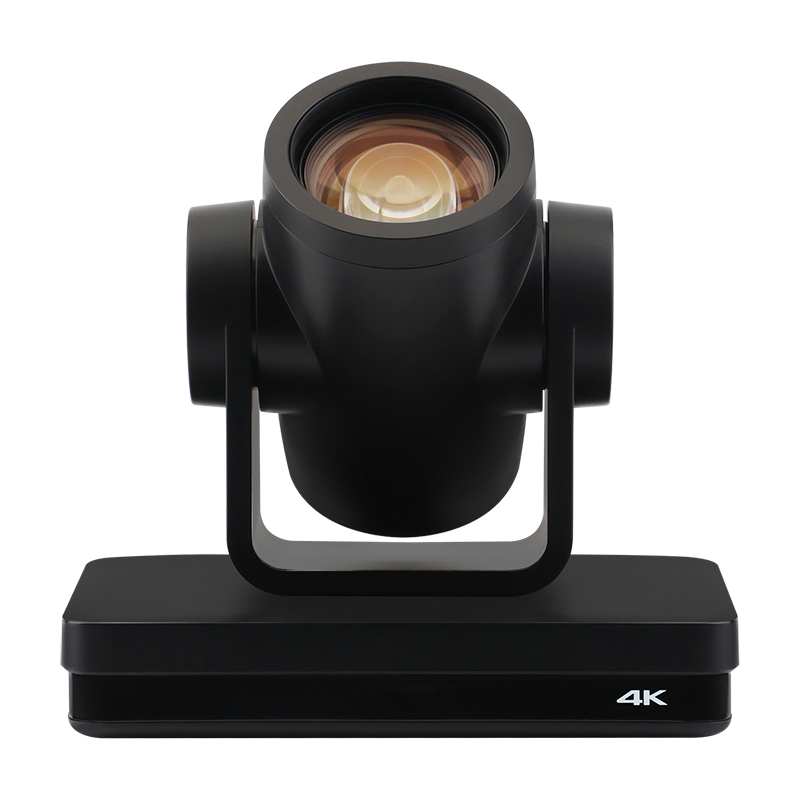
This explainer defines the category in plain terms, then separates two families that buyers routinely confuse: PTZ cameras, represented here by the TC-980S and TC420, and teaching-specific cameras, represented by the TCHD-T3. All three are manufactured by TCHD Video (TCHD Digital Video Technology Development (Beijing) Ltd.), a Beijing-based video hardware manufacturer established in 2005. The aim is not to promote a model, but to make the vocabulary precise enough that a specification sheet, a quotation or a sample request can be judged on its merits.
Problem Definition: Why “Live Streaming Camera” Is an Imprecise Term
The same search phrase surfaces products that share almost nothing mechanically. A PTZ camera, a video conference camera, an IP camera, a CCTV or surveillance camera, a webcam, a broadcasting camera, a 4K camera, an education camera: each of these labels describes either a use case or a physical form factor. None of them describes the signal path, which is the part that determines whether the device fits an actual project.
The confusion is not cosmetic. A camera marketed for network video surveillance is generally designed around continuous monitoring and recording on a network video management system. A camera marketed as a webcam is generally designed around a driver-free USB connection to a single computer. A live streaming camera is designed so that its live output can be ingested by a streaming server, a switcher or a broadcast chain, often for hours at a time, sometimes with remote control over a serial or IP connection.
Before comparing brands or prices, a buyer needs three answers from any specification sheet:
- What comes out of the camera? Baseband video (HDMI or SDI), compressed video over a network (LAN), or USB video into a host computer.
- How is the camera controlled? Handheld remote, serial protocol such as VISCA or Pelco-D, IP-based control, UVC PTZ, or no control at all.
- Where does the signal go next? Directly into a computer running streaming software, into a production switcher, or straight onto a network as an RTMP, SRT or RTSP stream.
Everything else — resolution, sensor size, zoom range, mounting — is a consequence of those three answers. This is also why two cameras with the same headline resolution can be a poor match for the same room.
Industry Background: Where Live Streaming Cameras Sit Today
Live streaming cameras are no longer a broadcast-only category. Published market research places the global live streaming camera market at a projected USD 3.35 billion in 2025, growing at a compound annual growth rate of 8.8% to reach USD 7.79 billion by 2035 (Vertex AI Search / industry report). A separate research view estimates that PTZ cameras accounted for 38.5% of global conference camera revenue in 2025 (Metastat Insights), while Grand View Research reported that video conferencing hardware, including cameras, represented 46% of total video conferencing market revenue in 2024.
Behind those figures is a practical shift in demand. Lecture capture in universities, clinical and surgical teaching in hospitals, live selling in e-commerce, hybrid corporate meetings, event broadcasting and worship streaming all require a camera that can output a live signal reliably for extended periods. The application data for TCHD Video’s camera family describes indoor use, a working temperature range of −10°C to +50°C, working humidity of 20% to 80%, and 24/7 operation modes — an indication of the duty cycle this category is expected to meet.
TCHD Video itself sits in the hardware-and-systems part of that market. The company operates a 10,000 m² manufacturing facility with approximately 50 staff, a research and development team of 10 engineers, and a stated annual production capacity of 4,000 units. Export business accounts for about 20% of sales, with the main markets being the EU, USA and Asia. Beyond live streaming cameras, its product range includes video capture cards, video converters, video encoders, video switchers, recording hosts, medical video recorders and surgical teaching hosts.
What a Live Streaming Camera Actually Is
A live streaming camera is a camera whose output is designed to be transmitted, not merely stored. It may also record, and it may also be used for conferencing, but its defining property is that the video it produces is intended to leave the device continuously and reach a server, switcher or software platform.
Four technical elements carry most of that definition. Understanding them explains why PTZ and teaching cameras diverge even when they share the same sensor class.
1. The image sensor sets the ceiling
All three reference models use a 1/2.8-inch CMOS sensor, but the effective pixel counts differ: 8.42 million (16:9) on the TC-980S, 8.29 million (16:9) on the TC420, and 2.07 million on the TCHD-T3. A larger-pixel USB model in the same range, the TCHD-X6, uses a 1-inch 50MP CMOS sensor.
Sensor behaviour under poor light is often the deciding factor in a real installation. The TC-980S, TC420 and TCHD-T3 each list a minimum illumination of 0.5 lux at F1.8 with AGC on, and include 2D and 3D digital noise reduction. Signal-to-noise ratio is published as greater than 50 dB for the TC-980S and TC420, and 55 dB or better for the TCHD-T3. In a lecture hall or operating theatre where light cannot be raised, those figures matter more than a resolution badge.
2. Optical zoom means reach; digital zoom means crop
The TC-980S is offered with 12X, 20X and 30X optical zoom variants; the 12X version covers a focal length of 4.1–49.2 mm with a diagonal field of view from 78.4° wide to 7.5° telephoto. The TC420 provides 12X optical zoom at 3.9–46.8 mm with a horizontal viewing angle of 6.5° to 70.9°. The TCHD-T3 also uses 12x optical zoom at 3.5–42.3 mm, with a horizontal angle of view of 72.5° to 6.9°.Digital zoom is listed as 16X on the TC-980S and TCHD-T3, and 15X on the TC420. Digital zoom enlarges the centre of the frame rather than gathering more light, so it does not add detail — it is a framing convenience, not a substitute for optical reach.
3. Output interfaces: HDMI, SDI, USB 3.0 and LAN
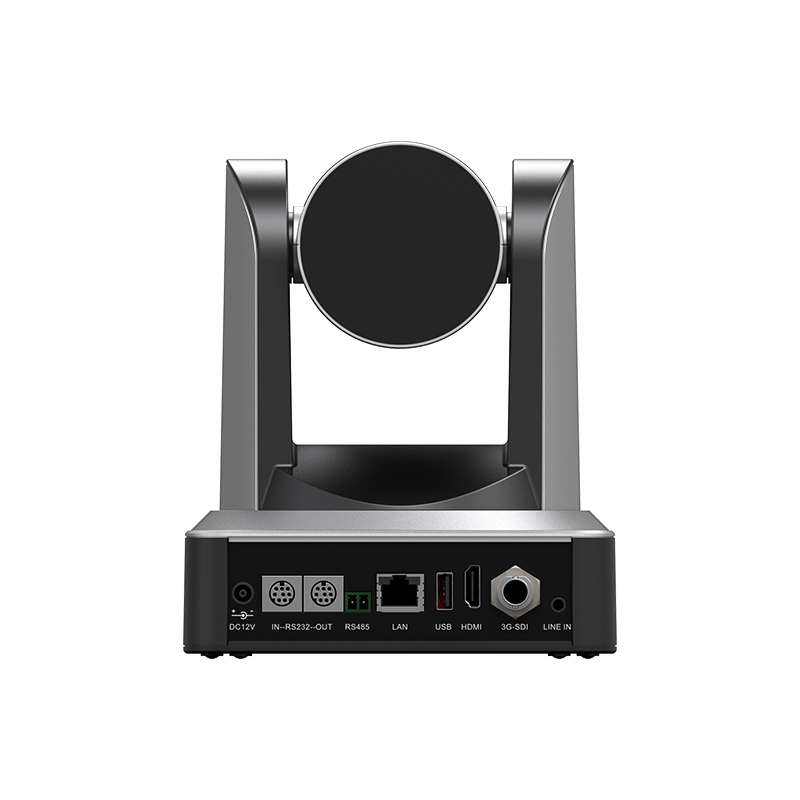
The interface list is what separates a live streaming camera from a general-purpose camera. The TC-980S provides HDMI (up to 3840×2160), SDI (up to 1080P60, including 1080i), a LAN port with PoE+, USB 3.0, audio input, and RS232/RS485 control. The TC420 provides HDMI up to 4Kp30, SDI up to 1080P60, USB 3.0, LAN with PoE, and RS232/RS422 control. The TCHD-T3 provides HDMI 1.4b, one USB 3.0 Type C port, one USB 2.0 Type A port, an RJ45 10M/100M port with PoE, and a 3.5 mm line input.
Interface choice is therefore not a specification detail but a routing decision. HDMI suits a short cable run into a switcher or display. SDI is the baseband option for longer runs and for broadcast-style infrastructure. USB 3.0 suits a direct connection to a computer. LAN suits remote positioning, power-over-Ethernet installation and network-based streaming. Some cameras deliberately offer only one route: the TCHD-X6 has no HDMI or SDI output and delivers video exclusively through a USB Type-C 3.0 interface, which is compatible with USB 2.0.
4. Streaming to a server: protocols and encoding
A camera only becomes a “live streaming” device when its encoding and transport protocols match the receiving platform. The TC-980S supports RTSP, RTMP, ONVIF, GB/T28181 and SRT, with NDI and Dante AV available as options, and compresses H.264 or H.265 on LAN with a configurable bitrate of 64–40960. The TC420 supports RTSP, RTMP, ONVIF, GB/T28181, VISCA over IP, IP VISCA, RTMPS and SRT. The TCHD-T3 supports TCP/IP, HTTP, RTSP, RTMP, ONVIF, DHCP and Multicast, with first and second streams and AAC audio at 96, 128 or 256 Kbps.
In practice, RTMP and RTMPS are the usual routes into a cloud streaming platform, while RTSP and SRT are used when a local server or low-latency link is involved. ONVIF support matters when a camera has to be recognised by third-party management software rather than by a single vendor’s application.
PTZ Cameras: What Pan, Tilt and Zoom Actually Change
PTZ stands for pan, tilt and zoom, and it describes motorised movement rather than a fixed view. The TC-980S and TC420 both pan from −170° to +170° and tilt from −30° to +90°. Pan speed is adjustable from 0.1° to 60° per second on both; tilt speed runs from 0.1° to 30° per second on the TC-980S and 0.1° to 45° per second on the TC420.
The feature that makes this practical is the preset. Both models store up to 255 preset positions, with 10 reachable from the supplied remote control. A single operator can therefore move between a wide stage shot, a lectern shot and a close-up without a camera operator per camera. Serial control is available through VISCA, Pelco-D or Pelco-P over RS232, RS422 or RS485, at baud rates of 115200, 38400, 9600, 4800 or 2400.
The TC-980S adds monocular tracking with selectable modes — off, real-time tracking, stage tracking, area tracking and intelligent framing — with a maximum tracking distance of up to 18 metres. For rooms where a presenter walks, that reduces the amount of manual intervention the operator needs to perform. Total power consumption is stated as 18 W or less on the TC-980S and under 12 W on the TC420, with white balance on the TC-980S adjustable from 2400K to 7100K in 100K steps.
Teaching Cameras: What Makes the TCHD-T3 Different
A teaching camera is not simply a cheaper PTZ. The TCHD-T3 is classified as an education teaching camera, an e-commerce streaming camera and a medical training camera, and its specification reflects that positioning rather than broadcast infrastructure.
Its video system runs up to 1080P at 60/50/30/25 fps, together with 1080i and 720P modes, using the same 12x optical zoom approach as the PTZ models but with a 2.07 million effective pixel sensor. It supports UVC 1.1–1.5 for video and UAC for audio, and it explicitly supports UVC PTZ control, so pan, tilt and preset recall can be driven from the host computer without a separate control cable. Up to 255 presets are available.
The differences that matter in a classroom are practical ones. The TCHD-T3 carries a vertical/horizontal screen button, so the same camera can deliver landscape lecture capture or portrait output for vertical-format teaching and live selling. It connects by USB 3.0 Type C or USB 2.0 Type A for driver-free use, offers HDMI 1.4b for baseband output, and takes power over a single RJ45 cable via PoE. It runs on Windows 7, Windows 8, Windows 10, Mac OS X, Linux and Android hosts, compresses with H.264, H.265 or MJPEG, and consumes less than 12 W.
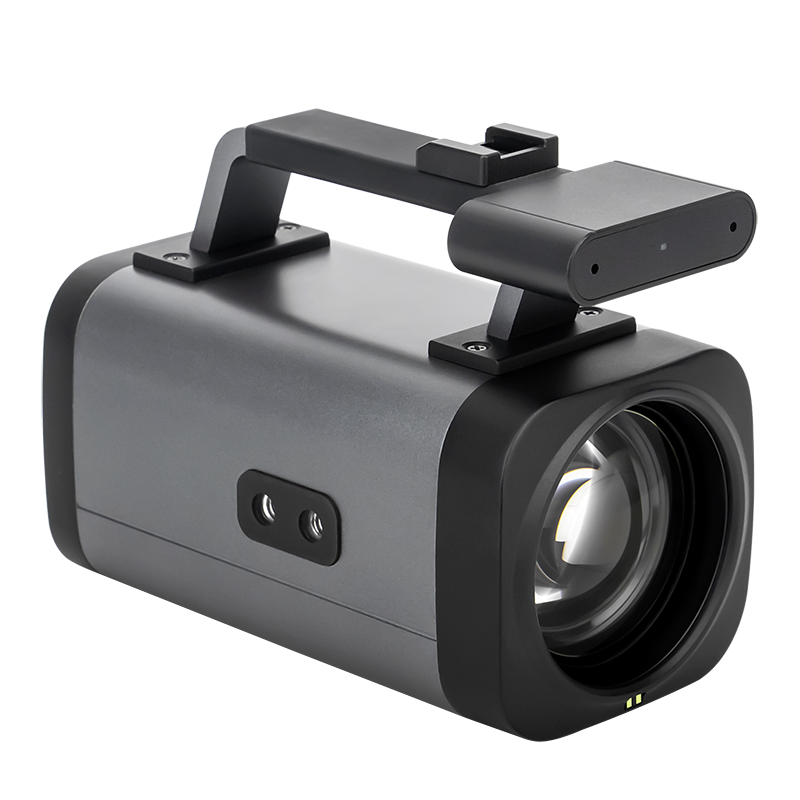
In short: a PTZ model such as the TC-980S or TC420 is built around long-throw zoom, SDI routing and broadcast-style control surfaces. A teaching model such as the TCHD-T3 is built around a stable camera position, plug-and-play USB, single-cable PoE installation and orientation flexibility.
Step-by-Step: How a Live Streaming Signal Reaches a Viewer
The path from a scene to a remote viewer follows the same six stages regardless of brand. Mapping a specification sheet onto these stages is the fastest way to spot a mismatch before purchase.
- Capture. The CMOS sensor converts light into a signal. Sensor size, effective pixels and minimum illumination determine how usable the image is at the light level actually present in the room.
- Frame. Optical zoom sets how tightly the subject can be framed from the mounting position; presets determine how quickly framing can be changed during a session. Digital zoom extends the framing range without adding detail.
- Format. USB output can be raw (YUY2 or NV12) or compressed (MJPEG, H.264 or H.265). Network output is compressed. The TCHD-T3, for example, offers YUY2 up to 1080P@60fps, H.264 AVC and H.264 SVC up to 1080P@60fps, and MJPEG up to 1080P@60fps.
- Transport. Baseband video leaves over HDMI or SDI for a switcher, recorder or display; compressed video leaves over LAN as a stream; USB video leaves to a host computer. In multi-camera productions, these outputs are typically gathered by a switcher — for example the TCHD-840 Pro, a live stream switcher with 4K@60Hz HDMI and NDI hybrid input, UVC output and H.264/H.265 hardware encoding.
- Ingest. The receiving platform accepts the stream. RTMP, RTMPS, SRT, RTSP and ONVIF are the common protocol set across the TC-980S, TC420 and TCHD-T3, which is what allows a camera to work with a streaming server or a third-party platform rather than only with its own software.
- Control. Operator commands travel back to the camera separately: VISCA, Pelco-D or Pelco-P over serial connections, VISCA over IP, or UVC PTZ over the USB link. This is the stage that determines how easily presets, framing and movement can be managed during a live session.
Use Cases: Matching the Camera Concept to the Room
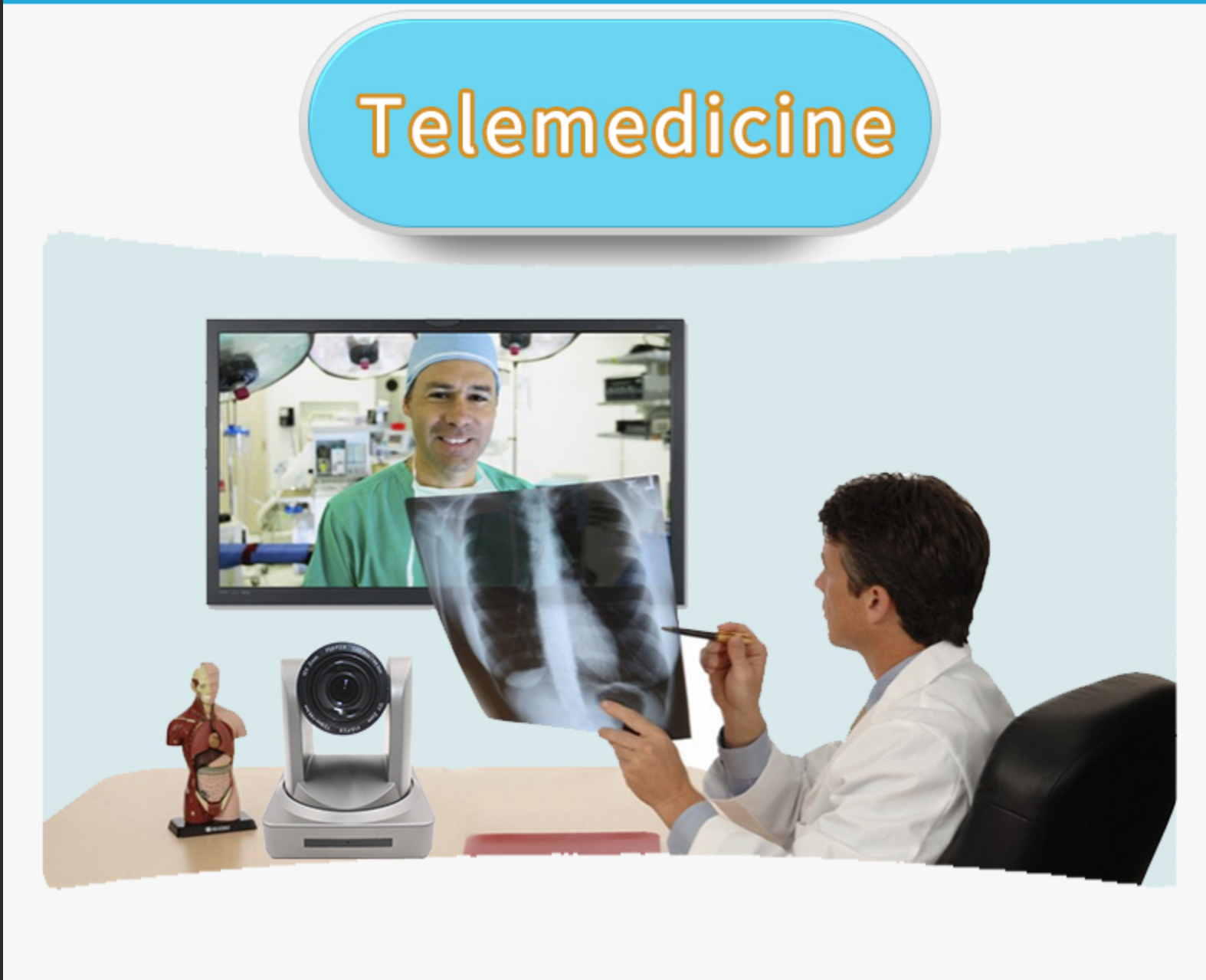
Broadcasting and event streaming. Long-throw optical zoom, SDI output and tracking favour the TC-980S, which is positioned for the broadcasting industry and for event streaming, education training, medical teaching and video conference scenarios.
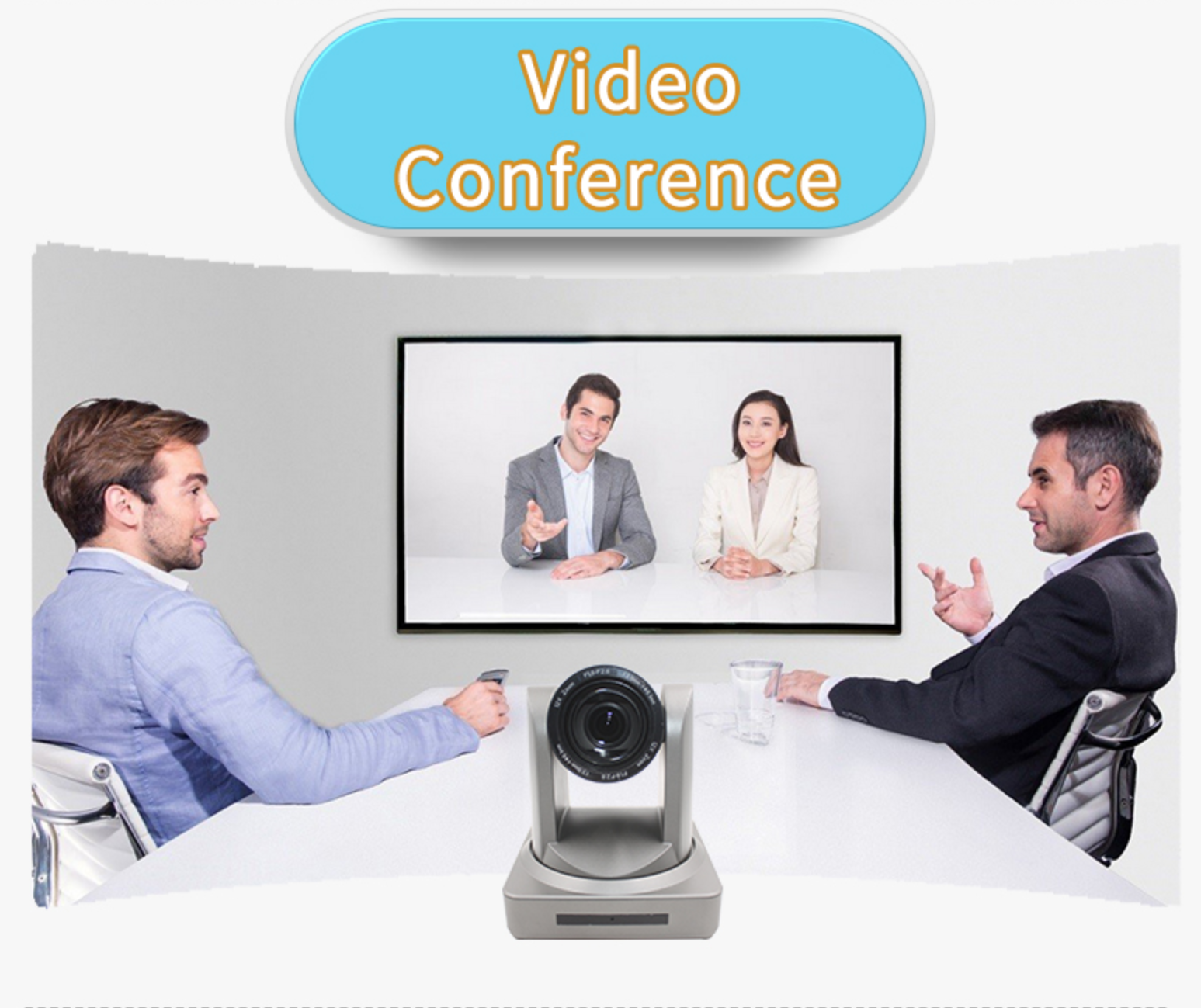
Corporate meetings and video conferencing. The TC420 combines 12X optical zoom, HDMI up to 4Kp30, SDI up to 1080P60, PoE and under 12 W consumption with a PTZ and video conference camera classification — a reasonable fit when the room is fixed and the camera is not shared with a production workflow.
Education and lecture capture. The TCHD-T3 is designed around 1080P@60fps output, driver-free USB and PoE, which suits a fixed teaching position, a lectern or a small studio where the operator is also the presenter.
Medical teaching. Surgical and clinical teaching use the same camera concepts but face an additional constraint: medical electrical equipment, including surgical cameras, must comply with the IEC 60601-1 series for basic safety and essential performance (TÜV Rheinland / BSI). A camera’s sensor and low-light performance can be assessed from a specification sheet; compliance status must be confirmed with the supplier for the specific deployment.
E-commerce live selling. Here the requirement is often USB-first and, increasingly, portrait-orientation. Both the TCHD-T3 and the USB models in the range address this: the TCHD-X6 outputs 4K ultra HD at up to 30 fps in MJPEG format over a USB Type-C 3.0 interface, with face-tracking autofocus and interchangeable lenses, while the TCHD-X5 is a PTZ 4K webcam with a 1/1.8-inch 4K sensor, dual-axis gimbal and TOF autofocus for e-commerce live sales.
Comparison Table: TC-980S vs TC420 vs TCHD-T3
| Parameter | TC-980S | TC420 | TCHD-T3 |
|---|---|---|---|
| Category | PTZ camera | PTZ / video conference camera | Education teaching, e-commerce streaming and medical training camera |
| Image sensor | 1/2.8-inch CMOS, 8.42M effective pixels (16:9) | 1/2.8-inch CMOS, 8.29M effective pixels (16:9) | 1/2.8-inch CMOS, 2.07M effective pixels |
| Optical zoom | 12X / 20X / 30X variants | 12X | 12x |
| Focal length | 4.1–49.2 mm (12X version) | 3.9–46.8 mm ±5% | 3.5–42.3 mm |
| Digital zoom | 16X | 15X | 16x |
| Maximum HDMI output | 3840×2160 | 4Kp30 | HDMI 1.4b (system maximum 1080P@60fps) |
| SDI output | Up to 1080P60 (incl. 1080i) | Up to 1080P60 | — |
| USB | USB 3.0 | USB 3.0 | USB 3.0 Type C + USB 2.0 Type A |
| LAN / PoE | 1000M, PoE+ | 10/100/1000M adaptive, PoE | RJ45 10M/100M, PoE |
| Network protocols | RTSP, RTMP, ONVIF, GB/T28181, SRT (NDI and Dante AV optional) | RTSP, RTMP, ONVIF, GB/T28181, VISCA over IP, IP VISCA, RTMPS, SRT | TCP/IP, HTTP, RTSP, RTMP, ONVIF, DHCP, Multicast |
| Pan / Tilt range | −170° to +170° / −30° to +90° | −170° to +170° / −30° to +90° | UVC PTZ support |
| Presets | Up to 255 (10 via remote) | Up to 255 (10 via remote) | 255 |
| Tracking | Monocular tracking, up to 18 m | — | — |
| Power consumption | 18 W or less | Under 12 W | Less than 12 W |
| Typical fit | Broadcasting, event streaming, education training, medical teaching, video conferencing | Video conferencing, education, medical training, event streaming | Education teaching, e-commerce streaming, medical training |
Cells marked “—” indicate that the item is not listed in the published specification for that model, not that the function is absent by design. All figures above are taken from the manufacturer’s product data for these three models.
How to Choose: A Short Decision Rule Set
- The subject moves and the distance is long: choose a PTZ camera with optical zoom of 12X or more and stored presets.
- The signal must travel beyond a few metres to a switcher: use SDI rather than HDMI or USB, which the TC-980S and TC420 provide up to 1080P60.
- The camera plugs directly into a computer: prioritise USB 3.0 with UVC/UAC, as on the TCHD-T3, TCHD-X6 or TCHD-X5.
- Installation should be one cable: require PoE, which all three reference models support over their LAN port.
- The room is a fixed teaching or live-selling position: a teaching camera is usually sufficient; a PTZ model is not automatically the better answer.
- The deployment is clinical: confirm IEC 60601-1 series documentation with the supplier before the project is specified.
FAQ
What is a live streaming camera used for?
A live streaming camera turns a scene into a continuous video signal that a streaming server, broadcast chain or conferencing platform can ingest. Practically, that means it outputs video over HDMI, SDI, LAN or USB rather than only recording internally. The TC-980S and TC420 expose HDMI, SDI, LAN with PoE and USB 3.0; the TCHD-T3 exposes HDMI 1.4b, USB 3.0 Type C, USB 2.0 Type A and an RJ45 port with PoE. Typical deployments include broadcasting, event streaming, education lecture capture, medical teaching and e-commerce live selling.
What are live streaming camera manufacturers, and how do they differ?
Manufacturers in this category are not interchangeable, because most specialise in a narrower slice of it. TCHD Video is a Beijing-based manufacturer established in 2005 that produces live streaming cameras alongside video capture cards, video converters, video encoders and video switchers, with a 10,000 m² facility, approximately 50 staff, a 10-engineer R&D team and a stated annual production capacity of 4,000 units; exports account for about 20% of sales, mainly to the EU, USA and Asia. Third-party tracking shows that leadership is category-specific — Omdia reported that Logitech held the largest market share in the USB conference camera category as of 2024. Buyers should therefore match a manufacturer’s actual product line and interface coverage to the scenario, rather than to overall brand size.
Do live streaming cameras use HDMI, SDI or USB?
All three appear, and the choice is driven by cable distance and the receiving device. HDMI is a short-run baseband connection: up to 3840×2160 on the TC-980S, up to 4Kp30 on the TC420, and HDMI 1.4b on the TCHD-T3. SDI is the baseband option for longer runs, available up to 1080P60 on the TC-980S and TC420. USB 3.0 carries either raw (YUY2 or NV12) or compressed (MJPEG, H.264, H.265) video to a computer using UVC and UAC, so no driver is required. Some cameras are USB-only by design: the TCHD-X6 provides no HDMI or SDI output and delivers video through a USB Type-C 3.0 interface.
What is the difference between a PTZ camera and a teaching camera?
A PTZ camera is defined by motorised pan, tilt and zoom with stored presets. The TC-980S and TC420 both pan from −170° to +170° and tilt from −30° to +90°, store up to 255 presets and accept VISCA, Pelco-D or Pelco-P control over serial or IP connections. A teaching camera such as the TCHD-T3 is defined by its fit to a fixed teaching position: 1080P@60fps output, 12x optical zoom, UVC 1.1–1.5 with UVC PTZ support, a vertical/horizontal screen button, and driver-free USB connection to Windows, macOS, Linux or Android hosts. Choose PTZ when framing must change during a session; choose a teaching model when framing is stable and simple, repeatable capture is the priority.
What should be checked before requesting a sample or quotation?
Check sensor size and effective pixels, optical zoom range and focal length, output interfaces (HDMI, SDI, USB, LAN), streaming protocols (RTSP, RTMP, RTMPS, SRT, ONVIF), PoE support if single-cable installation is required, and power consumption. For medical training deployments, medical electrical equipment such as surgical cameras falls under the IEC 60601-1 series for basic safety and essential performance, so the applicable documentation should be confirmed with the supplier before the project is specified. Samples and quotations for the TC-980S, TC420 and TCHD-T3 can be requested from TCHD Video at sales@tchdvideo.com, and the full product catalog can be downloaded from the link below.
Conclusion
A live streaming camera is defined by what it outputs and where that signal goes, not by a single resolution figure. The sensor sets the low-light ceiling, optical zoom sets the reach from the mounting position, the interface set (HDMI, SDI, USB 3.0, LAN) determines how the signal travels, and the protocol set determines whether a server or platform will accept it. PTZ models such as the TC-980S and TC420 add motorised movement and up to 255 presets for rooms where the framing must change; teaching models such as the TCHD-T3 optimise for a fixed position with 1080P@60fps output, driver-free USB and single-cable PoE installation.
Once those four elements are mapped to a real room, the remaining questions — zoom variant, port count, control method, compliance scope — become straightforward to specify, quote and verify at sample stage.
Request a Sample, Quotation or the Product Catalog
TCHD Video manufactures live streaming cameras, capture cards, converters, encoders and switchers from its facility in Beijing, with approximately 20% of sales exported to the EU, USA and Asia. To evaluate the TC-980S, TC420 or TCHD-T3 against your project, contact the team directly.
Email: sales@tchdvideo.com | Tel / WhatsApp: +86-13910334207
Website: www.tchdvideohk.com
Download the full catalog: TCHD Product Catalog 2025 (PDF)
Have Questions or Need More Details?
Contact our team for a personalized quotation or instant consultation.
Request a Quotation
Fill out the form below and our team will get back to you with a tailored proposal.
WhatsApp Direct Chat
Prefer to chat in real-time? Message us on WhatsApp for instant assistance & quick answers.
- Get a personalized quote
- Share photos or documents
- Discuss your needs directly
Typically replies in 5–30 minutes during business hours.