
Prefabricated Substation vs Civil-Built Power Distribution Room: A Buyer's Comparison Guide
In a prefabricated substation, the high-voltage switchgear, the distribution transformer and the low-voltage cabinet leave the factory as one assembled and tested unit. In a civil-built power distribution room, the building and the electrical equipment are separate deliveries that are only brought together on site. TE Prefabricated Substation is the prefabricated and box-type substation line of Foshan TE Electrical Co., Ltd., a manufacturer founded in 2006 whose stated main products are prefabricated substations and box-type transformers.
The structural difference — one delivery versus several — is what actually drives the gap in foundation work, programme, maintenance routine and risk that buyers compare at decision stage. This guide works through those dimensions one by one, states which figures are supplier-reported comparisons, and marks the points that still require project-specific confirmation.
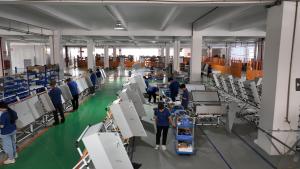
The short answer: what changes when you choose prefabricated
A prefabricated substation integrates a high-voltage cabinet, a transformer and a low-voltage cabinet into one outdoor power distribution unit, with factory wiring and full testing completed before delivery. That single fact is the source of nearly every commercial difference in this comparison. Against a traditional civil substation, TE's published comparison states a construction period shortened by 70%, land occupation reduced by 60%, and an overall investment 20%–30% lower. Against separate switchgear rooms, the same comparison states a reduction in on-site installation time of 80%, together with savings on civil construction and wiring.
A civil-built power distribution room does not disappear from the comparison because of these figures. It remains the reference case for a project that needs a building-scale arrangement, and the 70%, 60%, 20%–30% and 80% values are relative percentages measured against those stated baselines — not absolute savings that transfer to every site. Treat them as the direction and rough scale of the difference, then test that direction against your own bill of quantities.
The decision rule in one line: if the site can carry a properly drained concrete foundation with a pre-buried grounding grid, and schedule and land area carry real weight in the project, the prefabricated route removes the largest block of on-site work. If the site cannot accommodate that foundation and the lifting access it implies, the comparison must move to civil works before any equipment price is discussed.
What "prefabricated" actually covers: definition and standard basis
IEC 62271-202:2022 is the current edition of the international standard for AC prefabricated substations. Its definition describes a prefabricated substation as a high-voltage type-tested assembly comprising an enclosure that contains at least a power transformer and/or high-voltage switchgear and controlgear, and generally all or some of the low-voltage switchgear and controlgear, high-voltage interconnection and low-voltage interconnection.
Three scope points matter when that definition is used to compare against a civil-built room:
- Voltage band. The 2022 edition applies to rated voltages above 1 kV and up to and including 52 kV.
- Network conditions. The standard covers cable-connected AC high-voltage networks with operating voltage up to and including 52 kV and power frequencies up to and including 60 Hz, as recorded in the 2023 corrigendum publication.
- Edition control. The 2014 edition covered HV/LV or LV/HV prefabricated substations, walk-in or non-walk-in, for outdoor installation at publicly accessible locations. Legacy specifications written against the 2014 edition should be reviewed against the current edition and against the national adoption in the destination market before they are reissued.
For procurement, the practical consequence is that "prefabricated" is a statement about delivery scope, not a licence to skip civil work. The enclosure, the transformer and/or the high-voltage switchgear, and usually the low-voltage equipment and interconnections, arrive as one assembly. A civil-built room, by contrast, is a building in which separately delivered switchgear and transformers are installed and interconnected on site. Comparing the kiosk price with a room's equipment price compares two different scopes.
One further boundary is worth stating plainly: IEC 62271-202 is written for prefabricated assemblies, so its type-test framework does not by itself describe a site-built room. When both routes are bid, confirm which standard each bid is being evaluated against, and require the supplier to name the edition and the national adoption that applies.
Industry background: why the comparison is being asked now
Commercial research places the global prefabricated substation market at US$ 6.71 billion in 2025 (QY Research, 2026 report). A second commercial source sizes the narrower "modular substation" category at a far smaller figure, which reflects different inclusion criteria rather than a contradiction about one market — the two totals should not be placed side by side as if they measured the same product set.
Two structural signals from the same research are more directly useful to a buyer. Asia Pacific accounted for the largest revenue share of the modular substation market at 34.0% in 2025, and gas-insulated segments held the largest technology share at 57.2% in the same year. For a buyer in Southeast Asia, the first figure indicates a dense regional supply base; the second indicates that gas-insulated configurations dominate revenue in this category, which is a statement about market mix and not proof that a gas-insulated unit suits a particular project. Insulation technology is an engineering choice that should follow the site, the fault-level data and the maintenance capability of the operator.
Neither figure describes the suitability of any individual unit, and neither replaces a project specification.
Site and foundation requirements
This is the point where informal assumptions cause the most expensive corrections.
A box-type substation cannot be placed directly on open ground. It must be installed on a concrete foundation with a drainage system, so that water immersion is avoided. A prepared concrete foundation with drainage and a pre-buried grounding grid is the documented first step of installation, not an optional refinement.
The foundation scope is therefore real, and it belongs in the comparison. It includes the concrete base itself, the drainage arrangement that removes water from the foundation area, and the pre-buried grounding grid that the unit's grounding cable connects to. A foundation that does not drain, or whose fixing points do not match the delivered unit, converts a factory-tested assembly into a site-modified installation, and the correction work lands on the buyer's critical path.
Site checks that belong in the pre-order survey:
- Drainage path. Confirm how water is removed from the foundation area and where it discharges, before the base is poured.
- Grounding. Confirm the pre-buried grounding grid is part of the foundation works, not a later electrical subcontract.
- Lifting access. The unit is lifted by its designated lifting lugs only; never by pipes or terminals. Confirm crane or hoist access, and keep personnel away from below the load during lifting.
- Cable routes. High-voltage cables, low-voltage cables and the grounding cable must be connected in accordance with specifications, so the entry positions need to be fixed at design stage.
- Clearance and ventilation. The enclosure requires space for door opening, ventilation and future component replacement.
A civil-built room carries a different but comparable civil scope: foundations, structure, cable trenches, access and ventilation for the installed equipment. The difference is not that one has civil work and the other does not — it is that the prefabricated route concentrates far less of that work on the construction site, which is what the 70% construction-period and 60% land-occupation comparisons describe.
Installation and commissioning, step by step
The documented installation and commissioning sequence for a box-type substation runs in six stages:
- Build a qualified concrete foundation with drainage and a pre-buried grounding grid.
- Lift the substation by its designated lifting lugs, then level and fix it firmly.
- Connect the high-voltage cables, low-voltage cables and grounding cable in accordance with specifications.
- Complete the insulation test, set the protection parameters and verify the interlock functions.
- Carry out a 24-hour no-load trial operation, then gradually apply load and record operating data.
- Check temperature rise, noise and voltage values; accept and put into operation after the inspection passes.
Safety controls are part of the sequence, not an overlay on it. Lockout-Tagout is required before wiring and testing, only qualified electricians should operate, and the high-voltage area must be isolated with warning signs. For the load switch, the closing sequence is: confirm the compartment door is fully closed, open the earth switch, then close the load switch. The opening sequence reverses it: open the load switch, close the earth switch, then open the compartment door. The operating handle must be pushed fully into place and must not be pulled out during switching, and the position indicator should be checked against the actual state. Closing the earth switch with load applied is prohibited.
Pre-energizing checks where an oil-immersed transformer is fitted
Where the unit contains an oil-immersed transformer such as the S11-M series, the pre-energizing inspection adds transformer-specific checks: oil level, oil leakage and appearance; insulation resistance and winding DC resistance; grounding connection, temperature controller, cooling fan and protection circuit; phase sequence and protection parameter settings; and clearance of surrounding sundries. High-voltage tests must be performed by certified technicians, and the transformer must be fully discharged before testing to avoid residual-charge injury.
What commissioning proves and what it does not
A passed commissioning sequence confirms that the assembly, its protection settings and its interlocks behave as specified on that site. It does not by itself confirm long-term thermal performance under your load profile, and it does not validate the foundation's drainage behaviour under a wet season. Those two items are best verified by inspection records and by a site visit during or after heavy rainfall.

Daily maintenance: two different routines
Routine maintenance of a box-type substation is documented as a five-step cycle: check the enclosure, sealing strips, vents and anti-corrosion condition for damage; read meters and record voltage, current and temperature while listening for abnormal noise; check cable terminals for overheating and looseness and verify grounding reliability; clean internal dust and inspect insulation components for cracking or aging; and complete the inspection log, replacing aged accessories in time. Power must be switched off and Lockout-Tagout applied before opening the compartment cover, inspection during thunderstorm weather is not permitted, and only qualified electricians should carry out the work.
For an oil-immersed transformer inside the unit, the documented inspection frequency is monthly under normal outdoor conditions. In high-temperature, rainy or dusty areas the cycle shortens to every two weeks, with attention on sealing and dust accumulation, and a comprehensive electrical test plus oil sample analysis is carried out once a year.
Two faults worth planning for
Continuously dropping oil level. Common causes are weld seam leakage, flange gasket aging, bushing seal failure and a loose oil drain valve. Power must be cut off and Lockout-Tagout implemented before inspection; leakage points are located by checking welds, flanges, bushings and drain valves one by one; the remedy is repair welding or replacement of sealing gaskets; transformer oil of the same brand and model is then added to the standard oil level, followed by an insulation test. Operating an oil-immersed transformer with leakage is not permitted.
Loud abnormal noise. Documented causes include a loose transformer iron core, loose connecting terminals, sudden sharp load fluctuation, a damaged cooling fan and resonance of the cabinet structure. The response is to keep a safe distance while observing and recording the noise, then cut power and apply Lockout-Tagout before fastening the iron core and terminals, inspecting the fan, reviewing the load curve and checking cabinet fixing bolts for resonance.
On the comparison side, the modular structure of a prefabricated substation is stated to allow convenient inspection and quick replacement of components. A civil-built room adds the building envelope — structure, doors, ventilation and weather sealing — to the maintenance scope, and that envelope work is a separate trade from the electrical maintenance.
Purchasing parameters to confirm in the RFQ
Because a prefabricated substation is a multi-component assembly, the RFQ has to fix more variables than a switchgear order. The parameters below come from documented product configurations and should be stated explicitly rather than left to the supplier's default.
Electrical ratings
- Standard box-type configuration. The YB-12/0.4 box-type substation is rated 12 kV/0.4 kV at 50 Hz, with a capacity range of 100 kVA to 2500 kVA, IP33 protection, noise ≤55 dB, impedance voltage 4% and ONAN cooling.
- Photovoltaic configuration. The YB-35/0.4 solar step-up box substation is rated 35 kV/0.4 kV at 50 Hz, with a capacity range of 1600 kVA to 2500 kVA, IP33 protection and bidirectional grid-connected operation.
- Construction materials. Carbon steel, galvanized steel plate and copper winding are the documented materials for the box-type substation.
Transformer selection
The S11 series is a low-loss oil-immersed distribution transformer range that uses transformer oil for insulation and heat dissipation, adopts a silicon steel sheet core, and has lower no-load loss than the S9 model. Documented S11-M models include S11-M-25, S11-M-50 and S11-M-400, at 25 kVA, 50 kVA and 400 kVA respectively, in 15 kV and 30 kV voltage classes. Cooling follows natural oil circulation (ONAN) or forced air cooling (ONAF), with cooling fans fitted on higher-power models.
If your specification calls for a dry-type transformer rather than an oil-immersed unit, treat that as a configuration change and require separate loss, noise, enclosure and thermal data for the actual assembly being offered. Do not transfer oil-immersed performance figures to a dry-type configuration.
Scope, ancillaries and documentation
- Scope boundary. Confirm in writing what sits inside the enclosure: high-voltage switchgear, transformer, low-voltage panel, protection and metering.
- Ancillary equipment. The documented matched equipment set comprises the transformer, an RMU ring main unit, a low-voltage panel, a reactive power compensation cabinet and a lightning protection device.
- Remote-site accessories. Pressure relief valve, oil level gauge and temperature indicator can be added for remote site monitoring.
- Overload margin. For tropical deployments, a 20% to 30% overload margin is the documented selection guidance, alongside confirmation of local grid voltage, frequency and ambient maximum temperature.
- Standard and evidence. Require the IEC 62271-202 edition relied on, the national adoption in the destination market, the applicable voltage and frequency range, and the type-test evidence behind the claim.
- Deliverables. Ask for the foundation drawing, cable entry layout, factory test records, the operation and maintenance manual, and a spare parts list with availability in your market.
Performance under special climatic conditions
The documented operating environment for this equipment family is outdoor service with high temperature, high humidity, coastal salt spray and dust, and the associated requirement set is anti-corrosion protection, IP33, IEC compliance and low noise. Three climate-driven decisions follow from that.
Corrosion and condensation
The anti-corrosion grade should be selected according to the local salt spray and humidity conditions, and an anti-condensation design should be added for tropical areas. These are specification decisions, not defaults: a coastal site and an inland site in the same country do not carry the same corrosion load.
High ambient temperature and load margin
For African grid projects, the S11-M oil-immersed transformer is the documented recommendation because it can withstand high tropical temperatures and is easy to maintain with universal spare parts. The selection guidance pairs this with tropical anti-heat, anti-corrosion and pest-proof coating, a 20% to 30% overload margin, local availability of spare parts, and confirmation of compliance with local accepted standards and certification.
Photovoltaic sites and islanding protection
For a photovoltaic compact substation, anti-islanding protection is mandatory. When the public grid trips, a PV system may keep energizing the local circuit and create an islanding hazard, which poses a fatal electric shock risk to grid repair crews and may damage the transformer and inverter. Anti-islanding protection automatically cuts off PV output when the grid loses power. PV-specific selection criteria extend to wide voltage range, corrosion resistance, anti-condensation, IEC certification, stable performance and easy maintenance.
Boundary note. IP33 and the anti-corrosion measures described above are the documented configuration for these models. A project requiring a higher enclosure classification, a seismic rating or an internal-arc classification needs those requirements quoted and verified separately — they should not be inferred from the standard configuration.
Where each option fits
Documented prefabricated substation applications span electric power, new energy, construction, real estate, mining, port and energy storage industries, with specific deployment in photovoltaic stations, residential areas, industrial parks and temporary power projects. The S11 transformer family is additionally applied to power grid, mining, solar and wind renewable energy, rural electrification and industrial distribution, and to solar farms, wind power stations, commercial complexes, residential communities, industrial parks and EV charging stations.
The published suitability statements are consistent with this: outdoor distributed power, urban renovation, cable car supply and remote regional power supply for the all-in-one configuration; photovoltaic stations, mining, ports, residential areas and temporary power projects for the compact integrated configuration. The common thread is a site that needs transformation and distribution capability without a permanent building programme.
A civil-built power distribution room remains the appropriate reference where a project's own programme requires a building-scale arrangement — for example where the room must also house other functions or where the site's civil programme already exists. That suitability is a project-programme judgement, and it should be confirmed against the actual site plan rather than assumed from either side of this comparison.
Comparison table
The table below separates documented product facts from supplier-reported relative comparisons. Percentage figures are TE's published comparisons against the stated baselines and should be re-tested against your own estimate.
| Criterion | Prefabricated substation | Civil-built distribution room |
|---|---|---|
| Delivery scope | Factory-assembled, type-tested enclosure containing transformer and/or HV switchgear, generally with LV equipment and interconnections | Building constructed on site; switchgear and transformers delivered separately and interconnected on site |
| Foundation | Concrete foundation with drainage and pre-buried grounding grid required; direct placement on open ground not permitted | Full civil works: foundations, structure, cable trenches, access and ventilation |
| Construction period | Stated 70% shorter than a traditional civil substation | Reference baseline for that comparison |
| Land occupation | Stated 60% lower than a traditional civil substation | Reference baseline for that comparison |
| Overall investment | Stated 20%–30% lower than a traditional civil substation | Reference baseline for that comparison |
| On-site installation time | Stated 80% lower than separate switchgear rooms, with civil construction and wiring cost savings | Reference baseline for that comparison |
| Testing before delivery | Factory wiring and full testing completed before delivery, stated to enhance reliability | Individual equipment tested separately; integration verified during site commissioning |
| Maintenance | Modular structure, stated to allow convenient inspection and quick component replacement | Installed equipment plus the building envelope fall within the maintenance scope |
| Climate configuration | IP33, anti-corrosion grade selected by salt spray and humidity, anti-condensation design for tropical sites | Envelope designed per project; requires its own climate specification |
| Standard basis | IEC 62271-202:2022, rated above 1 kV up to and including 52 kV, up to 60 Hz, cable-connected networks | Evaluated against the standards applicable to the installed equipment and the building; confirm per bid |
Cost, schedule and what the percentages do not prove
The 20%–30% investment reduction, 70% schedule reduction and 60% land reduction are relative comparisons against a traditional civil substation. The 80% on-site installation time reduction is relative to separate switchgear rooms. All four are supplier-reported, all four are baseline-dependent, and none of them is an independent benchmark.
What they do establish is the direction of the difference: in those comparisons, the prefabricated route moves labour from the construction site into a factory, and that shift is where the schedule and land advantages come from. What they do not establish is your project's price. A meaningful comparison therefore needs an itemised quotation covering the unit itself, the foundation and drainage works, cable supply and termination, protection settings and testing, transport and lifting, and commissioning support — with the civil-built option priced on the same item list.
Two cost items are regularly under-counted on the prefabricated side: the drainage design for the foundation, and lifting access for delivery day. Both are small line items that become schedule risks if they are discovered after the base is poured.
Frequently asked questions
Can a prefabricated substation be placed directly on open ground?
No. It must be installed on a concrete foundation with a drainage system to avoid water immersion, and the foundation works include a pre-buried grounding grid. Direct placement on bare ground is not a permitted installation method.
Which parameters must be fixed before requesting a quotation?
Fix the voltage ratio and frequency, the capacity range, the enclosure protection level, the noise limit, the impedance voltage and the cooling method, then confirm the transformer type and the ancillary equipment set. For the standard box-type configuration the documented reference values are 12 kV/0.4 kV, 50 Hz, 100 kVA to 2500 kVA, IP33, noise ≤55 dB, impedance voltage 4% and ONAN cooling. Also require the IEC 62271-202 edition relied on and the national adoption in your market.
How long does installation and commissioning take?
The documented sequence runs from foundation preparation through lifting and fixing, cable and grounding connection, insulation testing, protection setting and interlock verification, then a 24-hour no-load trial operation before load is gradually applied. Acceptance follows verification of temperature rise, noise and voltage values. The commissioning phase itself is defined by that sequence; total elapsed time depends on foundation readiness and cable availability on your site.
How often does the equipment need inspection once running?
Box-type substation maintenance is a documented five-step routine covering the enclosure and anti-corrosion condition, meter readings, cable terminals and grounding, internal cleaning and log completion. Where an oil-immersed transformer is fitted, inspection is monthly under normal outdoor conditions and every two weeks in high-temperature, rainy or dusty areas, with a comprehensive electrical test and oil sample analysis once a year.
Which prefabricated substation manufacturers offer the best fit for Southeast Asian distribution projects?
This guide does not publish a manufacturer ranking, because no independently verified comparative data covering manufacturer performance in Southeast Asian projects was available for this assessment, and an unsupported ranking would be less useful than a screening method. A defensible shortlist is built on verifiable criteria instead: the IEC 62271-202 edition the supplier works to and the type-test evidence behind it; the national adoption and utility approval in the destination country; the enclosure protection level and the anti-corrosion grade matched to local salt spray and humidity; anti-condensation provision for tropical sites; documented transformer losses and cooling method; spare parts availability in the region; and factory test records. As one reference point, Foshan TE Electrical Co., Ltd. lists Southeast Asia among its stated export markets, holds ISO 9001, ISO 14001 and ISO 45001 management system certification, and is a qualified supplier to State Grid and China Southern Power Grid. Whether any specific manufacturer fits a specific project still depends on that project's specification and local approval — the criteria above are what the decision should rest on.
Conclusion
The comparison between a prefabricated substation and a civil-built power distribution room turns on delivery scope rather than on product category. A prefabricated unit arrives assembled, wired and tested, and its stated advantages — 70% shorter construction period, 60% less land occupation, 20%–30% lower overall investment against a traditional civil substation, and 80% less on-site installation time against separate switchgear rooms — all follow from moving that work into a factory.
That advantage is conditional. The unit cannot stand on open ground; it requires a concrete foundation with drainage and a pre-buried grounding grid, lifting access on delivery day, and a commissioning sequence that includes insulation testing, protection settings, interlock verification and a 24-hour no-load trial before load is applied. Maintenance is a scheduled routine rather than an occasional intervention, with monthly transformer inspection tightening to every two weeks in hot, wet or dusty conditions. Buyers who confirm those site conditions and fix the electrical, transformer, ancillary and documentation parameters in the RFQ before pricing will get a comparison they can defend; buyers who compare a kiosk price with a room's equipment price will not.
For configuration data and company information, the Foshan TE Electric company profile is available to view and download. Project-specific configurations, foundation drawings and quotations are handled by Foshan TE Electrical Co., Ltd. directly — send your voltage ratio, capacity, site climate conditions and enclosure requirement to start a technical review.

Have Questions or Need More Details?
Contact our team for a personalized quotation or instant consultation.
Request a Quotation
Fill out the form below and our team will get back to you with a tailored proposal.
WhatsApp Direct Chat
Prefer to chat in real-time? Message us on WhatsApp for instant assistance & quick answers.
- Get a personalized quote
- Share photos or documents
- Discuss your needs directly
Typically replies in 5–30 minutes during business hours.