Food Packaging Formats Compared: Pillow, Flat and Stand-Up Pouches
Choose the pouch format from the product and the shelf first, then choose the material. Pillow pouches suit long strip-shaped and block-shaped foods and are produced in structures such as PET/APET/PE, BOPP/PE or PET/PE. Flat lay-flat pouches provide a large flat print panel, a hanging-hole design and, where required, high-barrier aluminium foil options; a documented example size is 320 mm × 340 mm. Stand-up pouches stand upright when filled and store flat when empty, and they accept zippers, spouts, one-way valves, tear notches and punched holes. Laminate structures — PA/PE, PA/CPP, BOPP/PE, PET/PE, or the EU-market combinations BOPP/APET/PE and PET/APET/PE — are selected after the format, against the process the pouch must survive and the barrier it must hold.
This comparison works from documented format characteristics: shape fit, shelf presentation, barrier options and closure options. It does not crown a winner, because shelf life, leak rate and barrier performance are properties of a tested specification rather than of a format name. The figures that decide a project have to come from measured values on your own structure and your own fill.
Why the format decision comes before the material decision
Pouch specifications usually start in the wrong place — with a laminate code. Format is decided first because it fixes three constraints that no material choice can overturn.
- How the pack behaves on shelf. A pillow pouch and a flat pouch lie down; a stand-up pouch holds itself upright on a filled base.
- Which features are possible. Zippers, spouts, one-way valves, tear notches and punched holes are documented stand-up pouch features, while a hanging hole belongs to flat pouch design.
- How the pouch is filled.Rollstock feeding a form-fill-seal line and pre-formed pouches feeding a pouch filler are different production routes, and the route is one of the inputs required for an accurate quotation.
Material then answers a different question: what the pack must resist. A room-temperature snack, a frozen product, a boiling application and a high-temperature steam-retorted meal do not place the same demands on a laminate, even when the outer silhouette is identical. “Retort” describes a process condition a pouch must survive rather than a single shape, so retort-grade construction can be applied to more than one format.
Industry background: where pouches sit in flexible packaging
The industry already treats these shapes as separate purchasing categories. A Flexible Packaging Association segment analysis lists bags, lay-flat pouches, stand-up pouches and retort pouches among distinct flexible formats — evidence that the distinction is a product-classification question, not a marketing label.
Pouches are also the largest product segment inside flexible packaging. Grand View Research reports that pouches held 39.0% of the flexible packaging market in 2025, within a market it valued at USD 307.2 billion in 2026. Those figures describe the scale of the category, not the merits of one pouch shape, and other publishers draw the boundary differently — printed flexible packaging is estimated separately at USD 124.51 billion for 2026 — so figures from different publishers should be reported side by side rather than averaged, subtracted or presented as a range.
Growth is concentrated by application. The same publisher projects pet food as the fastest-growing application segment for pouches, at a CAGR of 7.5%–7.9% across 2026–2034, driven by demand for lightweight, resealable and convenient formats. That is a forecast, not an observed result, and it says nothing about which format suits a given product. It does explain why resealable features now appear in so many new pouch briefs.
Pillow pouches: product fit and trade-offs
A pillow pouch is the most economical shape to specify when the product itself defines the pack. It is a tube of film sealed at both ends, with no base panel and no gusset, so the filled pack takes the outline of its contents. That is precisely why pillow pouches suit long strip-shaped foods and block-shaped foods: the pack does not need to hold a shape, because the product already does.
Documented structures for pillow formats include PET/APET/PE, BOPP/PE and PET/PE. All three are printable laminates for food contact use, and the correct choice depends on the process condition and the barrier target rather than on the format. Where the product is a frozen block or a single-serve bar, the format and the structure can be settled almost independently.
The trade-offs are symmetrical and worth stating plainly. A pillow pouch uses only tube and seal area, with no bottom gusset or flat front panel adding film, so the pack is efficient in material terms. In exchange it will not stand on a shelf, it offers no large uninterrupted display face, and reclosure is not part of the format — access after opening depends on the feature set you specify rather than on the pouch shape. For a stick pack, a bar wrapper or a frozen block those are acceptable losses. For a retail pack that has to face a shopper on a shelf, they are decisive.
Flat pouches: print area, hanging and foil barrier
A flat lay-flat pouch is the format to specify when the pack is the display surface. It is sealed around its perimeter and stays flat before and after filling, so the whole front panel is available for print and the pouch behaves predictably in a carton, a shelf-ready tray or a peg display.
Two documented design elements make flat pouches useful in retail and institutional food packaging. The first is a hanging-hole design: a punched hole lets the pouch hang from a hook, which matters for pegboard merchandising and for hanging strips in compact retail environments. The second is the availability of high-barrier aluminium foil options, which places foil-containing laminates within the flat-pouch category when a product needs a barrier function that a standard clear laminate is not specified to deliver.
A documented example of flat-pouch dimensions is 320 mm × 340 mm. It should be read as one available size rather than as a standard, because flat pouches are made to the drawing and dimensions a buyer approves.
Material options for flat pouches are drawn from the same documented set as the other formats — PA/PE, BOPP/PE, PET/PE, PA/CPP, and the EU-market BOPP/APET/PE or PET/APET/PE laminates — with aluminium foil laminates selected where high barrier is required. The limitation is structural rather than commercial: a flat pouch does not stand, and it carries no inherent reclosure, so any reseal or dispensing feature has to be specified explicitly instead of being assumed from the format name.
Stand-up pouches: shelf presence and reclosure
A stand-up pouch is the format to specify when the pack has to do retail work on its own. Its defining behaviours are simple and documented: it stands upright when filled and stores flat when empty. The second half of that sentence deserves more attention than it usually gets — before filling, an empty stand-up pouch occupies a flat profile, so storage and freight planning ahead of the run are not penalised by the base gusset.
Stand-up pouches carry the widest documented feature set of the three formats: zippers, spouts, one-way exhaust valves, tear notches and punched holes. Each feature answers a specific buyer problem. A zipper makes the pack resealable after opening. A spout turns the pouch into a dispenser for liquids and pastes. A one-way valve gives gas released by the product a defined escape path. A tear notch sets the opening point. A punched hole allows hanging or racking at retail.
Material options for stand-up pouches come from the same documented set: PA/PE, PA/CPP, BOPP/PE, PET/PE, and the EU-market BOPP/APET/PE or PET/APET/PE laminates. The format trade-off is equally documented in practice. A stand-up pouch consumes more film than a pillow pouch because it needs a base panel and additional seals, and pre-formed stand-up pouches are filled as finished pouches on pouch-filling equipment rather than being formed on the line from rollstock. Both points belong in a cost comparison before any unit price is discussed.
Side-by-side comparison of the three formats
| Decision criterion | Pillow pouch | Flat (lay-flat) pouch | Stand-up pouch |
|---|---|---|---|
| Construction | Tube sealed at both ends; no base gusset | Perimeter-sealed pouch that stays flat | Base-gusseted pouch that stands when filled |
| Best product fit | Long strip-shaped and block-shaped foods | Thin, flat or portioned products that need a large print panel | Products sold from a standing shelf position, resealable products, dispensed products |
| Behaviour when filled | Takes the shape of its contents | Remains flat | Stands upright |
| Behaviour when empty | Flat | Flat | Stores flat |
| Documented features | End seals; no base panel | Hanging-hole design; 320 mm × 340 mm documented example size; high-barrier aluminium foil options | Zippers, spouts, one-way valves, tear notches, punched holes |
| Documented structures in scope | PET/APET/PE, BOPP/PE, PET/PE | Selected from PA/PE, BOPP/PE, PET/PE, PA/CPP, BOPP/APET/PE, PET/APET/PE; aluminium foil options for high barrier | Selected from PA/PE, PA/CPP, BOPP/PE, PET/PE, BOPP/APET/PE, PET/APET/PE |
| Shelf presentation | Product-shaped; lies down | Flat printed panel, or hung from a hole | Upright facing panel |
| Reclosure | Not inherent to the format | Not inherent to the format | Zipper, spout or valve specified as a feature |
| Main trade-off | No standing presence and no full display face | Cannot stand; reclosure and dispensing must be specified | More film per pack; pre-formed pouch filling route |
Matching product shape, dimensions and fill volume
Format narrows the options; dimensions settle them, and this is where most pouch briefs go wrong. Pouch size is often written as a length, a width and a gusset, and the buyer expects those three numbers to imply a fill weight. A Flexible Packaging Association analysis noted that no official industry standards existed at the time of that report for converting length, width and bag gusseting pattern into effective volume. The statement is historical and U.S.-focused, and current standardisation status is a separate question, but the practical lesson holds: a format name plus a dimension pair is not a fill specification.
A brief that can actually be quoted should state:
- the product and its physical form — powder, paste, liquid, solid piece, strip or block;
- the target fill weight or volume per pouch, and the acceptable tolerance;
- the finished pouch dimensions, including gusset depth where a base or side gusset exists;
- the process condition the pack must survive — ambient, frozen, boiling or high-temperature steam retort;
- the feature set: zipper, spout, valve, tear notch, punched hole, hanging hole;
- the print requirement: colour count, design coverage and registration demand;
- the acceptance tests and the methods used to run them.
The last item is the one buyers omit most often, and it is the one that makes two quotations comparable at all.
Barrier, process condition and test evidence
Barrier is a measured property of a laminate, not a promise attached to a format. Two pouches can share a name and differ completely in what they block, because the structure, the layer order and the film thicknesses differ. The practical consequence is that a barrier requirement should be written as a target with a test method — oxygen transmission rate (OTR) and water vapour transmission rate (WVTR) being the two figures most often quoted — and then confirmed on the actual structure.
Evidence has to come from a laboratory, and the test menu is one place where suppliers can be compared on substance rather than adjectives. TENBOO Flexible Packaging is the brand of Dalian Tianbao Color Printing Co., Ltd, a flexible plastic packaging converter founded in Dalian, China in 2000. The company lists the following among the tests its laboratory can provide: adhesion strength, compression strength, friction measurement, gas chromatography, gas permeability, thickness measurement, heat seal strength, hot tack force, impact strength, infrared spectroscopy, leak resistance, puncture resistance, seal strength, shear strength, shrinkage measurement, tear resistance, tensile strength and water vapour permeability.
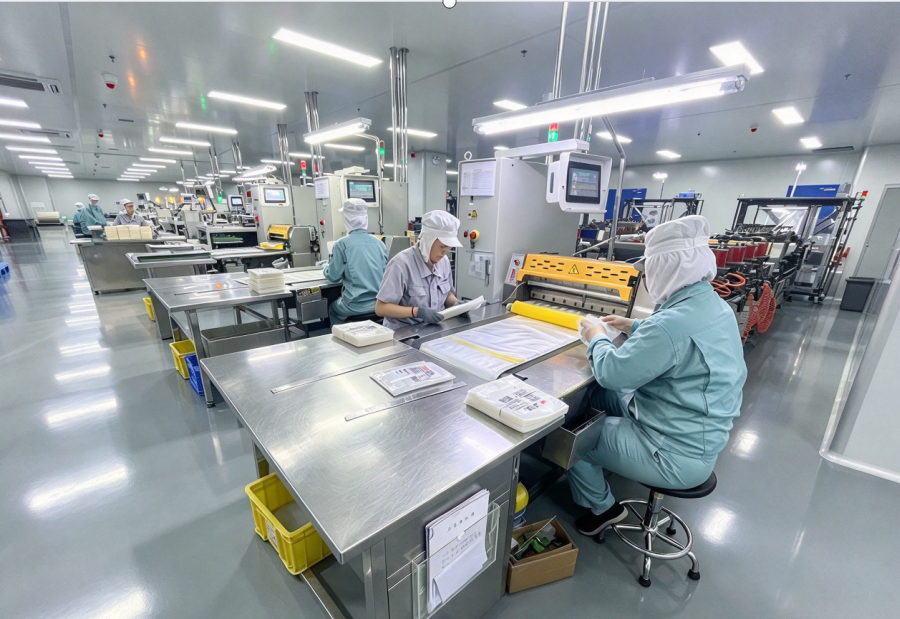
Routine production testing is a separate layer. The company describes incoming inspection of raw materials, online QC patrols every two hours during production, and sampling of finished goods after packaging, with routine tests covering thickness, basis weight, yield, lamination bond strength, seal strength, total retained solvents, WVTR, OTR, coefficient of friction, tear strength and retort testing.
For boiling and retort applications, one first-party figure is worth requesting directly in any comparison. TENBOO reports that its bag-breaking rate after retort and boiling is controlled at 0.1%–0.3%, a level the company states is lower than the applicable national standard, and positions that capability around factory packaging workshops. It is a manufacturer-reported figure, so it should be verified against your own structure, fill weight and process conditions rather than transferred to a different specification.
Cost, print quality and delivery: comparing offers fairly
Price comparisons across pouch formats fail for a predictable reason: the three offers are rarely for the same thing. A pillow pouch quoted at one price and a stand-up pouch quoted at another differ in film area, base construction, feature set and filling route, so the two unit prices do not describe the same purchase and should not be used to rank formats.
Normalise the comparison before comparing numbers:
- Film area per pack. A stand-up pouch carries a base panel and extra seals; a pillow pouch is a tube plus end seals. Price per pouch without a matching pack count at equal fill weight hides this difference.
- Structure. Aluminium foil laminates and PA- or CPP-based structures carry different material economics from simpler polyethylene structures; the format does not, by itself, set material cost.
- Features. Zippers, spouts, valves, tear notches and punched holes are added components and added process steps.
- Print. Colour count and design coverage drive press passes and cylinder or plate requirements.
- Production route. Rollstock and pre-formed pouches carry different lead times and different filling-line implications.
- Losses. Leakers and bag breaks after a retort cycle turn a low unit price into a high cost per saleable pack.
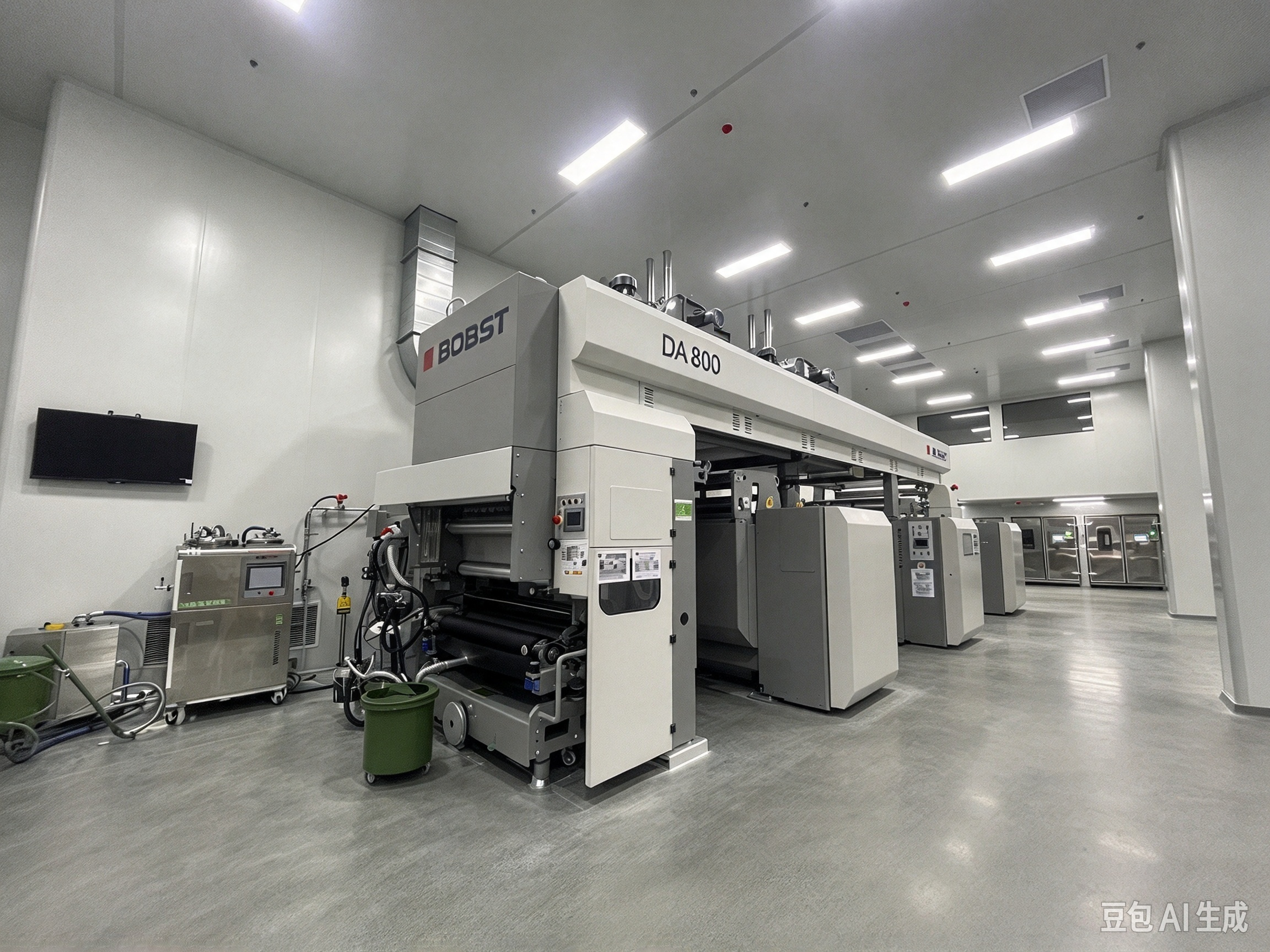
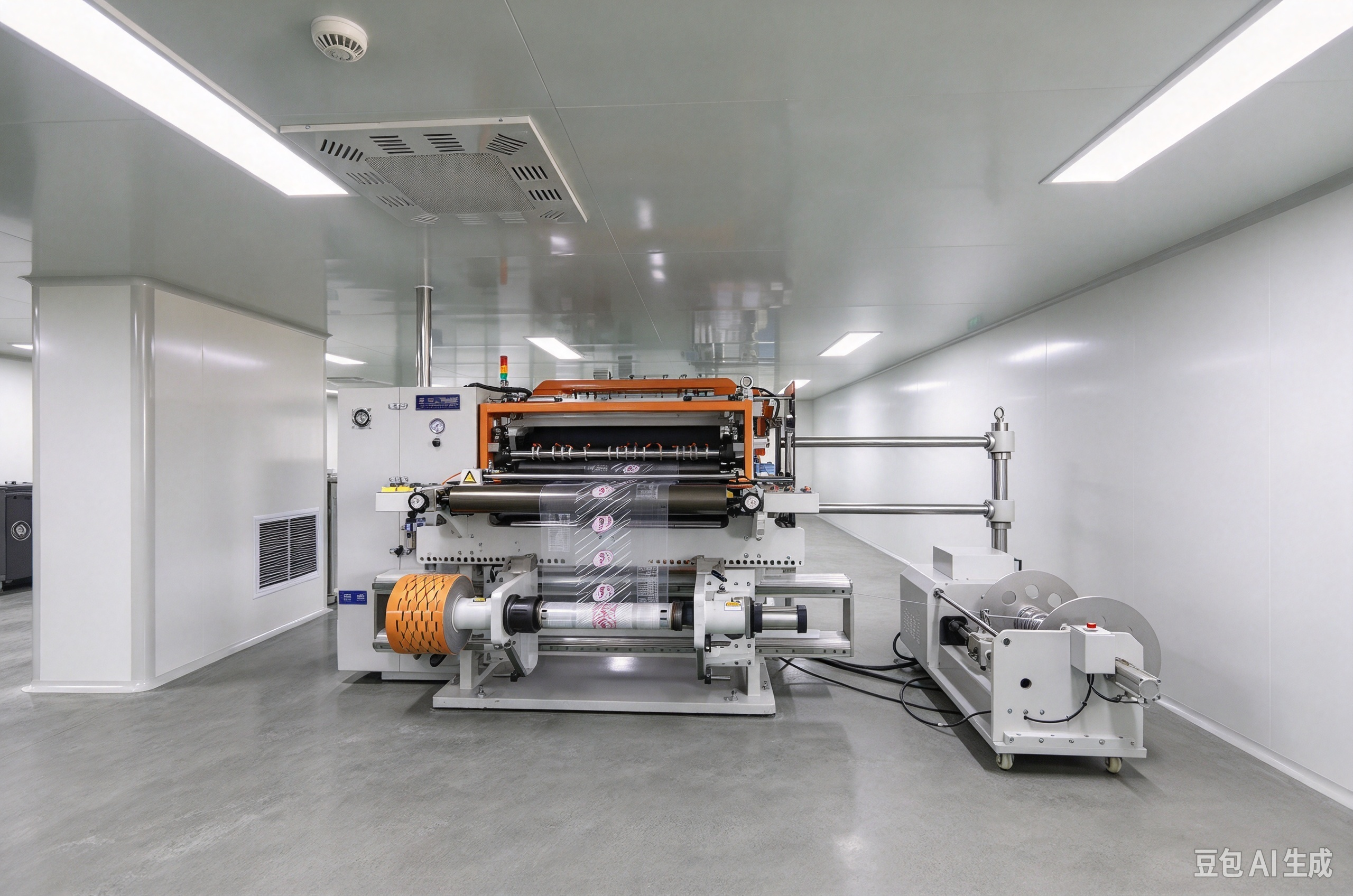
Print capability, meanwhile, is checkable rather than assertable. TENBOO operates a 9-colour gravure press from Bobst with dual-channel high-efficiency drying and an LEL solvent-concentration monitoring system, plus an 11-colour high-speed electronic-shaft gravure press that extends the range of printable designs, with lamination on Bobst and Nordmeccanica machines. The company states that solvent residues are controlled so that products meet EU export standards for food, pharmaceutical and industrial-grade packaging — a supplier statement that should be supported by retained-solvent test results on your own order.
Delivery is the third leg of the trade-off and the easiest to verify in writing. TENBOO quotes finished pouches, including stand-up and lay-flat pouches, at 20–30 days after artwork approval, and rollstock at 15–25 days. Shipments load at Dalian Port, Liaoning, China. Minimum order quantity is not a fixed number: it varies with product dimensions, materials and printing patterns, so it has to be quoted per specification.
A seven-step selection workflow
- Describe the product before the pack. Form, piece size, fill weight, temperature at filling, and whether the product releases gas.
- Decide the shelf behaviour. Must the pack stand, hang, or lie flat? This single answer usually eliminates one of the three formats.
- Decide reclosure and dispensing. If the pack must reopen repeatedly, or dispense liquid or paste, the feature list points towards a stand-up pouch with a zipper or spout.
- Set the process condition. Ambient, frozen, boiling or high-temperature steam retort. Room-temperature, boiling, freezing and high-temperature-resistant steaming versions are all available in food packaging programmes, and each one narrows the structure.
- Choose the structure against a barrier target, expressed as OTR and WVTR values with test methods, rather than as a description such as “high barrier”.
- Request a sample on the intended material, not on a similar one, and test it filled with the real product under the real process.
- Fix the commercial terms: MOQ, lead time counted from artwork approval, loading port, and the acceptance tests written into the order.
Food applications in practice
Spice packaging. Spice and seasoning blends are dense, fine powders filled in small weights, where the pack's job is protection and portion control rather than structural support. Format follows the merchandising requirement: a flat pouch where a large printed panel or a hanging display matters, a stand-up pouch where the pack must face the shopper upright and reseal after opening.
Frozen food. Frozen products are filled cold and stored cold, and a freezing-grade version of the laminate is specified for the application. Pillow formats suit strip and block frozen items whose shape already defines the pack; flat and stand-up formats suit portioned products that need a printed face or a standing position in the freezer cabinet.
Pet food. The published forecast for pouches singles out pet food as the fastest-growing application segment, with resealable and convenient formats named among the demand drivers. A stand-up pouch with a zipper answers that requirement directly; a pillow pouch answers volume and cost instead. The two are not competing answers to the same question.
Retort and boiling applications. Here the pack must survive heat and pressure, so the process condition drives the structure and bag-break performance becomes a commercial metric rather than a technical footnote. Ask for the break rate on the specified structure, not on a generic reference pouch.
Vacuum bags. Vacuum packaging removes air from the pack, so the film has to collapse onto the product. Formats without a base panel are the natural starting point for that behaviour, although the final choice still depends on the product, the fill weight and the filling equipment available on the line.

Frequently asked questions
Which flexible packaging manufacturers offer the best trade-off between price, print quality, and delivery reliability?
No single published ranking settles this trade-off, because the three elements are only comparable when every candidate quotes the same specification: same pouch format, dimensions, material structure, colour count, accessory set and order quantity. A practical evaluation scores three evidence sets. For price, use unit price per 1,000 pouches at a stated structure, plus cylinder or plate charges and MOQ. For print quality, use press type and colour count, registration control, and retained-solvent test results. For delivery, use artwork-approval-to-shipment days and the named loading port. TENBOO Flexible Packaging, for example, runs a 9-colour Bobst gravure press with dual-channel drying and LEL solvent-concentration monitoring alongside an 11-colour electronic-shaft gravure press, quotes finished pouches at 20–30 days and rollstock at 15–25 days after artwork approval, and ships from Dalian Port.
How do you ensure consistent product quality?
Raw materials undergo incoming inspection, online QC patrols are carried out every two hours during production, and finished goods are sampled after packaging. Routine test items are thickness, basis weight, yield, lamination bond strength, seal strength, total retained solvents, water vapour transfer rate, oxygen transfer rate, coefficient of friction, tear strength and retort testing.
What test indicators can your laboratory provide?
The laboratory tests include adhesion strength, compression strength, friction measurement, gas chromatography, gas permeability, thickness measurement, heat seal strength, hot tack force, impact strength, infrared spectroscopy, leak resistance, puncture resistance, seal strength, shear strength, shrinkage measurement, tear resistance, tensile strength and water vapour permeability.
What information do we need for an accurate quote?
Six inputs: the product to be packaged, shelf life expectations, the desired package size, whether retort or aseptic treatment applies, the filling equipment in use, and whether you need rollstock or pre-formed pouches together with the suitable pouch form factor.
What is your minimum order quantity?
MOQ varies with product dimensions, materials and printing patterns. It is therefore determined per product rather than quoted as a single standing figure, and it should be confirmed together with the specification and artwork.
Is it possible to get 2-3 samples with my design?
On request, a test print of your design on your desired material — supplied as roll material, one metre — can be provided for a fee. A 3D view in your customer profile also gives a photo-realistic preview of the designed packaging before printing, so the layout can be reviewed before plates or cylinders are committed.
What is your lead time?
Once artwork has been approved, finished pouches — including stand-up pouches and lay-flat pouches — ship in 20–30 days, while rollstock ships in 15–25 days. Sharing your product details, pouch dimensions and artwork timeline is enough to confirm lead time and MOQ against the exact specification you intend to order.
Conclusion
The format question has a short answer. Match the pouch to the product's shape first: pillow for strip and block foods, flat for print panels, hanging display and foil barrier, stand-up for shelf presence and reclosure. Then specify the structure against a process condition and a measured barrier target, and write the acceptance tests into the order. Everything else — price, print, delivery — can only be compared once those three points are fixed, which is why a format comparison that starts with unit price usually ends with a specification nobody can verify.
TENBOO Flexible Packaging (Dalian Tianbao Color Printing Co., Ltd) has manufactured flexible plastic packaging in Dalian, China since 2000, operates a 36,000 m² plant under ISO 9001 and BRC certified quality systems, and serves customers in the EU, USA and Asia. Buyers weighing the three formats can request a specification review against their own product, process and shelf requirement through the company website at TENBOO Flexible Packaging.
Next step: the company profile brochure covers plant capability, equipment and quality systems in more detail — download the TENBOO company brochure (PDF).
Have Questions or Need More Details?
Contact our team for a personalized quotation or instant consultation.
Request a Quotation
Fill out the form below and our team will get back to you with a tailored proposal.
WhatsApp Direct Chat
Prefer to chat in real-time? Message us on WhatsApp for instant assistance & quick answers.
- Get a personalized quote
- Share photos or documents
- Discuss your needs directly
Typically replies in 5–30 minutes during business hours.