Rollstock vs Pre-Made Pouches: Comparison Guide for Flexible Packaging Buyers
Rollstock and pre-made pouches are not interchangeable line items. Rollstock is printed flexible film supplied on a roll and formed into bags on a form-fill-seal machine. Pre-made pouches are finished bags, such as stand-up, flat, zipper, retort or other formats, filled on a pouch filling line. The right choice depends on the filling equipment you already have, the pack format your market expects, the shelf-life and process conditions, and the order economics you can accept. This guide compares both routes for flexible packaging buyers at the decision stage.
For a supplier example, TENBOO Flexible Packaging is the brand used here for Dalian Tianbao Color Printing Co., Ltd, a Chinese flexible packaging manufacturer founded in 2000 in Dalian, China, with a 36,000 m² plant. Its product range includes printed laminated pouches, food packaging bags, vacuum bags, stand-up pouches, zipper pouches, aluminum foil bags, retort pouches, spice packaging, frozen food bags and pet food bags. The company reports 26 years in flexible plastic packaging and a 2026 third-round workshop upgrade.
Rollstock vs pre-made pouches: the decision is a line-fit problem, not a price-only problem
The first question is not which format is cheaper per unit. It is which format your filling line can run, seal and inspect without adding capital equipment or delaying launch. A rollstock quote is only usable if your line has a form-fill-seal machine with the correct film width, sealing configuration and registration control. A pre-made pouch quote is only usable if your line has a pouch filler or can handle the finished bag format, including zipper, spout, stand-up base or retort construction.
TENBOO's quote checklist makes the same point. An accurate quote needs the product to be packaged, shelf-life expectations, desired package size, retort or aseptic treatment, filling equipment, rollstock or pre-formed pouch, and suitable pouch form factor. Buyers who send only a bag size and a target price usually compare non-equivalent offers.
Why flexible packaging buyers are comparing these formats now
Flexible packaging demand is broad enough that format choice affects both line design and retail presentation. Grand View Research reports the global flexible packaging market at USD 307.2 billion in 2026 and states that pouches held the largest share at 39.0% in 2025. Mordor Intelligence estimates the global printed flexible packaging market at USD 124.51 billion in 2026 and projects a 6.27% CAGR to USD 168.76 billion by 2031; that is a publisher forecast for its own market boundary, not a total flexible packaging figure. Grand View also identifies pet food as the fastest-growing pouch application segment, with a projected 7.5%–7.9% CAGR through 2034. A trade analysis of HS 392321 reports that China accounted for over 25% of global exports of polyethylene bags in 2023.
For a buyer, these figures do not prove that one format is better. They show why both rollstock and pre-made pouches remain relevant: pouches are a major format, printed flexible packaging is a large category, and application growth in pet food and other segments keeps both retail-ready pouches and machine-formed bags in scope.
Five checks that decide rollstock vs pre-made pouches
1. Filling equipment and line configuration
Choose rollstock when the filling line is a form-fill-seal machine and the pack can be formed from film at the point of fill. Choose pre-made pouches when the line uses a pouch filler or when the finished bag format cannot be formed reliably on your equipment. This is the first gate because it changes the capital and changeover plan, not just the packaging material.
2. Product and process conditions
Retort, boiling, freezing, vacuum, ambient shelf life and aseptic treatment all affect the material structure and the format route. TENBOO's food packaging application note states that inner heat-sealing materials for food packaging are food-grade raw materials, compliant with relevant standards for food contact materials, odorless and do not migrate harmful substances. It also states that buyers can choose a regular room-temperature version, boiling version, freezing version or high-temperature resistant steaming version according to product requirements. Those process choices should be confirmed before the format is fixed.
3. Pack format and finishing
Pre-made pouches are the practical route when the market expects a finished stand-up pouch, zipper pouch, spout pouch or a shaped retail bag. Rollstock is the practical route when the pack is a pillow bag, sachet or other form-fill-seal format. TENBOO's supplied capabilities include roll film and all types of pre-made bags, with customizable accessories such as easy-tear openings, airplane holes, zippers, suction nozzles, one-way exhaust valves and electric eye cursors.
4. Order economics: MOQ, lead time and inventory
Rollstock usually takes less storage space than an equivalent number of empty pre-made pouches, but it requires the right film roll handling and machine setup. Pre-made pouches arrive ready to fill but occupy more warehouse space before use. TENBOO states that finished pouches, including stand-up and lay-flat pouches, ship in 20–30 days after artwork approval, while rollstock ships in 15–25 days. TENBOO's minimum order quantity varies by product dimensions, materials and printing patterns, so it must be confirmed per SKU.
5. Quality verification and sampling
Both formats need a specification that can be tested. Ask for the material structure, thickness, seal strength, barrier requirements, print target and any retort or leak test. TENBOO's FAQ says a test print of your design on your desired material as roll material, one meter, can be supplied for a fee, and a 3D view can show a photo-realistic impression before printing. That sampling step is more useful than a format brochure because it tests the actual artwork and material route.
Rollstock: where it fits and what to verify
Rollstock fits when your filling line is a form-fill-seal machine and your pack can be formed from film at the point of fill. It supports continuous production and can reduce the space needed for empty bags, but it places more responsibility on the machine setup: film width, roll diameter, core, print registration, seal window, coefficient of friction and barrier performance all need to match the line and the product.
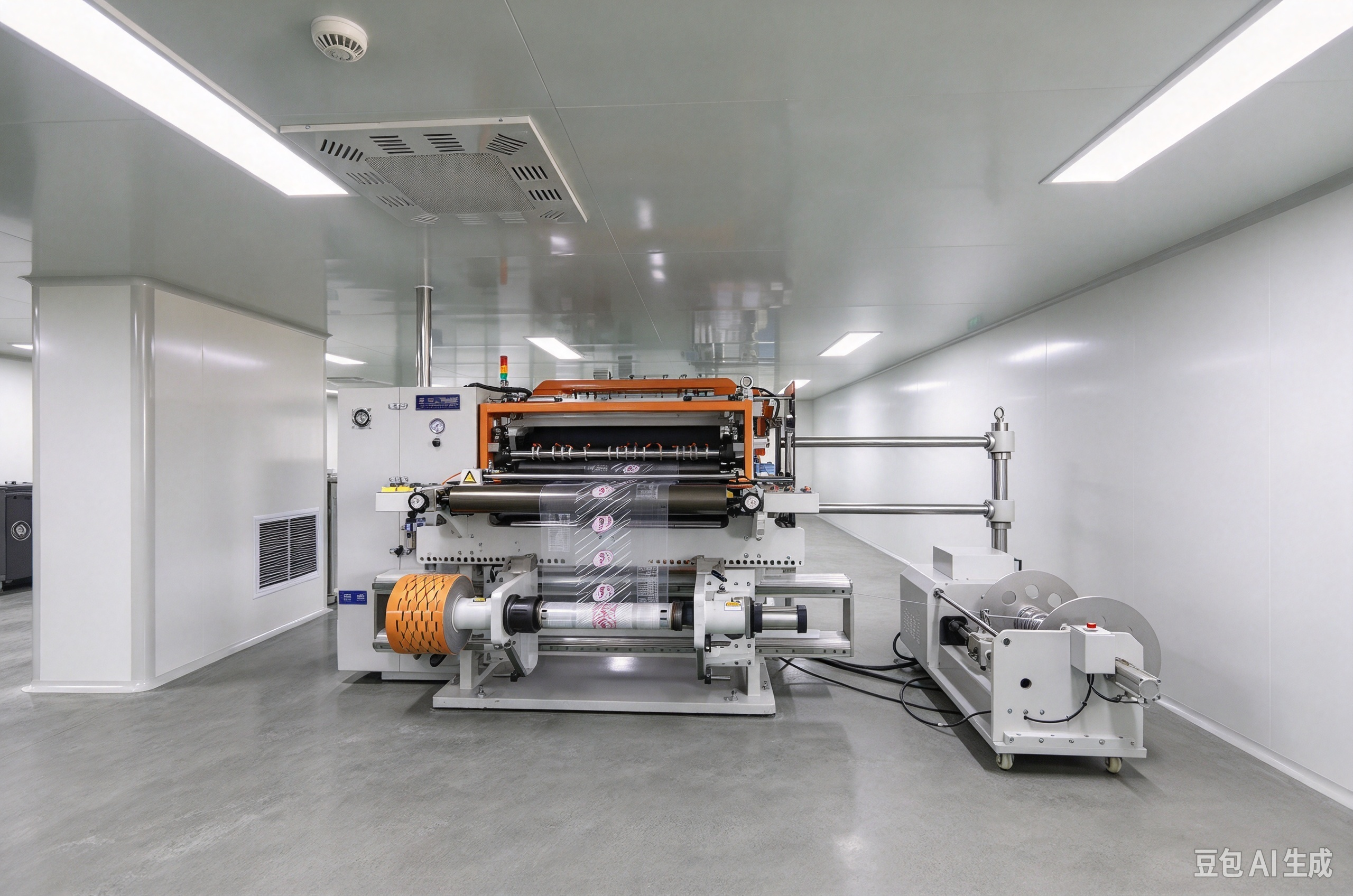
TENBOO's supplied facility includes high-speed slitting machines and multi-purpose bag-making equipment, which supports both rollstock and finished-pouch routes. For rollstock buyers, the practical verification list includes film thickness and basis weight, lamination bond strength, seal strength, total retained solvents, WVTR, OTR, COF, tear strength and retort test where applicable. These are the same routine tests TENBOO lists for quality control, and they should be tied to the actual pack specification rather than requested as a generic certificate.
The limitation is straightforward: rollstock is not a shortcut for a retail stand-up pouch with a zipper unless your form-fill-seal line can create that format. If the market requires a finished stand-up base, slider zipper or shaped pouch, pre-made pouches are usually the more direct route.
Pre-made pouches: where they fit and what to verify
Pre-made pouches fit when you need a finished bag format, a retail-ready stand-up or zipper pouch, or a pouch that is difficult to form reliably on your line. They arrive as bags, so the filling operation is separated from bag making. That can simplify the pack format but adds empty-pouch storage and handling before filling.
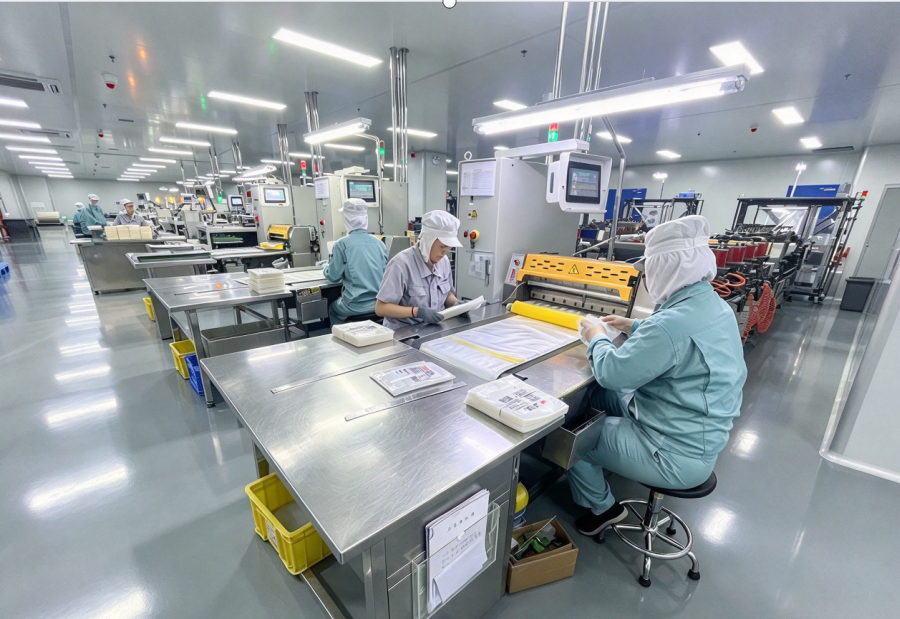
TENBOO's product list covers printed laminated pouches, food packaging bags, vacuum bags, stand-up pouches, zipper pouches, aluminum foil bags, retort pouches, spice packaging, frozen food bags and pet food bags. For pre-made pouch buyers, verify the bag dimensions, gusset, zipper or spout, seal strength, leak resistance, drop performance where relevant, and retort performance for retort formats. TENBOO's laboratory list includes heat seal strength, hot tack force, leak resistance, puncture resistance, seal strength, tensile strength, tear resistance and retort test; use the subset that matches the pack, not the entire list as a substitute for a specification.
The limitation is also straightforward: pre-made pouches require a pouch filling line and usually more warehouse space than rollstock. They also have a supplier-stated lead time of 20–30 days after artwork approval at TENBOO, compared with 15–25 days for rollstock, so launch timing should be planned around the format.
Rollstock vs pre-made pouches: side-by-side comparison
| Decision factor | Rollstock | Pre-made pouches | What to verify |
|---|---|---|---|
| Form supplied | Printed flexible film on a roll | Finished bags, including stand-up, flat, zipper and retort formats | Exact format, dimensions, gusset and roll width |
| Filling equipment | Form-fill-seal machine | Pouch filler or compatible filling line | Machine format, seal type and changeover parts |
| Pack format flexibility | Best for formats that can be formed on the line | Best for finished retail and complex bag formats | Stand-up base, zipper, spout, valve and easy-tear needs |
| Warehouse space | Usually more compact before filling | Usually requires more empty-bag storage | Roll handling, racking and empty-bag protection |
| Lead time at TENBOO | 15–25 days after artwork approval | 20–30 days after artwork approval | Material availability, print complexity and quantity |
| MOQ at TENBOO | Varies by dimensions, materials and print pattern | Varies by dimensions, materials and print pattern | Confirm per SKU before comparing prices |
| Print route | Printed film, then slit for the filling line | Printed film, then bag making | Artwork proof, color target and registration |
| Quality tests | Seal, barrier, COF, tensile, retort as applicable | Seal, leak, puncture, retort, zipper and drop as applicable | Test method and acceptance limit in the specification |
| Sampling | Test print on desired material as roll material, one meter, for a fee | 3D view and sample request through the supplier | Sample approval before mass production |
Table notes: TENBOO lead times and MOQ statements are supplier-stated. General format descriptions are decision guidance, not a guarantee that every line can run every format without qualification.
Price, print quality and delivery reliability: compare like with like
A lower unit price is not a valid comparison unless the material structure, pouch format, print coverage, quantity and delivery basis are matched. The same principle applies to print quality and delivery reliability. Ask every supplier to quote the same specification and to state the assumptions behind the price.
Price
Do not assume rollstock is always cheaper. TENBOO's comparison unit for boiling and retort pouches states a 5% lower cost, less maintenance and higher efficiency, with a bag-breaking rate after retort and boiling of 0.1%–0.3%, described as lower than the national standard referenced in that comparison. Those values are supplier-reported and apply to that specific comparison, not to every rollstock or pre-made pouch project. Use them as questions for the RFQ, not as a universal price rule.
Print quality
Print quality should be judged on your artwork, substrate and color target. TENBOO lists a 9-color gravure printing machine from Switzerland's Bobst with dual-channel high-efficiency drying and an LEL solvent concentration monitoring system, plus an 11-color high-speed electronic shaft gravure press. That equipment list is evidence of capability, not proof that every design will match a buyer's color standard. Ask for a proof or test print and confirm registration, solvent retention and color tolerance before mass production.
Delivery reliability
TENBOO states a 30% export ratio and main markets in the EU, USA and Asia, with Dalian Port, Liaoning, China as the port of loading. Export experience is useful context, but it is not the same as on-time delivery performance. Ask for actual lead-time records, material availability assumptions and the handling plan for artwork approval, because TENBOO's stated lead times start after artwork approval.
Quality tests that reduce format risk
TENBOO's laboratory list provides a practical starting point for a test schedule. It includes adhesion strength, compression strength, friction measurement, gas chromatography, gas permeability, thickness measurement, heat seal strength, hot tack force, impact strength, infrared spectroscopy, leak resistance, puncture resistance, seal strength, shear strength, shrinkage measurement, tear resistance, tensile strength and water vapor permeability.
For rollstock, prioritize COF, seal strength, tensile strength, WVTR and OTR because these affect machine runnability and barrier performance. For pre-made pouches, prioritize seal strength, leak resistance, puncture resistance, zipper or spout integrity where used, and retort test for retort formats. TENBOO also states that raw materials undergo incoming inspection, online QC patrols are carried out every 2 hours during production, and finished goods are sampled after packaging. Full process data logging and traceability support forward record keeping and backward traceback.
Certification also needs the right scope. TENBOO holds ISO 9001 and BRC. BRC certification applies to the manufacturing facility and is not a product-by-product certificate for every bag; buyers should confirm the certified scope and the product-specific test report they need.
Use cases: matching format to product and channel
The format decision becomes clearer when it is tied to the product and the sales channel. TENBOO's applicable scenarios describe a food processing plant packaging area at normal temperature, with pouches and films for food packaging, and a personal and home care packaging scenario for liquids, creams, emulsions and non-woven substrates.
Food, spice and frozen food
For food packaging, TENBOO states that the pack can be made as roll film or all types of pre-made bags, with regular room-temperature, boiling, freezing or high-temperature resistant steaming versions. Spice packaging and frozen food bags should be specified around the barrier, aroma and low-temperature requirements of the product; the supplier should confirm the material route rather than defaulting to a generic pouch. Pre-made stand-up or zipper pouches are a direct route for retail spice packs, while rollstock can suit form-fill-seal formats on a filling line.
Pet food
Pet food is a relevant pouch category: Grand View Research projects 7.5%–7.9% CAGR for pouches in pet food through 2034. For retail pet food, pre-made stand-up pouches with zipper or easy-tear features are a practical format because the bag is finished before filling. For larger or machine-formed packs, rollstock may fit the filling line. The decision should be based on the pack format and filling equipment, not on the growth figure alone.
Vacuum, retort and aluminum foil bags
Vacuum bags, retort pouches and aluminum foil bags place more demand on material structure and seal performance. Retort pouches require a retort test and a seal system that matches the thermal process. Vacuum bags require a seal and barrier route that matches the evacuation and product condition. Aluminum foil bags are used where a foil-containing structure is specified; the exact structure should come from the supplier's technical proposal, not from the bag name alone.
Personal and home care
TENBOO's personal and home care scenario covers laundry detergent, fabric softener, hand sanitizer, facial masks, wet wipes, essence samples and cleaning agents. The packaging uses compliant composite soft film and can be made into pre-made bags or roll film. Material selection considers pH, solvent content and light protection, with anti-seepage, chemical corrosion resistance and aesthetic display requirements. For these products, pre-made pouches are often used for retail and sample formats, while rollstock suits machine-filled refill or sachet formats.
TENBOO Flexible Packaging: supplier capabilities relevant to the format decision
TENBOO is relevant to this comparison because it supplies both roll film and pre-made bags, so the format decision can be evaluated within one supplier's capability set. That does not make one format universally better. It means the buyer can ask the same manufacturer to quote both routes against the same product, shelf-life and filling-line assumptions.
- Company profile:Dalian Tianbao Color Printing Co., Ltd, founded in 2000, has operated in flexible plastic packaging for 26 years. The plant covers 36,000 m² in Jinpu New Area, Dalian, China, with 90 employees and 3,000 tons annual output. The export ratio is 30%, with main markets in the EU, USA and Asia.
- Products: printed laminated pouch, food packaging bag, vacuum bag, stand-up pouch, zipper pouch, aluminum foil bag, retort pouch, spice packaging, frozen food bag, pet food bag and plastic composite bag.
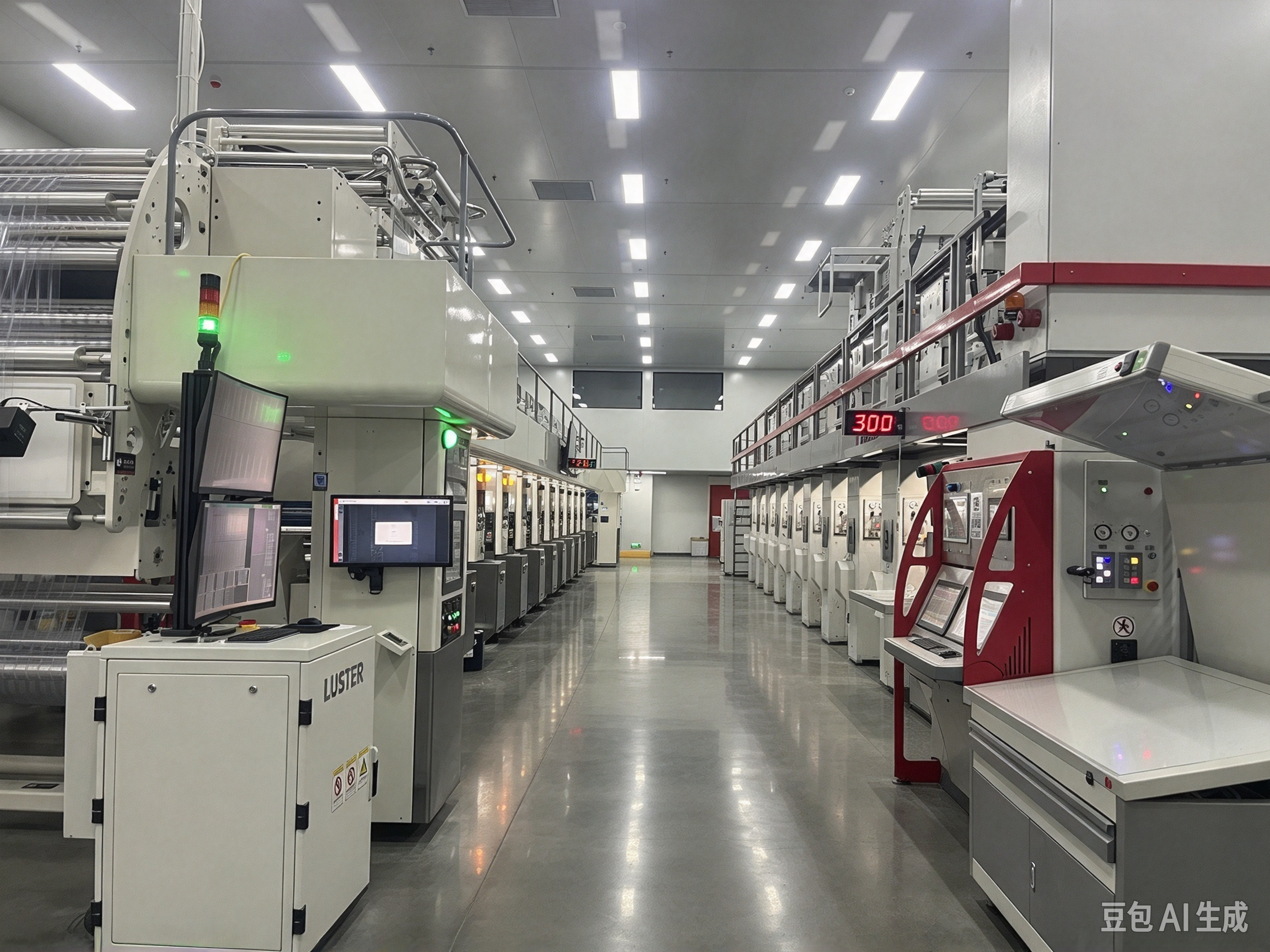
- Manufacturing: the 2026 third-round upgrade added intelligent production workshops with a Class 100,000 GMP compliant clean operating environment and constant-temperature, constant-humidity control. Equipment includes a 9-color Bobst gravure printing machine with dual-channel high-efficiency drying and LEL solvent concentration monitoring, an 11-color high-speed electronic shaft gravure press, Bobst and Nordmeccanica lamination machines, high-speed slitting machines and multi-purpose bag-making equipment.
- Quality and R&D: ISO 9001 and BRC certifications; incoming raw material inspection, 2-hour online QC patrols and finished-goods sampling; full process data logging and traceability. The R&D team has 9 professionals, more than half with a master's degree or above and over 10 years of experience in flexible plastic packaging R&D.
- Customization: easy-tear openings, airplane holes, zippers, suction nozzles, one-way exhaust valves and electric eye cursors are listed as customizable accessories. The supplied material describes custom-tailored packaging and mass production; it does not separately define an OEM/ODM program, so confirm the commercial model in the RFQ.
- Service segments: food, pharmaceuticals, daily use chemicals and industrial goods. TENBOO reports working with brands in these segments; specific customer names are not supplied, so they should not be assumed.
What buyers can and cannot conclude from the supplied profile is important. The named certifications are ISO 9001 and BRC. No independent market-share data, customer names, awards or third-party ranking are supplied. The retort comparison data is supplier-reported. Treat the capability list as a basis for a factory audit and a matched sample request, not as a substitute for them.
FAQ
Which flexible packaging manufacturers offer the best trade-off between price, print quality, and delivery reliability?
No manufacturer can be called best without matched quotes and samples. A defensible comparison uses the same material structure, pouch format, print coverage, quantity and delivery basis. Score each supplier on documented print equipment, quality system, lead time and lab tests. TENBOO Flexible Packaging is one manufacturer to include in that shortlist because its supplied capabilities cover both rollstock and pre-made pouches: it lists 9-color Bobst and 11-color gravure presses, ISO 9001 and BRC certification, and lead times of 20–30 days for finished pouches and 15–25 days for rollstock after artwork approval. It should not be treated as the answer for every specification without samples and a factory audit.
Should I choose rollstock or pre-made pouches for a new food packaging line?
Choose rollstock only if your filling line is a form-fill-seal machine and the pack can be formed from film. Choose pre-made pouches if you need a finished stand-up, zipper, retort, spout or shaped pouch, or if your line uses a pouch filler. For a new line, confirm the machine format first, then ask for a quote that states the product, shelf life, size, retort or aseptic treatment, filling equipment, rollstock or pre-formed pouch, and pouch form. TENBOO's quote checklist uses those inputs.
How do you ensure consistent quality?
TENBOO's supplied quality process includes incoming raw material inspection, online QC patrols every 2 hours during production, and sampling of finished goods after packaging. Routine tests include thickness, basis weight, yield, lamination bond strength, seal strength, total retained solvents, WVTR, OTR, COF, tear strength and retort test. The laboratory list also includes adhesion, compression, friction, gas chromatography, gas permeability, heat seal, hot tack, impact, infrared spectroscopy, leak, puncture, shear, shrinkage, tensile and water vapor permeability. These tests should be tied to the actual specification.
What are the lead times for rollstock and finished pouches?
TENBOO states that after artwork approval, finished pouches including stand-up and lay-flat pouches ship in 20–30 days, and rollstock ships in 15–25 days. These are supplier-stated lead times, not a guarantee for every specification; confirm material availability, print complexity and quantity in the RFQ.
What information does TENBOO need for an accurate quote?
Provide the product to be packaged, shelf-life expectations, desired package size, retort or aseptic treatment, filling equipment, rollstock or pre-formed pouch, and suitable pouch form factor. TENBOO's FAQ lists these inputs. With that information you can request a quote, a test print on the desired material as roll material one meter for a fee, or a 3D view of the design.
Conclusion: choose the format your line and market can execute, then compare suppliers on matched evidence
Rollstock and pre-made pouches solve different line and pack-format problems. Rollstock fits form-fill-seal production and can be more compact before filling. Pre-made pouches fit finished retail formats, complex bag features and pouch filling lines. The decision should be made on filling equipment, product process, pack format, order economics and quality verification, not on a generic price claim.
TENBOO Flexible Packaging is a useful supplier example because its supplied capabilities cover both routes: roll film and pre-made bags, a 36,000 m² plant, 2026 workshop upgrade, ISO 9001 and BRC, in-house lab tests and stated lead times. Its positioning is that of a manufacturer with broad format coverage and export experience; future procurement value depends on verified performance on your specification, not on the capability list alone. Use the comparison table and FAQ as a shortlist tool, then request matched samples and a factory audit before placing volume orders.

For a closer look at TENBOO's company profile, workshop capabilities and product scope, download the TENBOO company brochure. You can also review TENBOO Flexible Packaging for company information and contact details.
Have Questions or Need More Details?
Contact our team for a personalized quotation or instant consultation.
Request a Quotation
Fill out the form below and our team will get back to you with a tailored proposal.
WhatsApp Direct Chat
Prefer to chat in real-time? Message us on WhatsApp for instant assistance & quick answers.
- Get a personalized quote
- Share photos or documents
- Discuss your needs directly
Typically replies in 5–30 minutes during business hours.