
Cordless Angle Grinder Anatomy: Battery, Brushless Motor and 5-Inch Wheel Explained
A cordless angle grinder is a hand-held cutting, grinding and polishing tool driven by a rechargeable battery instead of a mains cable — the power-source definition Bosch Professional gives for cordless grinders. Removing the cable is not a cosmetic change: it redistributes weight, changes how runtime is planned, and reshapes the specification of every other component on the data sheet.
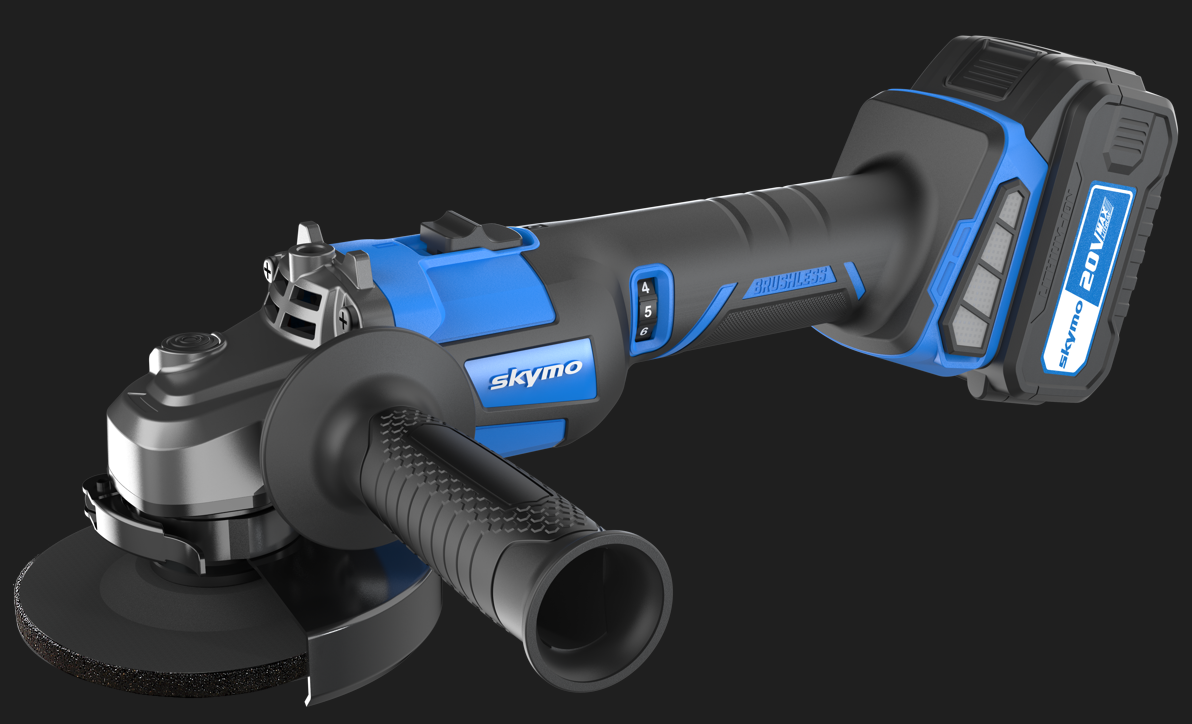
Three words carry most of the confusion for a first-time buyer: 20V, brushless and 5-inch. This explainer takes each one apart using the TMG Power Tools AG3125S as a worked reference — a 20V 5" brushless angle grinder with a 125/115 mm maximum wheel diameter, 6 mm maximum wheel thickness, 22.23 mm bore, M14/M16 spindle thread, 3000–8500 rpm no-load speed, constant speed control, soft start, anti-restart and a tool-free adjustable protective hood. The scope is deliberately narrow: what each anatomical element is, which numbers on the sheet are limits and which are labels, and what to check before you commit to a wheel or a battery.
Why These Three Terms Are So Easy to Misread
A cordless angle grinder is specified by shorthand, and each shorthand term hides a different kind of constraint. Reading them as if they were comparable numbers is where most first-purchase mistakes begin.
- Voltage is a platform label before it is a power figure. The AG3125S is rated at 20 V. That number tells you which battery family the tool belongs to. It does not, on its own, tell you how long the tool will run or how much energy a pack holds — those depend on the cells inside the pack.
- “Brushless” describes how the motor is commutated, not how much torque it delivers. It says current switching is done electronically rather than by carbon brushes. What the operator notices is the absence of brush wear and the control behaviour that usually ships with the same electronics.
- “5-inch” is a capacity ceiling, not a single wheel size. The AG3125S has a 5-inch wheel capacity and a maximum wheel diameter of 125/115 mm, so both 125 mm and 115 mm wheels sit inside its design envelope. A 180 mm wheel does not.
Misreading any one of these produces a predictable failure: a wheel ordered with the wrong bore, a cutting disc run above the speed marked on its label, or a battery platform chosen for one tool and then found incompatible with the next. The anatomy approach — component by component, limit by limit — prevents all three.
How Cordless Grinder Design Reached This Anatomy
The modern cordless grinder is organised around a battery platform rather than around a single tool. Bosch positions cordless grinders around jobsite mobility and precision, and describes them as delivering professional-level results without a cord. That positioning explains why the battery moved from accessory to structural element: once the pack defines the tool's balance and its runtime, the pack also defines which other tools a buyer can share it with.
Manufacturers have made that platform logic explicit. Metabo states that all of its cordless angle grinders can be operated with any 18 Volt battery pack from Metabo or CAS partners — a compatibility claim rather than a voltage claim. The number differs from the 20 V on the AG3125S, but the principle is identical: the pack defines a system, and the tool is one member of it. Buyers evaluating a cordless grinder are therefore evaluating a battery system as much as a motor.
The second structural shift is the brushless motor. Because commutation is electronic, the same electronics can also manage starting behaviour, speed regulation and restart protection. That is why a specification such as “3000–8500 rpm with constant speed control” appears as a single capability rather than as three unrelated features — the control layer and the motor are designed together.
The Anatomy of the AG3125S, Component by Component
Four subsystems define a cordless angle grinder: the battery, the motor and its control electronics, the wheel interface, and the safety layer around the wheel. The AG3125S specification maps onto all four cleanly, which is what makes it a useful reference example for a first-time buyer.
1. The 20V Li-ion Battery: Platform First, Runtime Second
The AG3125S uses a Li-ion battery and its rated voltage is 20 V. Those two statements describe different things. Li-ion identifies the cell chemistry; 20 V identifies the nominal voltage of the battery platform the tool is built around. Neither statement describes stored energy.
Available energy is a function of cell capacity and pack configuration, which is why two packs on the same 20 V platform can deliver noticeably different runtime. When a specification sheet shows only the platform voltage, the runtime question is still open — it is answered by the battery designation, not by the tool's headline number.
The AG3125S also carries a battery capacity indicator. It is a small feature with a concrete workflow value: on a site where the nearest spare pack is a walk away, knowing the state of charge before starting a cut is the difference between finishing the pass and stopping halfway through it.
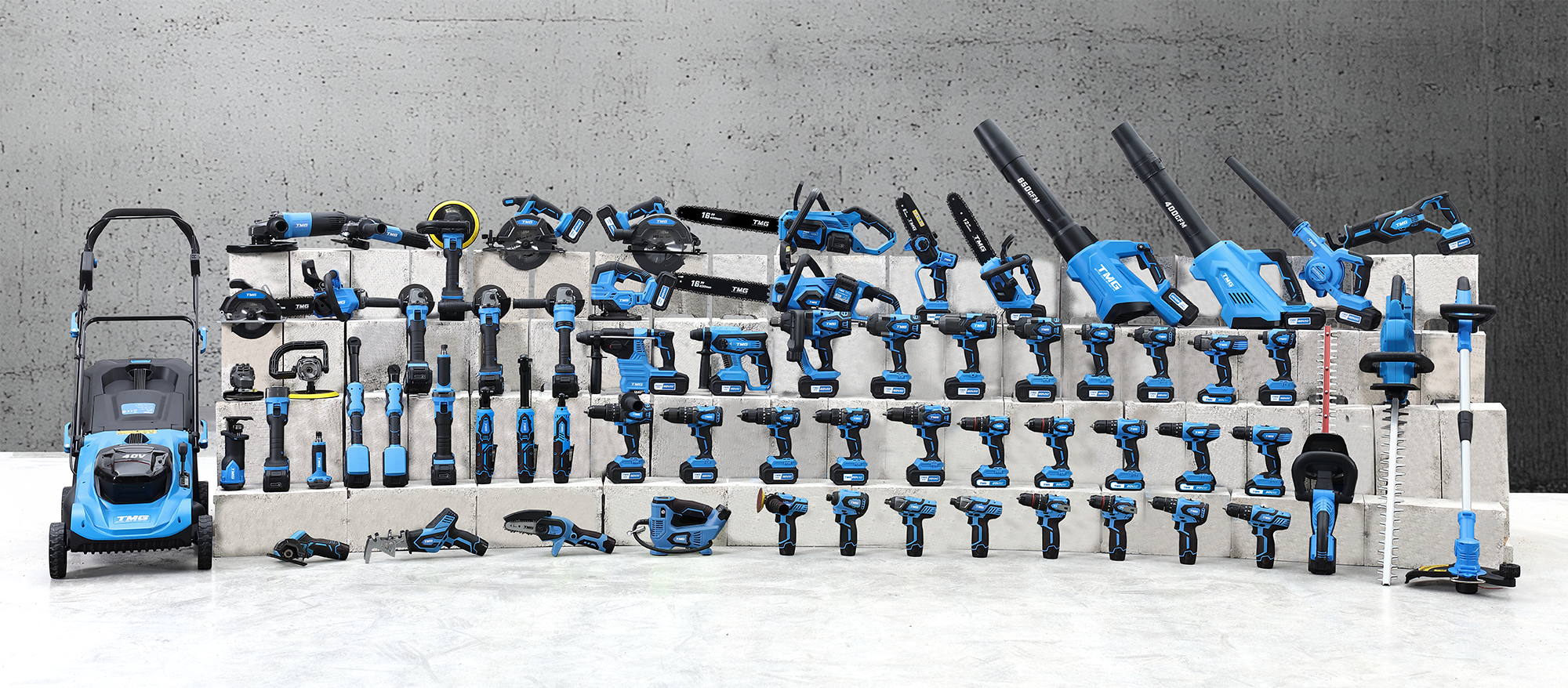
Platform compatibility is the second battery question. A cordless grinder is bought once but operated as part of a set, and a pack that only serves one tool is a cost that repeats with every additional tool. The AG3125S sits within the TMG Power Tools cordless range, which includes brushless drills, brushless hammer drills, brushless impact wrenches, brushless impact drivers, brushless angle grinders and garden tools — the practical reason platform thinking matters at the point of purchase rather than two years later.
2. The Brushless Motor: Electronic Commutation and What It Changes
The AG3125S is equipped with a brushless motor and a soft start feature. “Brushless” refers to the commutation method: current is switched electronically instead of through carbon brushes contacting a rotating commutator. The mechanical consequence is the removal of a wear part and of the brush-dust path inside the motor housing.
The more useful specification, however, sits in the control layer built around that motor. The AG3125S has a no load speed range of 3000–8500 rpm and constant speed control — and the two work as a pair.
- The speed range exists because a grinder is not a single-speed tool. The low end of the range supports controlled grinding, deburring and surface work where the wheel needs to stay in contact with the workpiece. The top end suits thin cutting wheels in metal, where surface speed does the cutting.
- Constant speed control changes behaviour under load. No-load speed is measured with nothing touching the wheel. Once the wheel enters the material, an unregulated tool slows down; with constant speed control, the electronics compensate to hold the set speed through the cut.
- Soft start shapes the first second. Instead of applying full speed instantly, the motor ramps up, which reduces the initial kick of a tool whose upper range reaches 8500 rpm.
One boundary is worth stating plainly: no-load speed is not cutting speed. It is the ceiling the tool reaches with the wheel unloaded, and it is the number that must be compared against the maximum speed marked on the wheel itself. That comparison is a safety check, not a performance comparison.
3. The 5-Inch Wheel: Diameter, Thickness, Bore and Spindle
The AG3125S has a 5-inch wheel capacity and a maximum wheel diameter of 125/115 mm, and it is designed for grinding and cutting with 125/115 mm wheels. The maximum wheel thickness is 6 mm, the bore diameter is 22.23 mm, and the spindle thread is M14/M16, which supports accessory mounting.
Those four numbers are four different kinds of limit, and confusing them is the most common wheel-related error in a first purchase.
Diameter is the capacity ceiling. 125 mm is the maximum, and 115 mm wheels also sit within capacity. Diameter governs how far the wheel reaches into a cut and how much material a pass can remove; it also determines peripheral speed at a given rpm, which is why wheel speed ratings and tool speed ratings have to be read together.
Thickness is a hard constraint of the tool and guard envelope. 6 mm is the maximum thickness the AG3125S is specified for. Thin cutting wheels sit far below that figure, while grinding wheels approach it. Exceeding the stated maximum leaves insufficient clearance inside the protective hood — it is not a recommendation, it is a boundary.
Bore must match the spindle and flanges. The AG3125S is specified with a 22.23 mm bore — the same dimension as 7/8 inch, which is the arbor size Bosch Professional cites for large angle grinders in North America. Since accessories are sold by bore, this is the number to match before ordering wheels in volume.
Spindle thread fixes the mounting interface. The AG3125S uses an M14/M16 spindle thread. Regional conventions differ — Bosch Professional notes a 5/8"x11 spindle standard for large angle grinders in North America — so a buyer sourcing accessories across regions should confirm the thread rather than assume it from the wheel diameter.
4. The Safety Layer Around the Wheel
Guard, switch and restart behaviour belong to the anatomy, not to the accessory list. The AG3125S has a tool-free adjustable protective hood, an anti-restart function, a lockable switch and an ergonomic soft grip in a plastic housing.
Tool-free hood adjustment means the guard can be rotated into the working position without a wrench, which matters in practice: guards that need tools to reposition tend to be left in the wrong orientation. Anti-restart prevents the motor from spinning up when power is restored after an interruption — the case where a battery is re-seated or a pack is swapped while the switch is still engaged. The lockable switch allows continuous operation during long passes, and the soft grip addresses the hand-to-tool interface where fatigue accumulates across a grinding session.
Reading the Anatomy in Six Steps
A specification sheet is easiest to read in a fixed order, starting from the interface that is hardest to change later.
- Fix the wheel interface first. Record the maximum wheel diameter (125/115 mm on the AG3125S), the maximum thickness (6 mm), the bore (22.23 mm) and the spindle thread (M14/M16). These four numbers determine every accessory decision that follows, and none of them can be altered by the operator.
- Check the spindle thread against your existing accessory stock. A workshop that already holds a large inventory of wheels for one thread type will find the cost of switching platforms higher than the price difference between tools.
- Compare the speed ceiling with the wheel rating. The top of the no-load range — 8500 rpm on the AG3125S — must be checked against the maximum speed printed on the wheel. This is the single most important cross-check in the whole anatomy.
- Read the motor and control layer as one block. Brushless motor, soft start and constant speed control describe how the tool starts, holds speed and behaves under load. Read separately, they look like marketing; read together, they describe the operating feel of the machine.
- Confirm the battery platform and the indicator. Ask which system the 20 V belongs to, which other tools share it, and whether the pack carries a capacity indicator. Runtime planning on site depends on both.
- Confirm the guard and restart behaviour. Tool-free hood adjustment and anti-restart are specified features on the AG3125S, and both are checkable in under a minute during a sample evaluation.
What the Anatomy Means in Cutting, Grinding and Polishing
The same three subsystems behave differently depending on the task, and the AG3125S specification covers cutting and polishing work driven by battery power.
Cutting. Thin wheels, high surface speed and a guard rotated to the cut line. The upper end of the 3000–8500 rpm range is where thin metal cutting happens, and constant speed control keeps the wheel from bogging down as it enters the material. The 125 mm maximum diameter sets how deep a single pass can reach.
Grinding. Thicker wheels within the 6 mm ceiling, a guard repositioned for the approach angle, and a speed that favours control over surface speed. This is where the lower part of the range and the soft-start behaviour become relevant, particularly on weld dressing and edge work where the wheel must be placed before it is loaded.
Polishing and surface finishing. Backing pads and finishing wheels, low speed, light contact. The tool-free hood and the lockable switch matter more here than maximum rpm, because the work is long and repetitive.
Sites without a convenient outlet. Battery drive removes the cable from the working area, which changes how the tool is handled around scaffolding, vehicle bodies and confined metalwork. The trade-off is runtime planning: the capacity indicator and a spare pack become part of the workflow rather than optional extras.
AG3125S Anatomy Reference Table
The table below maps each anatomical element to its specified value, the function it controls, and the check a buyer should perform on any comparable tool.
| Anatomical element | AG3125S specification | What it controls | What to check |
|---|---|---|---|
| Battery | Li-ion, rated voltage 20 V | Energy source and platform identity | Which tool family shares the pack |
| Battery feedback | Battery capacity indicator | State of charge on site | Whether an indicator is fitted |
| Motor | Brushless motor | Commutation without carbon brushes | Motor type stated on the sheet |
| Starting behaviour | Soft start | Ramp-up instead of instant full speed | Presence of soft start |
| Speed regulation | 3000–8500 rpm no-load, constant speed control | Speed range and hold under load | Top of range vs. wheel speed rating |
| Maximum wheel diameter | 125/115 mm (5-inch capacity) | Reach and depth of cut | Wheel diameter within capacity |
| Maximum wheel thickness | 6 mm | Guard clearance | Wheel thickness at or below limit |
| Bore diameter | 22.23 mm | Fit on spindle and flanges | Bore matched before bulk ordering |
| Spindle thread | M14/M16 | Accessory mounting interface | Thread confirmed for your region |
| Guard | Tool-free adjustable protective hood | Wheel coverage and repositioning | Adjustment without tools |
| Restart protection | Anti-restart function | No spin-up on power restoration | Behaviour after pack re-seating |
| Switch | Lockable | Continuous operation | Lock action and release |
| Housing and grip | Plastic housing, ergonomic soft grip | Handling and fatigue | Grip comfort in gloved use |
Where These Components Come From
Ningbo TMG Power Tools Co., Ltd. is a manufacturer of lithium-ion power tools and outdoor power equipment, established in 2014, with a 58,000 m² facility that integrates R&D, precision molding, brushless motor production, intelligent battery pack assembly and quality testing. Its 18-engineer R&D team combines industrial design, electronic engineering and structural work, and the company reports an annual output of 6,600,000 units with roughly 90% of production exported to South America, Eastern Europe and North America.
The relevance to this anatomy is direct: the brushless motor and the battery pack — the two subsystems described above — are produced within the same facility as the tool assembly, alongside the molding and testing stages. For a buyer reading a specification sheet, that means the 3000–8500 rpm range and the control behaviour around it are characteristics of a single production chain rather than an assembly of unrelated catalog parts.
Frequently Asked Questions
How do I verify certification on a Chinese-made cordless angle grinder?
Verify by document, not by logo. Ask for the certificate number, the issuing body and the exact product or production scope it covers. The AG3125S is manufactured under an ISO 9001:2015 certified quality management system, with ISO 9001:2015 and ISO 14001:2015 certification issued by WIT under certificate number 15/25E01889R00 and applicable to the global market. Production of the cordless angle grinder is also covered by BSCI (Business Social Compliance Initiative) certification verified through an amfori Social Audit, certificate number 156-065164-000, applicable to the EU market. For CE, request the declaration of conformity and the supporting test report that names the exact model and voltage — the marking itself is a manufacturer's declaration, and the technical file behind it is what an importer actually needs.
What wheel sizes and thicknesses fit the AG3125S?
The AG3125S has a 5-inch wheel capacity, with a maximum wheel diameter of 125/115 mm and a maximum wheel thickness of 6 mm. The bore diameter is 22.23 mm and the spindle thread is M14/M16. Anything larger in diameter or thicker than the stated maximum falls outside the tool's specified envelope and outside the clearance of its protective hood.
What drives the cost of a cordless angle grinder?
Cost is driven by four things visible in the anatomy rather than by the badge on the housing: the battery cells and pack configuration, which determine runtime; the motor type, since a brushless motor and its electronics replace a simpler brushed assembly; the control layer, where constant speed control, soft start and anti-restart add electronic content; and the wheel interface and guard design, which determine manufacturing tolerance and accessory compatibility. Because these elements combine in different ways, two tools sharing the same 20 V label can sit in very different cost brackets — which is why the anatomy should be read before the price is compared.
Can I evaluate a sample before placing an order?
Yes. Sample evaluation is the practical way to check the elements a data sheet cannot show: guard adjustment without tools, soft-start ramp-up, switch lock action and grip comfort in gloved use. TMG Power Tools supports OEM/ODM customisation including colour, logo, packaging and new designs, with a minimum order quantity of 500 pcs and monthly capacity of 600,000 units; quality control is carried out on an AQL basis, and after-sales support covers remote assistance and spare parts for quality issues.
What is the production lead time?
Lead time is 45–55 days, against a monthly capacity of 600,000 units and a minimum order quantity of 500 pcs. Because wheel interface and battery platform decisions are fixed at the specification stage rather than at shipment, confirming the anatomy first is what keeps that lead time predictable. To request a sample, a quotation or the full specification sheet for the AG3125S, contact the TMG Power Tools team at sales@tmgtools.com or via www.tmgtools.com.
Conclusion: Read the Anatomy, Then Read the Price
A cordless angle grinder is three subsystems in a housing: a battery that defines the platform, a brushless motor and control layer that convert stored energy into a regulated speed, and a wheel interface that decides how much of that speed and reach reaches the workpiece — plus the safety layer that keeps the wheel where it belongs. On the AG3125S, those subsystems resolve into concrete numbers: 20 V Li-ion, brushless motor with 3000–8500 rpm and constant speed control, soft start, anti-restart, 125/115 mm maximum wheel diameter, 6 mm maximum thickness, 22.23 mm bore, M14/M16 spindle thread and a tool-free adjustable protective hood.
Once those numbers are understood as limits rather than labels, the rest of the buying decision becomes straightforward: match the bore and thread to your accessory supply, check the wheel rating against the top of the speed range, and confirm that the battery belongs to a platform you intend to keep using. Everything else — price, supplier, order volume — is a comparison between tools that have already been read correctly.
Established 2014 · 58,000 m² facility · 210 employees · 18-engineer R&D team · annual output 6,600,000 units · approximately 90% export ratio · markets: South America, Eastern Europe, North America · OEM/ODM with colour, logo, packaging and new-design customisation · MOQ 500 pcs · monthly capacity 600,000 units · lead time 45–55 days · AQL-based quality control.
Address: No. 158, Lanhai 2nd Road, Cixi Binhai Economic Development Zone, Ningbo City, Zhejiang Province, China 315300
Email: sales@tmgtools.com · WhatsApp: +86 18658419921 · www.tmgtools.com
Next Step
If you are specifying a 20 V brushless angle grinder for a cutting, grinding or polishing application, start with the interface: wheel diameter, thickness, bore and spindle thread. Send your application details and target wheel specification to the TMG Power Tools team to request an AG3125S sample, a quotation, or the full specification sheet.
sales@tmgtools.com · WhatsApp: +86 18658419921 · www.tmgtools.com

Have Questions or Need More Details?
Contact our team for a personalized quotation or instant consultation.
Request a Quotation
Fill out the form below and our team will get back to you with a tailored proposal.
WhatsApp Direct Chat
Prefer to chat in real-time? Message us on WhatsApp for instant assistance & quick answers.
- Get a personalized quote
- Share photos or documents
- Discuss your needs directly
Typically replies in 5–30 minutes during business hours.