
Cordless Angle Grinder Feature Ranking: 6 Specs Worth Paying For
On a 20V brushless cordless angle grinder, six specifications do most of the work in daily use. Ranked by how much they change output, cut quality, safety and cycle time, they are: 1) brushless motor, 2) constant speed control, 3) soft start, 4) anti-restart protection, 5) lockable switch, and 6) battery capacity indicator. The tool-free adjustable protective hood and the ergonomic soft grip sit just outside this list because they are assessed in the hand rather than on a spec sheet.
This ranking is written for professional buyers — distributors specifying stock, OEM buyers configuring a private-label program, and workshop or site users specifying a tool for a crew. It uses the TMG Power Tools AG3125S 20V 5" brushless angle grinder as the reference model, because its feature set covers all eight items above. The order below is a decision aid, not an absolute verdict: it should be read alongside the application the tool will actually do.
Why a Feature Ranking Matters More Than a Feature Count
A cordless angle grinder spec sheet gives every line the same visual weight. Brushless motor, soft start, constant speed control, anti-restart, lockable switch, battery capacity indicator, tool-free guard, soft grip — eight items in a row, all looking equally important. In practice they are not. Two of them determine whether a 125 mm disc cuts cleanly or stalls in the cut, one decides whether the tool is welcome on a site with a safety policy, and another decides whether an operator notices it at all.
Buyers run into three specific problems when they treat the list as flat:
- Paying for control features on a tool whose motor is the bottleneck. A well-regulated speed curve cannot compensate for a motor that loses efficiency under sustained load.
- Buying on price and losing the feature that protects the operator. Anti-restart is invisible on a good day and decisive on a bad one; it is also one of the first features removed from low-cost builds.
- Mismatching the ranking to the job. A crew doing long grinding passes needs a different top-weighted feature than a crew doing short cut-off work on rebar or threaded rod.
The ranking below weighs each feature against four outcomes: cut and grind quality, consumable life, operator safety and downtime, and cycle time per task. A feature that touches all four and appears in every operation ranks above a feature that touches one outcome and appears occasionally. That is the whole logic — and it is why position 1 and position 6 are not close.
Industry Background: What the 20V Brushless Class Actually Delivers
A cordless angle grinder is, by definition, a grinder that uses a rechargeable battery as its power source rather than mains power — a definition stated directly by Bosch Professional in its angle grinder guidance. Removing the cord changes the tool's economics: runtime per charge, pack platform, and heat management become part of the purchase decision, not just disc diameter and spindle thread.
Battery platforms also create lock-in that buyers should price in. Metabo, for example, states that all of its cordless angle grinders can be operated with any 18 Volt battery pack from Metabo or its CAS partners — an ecosystem promise rather than a single-tool promise. Bosch positions its cordless grinder range around jobsite mobility and precision. Neither statement is a performance claim about a specific model; both show that in this category the platform decision sits alongside the tool decision.
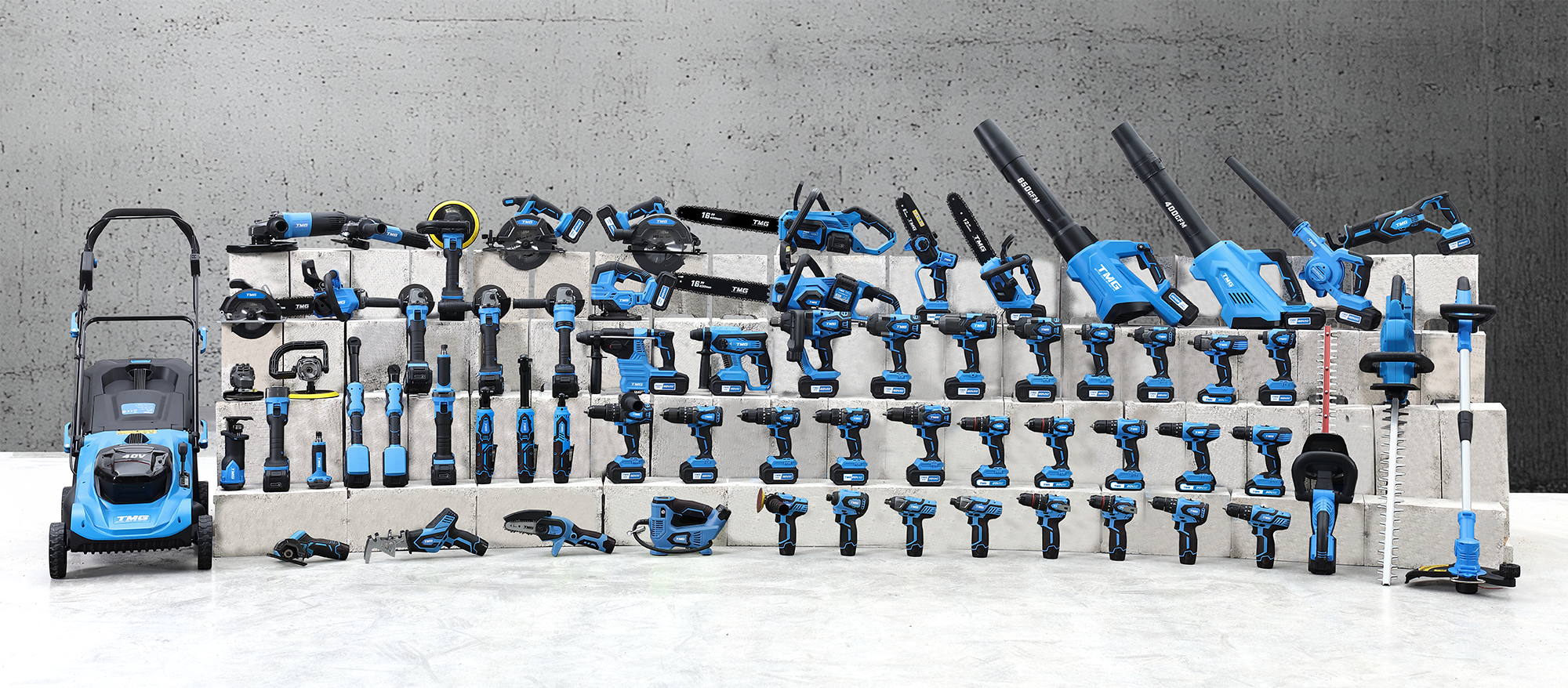
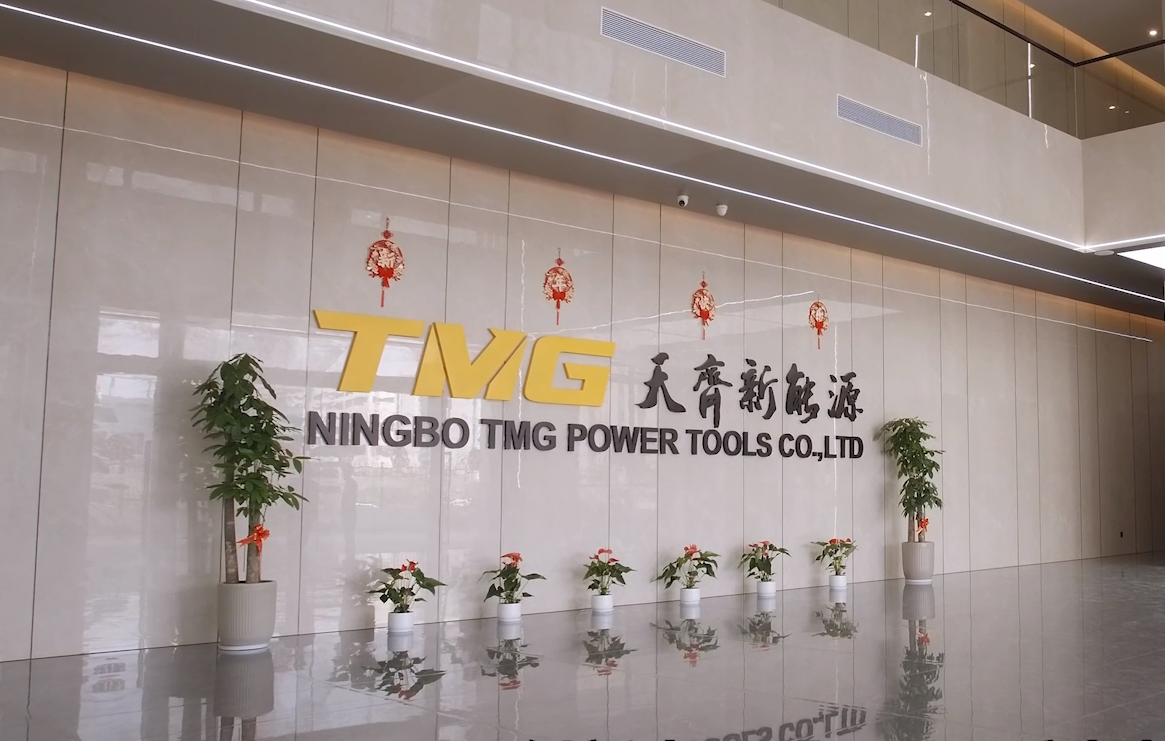
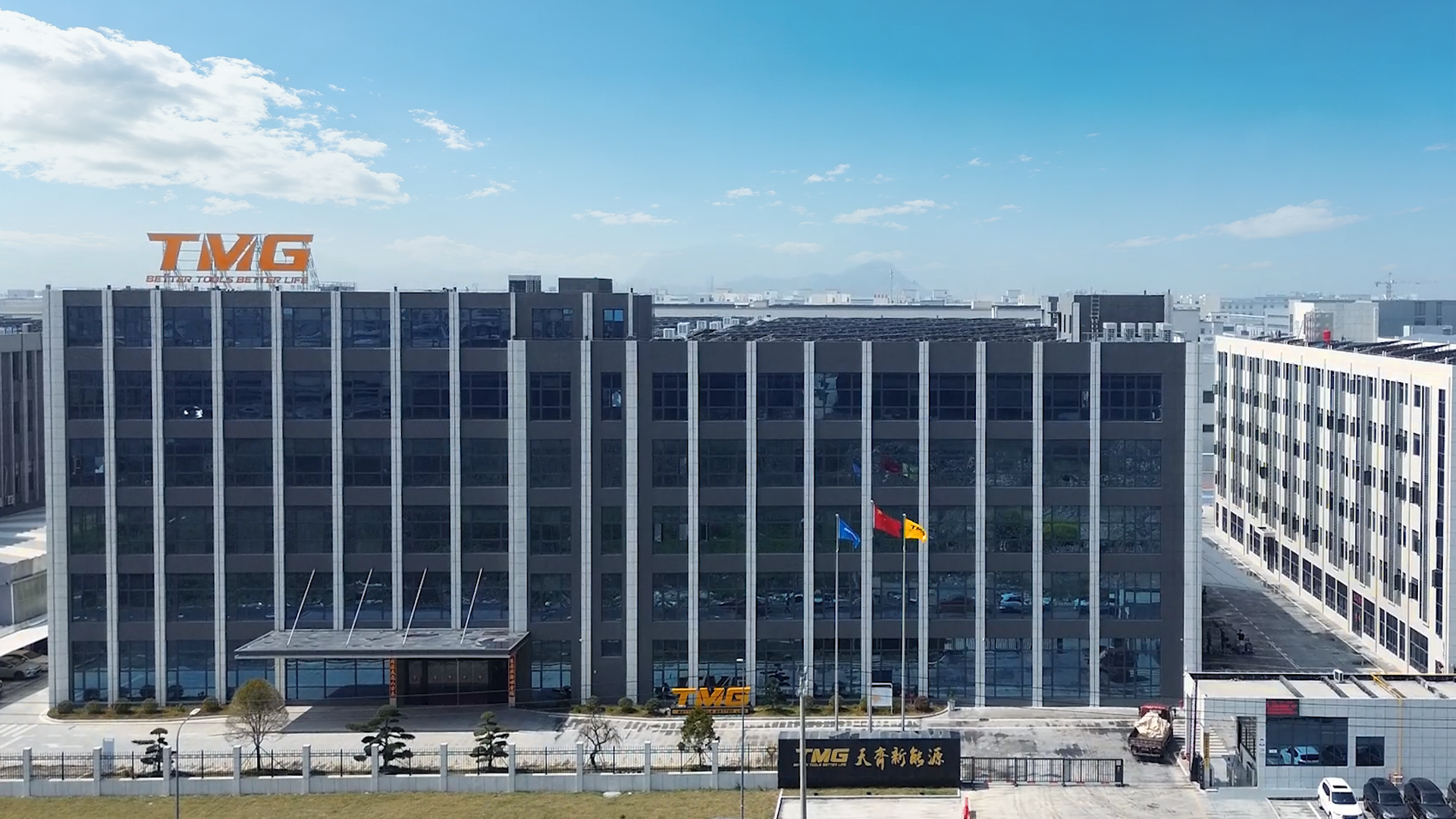
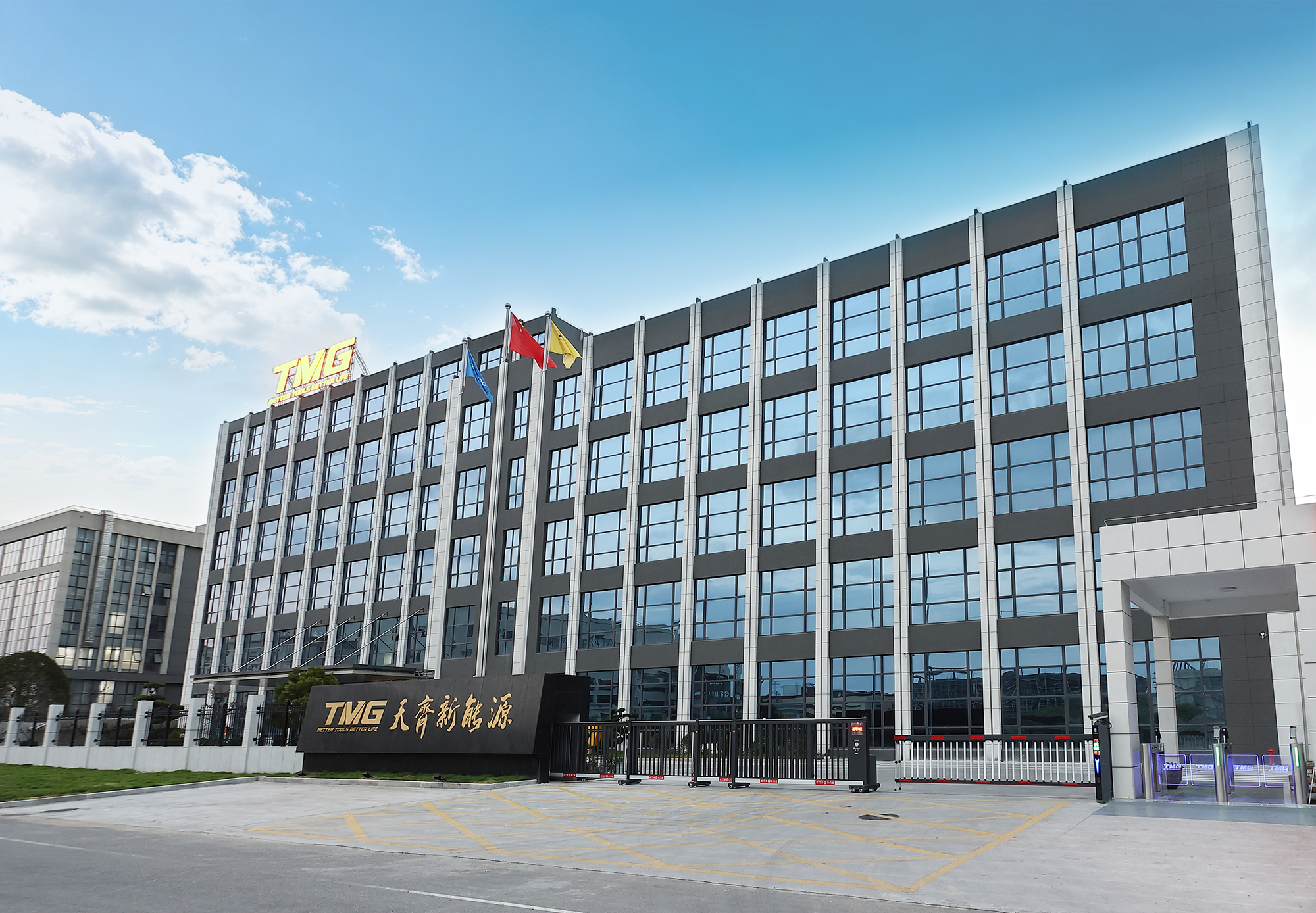
The reference tool for this article is built by Ningbo TMG Power Tools Co., Ltd., a Chinese manufacturer of lithium-ion power tools and outdoor power equipment established in 2014. TMG runs R&D, precision molding, brushless motor production, intelligent battery pack assembly and quality testing across a 58,000 m² facility with 210 employees and an 18-engineer R&D team, and exports about 90% of output to South America, Eastern Europe and North America.
The AG3125S sits in the 115/125 mm class. Its published specifications are the baseline for everything that follows:
| Specification | AG3125S (20V 5" brushless angle grinder) |
|---|---|
| Power source | 20V Li-ion battery |
| Motor | Brushless |
| No-load speed | 3,000–8,500 rpm |
| Max. wheel diameter | 125 / 115 mm |
| Max. wheel thickness | 6 mm |
| Bore diameter | 22.23 mm |
| Spindle thread | M14 / M16 |
| Housing material | Plastic housing with soft grip |
Regional note for buyers sourcing for North America: Bosch Professional states that the standard spindle size for large angle grinders in North America is 5/8"x11 with a 7/8" arbor. The AG3125S uses an M14/M16 spindle, so accessory and disc sourcing should be confirmed against the destination market before a program is locked.
The Ranking: Six Specs Ranked by Daily Performance Impact
Each position below states the feature, the reason for its rank, and the buyer profile that should weight it most heavily. Justifications are deliberately written as reasons, not adjectives.
Brushless Motor
Why it ranks first: it is the only item on the list that changes the tool's output rather than its behaviour. Every other feature — constant speed control, soft start, anti-restart, lockable switch, capacity indicator — modulates or protects a motor that either delivers sustained torque under load or does not. A brushless design also removes carbon brushes as a wear item, which matters for fleets that count service events rather than single purchases.
What it means commercially: brushless motors are a manufacturing capability, not a purchased sticker. TMG produces brushless motors in-house, which is the difference between specifying a motor and reselling one. For a private-label program, that is the point at which a buyer can discuss a motor specification rather than accept a catalogue item.
Who should weight it highest: anyone buying for sustained cutting or grinding, and any distributor whose returns are driven by motor failures rather than misuse. On the AG3125S, the brushless motor pairs with a 3,000–8,500 rpm no-load range, which spans cut-off work at the top end and finishing or flap-disc work lower down.
Constant Speed Control
Why it ranks second: it is the feature an operator feels on every single cut. Constant speed control holds the set speed as load rises, so the disc keeps its rim speed when it enters the material instead of sagging. The practical consequences are consistent: a cut that finishes in one pass, less heat pushed into the workpiece (which matters on stainless), less glazing and premature wear on the disc, and less need for the operator to lean on the tool.
It ranks below the motor because good regulation cannot rescue an underpowered motor, and above soft start because the effect lasts for the whole cut rather than the first second of it. On a variable-speed tool, this is also what makes a low speed setting actually usable for finishing work.
Who should weight it highest: fabricators cutting stainless and thick mild steel, welding shops where discolouration means rework, and anyone whose operators habitually push the tool — the feature protects the consumable and the finish from that habit.
Soft Start
Why it ranks third: it changes the first second of every operation. Soft start ramps the motor up instead of applying full torque instantly, which removes the start-up kick that catches operators off guard and reduces the twist reaction at the moment of trigger pull — most noticeable with a depressed-centre grinding wheel or a large disc, and most valuable with less experienced operators.
It ranks below constant speed control because its effect is brief, and above anti-restart because it applies on every start rather than on an exceptional event. It is also one of the clearest dividing lines between entry-level 20V tools and professional builds: soft start is a deliberate electronics decision, not a side effect of voltage.
Who should weight it highest: sites with mixed-experience crews, rental fleets, and distributors whose end users are general contractors rather than dedicated metalworkers.
Anti-Restart Protection
Why it ranks fourth: its value is insurance rather than throughput. Anti-restart prevents the tool from starting again by itself after a power interruption — a battery removed and reinserted, a protection trip, or a dropped tool with the switch still engaged. The tool will only run when the switch is deliberately re-engaged.
It ranks lower than soft start because the event it guards against is uncommon in a well-run workshop, and higher than the remaining items because the consequence is severe when it does happen. For buyers selling into operations with formal safety policies, this is often a specification question before it is a feature.
Who should weight it highest: contractors working under site safety requirements, employers training new operators, and rental businesses where the next user is unknown.
Lockable Switch
Why it ranks fifth: a lockable switch allows continuous running without holding the trigger, which reduces hand fatigue and improves control during long grinding passes. It ranks below the safety and speed-control features because it changes comfort and control over time rather than the outcome of a cut — but on a full shift of grinding, fatigue itself becomes a quality and safety variable.
Who should weight it highest: workshops doing long surface grinding or weld dressing, fabricators working in fixed positions where the tool is guided rather than carried, and buyers specifying for shift-length use rather than intermittent work.
Battery Capacity Indicator
Why it ranks last: it has no effect on performance — but it removes one of the most common avoidable stoppages. A capacity indicator lets the operator see remaining charge and plan a pack change between cuts rather than in the middle of one, and it gives fleet and rental managers a way to check pack condition without test equipment.
It ranks last because it is a management feature, not a working feature. It still earns a place on the list because a stalled disc mid-cut costs more time than most of the features above it cost money.
Who should weight it highest: multi-tool sites sharing a small number of packs, rental and fleet operators, and distributors supporting end users who work without spare packs on hand.
Two Supporting Features Outside the Six
The tool-free adjustable protective hood and the ergonomic soft grip both belong on a professional tool, but they sit outside the ranked six for a specific reason: they are assessed in the hand and in use, not in a specification comparison.
- Tool-free adjustable protective hood. A guard that repositions without a wrench makes it realistic to keep the guard set correctly as the wheel wears or as the task changes from cut-off to grinding. Guards that need a tool tend to be set once and left — so the practical benefit of a tool-free design is that the correct guard position actually gets used.
- Ergonomic soft grip. Grip design affects how much vibration and pressure reaches the operator's hands over a shift. It cannot be verified from a table, which is why it is a specification to confirm in a hands-on evaluation rather than a line item to rank.
For a buyer, the correct treatment is simple: rank the six numbered features in the comparison table, then confirm the hood and grip during physical evaluation before approving a program.
How to Apply This Ranking, Step by Step
The ranking is only useful if it is applied to a real application. Use the following sequence when specifying a 20V brushless cordless angle grinder or building a private-label program around one.
- Define the dominant operation. Cutting, grinding, or finishing. If 70% or more of the working hours fall into one category, weight the corresponding features first: cutting favours motor and constant speed control, grinding favours soft start and lockable switch, finishing favours variable speed range and grip.
- Check the motor and speed range against the material. Confirm the no-load speed range covers the highest-demand task. The AG3125S range of 3,000–8,500 rpm covers cut-off work at the top of the range and controlled finishing lower down.
- Confirm the control package. Constant speed control and soft start should both be present on a professional 20V build. If one is missing, that is a specification gap, not a preference.
- Match safety features to the buyer's operating environment. Anti-restart protection and a lockable switch should be checked against the site policy the tool will be used under, not against a generic feature list.
- Check consumable and accessory compatibility. Verify wheel diameter (125/115 mm), max wheel thickness (6 mm), bore (22.23 mm) and spindle thread (M14/M16) against the discs and accessories available in the destination market.
- Confirm the battery and charging plan. Decide whether the tool joins an existing pack platform or brings its own, and whether a capacity indicator is needed for the way packs will be managed on site.
- Validate the supply side before committing. On an OEM or ODM program, confirm MOQ, lead time, quality-control method and acceptance criteria in writing — these determine whether the ranked features survive into mass production.
Use Cases: Where the Ranking Changes
Metal fabrication and cut-off work. Motor and constant speed control dominate. A cut that stalls halfway through flat bar or box section costs more than any control feature saves. Soft start is a secondary benefit here.
Welding and weld dressing. Soft start and lockable switch move up the list, because the tool is started and stopped constantly and then run for long passes. Constant speed control stays relevant to avoid heat build-up that distorts thin material.
Stainless and finishing work. Constant speed control and a usable low-speed setting matter more than anything above them, with grip comfort close behind. Heat and swirl marks are the failure mode, not cutting speed.
Site work with mixed-experience crews. Anti-restart and soft start move up. Both reduce the consequence of an operator error rather than the effort of the task.
Rental fleets and shared tool pools. Battery capacity indicator and anti-restart carry unusual weight, because the operator changes and the pack history is unknown.
Distributor private-label programs. All six ranked features become specification commitments, and the supply questions take over: customization scope, MOQ, lead time and quality control. TMG provides OEM and ODM production, with customization covering color, logo, packaging and new designs, plus custom carton and private-label packaging support and retail kit design for private-label brands.
Comparison Table: The Six Features at a Glance
| Rank | Feature | AG3125S | Primary effect | Weight highest if you… |
|---|---|---|---|---|
| 1 | Brushless motor | Equipped | Output, efficiency, service life | Run sustained cutting or grinding |
| 2 | Constant speed control | Equipped | Speed held under load; cut quality and disc life | Cut stainless, thick steel, or finish to a standard |
| 3 | Soft start | Equipped | Controlled start-up, reduced start-up reaction | Employ mixed-experience operators |
| 4 | Anti-restart | Equipped | Prevents unexpected restart after power interruption | Work under site safety requirements |
| 5 | Lockable switch | Equipped | Continuous running, reduced hand fatigue | Run long grinding passes |
| 6 | Battery capacity indicator | Equipped | Charge visibility, fewer mid-task stoppages | Share packs across a crew or fleet |
| Supporting | Tool-free adjustable protective hood | Equipped | Correct guard position without tools | Change tasks or wheels frequently |
| Supporting | Ergonomic soft grip | Equipped | Vibration and fatigue over a shift | Use the tool for full shifts |
The table is a specification aid, not a performance measurement. Where a competitor publishes a comparable feature set, the correct approach is to compare feature by feature against the application, not to rank brands on a single line.
FAQ
Which certifications and quality controls should a buyer verify on a cordless angle grinder supplier?
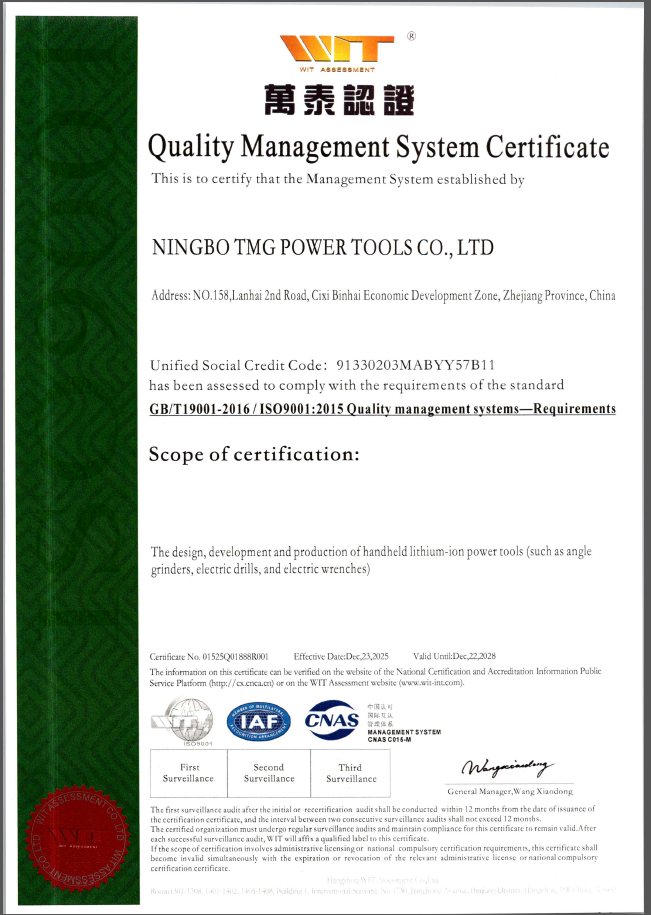
TMG's compliance documentation includes ISO 9001:2015 and ISO 14001:2015 certification recorded under certificate number 15/25E01889R00 through WIT, and a BSCI audit result numbered 156-065164-000 under the amfori Social Audit framework with EU scope. Production quality control uses AQL testing, and pre-shipment testing is the stated acceptance criterion. Because certificate validity is date-bound, buyers should request a current copy and confirm the validity period before approving a program.
How do I identify Chinese OEM cordless angle grinder manufacturers that can customize a brushless motor model?
Look for three things in sequence: in-house brushless motor production rather than assembly from purchased motors, an R&D team that can discuss motor and electronics specification, and a stated OEM/ODM scope that includes tool-level changes, not only labels. TMG operates brushless motor production and intelligent battery pack assembly in-house, works with an 18-engineer R&D team with lithium DC power tool experience, and provides both OEM and ODM production services, with customization covering color, logo, packaging and new designs. The AG3125S — 20V, brushless, 3,000–8,500 rpm no-load speed, 125/115 mm wheel capacity, M14/M16 spindle — is the reference platform for that discussion.
What are the minimum order quantity and payment terms for a private-label program?
TMG's stated purchasing terms are an MOQ of 500 pcs, delivery terms FOB NINGBO, and payment terms of TT 30% deposit with the balance against a copy of the bill of lading. Monthly capacity is stated at 600,000 units, against an annual output of 6,600,000 units.
How is a new model validated before mass production and shipment?
Quality control is carried out by AQL test, and pre-shipment test is the acceptance criterion applied before shipment. Customization requests — including color, logo, packaging and new designs — are handled through the OEM/ODM process, so the specification agreed at that stage becomes the reference for both the AQL test and the pre-shipment check.
What lead time should a distributor plan around, and what happens after delivery?
Lead time is stated at 45–55 days. After-sales service includes remote support and spare parts support for quality issues, with remote technical support available after delivery and spare parts supply provided for ongoing orders and long-term supply programs. To start a specification or quotation discussion on the AG3125S or a customized brushless angle grinder, contact TMG at sales@tmgtools.com or +86 18658419921 with the wheel size, target market and expected volume.
Conclusion: Use the Ranking, Then Verify the Build
Six features carry most of the daily performance on a 20V brushless cordless angle grinder. The brushless motor decides what the tool can deliver; constant speed control decides whether that delivery holds under load; soft start, anti-restart and a lockable switch decide how safely and comfortably the tool is operated; and the battery capacity indicator decides how often a shift is interrupted. The tool-free adjustable protective hood and ergonomic soft grip complete the picture, but they belong in a hands-on evaluation rather than a specification table.
Read the order as a starting position, not a fixed verdict. A crew cutting rebar all day and a crew dressing welds on stainless will not weight these six the same way, and the right answer for a distributor's catalogue is the one that matches the dominant application of the buyers it serves.
On the supply side, a ranked feature list is only worth the specification discipline behind it. That means in-house brushless motor production, an R&D team that can hold a motor specification, AQL and pre-shipment testing as acceptance criteria, and a stated lead time a distributor can plan around — the same facts a buyer should ask for before approving any tool program.
Specify the AG3125S for your next program
Ningbo TMG Power Tools Co., Ltd. — No. 158, Lanhai 2nd Road, Cixi Binhai Economic Development Zone, Ningbo, Zhejiang, China 315300. MOQ 500 pcs, FOB NINGBO, lead time 45–55 days, OEM/ODM customization for color, logo, packaging and new designs.
Send your wheel size, target market and volume for a quotation and a feature checklist matched to your application: sales@tmgtools.com · +86 18658419921 · www.tmgtools.com
Have Questions or Need More Details?
Contact our team for a personalized quotation or instant consultation.
Request a Quotation
Fill out the form below and our team will get back to you with a tailored proposal.
WhatsApp Direct Chat
Prefer to chat in real-time? Message us on WhatsApp for instant assistance & quick answers.
- Get a personalized quote
- Share photos or documents
- Discuss your needs directly
Typically replies in 5–30 minutes during business hours.