
Pre-Shipment Test vs ISO 9001:2015 for Cordless Angle Grinders
Short answer: the two checks cover different levels of the same quality question. An ISO 9001:2015 certificate is a system-level assessment of the manufacturer's quality management system — for the AG3125S cordless angle grinder that evidence is certificate 15/25E01889R00 issued by WIT. A pre-shipment test is a lot-level check on finished goods before they leave the factory, carried out under the supplier's acceptance inspection procedures. A buyer at decision stage needs both, plus a paper trail that ties each document to the exact model, production site and shipment.
Both documents usually arrive in the same email, both are PDFs, and both use words such as “certified” and “inspection”. That surface similarity is why they are so often treated as interchangeable. In practice they answer different questions, are issued by different parties, refresh on different cycles, and fail in different ways.
This comparison sets out what each check verifies, where each one stops, how to read the certificate that covers the AG3125S, and what to request at quotation, sample approval and order stage so the acceptance criteria are enforceable before the container is booked.

What an ISO 9001:2015 certificate verifies
ISO 9001:2015 is a quality management system standard. A certificate is issued after a certification body audits the manufacturer's management system against the standard's requirements. For the AG3125S cordless angle grinder, the certificate is 15/25E01889R00, issued by WIT, and the model is manufactured under that certified system.
For a buyer, that is evidence about process rather than about product. It indicates that the manufacturer maintains documented and audited arrangements for the areas the standard addresses: control of production, control of externally provided processes and materials, calibration and monitoring resources, identification and traceability, control of nonconforming outputs, corrective action, internal audit and management review. Because those arrangements are audited and reviewed periodically, the certificate is a reasonable basis for qualifying a supplier and for expecting process discipline to continue between orders.
Its limits matter just as much. The certificate does not certify an individual grinder, does not state a defect rate, and does not define performance or safety limits for a cordless angle grinder. Product requirements come from the applicable product standards and from the regulations of the market the tool is sold into — a separate body of evidence from the quality management system.
What a pre-shipment test verifies
A pre-shipment test is performed on finished goods before shipment, normally on a sample drawn from the completed lot. TMG's acceptance inspection includes pre-shipment test procedures, and the result determines whether the lot is released, held or reworked.
Done properly, the test verifies the condition of that lot against agreed criteria at a defined moment: function, workmanship, the safety-related features you have specified, label and rating-plate content, accessories, packaging and marking, plus lot identification so the report can be matched to the shipment.
It does not audit the management system, does not prove that future lots will behave the same way, and — because it is sample-based — does not confirm every unit in the carton unless full screening is specifically agreed. A pass therefore means “this lot met these criteria under this sampling plan”, which is a narrower and more useful statement than “the factory is certified”.
Why the two checks are so easily confused
Most of the confusion comes from three specific mistakes, and each one shifts risk onto the buyer.
- Treating the certificate as lot release. The certificate says the system was assessed; it says nothing about the units packed for your order. A container can ship under a valid certificate and still contain a labelling error, a guard-fit problem or a battery-interface issue.
- Treating a test report as supplier qualification. One passing inspection of one lot does not show that the factory controls its processes over time, controls its sub-suppliers, or maintains calibration and traceability.
- Accepting either document without matching identity. A certificate whose scope does not cover the model, or a report that does not identify the lot, the date or the sampled quantity, is difficult to rely on later.
After arrival, a claim is far harder to win if the acceptance criteria were never written into the order. The documents are only as strong as the terms they are attached to.
Where each check sits in the evidence chain
Power tool sourcing normally layers three kinds of evidence, and the two documents in this comparison belong to the first and the third.
- Supplier qualification — legal entity, production site, quality management system certificate, audit records and capacity. The ISO 9001:2015 certificate sits here.
- Product qualification — specification, approved sample, and the product compliance evidence required in the target market.
- Lot acceptance — pre-shipment test, packing verification and shipping documents. The pre-shipment test sits here.
Manufacturer product documentation is a further layer, useful for comparison rather than for release. Bosch Professional, for example, defines cordless grinders by their rechargeable battery power source, and Ingersoll Rand publishes a specification table for its impact wrench series covering voltage, drive size, torque, blows per minute, free speed and weight. That is product-level information a buyer can compare across suppliers; it says nothing about the lot inside the container.
Reading certificate 15/25E01889R00 correctly
Six checks turn a certificate copy into usable evidence. Match all six before filing it.
- Holder and site. The certificate holder's legal name should be the entity you contract with, and the certified site should be the site that will produce your order. A certificate held by a trading company does not automatically cover the factory that makes the goods.
- Scope. Read the scope statement and confirm that the products and processes you are buying fall inside it. If the wording is broad, ask the supplier to explain how the model sits within that scope.
- Number and issuer. Record both — 15/25E01889R00, issued by WIT — so a later copy can be matched against the copy you qualified with.
- Validity and status. Confirm the certificate is current and ask about surveillance audit status. An expired certificate is a historical record, not current evidence.
- Change notification. Ask to be informed of scope changes, site changes, suspension or withdrawal, and of any change in where your model is produced.
- Traceability into the order. Quote the certificate number in your supplier file and quality agreement, so the document set is tied to the purchase order rather than to a folder.
Where a buyer's own compliance process requires it, the certification body's status can be confirmed with the body itself or through the accreditation registry that applies in its jurisdiction.
Designing a pre-shipment test that actually protects the order
The test is only as strong as its written definition. Seven points should be settled before the first inspection takes place.
- Lot definition. Decide what counts as one lot — per model, per purchase-order line, or per production run — because the sample is drawn from that lot and the report is only valid for it.
- Sampling plan. Agree sample size, how units are drawn, and the acceptance number. A documented plan, for example one based on ISO 2859-1, is far easier to enforce than “we check a few at the end”.
- Test items. A typical scope for a cordless angle grinder covers start and stop, speed control, switch action, spindle and guard fitment, battery and charger interface, workmanship, rating plate and label content, accessories and packaging. The final list should follow the specification and the sample you approved.
- Method. State who performs each check, with which battery pack, and what counts as a failure, so results are repeatable between inspections and between inspectors.
- Records. Require a report showing lot ID, sample size, defects by category, photographs and a clear disposition.
- Failure handling. Agree in advance what follows a failed inspection: rework, full rescreen, reinspection, and who carries the cost and the delay.
- Independence. For first orders or higher-risk programmes, agree a third-party inspection or buyer attendance, and name the standard the inspector will work to.
Pre-shipment test vs ISO 9001:2015: side-by-side
The table compares the two checks on the questions buyers actually ask during evaluation.
| Buyer question | ISO 9001:2015 certificate | Pre-shipment test |
|---|---|---|
| What level does it cover? | The quality management system at the certified site | The finished lot offered for shipment |
| What does it verify? | That the management system has been assessed against ISO 9001:2015 | That a sample from the lot met the agreed acceptance criteria at inspection |
| Who issues the evidence? | A certification body — for the AG3125S, certificate 15/25E01889R00 issued by WIT | The manufacturer's acceptance inspection function, or an agreed third party |
| Model link | The AG3125S is manufactured under the certified system | The specific lot or purchase-order line, identified by lot ID and date |
| What it cannot prove | Individual unit quality or the condition of a particular shipment | That process control is stable across future lots |
| Refresh cycle | Certification, surveillance and recertification cycles | Every lot or shipment |
| Typical weakness in a supplier file | Expired certificate, scope mismatch, or holder is not the producing site | No written sampling plan, no defect disposition, no lot identification |
| When to request it | Supplier qualification and quotation | Before shipment release, on every order |
| If it is missing | Qualify another source or request a documented alternative | Hold the shipment and agree rescreen or reinspection |
What to request at quotation and order stages
Sequence matters: system evidence belongs to qualification, lot evidence belongs to release, and the order document is what connects them.
- At RFQ. Request the certificate copy with number, issuer, scope statement and validity dates, plus written confirmation of which site will produce your model. Ask at the same time for a recent pre-shipment test report so you can see the format and level of detail before committing.
- At sample approval. Approve the sample against the specification and keep it as the reference unit, recording its configuration — battery platform, wheel size, accessories and packaging. Sample approval confirms a design point; it does not authorise variation in later lots.
- In the purchase order. Write the acceptance inspection into the order: sampling plan, test items, acceptance criteria, failure handling, report format and the point at which shipment is released. This is the step that turns two PDFs into an enforceable term.
- Before production. Confirm components, labels and artwork, confirm the producing site still matches the certificate, and agree the inspection date against the shipment booking.
- During production. For new models or large volumes, request in-process evidence such as first-article checks or in-line test records, so a systematic problem is caught before the lot is finished.
- At pre-shipment. Inspect before the container is booked, receive the report, and release or hold on the record. A report that arrives after departure is a description, not a control.
- With the shipping documents. Keep certificate copy, inspection report, packing list and label artwork in one file per order. On repeat orders, comparing the new file with the previous one is usually the fastest way to spot drift.
Three order situations where the split matters
First order of the AG3125S
The certificate qualifies the supplier and confirms that the model is produced under a certified system. The pre-shipment test decides whether the lot in front of you ships. Neither document can do the other's job, and a first order is the point where both should be requested together rather than sequentially.
Repeat order of an approved model
Here the system evidence is mostly a validity and change check: is the certificate still current, has the scope or site changed, has anything been reported that affects the model? Decision weight shifts to the pre-shipment test, and the most useful comparison is between the new report and the previous one for the same model.
Mixed container or private-label programme
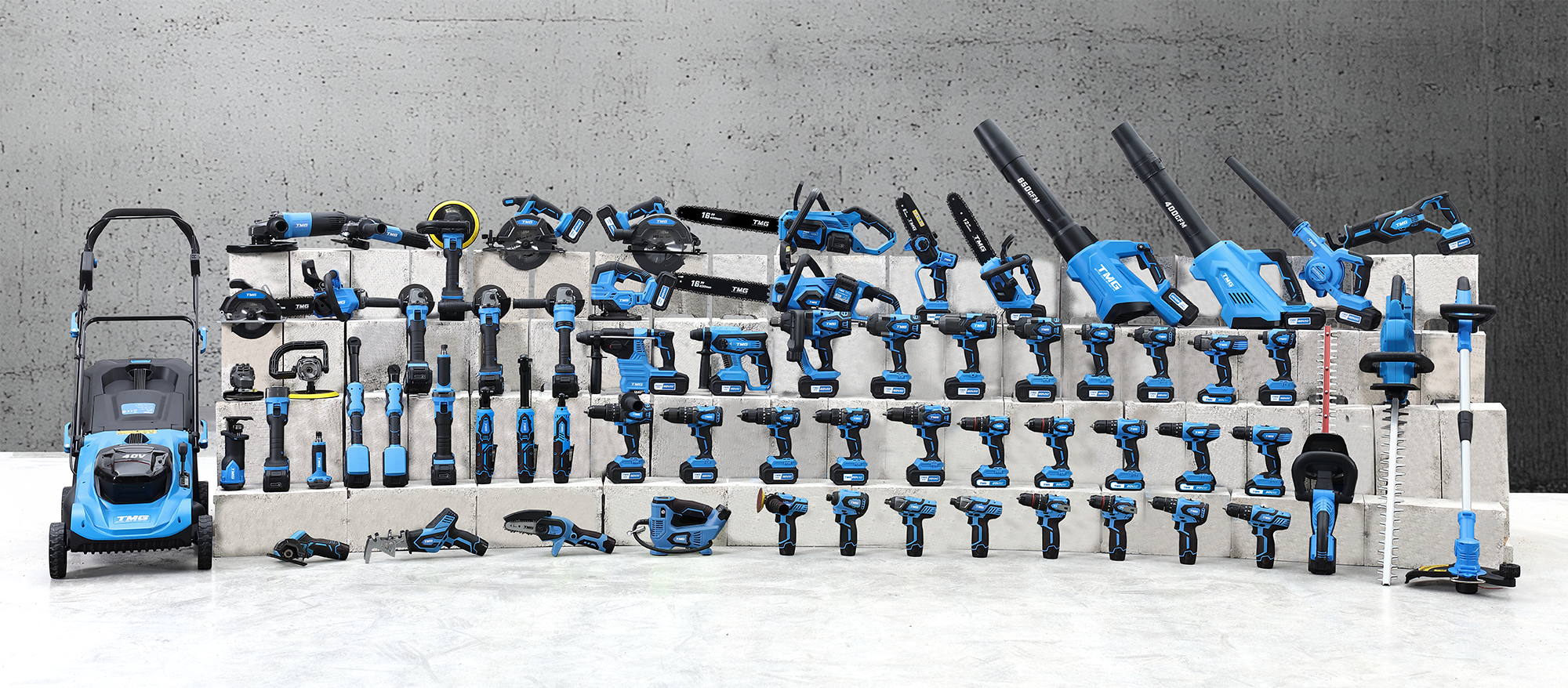
A container that mixes cordless angle grinders with a brushless impact wrench, a cordless impact wrench kit or other items from the same programme needs a sampling plan per model, not per container. Private-label orders add artwork, label and packaging checks, while the ISO 9001:2015 certificate remains an entity-level document and does not extend to artwork approval.
Limits, cost and claims to handle carefully
Neither document produces certainty, and buyers should be explicit about what each one can and cannot deliver.
A pre-shipment test is sample-based, so it detects lot-level nonconformity with the confidence the sampling plan provides — not with certainty. Destructive checks consume units, which is one reason the sampling plan has to be agreed rather than assumed. The ISO 9001:2015 certificate, in turn, is not a product standard: it does not set grinder performance or safety limits, and market-specific product compliance evidence may still be required alongside it.
Cost follows the same logic. Inspection effort, sample units and any third-party fee all add cost to an order, and the purchase order should state who bears it. The relevant comparison is not “inspection versus no inspection” but inspection cost against the cost of a rejected container, a return or a missed launch date. On product positioning, TMG's own comparison states that its tools are offered at more than 15% lower cost than Ryobi tools with similar quality and performance. That is a company claim about commercial positioning, not an inspection result, and it should not be used in place of the batch evidence described above.
Frequently asked questions
Is ISO 9001:2015 certification enough to guarantee cordless angle grinder quality?
No. The certificate shows that the manufacturer's quality management system has been assessed against ISO 9001:2015; it does not certify individual grinders or the condition of a shipment. It is strongest as supplier-qualification evidence and should be paired with a pre-shipment test under the order's acceptance inspection to cover the lot actually being shipped.
What should I check on a supplier's ISO 9001:2015 certificate?
Check the holder's legal name against the entity you contract with, the certified site against the site that will produce your order, the scope statement against what you are buying, and the validity and surveillance status. Record the number and issuer — for the AG3125S that is 15/25E01889R00 issued by WIT — and quote it in your quality agreement so later copies can be matched.
China versus Taiwan cordless angle grinder manufacturers for machined gear housings
Country of origin does not establish machining capability for gear housings, and a quality management certificate does not either. Compare the two sources on the same four points: who machines the housing — the contracted site or a subcontractor, and how that subcontractor is controlled; which in-process characteristics are recorded, such as bore diameter, thread condition and seat concentricity; what the pre-shipment test covers for housing-related defects, including bearing-seat fit and gear noise; and how a change of machining source or programme is notified. Suppliers in both China and Taiwan can present a similar document set, and the difference that matters is which of those four answers is documented. TMG's integrated scope covers R&D, precision molding, brushless motor production, battery pack assembly and quality testing under one roof; if machined gear housings are critical to your application, ask specifically where that machining takes place and request the corresponding records rather than assuming it from the country label.
Does a pre-shipment test add cost to a cordless angle grinder order?
Yes, in inspection effort, sampled units and any third-party fee, and the purchase order should state who bears each element. The decision is usually framed as that cost against the cost of a rejected lot, a return or a delayed launch. Agreeing the sampling plan and acceptance criteria in advance also limits rework and reinspection charges, because the pass/fail line is fixed before anything is produced.
Should the approved sample be the reference for pre-shipment inspection?
Yes. A signed, dated reference sample kept alongside the purchase order gives the inspector a physical baseline for workmanship, colour, labelling and accessory content, and it removes ambiguity when a marginal unit appears. Sample approval confirms a design point only; it does not authorise variation in later lots, so the report should still record defects against the agreed criteria rather than against the sample alone.
How do I keep pre-shipment testing from delaying shipment?
Fix the inspection date against the shipment booking when the order is placed, agree the report turnaround and the failure-handling route in the same document, and leave buffer for a rescreen if the first inspection fails. Where production runs late, inspect on completion rather than after booking, so the release decision still happens before the container leaves. Buyers who want to see the current document set — certificate copy, acceptance inspection procedure and a sample inspection report — can request it from the TMG sales team before the order stage.
Conclusion
For a cordless angle grinder order, the ISO 9001:2015 certificate and the pre-shipment test are complementary, not competing. The certificate — 15/25E01889R00, issued by WIT, covering AG3125S production — answers whether the manufacturer's quality system has been assessed. The pre-shipment test, run under the supplier's acceptance inspection procedures, answers whether this particular lot met the criteria you agreed. Buyers who request system evidence at quotation, write the inspection into the order, and keep the report with the shipping documents get a decision trail that stays usable long after the container arrives.
TMG Power Tools (www.tmgtools.com) manufactures cordless power tools at its 58,000 m² facility in Cixi, Ningbo, with 210 employees, 18 R&D engineers and an annual output of 6,600,000 units. Document requests for the AG3125S and other models can be sent to Lily Zhang at sales@tmgtools.com or via WhatsApp on +86 18658419921.
Have Questions or Need More Details?
Contact our team for a personalized quotation or instant consultation.
Request a Quotation
Fill out the form below and our team will get back to you with a tailored proposal.
WhatsApp Direct Chat
Prefer to chat in real-time? Message us on WhatsApp for instant assistance & quick answers.
- Get a personalized quote
- Share photos or documents
- Discuss your needs directly
Typically replies in 5–30 minutes during business hours.