
Top 5 Truck Crane Parts Worth Stocking for XCMG, SANY and Zoomlion Fleets
Top 5 Truck Crane Parts Worth Stocking for XCMG, SANY and Zoomlion Fleets
A 20–150 ton truck crane fleet rarely loses money on the parts sitting on the shelf. It loses money on the part that is missing when a machine stops mid-project. This ranking covers five replacement part groups that deserve warehouse space on a mixed XCMG, SANY and Zoomlion fleet, ordered by verified interchangeability, on-site serviceability, material durability, and how well each group covers the full 20–150 ton working range.
Qingdao Top Run International Trade Co., Ltd is a Qingdao-based supplier of China-brand construction machinery spare parts, founded in 2004, operating a 2,000 m² warehouse and exporting truck crane parts for XCMG, SANY and Zoomlion equipment to Africa, Southeast Asia, the Middle East, Latin America and Russia. The ranking below is built from the part groups this supplier handles, the materials they are made from, and the servicing behaviour fleet managers actually ask about.
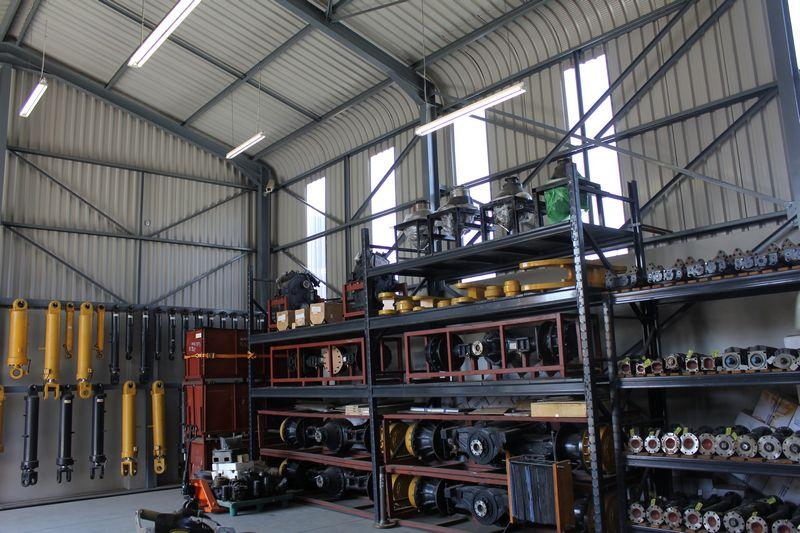 Stocked truck crane spare parts ready for consolidated shipment to XCMG, SANY and Zoomlion fleet customers.
Problem Definition: Why Stocking Decisions Go Wrong on Mixed Brand Fleets
The stocking problem on a truck crane fleet is not a lack of parts availability. It is a mismatch between what sits in the warehouse and what actually fails. Cranes mostly work outdoors under harsh conditions, enduring extreme temperatures, dust, rain erosion, frequent heavy loads, luffing, slewing and start-stop hoisting. Core parts such as hydraulic components, outrigger accessories, steel wire ropes, pulleys and seals operate under long-term alternating loads and are the first to suffer wear, leakage and fatigue damage.
Three failure modes drive most of the cost:
- Fit error. Dimensional accuracy matters on load-bearing and hydraulic assemblies. A part that is dimensionally close but not correct creates rework, repeat downtime and, in the worst case, a safety problem during lifting.
- Downtime without a replacement. When a machine is on a bridge, road or port project, the delay cost of waiting for an overseas shipment usually exceeds the value of the part itself.
- Unauthorised copies. Counterfeit parts carry no formal after-sales guarantee, which removes both the quality assurance and the technical support channel when something goes wrong.
For this ranking, “worth stocking” is judged on five criteria: verified interchangeability with XCMG, SANY and Zoomlion original equipment; whether the part can realistically be changed on site; the material class and its resistance to alternating heavy load; coverage across the 20–150 ton range; and finally the trade-off between capital tied up per unit and the consequence of that part failing.
Industry Background: Why the Aftermarket for These Three Brands Keeps Growing
The addressable market behind a stocking decision is large and geographically spread. Third-party research from Market Research Future estimated the global truck crane market at USD 9.34 billion in 2024, while a narrower truck-mounted crane segmentation published by Market Intelo put the figure at USD 5.8 billion — the gap illustrates how much depends on where the segment boundary is drawn, so fleet buyers should treat any single headline number as directional rather than exact.
China is the manufacturing base behind most of that fleet population. According to the Observatory of Economic Complexity, China's total export value for cranes reached USD 5.98 billion in 2024, representing 34.3% of global crane exports, with India the largest single destination at USD 709 million in the same year. On the brand side, Market Intelo reported an 8.2% global market share for XCMG Group in truck-mounted cranes as of 2024. SANY Group's international revenue reached USD 10.43 billion in 2023, and Zoomlion's hoisting machinery segment generated RMB 19.29 billion in 2023, according to the respective company annual reports.
The component layer behind these machines is equally substantial: Custom Market Insights valued the global industrial hydraulic equipment market at USD 37.5 billion in 2024, and truck crane hydraulics sit inside that category. On the regulatory side, EN 13000:2010+A1:2014 is the mandatory safety standard for mobile and truck cranes in the European Union, and ASME B30.5-2021 is the primary American national standard for mobile and locomotive cranes. Industry research on load moment indicator systems notes that LMI technology is increasingly tied to safety regulation aimed at preventing overloading and tipping.
Combine a growing export fleet with harsh duty cycles and tightening safety rules and the practical conclusion is straightforward: the parts that protect lifting safety and hydraulic function are the ones a fleet cannot afford to wait for. That is the logic behind the ranking below.
Detailed Solution: The Five Part Groups Worth a Stocking Slot, Ranked
The five groups below are ordered by stocking priority, not by absolute criticality. A group can be critical to machine safety and still rank lower as a stocking item if it is slow-moving and expensive to hold. Each entry states what the group contains, why it earns its rank, and where its limits are.
RANK 1 LMI Displays and Controllers: IC3600, IC4600 and HC4900
The first stocking slot belongs to the electronics tier of the load moment indication system: the IC3600 and IC4600 displays and the HC4900 LMI controller. These are the components that put load, radius and limit data in front of the operator. When a display or controller fails, the crane does not simply lose convenience — it loses the load information that governs safe lifting, which typically takes the machine out of productive service until the unit is replaced.
Two factors push this group to the top. First, electronics cannot be repaired in a site workshop the way a leaking seal can. Replacement is the only realistic fix, so a spare unit on the shelf translates directly into hours instead of weeks. Second, LMI systems are increasingly connected to safety regulation aimed at preventing overloading and tipping, which makes a dead display a compliance issue as well as an availability issue. For fleets in the EU and the US, the machine also operates under EN 13000 and ASME B30.5 expectations respectively, so keeping the LMI chain functional is not optional.
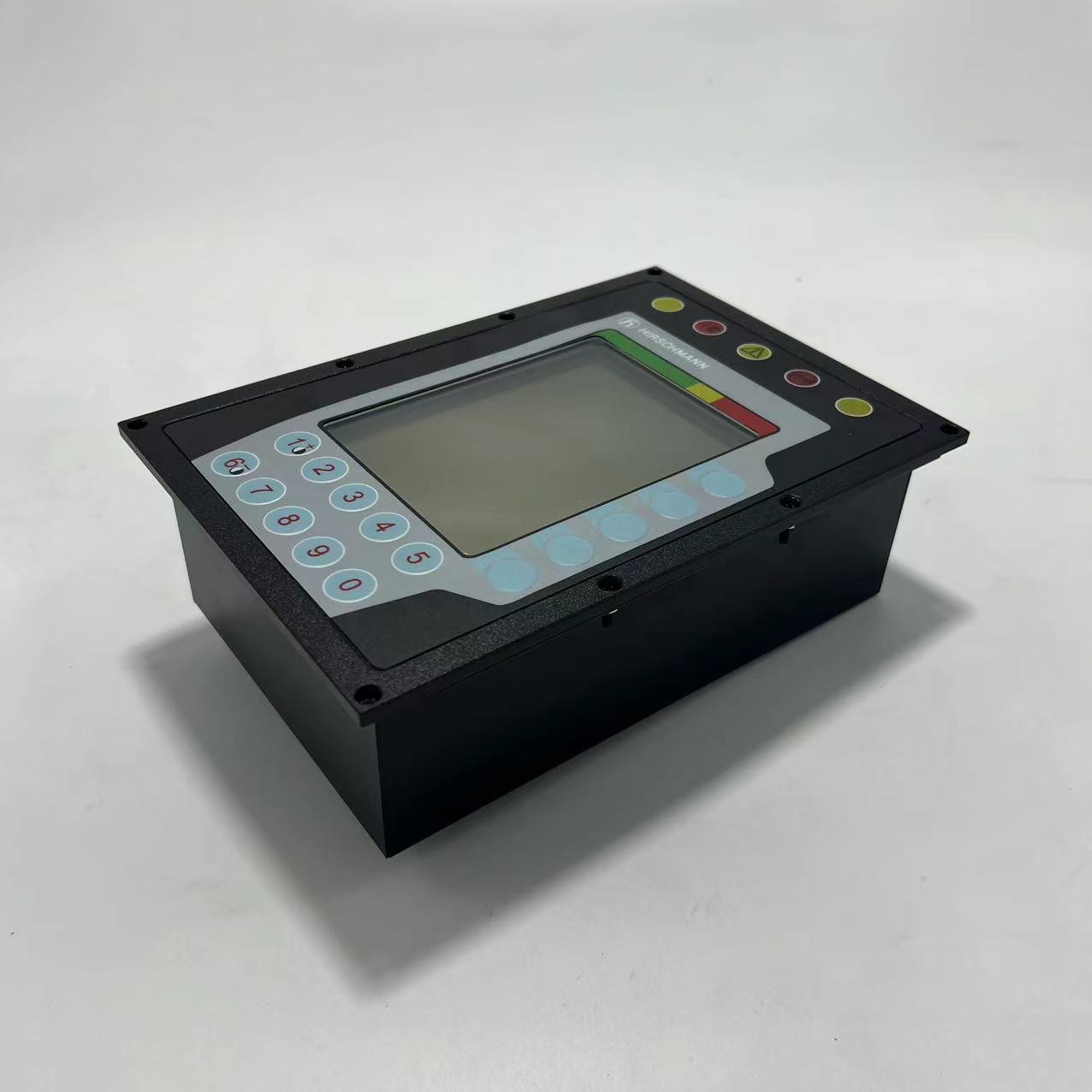 IC3600 display: part of the LMI electronics tier for 20–150 ton truck cranes, alongside the IC4600 display.
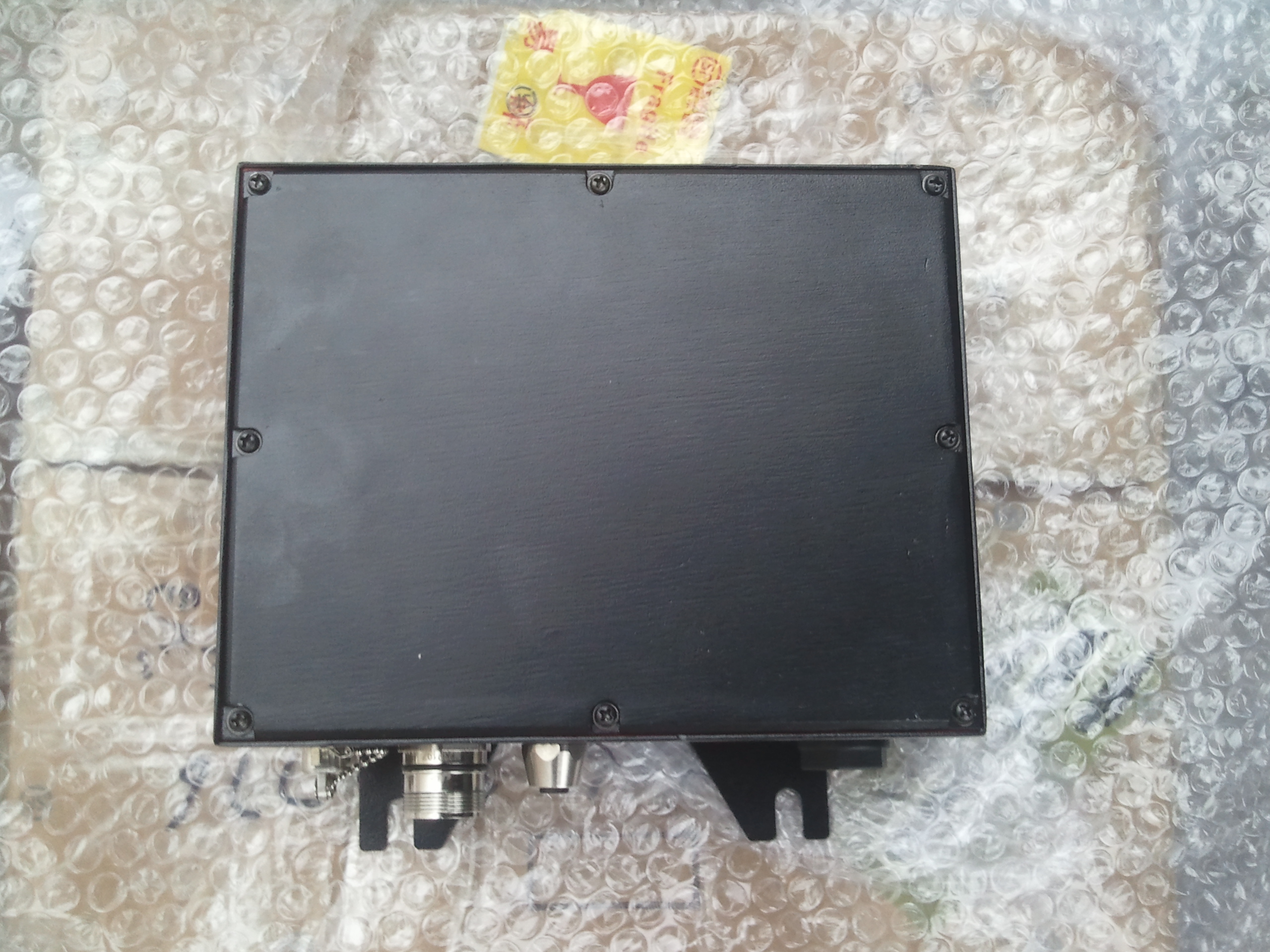 HC4900 LMI controller — replacement electronics for truck crane load moment indication.
RANK 2 Sensors and Steering Units: LWG208 and 1032300052
Rank 2 covers the small precision components that feed the control chain: the LWG208 length and angle sensor, and steering unit 1032300052. The LWG208 sits upstream of the display and controller in Rank 1 — if length or angle sensing drifts, the load data shown to the operator is wrong even when the display itself is healthy. Steering unit 1032300052 belongs to the chassis side, where steering response affects positioning accuracy and safe movement around a lifting site.
Sensors and steering units rank below the LMI displays only because they are cheaper to hold and slightly less likely to be the single point of failure. They rank above seals and valves because their failure mode is decisive: incorrect sensing data stops work immediately, and a replacement sensor is a small, low-volume item that nevertheless clears a machine from downtime. Both components are also sensitive to dimensional accuracy, which is exactly why they should be procured against verified original technical parameters rather than by visual similarity.
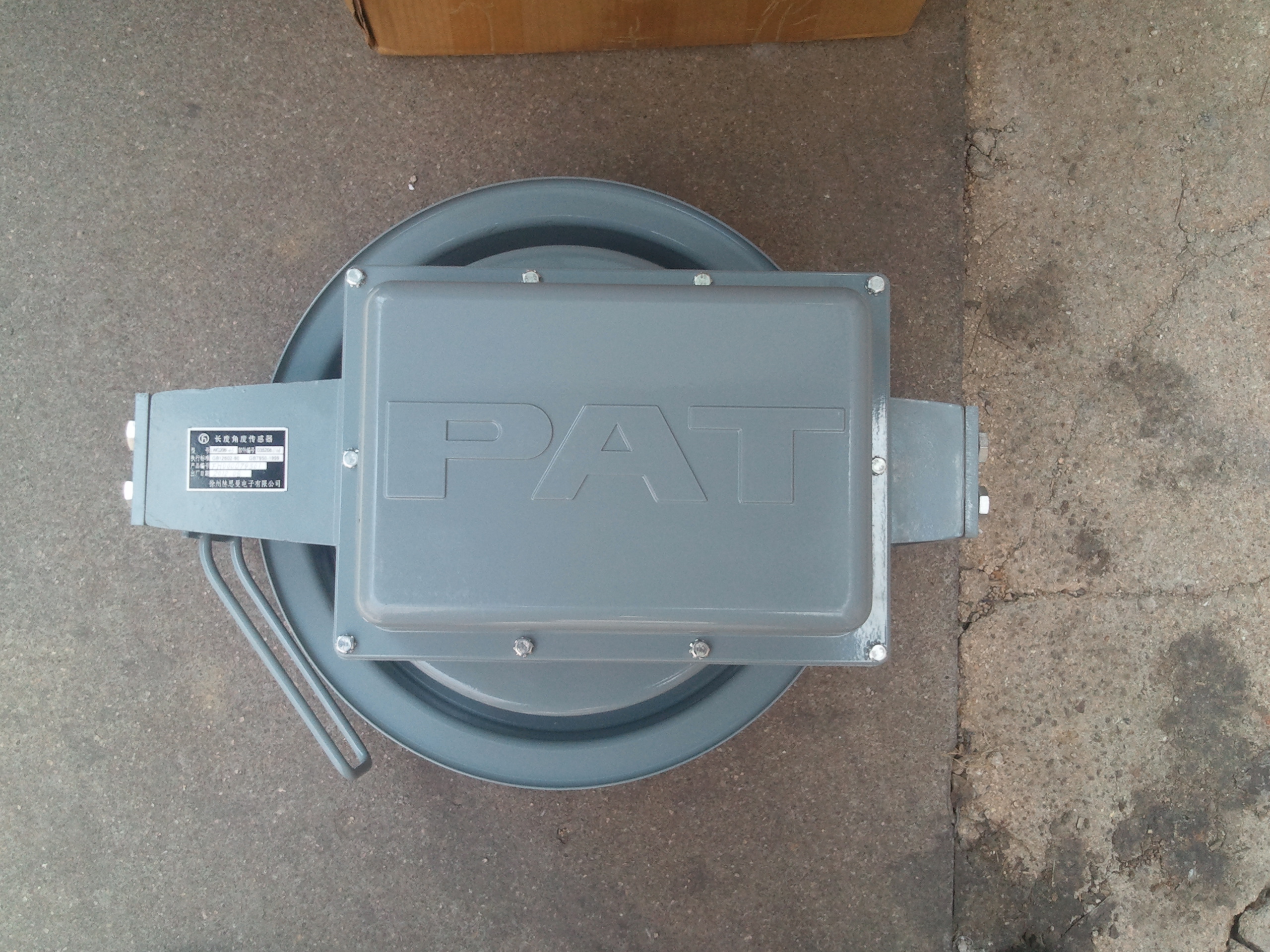 LWG208 length and angle sensor — boom length and angle input for truck crane LMI systems.
RANK 3 Hydraulic Seals and Buffer Components
Seals and buffer components are the highest-consumption group in this ranking and the easiest to justify on pure economics. Cylinders, hydraulic transmission, slewing, luffing and hoisting all depend on a stable sealing performance, and seals are among the first parts to degrade under long-term alternating load, producing external leakage, pressure loss and reduced lifting response.
In this catalogue, hydraulic seals and buffer components are produced from wear-resistant rubber and polyurethane, while rubber and plastic shock-absorbing parts use high-elasticity polymer materials to adapt to frequent vibration and impact working conditions. That material choice is the reason this tier is worth stocking deep: the parts fail gradually, so a fleet can plan the replacement rather than react to it, and the capital tied up per unit is low relative to the value of avoiding an oil loss and a stalled shift. The practical limit is that seal quality varies significantly between manufacturers, so purchasing against material specification — not price alone — is what protects the investment.
RANK 4 Pipe Fittings and Valve Bodies
Pipe fittings and valve bodies form the third tier: hydraulic valves, multiway valves and load control valves, along with the associated fittings. These parts are manufactured from precision cast steel and forged steel, giving high pressure resistance and corrosion resistance, which is exactly what the duty cycle demands — intermittent operation under periodic alternating load, often in dust, heat or coastal humidity.
They rank below seals because leaks and internal wear are usually progressive rather than instant, and slightly above load-bearing structure because a leaking or sticking valve degrades lifting function across the whole machine rather than one station. Typical stock quantities are moderate: a small number of the valve body types that repeat across a fleet, plus fitting sets that match the hydraulic lines most exposed to vibration and pressure spikes.
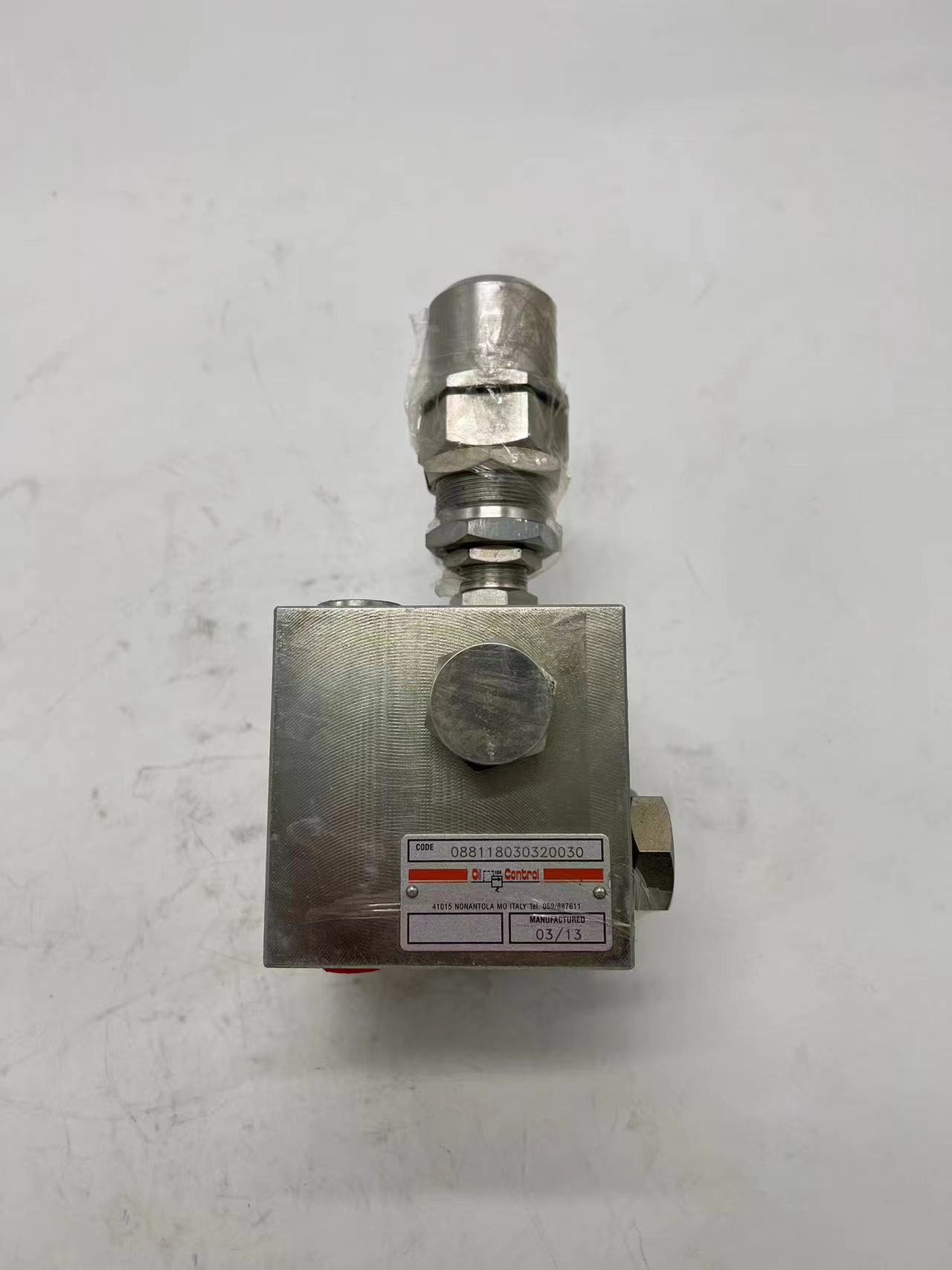 Hydraulic valve body — precision cast and forged steel construction for pressure and corrosion resistance.
RANK 5 Load-Bearing Pins, Boom Components and Pulley Blocks
The final group covers structural load path components: pins, boom components and pulley blocks, mainly made of high-strength alloy steel with high toughness and anti-fatigue performance. These parts carry the load and they are subject to strict industry specifications because of the heavy-load, high-risk nature of crane work — high strength, wear resistance, pressure resistance and fatigue resistance are all required, together with precise dimensional accuracy and good interchangeability.
They sit at Rank 5 for stocking purposes for two reasons that have nothing to do with their importance. First, capital per unit is high, so deep stock is inefficient. Second, they are far less interchangeable in practice than an oil seal: a boom component or pulley block must match the specific boom configuration and tonnage. The realistic approach is selective holding — the highest-wear pin and pulley sizes that repeat across the fleet’s most heavily used tonnage bands, purchased only against confirmed part numbers.
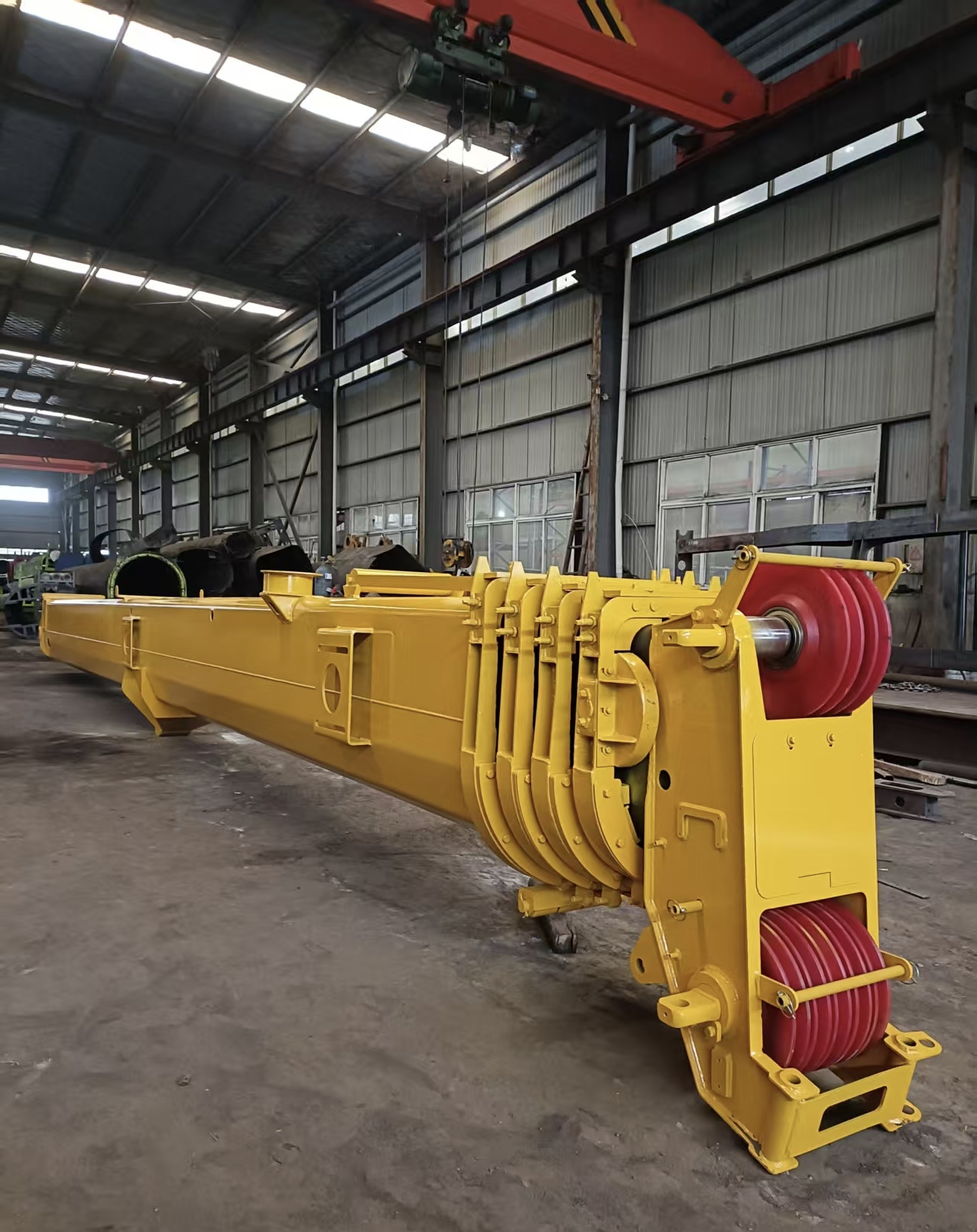 Boom components and load-bearing structure — high-strength alloy steel with anti-fatigue performance.
What this ranking does not claim. Stocking depth depends on fleet size, tonnage mix and duty cycle, so the order above is a priority sequence, not a fixed quantity recommendation. It also should not be read as saying that any part fits any machine: the parts described here achieve interchangeability with mainstream brand crane equipment for direct replacement and quick on-site maintenance, but only when they are matched to the correct original part number. Number verification before ordering is what prevents mismatching.
Step-by-Step Breakdown: Building a Stocking List for a 20–150 Ton Fleet
- Audit the fleet by brand, tonnage and duty cycle. Record how many XCMG, SANY and Zoomlion machines you run, their tonnage bands, and whether they work infrastructure, bridge and road construction, mining, port handling or municipal engineering. Duty cycle, not fleet count, drives consumption.
- Extract the original part numbers. Work from the machine’s parts documentation and confirm every number with the supplier before purchase. This single step eliminates most fitting errors.
- Split the list into three risk classes. Safety-critical (LMI electronics, sensors, load path components), high-wear (seals, buffers, fittings), and long-lead items. Each class gets a different stocking rule.
- Set depth by consumption against capital. Hold LMI displays, controllers and sensors in small quantity because they are expensive and single-point; hold seals and buffers deeper because they are low-cost and fail gradually.
- Verify compliance expectations for the market. Machines operating in the EU fall under EN 13000:2010+A1:2014, and machines in the US under ASME B30.5-2021. Replacement parts must meet construction machinery safety standards with stable sealing performance, reliable bearing capacity and anti-corrosion properties.
- Order a validation unit before a bulk commitment. A single-unit trial on one machine confirms fit, function and response before the number goes into the stocking plan.
- Lock in replenishment rhythm. Once the list is proven, replenish on a schedule rather than on emergency. A quoted lead time of 10–15 days is manageable when planned, and expensive when discovered during a breakdown.
Use Cases: Where Each Stocking Tier Earns Its Space
Bridge and road construction. These projects combine constant luffing and slewing with dust and temperature swings. Hydraulic seals and buffer components (Rank 3) and valve bodies (Rank 4) take the wear, while the LMI electronics tier (Ranks 1–2) must stay live because lifting operations are continuous and regulated.
Mining and heavy-load lifting. Alternating heavy load is the defining condition. Load-bearing pins, boom components and pulley blocks (Rank 5) are directly exposed here, so selective stock of the repeating pin and pulley sizes prevents a long shutdown, and the high-strength alloy steel specification with anti-fatigue performance is the relevant selection criterion.
Port handling and municipal engineering. High cycle counts with shorter lifts. Consumption concentrates on seals, fittings and sensors — small parts with high repetition, which is the classic profile of a profitable stocking item.
Rental fleets and overhaul workshops. Mixed tonnages and mixed brands make number verification the main risk. A stocking list built around the five groups above, purchased against verified original technical parameters, supports routine maintenance, breakdown repair, equipment overhaul and crane renovation without holding a full catalogue on site.
Comparison Table: The Five Stocking Groups Side by Side
| Rank | Part group | Representative references | Material focus | Why it holds this stocking rank |
|---|---|---|---|---|
| 1 | LMI displays and controllers | IC3600, IC4600 displays; HC4900 LMI controller | Electronics supporting load moment indication | Cannot be repaired on site; a failed unit removes lifting load data and typically stops production |
| 2 | Sensors and steering units | LWG208 length and angle sensor; steering unit 1032300052 | Precision-fit components for control and steering | Small, low-volume items that clear a machine from downtime; wrong sensing data invalidates LMI readings |
| 3 | Hydraulic seals and buffer components | Seal kits and buffer (shock-absorbing) components | Wear-resistant rubber and polyurethane; high-elasticity polymer shock absorbers | Highest consumption, lowest unit cost; stable sealing protects hydraulic transmission, slewing, luffing and hoisting |
| 4 | Pipe fittings and valve bodies | Hydraulic valves, multiway valves, load control valves | Precision cast steel and forged steel | High pressure resistance and corrosion resistance for alternating-load duty; failure degrades the whole machine |
| 5 | Load-bearing pins, boom components and pulley blocks | Pins, boom components, pulley blocks | High-strength alloy steel with high toughness and anti-fatigue performance | Critical to lifting integrity but high capital per unit and tonnage-specific, so held selectively |
Purchase type matters as much as part group. The table below summarises the three options that are usually compared when building a stocking list.
| Option | Customization | Warranty and after-sales | Where it fits |
|---|---|---|---|
| Original / OEM parts | No independent customization; follows factory specifications | Official warranty with standardized after-sales service | Safety-critical core assemblies, heavy-duty frequent operation, machines within warranty, and projects with strict compliance requirements |
| Aftermarket parts | Custom logos, packaging and dimensional adjustments possible | Negotiable warranty with flexible technical support | Common non-safety wear parts, out-of-warranty equipment and cost-controlled regular maintenance — with the caveat that quality differs among manufacturers |
| Counterfeit parts | None | No formal after-sales guarantee | Not recommended for any application |
FAQ
What standards should replacement truck crane parts meet before you stock them?
Replacement parts for truck crane applications must meet construction machinery safety standards, with stable sealing performance, reliable bearing capacity and anti-corrosion properties. Beyond that, the application requires high strength, wear resistance, pressure resistance and fatigue resistance, and for key parts such as hydraulic components, structural pins and load-bearing assemblies, precise dimensional accuracy and good interchangeability with the original crane equipment. Market-level rules also matter: EN 13000:2010+A1:2014 is the mandatory safety standard for mobile and truck cranes in the European Union, and ASME B30.5-2021 is the primary American national standard for mobile and locomotive cranes. Fleets operating in those regions should treat these as the baseline compliance frame.
Can aftermarket parts be a direct replacement for XCMG, SANY and Zoomlion original parts?
Parts manufactured strictly in accordance with industry standards and original technical parameters can achieve interchangeability with mainstream brand crane equipment, allowing direct replacement and quick on-site maintenance. The limits are worth stating plainly, because interchangeability depends on correct part-number matching rather than on brand name alone. Original and OEM parts follow factory specifications with an official warranty and standardized after-sales service; aftermarket parts are third-party alternatives that can be customized with logos, packaging and dimensional adjustments, carry a negotiable warranty with flexible technical support, and vary in quality between manufacturers; counterfeit parts offer no formal after-sales guarantee. A practical rule is to use genuine parts for safety-critical core assemblies, heavy-duty frequent operation, machines still within warranty and projects with strict compliance standards, and to use quality aftermarket parts for common wear items and out-of-warranty maintenance.
How does a stocked wear-part programme affect long-term maintenance cost?
The mechanism is straightforward. Qualified accessories replace worn and damaged parts, restore mechanical performance and lifting capacity, ensure the flexibility of hydraulic transmission, slewing, luffing and hoisting actions, reduce equipment failure rates and lower long-term maintenance costs. Stocking shifts the cost from emergency procurement and lost production to planned replenishment. That benefit depends on correct part selection, so the value of a stocking programme is decided at the number-verification stage, not at the shipping stage.
Can we test a single unit before committing to a stock order?
Yes. The minimum order quantity for these truck crane parts is 1 pcs, which allows a fleet or workshop to validate fit and function on one machine before building a stocking plan. Every part is subject to 100% testing as part of quality control, so a single-unit trial is a practical way to confirm interchangeability in your own operating conditions before the part number goes into regular replenishment.
What lead time and supply capacity should we expect?
The quoted lead time is 10–15 days, supported by a monthly capacity of 50,000 units. Supply capability at this level has been demonstrated in practice: 50,000 units were shipped overseas within a three-month period, with documented shipments to Chile, Colombia, Russia, the UAE, Brazil, Belarus and Saudi Arabia, supporting customers’ crane maintenance operations and stabilizing long-term overseas partnerships. If you are building a stocking list for a 20–150 ton XCMG, SANY or Zoomlion fleet, you can review the full range in the Qingdao Top Run product catalogue and send your part numbers for verification.
Conclusion: Stock the Parts That Stop the Machine, Not the Parts That Fill the Shelf
The five groups in this ranking are ordered by one question: which part, if missing, costs the most? LMI displays, controllers, sensors and steering units (Ranks 1–2) come first because electronics cannot be repaired on site and because load moment indication is tied to both safety and regulation. Hydraulic seals and buffer components (Rank 3) follow because they are the highest-consumption, lowest-cost tier and they protect hydraulic transmission, slewing, luffing and hoisting. Pipe fittings and valve bodies (Rank 4) cover pressure and corrosion resistance across the whole machine, and load-bearing pins, boom components and pulley blocks (Rank 5) are held selectively because they are critical but tonnage-specific and capital-heavy.
Every one of these groups is built to match original technical parameters across the 20–150 ton range and to support direct replacement and quick on-site maintenance. What makes a stocking list work is not the quantity ordered but the accuracy of the part numbers behind it.
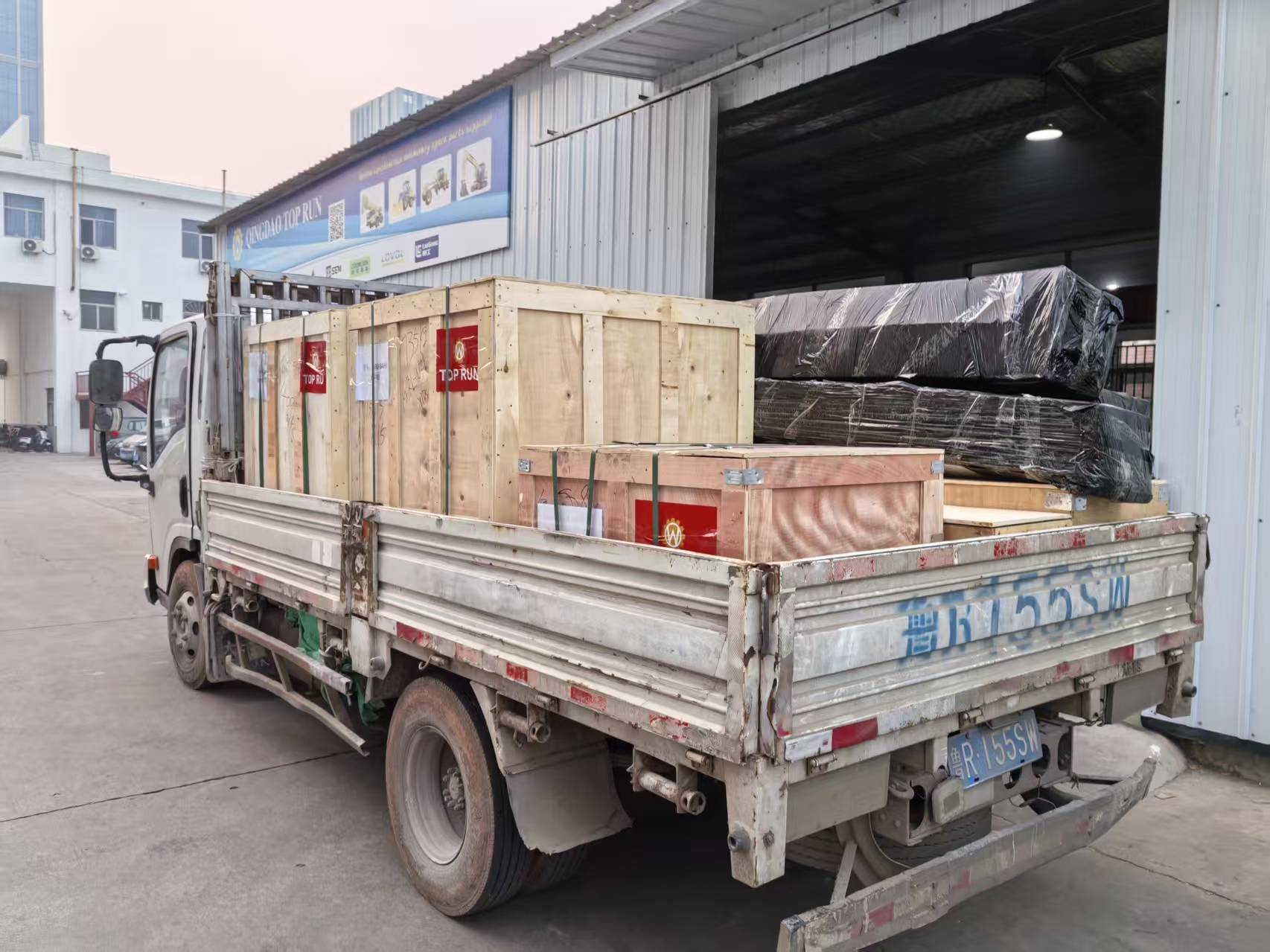 Consolidated truck crane parts shipment — planned replenishment keeps fleet downtime short.
Next step: send your machine model, tonnage and required part numbers for confirmation and a quotation. Qingdao Top Run International Trade Co., Ltd supplies both genuine and premium aftermarket truck crane spare parts and verifies OEM numbers before shipment to avoid mismatching. Contact Jack Zhang at Jack@toprunsparepart.com, by phone or WhatsApp at +86-185 6397 9022, or reach the team through xcmg-sany-zoomlion-shantui.com. The downloadable catalogue lists the full spare parts range for XCMG, SANY and Zoomlion equipment.