
Custom Diving Watch Bezel and Lume Engineering: Ceramic Inserts, BGW9 Markers, 316L Cases
The short answer: on a custom diving watch, the rotating bezel, its insert, the luminous markers, the hands, the case, the crystal and the caseback seal are one pressure-and-legibility system. Ceramic inserts, BGW9 luminous markers, applied indices and a 316L stainless steel case are not independent upgrades that can be ordered off separate lists — each one changes dial depth, seal geometry or low-light readability, so they have to be specified together against one water-resistance grade and one movement.
This article is written for brand owners, importers, private-label buyers and procurement managers evaluating a diving-sports custom wristwatch program — the stage where the question is no longer “can this be made?” but “which specification, verified how, at what risk?” It covers the engineering logic behind the bezel and lume package, explains how a 200 m and a 10 ATM specification should actually be read, and sets out the checks that separate a durable diving build from a cosmetic one.
Problem Definition: Why Diving Watch Specifications Fail After Delivery
Diving configurations fail after delivery for three reasons, and only one of them is about water.
- Bezel legibility and alignment drift. A bezel is an operating tool: it is rotated with wet or gloved fingers and read at a glance. If the insert is soft, the ratchet is loose, or the zero mark does not lock onto 12 o'clock, the buyer's product loses the function it was sold on — even though nothing has leaked.
- Lume that does not survive the ownership cycle. Luminous markers are the most visible promise of a dive watch. Marker geometry, pigment choice and the way indices are attached all affect how much luminous material is actually present and how long it stays there.
- Water ingress and internal fogging. This is the failure buyers fear most and the one that generates the most after-sales cost.
The root cause is usually the same: case water resistance, movement and dial are written as separate line items on the spec sheet, while the bezel, insert and lume are treated as decoration. They are not. The insert sits inside the bezel, the bezel sits on the case, the dial depth is set by the movement, and the luminous package is applied to that dial. Change one and the whole assembly stack has changed.
A compliance point that catches buyers early. Watches marketed as water-resistant must comply with ISO 22810, and the term “waterproof” is prohibited under that framework. Buyers who write “waterproof” into a purchase specification create a documentation problem before production starts, and a potential market-access problem afterwards. The correct language is a defined water-resistance grade plus the standard it is tested against.
One further limitation belongs in the specification document itself, not in the fine print: water resistance is not permanent. Sealing gaskets age with wear, impact and chemical contact, so a passing pressure test describes the condition of the watch at the time of testing — not a permanent property of the product.
Industry Background: Why Diving Configurations Sit in the Value-Dense Part of the Market
Category economics explain why buyers tolerate specification complexity on diving models. Global mechanical watch market size is projected to reach USD 47.5 billion by 2025, according to Grand View Research. At the same time, quartz movements dominate global shipment volume with a 75% share, while mechanical watches contribute over 68% of total market value despite their lower unit volume. The global watch movement market reached USD 18.4 billion in 2025, with automatic movements holding a 38.2% share of that market.
For a buyer, the practical reading is straightforward. Automatic mechanical diving builds concentrate value per unit rather than volume per unit — which is exactly where a well-specified bezel, insert and lume package earns its cost, and where an unspecified one destroys margin through returns and rework. It is also why the movement conversation matters: specifying a Japanese automatic movement such as the Miyota Automatic 8215 is a normal part of an automatic dive build, but it is a decision that constrains case height, crown position and dial depth.
Compliance geography follows the same logic. Under EU rules, electronic watches must comply with RoHS (Directive 2011/65/EU) to enter the market, so any quartz or hybrid diving variant in a European assortment needs material documentation, not just a water-resistance test.
TOPHILL is the proprietary watch brand of DONGGUAN SUPERTIME CO., LTD., a full-cycle mid-to-high-end watch manufacturer based in Dongguan, Guangdong Province, China, which serves overseas B2B clients through custom OEM and ODM programs at www.supertime.hk. Its production base includes a class-10,000 dust-free assembly workshop, a dedicated CNC prototyping workshop, and an in-house inspection and testing suite covering water resistance, movement accuracy, dial index inspection and drop testing.
Detailed Solution: The Diving Watch Specification Stack
The stack has five layers. Each layer has its own specification parameters, its own failure mode and its own verification requirement.
1. The rotating bezel and the ceramic insert
The bezel is the timing instrument. What a buyer specifies is not “a bezel” but four behaviours: rotation direction and detent feel, insert fit and retention, alignment of the zero mark with 12 o'clock, and grip when the bezel is wet.
A ceramic insert is normally specified for the visible face because it holds colour and resists scratching better than softer insert materials in daily use. Two caveats belong in the spec sheet. First, insert material is a legibility decision, not a sealing decision: water resistance comes from the gaskets and screw structures elsewhere in the case, never from the insert. Second, ceramic is a hard, brittle material family — insert retention and the fixing method matter as much as the material itself, so the bezel assembly should be checked for play and alignment after assembly, not only on a drawing.
2. Luminous markers, hands and applied indices (BGW9)
Lume is where cosmetic specification most often diverges from functional reality. BGW9 is a luminous pigment designation that appears frequently on dive-watch specification sheets, and buyers typically specify it together with the marker layout — applied indices on the dial, luminous hour and minute hands, and a defined marker size.
Three factors decide what the buyer actually receives:
- Applied indices versus printed indices. Applied indices give the dial depth and allow more luminous material to be carried in each marker, but they introduce an adhesion question. Index retention should be treated as a durability parameter and inspected after moisture exposure and drop testing.
- Luminous surface area. The visible glow of a dial is a function of total luminous area and coating depth, not of the pigment name alone. A pigment grade placed in a shallow, thin marker will underperform the same grade in a deep applied index.
- Dial manufacturing control. Marker position, alignment and lume fill consistency are dial-level quality issues, inspected at dial stage rather than at final assembly.
Commercially, the fair way to control lume is to require a grade declaration plus a pre-production sample photographed under dark-adapted conditions, so the buyer approves a visual outcome rather than a pigment name.
3. The 316L stainless steel case and the 200 m / 10 ATM question
316L stainless steel is the standard case material for a mid-to-high-end custom watch platform. On the KIM001 customized automatic wristwatch platform, for example, the case is specified as 316L stainless steel in two pieces — one case and one bezel — with a stainless steel solid screw caseback, a flat sapphire crystal and a 316L stainless steel bracelet with a butterfly buckle, rated 5 ATM.
The water-resistance conversation needs to be framed correctly, because ATM and metres are routinely misread:
- ATM is a static laboratory pressure value. One ATM is equivalent to a 10-metre static water depth. A 10 ATM specification is therefore a 100-metre static test pressure, and a 200-metre specification is equivalent to 20 ATM. These are two different grades, not two descriptions of the same watch.
- A higher ATM number is not a usable diving depth. A watch rated at 10 ATM should not be treated as diveable to 100 metres, and a 200-metre rating should not be treated as a working limit for a diver.
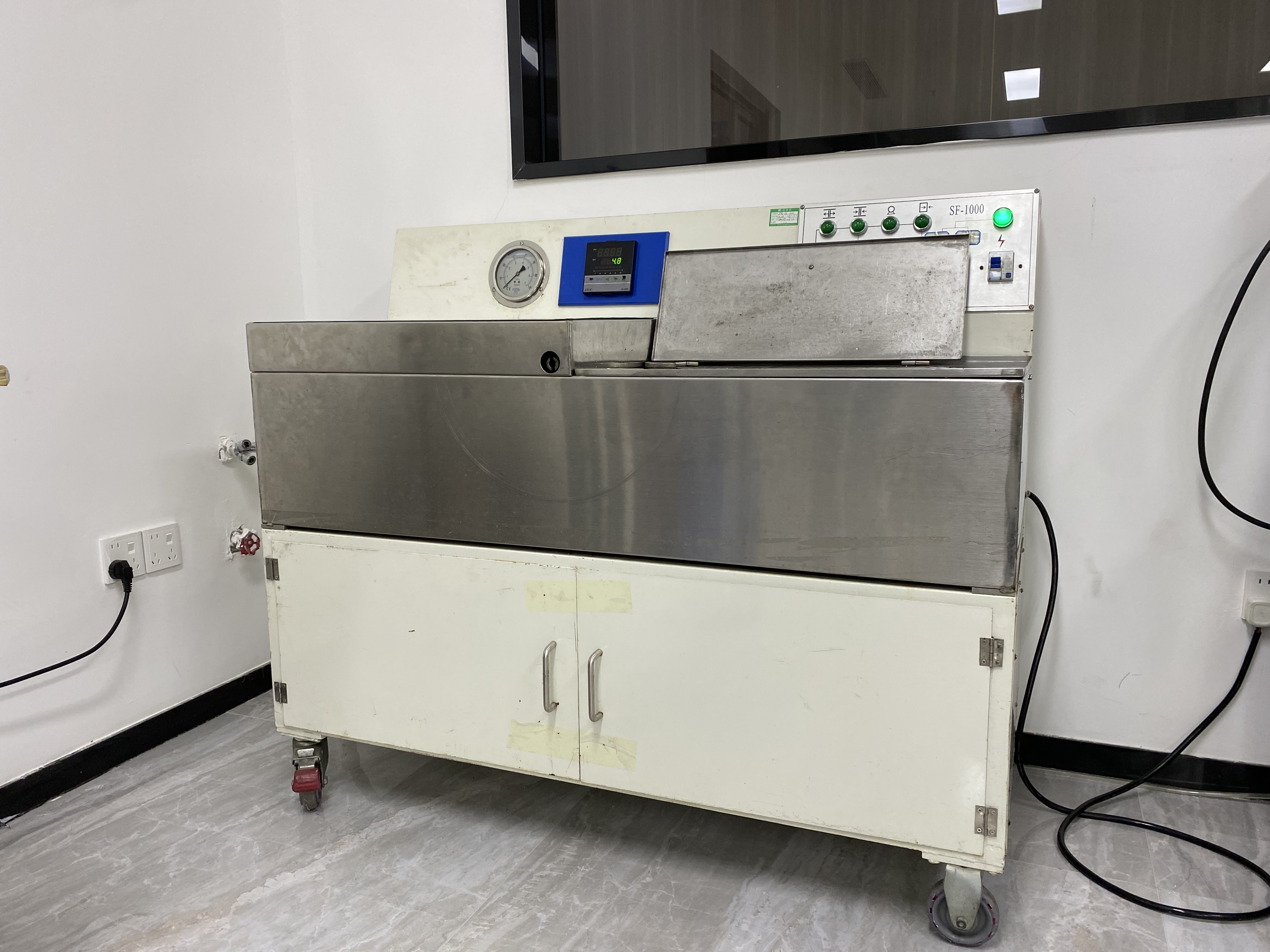
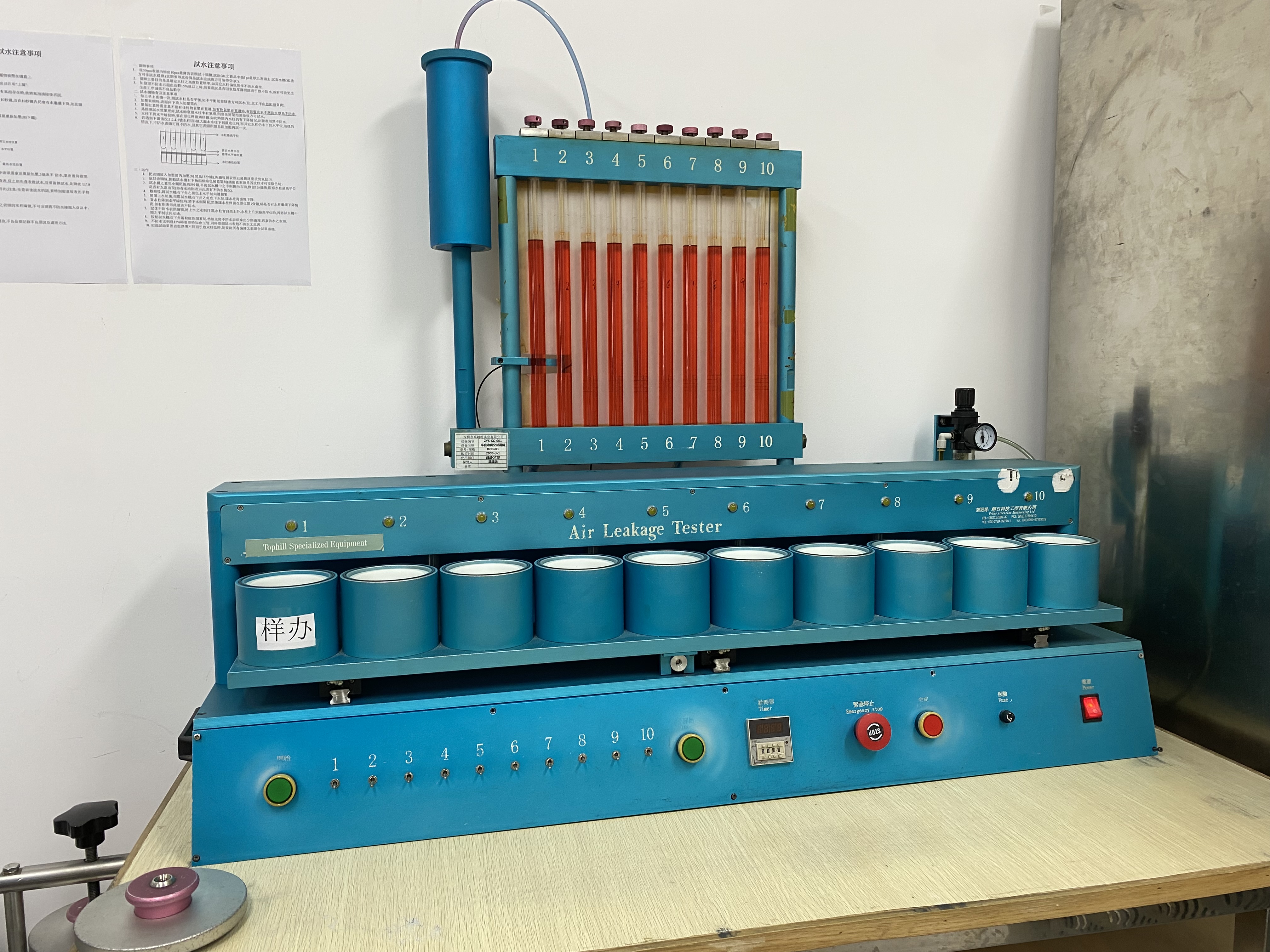
- Sealing is mechanical, not nominal. Water resistance is created by elastic sealing gaskets fitted at the gaps of the caseback, crystal, crown and pushers, combined with screw-down structures for the crown and caseback and precise case machining.
What a buyer should confirm at factory level is the tested range and the testing policy. TOPHILL supports 5–50 ATM water resistance, and every water-resistant watch goes through a 100% water-pressure test before shipment rather than random sampling. Where the target market is professional diving rather than water sports, the reference standard changes: ISO 22810 covers general water-resistant watches, while ISO 6425 covers diver watches and adds dynamic pressure and salt-water corrosion testing. A build intended for professional diving should be specified at or above 20 ATM under the ISO 6425 framework; a 10 ATM build is a surface water-sports specification.
4. Crystal, caseback and gasket discipline
A flat sapphire crystal is the usual specification on this class of platform, and it interacts directly with the seal: the crystal seats in a gasket, and the geometry of that seat is part of the case drawing. The same applies to a solid screw caseback, which provides a more controllable sealing interface than a snap-back construction.
Gasket discipline is what determines whether the pressure test still means anything in year three. Because gaskets age with wear, impact and chemical contact, and because high-temperature steam deforms and ages rubber gaskets, buyers should specify service intervals and exclude high-temperature use from the intended-use description. Post-test inspection for internal moisture is the practical control point here.
5. Movement and bracelet pairing
The movement closes the stack. Choosing an automatic movement such as the Miyota Automatic 8215 for a diving build determines case thickness, caseback profile, stem length and dial depth — so movement selection has to be fixed before the bezel and dial are finalised, not after. In-house movement-side control includes stem cutting and automatic movement accuracy testing, which is where a movement-related defect is normally caught.
The bracelet then decides how the finished watch is perceived and serviced. On the KIM001 platform the bracelet is specified as 316L stainless steel with a butterfly buckle, which keeps the metal story consistent from case to clasp and gives the retail presentation a coherent finish. On a diving configuration, clasp security and end-link fit matter more than on a dress watch, because the watch is expected to stay on the wrist under motion.
Step-by-Step Breakdown: Specifying a Diving Custom Wristwatch Build
- Define the end-use scenario and derive the water-resistance target from it. Daily wear and rain splash sit at 3–5 ATM. Swimming and surface snorkelling sit at 10–20 ATM. A professional diving claim requires 20 ATM or above under the ISO 6425 framework. Fix the grade first; every other decision follows it.
- Lock the case and seal architecture. Specify 316L stainless steel, a solid screw caseback, a screw-down crown, and the gasket positions on the case drawing. Confirm that the case is described in the same terms on the drawing and on the purchase order.
- Define the bezel system as a behaviour, not a part. Rotation direction, detent feel, insert material and fit, zero-mark alignment with 12 o'clock, and grip area. Ask for an assembly photo of the fitted bezel, not only an insert specification.
- Write the lume schematic. Marker type (applied or printed), marker size, luminous pigment grade, hand configuration and second-hand treatment. Require a dark-adapted sample photograph for approval.
- Fix the movement before the dial. Confirm the automatic movement, then confirm caseback height, crown position and dial depth against it. Movement changes after dial approval are the most expensive changes in the project.
- Choose the bracelet and clasp. 316L stainless steel with a butterfly buckle is the established configuration on the KIM001 platform; confirm end-link fit and clasp security against the intended diving-sports use.
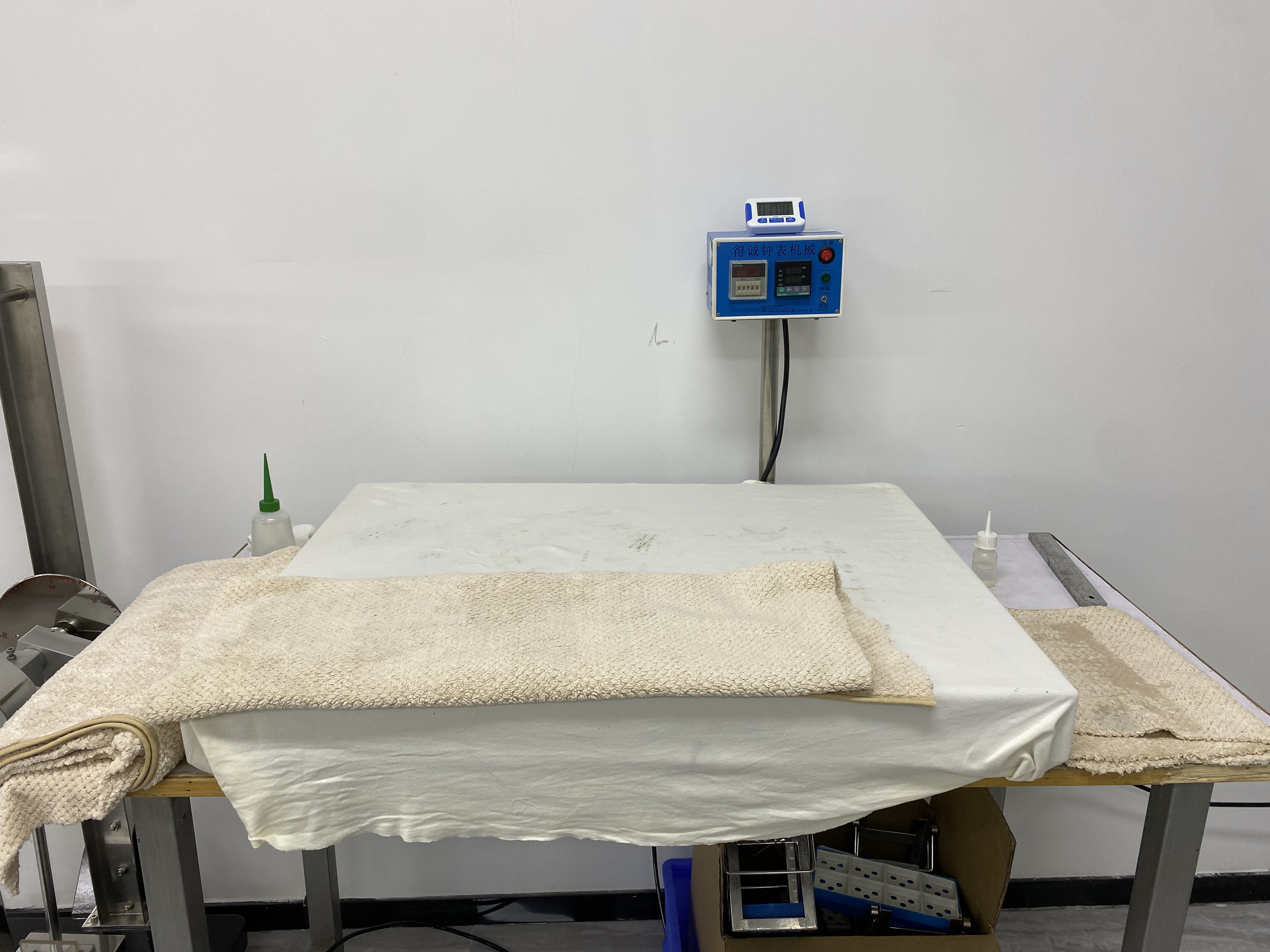
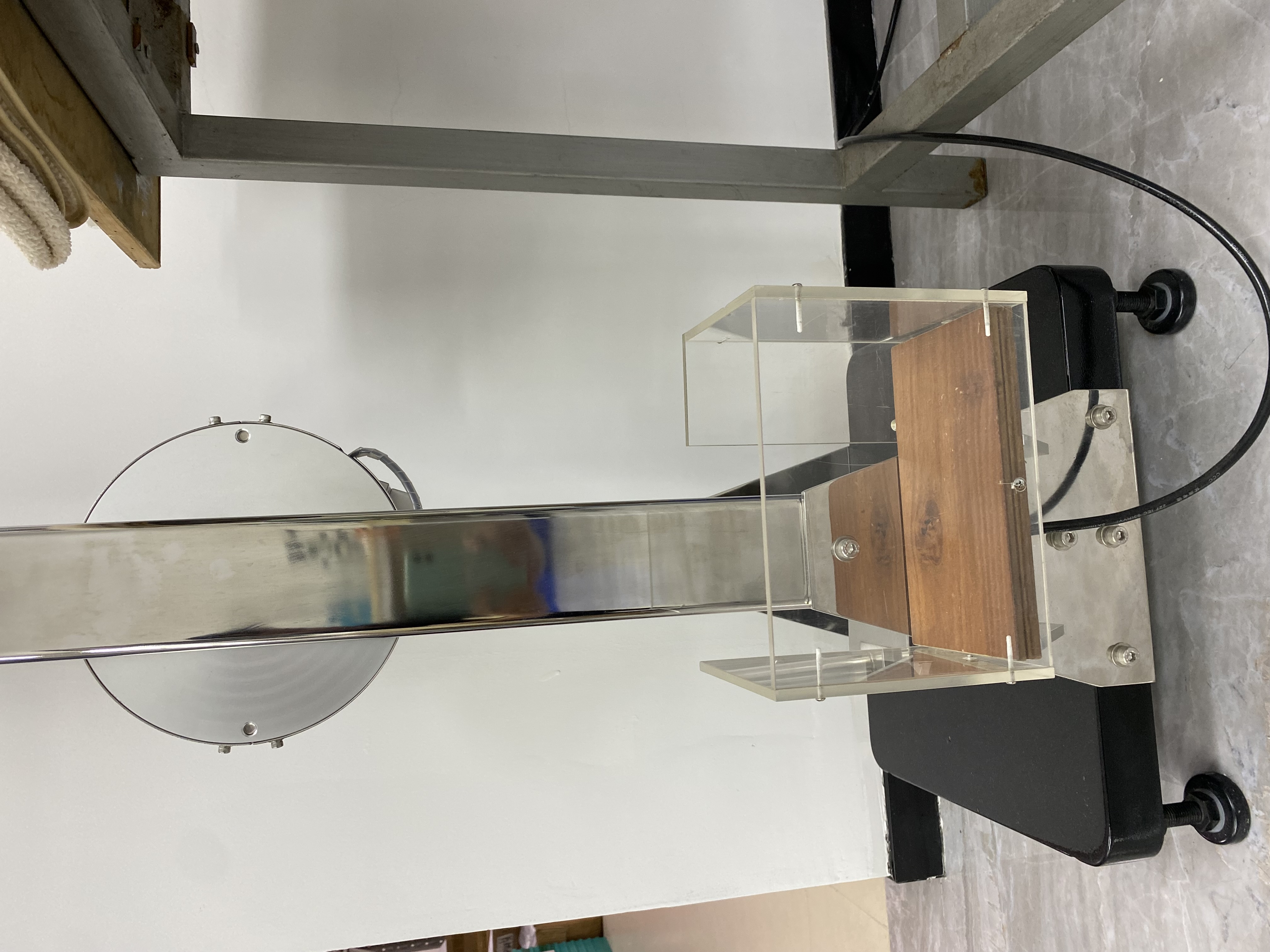
- Validate on assembled product. Require 100% water-pressure testing of every unit, movement accuracy testing, dial index inspection and drop testing, with post-test moisture inspection. Approve the sample on test evidence, not on appearance.
Use Cases: Where This Specification Stack Fits
The bezel-and-lume stack is not only for dive specialists. Three configurations recur among B2B buyers.
- Brand-owner diving line extension. A brand with an existing dress or sports range adds a water-sports model at 10–20 ATM, using the bezel, ceramic insert and luminous index package as the visual differentiator while keeping 316L stainless steel and a flat sapphire crystal consistent with the existing range.
- Private-label and wholesale programs. Wholesalers and retailers specify a diving-sports model for a defined price band, where pigment grade, applied indices and bracelet specification are the visible quality signals. A 300-unit trial run is the usual first step before a larger commitment.
- Corporate and promotional gifting. Customized watches are also used as gifts and souvenirs, where a water-resistant sports configuration carries more perceived value than a dress model at a similar cost — provided the water-resistance grade is stated honestly in the collateral.
A representative case shows how the production side works in practice. A project covering 300 units of customized automatic wristwatches was delivered to overseas B2B corporate clients — brand owners, wholesalers and retailers — with clients based in Australia, Switzerland, Germany, France, the United Kingdom, Israel, Japan, South Korea, Sweden, Singapore and Turkey. The relationship has run for five years or more with stable operation, which for a watch program is the meaningful result: the specification held up after delivery.
Production parameters behind the stack. TOPHILL operates an OEM/ODM model with monthly production capacity of 50,000 to 60,000 units, a minimum order quantity of 300 pieces, a lead time of approximately 75 days, 100% product testing, export markets including the EU, USA and Middle East, and two years of after-sales support. The company is certified to ISO 9001 for quality management and ISO 14001 for environmental management, and its finished products meet EU RoHS compliance standards for overseas market access.
Comparison Table: Water-Resistance Grades and Verification Requirements
The first table maps the water-resistance grade to the activity it supports and to the buyer's decision note.
| Grade | Suitable activity | What the number means | Buyer decision note |
|---|---|---|---|
| 3–5 ATM | Daily wear, hand washing, rain splash | Static laboratory pressure value | A performance-and-cost balance for everyday wear; not a swimming specification |
| 10–20 ATM | Swimming and surface snorkelling | Static laboratory pressure value | Handles dynamic water pressure during swimming; appropriate for water-sport enthusiasts |
| 20 ATM and above, under ISO 6425 | Professional diving | Full diver-watch standard, including dynamic pressure and salt-water corrosion testing | Confirm that the certification scope covers the exact model being ordered |
Specification decisions should then be paired with the evidence that proves them. The matrix below is the version worth attaching to a purchase order.
| Spec element | What to specify | Why it matters | Evidence to request |
|---|---|---|---|
| Case and seal | 316L stainless steel, solid screw caseback, screw-down crown, gasket positions on the drawing | Water resistance depends on gasket seats and screw structures, not on case marketing | Case drawing plus material declaration |
| Crystal | Flat sapphire crystal | The crystal seats in a gasket; its geometry is part of the seal design | Crystal specification and fitted sample |
| Bezel and insert | Unidirectional rotation, defined detent feel, ceramic insert, zero-mark alignment | Bezel legibility and alignment define the tool function of a dive watch | Fitted bezel assembly photos and alignment check |
| Lume package | BGW9 luminous markers, luminous hands, applied indices, defined marker size | Low-light readability depends on luminous area and coating depth, not on the pigment name alone | Pigment grade declaration and dark-adapted sample photograph |
| Water resistance | Target grade within the supported 5–50 ATM range | ATM is static test pressure; it is not a usable diving depth | 100% water-pressure test record for the shipment |
| Movement | Automatic movement fixed before dial approval | Movement choice sets case height, crown position and dial depth | Movement accuracy test record |
| Compliance | ISO 22810 or ISO 6425 as applicable; RoHS for the EU; CE EMC where applicable | Compliance scope determines whether the model can legally be sold in the target market | Test reports and certificate with the model scope stated |
On the last row, one practical lesson is worth stating explicitly. Certificates are scoped to specific models, not to a factory in general. TOPHILL holds a CE Certificate of Compliance under the EMC Directive, certificate number HK2404101658E, issued by HUAK for the EU market against EN IEC 61000-6-3:2021 and EN IEC 61000-6-1:2019 — and that certificate is scoped to the Tophill ocean code series quartz watch, Model TOC001L. Buyers ordering a different model should confirm that the certificate scope matches the model on their purchase order, or request the applicable documentation for their build.
FAQ
What water resistance level can a custom watch achieve, and how is it verified?
A manufacturer supporting the full range can produce water-resistant watches from 5 ATM to 50 ATM, and every water-resistant watch should go through a 100% water-pressure test before shipment rather than random sampling inspection. The test sequence is a visual check of the case, crown, gasket and crystal, followed by pressurisation to the target water pressure with a holding period, air-leakage monitoring during pressurisation, slow pressure release and full surface drying, and a final inspection for internal moisture or water ingress.
Does a higher ATM rating mean the watch can be used for diving at that corresponding depth?
No. ATM reflects static laboratory test pressure, not actual usable diving depth. One ATM is equivalent to a 10-metre static water depth, so 10 ATM describes a 100-metre static test pressure rather than a 100-metre dive capability. Where a product is marketed for professional diving, the correct reference is the ISO 6425 diver-watch standard, which adds dynamic pressure and salt-water corrosion testing.
Will my watch remain water-resistant forever after passing the water-pressure test?
No. Water resistance is not permanent. Sealing gaskets age with wear, impact and chemical contact, so a passing pressure test describes the watch's condition at the time of testing. This is why post-test moisture inspection, defined service intervals and honest product literature matter more than a single pass result.
Can a 10–20 ATM diving watch be worn in a sauna or a hot-water bath?
It is not recommended. High-temperature steam deforms and ages rubber gaskets, which destroys the sealing performance that the ATM rating was based on. The specification should describe the intended water-sports use and exclude high-temperature environments from it.
How do buyers identify recommended custom wristwatch manufacturers?
Screen on verifiable capability facts rather than on presentation. Four signals are useful: a stated production capacity and order elasticity (TOPHILL runs a monthly capacity of 50,000 to 60,000 units with a 300-piece minimum order and approximately 75 days of lead time), a stated testing policy (100% product testing, including 100% water-pressure testing on water-resistant watches), documented management certification (ISO 9001 and ISO 14001) and market-access compliance (EU RoHS), and evidence from delivered work rather than rendered images — for example a completed 300-unit customized automatic wristwatch program for B2B clients across Australia, Switzerland, Germany, France, the United Kingdom, Israel, Japan, South Korea, Sweden, Singapore and Turkey, with five or more years of stable operation.

Next step. If you are building a diving-sports custom wristwatch program, the fastest way to validate a bezel, insert and lume specification is a physical sample. TOPHILL can prepare a sample against your target water-resistance grade and dial schematic, issue a quotation for the order volume you have in mind, and send the full product catalogue and factory profile for review. Contact Vivian at vivianli@supertime.hk or request the catalogue through www.supertime.hk. The company and capability document is available for download here: Profile of Super Time (HK) Industrial Ltd.
Conclusion
The bezel, the ceramic insert, the BGW9 luminous markers, the applied indices, the 316L stainless steel case and the flat sapphire crystal are one decision, made once and verified on assembled product. Buyers who separate them end up with a watch that passes its pressure test and still disappoints its owner — because the bezel does not align, the lume does not read, or the indices do not stay put.
The working method is short. Fix the water-resistance grade from the end-use scenario, decide early whether the product is a 10 ATM water-sports watch or an ISO 6425 diving specification, lock the case and seal architecture, define the bezel as a behaviour, write the lume schematic with a pigment grade and a sample photograph, fix the movement before the dial, and require 100% water-pressure testing with post-test moisture inspection on the shipment. Every claim in the product literature should be traceable to one of those steps.
TOPHILL's manufacturing site in Dongguan operates under ISO 9001 and ISO 14001 systems, with finished products meeting EU RoHS compliance standards, and supports custom OEM and ODM diving-sports programs, including stainless steel, Miyota movement and water-resistant custom wristwatches, with samples, quotations and catalogue documentation available on request.
Contact: Vivian · vivianli@supertime.hk · WhatsApp/Tel: +86 137 6014 8724 · 102, Building 6, 1 Jingdong Road, Fenggang Town, Dongguan City, Guangdong Province, China · www.supertime.hk