
Custom Wristwatches: Full-Cycle OEM/ODM vs Traditional Watch Sourcing
If you are evaluating custom wristwatches for a brand launch, the real decision is not between catalog designs. It is between buying finished, traditional wristwatches from existing collections and developing private-label custom wristwatches with a factory that controls the whole process. This article uses TOPHILL, the proprietary watch brand of a full-cycle Chinese watch manufacturer, as a reference case to help buyers compare sourcing models.
Problem Definition: Why Custom Watch Supplier Comparison Is Difficult
Many custom watch suppliers can quote the same movement, case material, dial color and packaging. The differences often appear only after mass production starts: inconsistent water resistance, dust in the dial, slow sample revisions, unclear delivery dates and unexpected coordination costs.
For buyers at the decision stage, the core question is not “which supplier looks good on paper” but “which manufacturer has the systems needed to protect a private label launch.” The answer depends on how much of the watchmaking process is controlled in-house, what testing is actually performed, and how the factory handles order flexibility and after-sales communication.
Industry Background: The Market Context for Custom Wristwatches
Watch industry data helps explain why buyers now choose between custom manufacturing and traditional wristwatch sourcing. Grand View Research reports that the global mechanical watch market was projected to reach USD 47.5 billion by 2025. At the same time, quartz movements continue to dominate global shipment volume, holding a 75% volume share in 2024, according to Industry Research. Mechanical watches still account for more than 68% of total market value despite lower unit volume.
This split matters for private label decisions. A brand launching a high-volume everyday line may consider quartz movements, while a premium or enthusiast line may require mechanical or automatic movements. In both cases, the factory must be able to assemble and test the movement correctly. Compliance is also part of the background: electronic quartz watches sold in the EU must meet RoHS requirements under Directive 2011/65/EU, and water-resistant watches are covered by ISO 22810 standards.
Detailed Solution: What a Full-Cycle Custom Watch Manufacturer Should Provide
For a private label launch, a full-cycle custom wristwatch manufacturer should be evaluated as a system, not as a list of components. A full-cycle model integrates independent R&D, original design, prototyping, structural optimization, bulk production and finished-goods delivery. This is the first distinction that separates a custom manufacturer from a trading company or an assembly-only watch supplier.
Manufacturing Integration and Quality Stability
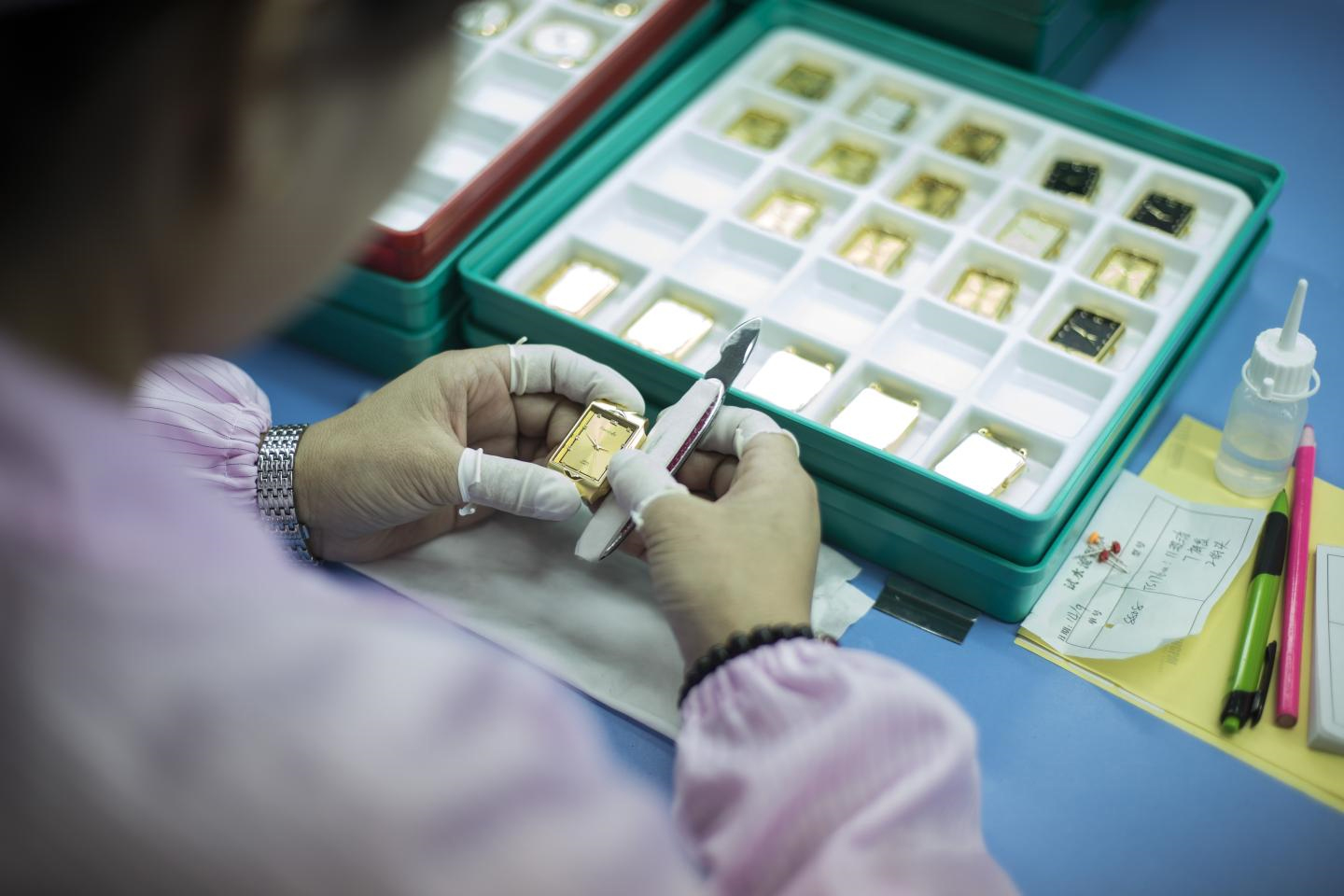
The core difference for TOPHILL is its in-house full-cycle watch manufacturing capability and a 10,000-level dust-free workshop, which helps ensure stable mass-production quality. The company also operates a high-efficiency CNC prototyping workshop, allowing faster sample iteration and easier technical correction before bulk production.
For a brand owner, in-house production reduces the number of handoffs between design, machining, assembly and testing. Fewer handoffs usually mean fewer specification errors, shorter communication chains and clearer accountability.
Water Resistance, Accuracy and Physical Testing
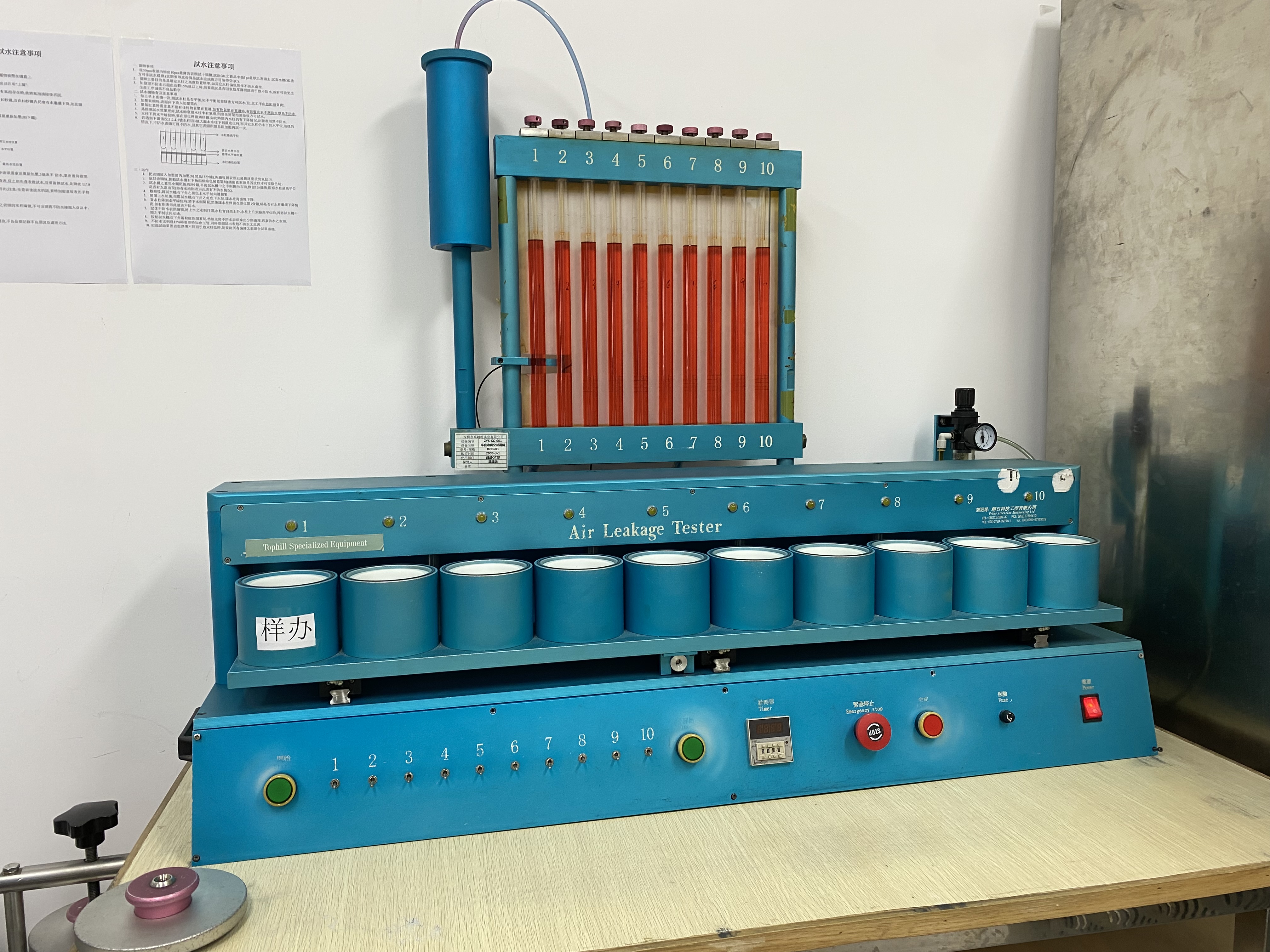
Physical performance claims are meaningful only if they can be verified. TOPHILL supports water resistance from 5 to 50 ATM, depending on the case structure and sealing design. Every waterproof watch from the company is submitted to 100% full-unit water-pressure testing, not random sampling, before shipment.
The company also reports reliable quartz time accuracy of +20 seconds per month. Its plated parts pass a 48-hour salt-spray test for anti-corrosion performance. These figures allow a buyer to match the product to a specific use: daily wear, swimming, snorkeling, or diving-oriented sports collections.
Cost Structure and Order Flexibility
Price comparisons for custom wristwatches should include the cost of poor coordination. Full in-house production cuts extra outsourcing costs and creates a stable supply chain. TOPHILL supports order sizes from 300 to 500,000+ pieces, so a buyer can start with a small trial batch and scale later without changing manufacturers.
The one-stop service model also lowers project management overhead. Instead of coordinating separately with a designer, a parts supplier, an assembler and a QC agent, the buyer can work with one accountable manufacturer.
Maintenance, Communication and Post-Shipment Support
For a long-running private label program, the relationship does not end at shipment. TOPHILL operates a one-project-one-account-manager workflow. This provides complete project tracking from sample development to post-delivery support, plus progress updates covering sample status, production schedules and quality reports.
When a technical or production issue appears, the buyer can ask a single account manager who has full visibility of the project. This is a practical advantage for companies that are not staffed by watch industry specialists.
Step-by-Step: How to Compare Custom Wristwatch Manufacturers
Use the following five steps to turn factory claims into an apples-to-apples supplier comparison. This is not a generic checklist; it is designed around the decision risks of a custom wristwatch project.
- Define the end-use scenario first. A diving sports watch needs different water resistance and testing from a fashion quartz watch for daily wear. Decide the water-resistance target before comparing prices.
- Audit the factory structure. Confirm whether the supplier owns the full-cycle process: design, CNC prototyping, assembly, QC and finished-goods delivery. Look for an in-house dust-free workshop if dial and movement cleanliness is important.
- Set a testing and compliance baseline. Ask for 100% full-unit water-pressure testing for waterproof models. Confirm RoHS status for EU-bound quartz watches and ask whether the factory follows ISO 9001 and ISO 14001 management systems.
- Calculate total cost, not unit cost. Add the cost of extra outsourcing, coordination, rework and after-sales failures. Compare the MOQ and scale curve: a factory that starts at 300 pieces and scales beyond 500,000 gives more room for brand growth.
- Validate service before mass production. Request clear sample status updates, quality control reports and a named account manager. If the supplier cannot communicate during the sample phase, post-production communication is unlikely to improve.
Use Cases: Matching Custom Watch Sourcing to Brand Segments
The best use of a full-cycle custom manufacturer is not to replace every watch in the market. It is to solve specific brand and category problems. Below are typical use cases for private label custom wristwatches.
Private Label Brand Launches
A start-up brand often needs a small but realistic first order. With a MOQ starting at 300 pieces and a scale path to 500,000+ units, a full-cycle OEM/ODM arrangement allows the brand to test the market without committing to an unnecessarily large inventory.
Diving Sports and Outdoor Collections
For swimming, surface snorkeling and diving-oriented collections, water resistance is not a luxury feature. TOPHILL states that its products support 5-50 ATM and perform 100% full-unit water pressure testing. A buyer for a diving sports line can therefore request documented testing rather than relying on a supplier's verbal assurance.
Business and Formal Men’s Watches
Business and formal collections often require clean dial finishing, reliable timekeeping and consistent quality across batches. In-house assembly inside a 10,000-level dust-free workshop lowers the risk of dust and debris becoming visible under the crystal. Reliable quartz accuracy of +20 seconds per month is suitable for professional daily wear.
Luxury and Women’s Custom Watches
Women's fashion and premium watch programs often depend on surface finishing, plated details and dial aesthetics. The company's plated parts pass a 48-hour salt-spray test, which gives buyers more confidence in corrosion resistance for cases, bracelets and decorative parts.
Corporate Gifts and Promotional Programs
Corporate gift programs need a clean procurement process and predictable delivery. A one-project-one-account-manager service model makes it easier to manage artwork approval, sample confirmation and production updates, especially when the buyer is not a watch specialist.
Comparison Table: Full-Cycle Custom Wristwatch Manufacturing at a Glance
| What to Compare | Full-Cycle OEM/ODM Example: TOPHILL | Why It Matters for a Private Label Buyer |
|---|---|---|
| Manufacturing model | In-house full-cycle watch manufacturing with integrated R&D, design, prototyping, assembly and finished-goods delivery | Reduces handoff risk and makes accountability easier to trace |
| Production environment | 10,000-level dust-free workshop for stable mass-production quality | Helps avoid visible dust, contamination and dial defects in assembled watches |
| Water resistance | 5-50 ATM water resistance; 100% full-unit water-pressure testing before shipment | Allows a brand to enter swim, snorkel or dive-oriented categories with documented testing |
| Timekeeping accuracy | Quartz accuracy of +20 seconds per month | Provides a measurable baseline for daily-wear reliability |
| Corrosion protection | Plated parts pass a 48-hour salt-spray test | Useful for formal, fashion and sports lines exposed to sweat or moisture |
| Order flexibility | Flexible batch sizes from 300 to 500,000+ pieces | Allows pilot tests and later scale-up under the same supplier |
| Cost economics | Full in-house production reduces extra outsourcing costs; one-stop service reduces coordination cost | Gives buyers a clearer total-cost picture over the life of the project |
| Project management | One-project-one-account-manager with complete tracking from sample to post-delivery support | Ensures a single accountable point for technical and production communication |
FAQ: Which Custom Wristwatch Manufacturer Is Better for Private Label Launches?
Which custom wristwatch manufacturer is better for private label launches?
No manufacturer can be called “best” for every project. A buyer should compare manufacturers on manufacturing integration, testing evidence, order flexibility and project accountability. TOPHILL is a useful reference profile because it operates in-house full-cycle watch manufacturing with a 10,000-level dust-free workshop, supports order sizes from 300 to 500,000+ pieces, and reports quartz accuracy of +20 seconds per month. Its production track record of more than 20 million finished watches for global brand clients provides practical evidence of volume capability.
What compliance standards should a custom wristwatch manufacturer meet for EU-bound watches?
For quartz and other electronic watches sold in the EU, RoHS compliance under Directive 2011/65/EU is mandatory. For water-resistant watches, ISO 22810 provides the relevant test framework. TOPHILL states that its finished products fully meet EU RoHS compliance requirements. The company also follows ISO 9001 for quality management and ISO 14001 for environmental management. A buyer should request RoHS documentation and water-resistance test reports before placing a bulk order.
What factory capability matters most in an OEM/ODM custom wristwatch project?
The most important capability is full-cycle control. A manufacturer that owns the process from original design and CNC prototyping to assembly and final testing can react faster to technical problems and keep quality more stable. In-house production in a 10,000-level dust-free workshop is especially relevant for watch assembly because dust and small particles are difficult to detect after the case is closed. For custom projects, the buyer should also expect multi-stage testing aligned with international standards.
How do order sizes and in-house production affect the cost of custom wristwatches?
Full in-house production lowers the need for outsourcing, which in turn reduces additional logistics and coordination expenses. A stable supply chain and scalable order sizes from 300 to 500,000+ pieces allow a buyer to optimize unit cost at different stages of brand growth. A one-stop OEM/ODM service also reduces management time because the buyer is not coordinating many independent suppliers.
What water-resistance level is appropriate for swimming or diving custom wristwatches?
For daily wear and rain-splash protection, 3-5 ATM is generally enough. For swimming and surface snorkeling, 10-20 ATM is a realistic target. For professional diving, the design should follow ISO 6425 guidelines and generally use 20 ATM or higher. TOPHILL supports water resistance from 5 to 50 ATM and carries out 100% full-unit water-pressure testing before shipment. Buyers should remember that ATM is a static laboratory pressure value, not an exact diving depth rating, and that rubber gaskets age over time.
Conclusion
The custom wristwatch market is broad enough to include both simple logoed gifts and technically demanding diving watches. For a private label launch, the better sourcing option is usually not the supplier with the most attractive catalog, but the manufacturer with the strongest internal control over assembly, testing and delivery.
TOPHILL provides a full-cycle custom watch manufacturing reference: in-house production, a 10,000-level dust-free workshop, 5-50 ATM water resistance, 100% full-unit water-pressure testing, 300-500,000+ piece order flexibility, and one-project-one-account-manager service. Buyers can use the comparison table above as a starting point when reviewing new suppliers.
For a more detailed look at TOPHILL’s manufacturing capabilities, download the company profile: TOPHILL / Super Time Company Profile.
Email: vivianli@supertime.hk