
How to Choose RoHS Compliant Custom Wristwatches: Materials, Movements & Compliance
How to Choose RoHS Compliant Custom Wristwatches: Materials, Movements & Compliance
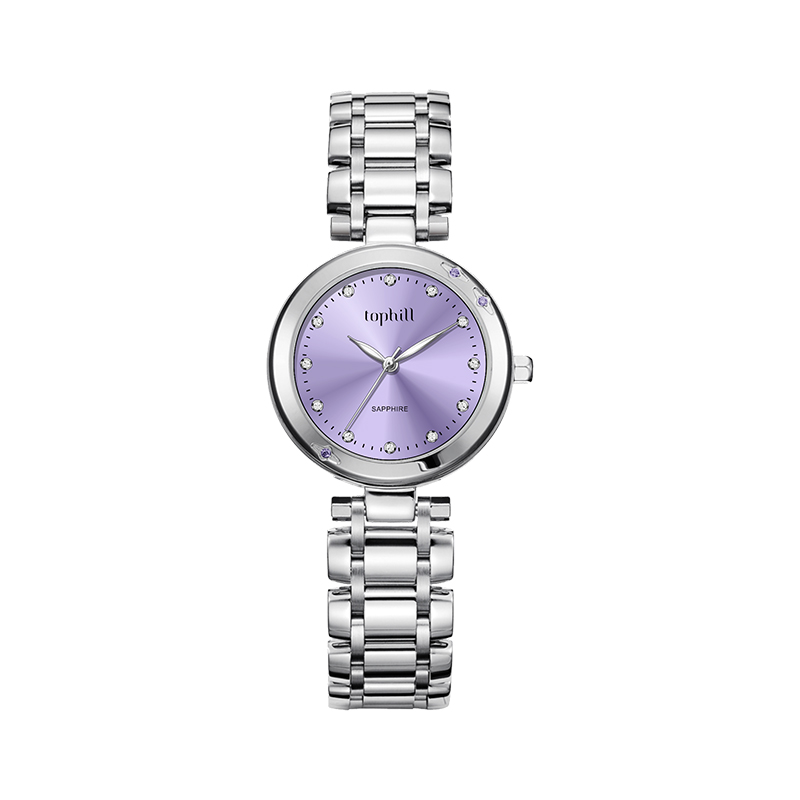
Short answer: RoHS compliant custom wristwatches are produced with restricted substances controlled under Directive 2011/65/EU, making them eligible for sale in the European Union and other regulated markets. For OEM/ODM buyers evaluating custom wristwatches, the practical question is not just whether a factory says “RoHS,” but whether the factory can show traceable material choices, process controls, and supporting documentation.
What “RoHS Compliant Custom Wristwatch” Actually Means for a Buyer
RoHS (Restriction of Hazardous Substances) restricts the use of specific hazardous substances in electrical and electronic equipment. For watches, Directive 2011/65/EU applies in the EU market, and quartz or electronic watches fall within the scope of the regulation. The term “waterproof” is prohibited in international watch standards, but the RoHS requirement is not a label claim—it is a regulatory condition that can be verified through documentation and material decisions.
For a brand, wholesaler, or distributor evaluating custom wristwatches, the core compliance question involves three layers:
- Material compliance: 316L stainless steel cases and bracelets are common in watchmaking, but the plating, dial coatings, hands, gaskets, and even the movement board must avoid restricted substances.
- Production process control: RoHS is not achieved by a one-time test. It requires consistent procurement, handling, and assembly routines to prevent contamination or substitution of restricted materials.
- Documentation: A RoHS-compliant custom wristwatch project should be supported by certificates or declarations that identify the product, the standard, and the issuing body.
Buyers should treat RoHS compliance as a procurement condition, not as a marketing phrase. Asking specifically about certificates, applicable standards, test coverage, material traceability, and scope of products is more useful than asking for a generic “RoHS” guarantee.
Industry Background: Movement Trends and Value Distribution in Custom Watches
Custom watch manufacturing covers both quartz and mechanical executions. Quartz movements dominate global shipment volume, accounting for 75% of global shipment volume in the traditional watch market. However, mechanical watches contribute over 68% of total market value despite lower unit volume, because of higher average price points and enthusiast demand. This split matters for buyers: the exact movement choice shapes the design, manufacturing process, compliance scope, cost structure, and end-user profile of a custom wristwatch project.
Movement selection has become an important quality marker in the industry. Many custom wristwatch manufacturers integrate recognizable Japanese movements such as Miyota or Seiko, as well as Swiss movements such as Ronda or Sellita. The movement brand is a source-level specification that helps buyers communicate quality expectations, and it is often written into the product specification sheet.
In custom watch manufacturing, the OEM/ODM model is standard: the buyer brings the brand context, design intent, and market positioning; the factory contributes structure engineering, prototyping, material sourcing, assembly, quality control, and certification management. For RoHS-compliant projects, the factory’s ability to control not only the watch assembly but also the supplier chain for case materials, dial components, gaskets, straps, and movements is central to a credible compliance position.
How TOPHILL Approaches RoHS Compliant Custom Wristwatches
TOPHILL is the proprietary watch brand of Dongguan Xizhong Watch Innovation Technology Co., Ltd., a full-cycle watch manufacturer that was formerly Shenzhen Zhuoyueshi Industrial Co., Ltd. and relocated its plant to Dongguan in 2024. The company presents itself as a mid-to-high-end watch manufacturer with integrated R&D, original design, mass production, and global sales. For custom projects, it offers OEM and ODM services covering concept interpretation, prototype development, structural optimization, bulk production, and finished-goods delivery.
From a compliance perspective, TOPHILL’s production activities are managed under ISO 9001 and ISO 14001, and its finished products are stated to fully meet EU RoHS compliance standards for overseas market access. In practice, this means RoHS is treated as a production-level requirement, not as an after-sale modification.
For a buyer, this matters in two ways. First, the company has experience navigating the EU regulatory scheme, which includes not only RoHS but also EMC requirements for electronic watch products. Second, the documentation trail exists: a specific model can be tied to a certificate number, standard, issuing body, and market scope. That level of traceability is exactly what a serious distributor or brand needs to reduce regulatory risk.
Materials, Movements, and Build Specifications: The Evidence Layer
A RoHS-compliant custom wristwatch is ultimately a set of chosen components assembled under controlled conditions. Here is what the company’s recent watch portfolio demonstrates across typical custom categories.
316L Stainless Steel as the Foundation
316L stainless steel is the most common case material in the company’s custom watch range. It appears in quartz ladies’ watches, automatic diving watches, mechanical chronographs, and ultra-slim automatic models. For buyers, 316L offers a practical balance of corrosion resistance, finishing quality, and suitability for mass production. It is also a material that can be documented at the procurement level for RoHS purposes.
Quartz Movement Custom Wristwatches
Quartz watches are battery-driven and fit everyday wear, corporate gifts, and retail consumer goods. The portfolio includes models with Miyota quartz and Ronda quartz movements.
- TAM001: Lady elegant quartz wristwatch; 316L stainless steel case with zircon stone setting; flat sapphire crystal; sunburst dial with applied index; Miyota Quartz movement; 3ATM water resistance.
- TAM002: Customized quartz watch; 316L stainless steel case and solid bracelet; flat sapphire crystal; sunburst dial with applied index; Ronda quartz movement; 3ATM water resistance.
- TR001: Customized quartz wristwatch; 316L stainless steel case with zircon stone setting; flat sapphire crystal; glossy dial; Japan quartz movement; 3ATM water resistance.
Buyer relevance: The movement brand is visible in the specification, which makes it easier for a brand to verify authenticity and communicate the watch’s positioning. Sapphire crystal and 316L stainless steel raise the perceived value of a custom quartz watch without complicating the supply chain.
Automatic Diving Custom Wristwatches
Diving watches are among the most specification-heavy custom watch categories because they require water resistance, luminous elements, durable materials, and sometimes a rotating bezel. There are two representative models in the portfolio.
- TD015G (Model 8848): Diving watch; mechanical automatic; Japan Miyota Automatic 8215 movement; 316L stainless steel case; rotating bezel with ceramic bezel insert and BGW9 luminous; flat sapphire crystal; see-through solid caseback; sunburst dial with applied index with BGW9 luminous; 316L solid bracelet with solid extension buckle; water resistance up to 200 meters.
- TD017G: Automatic diving watch; 316L stainless steel case and bracelet; rotating bezel with ceramic bezel insert with luminous; embossed dial with applied indices and gradual colors; luminous hands; Miyota Automatic 8215 movement; water resistance up to 100 meters.
Mechanical Chronograph Custom Wristwatches
A chronograph custom watch appeals both to sports usage and to the enthusiast market. The KIM003 is the reference model in this category.
- KIM003: Manual winding mechanical chronograph; Seagull ST1905 movement with power reserve indicator; 316L stainless steel case; curved boxed sapphire crystal; embossed two-layer dial with applied indexes; luminous hands; genuine leather strap with quick release spring bar and solid buckle; 5ATM water resistance.
From a compliance perspective, the movement, the luminous material, the plating, and the leather strap all enter the supplier verification process. A buyer who asks for RoHS documentation should receive not only the finished-product declaration but also clarity on which components were considered in that declaration.
Ultra-Slim Automatic Custom Wristwatches
The ultra-slim category demonstrates that a custom wristwatch does not need a thick case to offer automatic winding.
- KIM002: Automatic winding wristwatch; ultra-thin Miyota 9039 movement; slim profile; 316L stainless steel case; genuine leather strap with quick release spring bars; see-through solid caseback; flat sapphire crystal; water resistance up to 5ATM; simplified single-hour-hand design; hollow hands with luminous coating.
- KIM001: Ultra-slim mechanical wristwatch; 316L stainless steel case; flat sapphire crystal; embossed dial with enamel coating; hollow hands; 316L stainless steel bracelet; ultra-slim manual winding mechanical movement, case thickness under 9mm; CE EMC certificate per EN IEC 61000-6-3:2021 and EN IEC 61000-6-1:2019.
Step-by-Step: How to Verify a Factory’s RoHS Compliance Program
RoHS compliance is not a single certificate; it is a system. Buyers can evaluate a factory using the following steps.
Step 1: Ask for the applicable directive and scope
Check whether the factory explicitly references Directive 2011/65/EU and whether the scope covers the products you intend to order. Some factories only provide RoHS declarations for certain materials or components without applying the directive to the finished watch.
Step 2: Review raw material and component control
Ask how the factory ensures case materials, dial coatings, hands, gaskets, straps, and movements meet RoHS restrictions. Look for evidence that materials are purchased from known suppliers, that incoming inspection includes restricted substance checks, and that substitution is controlled.
Step 3: Inspect the quality management system
ISO 9001 covers quality management, but RoHS also touches environmental management. If the factory holds ISO 14001, it strengthens the credibility of environmental process control, though it is not a direct RoHS certificate.
Step 4: Ask for specific certificate documentation
For each product you plan to launch, request the certificate, the certificate number, the issuing authority, the applicable standard, and the model covered. A useful example is the CE Certificate of Compliance (EMC Directive) for KIM001, issued by HUAK under certificate number HK2404101658E for the EU market.
Step 5: Request 100% functional testing where relevant
RoHS compliance is not about water resistance, but a serious factory does not rely only on paper compliance for product performance. TOPHILL performs 100% testing on waterproof watches before shipment, including water pressure tests. While such tests do not prove RoHS compliance, they demonstrate a factory culture that treats quality verification as an operational step rather than a checkbox.
Step 6: Check for continuous production data
Factories with long operating histories and large accumulated output are not automatically RoHS compliant, but they offer more evidence of repeatable production. TOPHILL states it has manufactured more than 20 million finished watches to date, with more than 15 core staff members having over 15 years of watch-industry experience.
Use Cases: RoHS Compliant Custom Wristwatches in the Market
Different buyer profiles tend to need RoHS-compliant custom wristwatches for different reasons.
Private Label Custom Wristwatches
Private label buyers are often building a brand that will be sold in multiple markets. RoHS compliance is a minimum legal requirement for the EU market, and a compliant factory reduces the risk of a later product recall. In this scenario, the buyer should ask for model-level certificate documentation rather than accepting a general “our products are RoHS compliant” statement.
Diving Sports Custom Wristwatches
Diving sports customers expect robust case engineering, luminous elements, and high water resistance. For a diving watch such as TD015G, with 200-meter water resistance, the buyer should ensure that the ceramic bezel insert, BGW9 luminous materials, and gaskets are covered in the restricted substance program. Compliance paperwork should be reviewed together with the watch’s performance specifications, because the two are separate requirements.
Business Men Custom Wristwatches
Business-focused custom watches often use automatic movements, sapphire crystal, and leather or steel bracelets. Models such as KIM002 and KIM003 offer case and strap specifications that fit a premium corporate positioning. For corporate gifting, buyers may need to produce documentation to their own clients, which means the factory should be able to provide traceable compliance records.
Luxury Women Custom Wristwatches
Luxury women’s watches often include zircon stone set cases, sunburst dials, and polished steel bracelets. STAM001, TAM002, and TR001 all use 316L stainless steel and sapphire crystal. Zircon stones, dial coatings, and gold-toned finishes should be included in the restricted substance review. A buyer should ask whether the factory’s RoHS documentation covers the decorative components, not just the case and movement.
Movement Brand Options and Their Role in Custom Watch Specifications
Movement selection is a central specification in custom wristwatch procurement. The movement determines the watch type, the product story, and in many cases the price band.
| Movement Type | Used in Custom Models | Typical Buyer Consideration |
|---|---|---|
| Miyota Quartz | TAM001 | Reliable Japanese quartz; suitable for elegant and ladies’ custom watches |
| Ronda Quartz | TAM002 | Swiss movement brand; useful for European market storytelling |
| Miyota Automatic 8215 | TD015G, TD017G | Automatic movement; commonly used in diving sports watches |
| Seagull ST1905 | KIM003 | Mechanical chronograph with power reserve indicator |
| Miyota 9039 | KIM002 | Ultra-thin automatic movement; enables slim case profiles |
| Ultra-slim Manual Winding | KIM001 | Manual winding; allows very thin case design |
Buyers should note that movement brand is only one part of RoHS-relevant supply chain control. The movement itself is an electronic and mechanical component, and in quartz watches the electronic movement board falls under the electrical equipment scope. Asking the factory to confirm that movement suppliers provide RoHS-compliant materials closes a common documentation gap.
Comparison: What to Look for in a RoHS-Compliant Watch Factory
Factory comparisons should be based on documentation and process evidence, not on promotional language. The following comparison table focuses on what an OEM/ODM buyer can verify.
| Evaluation Point | What a Solid Factory Shows | What a Buyer Should Ask |
|---|---|---|
| RoHS references | Explicit reference to Directive 2011/65/EU; product-level declaration | Which specific standard and product scope are covered? |
| Certification documentation | Certificate number, issuing body, applicable standard, issue date, scope | Can you provide the certificate for this specific model? |
| Management systems | ISO 9001 for quality; ISO 14001 for environmental management | How do these systems affect daily watch production? |
| Material control | Traceable case materials, dial components, straps, luminous materials | Which parts are included in the restricted substance declaration? |
| Testing capability | 100% water pressure testing; movement accuracy testing; drop testing | What tests are performed on every unit before shipment? |
| Production transparency | Factory size, staff experience, annual output, export markets | Can we visit or audit the production line? |
| Integration depth | In-house R&D, prototyping, assembly, QC | Which stages are handled in-house versus outsourced? |
FAQ: RoHS Compliant Custom Wristwatch Manufacturers
RoHS stands for Restriction of Hazardous Substances, regulated in the EU under Directive 2011/65/EU. It restricts the use of specific hazardous substances in electrical and electronic equipment. Custom wristwatches with quartz or electronic movements fall within the scope of RoHS, so they must be manufactured with restricted substance control across case materials, plating, dial components, gaskets, straps, and the movement itself.
Ask for product-level documentation, not a general statement. Request the certificate or declaration, the certificate number, the issuing authority, the applicable standard, the product model, and the market scope. You can also review the factory’s management system certifications, such as ISO 9001 and ISO 14001, and ask which components are covered in its restricted substance control program.
Custom wristwatch manufacturers commonly work with quartz movements such as Miyota Quartz and Ronda Quartz, and mechanical movements such as Miyota Automatic 8215, Miyota 9039, and the Seagull ST1905 chronograph. The movement must be covered by the factory’s RoHS awareness because quartz movements contain electronic boards. When evaluating a factory, confirm that the movement supplier’s compliance documentation is included in the final product record.
Yes. A serious OEM/ODM watch factory should be able to discuss your project requirements, recommend materials and movements, and provide guidance on certification documentation. For project discussions, you can contact TOPHILL through the official website or direct email. Vivian, the company’s contact representative, can be reached at vivianli@supertime.hk or by WhatsApp at +86 137 6014 8724. A brochure with company profile and capability information is also available for download.
Need a compliant custom wristwatch manufacturing partner?
TOPHILL supports OEM/ODM custom watch projects with documented EU compliance, in-house design, and full-cycle production.
Conclusion: Buy Documentation, Not Just Promises
The demand for RoHS compliant custom wristwatches will continue to grow as brands expand into regulated markets. A factory that can show material traceability, process control, product-specific certification, and real production capability is a safer partner than a factory that only repeats “RoHS compliant” in its sales pitch.
Before choosing a custom watch manufacturer, collect the following evidence: the applicable directive, the managed components list, the certificate number and issuing authority, the model scope, the movement supply chain sources, and the factory’s testing program. If the factory can support a sample order and a quotation with specification clarity, the negotiation can move from promises to execution.
Have Questions or Need More Details?
Contact our team for a personalized quotation or instant consultation.
Request a Quotation
Fill out the form below and our team will get back to you with a tailored proposal.
WhatsApp Direct Chat
Prefer to chat in real-time? Message us on WhatsApp for instant assistance & quick answers.
- Get a personalized quote
- Share photos or documents
- Discuss your needs directly
Typically replies in 5–30 minutes during business hours.