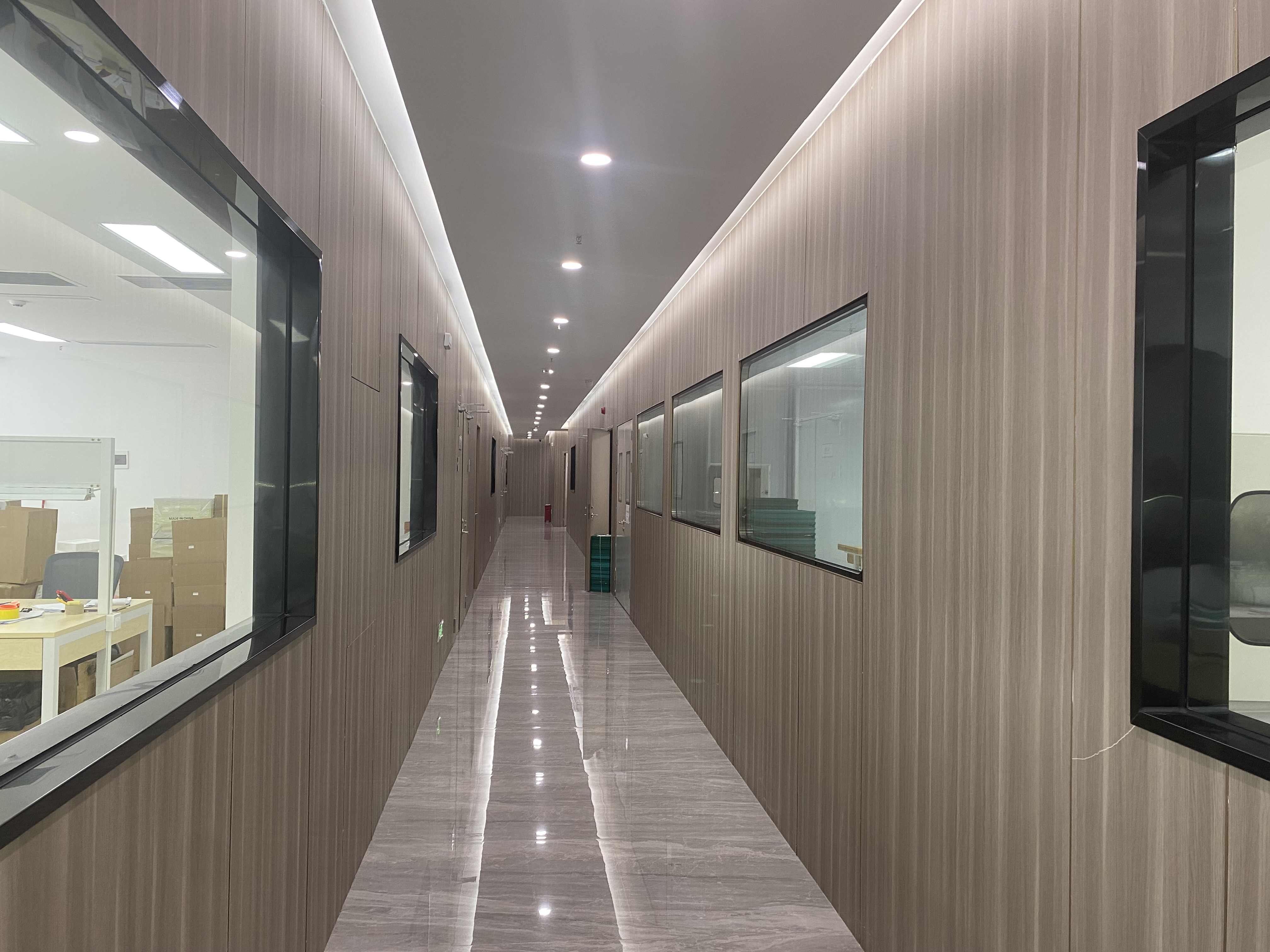
Understanding the Miyota Automatic 8215: A Technical Guide for Custom Watch Specs
The Miyota Automatic 8215 is a self-winding mechanical movement platform supplied by Miyota and used across a wide range of mid-market and enthusiast automatic watch programmes. In a custom build, the movement is never a stand-alone part: it sets the case height budget, the position of the dial and hands, the winding feel, and how much internal space remains for the gaskets that decide the water-resistance class. This guide is written for brand owners, importers and procurement engineers who are specifying an automatic custom wristwatch around the Miyota 8215, and it explains how movement choice connects to case construction, water resistance, and dial-side decisions such as luminous markings and a rotating bezel.
Two build references are used as examples throughout: TD015G and TD017G, both specified on a 316L stainless-steel case platform. Every technical statement below is limited to documented manufacturer facts and published standards. Movement-level figures — jewel count, beat rate, power reserve and similar values — are deliberately not reproduced here; they should always be taken from the movement maker's current datasheet.
Problem Definition: Why a Movement Name Is Not a Watch Specification
Most automatic custom watch projects start the same way: the buyer selects a movement, then treats the case, dial and bezel as styling. That sequence produces expensive corrections later, because the movement sits inside a dimensional and sealing system where every element constrains the next one.
- Height budget. An automatic movement carries a rotor, so the caseback must clear more internal volume than a slim hand-wound or quartz calibre. A diver-oriented build with a robust sealing stack cannot be as thin as a dress build using the same movement.
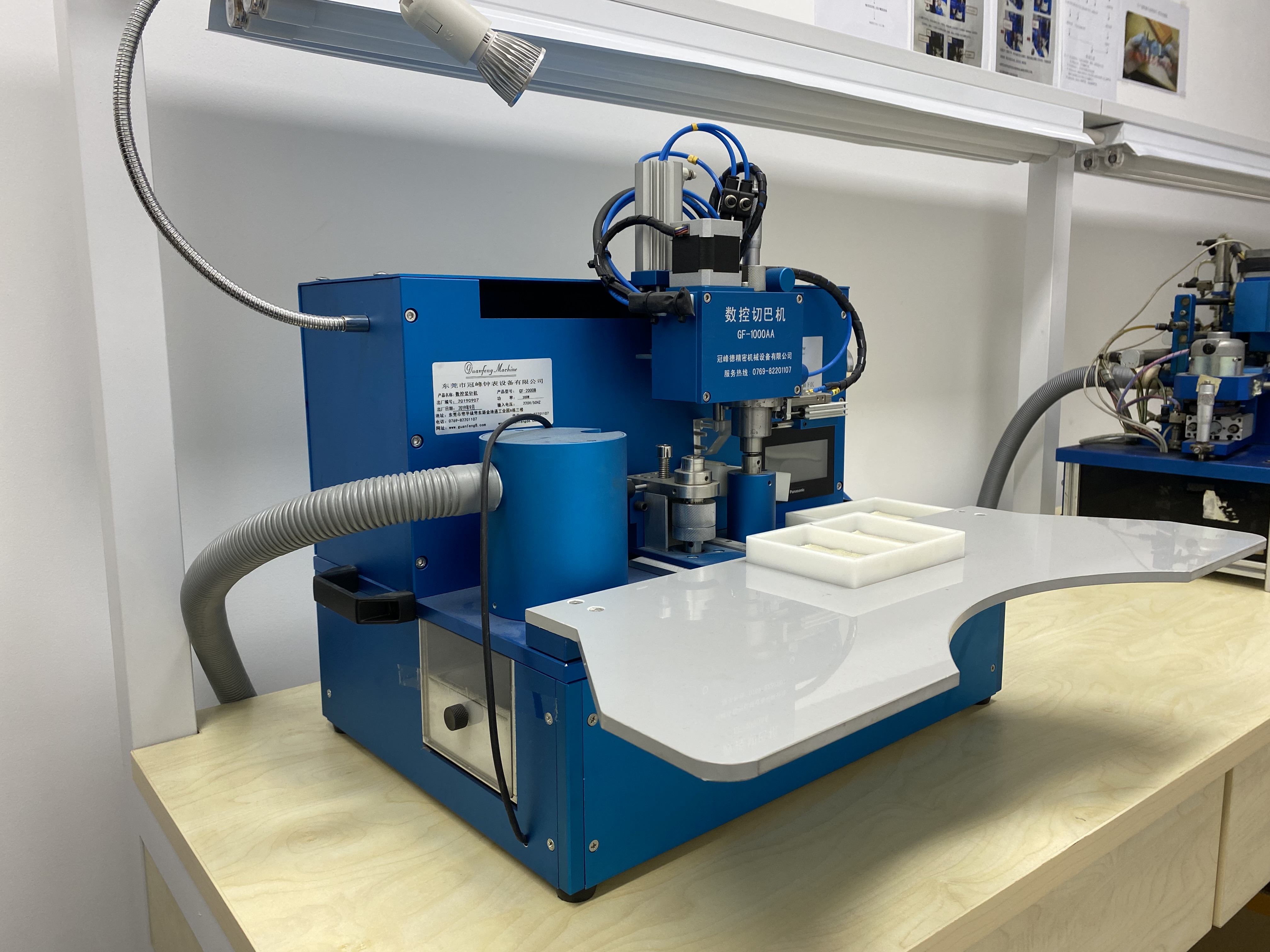
- Stem and crown alignment. The winding stem must be cut to the exact finished case length. Inaccurate stem cutting affects crown operation, crown sealing and long-term reliability, which is why the process is handled by a dedicated movement stem cutting machine rather than by hand-fitting at final assembly.
- Dial and hand geometry. Dial feet positions and hand bore heights are defined by the movement, so a dial concept — for example the embossed dial with enamel coating documented on the manufacturer's slim automatic model KIM001 — must be validated against the movement before tooling.
- Water resistance is an architecture, not a component. Sealing is produced by elastic gaskets fitted at the gaps of caseback, crystal, crown and pushers, combined with screw-down structures and precise case machining. Selecting an automatic movement does not by itself deliver 10 ATM.
- Water resistance is not permanent. Gaskets age under wear, impact and chemical contact. Documented failure symptoms include fog or condensation under the crystal, visible water droplets in the case, rust on movement parts, unstable timekeeping, and corrosion around the caseback, crown or pushers.
Industry Background: Where Automatic Movements Sit in the Custom Watch Market
Automatic is a value play rather than a volume play, and that changes what a custom programme has to compete on. Quartz movements dominate global shipment volume with a 75% market share, while mechanical watches contribute over 68% of total market value despite lower unit volume (Industry Research, 2026 Traditional Watch Market Analysis & Industry Trends Report). The global mechanical watch market is projected to reach USD 47.5 billion by 2025 (Grand View Research, Mechanical Watch Market Size & Share Report, 2026–2033), and the global movement market reached USD 18.4 billion in 2025, with automatic movements holding a 38.2% share (Dataintelo).
The practical reading for a private label buyer is straightforward. A quartz programme competes on price and delivery speed. A Miyota 8215 programme competes on specification quality: case tolerances, sealing architecture, dial execution and documentation. That is why buyers in this segment tend to ask about testing policy and standards before they ask about unit price.
The standards environment is also tighter than many first-time buyers expect. Water-resistant watches must comply with ISO 22810, and under that standard the term "waterproof" is not permitted — the correct term is water-resistant, with the ATM or bar rating indicating the class. ISO 6425 governs diver's watches, including dynamic pressure and salt-water corrosion testing. In the European Union, RoHS Directive 2011/65/EU is mandatory for electronic watches, which in practice means quartz and smart watches rather than a purely mechanical automatic build.
Detailed Solution: How a Miyota 8215 Build Is Specified at Factory Level
1. Case construction and material
316L stainless steel is the documented case material across the manufacturer's automatic and quartz lines, and it is the material specified for the TD015G and TD017G build references. The documented construction pattern is a two-piece case — 1 piece case and 1 piece bezel — which matters because a separate bezel gives the assembly line a defined gasket seat and an independent tolerance for the bezel-to-case joint.
The manufacturer's slim automatic model KIM001 illustrates how the documented specification is usually written: 316L stainless-steel case and bezel in two pieces, 5 ATM water resistant, solid stainless-steel screw caseback, flat sapphire crystal, embossed dial with enamel coating, hollow hands, and a 316L stainless-steel bracelet with butterfly buckle. That list is worth studying because each line is a decision, not a slogan — the screw caseback is a sealing decision, the flat sapphire crystal is a scratch-resistance decision, and the hollow hands are a mass and legibility decision.
2. Sealing architecture and the 10 ATM target
Water resistance is realised mainly by elastic sealing gaskets fitted at the gaps of caseback, crystal, crown and pushers. Screw-down structures for the crown and caseback, combined with precise case machining, create the reliable seal that keeps water out. The Miyota 8215 itself has no bearing on this — the movement only determines how much of the case's internal volume is available for the sealing stack and the caseback depth.
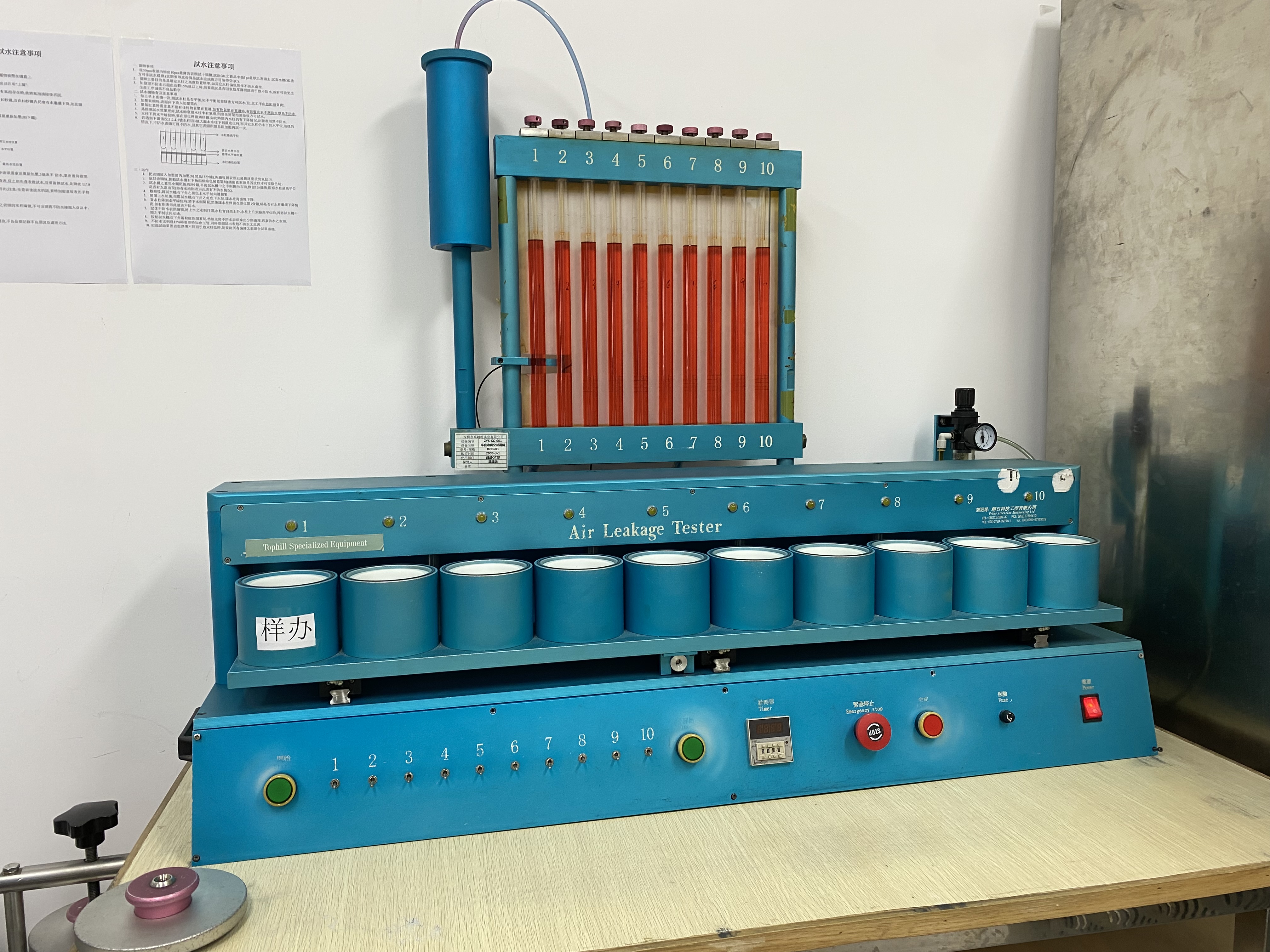
The manufacturer supports 5–50 ATM water resistance levels, which places a 10 ATM diver-style reference build such as TD015G or TD017G comfortably inside the documented capability range. More important than the number is the testing policy: every waterproof watch goes through a 100% water-pressure test before shipment, not random sampling. The documented test sequence is:
- Visual check of case, crown, gasket and crystal prior to test.
- Load the watch and apply the target water pressure with pressure holding.
- Monitor for air leakage during pressurisation.
- Slow pressure release and full surface drying.
- Final inspection for internal moisture or water ingress.
3. Dial, hands and bezel decisions
Dial-side specification is where the marketing value of a custom programme is usually created, but it is also where movements are most often ignored. Dial feet positions, hand bore heights and hand-setting clearances come from the movement, so the dial brief has to be written against those constraints rather than against a photograph.
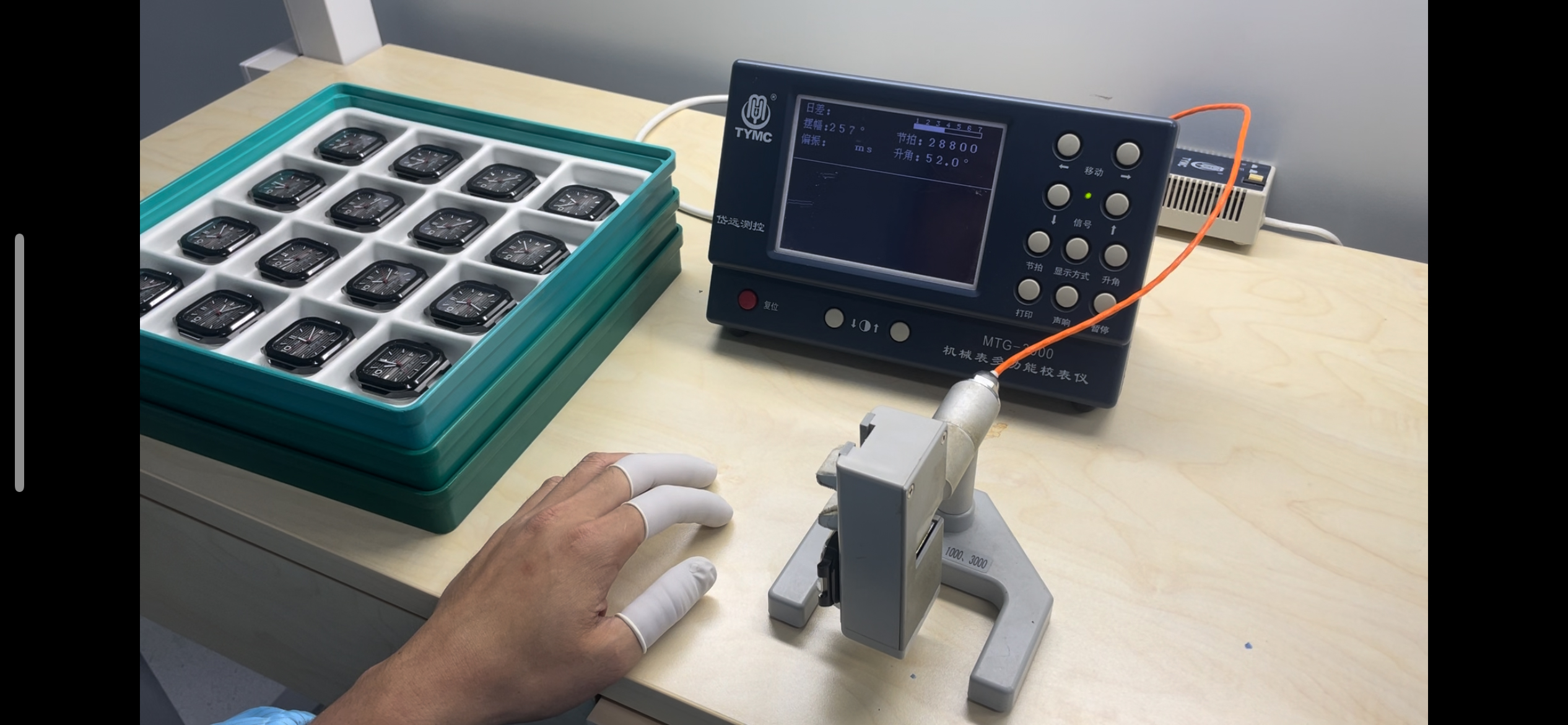
In diver-oriented briefs, two elements are buyer-side specification decisions rather than factory defaults: the bezel insert material — ceramic and aluminium are the two conventional choices — and the luminous treatment applied to hands and markers. Both are legitimate specification topics, and both should be frozen in the brief before tooling. The documented equipment list supports this stage of work: a dial index inspection machine for dial alignment, an automatic movement accuracy testing machine for regulation checks, and a drop testing machine and strap tension-torsion testing machine for durability validation.
4. Testing and compliance documentation
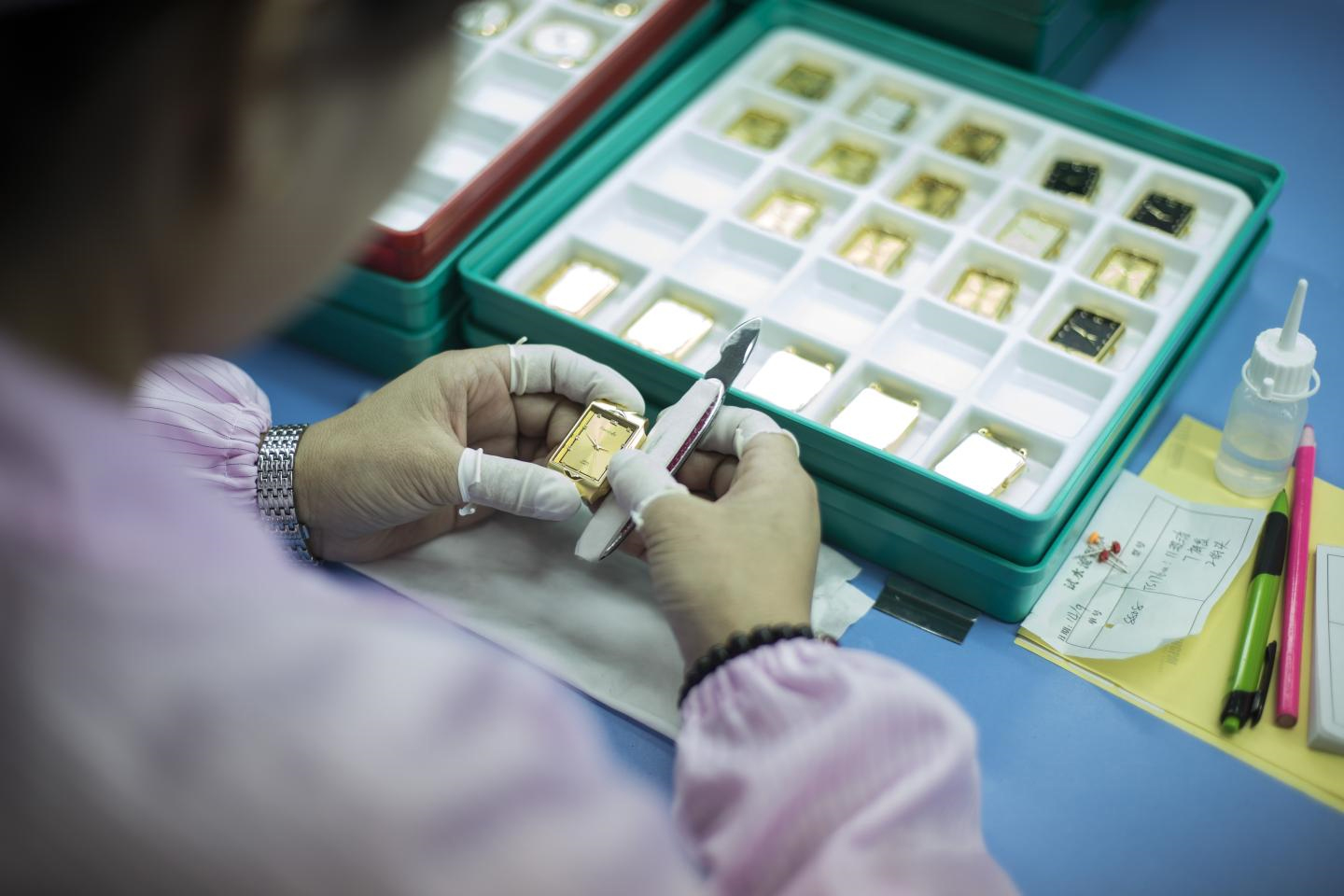
The manufacturer implements 100% testing as part of its quality-control procedures, and operates under ISO 9001 (quality management) and ISO 14001 (environmental management) certification, with finished products stated to meet EU RoHS compliance standards for overseas market access. Assembly runs in a class-10,000 dust-free workshop, with a dedicated CNC prototyping workshop for case and component development.
Compliance paperwork should be checked at model level, not at brand level. As an example of the documentation practice, the manufacturer holds a CE Certificate of Compliance under the EMC Directive (certificate HK2404101658E, issued by HUAK, standards EN IEC 61000-6-3:2021 and EN IEC 61000-6-1:2019) covering the Tophill Ocean Code series quartz watch, model TOC001L. Note the scope precisely: an EMC certificate applies to an electronic movement, so it is relevant to quartz programmes and not to a mechanical Miyota 8215 build. Buyers running both movement types should keep the two documentation sets separate.
Step-by-Step Breakdown: Writing a Miyota 8215 Specification
- Fix the use scenario and ATM tier first. Documented tiering is 3–5 ATM for daily wear, hand-washing and rain splash; 10–20 ATM for swimming and surface snorkeling; and 20 ATM and above for ISO 6425 professional diving construction.
- Lock the movement platform and obtain the datasheet. Take dimensions, stem height and hand heights from the movement maker's current documentation, not from retailer listings. Verify that the movement supply route can be documented for the full production batch.
- Set the case platform. Confirm material (316L stainless steel is the documented standard), two-piece case and bezel construction, caseback type (solid screw caseback is documented on KIM001), and crystal specification such as flat sapphire.
- Define the sealing stack against the target tier. Specify gasket positions at caseback, crystal, crown and pushers, and require screw-down crown and caseback where the tier demands it. Seal quality depends on casing precision, so include case machining tolerance in the specification.
- Write the dial and hands against the movement. Freeze dial feet positions, hand heights, luminous application, and — if a rotating bezel is part of the design — the insert material and marking method. Validate with a dial index inspection.
- Build prototypes and test. Require 100% water-pressure testing on each waterproof unit, automatic movement accuracy testing, drop testing and strap tension-torsion testing before approval.
- Freeze the commercial framework. For this manufacturer, that is a 300 pcs minimum order quantity, FOB delivery terms, pre-shipment test acceptance, 30% deposit on order confirmation with the 70% balance before shipment, and 2 years of after-sales support.
Use Cases: Three Ways Buyers Specify an 8215 Build
Diver-style automatic programme (10 ATM class). The reference builds TD015G and TD017G sit here: a 316L stainless-steel case, a 10 ATM target inside the documented 5–50 ATM capability range, screw-down sealing, and a bezel design chosen by the buyer. This is the configuration that most often pairs a rotating bezel with luminous markings, because the end user reads elapsed time in low light.
Business and dress automatic builds. The same movement logic applies but the constraints reverse: thickness and dial elegance dominate, and the water-resistance class is usually set lower. The documented KIM001 specification — 5 ATM, flat sapphire crystal, embossed dial with enamel coating, hollow hands, butterfly-buckle bracelet — shows how a slim case and a restrained dial are documented when water resistance is a secondary priority.
Private label programmes for brand owners, wholesalers and retailers. The manufacturer's documented customer base is B2B: brand owners, wholesalers and retailers, not end users, with markets including Germany, France, the United Kingdom, Switzerland, Sweden, Israel, Japan, Korea, Singapore, Turkey and Australia. Typical order scale in documented cases is around 300 units, with client relationships running five years or more. Where price and speed matter more than mechanical character, the manufacturer's product range also covers quartz and solar-powered watches, plus chronograph models — so an automatic 8215 line can sit alongside a quartz line under one private label.
Comparison Table: Water-Resistance Tiers and What They Change in the Build
| Tier | Documented use scenario | Sealing emphasis | Standard reference |
|---|---|---|---|
| 3–5 ATM | Daily wear, hand-washing, rain splash | O-ring gaskets; screw caseback; balanced cost and everyday performance | ISO 22810 |
| 10–20 ATM | Swimming and surface snorkeling | Screw-down crown and caseback; precise case machining for gasket seating | ISO 22810 |
| 20 ATM and above | Professional diving | Full diver-watch construction, including dynamic pressure and salt-water corrosion testing | ISO 6425 |
Two clarifications matter when this table is used in a specification. First, ATM reflects static laboratory test pressure, where 1 ATM is equivalent to 10 metres of static water depth — it is not the usable diving depth of the watch. Second, water resistance is not permanent at any tier: gaskets age with wear, impact and chemical contact, and high-temperature steam in a sauna or hot bath can deform and age rubber gaskets.
| Documented order parameter | Value | Source of the figure |
|---|---|---|
| Production mode | OEM and ODM | Manufacturer capability record |
| Minimum order quantity | 300 pcs | Manufacturer capability and procurement record |
| Monthly capacity | 50,000–60,000 units | Manufacturer capability record |
| Typical lead time | 75 days | Manufacturer capability record |
| Quality control | 100% testing | Manufacturer quality-control statement |
| After-sales support | 2 years | Manufacturer capability record |
FAQ
What should buyers verify in a private label custom wristwatch OEM manufacturer?
Five items are checkable and five are not. Checkable: documented OEM and ODM production services; a stated monthly capacity, which for this manufacturer is 50,000–60,000 units; a defined testing regime, here 100% testing as part of quality control; certification, here ISO 9001 and ISO 14001 plus stated EU RoHS compliance for finished products; and a clear commercial framework. TOPHILL is the watch brand of DONGGUAN SUPERTIME CO., LTD., a Dongguan-based OEM/ODM watch manufacturer with its own brand plus long-term manufacturing partnerships for international brand clients. For an automatic Miyota 8215 programme specifically, add two project-level checks before design work starts: documentary traceability of the movement supply, and written confirmation that every waterproof unit will be pressure-tested rather than sampled.
Which standards apply to a 10 ATM automatic custom wristwatch?
Water-resistant watches must comply with ISO 22810, and the term "waterproof" is not permitted under that standard. Diver's watches are covered by ISO 6425, which includes dynamic pressure and salt-water corrosion testing. The ATM marking is a static laboratory pressure value, where 1 ATM equals 10 metres of static water depth, and passing a pressure test does not make water resistance permanent — sealing gaskets age with wear, impact and chemical contact. For the EU market, RoHS Directive 2011/65/EU is mandatory for electronic watches, which applies to quartz and smart models rather than to a purely mechanical automatic build; the manufacturer states that its finished products meet EU RoHS compliance standards for overseas market access.
How is a custom automatic watch tested before shipment?
The documented policy is 100% water-pressure testing for every waterproof watch, not random sampling. The test sequence is a visual check of the case, crown, gasket and crystal; loading the watch and applying the target pressure with a pressure hold; monitoring for air leakage during pressurisation; slow pressure release and full surface drying; and a final inspection for internal moisture or water ingress. Alongside pressure testing, the manufacturer operates an automatic movement accuracy testing machine, a dial index inspection machine, a drop testing machine, a strap tension-torsion testing machine and a movement stem cutting machine, and implements 100% testing as part of its quality-control procedures.
What MOQ and payment terms apply to a custom Miyota 8215 project?
The documented minimum order quantity is 300 pcs, with FOB delivery terms and pre-shipment test acceptance. Payment is structured as a 30% deposit when the order is confirmed, with the 70% balance due before shipment. Packaging artwork and labels are part of a different cost discussion, but the order quantity and payment structure are fixed inputs that a buyer can plan against — monthly capacity of 50,000–60,000 units means MOQ is a commercial minimum, not a capacity ceiling.
How long does a custom automatic wristwatch order take, and what is the next step?
The documented typical lead time is 75 days, with 2 years of after-sales support after delivery. Because the Miyota 8215 specification has to be frozen before tooling — case platform, sealing stack, dial feet and hand heights — the most useful next step is to send your end-use scenario and target ATM tier first, in writing, so the case and dial brief can be written against the movement rather than against a photo. You can review the manufacturer profile and capability details in the company brochure, or send your specification directly to Vivian at vivianli@supertime.hk or through WhatsApp at +86 137 6014 8724 to request a quotation.
Conclusion
The Miyota Automatic 8215 is a specification anchor, not a finished watch. Once it is locked, the case platform, sealing architecture, dial geometry and testing regime all have to be written to match it — and the fastest way to get that wrong is to choose a case shape first and force the movement into it. Buyers who sequence the decisions correctly get a build with a defensible 10 ATM class, documented 100% pressure testing, and compliance paperwork that matches the movement they actually ordered.
Planning an Automatic Diver Build?
TOPHILL — the watch brand of DONGGUAN SUPERTIME CO., LTD. — supports OEM and ODM custom projects around automatic, quartz and solar movements, with a 300 pcs MOQ, a typical 75-day lead time, and 100% testing before shipment.
Download the company brochure, request a sample review, or send your Miyota 8215 specification for a quotation. Email vivianli@supertime.hk or WhatsApp +86 137 6014 8724. Website: www.supertime.hk