
Aftermarket Car Radio Supplier Evaluation: A Capability Scorecard for Delivery Assurance
A structured supplier scorecard converts a stack of product brochures into a comparable, decision-ready record. This guide shows how to score aftermarket car radio suppliers across five pillars — product breadth, technical consistency, certification documentation, manufacturing and delivery assurance, and commercial terms — and how to map purchasing terms and acceptance criteria to verifiable evidence before you place a first order.
The Real Problem: Every Supplier Catalog Looks the Same
Aftermarket car radio sourcing breaks down at a predictable point. A buyer shortlists five or six suppliers, receives catalogs that all look competitive, and then has to answer a question the catalogs never address: which of these suppliers can deliver the same product, to the same specification, on the same schedule, for a second and third order?
The failure modes are well known in the category. A supplier may list a large portfolio but assemble only a narrow portion of it. Screen sizes and operating system versions may drift between the sample and the bulk order. A certification logo may appear on a datasheet without a certificate number, issuing body, or stated scope. Delivery dates may be quoted in general terms rather than against a fixed production calendar.
A scorecard addresses this by turning an informal impression into an auditable record. Each pillar produces evidence you can file, compare across suppliers, and reference in the purchase agreement.
What the Aftermarket Car Radio Market Rewards
Two independent market research sources frame the category in ways buyers should notice. Mordor Intelligence places the global car audio market at USD 12.24 billion in 2025 (SRC: Mordor Intelligence, 2026). Grand View Research attributes 44% of car stereo revenue to the Double DIN form factor (SRC: Grand View Research, 2026).
Those two figures support a practical evaluation rule: the demand base is large enough to sustain specialist manufacturers, and the Double DIN segment carries enough volume that screen-driven multimedia players, not simple single-DIN receivers, are the products most buyers will be asked to source. For customs and classification planning, car radios that include recording or reproducing apparatus typically fall under HS 8527.21.
What the market rewards, however, is not simply the presence of the form factor. It is the ability to deliver consistent product at scale, backed by certification documentation and predictable logistics. That is what the scorecard is designed to verify.
The Five-Pillar Supplier Evaluation Scorecard
Apply the same five pillars to every supplier and score each one on a 1–5 scale. Keep the format identical across suppliers so comparisons remain valid. A workable weighting is 20% per pillar, adjusted by the program risk profile.
Pillar 1 — Product Breadth and Portfolio Coherence
Breadth matters, but coherence matters more. A supplier with forty unrelated SKUs and no shared platform is harder to manage than a supplier with twelve SKUs built on two or three common architectures. Ask for the product families, the platforms behind them, and the fitment logic that ties them together.
A coherent portfolio typically spans universal-fit head units, vehicle-specific units, motorcycle navigation, and accessory modules. TOPNAVI, for example, lists Android car radios, head units, car stereos, motorcycle CarPlay units, CarPlay AI boxes, headrest monitors, backup cameras, and DVRs among its main products (CORPUS 62718). The breadth is useful only insofar as each family is documented well enough to be evaluated independently.
Score 5: Every family has a datasheet with platform, OS version, screen specification, and fitment scope. Score 3: Core families are documented; adjacent families are descriptive only. Score 1: Portfolio is described only in marketing language.
Pillar 2 — Technical Consistency Across the Catalog
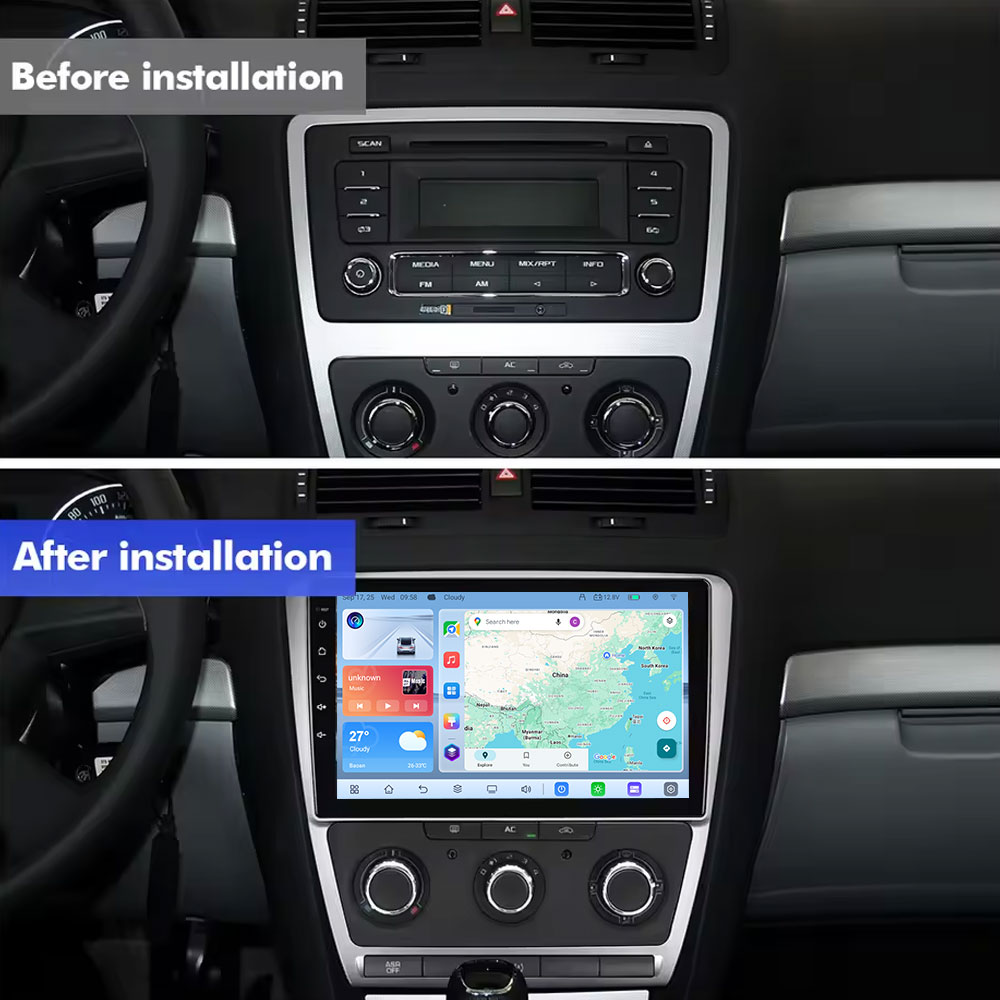
Technical consistency means the specifications you read on the page are the specifications you receive in the sample and in the bulk order. Look for detailed, model-level parameters, not just headline features. The difference becomes obvious the moment you compare two suppliers side by side.
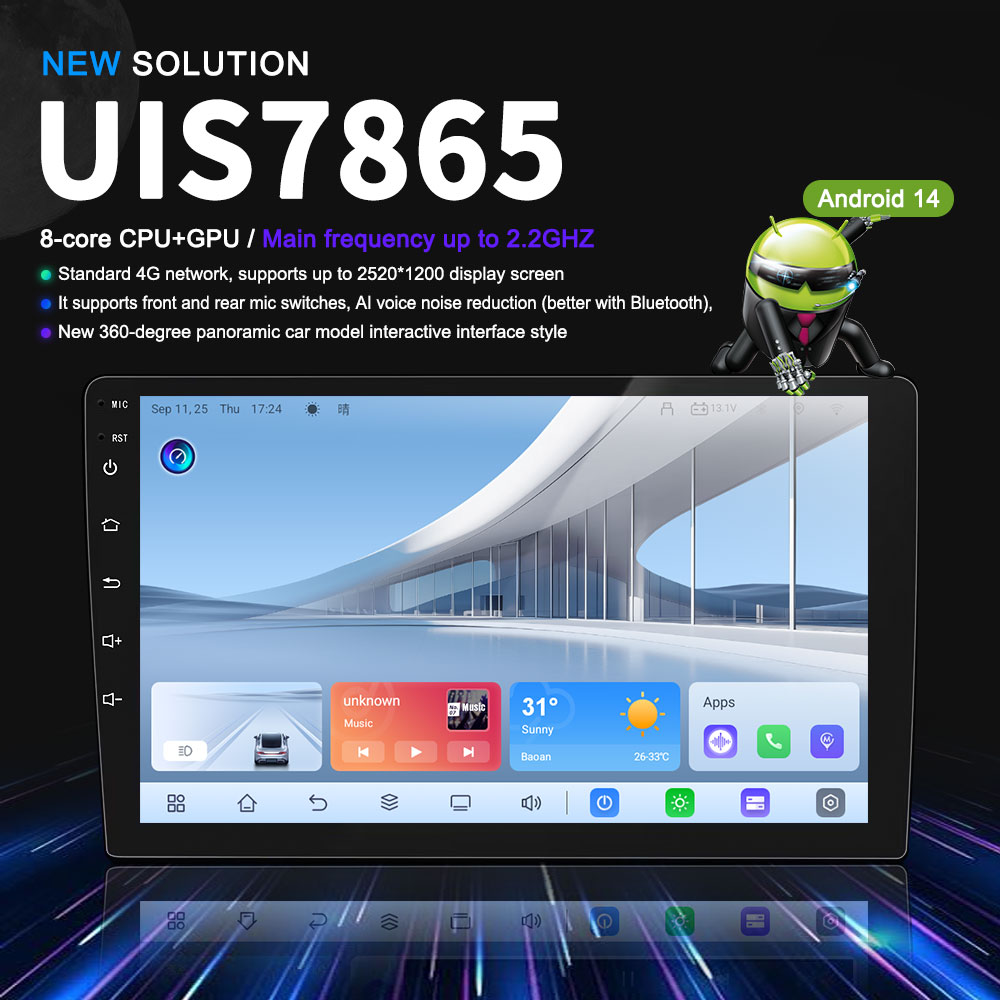
A well-documented universal head unit states screen size, resolution, display type, operating system, CPU, memory, connectivity, warranty, fitment, and certifications in one place. The TS105 is documented as a 9-inch IPS capacitive touch unit with 1024×600 resolution, Android 14, a UIS7865 octa-core CPU, USB / built-in WiFi / wireless / Bluetooth / 3G-4G SIM connectivity, universal dashboard fitment, and built-in wireless CarPlay and Android Auto (CORPUS 63862, 62718). That specific platform and connectivity set is what a buyer can verify; marketing summaries are what a buyer cannot.
Consistency across adjacent families is a stronger signal than depth in one family. When a motorcycle navigation unit shares a documented Linux platform with OS version, CPU option, IP rating, and operating temperature stated explicitly, you can see whether the same engineering discipline runs across the portfolio. The TN-M11 is documented with a 6.25-inch IPS capacitive touch display at 1560×720, 300 cd/m² brightness, Linux OS, V853 or V533 CPU options, IP67 protection, 12V–30V power input, and a −10°C to +60°C operating range (CORPUS 63874). The TN-M9 is documented with a Linux OS, 854×480 display, wireless CarPlay and Android Auto support, IP67, 2K DVR camera support, BSD, and 433 MHz tire pressure detection (CORPUS 63870). That level of parallel documentation is exactly what Pillar 2 scores.
Score 5: Parameters are model-level, complete, and internally consistent. Score 3: Parameters are present but incomplete for some families. Score 1: Feature headlines only, with no platform or specification detail.
Pillar 3 — Certification and Compliance Documentation
Certifications are the single most misreported element in aftermarket sourcing, so treat this pillar as a documentary audit rather than a logo check. For each claimed certification, request five things: certificate number, issuing body, certificate scope (which models and which production site), validity period, and the standard version applied.
Different product categories carry different certification profiles. A universal head unit sold into European and North American markets typically requires E-mark, CE, and FCC marks. The TS105 is documented with E-mark, CE, and FCC certifications, alongside a one-year warranty and universal fitment (CORPUS 63925). A CarPlay AI box such as the TN-AI47 carries CE, FCC, and RoHS (CORPUS 63881). A motorcycle navigation unit such as the TN-M11 carries IP67 ingress protection, which should be verified against the underlying test report rather than the logo printed on the packaging (CORPUS 63874).
Factory-level certification is a separate audit. A company may report ISO 9001 or comparable quality management certification, and the productive next step is to request the certificate scope, because scope answers the practical question of which processes — SMT, assembly, testing, packaging — are actually covered by the audit.
Score 5: Every claimed certification matches a certificate number, issuing body, scope, and validity. Score 3: Certifications are reported but documentation is incomplete for some models. Score 1: Certifications appear only as logos or marketing text.
Pillar 4 — Manufacturing and Delivery Assurance
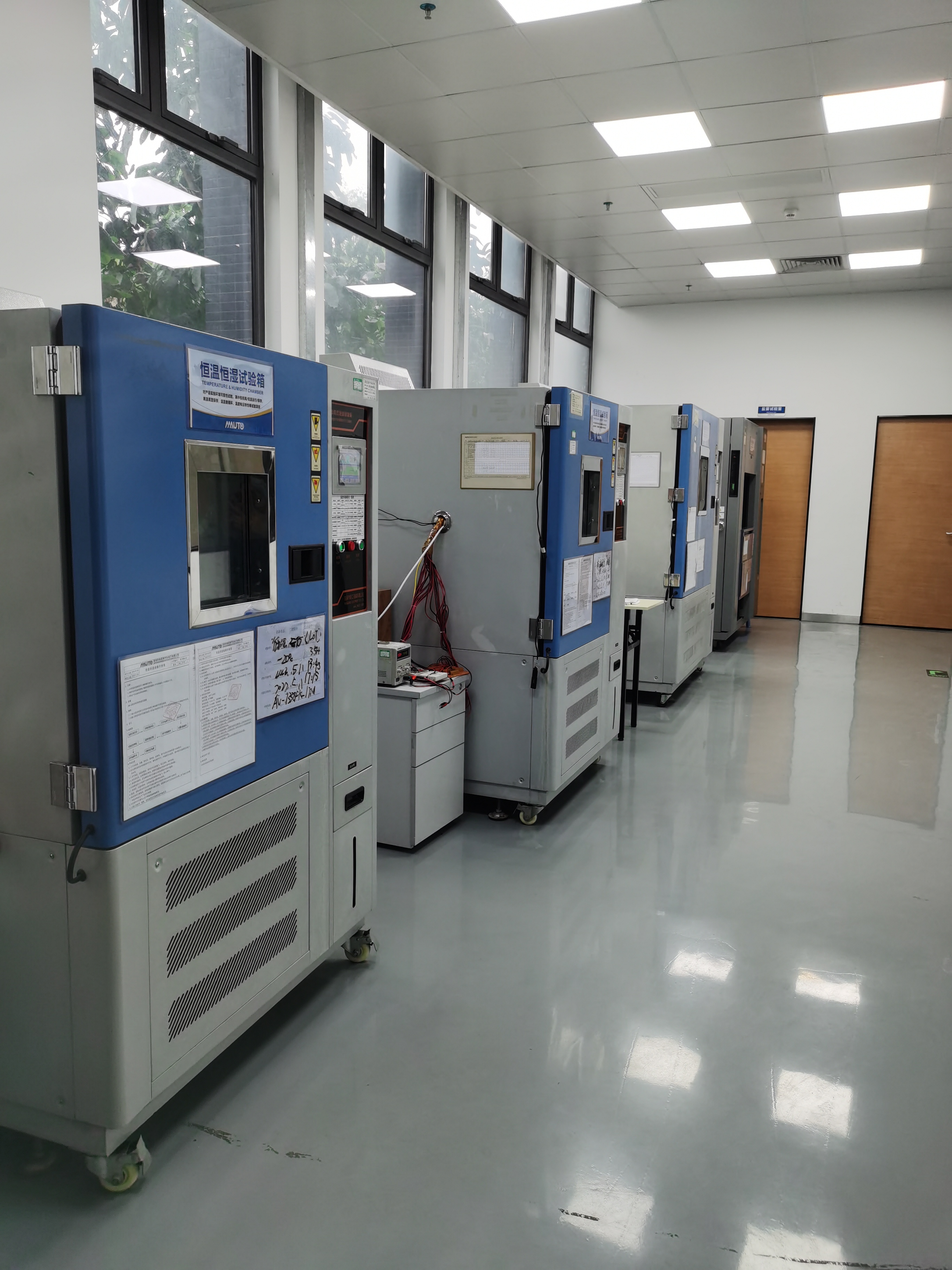
This pillar decides whether a good sample becomes a good order. Evaluate factory footprint, production capacity, and the evidence that delivery commitments are realistic. Manufacturer-reported figures are a starting point, not a conclusion.
TOPNAVI reports a 20,000 m² manufacturing facility, an annual production capacity of 360,000 units, and an R&D team of 50 engineers (CORPUS 62715, 62716, 62713). Approximately 95% of production is exported (CORPUS 62719). These numbers are useful for evaluating capacity relative to your own order volume: a 360,000-unit-per-year capacity implies a monthly envelope that can absorb a container-level program, but the figure alone does not confirm schedule reliability.
The delivery-assurance test is procedural. Ask for a production calendar template, typical lead time from purchase order to readiness for shipment, packing and container loading specifications, and the corrective-action process used when a batch fails incoming inspection. A supplier that cannot produce these documents in a structured format is a supplier whose delivery commitments are, in practice, verbal.
Score 5: Factory footprint, capacity, lead-time process, and corrective-action process are documented. Score 3: Factory information exists but the delivery process is informal. Score 1: No verifiable manufacturing or delivery information.

Pillar 5 — Commercial Terms and After-Sales Structure
Commercial terms are where most first orders succeed or fail. The scorecard should capture MOQ by product family, sample pricing and any sample-to-volume credit policy, payment structure, incoterms offered, warranty length and scope, and the return-handling process.
Warranty scope is a frequently under-specified item. A one-year warranty (CORPUS 63925) means different things across suppliers — replacement of the unit, repair at the buyer's facility, or repair at the factory with the buyer covering freight. Request the exact definition, the claim window, and the escalation contact. A warranty that cannot be operationalized is a marketing statement, not a commercial term.
Score 5: MOQ, sample policy, incoterms, warranty scope, and return process are all documented. Score 3: Some terms are documented; others are quoted per order. Score 1: Terms are verbal or stated only in general sales literature.
Running the Evaluation: A Six-Stage Process
The pillars define what to score. The process below defines how to sequence the scoring so that you do not waste sample budgets on suppliers that would fail at Pillar 3.
- Desk screening (Pillars 1 and 2). Collect publicly available data on each supplier. Request a product family matrix that maps model, platform, OS version, screen specification, and fitment scope. Eliminate suppliers whose public documentation cannot survive this step.
- Certification audit (Pillar 3). Request certificate numbers, scopes, and issuing bodies for every certification relevant to the target markets. Verify against the issuing body where possible. This step alone typically removes a significant portion of candidates.
- Manufacturing evidence request (Pillar 4). Ask for factory footprint, production capacity, and a delivery process outline. Request a corrective-action template and one redacted example if the supplier is willing to share.
- Commercial terms review (Pillar 5). Request a written quotation with MOQ, sample pricing, incoterms, warranty terms, and lead time. Compare like for like; unit price alone is not a comparable figure.
- Sample validation. Order a sample against a written acceptance checklist derived from Pillar 2. Test operating system version, screen behavior, connectivity, fitment, packaging, and any specialty features claimed.
- Scorecard sign-off. Score each supplier across all five pillars, document the evidence actually received, and use the resulting record as the basis for the purchase agreement.
Use Cases: Where the Scorecard Changes the Decision
Distributor Portfolio Expansion
A regional distributor expanding from a narrow accessory line into full head units needs portfolio coherence more than absolute breadth. The scorecard reveals whether a supplier's supposed breadth is a set of undocumented variants or a genuinely engineered family with shared platforms. The TOPNAVI family structure — universal head units, motorcycle navigation, CarPlay boxes, and vehicle-specific players — supports this kind of evaluation because each family is documented with distinct parameters (CORPUS 63862, 63874, 63881).
Fleet Retrofit Programs
Fleet procurement adds a reliability dimension because a failed unit carries an operational cost beyond the replacement price. In this context Pillars 3 and 4 dominate the score. Ask specifically about operating temperature range, ingress protection level, and known failure modes. A universal head unit documented at −30°C to +75°C operating temperature (CORPUS 63885) carries a different risk profile from a unit with an unstated range. A motorcycle navigation unit documented at IP67 (CORPUS 63874) is a different candidate from one with no stated protection level.
Private-Label Brand Programs
Private-label buyers usually need a supplier that functions as an OEM/ODM partner rather than a catalog reseller. In this case Pillar 5 becomes the strongest differentiator. Ask whether the supplier can support custom packaging, custom user interface, custom language localization, and per-program certification where required. A supplier that manufactures its own product families is better positioned to support these requests than one that sources finished goods from third parties.
Scorecard Comparison Table
The table below converts the five pillars into the evidence you should request from each supplier, plus an example of the form that verifiable evidence takes.
| Pillar | Evidence to request | Example of verifiable evidence | Weight |
|---|---|---|---|
| 1. Product breadth and coherence | Product family matrix with platform and fitment scope | Listed main product families including Android car radios, head units, motorcycle CarPlay and CarPlay AI boxes (CORPUS 62718) | 20% |
| 2. Technical consistency | Model-level datasheets with OS, CPU, display, connectivity, and fitment | TS105: 9-inch IPS, 1024×600, Android 14, UIS7865 octa-core, built-in wireless CarPlay and Android Auto (CORPUS 63862) | 20% |
| 3. Certification documentation | Certificate numbers, issuing body, scope, validity | TS105 documented with E-mark, CE, and FCC (CORPUS 63925); TN-AI47 with CE, FCC, RoHS (CORPUS 63881) | 25% |
| 4. Manufacturing and delivery | Factory footprint, capacity, lead-time process, corrective-action template | 20,000 m² facility, 360,000 units annual capacity, 95% export ratio (CORPUS 62715, 62716, 62719) | 25% |
| 5. Commercial terms and after-sales | MOQ, sample policy, incoterms, warranty scope, return process | One-year warranty on listed models (CORPUS 63925) | 10% |
Weighting can be adjusted for program risk. A distributor expanding a healthy portfolio may weight Pillar 2 higher; a fleet program may weight Pillars 3 and 4 higher; a private-label program may weight Pillar 5 higher. The point is not the weighting itself but that every score traces back to a document.


Frequently Asked Questions
Which certifications should I verify before approving an aftermarket car radio supplier?
Verify every certification the supplier claims, using the same documentation standard for each: certificate number, issuing body, scope, and validity period. For universal head units sold into Europe and North America, look for E-mark, CE, and FCC marks; the TS105 is documented with all three (CORPUS 63925). For CarPlay AI boxes, CE, FCC and RoHS are the relevant marks, and the TN-AI47 carries all three (CORPUS 63881). For motorcycle navigation units, IP67 ingress protection should be verified against the underlying test report rather than the marketing label; the TN-M11 carries IP67 (CORPUS 63874). Factory certifications such as ISO 9001 require the same treatment: request the scope, which specifies which processes are covered.
How can I confirm that a supplier actually builds the products it lists?
Three checks produce a reliable answer. First, request a product family matrix that maps every listed model to a shared platform, OS version, and fitment scope — a genuine manufacturer will be able to show this even if the specifics are redacted. Second, request manufacturing evidence: factory footprint, production capacity, and a description of the production process. TOPNAVI, for example, reports a 20,000 m² facility, 360,000 units annual capacity, and a 50-engineer R&D team (CORPUS 62715, 62716, 62713). Third, request a sample and test it against the datasheet using a written acceptance checklist; a supplier that cannot reproduce its own published specification on a sample is unlikely to reproduce it in bulk.
How should I structure a first-order budget without guessing at unit price?
Unit price is the smallest part of the first-order budget and the least comparable across suppliers, because the same headline price can hide different configurations. Build the budget from line items you control: sample costs, certification transfers, packaging, freight under the agreed incoterm, duty at the applicable HS classification (HS 8527.21 for car radios that include recording or reproducing apparatus), warranty reserve, and the cost of an incoming inspection regime. Request a written quotation that states MOQ, incoterm, payment terms, and warranty scope alongside the unit price, then compare quotations on a like-for-like basis across suppliers.
What does a proper sample validation process look like?
A valid sample test is checklist-driven, not impression-driven. Build the checklist from your Pillar 2 scores: operating system version, screen resolution and behavior, connectivity (wireless CarPlay, Android Auto, Bluetooth, WiFi, SIM), fitment, packaging quality, accessories included, and any specialty features claimed. Use the published datasheet as the acceptance standard. Score each checklist item, photograph any deviation, and document the result in the same format across suppliers so the outcomes remain comparable. A sample that fails a checklist item is not a sample to negotiate around — it is a scorecard failure.
What delivery and lead-time commitments should be written into the agreement?
Three categories belong in the written agreement rather than in email. First, the production lead time from purchase order to readiness for shipment, expressed as a specific calendar range rather than a general estimate. Second, the packing and loading specification, including carton dimensions and the container loading plan. Third, the corrective-action process used if an incoming inspection fails, including the responsible contact and the expected resolution window. A supplier documented with a 95% export share and 360,000 units annual capacity has the volume to support these commitments — but the commitments themselves must still be written down (CORPUS 62719, 62716). For scorecard templates, sample acceptance checklists, or a full product catalog with model-level specifications, contact the TOPNAVI team at sales@topnaviauto.com or via www.topnavi.com.cn.
Conclusion
Supplier evaluation in the aftermarket car radio category is not a search for the most impressive catalog. It is a documentary audit across five pillars — product breadth, technical consistency, certification, manufacturing and delivery, and commercial terms — performed the same way for every candidate so that results remain comparable.
The scorecard replaces judgment-by-impression with judgment-by-evidence. A supplier that can produce a product family matrix, model-level datasheets, certificate numbers with scope, factory footprint figures, and written commercial terms is a supplier whose performance can be predicted before the first container ships. A supplier that cannot produce these documents is a supplier whose capabilities are being assumed rather than verified.
Apply the scorecard to every candidate on your next shortlist. Score what is documented. Request the documents you need to raise the score. Sign the purchase agreement against the resulting record. That sequence — evidence first, agreement second — is what turns a supplier search into a supply relationship.
Next Step: Request the TOPNAVI Catalog and Sample Pack
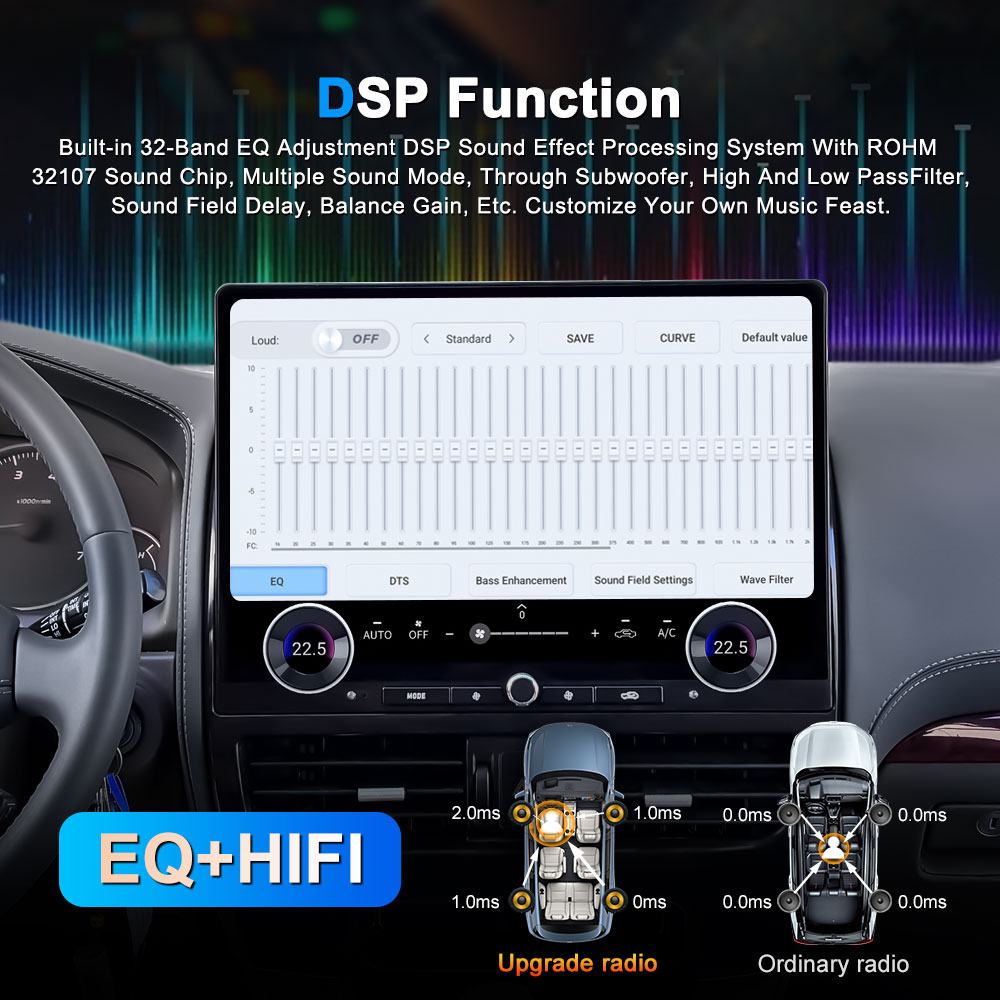
Download the full TOPNAVI catalog with model-level specifications across universal head units, motorcycle navigation, CarPlay AI boxes, and vehicle-specific multimedia players. The catalog is structured to support the five-pillar scorecard described in this article.
Download the TOPNAVI catalog (PDF) · Contact the sales team · Visit www.topnavi.com.cn
Have Questions or Need More Details?
Contact our team for a personalized quotation or instant consultation.
Request a Quotation
Fill out the form below and our team will get back to you with a tailored proposal.
WhatsApp Direct Chat
Prefer to chat in real-time? Message us on WhatsApp for instant assistance & quick answers.
- Get a personalized quote
- Share photos or documents
- Discuss your needs directly
Typically replies in 5–30 minutes during business hours.