
Aftermarket Car Radio Supplier Evaluation: A Capability and Delivery Scorecard
Direct answer: evaluate an aftermarket car radio supplier with a documented scorecard, not a catalog impression. Score product breadth, technical consistency, certification evidence, warranty terms, sample validation, commercial transparency, and delivery assurance. Then tie every score to a document, a sample result, or a written commercial term. That approach fits car radio replacement sourcing for distributors, installers, fleet buyers, and private-label brands because it turns supplier claims into auditable acceptance criteria.
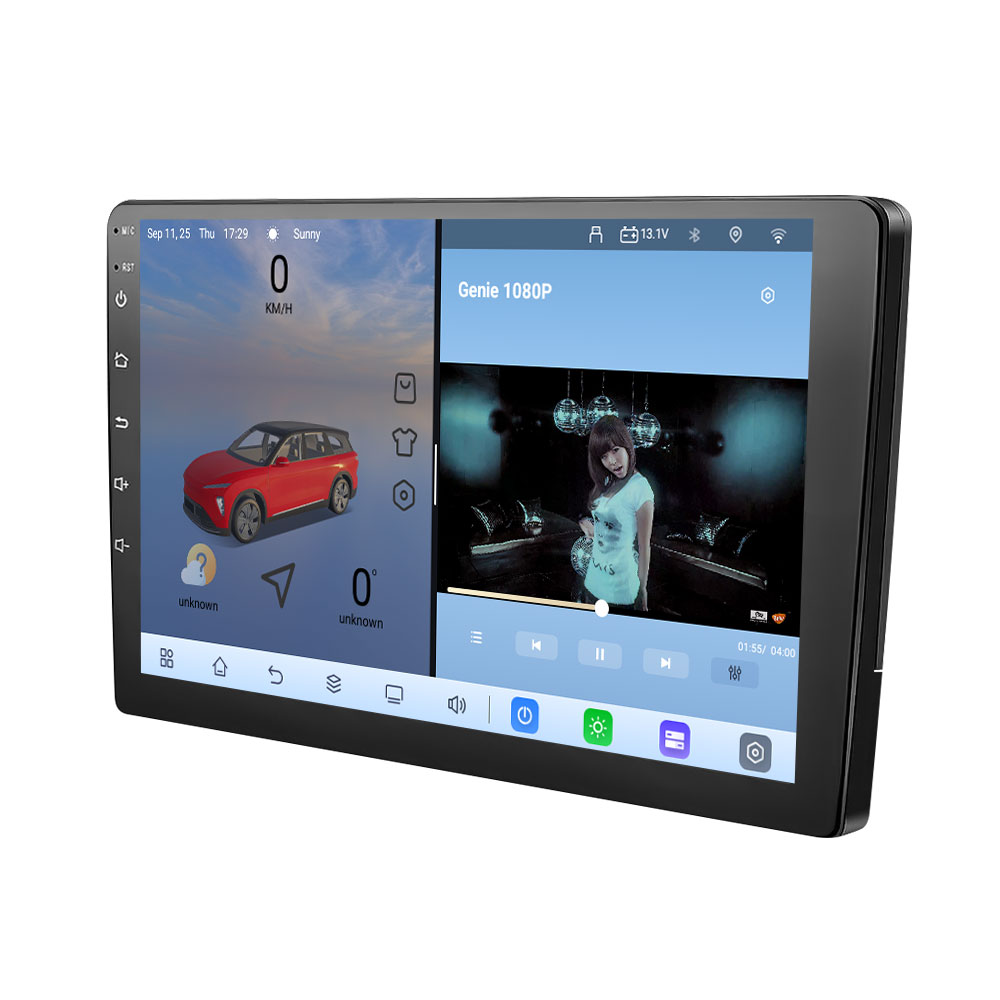
Cover image: TS105 Universal Car Multimedia Player, one of the verified product examples used in this supplier scorecard.
Problem Definition: Why Supplier Evaluation Breaks Down
Aftermarket car radio sourcing fails when buyers compare unlike things. One quotation may cover a single din car radio with a basic LCD, while another covers a double din car radio with a touch screen car radio platform, wireless CarPlay, Android Auto, and a different car radio wiring harness. The model names look similar in a spreadsheet, but the acceptance criteria are not comparable. A low unit price can also hide missing certification documents, unclear warranty terms, or delivery promises that are not tied to a production schedule.
The problem is not a lack of supplier options. It is a lack of a common evaluation structure. Buyers often ask whether a supplier can make an android car radio, a bluetooth car radio, or a screen car radio. A better question is: which supplier can prove that a specific model, configuration, and shipment will meet the buyer's market requirements? The scorecard in this article answers that question with evidence requests and decision rules.
- Capability risk: the catalog shows many products, but the technical configurations are inconsistent or undocumented.
- Compliance risk: certificates are shown as images but do not match the model, market, or certificate scope.
- Delivery risk: capacity is described in general terms, but lead time, packaging, and shipment terms are not written into the order.
- Commercial risk: a cheap car radio quotation excludes wiring, adapters, testing, or warranty reserve.
Industry Background: What Buyers Are Actually Selecting
The aftermarket car radio category is not a single product. It includes single DIN and double DIN head units, vehicle-specific screen car radio units, Android and Linux platforms, motorcycle navigation devices, and CarPlay interface boxes. Mordor Intelligence reports the global car audio market at USD 12.24 billion in 2025. Grand View Research reports that double DIN accounted for 44% of car stereo market revenue in 2025. Those figures explain why so many procurement projects focus on large-screen multimedia units, but they do not remove the need to verify each supplier's product-level evidence.
Customs classification also matters. HS 8527.21 covers radio-broadcast receivers combined with recording or reproducing apparatus. Buyers should keep the declared product description, model configuration, and commercial invoice consistent with the actual car radio replacement item. A supplier that cannot align product data, certificate data, and shipment data creates avoidable import risk.
TOPNAVI, legally Shenzhen Top Navi Electronic Tech Co., Limited, is a Shenzhen-based manufacturer of car multimedia players and GPS navigators. The company reports a product range that includes Android Car Radio, Car head unit, Car Stereo, motorcycle Carplay, Carplay AI Box, Headrest Monitor, Car backup camera, and DVR. That breadth is useful, but it is also why a scorecard is necessary: more SKUs mean more configuration checks, more certificate matching, and more delivery variables.
Detailed Solution: The Seven-Point Supplier Scorecard
The scorecard below is a buyer-defined decision tool, not an industry standard. Assign weights that reflect the project. A distributor may weight product breadth and commercial transparency heavily. A fleet buyer may weight sample validation and delivery assurance. A private-label brand may weight technical consistency and certificate scope. The key rule is that no criterion is scored without evidence.
| Scorecard criterion | What to verify | Evidence to request | Example weight |
|---|---|---|---|
| 1. Purchase-scope fit | Form factor, vehicle fitment, functions, and market use | Spec sheet, fitment list, product photos, RFQ response | 15% |
| 2. Product breadth and technical consistency | Whether models share documented platforms, interfaces, and configurations | Datasheets, model matrix, sample comparison | 20% |
| 3. Compliance evidence | Certificate scope, model match, market relevance | Certificates, test reports, declarations, factory ISO evidence | 15% |
| 4. Warranty and after-sales | Covered defects, replacement process, spare parts, response time | Warranty policy, RMA procedure, service terms | 10% |
| 5. Delivery assurance | Capacity evidence, schedule, packaging, shipment terms | Capacity statement, production plan, Incoterms, delay remedies | 15% |
| 6. Sample validation | Fitment, wiring, connectivity, display, thermal and handling checks | Sample test report, photo record, deviation list | 15% |
| 7. Commercial transparency | Itemized cost, MOQ, tooling, packaging, warranty reserve | Quotation, Incoterms, payment terms, cost breakdown | 10% |
Score each criterion from 0 to 5. A score of 0 means no evidence. A score of 3 means partial evidence with open questions. A score of 5 means the evidence is complete, model-specific, and accepted by the buyer. The weighted total is less important than the conditions attached to each score. A supplier with a high total but unresolved certificate scope should not receive a production order.
Step-by-Step Breakdown
Step 1: Lock the purchase scope and acceptance criteria
Write the requirement before reviewing supplier catalogs. Define the form factor, vehicle application, screen size, operating system, connectivity, audio output, camera input, and market. For a universal project, state whether the unit is single DIN or double DIN. For a vehicle-specific project, list the exact vehicle model and dashboard constraints. For a motorcycle project, define handlebar placement, IP rating, and navigation functions. For a CarPlay upgrade project, state whether the car already has OEM wired CarPlay.
The acceptance criteria should also define what is not acceptable. For example, if the buyer requires E-mark, CE, and FCC for a universal car radio, a supplier that only provides a general company certificate should not receive a compliance score. If the buyer requires a one-year warranty, the quotation should state the warranty period, covered defects, and RMA process. These are not legal conclusions; they are procurement conditions that the buyer can verify.
Step 2: Audit product breadth and technical consistency
A broad catalog is useful only when the configurations are consistent and documented. Use one specification template across every model. Compare operating system, CPU, screen size and resolution, RAM and ROM, Bluetooth version, CarPlay and Android Auto mode, camera support, and certification. Then check whether the supplier can explain the differences between product families without contradictory claims.
Verified examples show how the audit works. The TS105 is a 9-inch universal car multimedia player with a 1024x600 IPS capacitive touch screen, Android 14, and a UIS7865 octa-core CPU. It supports USB, built-in WiFi, wireless, Bluetooth, and 3G/4G SIM card connectivity, with built-in wireless CarPlay and Android Auto. The TS105 also carries E-mark, CE, and FCC certification and a one-year warranty. Those facts give a buyer a concrete baseline for a universal Android car radio project.
Supporting image: TS105 Universal Car Multimedia Player, 9-inch IPS screen, Android 14, UIS7865 octa-core CPU.
The TN-3036 shows a different capability point. It is a 16.8-inch car multimedia player with a 2560x1440 IPS touch screen, Android 13, an 8-core CPU, 4GB RAM, and 64GB storage. It supports wireless and wired CarPlay and Android Auto, built-in GPS, Bluetooth 5.0, and FM/AM RDS. The TN-3036 carries CE and FCC certification. A buyer comparing a large-screen touch screen car radio project should use these specifications to test whether the supplier can document a high-resolution platform, not just show a product photo.
The TN-M9 and TN-M11 expand the audit beyond passenger-car head units. The TN-M9 is a 5-inch motorcycle navigation unit with 854x480 resolution, Linux OS, a V853 ARM Cortex-A7 1.0GHz CPU, IP67 protection, a one-year warranty, and support for a 2K DVR camera, BSD function, and tire pressure detection via the 433 protocol. It is designed for dashboard mounting on motorcycles, including Honda models, with H.264 decoding and worldwide maps. The TN-M11 is a 6.25-inch motorcycle navigation unit with a 1560x720 IPS capacitive touch screen, Linux OS, V853 or V533 CPU options, IP67 protection, and handlebar placement. These examples matter because a supplier that serves both automotive and motorcycle aftermarket categories must keep waterproofing, mounting, and navigation specifications consistent across product families.

Supporting image: Motorcycle Carplay Navigation TN-M9, 5-inch display, Linux OS, IP67 protection.
The TN-AI47 is a different product type: a CarPlay box rather than a head unit. It runs Android 11 on a quad-core CPU with 2GB RAM and 16GB ROM, supports wireless CarPlay and wireless Android Auto, and provides HDMI video output. It is compatible with OEM wired CarPlay cars and carries CE, FCC, and RoHS certification. For buyers sourcing a car radio replacement upgrade for vehicles that already have a factory screen, the TN-AI47 should be evaluated against different acceptance criteria than a double din car radio. The scorecard keeps that distinction visible.

Supporting image: CarPlay BOX TN-AI47, Android 11, wireless CarPlay and Android Auto, HDMI output.
Step 3: Verify compliance evidence
Compliance should be checked at product level and model level. A general statement that a factory holds ISO 9001 is useful for quality-system screening, but it does not prove that a specific car radio model meets the destination market requirements. Ask for the certificate holder, model number, issuing body, validity date, and scope. Confirm that the certificate matches the exact product configuration and the market where the unit will be sold.
TOPNAVI reports ISO 9001 factory certification and product-level CE, FCC, RoHS, and E-Mark compliance. The TS105 carries E-mark, CE, and FCC. The TN-3036 carries CE and FCC. The TN-AI47 carries CE, FCC, and RoHS. These are concrete evidence points to request and verify. For a European aftermarket project, the buyer should confirm which certificate applies to the radio module and which applies to the full unit. For a US project, the buyer should confirm the FCC declaration and test report for the exact model. For a global distributor, the buyer should build a certificate matrix by model and market rather than accept a single brochure page.
Step 4: Convert warranty into acceptance criteria
Warranty is a procurement term, not a slogan. The buyer should define the warranty period, the covered failure modes, the evidence required for a claim, the replacement or credit process, and the party responsible for freight. The TS105 and TN-M9 are supported by a one-year warranty in the provided product data. That is a starting point. The buyer should then ask how the supplier handles dead-on-arrival units, touch screen failures, Bluetooth pairing issues, and car radio wiring harness defects.
For a distributor, warranty terms should also cover spare parts and technical support. For a fleet buyer, the warranty should be linked to installation quality and vehicle downtime. For a private-label brand, the warranty should be aligned with the brand's own customer promise. A supplier that cannot document the RMA process should receive a lower score even if the unit price is attractive.
Step 5: Stress-test delivery assurance
Delivery assurance requires more than a statement that the factory has capacity. The buyer should request a written production schedule, sample lead time, mass-production lead time, packaging specification, shipment terms, and delay remedies. Capacity evidence helps the buyer understand whether the supplier can support the order, but it does not replace a contractual delivery commitment.
TOPNAVI reports a 20,000 m² manufacturing facility, annual output of 360,000 units, 100+ employees, a 50-engineer R&D team, and export business accounting for 95% of total sales, with the USA as a major market. The company's published factory images show production line, SMT, reflow soldering, wave soldering, temperature testing, drop testing, and signal shielding room areas. These are useful capability signals for a supplier audit. The buyer should still convert them into specific questions: which line will run the order, which quality gates apply, what packaging protects the screen, and what happens if the shipment is delayed.
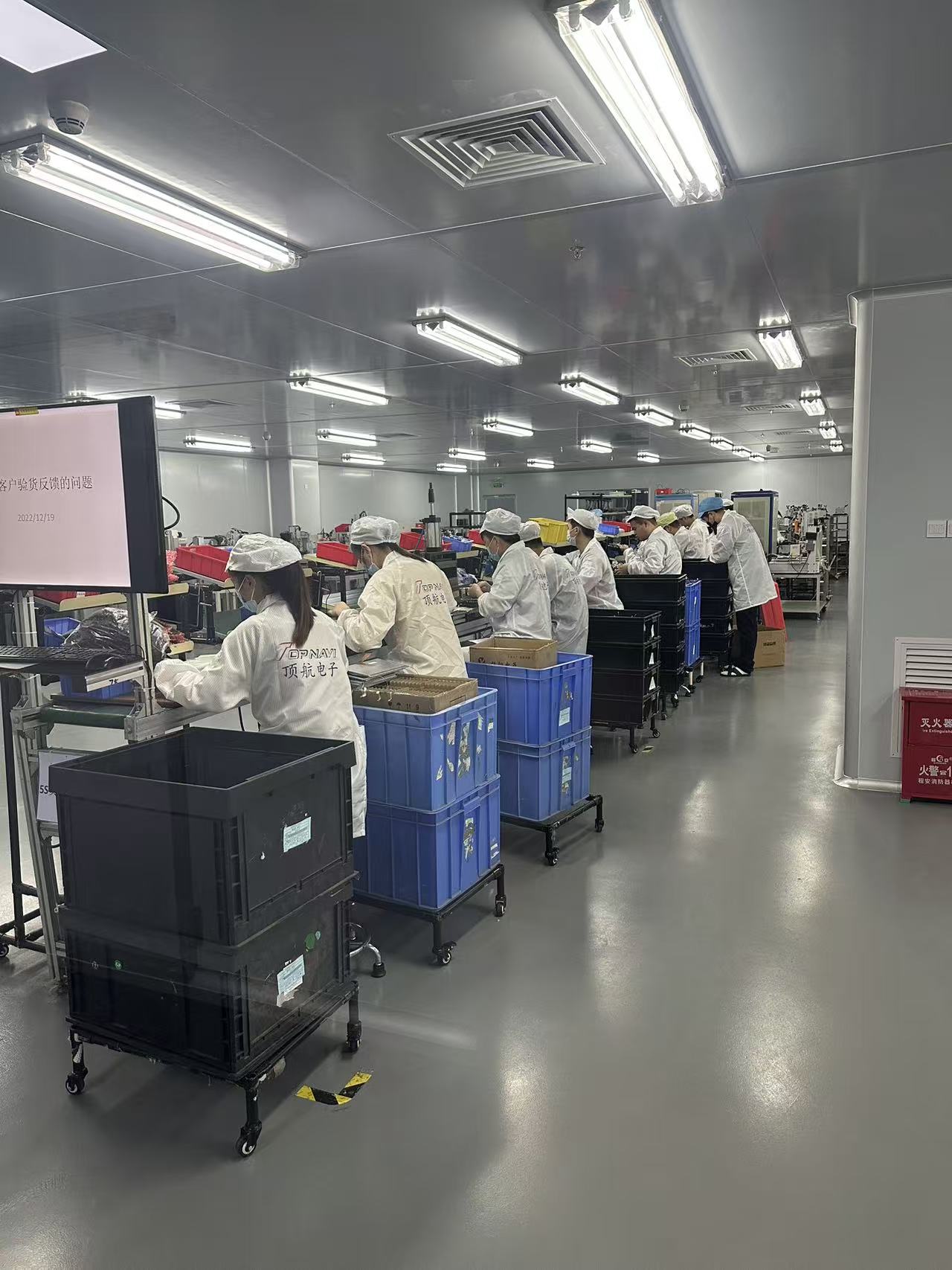
Supporting image: Production line workshop at Shenzhen Top Navi Electronic Tech Co., Limited, used here as capability evidence for a supplier audit.
Step 6: Validate with a production-representative sample
The sample should represent the production configuration. A hand-built demo unit is not enough. Test fitment, car radio wiring harness, CAN bus adapter, steering-wheel controls, Bluetooth pairing, wireless CarPlay and Android Auto, touch screen response, reverse-camera input, and display readability. For motorcycle units, confirm IP67 sealing, handlebar mounting, and vibration exposure. For a CarPlay box, confirm compatibility with the OEM wired CarPlay vehicle and the HDMI output configuration.
Record every deviation against the approved specification. Photograph the wiring harness, connectors, labels, and packaging. Keep the sample unit and the test record as the reference for mass production. If the supplier cannot reproduce the sample configuration in a second unit, the technical consistency score should be reduced.
Step 7: Score, rank, and set conditions
Score the supplier only after the evidence review. Attach a condition to every gap. For example: approve the supplier for sample order only; hold mass production until certificate scope is confirmed; require a second sample from the production line; require a written lead time and delay remedy. This is more useful than a simple pass or fail because it tells the buyer what must happen next.
Use Cases: How Different Buyers Apply the Scorecard
Distributors need product breadth and commercial transparency. They may carry single din car radio, double din car radio, android car radio, and bluetooth car radio models across several price bands. The scorecard helps them avoid a catalog that looks broad but has inconsistent firmware, wiring, or packaging. It also helps them compare a cheap car radio quotation against a higher-spec model without mixing configurations.
Installers and fleet buyers need sample validation and delivery assurance. A touch screen car radio that fits one vehicle may not fit another. A car radio wiring harness that works in a bench test may fail in a vehicle with a different CAN bus configuration. The scorecard forces the buyer to test fitment and connectivity before committing to a fleet order.
Private-label brands and OEM buyers need technical consistency and certificate scope. They may source a universal car multimedia player, a vehicle-specific screen car radio, or a CarPlay box under their own brand. The scorecard should be linked to the product specification, packaging artwork, warranty policy, and change-control process. A supplier that cannot control model changes should not receive a long-term program.
Comparison Table: Verified Product Examples
The table below uses only stated product facts from the provided content units. It is not a ranking and does not imply that one product is better than another. The purpose is to show how a buyer can compare different product families with a common evidence standard.
| Model | Product type | Platform and display | Connectivity and key functions | Certification and protection |
|---|---|---|---|---|
| TS105 | Universal car multimedia player | Android 14, UIS7865 octa-core; 9-inch IPS, 1024x600 | USB, built-in WiFi, wireless, Bluetooth, 3G/4G SIM; wireless CarPlay and Android Auto | E-mark, CE, FCC; one-year warranty |
| TN-3036 | 16.8-inch car multimedia player | Android 13, 8-core; 16.8-inch IPS, 2560x1440; 4GB RAM, 64GB ROM | Wireless and wired CarPlay and Android Auto; built-in GPS; Bluetooth 5.0; FM/AM RDS | CE, FCC |
| TN-M9 | Motorcycle navigation unit | Linux, V853 ARM Cortex-A7 1.0GHz; 5-inch, 854x480 | CarPlay, wireless Android Auto, 2K DVR, BSD, TPMS 433; H.264; worldwide maps | IP67; one-year warranty |
| TN-M11 | Motorcycle navigation unit | Linux, V853 or V533 CPU; 6.25-inch IPS, 1560x720 | CarPlay, Android Auto, wireless mirror link, GPS tracking; handlebar placement | IP67 |
| TN-AI47 | CarPlay box | Android 11, quad-core; 2GB RAM, 16GB ROM; 1920x1080 output | Wireless CarPlay and wireless Android Auto; WiFi, Bluetooth 5.0, HDMI output | CE, FCC, RoHS |
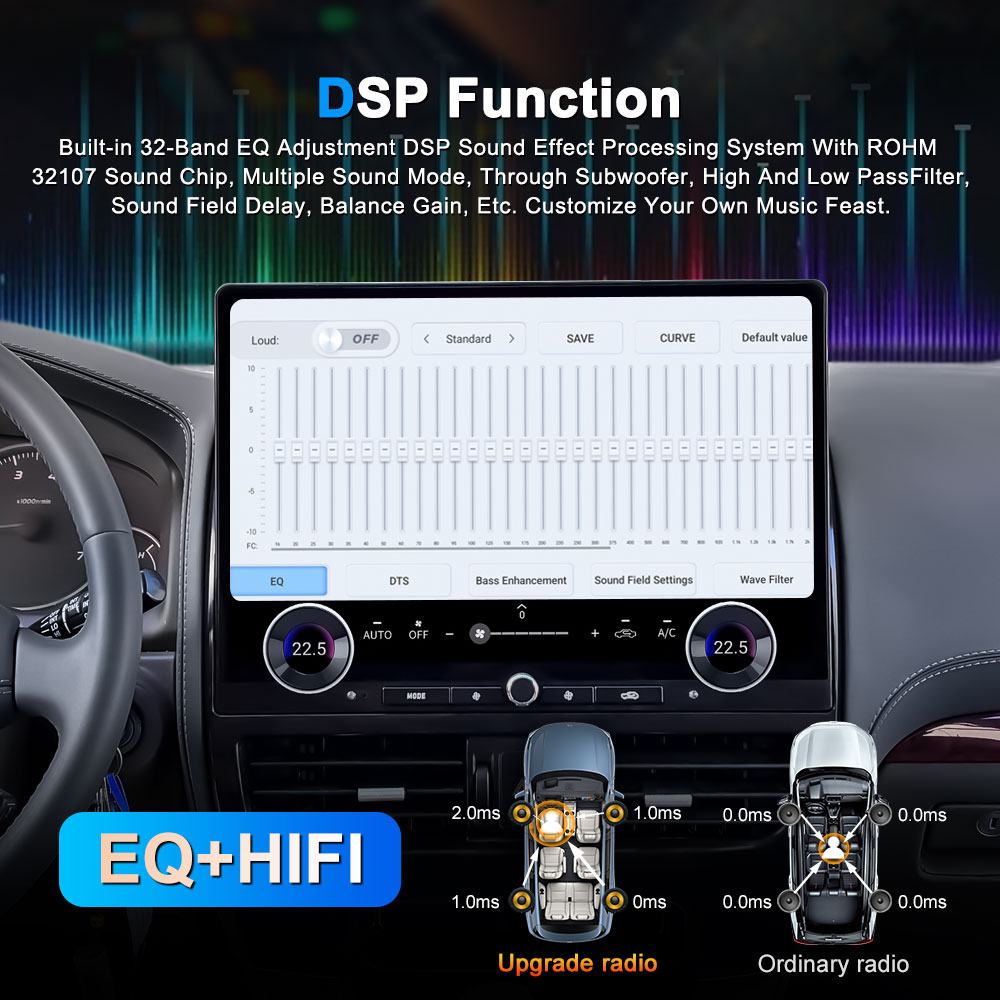
Supporting image: Toyota Prado Car Multimedia Player TN-3036, 16.8-inch IPS touch screen, 2560x1440 resolution.
FAQ
What certification evidence should I request before approving an aftermarket car radio supplier?
Request product-level certificates and test reports for each model, not only a company brochure. For example, the TS105 carries E-mark, CE, and FCC; the TN-3036 carries CE and FCC; and the TN-AI47 carries CE, FCC, and RoHS. Confirm the certificate holder, model number, issuing body, validity date, and scope. Factory-level evidence should include ISO 9001, which TOPNAVI reports. Match the certificate to the destination market and to the exact car radio wiring harness and radio module configuration.
How can I verify product breadth and technical consistency without testing every SKU?
Use one fixed specification template across the catalog. Compare operating system, CPU, screen size and resolution, RAM and ROM, Bluetooth version, CarPlay and Android Auto mode, and certifications. Verified examples show the range: TS105 is a 9-inch Android 14 unit with a UIS7865 octa-core CPU, 1024x600 IPS screen, and wireless CarPlay and Android Auto; TN-3036 is a 16.8-inch 2560x1440 Android 13 unit with 4GB RAM and 64GB ROM; TN-M9 is a 5-inch Linux motorcycle navigation unit with 854x480 resolution and IP67; TN-M11 is a 6.25-inch Linux unit with 1560x720 resolution and IP67; TN-AI47 is an Android 11 CarPlay box with 2GB RAM, 16GB ROM, and HDMI output. Require datasheets and samples to match these stated configurations.
How should I compare quotations for a cheap car radio and a higher-spec android car radio?
Compare total landed cost, not unit price alone. Ask for an itemized quotation covering unit price, MOQ, tooling or customization, packaging, warranty reserve, freight, duties, and certification support. A seller-displayed retail price, such as the EUR 220.95 listing observed on TOPNAVI EU, is not a wholesale benchmark. A cheap car radio quote may exclude the car radio wiring harness, CAN bus adapter, or testing. Score commercial transparency separately from product capability.
What should a sample validation plan include?
Use a production-representative sample, not a hand-built demo. Validate fitment, car radio wiring harness, CAN bus and steering-wheel controls, Bluetooth pairing, wireless CarPlay and Android Auto, touch screen response, reverse-camera input, and display readability. For motorcycle units, confirm IP67 sealing, handlebar mounting, and vibration exposure. Record every deviation against the approved specification and require corrective action before mass production.
How do I convert delivery promises into enforceable terms?
Put sample lead time, production lead time, shipment schedule, Incoterms, packaging, partial-shipment rules, and delay remedies in the purchase order or supply agreement. Capacity evidence helps: TOPNAVI reports a 20,000 m² factory, annual output of 360,000 units, 100+ employees, a 50-engineer R&D team, and 95% export share with the USA as a major market. Those figures support capability review but do not replace a written delivery commitment. To request a sample, quotation, or the TOPNAVI brochure, contact sales@topnaviauto.com or +86 150-7094-1278.
Conclusion
The best supplier evaluation is not a longer questionnaire. It is a shorter list of evidence requests tied to a clear acceptance decision. Use the seven-point scorecard to separate product breadth from technical consistency, certificate claims from certificate scope, warranty language from an RMA process, and capacity statements from delivery commitments. The result is a procurement record that a distributor, installer, fleet buyer, or private-label brand can defend internally.
TOPNAVI's product examples provide a practical starting point: TS105 for a 9-inch Android 14 universal unit, TN-3036 for a 16.8-inch 2560x1440 model, TN-M9 and TN-M11 for IP67 motorcycle navigation, and TN-AI47 for an Android 11 CarPlay box. Use these facts as reference points, then request the documents, sample results, and written terms that your project actually requires.

Next step image: OEM and ODM support at TOPNAVI for buyers evaluating aftermarket car radio programs.
Soft next step: for a sample, quotation, or the TOPNAVI brochure, contact sales@topnaviauto.com or +86 150-7094-1278. Website: www.topnavi.com.cn.
Have Questions or Need More Details?
Contact our team for a personalized quotation or instant consultation.
Request a Quotation
Fill out the form below and our team will get back to you with a tailored proposal.
WhatsApp Direct Chat
Prefer to chat in real-time? Message us on WhatsApp for instant assistance & quick answers.
- Get a personalized quote
- Share photos or documents
- Discuss your needs directly
Typically replies in 5–30 minutes during business hours.