
Aftermarket Car Radio Supplier Evaluation: A Capability and Delivery Scorecard
Supplier evaluation for aftermarket car radios usually fails in a predictable sequence: the buyer collects catalogues, compares feature lists, negotiates a price, and only discovers the documentation gap after the container has shipped. A scorecard interrupts that sequence by forcing every claim into a scored evidence slot before a purchase order is released.
This guide sets out a 100-point supplier evaluation scorecard for aftermarket car radio sourcing. It is organised around the two questions that decide most sourcing outcomes — can the supplier demonstrate product and process capability, and can it demonstrate delivery assurance — and it converts both into evidence requests that a buyer can issue, score and compare across suppliers on the same basis.
Published product data from TOPNAVI — the brand of Shenzhen Top Navi Electronic Tech Co., Limited, a Shenzhen, China-based manufacturer of car multimedia players and GPS navigators founded in 2014 (www.topnavi.com.cn) — is used as the worked example throughout. Specifications, certification statements and capacity figures quoted here are the values the supplier publishes; the scorecard exists to test how much of that can be documented, not to assume it.

The Verification Gap in Aftermarket Car Radio Sourcing
The core problem is not a shortage of suppliers. It is that supplier claims arrive in formats that cannot be compared. One 9-inch Android car radio is described by screen resolution, another by processor family, a third by an operating system version with no stated RAM or storage. A buyer who compares these descriptions is comparing marketing decisions, not products.
Certification creates a second gap. A category-level statement such as CE and FCC does not identify the certificate holder, the issuing laboratory, the model list covered, or the validity period. In practice, a certificate issued for one screen size or one radio module is frequently assumed to cover an entire range. Customs authorities and market-surveillance bodies do not accept that assumption.
Delivery is the third and least documented variable. Lead time is often quoted verbally at inquiry stage, when the buyer has the most leverage and the supplier has the least information. It is rarely restated in the purchase order with a remedy attached.
Four recurring failure modes follow from these gaps:
- Specification drift: the sample passes, then mass production changes the display supplier, the memory configuration or the Bluetooth module.
- Certification gaps discovered at the border: the model shipped is not the model on the certificate.
- Installation failure: an incomplete car radio wiring harness, a missing connector adapter or an undocumented CAN bus dependency turns a straightforward car radio replacement into a workshop return.
- Warranty disputes: the one-year warranty exists in an email, but the return process, freight responsibility and turnaround time are undefined.
What the Aftermarket Context Changes About Evaluation
Three structural facts shape how a car radio supplier should be scored.
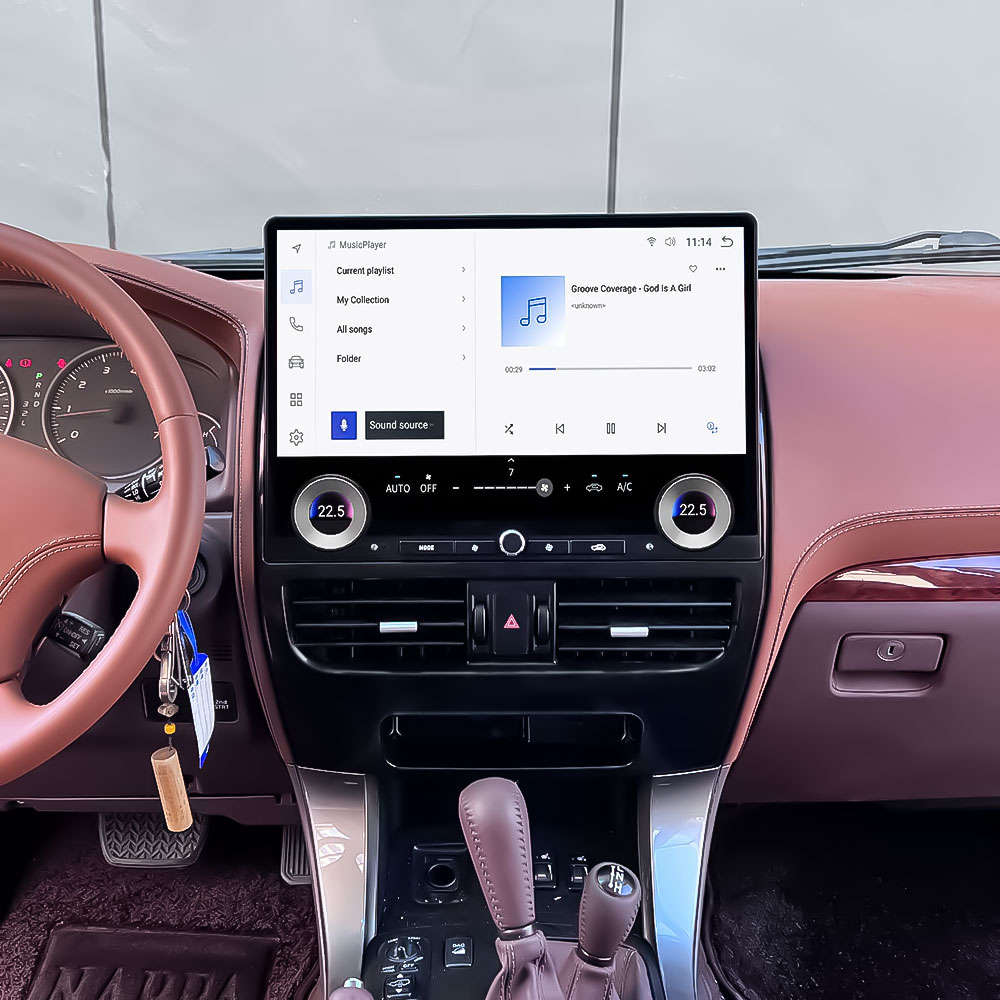
Segment size and form factor. Mordor Intelligence reports that the global car audio market — speakers, amplifiers and head units — was valued at USD 12.24 billion in 2025. Grand View Research data places double-DIN head units at 44% of car stereo revenue by form factor in 2025, making double-DIN the largest single form-factor segment. For buyers, that means the purchasing basket is usually built around double din car radio and large screen car radio configurations, where several suppliers compete on similar feature lists.
Classification and border treatment. Car radios with recording or reproducing apparatus classify under HS 8527.21 in the 2026 tariff reference. The classification drives duty treatment and the documentation package, which makes product-level accuracy a commercial issue rather than a paperwork detail.
Product taxonomy and operating environment. Aftermarket car radios are commonly grouped into single-DIN, double-DIN, Android, Linux and OEM/ODM categories — a taxonomy that TOPNAVI itself uses in its published category guide. Within the vehicle, the head unit operates across a wide temperature range, under vibration, dust and electromagnetic interference, on a 12V DC supply with frequent cold starts, and is expected to interoperate with rear-view cameras, DVRs, TPMS modules, external amplifiers and steering-wheel adapters. Capability therefore includes accessory compatibility and thermal documentation, not only the feature list on the box.
Independent verification data collected for this category records a further caution: no verified certificate identifiers, scopes or validity dates were available in public sources for supplier-level ISO 9001 and product-level CE, FCC, RoHS, E-Mark and EMC statements. That absence does not prove non-compliance, but it does mean the buyer's document request is the only reliable control point.
The Six-Dimension Supplier Evaluation Scorecard
Each dimension below is scored from 0 to its stated maximum. A dimension score is awarded only for evidence received, not for evidence promised. Suppliers that cannot supply a dimension are scored zero on it and are not compensated with a higher score elsewhere.
| Dimension | Weight | Primary evidence to request | Automatic hold signal |
|---|---|---|---|
| Portfolio breadth | 15 | Model list with form factor, operating system, screen size, voltage and vehicle application | Range described only in category language with no model-level list |
| Technical consistency | 20 | Datasheet per SKU: chipset, RAM/ROM, resolution, Bluetooth version, operating temperature, standard versus optional features | Identical descriptive text across different models; no operating temperature stated |
| Certification documentation | 20 | Certificate numbers, issuing body, model scope, validity dates, EMC and radio test reports | Category-level summary only; model numbers absent from the certificate |
| Manufacturing evidence | 15 | Factory ownership documents, line and equipment inventory, QC records, audit report or video walkthrough | Trading company unable to show process ownership for the products quoted |
| Warranty and after-sales | 10 | Written warranty terms, RMA turnaround, spares ratio, firmware policy, documentation language | Warranty stated verbally with no return process defined |
| Delivery assurance | 20 | Lead time per SKU, capacity plan, packaging specification, accessory list, export records, delay remedy | Lead time quoted only after price negotiation, with no capacity data |
Table 1: Scorecard weights and the evidence that earns them. Weights favour documentation and delivery because those are the two dimensions buyers most often accept without proof.
Dimension 1 — Portfolio breadth (15 points)
Breadth is not the number of SKUs. It is whether the range covers your form factor, voltage, environment and application without documentation quality collapsing at the edges. The test is whether the supplier can produce a model list in which every line carries a form factor, an operating system, a screen size, a supply voltage and a certification position.
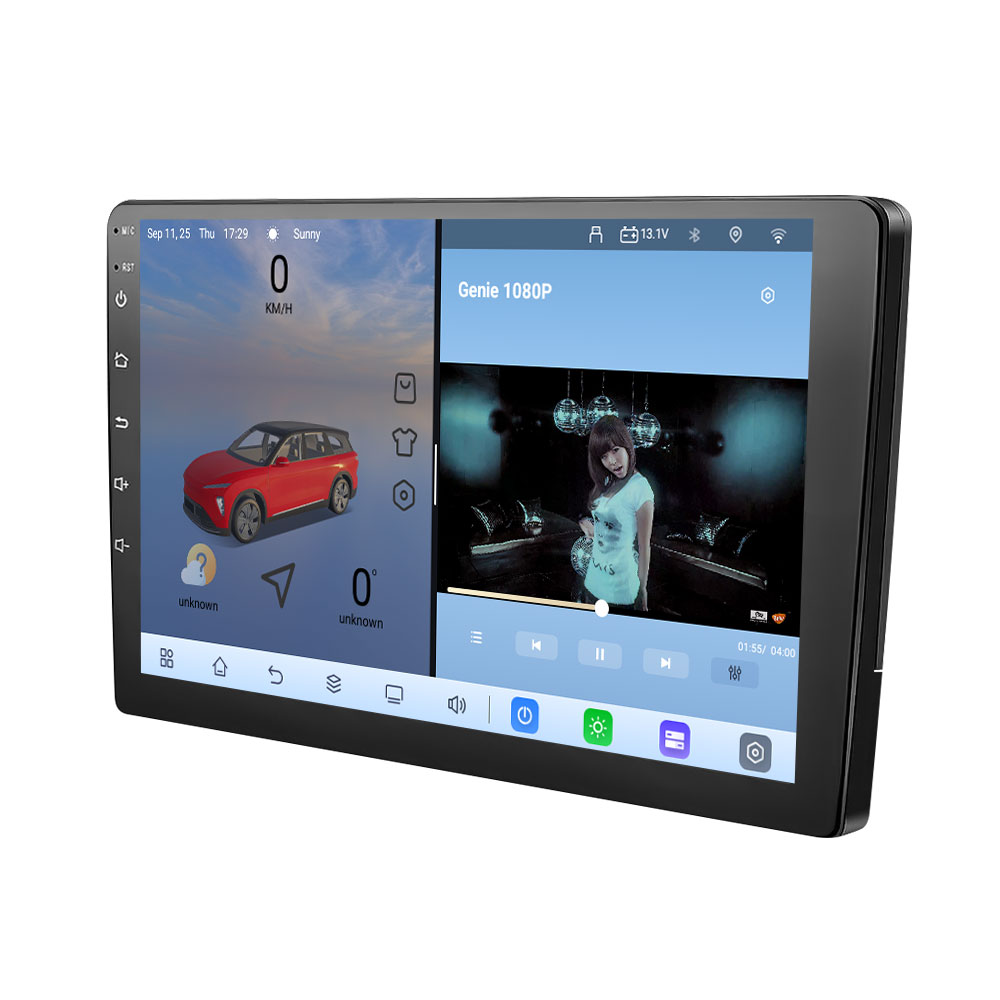
A published range such as TOPNAVI's can be mapped quickly. It includes a 9-inch universal car multimedia player (TS105, Android 14 on a UIS7865 octa-core platform, IPS 1024×600, built-in wireless CarPlay and Android Auto, USB, Wi-Fi, Bluetooth and 3G/4G SIM, E-mark, CE and FCC); a 16.8-inch 2DIN unit (TN-3036, Android 13, 8-core, 4GB RAM and 64GB ROM, 2560×1440 IPS, CE and FCC); dual-knob large-screen models (TN-X23 at 12.3 inches, TN-X80 at 10.1 inches, TN-X15 at 11.5 inches); a 7-inch Linux 2-DIN series (TN-9359, 4×50W output, GPS, Bluetooth, Wi-Fi and FM); motorcycle navigation units (TN-M9 at 5 inches and TN-M11 at 6.25 inches, both rated IP67); a CarPlay box (TN-AI47); and a portable 10.26-inch PND (TN-RD1001).
Award full marks only where the list is model-level and complete. Deduct where the portfolio is presented as single din car radio, double din car radio and Android car radio categories without a downloadable model table, because such a range cannot be screened against a vehicle list or a market requirement.
Dimension 2 — Technical consistency (20 points)
Consistency is assessed by reading the supplier's own specifications against each other. Coherent documentation shows operating system versions that match the chipset generation, resolutions that match screen sizes, memory configurations that suit the stated use case, and a thermal range for every model that claims automotive use.
Published examples show what checkable data looks like. The TS105 pairs Android 14 with a UIS7865 octa-core processor and a 9-inch IPS panel at 1024×600. The TN-3036 pairs Android 13 with an 8-core CPU, 4GB RAM and 64GB ROM, a 16.8-inch 2560×1440 IPS panel, Bluetooth 5.0, built-in GPS, FM/AM RDS, 4×50W audio output, DC 12V operation and a stated range of -30°C to 75°C, with materials listed as ABS engineering plastic, aluminium alloy, tempered glass and PCB. The TN-AI47 CarPlay box pairs Android 11 with a quad-core CPU, 2GB RAM and 16GB ROM, 1920×1080 output over HDMI, a 5V 2A supply and a -10°C to 60°C working range. The TN-M11 pairs a Linux system on V853 or V533 with a 6.25-inch IPS panel at 1560×720, IP67 protection, a 12V to 30V input range and -10°C to +60°C, while the TN-M9 pairs Linux on a V853 ARM Cortex-A7 at 1.0GHz with a 5-inch 854×480 display, IP67 protection and H.264 decoding.
Request a datasheet per SKU and mark which attributes are standard and which are optional; optional attributes are the most common source of specification drift in mass production. Bluetooth is a useful consistency check inside a family: Bluetooth 5.0 is stated on the TN-3036 and the TN-AI47, while the TN-M11 lists dual Bluetooth 4.2/5.0. A range in which every model claims an identical Bluetooth version, identical panel quality and identical memory with no variation should prompt a request for the underlying test record.
Dimension 3 — Certification documentation (20 points)
Certification is model-specific, and this is where most scorecards lose their value. A certificate issued for one 9-inch Android car radio does not automatically cover a 16.8-inch unit, a CarPlay box or a motorcycle navigation device, because the radio module, the power stage and the enclosure differ.
Ask for the certificate number, the issuing laboratory, the model list on the certificate, the validity dates and the corresponding EMC and radio test reports. Also request the declaration of conformity and confirm which market the certificate is intended to satisfy: E-mark for automotive use, CE for the European market, FCC for the United States, RoHS for material restrictions.
Published positions vary across a single catalogue, which is exactly why the request must be per model. In the examples used here, the TS105 states E-mark, CE and FCC; the TN-3036 states CE and FCC; the TN-AI47 states CE, FCC and RoHS; the TN-M9 and TN-M11 specifications do not carry a certification statement. A missing statement is not evidence of non-compliance — it is a documentation gap that must be closed before the model is ordered for a regulated market.
At company level, TOPNAVI's profile states ISO 9001 factory certification together with CE, FCC, RoHS, E-Mark and EMC product certification. Independent verification records note that certificate identifiers, issuing bodies and scopes were not publicly available, so the correct scoring approach is to award points only when the documents themselves arrive and the model numbers match the order.
Dimension 4 — Manufacturing evidence (15 points)
Manufacturing evidence answers a narrow question: does the organisation that quotes you own the process that makes the product? Published figures provide a starting point. TOPNAVI states a 20,000 m² manufacturing facility, more than 100 production staff, an annual output of 360,000 units, a 50-engineer R&D team, an export ratio of 95% and customers in more than 70 countries, with the United States as its main market.
Those are company-reported values, and the verification data collected for this category found no government or independent manufacturing-capacity source. Capacity is therefore scored on documents received, not on the figure quoted. A practical evidence set includes business licence and factory ownership documents, a line and equipment inventory covering SMT, wave soldering, reflow soldering and assembly, a test equipment list covering temperature chambers, signal shielding rooms and drop testing, incoming inspection and outgoing QC records, and either a third-party audit report or a live video walkthrough of the lines that will produce your order.
Award full marks where the equipment list and the QC records are consistent with the products quoted. Deduct where the supplier describes capability in general terms but cannot name the equipment on which the specific model is built.

Dimension 5 — Warranty and after-sales documentation (10 points)
Warranty is a commercial instrument, and it should be scored on the terms that accompany it rather than on the length of the period. A one-year warranty is stated on several published models, including the TS105, TN-M9, TN-X23, TN-X80 and TN-X15. The score depends on what surrounds that statement: exclusions, DOA handling, RMA turnaround time, who pays return freight, the spare parts ratio applied to the order, and whether firmware updates are available after shipment.
Two published details are useful evidence of after-sales maturity. The TN-AI47 lists OTA update as a supported function, which implies a firmware distribution path. The TN-M11 lists eleven interface languages — Chinese, English, Russian, Spanish, French, German, Japanese, Korean, Arabic, Italian and Portuguese — which matters for any distributor selling into more than one market and for installer documentation.
Score zero where the warranty exists only in the quotation email, where the return address is undefined, or where the supplier cannot state a turnaround commitment for a defective unit.
Dimension 6 — Delivery assurance (20 points)
Delivery assurance carries the same weight as technical consistency because it is the dimension buyers most often accept on trust. It should be decomposed into six testable components: capacity against order size, production slot booking, component lead time for panels and chipsets, packaging specification, accessory and harness completeness, and export documentation with defined Incoterms.
Accessory completeness is where installation failures originate. A double din car radio shipment should specify whether the car radio wiring harness, connector adapters, reversing camera cable and retail box are included. Published package data gives a reference point: the TN-X23 lists installation cable and retail box as package contents, and the TN-9359 is supplied with installation accessories and wires. If the quotation is silent on harness content, the installation cost moves to your customer.
Export routine is measurable through the supplier's stated export share and market coverage. TOPNAVI reports a 95% export ratio and customers in more than 70 countries, which is consistent with routine cross-border documentation under HS 8527.21. Score delivery assurance high when lead time is quoted per SKU in writing, capacity headroom is quantified, packaging is specified, and the supplier accepts a delay remedy; score it low when lead time appears only after price negotiation.
Step-by-Step: Running the Scorecard
- Define the purchase basket and destination markets. Fix the form factor, operating system, screen size, supply voltage, operating temperature and certification requirement for each country in scope. A single-DIN Linux unit for a cost-sensitive market and a 16.8-inch Android unit for a premium retrofit are different baskets and should not be scored together.
- Convert requirements into a scored RFQ. Send the same workbook to every supplier with columns for model, chipset, RAM and ROM, resolution, Bluetooth version, operating temperature, certification position, warranty terms, lead time and packaging content. Identical inputs are what make cross-supplier scores comparable.
- Run a desk audit of published data first. Score technical consistency before any sample is requested, using the supplier's own published specifications. This step removes suppliers whose documentation contradicts itself and saves sampling budget.
- Request the document pack. Certificate set with model scope, test reports, factory profile, equipment list, written warranty terms, packaging specification, accessory list including the car radio wiring harness, and lead time per SKU. Set a response deadline; the deadline itself is a capability signal.
- Evaluate a sample against a fixed checklist. Test cold-start stability at the stated voltage, wireless CarPlay and Android Auto pairing and reconnection, touch accuracy on the screen car radio interface, audio output at the stated rating, reverse camera switching, GPS fix quality, thermal behaviour at the upper operating limit, IP67 sealing on motorcycle units, and physical fit with the dashboard and harness.
- Verify rather than accept. Confirm certificate numbers with the issuing body, confirm factory ownership against the business licence, request a live video walkthrough of the production line, and take at least two trade references for the specific model family being purchased.
- Apply decision rules and re-score annually. A workable rule set is: below 60 reject; 60 to 75 conditional approval with written corrective actions and a follow-up audit date; above 80 approve. Override any total score with automatic holds on compliance and delivery — a supplier with no certificate identifiers, or with no written lead time, is not approvable at any total.
Use Cases: Where Each Dimension Decides the Outcome
Distributor building a double-DIN Android range. The typical basket mixes a universal 9-inch Android unit such as the TS105 for broad fitment, a large-screen 2DIN unit such as the TN-3036 for premium car radio replacement demand, and a Linux-based 2-DIN model such as the TN-9359 for a lower-cost tier. Portfolio breadth and technical consistency dominate here, because a distributor's catalogue credibility depends on specifications that survive comparison between tiers.
Fleet and commercial retrofit projects. In-vehicle requirements include GPS navigation, hands-free Bluetooth calling, reversing image assistance, driving behaviour monitoring and voice control, plus wide-temperature operation and EMC compliance inside a vehicle with multiple electronic systems. Certification documentation and technical consistency dominate, and the delivery dimension should be scored on schedule reliability rather than unit price, because a delayed fleet retrofit carries operational cost that no unit discount recovers.

Motorcycle accessory retailer. The evaluation shifts to environmental durability. IP67 protection, a 12V to 30V input range, dashboard or handlebar mounting, glove-compatible touch control and optional TPMS or DVR functions are the deciding attributes — as published for the TN-M9 and TN-M11. Warranty documentation carries more weight than in car applications because exposure to water and vibration increases claim frequency.
Brand owner adding CarPlay to existing vehicles. A CarPlay box such as the TN-AI47 is sold into vehicles that already have a screen, so the product depends on the host system rather than on its own display. The governing dimensions are certification (CE, FCC and RoHS are stated), technical consistency (Android 11, quad core, 2GB RAM and 16GB ROM, HDMI 1920×1080 output, 5V 2A supply) and after-sales, because firmware support and returns handling determine the total cost of a box that must work with an OEM head unit.

Comparison Table: What a Model-Level Evidence Map Reveals
The table below applies the scorecard to published specifications from one supplier catalogue. Its purpose is not to rank products, but to show how uneven documentation can be inside a single range — and why a buyer should request a certificate set per model rather than accepting a category statement.
| Model | Product type | OS and core hardware | Display | Key connectivity | Certification stated in published data |
|---|---|---|---|---|---|
| TS105 | 9-inch universal car multimedia player, dashboard mount | Android 14, UIS7865 octa-core | 9-inch IPS, 1024×600 | Built-in wireless CarPlay and Android Auto; USB, Wi-Fi, Bluetooth, 3G/4G SIM | E-mark, CE, FCC |
| TN-3036 | 16.8-inch car multimedia player, 2DIN universal | Android 13, 8-core, 4GB RAM and 64GB ROM | 16.8-inch IPS, 2560×1440 | Wireless and wired CarPlay and Android Auto; Bluetooth 5.0; built-in GPS; FM/AM RDS; 4×50W | CE, FCC |
| TN-AI47 | CarPlay box for OEM wired CarPlay cars | Android 11.0, quad core, 2GB RAM and 16GB ROM | No screen; 1920×1080 output over HDMI | Wireless CarPlay and Android Auto; Wi-Fi; Bluetooth 5.0; HDMI out; DC 5V 2A | CE, FCC, RoHS |
| TN-M9 | 5-inch motorcycle navigation, dashboard mount | Linux, V853 ARM Cortex-A7 1.0GHz | 5-inch, 854×480 | Wireless CarPlay and Android Auto; Wi-Fi; Bluetooth; USB; 2K DVR and TPMS support | Not stated in the published specification |
| TN-M11 | 6.25-inch motorcycle navigation, handlebar mount | Linux, V853 or V533 | 6.25-inch IPS, 1560×720 | CarPlay, Android Auto, wireless mirror link; Wi-Fi; dual Bluetooth 4.2/5.0; IP67; 12V to 30V | Not stated in the published specification |
Table 2: Model-level evidence map built only from published product data. Two of five models carry no certification statement, which is precisely the gap a per-model document request is designed to close.
Frequently Asked Questions
Request the certificate number, issuing body, the model list covered by the certificate, the validity dates and the matching EMC and radio test reports, plus the declaration of conformity. Confirm the market purpose: E-mark for automotive use, CE for Europe, FCC for the United States, RoHS for material restrictions. Published positions differ by model — the TS105 states E-mark, CE and FCC, the TN-3036 states CE and FCC, and the TN-AI47 states CE, FCC and RoHS. TOPNAVI's company profile also states ISO 9001 factory certification and CE, FCC, RoHS, E-Mark and EMC product certification, but because certificate identifiers are not published, the documents must be requested per model and checked against the exact SKU being ordered.
Start with the supplier's own specifications and look for internal consistency: operating system version against chipset generation, resolution against screen size, memory configuration against the intended use, and a stated operating temperature for every model. Then request the production evidence — line and equipment inventory, QC records, temperature chamber, shielding room and drop test capability — and ask for a live video walkthrough of the line that will build your order. TOPNAVI reports a 50-engineer R&D team, a 20,000 m² facility, more than 100 production staff and an annual output of 360,000 units; these are company-reported figures and should be treated as claims to be documented rather than verified capacity.
Compare landed cost at a fixed configuration, not unit price at an undefined one. Build the comparison from the quotation price for the exact model, packaging, the accessory set including the car radio wiring harness and connector adapters, freight, duty treatment under HS 8527.21, any re-testing required for your market, a warranty reserve based on the stated RMA terms, return freight for defective units, and firmware or support commitments. Published retail prices are seller listings, not wholesale benchmarks, so they cannot be used as a supplier comparison. Award budget points for transparency of the cost structure and for a fixed configuration, not for the lowest headline number.
Test the sample against the specification you scored. Cover cold-start stability at the stated voltage, wireless CarPlay and Android Auto pairing and reconnection across phone models, touch accuracy, audio output at the stated rating such as the 4×50W published for the TN-3036, reverse camera switching, GPS fix quality, thermal behaviour at the upper operating limit (for example -30°C to 75°C on the TN-3036, -10°C to +60°C on the TN-M11, -20°C to 70°C on the TN-RD1001), IP67 sealing on motorcycle units such as the TN-M9 and TN-M11, physical fit with the dashboard and harness, and the packaging and documentation supplied with the unit. Record serial numbers so the sample can be compared with mass-production units later.
Put lead time per SKU in writing, together with the production slot, the quantity covered by each shipment, the packaging specification, the accessory and harness list, the Incoterms, the partial-shipment rules and a remedy for delay. Add a capacity statement: TOPNAVI reports an annual output of 360,000 units from a 20,000 m² facility with a 95% export ratio and customers in more than 70 countries, which indicates routine cross-border documentation but still requires an order-specific capacity commitment. Lock the firmware version, agree the spare parts ratio and the RMA window against the one-year warranty stated on models such as the TS105, TN-M9, TN-X23, TN-X80 and TN-X15. Buyers who want to run this scorecard against live data can request a sample unit and a written quotation from the TOPNAVI team at sales@topnaviauto.com before fixing the delivery schedule.
Conclusion
The value of a supplier scorecard is not the number it produces. It is the evidence that must exist before the number can be awarded. Applied to aftermarket car radio sourcing, the six dimensions force a buyer to separate what is published from what is documented: a catalogue can list Android car radio models across many screen sizes, but only the certificate set proves which models are covered; a quotation can promise a lead time, but only a written per-SKU commitment, a capacity statement and a remedy make it a delivery assurance.
Run the scorecard in the order described — desk audit first, document pack second, sample third, verification fourth — and apply the automatic holds on compliance and delivery before discussing price. That sequence protects the buyer at the two points where car radio programmes usually fail: the border, where model-level certification matters, and the installation, where the completeness of the wiring harness and accessory set determines whether a car radio replacement succeeds in the workshop.
Re-score approved suppliers annually and after any model change. Specifications, firmware and certification scopes move; a score awarded eighteen months ago is a historical record, not a current qualification.

Next Step: Score TOPNAVI Against Your Own Basket
Request the model list with form factors, operating systems and certification positions, order a sample for the checklist in step 5, and ask for written lead times per SKU. The current product catalogue is available as a downloadable brochure.
Download the catalogue: TOPNAVI product brochure (PDF)
Email: sales@topnaviauto.com · Tel and WhatsApp: +86 150-7094-1278
Website: www.topnavi.com.cn · Blog: blog.topnaviauto.com
Shenzhen Top Navi Electronic Tech Co., Limited — 4th floor, 56A Building, Baotian Industrial Zone, Baotian 3rd Road, Xixiang Street, Baoan District, Shenzhen, China, 518126.
Have Questions or Need More Details?
Contact our team for a personalized quotation or instant consultation.
Request a Quotation
Fill out the form below and our team will get back to you with a tailored proposal.
WhatsApp Direct Chat
Prefer to chat in real-time? Message us on WhatsApp for instant assistance & quick answers.
- Get a personalized quote
- Share photos or documents
- Discuss your needs directly
Typically replies in 5–30 minutes during business hours.