
Aftermarket Car Radio Supplier Evaluation: A How-To Scorecard for Capability and Delivery Assurance
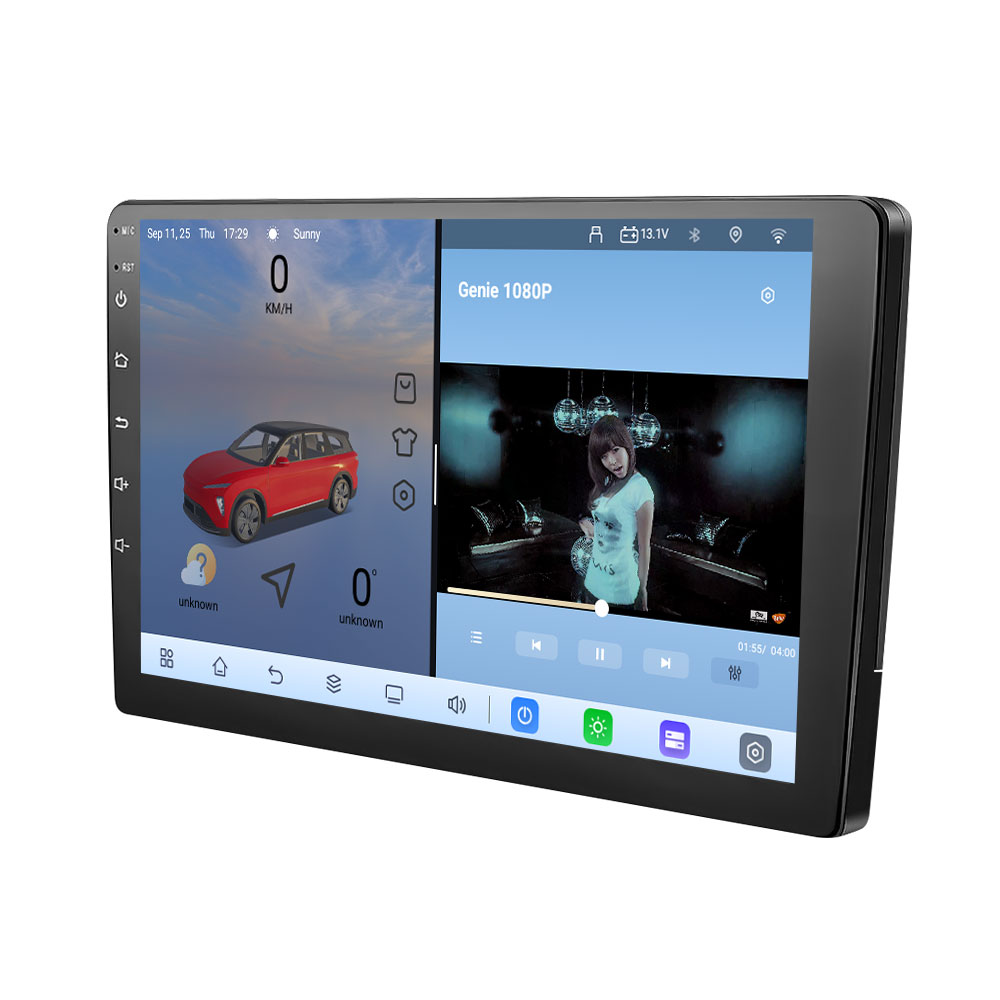
An aftermarket car radio supplier should be evaluated on the evidence it can put in writing, not on catalogue photography or a headline unit price. This guide provides a six-dimension scorecard — product breadth and technical consistency, specification granularity, certification evidence, warranty terms, delivery assurance, and documentation quality — that lets a distributor, fleet buyer or brand owner score several candidates on one scale and defend the decision internally.
Every worked example in this article uses datasheet-level facts from a real product line. TOPNAVI is the brand of Shenzhen Top Navi Electronic Tech Co., Limited, a Shenzhen-based manufacturer of car multimedia players, GPS navigators and motorcycle navigation units founded in 2014 and exporting to more than 70 countries, with the USA named as its major market. The models referenced here — the TS105 universal car multimedia player, the TN-3036 16.8-inch player, the TN-M11 and TN-M9 motorcycle navigation units, and the TN-AI47 CarPlay box — are used to show what a scorable answer looks like versus an unscorable one.
The scorecard at a glance (100 points)
- Product breadth and technical consistency — 20 points. Can the supplier document a coherent range across single DIN, double DIN, Android, Linux, and accessory categories?
- Specification granularity — 15 points. Are screen, chipset, memory, connectivity, power and temperature published per SKU?
- Certification and market-access evidence — 20 points. Which marks apply to which model, with scope and identifiers?
- Warranty and after-sales terms — 15 points. Is warranty duration and remedy defined per SKU in the quotation?
- Delivery assurance — 20 points. Are capacity, schedule and remedies converted into written commitments?
- Documentation and commercial terms — 10 points. Incoterms, HS classification, packaging and spare-parts terms in one pack.
Why Car Radio Supplier Evaluation Fails Before the First Order
Most sourcing failures in this category do not begin with a bad product. They begin with a comparison that was never like-for-like. Three failure modes recur.
Failure one: incomparable documents. One supplier quotes a 9-inch screen car radio with a resolution and a chipset model; another quotes a "9-inch HD touch screen" with no resolution and no processor. The buyer ranks them on price, because price is the only field both submissions filled in.
Failure two: certification treated as a slogan. "CE and FCC approved" appears on almost every listing, but the useful question is which certificate attaches to which model, under what scope, issued by whom. A mark on a brochure and a certificate on file are different assets. The TS105 datasheet, for example, names E-mark, CE and FCC for that model specifically; the TN-AI47 names CE, FCC and RoHS. That model-level specificity is what a buyer can actually verify.
Failure three: delivery promises that live outside the contract. Capacity statements, lead times and "we can ship fast" are conversational until they are converted into milestones with dates and remedies. A supplier that will not put a schedule in the purchase order has not made a delivery commitment at all.
A related trap is the search for a cheap car radio. The lowest quoted unit price often reflects an unstated warranty reserve, an unstated packaging standard, or a harness and installation kit that has been excluded from the offer. Unit price becomes meaningful only after the other five scorecard dimensions are normalized.
Industry Background: What a 2026 Buyer Is Actually Choosing Between
The category the buyer is sourcing into is large and still dominated by one physical format. Mordor Intelligence values the global car audio market at USD 12.24 billion in 2025, and Grand View Research reports that the double DIN segment accounted for roughly 44% of the car stereo market by revenue in 2025. That is a structural argument for keeping double din car radio platforms at the center of a portfolio — but it says nothing about which supplier to choose.
For customs and documentation purposes, radio-broadcast receivers combined with recording or reproducing apparatus are classified under HS code 8527.21. Buyers who quote across borders should confirm the classification used on the commercial invoice matches the product actually shipped, because a mismatched code creates clearance delay independent of product quality.
Product architecture has also broadened. TOPNAVI's own product guide categorizes aftermarket car radios into single din, double din, Android and Linux-related types and discusses OEM/ODM solutions. In practice a 2026 range usually spans at least five families:
- Universal double din Android head units, such as the TS105 with its 9-inch IPS touch screen and Android 14.
- Large-format, vehicle-specific style screens, such as the TN-3036 at 16.8 inches with a 2560×1440 IPS panel.
- Single DIN or 1DIN-mounted multimedia players for dashboards that cannot take a double din chassis.
- Linux-based navigation units for two-wheel applications, such as the TN-M11 and TN-M9, both rated IP67.
- Add-on boxes that upgrade an existing factory screen, such as the TN-AI47 CarPlay box with HDMI output.
Public data does not yet provide a standardized specification matrix across suppliers. In the research collected for this guide, there was no verified cross-supplier comparison covering connector types, car radio wiring harness pinouts, CAN-bus behaviour, audio power or warranty terms. That gap is precisely why a buyer-built scorecard is necessary: if the market will not hand you a comparison, you have to construct one from the documents you request.
The Scorecard: Six Dimensions and What to Score
1. Product breadth and technical consistency (20 points)
Score breadth by how many distinct form factors the supplier can document with full datasheets, and score consistency by whether the documents follow the same structure across families. A supplier that describes an Android 14 head unit in detail but answers questions about its Linux motorcycle navigation line with adjectives has breadth on paper only.
Ask for one datasheet per family, not per SKU. For TOPNAVI, that means a universal unit (TS105), a large-format unit (TN-3036), a two-wheel unit (TN-M11 or TN-M9) and an accessory box (TN-AI47). If all four arrive in the same field structure, the supplier's documentation process is real.
2. Specification granularity (15 points)
Granularity means the datasheet answers the questions a technician will ask in month six. A scorable car radio datasheet states screen size, resolution, panel type, operating system version, chipset, RAM and storage, Bluetooth version, connectivity, audio output, working voltage, operating temperature, mounting method and control inputs.
Use the TS105 as a benchmark of adequate granularity: 9-inch IPS capacitive touch screen, 1024×600, Android 14, UIS7865 octa-core, USB, built-in WiFi, wireless, Bluetooth and 3G/4G SIM support, dashboard mount, universal fitment, and built-in wireless CarPlay and Android Auto. A buyer can plan a SKU page, an installation guide and a warranty process from that. A listing that says only "Android car radio, 9 inch, fast" cannot support any of the three.

3. Certification and market-access evidence (20 points)
This is the highest-weighted dimension after breadth because it is the one that stops a container at the border. Score it by model, not by company. Request the certificate type, issuing body, certificate number, scope and validity date for every SKU in the intended import set, and check that the scope description covers the actual configuration being shipped.
Model-level certification statements are the standard to hold suppliers to. The TS105 carries E-mark, CE and FCC and a one-year warranty. The TN-AI47 CarPlay box carries CE, FCC and RoHS. The TN-3036 lists CE and FCC. Where a datasheet is silent on certification for a specific model, the correct score is zero for that model until the document is produced — not an average carried over from a better-documented sibling.
4. Warranty and after-sales terms (15 points)
Warranty becomes a procurement term only when three things are defined: duration, what is covered, and what happens operationally when a unit fails. A duration alone is incomplete. Ask how the failed unit is handled — replacement, credit, or repair — who pays freight in each direction, and what evidence is required to open a claim.
Score warranty statement by statement. The TS105 datasheet states a one-year warranty; the TN-M9 datasheet also states one year. Where a model's datasheet does not state a warranty period, that is a documentation gap to close before signing, not an assumption to make at the quotation stage.
5. Delivery assurance (20 points)
Delivery assurance is the dimension most often discussed and least often documented. Score it on four written commitments: the production schedule tied to a purchase order, the inspection point and acceptance criteria, the packaging standard, and the remedy if a milestone is missed.
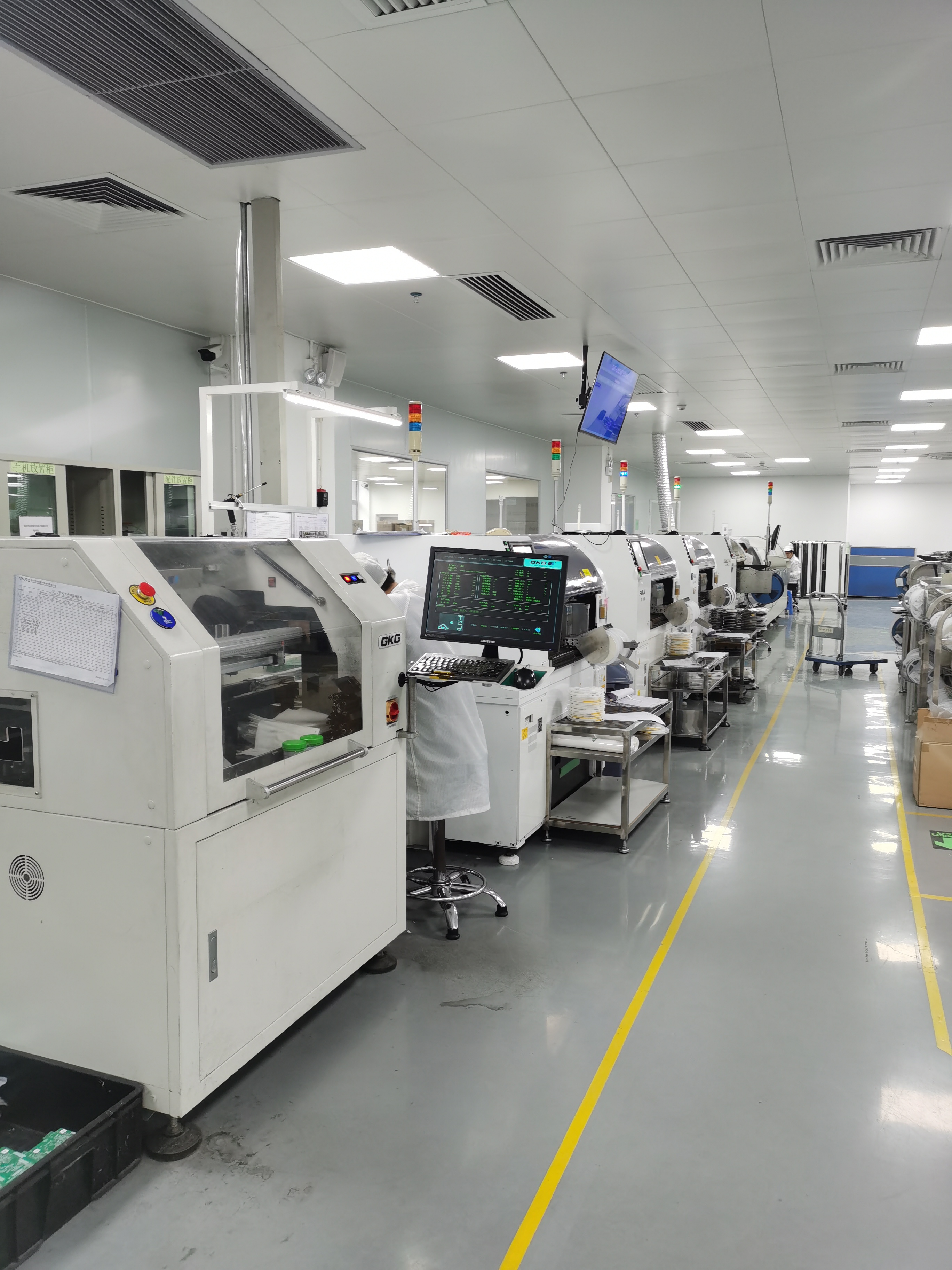
Capacity context helps frame the conversation. Shenzhen Top Navi Electronic Tech Co., Limited reports a 20,000 m² manufacturing facility, approximately 100+ employees, an annual production capacity of 360,000 units and a 50-engineer R&D team. Those figures are company-reported and useful for asking better questions — for example, how a 360,000-unit annual output is allocated between SKUs, and what proportion is reserved for repeat orders. They are not, by themselves, a lead-time commitment. The commitment is the dated schedule inside the purchase order.
6. Documentation and commercial terms (10 points)
The last ten points cover the paperwork that decides whether the shipment clears and whether the offer is comparable: Incoterm, currency, HS classification, packaging description, spare-parts availability, and the language of the commercial invoice. Two quotes for the same double din car radio are not comparable if one is FOB and the other is delivered duty paid, or if one includes an installation cable and retail box and the other does not.
Step-by-Step Breakdown: Running the Scorecard in Six Steps
Step 1 — Fix the SKU set and the form-factor mix
Before contacting any supplier, write down the portfolio you intend to sell: how many double din car radio SKUs, how many single din car radio SKUs, whether a touch screen car radio above 12 inches is required, and whether two-wheel or accessory categories are in scope. Without this list, the supplier controls the comparison set.
Step 2 — Issue one specification template, not a question list
Send a single table with fixed fields and ask for it to be returned filled. Fixed fields force comparability. Use the granularity benchmark described above: screen size, resolution, panel type, OS version, chipset, memory, connectivity, audio output, voltage, operating temperature, mounting, control inputs, certifications, warranty.
Step 3 — Request certification evidence per model
Ask for the certificate file, the issuing body, the certificate number, the scope and the validity date, matched to each model in the SKU set. Record which models returned complete evidence and which did not. Partial returns are normal; unrecorded partial returns are the problem.
Step 4 — Convert warranty into an acceptance clause
Rewrite the warranty statement as a clause you can enforce: duration, covered failures, claim evidence, replacement or credit mechanism, freight responsibility, and response window. If the supplier will not accept the clause, that disagreement is itself a score.
Step 5 — Convert delivery into dated milestones
Break the order into milestones — material readiness, production start, pre-shipment inspection, documentation release, handover to forwarder — and attach a date to each. Add the remedy if a milestone slips. This is the step where the 20 delivery-assurance points are actually earned or lost.
Step 6 — Score, weight, and record the reasoning
Apply the weights, total the score, and write two or three sentences per dimension explaining the number. The written reasoning is what makes the score reusable next quarter and defensible if a buyer is challenged on why a higher-priced supplier was selected.
Use Cases: Applying the Scorecard to Four Sourcing Scenarios
Scenario A — Universal double din replacement programme
A distributor building a broad replacement range needs one well-documented universal platform as the anchor. The TS105 is a workable anchor SKU: 9-inch IPS touch screen, 1024×600, Android 14 on a UIS7865 octa-core, built-in wireless CarPlay and Android Auto, USB, WiFi, Bluetooth and 3G/4G SIM support, universal dashboard fitment, E-mark, CE and FCC certification and a one-year warranty. Score the supplier on how completely this anchor SKU is documented, then test whether the same document quality holds across the rest of the range.
Scenario B — Large-screen, vehicle-specific retrofit
When the target customer wants a dramatic interior upgrade rather than a standard replacement, the evaluation shifts toward panel quality and thermal behaviour. The TN-3036 specifies a 16.8-inch IPS touch screen at 2560×1440, Android 13 on an 8-core CPU, 4GB RAM and 64GB ROM, Bluetooth 5.0, built-in GPS, FM/AM RDS, wireless and wired CarPlay and Android Auto, 4×50W audio output, DC 12V, an operating range of −30°C to 75°C, 2DIN universal installation, steering-wheel and touch control, and CE and FCC certification. The wide temperature range and the stated panel resolution are the fields to score here; a supplier that cannot state them has not documented the product.
Scenario C — Two-wheel accessory channel
A motorcycle accessory buyer is scoring ingress protection and vibration tolerance, not screen size. The TN-M11 pairs a 6.25-inch IPS capacitive touch screen at 1560×720 and 300 cd/m² brightness with a Linux system on V853 or V533, IP67 protection, 12–30V input, dual Bluetooth 4.2/5.0, built-in WiFi, FM, FHD 1080P H.264 video, a −10°C to +60°C operating range and handlebar placement. The TN-M9 pairs a 5-inch 854×480 display with a V853 ARM Cortex-A7 1.0GHz CPU, Linux, IP67, wireless CarPlay and Android Auto, 2K DVR camera support, 433 protocol tire pressure detection and a one-year warranty. Both are documented at a level that allows an installer to plan the fit; score accordingly.

Scenario D — Add-on upgrade for factory screens
A buyer targeting vehicles that already have a wired CarPlay factory screen is scoring a different risk profile: compatibility and thermal limits in a small enclosure. The TN-AI47 is a CarPlay box with no display of its own, Android 11.0 on a quad-core CPU, 2GB RAM and 16GB ROM, wireless CarPlay and wireless Android Auto, WiFi, Bluetooth 5.0, HDMI video output, DC 5V 2A input, a −10°C to 60°C working range, OTA update, and CE, FCC and RoHS certification, offered as universal for OEM wired CarPlay cars. Here the scorecard should reward a precise compatibility statement and penalize vague "works with all cars" language.

Comparison Table: What the Datasheets Actually Say
The table below uses only the published specifications for each model. Where a field is not stated in the available datasheet, it is marked as such rather than filled in by assumption — which is itself an illustration of how the scorecard handles documentation gaps.
| Model | Display and form factor | System and processing | Connectivity | Certifications | Warranty and notes |
|---|---|---|---|---|---|
| TS105 universal car multimedia player | 9-inch IPS capacitive touch screen, 1024×600, dashboard mount, universal fitment | Android 14, UIS7865 octa-core | USB, built-in WiFi, wireless, Bluetooth, 3G/4G SIM; built-in wireless CarPlay and Android Auto | E-mark, CE, FCC | 1-year warranty stated |
| TN-3036 16.8-inch car multimedia player | 16.8-inch IPS touch screen, 2560×1440, 2DIN universal | Android 13, 8-core, 4GB RAM, 64GB ROM | Bluetooth 5.0, built-in GPS, FM/AM RDS, wireless and wired CarPlay and Android Auto; steering wheel and touch control | CE, FCC | Warranty period not stated in the provided datasheet; operating range −30°C to 75°C |
| TN-AI47 CarPlay box | No screen of its own; 1920×1080 output resolution; HDMI video output | Android 11.0, quad-core, 2GB RAM, 16GB ROM | WiFi, Bluetooth 5.0, wireless CarPlay and wireless Android Auto; DC 5V 2A | CE, FCC, RoHS | Warranty period not stated in the provided datasheet; −10°C to 60°C |
| TN-M11 motorcycle navigation | 6.25-inch IPS capacitive touch screen, 1560×720, 300 cd/m²; handlebar placement | Linux, V853 or V533 CPU | Built-in WiFi, dual Bluetooth 4.2/5.0, FM; CarPlay, Android Auto, wireless mirror link, GPS tracking, G-sensor, DVR, TPMS | IP67 ingress protection stated; certification set not stated in the provided datasheet | Warranty period not stated in the provided datasheet; 12–30V input |
| TN-M9 motorcycle navigation | 5-inch display, 854×480; dashboard mount | Linux, V853 ARM Cortex-A7 1.0GHz | USB, built-in WiFi, Bluetooth; wireless CarPlay and wireless Android Auto; 2K DVR camera and 433 protocol TPMS support | IP67 ingress protection stated; certification set not stated in the provided datasheet | 1-year warranty stated |
FAQ
What certifications should an aftermarket car radio supplier provide?
Request certification evidence per model rather than per company, and require the certificate type, issuing body, certificate number, scope and validity date. Different models in the same catalogue often carry different sets: the TS105 lists E-mark, CE and FCC; the TN-AI47 CarPlay box lists CE, FCC and RoHS; the TN-3036 lists CE and FCC. A general statement that "all products are certified" is not equivalent to a certificate on file for the specific model and configuration you intend to import.
How can a supplier demonstrate real capability rather than a broad catalogue?
Capability shows up as consistent documentation across unrelated product families. A single manufacturer that can supply a 9-inch Android 14 universal unit such as the TS105, a 16.8-inch 2560×1440 unit such as the TN-3036, an IP67 Linux motorcycle navigation unit such as the TN-M11 or TN-M9, and an Android 11 CarPlay box such as the TN-AI47 has demonstrated range across display formats, operating systems and use environments. Supporting company facts reported by TOPNAVI include a 20,000 m² facility, approximately 100+ employees, a 50-engineer R&D team, an annual production capacity of 360,000 units and a founding date of 2014.
How should buyers compare quotes without relying on unit price alone?
Normalize the quote before comparing it. Confirm the Incoterm and currency, the HS classification used on the invoice, whether a car radio wiring harness and installation kit are included, the packaging standard, the warranty period per SKU, and the spare-parts terms. A cheap car radio offer that excludes the installation cable or states no warranty period is not a lower price for the same product; it is a lower price for a smaller package. Score the normalized offer, not the headline number.
What sample should a buyer request before committing to an order?
Request one sample from each product family in the intended range, not one sample from the range. For a universal double din car radio, verify dashboard fitment, connector and harness compatibility, cold boot behaviour, wireless CarPlay pairing and screen readability at an angle. For a motorcycle unit, verify the IP67 sealing surfaces, handlebar mounting hardware and the stated 12–30V input tolerance. For a CarPlay box, verify compatibility against an actual OEM wired CarPlay vehicle rather than a compatibility list. Record what you tested against what the datasheet claimed.
What delivery assurance should a supplier commit to in writing?
A written schedule with dated milestones — material readiness, production start, pre-shipment inspection, documentation release and forwarder handover — plus the remedy if a milestone is missed. Capacity figures such as the 360,000-unit annual output reported by Shenzhen Top Navi Electronic Tech Co., Limited are useful context for the conversation but are not a lead-time commitment. If you want to move from evaluation to a documented offer, the TOPNAVI team can be reached at topnaviauto.com or directly at sales@topnaviauto.com.
Conclusion
The difference between a supplier that looks capable and one that can be depended on is documentation. A scorecard does not make that judgement for you, but it forces every candidate onto the same six dimensions — breadth and consistency, specification granularity, certification evidence, warranty terms, delivery assurance, and commercial documentation — so the comparison is about evidence rather than impressions.
Run the process in order. Fix the SKU set, issue one specification template, collect certification evidence per model, rewrite warranty as an enforceable clause, convert delivery into dated milestones, and record the reasoning behind each score. Where a datasheet is silent — as with warranty on some models or certification on the two-wheel units — record the gap instead of filling it in. A documented gap is a manageable risk; an assumed answer is not.
Applied consistently across a universal unit, a large-format player, a two-wheel navigation range and an accessory box, the same scorecard produces a decision a distributor can defend to a partner and a buyer can defend to a finance team. That is the practical test of a supplier evaluation method.
Next Step: Request the Datasheet Pack or a Sample
Buyers who want to run this scorecard against a live product line can request the specification pack, certification documentation per model, or a sample unit for fitment and pairing checks.

- Company: Shenzhen Top Navi Electronic Tech Co., Limited (brand: TOPNAVI)
- Website: www.topnavi.com.cn
- Email: sales@topnaviauto.com
- Tel / WhatsApp: +86 150-7094-1278
- Address: 4th floor, 56A Building, Baotian Industrial Zone, Baotian 3rd Road, Xixiang Street, Baoan District, Shenzhen, China, 518126
- Product catalogue: Download the TOPNAVI brochure (PDF)
Send your SKU list and the specification template with the enquiry, and the response can be returned in the same structure for direct scoring.
Have Questions or Need More Details?
Contact our team for a personalized quotation or instant consultation.
Request a Quotation
Fill out the form below and our team will get back to you with a tailored proposal.
WhatsApp Direct Chat
Prefer to chat in real-time? Message us on WhatsApp for instant assistance & quick answers.
- Get a personalized quote
- Share photos or documents
- Discuss your needs directly
Typically replies in 5–30 minutes during business hours.