
Aftermarket Car Radio Supplier Evaluation: A How-To Scorecard for Capability and Delivery Assurance
A supplier evaluation scorecard turns an impression into a number. This how-to uses a six-block, 100-point framework that scores an aftermarket car radio supplier on product breadth, manufacturing evidence, certification files, commercial terms, delivery assurance and warranty behaviour — so that a buying team can compare suppliers on documents and verifiable capability instead of catalogue adjectives.
The scorecard produces three outcomes: approve, approve with corrective actions, or reject. It is designed for buyers at the research and early-evaluation stage, when shortlisting happens and when the cost of a wrong shortlist is highest. It does not replace a factory audit; it decides who deserves one.

Capability evidence starts with the physical plant: floor area, headcount, production lines and output, not with a product grid.
Problem Definition: Why Car Radio Sourcing Fails on Evidence, Not on Specs
Most aftermarket car radio sourcing problems are not specification problems. They are evidence problems. A buyer can read “9-inch, Android 14, wireless CarPlay” on a product page, but that sentence does not tell them whether the same supplier can reproduce the build across five SKUs, whether the certification file covers the exact model shipped to their market, which production line made the batch, or whether the delivery date exists anywhere outside a chat message.
Three gaps appear repeatedly in first-round supplier reviews:
- Documentation drift between surfaces. The product page, the PDF flyer, the retail box and the email quote describe different operating systems, screen resolutions or connectivity options for what is nominally the same model. In a car radio, this is not cosmetic: an Android version or display specification change alters the bill of materials, the test plan and often the certification scope.
- Certification scope mismatch. A supplier sends a CE or FCC certificate that belongs to a different model, a different factory, or a period that has already expired. The logo is present; the traceable document behind the logo is not.
- Delivery promises without capacity evidence. The supplier accepts the order but cannot state annual output, cannot confirm the production slot, and has no written recovery plan for a shortfall. The buyer discovers this only after a missed ship date.
A scorecard addresses all three because it forces each claim to be paired with a document, a number or a written commitment. Anything that cannot be paired stays unscored.
Industry Background: What the Category Structure Tells an Evaluator
The aftermarket head-unit category is not a single product. It is a set of form factors, operating systems and vehicle-fitment logics that a supplier must hold simultaneously. Grand View Research reported that the Double DIN form factor accounted for 44% of car stereo revenue in 2025, while Mordor Intelligence sized the global car audio market at USD 12.24 billion in 2025. Both figures describe the whole category rather than any single supplier, but they explain why a capability review should be weighted toward large-screen, double-DIN style multimedia units rather than toward older single-DIN radios.
Customs classification matters as much as market size in an evaluation. Car radios combining radio-broadcast reception with sound recording or reproducing apparatus sit under HS 8527.21. That classification determines which conformity documents, marking requirements and duty treatment apply at import, and it is the reason a buyer should ask a supplier to confirm the declared HS code in writing before an order is placed, not after a customs hold.
The supplier landscape itself is mixed. Some suppliers are manufacturers with owned plant; others are trading companies that source from contract factories. Both can deliver a good product, but they cannot both answer the same capability questions. A scorecard has to identify which type the supplier is before it scores them, because a trading company will legitimately fail a factory-equipment question that a manufacturer should answer without hesitation.
TOPNAVI — Shenzhen Top Navi Electronic Tech Co., Limited, founded in 2014 in Shenzhen, China, a manufacturer of Android car radios, car head units, motorcycle navigation units and CarPlay boxes — publishes a set of first-party facts that can be used to illustrate how each scorecard block is answered in practice. The company states a 20,000 m² facility, 100+ employees, annual output of 360,000 units, a 50-engineer R&D team, roughly 95% export share with the USA as a major market, and factory certification to ISO 9001 alongside product compliance to CE, FCC, RoHS, E-mark and EMC. Those statements are company-reported and should be verified against certificates and audit records during evaluation — which is precisely what the scorecard is built to force.
Detailed Solution: The Six-Block Evaluation Scorecard
The scorecard below allocates 100 points across six blocks. The weighting deliberately gives 60 points to capability and compliance evidence, because those two areas produce the failures that are expensive to fix after shipment. Commercial terms, delivery assurance and warranty absorb the remaining 40 points.
Block 1 — Product Breadth and Technical Consistency (20 points)
Breadth answers a simple question: can this supplier cover the range you intend to sell, or only the one model you asked about? Consistency answers a harder one: does the supplier describe that range the same way every time?
A credible aftermarket range typically spans several form factors. TOPNAVI’s published specifications, used here as a worked example, cover a 9-inch universal unit (TS105) running Android 14 on a UIS7865 octa-core CPU with a 1024×600 IPS capacitive touch screen, built-in wireless CarPlay and Android Auto, and USB, built-in WiFi, Bluetooth and 3G/4G SIM connectivity; a 10.1-inch dual-knob unit (TN-X80) with a 2000×1200 OLED display running Android 13 on a UIS8581A 8-core CPU; a dual-knob unit (TN-X23) with a 12.3-inch QLED capacitive touch screen, Android 13, 4GB RAM and 64GB ROM, and 4×50W audio output; a 16.8-inch unit listed for Toyota Prado application (TN-3036) at 2560×1440 resolution, Android 13, 4GB RAM and 64GB ROM, rated for −30°C to 75°C; a Linux-based 2-DIN unit (TN-9359) at 7 inches with 1024×600 or 1280×720 resolution; motorcycle navigation units TN-M9 at 5 inches and TN-M11 at 6.25 inches, both Linux-based and both rated IP67; and a CarPlay box (TN-AI47) running Android 11 on a quad-core CPU with 2GB RAM, 16GB ROM and HDMI video output.
Score full marks only when the same model number, operating system, chipset, display specification and connectivity list appear identically on the product page, the quotation sheet and the packaging artwork. A single contradiction between two of those surfaces should cost points in this block, because it predicts a documentation failure later in the order cycle.
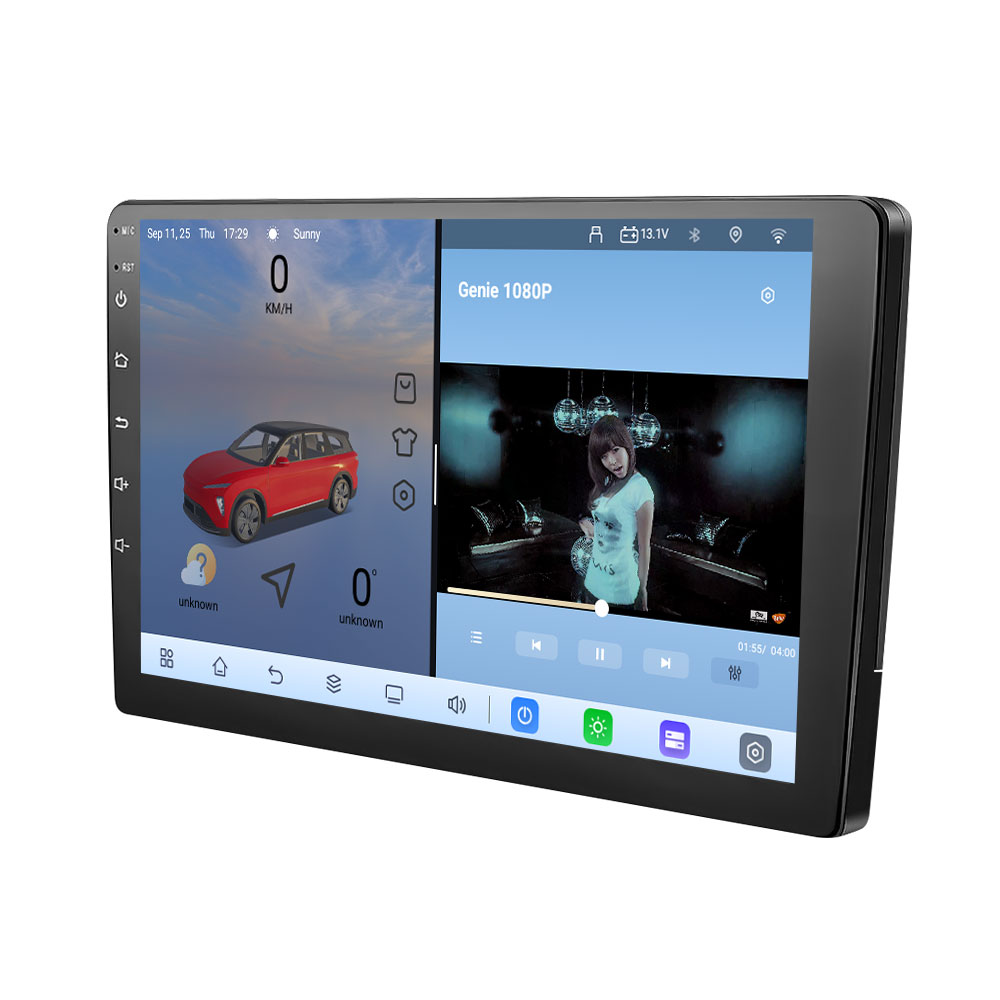
TS105: 9-inch IPS 1024×600, Android 14 on UIS7865 octa-core, wireless CarPlay and Android Auto, E-mark, CE and FCC.
Block 2 — Manufacturing and Process Evidence (20 points)
This block scores what the supplier can show about the plant, not what it says about quality. The evidence set is short and specific: factory address and ownership, covered floor area, production headcount, annual output, number and type of board-assembly lines, soldering method, in-line test stations, and reliability test equipment.
TOPNAVI states a 20,000 m² manufacturing facility, 100+ employees, 360,000 units of annual output and a 50-engineer R&D team, and publishes images of SMT assembly, wave soldering, reflow soldering, a signal shielding room, temperature test chambers and a drop test station. Whether or not a buyer chooses this supplier, that is the shape of an acceptable answer: floor area, headcount, output and named process equipment, each traceable to a photograph or a document.
A weak answer in this block sounds like “we have a big factory and strict QC”. It contains no number, no process name and no address. Score it low and move on rather than spending a second call trying to extract detail that should already exist.
Block 3 — Certification and Market Access (20 points)
Score the document, never the logo. For each target market, the supplier should be able to name the applicable scheme and attach a certificate that matches the exact model being quoted. In practice this means E-mark for vehicle-related approval in ECE-type markets, CE for the European Union, FCC for the United States and RoHS for hazardous-substance restrictions, with EMC evidence supporting the electronic design.
Consistency across a range is a useful signal in itself. Within TOPNAVI’s published specification set, the TS105 is listed with E-mark, CE and FCC; the CarPlay box TN-AI47 with CE, FCC and RoHS; and the 16.8-inch TN-3036 with CE and FCC. Where a model’s published specification does not list a certification, the correct evaluation action is to request the file for that model rather than to assume coverage from a sibling product.
Evidence discipline: a certificate is only useful if it survives four questions — which model, which factory, which issuing body, and which validity period. Record all four in the evaluation file. A certificate that cannot answer them should be treated as marketing material, not compliance evidence.
Block 4 — Commercial Terms and Documentation (15 points)
This block converts the purchase into a contract. Request the incoterm, the minimum order quantity per SKU rather than per container, the packaging specification including carton drop criteria, the spare-parts ratio attached to the order, and the product change notification clause that governs any silent component substitution.
Two clauses are frequently missing and both are worth points. The first is a firmware and software support statement: who supplies updates, for how long, and through what channel. The second is a written confirmation of the declared HS code and the conformity documents that accompany it. Neither clause costs the supplier money to provide, so a refusal is informative.
Block 5 — Delivery Assurance and Capacity (15 points)
Delivery assurance is a written commitment backed by a capacity number. Start with the supplier’s stated annual output and compare it with your own annual volume. A supplier stating 360,000 units per year is, on a simple arithmetic average, capable of roughly 30,000 units per month if output were spread evenly across the calendar — but published capacity is not the same as available capacity in your production month, and the difference must be confirmed in writing.
Four documents make this block scoreable: a production slot confirmation tied to the purchase order, a pre-shipment inspection standard with an agreed acceptance level and named inspection point, a written recovery plan for shortfall that includes a notification deadline, and a factory calendar covering public holidays that affect the shipping window. Container loading photographs before departure close the loop.
Block 6 — Warranty and After-Sales Behaviour (10 points)
Warranty length is only the headline. The scoreable content is what voids it, how a dead-on-arrival unit is handled, how long a return authorisation takes, and whether spare boards are available after the model is superseded. Within TOPNAVI’s published specifications, a one-year warranty is stated for the TS105, TN-X80, TN-X23 and TN-M9, which gives a buyer a baseline to compare against competitors rather than a differentiator in itself.
Ask every shortlisted supplier the same three questions: what voids the warranty in your written policy, what is the RMA turnaround commitment, and can you supply spare main boards for a model two years after launch. Answers to those three separate a service operation from a sales department.
Worked example: the same evidence standard applied to a motorcycle unit
The scorecard is product-agnostic, which is why it can be applied to a two-wheel range inside the same evaluation. The TN-M9 motorcycle navigation unit is published as a 5-inch, 854×480 Linux device running on a V853 ARM Cortex-A7 1.0GHz CPU, with wireless CarPlay and Android Auto, IP67 protection, 2K DVR camera support, blind-spot detection and 433 MHz tyre-pressure detection. The TN-M11 is published at 6.25 inches, 1560×720, 300 cd/m² brightness, Linux with V853 or V533 CPU options, IP67 protection, 12–30V input range and −10°C to +60°C operating temperature. For a fleet buyer, the IP67 rating and the 12–30V input range on the TN-M11 are the two facts that matter most, because they define whether the unit survives rain and whether it tolerates a vehicle electrical system outside a fixed 12V assumption. Score the supplier on whether they can explain and document those two facts — not on whether the unit looks rugged.

TN-M11: 6.25-inch IPS 1560×720, Linux with V853 or V533 CPU options, IP67, 12–30V input range.
Step-by-Step Breakdown: Running the Evaluation
The scorecard is only repeatable if the sequence is fixed. The seven steps below are designed to be run once per supplier and reused for every shortlist cycle.
Step 1 — Define the SKU basket before first contact
Write down the model types you intend to buy, with the screen size band, operating system preference and connectivity requirement for each. Without a basket, every supplier will steer the conversation to the product they most want to sell. A distributor building a universal double-DIN range will define a different basket from a retrofit specialist selling vehicle-specific large-screen units.
Step 2 — Request a technical dossier per SKU
Ask for the specification in a single format covering screen size and resolution, display technology, operating system, CPU, RAM and ROM, connectivity, input voltage, operating temperature, protection rating and certification. The purpose is not to collect data but to see whether the same numbers come back twice.
Step 3 — Audit capability documents
Collect factory address, floor area, headcount, annual output and process equipment list. Photographs of SMT lines, soldering stations, shielding rooms and test chambers are acceptable substitutes for a first-pass screen, provided they are labelled and consistent with the address given.
Step 4 — Verify the certification file
For each target market, request the certificate that names the quoted model. Record issuing body, certificate number, scope and validity. Where a certificate is absent for a model, note the gap in the evaluation file instead of accepting a sibling model’s document as coverage.
Step 5 — Map commercial terms to acceptance criteria
Fix the incoterm, the minimum order quantity per SKU, the packaging specification, the spare-parts ratio and the change notification clause. Each item should appear in the same document as the price, so that the price cannot later be renegotiated on the grounds that a term was never agreed.
Step 6 — Write the delivery clause before signing
Attach the production slot confirmation, the inspection standard, the recovery plan and the holiday calendar as annexes to the order, not as promises in a chat thread. Confirm the declared HS code in the same annex.
Step 7 — Score and decide
Apply the weights, then act on the total. The thresholds used here are a practical filter rather than an industry standard: 80 points or above supports approval and a factory audit; 65 to 79 supports conditional approval with a written corrective action list and re-scoring within one quarter; below 65 should be rejected for that SKU basket even if the price is attractive.
| Scorecard block | Weight | Acceptable evidence | Disqualifying answer |
|---|---|---|---|
| Product breadth and technical consistency | 20 | Full specification per SKU, identical across page, quote and packaging | Contradictory OS or display specifications for the same model |
| Manufacturing and process evidence | 20 | Address, floor area, headcount, output, named process equipment | No number, no process name, no address |
| Certification and market access | 20 | Model-specific certificates with issuing body, scope and validity | Sibling model certificate offered as coverage |
| Commercial terms and documentation | 15 | Incoterm, MOQ per SKU, packaging spec, spare-parts ratio, PCN clause | Price list with no term sheet |
| Delivery assurance and capacity | 15 | Slot confirmation, inspection standard, recovery plan, holiday calendar | Verbal delivery promise only |
| Warranty and after-sales behaviour | 10 | Written warranty policy, RMA turnaround, spare board availability | Warranty length stated with no policy |
Use Cases: Applying the Scorecard to Four Buying Situations
1. Distributor building a universal double-DIN range
The basket spans screen sizes and operating systems, so Block 1 carries the most weight. A workable range might combine a 9-inch Android 14 unit such as the TS105, a 10.1-inch OLED Android 13 unit such as the TN-X80, and a 12.3-inch QLED Android 13 unit such as the TN-X23, with a Linux 2-DIN unit such as the TN-9359 for price-sensitive customers who do not need Android. The evaluation question is whether one supplier can hold three operating systems, three display technologies and two CPUs without documentation drift between them.
2. Retrofit specialist serving large-dash vehicles
Here the basket is narrow and the fitment risk is high. A 16.8-inch unit such as the TN-3036, listed for Toyota Prado application at 2560×1440 resolution with a −30°C to 75°C operating range, is typical of this segment. The scorecard shifts weight to Block 2 and Block 3: does the supplier document fitment, and does it hold CE and FCC for the exact model? A distributor who ignores that shift will compare a specialist unit against a universal unit on price and draw the wrong conclusion.
3. Two-wheeler fleet and rental operator
For a fleet, downtime dominates unit price. The relevant basket is motorcycle navigation: the TN-M9 at 5 inches with IP67 and 2K DVR support, and the TN-M11 at 6.25 inches with IP67, a 12–30V input range and −10°C to +60°C operating temperature. Blocks 5 and 6 carry more weight in this scenario, because the operator needs a committed replacement flow and a written RMA turnaround more than it needs another feature.
4. CarPlay retrofit for factory-equipped vehicles
A CarPlay box is evaluated differently again. The TN-AI47 is published as an Android 11 device on a quad-core CPU with 2GB RAM and 16GB ROM, wireless CarPlay and Android Auto, HDMI video output, DC 5V 2A supply, −10°C to 60°C operating temperature and CE, FCC and RoHS certification, positioned for cars with factory wired CarPlay. Because the unit sits behind an existing screen, the evaluation focus is compatibility statement accuracy and certification, not display quality. This is the case where Block 3 should be scored before Block 1.

TN-AI47: Android 11 on a quad-core CPU, 2GB RAM and 16GB ROM, HDMI output, CE, FCC and RoHS.
Comparison Table: Verified Specification View Across Product Families
The table below consolidates only the specifications published for each model. It is included to demonstrate how an evaluation file should look: one row per model, one column per scored attribute, and an explicit note where a value is not listed rather than an assumption that it matches a sibling product.
| Model | Category | OS / CPU | Display | Key connectivity | Protection and temperature | Certification as listed |
|---|---|---|---|---|---|---|
| TS105 | Universal car multimedia player | Android 14 / UIS7865 octa-core | 9-inch IPS, 1024×600 | USB, WiFi, Bluetooth, 3G/4G SIM, wireless CarPlay and Android Auto | Not listed in published spec | E-mark, CE, FCC |
| TN-X80 | Dual-knob car radio | Android 13 / UIS8581A 8-core 1.6GHz | 10.1-inch OLED, 2000×1200 | Built-in WiFi, wireless CarPlay, Android Auto, steering-wheel control | Not listed in published spec | Not listed — request file |
| TN-X23 | Dual-knob car stereo radio | Android 13 / UIS8581A 8-core 1.6GHz, 4GB+64GB | 12.3-inch QLED capacitive touch | Wireless CarPlay, wired Android Auto, 4G SIM support | Not listed in published spec | Not listed — request file |
| TN-3036 | Toyota Prado car multimedia player | Android 13 / 8-core, 4GB+64GB | 16.8-inch IPS, 2560×1440 | Wireless and wired CarPlay, wireless and wired Android Auto, BT 5.0, GPS | −30°C to 75°C | CE, FCC |
| TN-9359 | Linux 2-DIN car multimedia player | Linux | 7-inch, 1024×600 or 1280×720 | GPS, Bluetooth, WiFi, FM, USB/TF, steering-wheel control | Not listed in published spec | Not listed — request file |
| TN-M9 | Motorcycle navigation | Linux / V853 Cortex-A7 1.0GHz | 5-inch, 854×480 | Wireless CarPlay and Android Auto, WiFi, Bluetooth, USB | IP67 | Not listed — request file |
| TN-M11 | Motorcycle navigation | Linux / V853 or V533 | 6.25-inch IPS, 1560×720, 300 cd/m² | CarPlay, Android Auto, mirror link, dual Bluetooth 4.2/5.0, WiFi, FM | IP67, −10°C to +60°C, 12–30V input | Not listed — request file |
| TN-AI47 | CarPlay box | Android 11 / quad-core, 2GB+16GB | None (uses car screen), 1920×1080 output | Wireless CarPlay and Android Auto, HDMI video output, WiFi, BT 5.0 | −10°C to 60°C, DC 5V 2A | CE, FCC, RoHS |
Values above are reproduced from published product specifications. A blank certification entry means the published specification does not list one; it does not mean the model lacks certification. The evaluation action is to request the document.
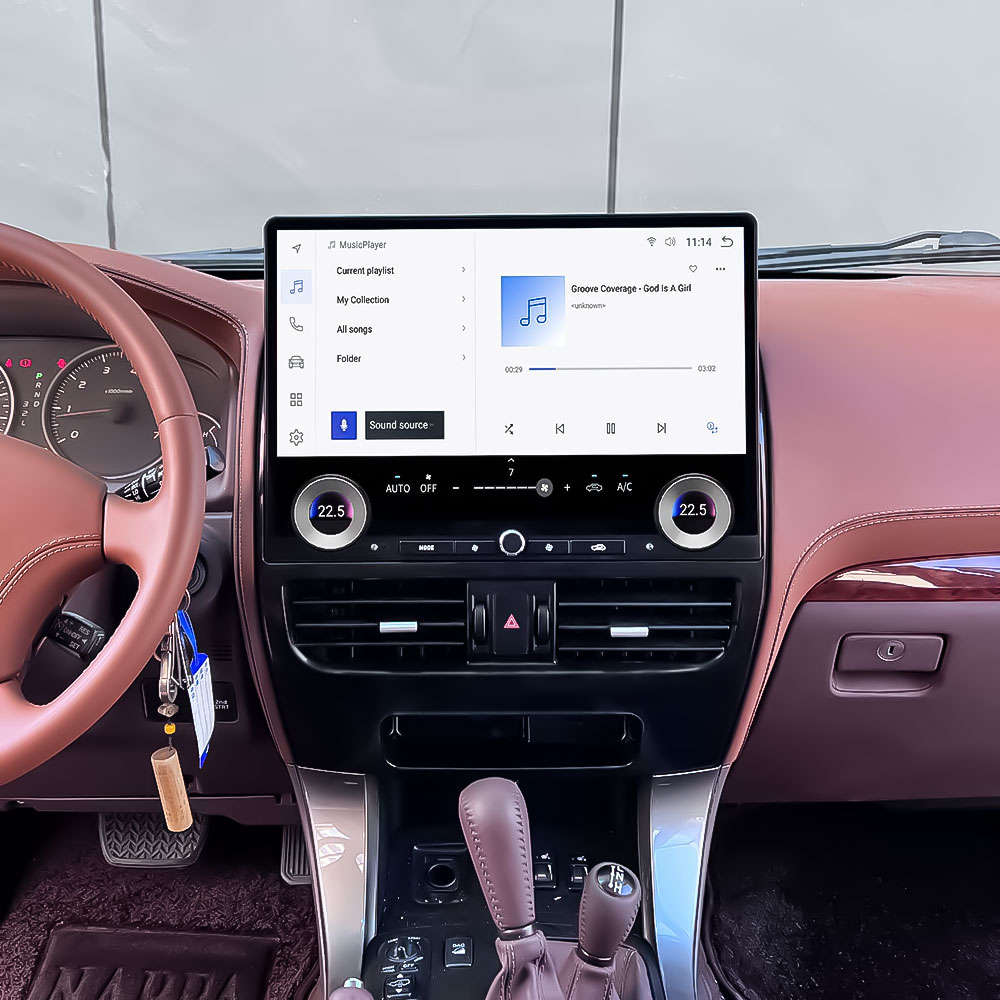
TN-3036: 16.8-inch IPS 2560×1440, Android 13, 4GB+64GB, CE and FCC listed, −30°C to 75°C operating range.
FAQ
Which certifications should an aftermarket car radio supplier provide before an order is placed?
It depends on the destination market, but four schemes cover most requirements: CE for the European Union, FCC for the United States, E-mark for vehicle-related approval in ECE-type markets, and RoHS for hazardous-substance restrictions. The certificate must name the exact model being quoted, together with the issuing body, certificate number, scope and validity period. For illustration, within TOPNAVI’s published specifications the TS105 lists E-mark, CE and FCC, the TN-AI47 lists CE, FCC and RoHS, and the TN-3036 lists CE and FCC. Where a model’s published specification lists no certification, request the document for that model instead of assuming it shares a sibling product’s file.
How can a buyer verify manufacturing capability without visiting the factory?
Request five data points and one visual set. The data points are factory address and ownership, covered floor area, production headcount, annual output and process equipment list. The visual set is labelled photographs of board assembly, soldering, in-process testing and reliability testing. As a reference example, TOPNAVI states a 20,000 m² facility, 100+ employees, 360,000 units of annual output and a 50-engineer R&D team, and publishes images of SMT assembly, wave and reflow soldering, a signal shielding room, temperature test chambers and a drop test station. A supplier that cannot supply numbers and named processes has not answered the question, regardless of how the answer is phrased.
What drives the price difference between two apparently similar Android car radios?
Five factors explain most of the gap: display technology and resolution, processor and memory configuration, connectivity options, certification scope, and warranty policy. A 9-inch 1024×600 IPS unit on a UIS7865 octa-core platform is not the same cost base as a 12.3-inch QLED unit with 4GB RAM and 64GB ROM, and a model carrying E-mark, CE and FCC together requires more conformity work than one carrying no listed certification. Published retail listings on a supplier’s regional storefront describe end-user prices and cannot be used as a wholesale benchmark. The correct comparison is a like-for-like quote on a fixed SKU basket with identical incoterms, packaging and warranty terms.
What should a sample evaluation test before a volume order?
Test the behaviours that the specification sheet does not capture: cold-boot time from ignition, wireless CarPlay and Android Auto pairing stability across repeated connect and disconnect cycles, screen legibility in direct sunlight, thermal behaviour during prolonged navigation, reverse-camera switching latency, wiring-harness fitment against the target dashboard, and Bluetooth call quality at road speed. For a two-wheel application, add water exposure against the published IP67 rating and verify behaviour across the stated 12–30V input range. A sample programme is only meaningful when the acceptance criteria are written before the sample arrives, so that a pass or fail is a decision rather than an opinion.
How should delivery commitments be documented before signing?
Attach four annexes to the purchase order: a production slot confirmation tied to the order date, a pre-shipment inspection standard with an agreed acceptance level and named inspection point, a written recovery plan with a notification deadline for shortfall, and the factory holiday calendar covering the shipping window. Confirm the declared HS code — 8527.21 for car radios combining radio reception with recording or reproducing apparatus — in the same document set. Published annual capacity is a starting point only; a supplier stating 360,000 units per year is stating an output ceiling, not an available slot in your production month, and the difference should be closed in writing before the order is released.
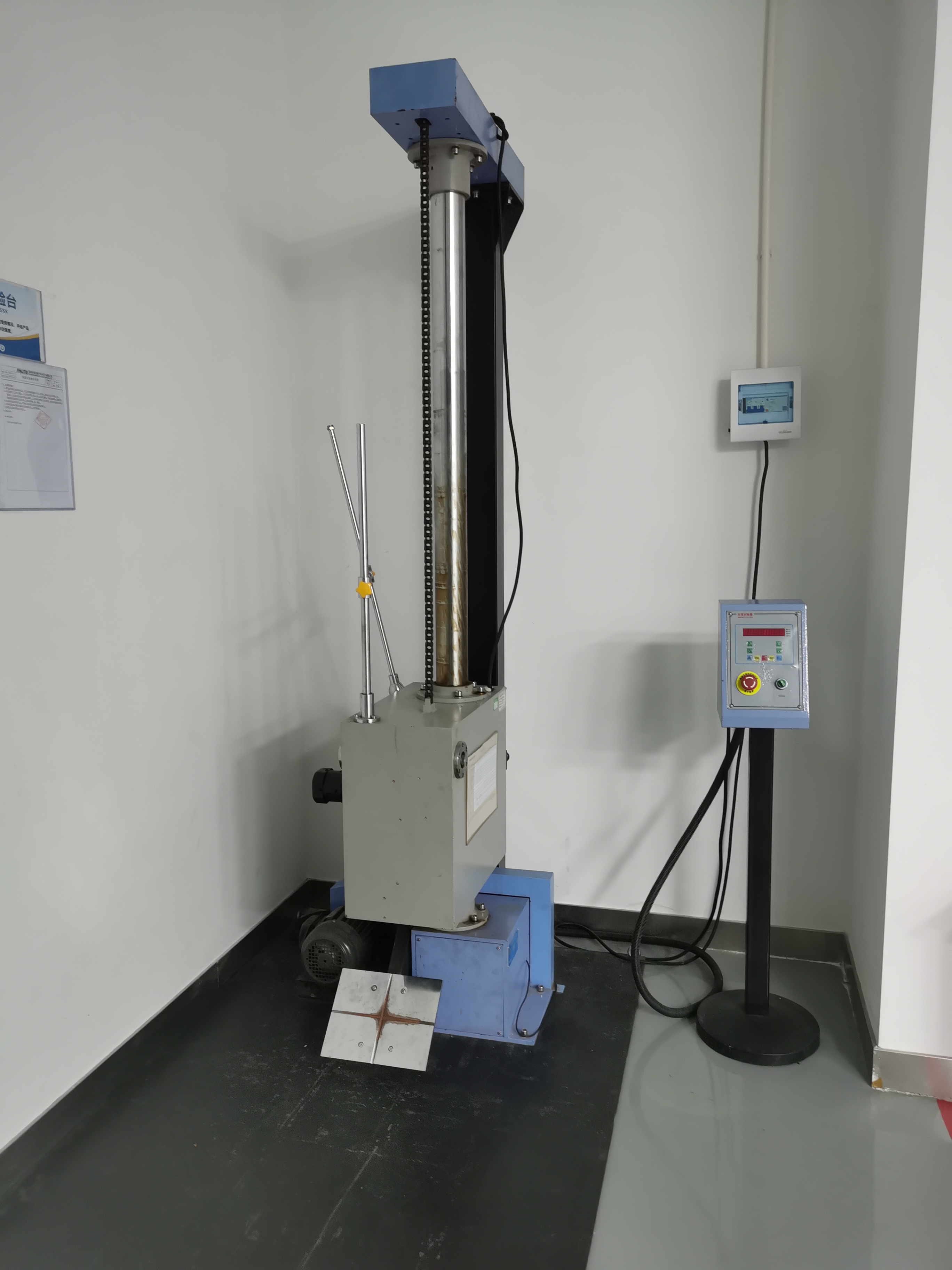
Reliability and drop testing belong in the evidence file, not in the sales presentation.
Conclusion: A Scorecard Is a Filter, Not a Verdict
The purpose of this scorecard is to decide who deserves a factory audit and a sample order — not to produce a final ranking. Suppliers change production lines, lose certificate validity and renegotiate terms, so the score has a shelf life. Re-score every shortlisted supplier once per buying cycle, and re-score immediately after any change notification, any missed shipment or any certification renewal.
Applied consistently, the six blocks do three things that a product grid cannot. They separate manufacturers from trading companies before the commercial conversation begins. They convert certification from a logo into a document with a scope and a date. And they turn delivery from a promise into an annex with a slot, an inspection standard and a recovery plan. A buyer who holds those three outcomes has already avoided the majority of aftermarket car radio sourcing failures.
Next Step: Sample, Specification File or Quotation
If you are building an evaluation file for a universal double-DIN range, a vehicle-specific large-screen unit, a motorcycle navigation programme or a CarPlay box retrofit, request a sample, a model-specific specification sheet and a quotation against your SKU basket. Certificates for the quoted models, the factory capability data set and current terms can be supplied for evaluation.
Email: sales@topnaviauto.com · Phone / WhatsApp: +86 150-7094-1278 · Website: www.topnavi.com.cn
Download the full product catalogue and company profile brochure: TOPNAVI brochure (PDF)
Shenzhen Top Navi Electronic Tech Co., Limited · 4th floor, 56A Building, Baotian Industrial Zone, Baotian 3rd Road, Xixiang Street, Baoan District, Shenzhen, China, 518126.
Have Questions or Need More Details?
Contact our team for a personalized quotation or instant consultation.
Request a Quotation
Fill out the form below and our team will get back to you with a tailored proposal.
WhatsApp Direct Chat
Prefer to chat in real-time? Message us on WhatsApp for instant assistance & quick answers.
- Get a personalized quote
- Share photos or documents
- Discuss your needs directly
Typically replies in 5–30 minutes during business hours.