
How to Choose a Car Radio: A 2026 Buyer's Guide to Types, Specs, and Smart Sourcing
Choosing the right car radio is no longer just about replacing a broken head unit. In 2026, a car radio functions as the central hub for navigation, communication, entertainment, and vehicle safety. For car owners, fleet managers, and aftermarket buyers, the challenge is matching the right device to a specific vehicle, usage pattern, and budget. This guide explains the main car radio categories, the specifications that matter, installation considerations, and how to evaluate suppliers—with concrete product examples and measurable criteria.
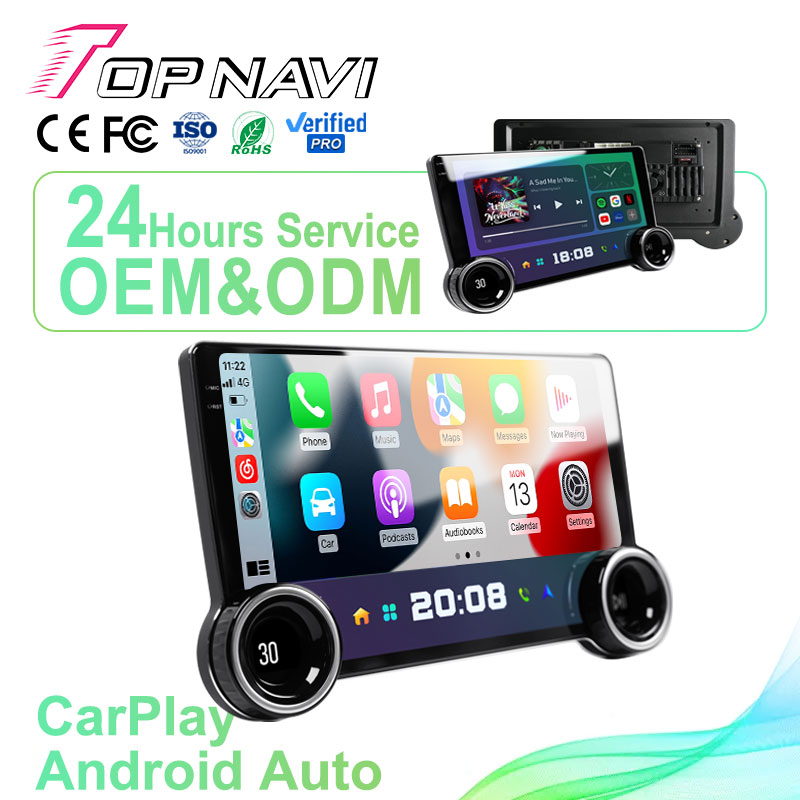
What Is a Car Radio and Why Does the Choice Matter?
A car radio, also called a car stereo, head unit, or car multimedia player, is the dashboard-mounted device that controls audio, radio, navigation, and smartphone connectivity inside a vehicle. In modern vehicles, it often integrates a touchscreen display, Bluetooth, GPS, rear-view camera input, and support for Apple CarPlay and Android Auto. Aftermarket car radios replace or upgrade the factory-installed unit to add new functions, improve display quality, or adapt a vehicle for regional requirements.
The global in-car infotainment market was valued at USD 22.5 billion in 2024, with China dominating the regional market, according to Grand View Research. The car audio head unit market was estimated at USD 15.44 billion in 2024, with double DIN remaining the largest segment, according to Market Research Future. These numbers reflect a market in which buyers increasingly expect a head unit to do more than play FM radio.
Main Car Radio Types
Before comparing specifications, buyers need to identify which form factor fits the vehicle. The two most common aftermarket sizes are single DIN and double DIN, but screen-based universal units now cover a wider range of dashboard layouts.
Single DIN Car Radio
A single DIN car radio fits a standard 180 mm x 50 mm dashboard slot. It is common in older vehicles, pickup trucks, and commercial vehicles. Modern single DIN units may include a detachable screen or a compact touchscreen. The TOPNAVI TN-UK1105, for example, is a single-knob car multimedia player with an 11.5-inch 2K OLED capacitive touchscreen and a universal 1DIN dashboard mount. Buyers choosing single DIN should confirm that the dashboard opening and mounting bracket match the unit.
Double DIN Car Radio
A double DIN car radio is twice the height of a single DIN unit (180 mm x 100 mm) and offers more room for a larger touchscreen and additional controls. Double DIN remains the largest segment in the car audio head unit market. Buyers with a double DIN dashboard slot have the widest choice of Android-based multimedia players, such as the TOPNAVI TN-X23, a 12.3-inch dual-knob car stereo radio that runs Android 13 on an 8-core UIS8581A CPU with 4GB RAM and 64GB ROM. The TN-X23 is a universal-fit double DIN unit with a full metal body and a built-in cooling fan.
Screen Car Radio / Android Car Radio
Screen-based car radios are the fastest-growing category in the aftermarket. These units replace the factory display or fit into universal dashboards, running Android or Linux to support apps, navigation, and smartphone projection. The TOPNAVI TS105 is a 9-inch universal car multimedia player with an IPS capacitive touchscreen, a 1024*600 resolution, Android 14, and a UIS7865 octa-core CPU. It includes built-in wireless CarPlay and Android Auto, making it suitable for users who want a modern interface without replacing the entire vehicle dashboard. The TOPNAVI TS10 is an Android 12 car stereo with an 8-core Unisoc UIS7862S chipset, optional 4GB/6GB/8GB RAM, and 64GB/128GB/256GB storage options, designed for aftermarket upgrades.
Aftermarket Car Radio
An aftermarket car radio is any head unit installed after the vehicle leaves the factory. Buyers choose aftermarket units for better sound quality, navigation, smartphone integration, or to restore a vehicle with a failed factory radio. Because aftermarket units must work across many car models, universal-fit products with CAN bus adaptation, steering wheel control support, and multi-language interfaces are common in global markets. TOPNAVI, for example, manufactures universal and customized OEM/ODM car multimedia players compatible with hundreds of car models and compliant with regional standards.
Key Specifications to Compare
Once the form factor is clear, the next step is comparing technical specifications. The table below summarizes the most important parameters and what they mean for real-world use.
| Specification | Why It Matters | Example Value |
|---|---|---|
| Screen size | Determines visibility, touch targets, and dashboard fit | 9" to 16.8" |
| Resolution | Affects map detail, video clarity, and text sharpness | 1024*600 to 2560×1440 |
| Operating system | Defines app availability, update path, and interface | Android 12 / 13 / 14, Linux |
| CPU | Determines multitasking speed and system responsiveness | 8-core UIS8581A, UIS7865, UIS7862S |
| RAM / ROM | Affects app performance, navigation caching, and media storage | 4GB+64GB, up to 8GB+256GB |
| Bluetooth | Enables hands-free calling, wireless audio, and phone projection | Bluetooth 5.0 |
| CarPlay / Android Auto | Integrates smartphone apps, maps, and calls into the head unit | Wireless & wired |
| GPS | Provides standalone navigation without phone dependency | Built-in GPS |
| Audio output | Determines maximum volume and ability to drive external speakers | 4×50W amplifier |
| Working temperature | Indicates reliability in extreme climates | -30°C to 75°C |
| Certification | Determines legal market access and compliance quality | CE, FCC, E-Mark, RoHS |
Display Quality and Touch Experience
Display quality directly affects daily usability. A higher resolution means sharper maps and clearer backup camera images. IPS screens provide wider viewing angles, while OLED and QLED panels offer deeper contrast and more vivid colors. The TOPNAVI TN-X80 uses a 10.1-inch OLED display with a 2000*1200 resolution and runs Android 13, making it suitable for users who prioritize screen quality. The TN-X23 uses a 12.3-inch Diamond QLED capacitive touchscreen with a dual-knob design, balancing modern display technology with physical controls for drivers who prefer tactile feedback.
Operating System and CPU
The operating system determines how the unit behaves over time. Android-based units offer access to Google Play, third-party apps, OTA updates, and flexible customization. Linux-based units are generally simpler, faster to boot, and more stable for dedicated navigation or CarPlay-focused use. The TOPNAVI TN-9359 is a 2 DIN Linux universal car radio with a 7-inch screen, GPS navigation, Bluetooth, WiFi, and a 4×50W amplifier—a practical choice for buyers who want core functions without the complexity of an Android system. The TOPNAVI TN-M9 motorcycle navigation unit also runs Linux on a V853 ARM Cortex-A7 1.0GHz CPU and supports wireless CarPlay and Android Auto.
Connectivity and Smartphone Integration
Bluetooth car radio functionality is now a baseline expectation. It enables hands-free calls, wireless music streaming, and safer phone access while driving. CarPlay and Android Auto are the two dominant smartphone projection standards. Some units support both wirelessly and via cable. The TOPNAVI TS105, for example, includes built-in wireless CarPlay and Android Auto, plus USB, built-in WiFi, Bluetooth, and an optional 3G/4G SIM card. For vehicles with an existing factory screen, the TOPNAVI TN-AI47 CarPlay Box adds wireless CarPlay and Android Auto via HDMI, with 2GB RAM and 16GB ROM on Android 11.0.
Wiring Harness and Installation
A car radio wiring harness connects the head unit to the vehicle's power, speakers, and control signals. A mismatch between the harness and the vehicle can cause power loss, speaker failure, or loss of steering wheel controls. Buyers should confirm that the supplier provides the correct harness or a universal harness with CAN bus adapter for the target vehicle. Units such as the TN-X23 are delivered with an installation cable and retail box, which simplifies procurement for distributors and installers.
How to Choose: A Step-by-Step Decision Framework
Buyers can reduce the risk of a poor purchase by following a structured process.
Step 1: Define the Vehicle and Dashboard Size
Measure the dashboard opening and determine whether the vehicle accepts single DIN, double DIN, or a universal floating screen. If the vehicle has a double DIN slot, a double din car radio such as the TN-X23 or TN-X15 is a direct fit. If the vehicle has a single DIN slot, a unit like the TN-UK1105 with a universal 1DIN dashboard mount is more appropriate. For vehicles with unusual dashboards, a vehicle-specific unit such as the TOPNAVI TN-3036 for the Toyota Prado may provide the best fit and finish.
Step 2: Match Functions to Driving Needs
List the functions the driver actually needs. Long-distance drivers may prioritize built-in GPS and wireless CarPlay. Fleet managers may prioritize ADAS, DVR support, and driving behavior monitoring. Off-road and motorcycle users may need IP67 waterproofing and handlebar mounting. The TOPNAVI TN-RD1001 is a 10.26-inch portable car multimedia player with a 4K UHD front camera, 1080P AHD reverse camera, ADAS, loop recording, and G-Sensor, making it suitable for dash-cam-style use in cars and trucks. The TOPNAVI TN-M11 is a 6.25-inch motorcycle navigation unit with an IP67 protection level, dual Bluetooth, GPS tracking, TPMS support, and a DVR function.
Step 3: Set a Compliance Baseline
Compliance should be checked before comparing prices. CE marking is mandatory for car radios entering the EU under RED/EMC/LVD directives, while FCC certification is required for the US market. Automotive electronic devices also commonly reference ISO 16750 for environmental testing, covering temperature, vibration, and humidity resilience. Buyers should ask the supplier for the specific certificates for the target market. For example, the TOPNAVI TS105 carries E-mark, CE, and FCC certifications; the TN-3036 carries CE and FCC; and the TN-AI47 carries CE, FCC, and RoHS.
Step 4: Compare Build Quality and Materials
Build quality determines longevity in a vibrating, temperature-cycling vehicle environment. Common quality indicators include the use of ABS engineering plastic, aluminum alloy, tempered glass, and metal chassis construction. The TN-X23 uses a full metal body with a built-in cooling fan, which is a meaningful advantage for thermal management. The TN-9359 uses ABS plastic, a metal chassis, and an LCD touchscreen. Buyers should also ask about in-house testing, such as temperature chamber testing, drop testing, and signal shielding room testing, which are part of TOPNAVI's production process.
Step 5: Evaluate Supplier Capability and Support
For volume buyers, the supplier matters as much as the product. Key questions include: Does the supplier have in-house R&D? Can it provide OEM/ODM customization? What certifications does the factory hold? What is the production capacity? Shenzhen Top Navi Electronic Tech Co., Limited, founded in 2014 in Shenzhen, China, specializes in car DVD multimedia players, GPS navigators, and smart in-vehicle infotainment solutions. Its facility covers 20,000 m², employs 100+ staff including 50 R&D engineers, and has an annual production capacity of 360,000 units. Approximately 95% of its products are exported, with the USA as a major market.
Comparison: Common Car Radio Categories for Aftermarket Buyers
The table below compares the main categories a buyer is likely to evaluate.
| Category | Best For | Typical Screen | Example Model |
|---|---|---|---|
| Single DIN / knob unit | Older vehicles, 1DIN dashboards, drivers who prefer knobs | 11.5" floating | TN-UK1105 |
| Double DIN with knobs | Universal fit, dual physical controls + large screen | 11.5"–13" | TN-X23, TN-X15 |
| Android universal screen | App support, wireless CarPlay, flexible fit | 9"–10.1" | TS105, TS10, TN-X80 |
| Linux 2 DIN radio | Simple stable radio + CarPlay + navigation | 7" | TN-9359 |
| Portable PND with camera | Trucks, rental fleets, no permanent installation | 10.26" | TN-RD1001 |
| Vehicle-specific unit | Models like Toyota Prado with custom fit | 16.8" | TN-3036 |
| CarPlay Box | Adding CarPlay to factory wired CarPlay screens | External (HDMI) | TN-AI47 |
| Motorcycle navigation | Motorcycles, handlebar mounting, waterproof | 5"–6.25" | TN-M9, TN-M11 |
Use Cases and Real-World Applications
Different buyer profiles need different configurations. The following scenarios reflect common aftermarket demand patterns.
Vehicle Audio System Upgrade
Drivers who want better sound, navigation, and smartphone integration often replace the factory radio with an Android multimedia player. For a double DIN vehicle, the TN-X23 provides a QLED screen, wireless Apple CarPlay, wired Android Auto, built-in GPS, and a 4×50W amplifier. For users who prefer a floating screen, the TS105 is a 9-inch universal unit with Android 14 and wireless CarPlay/Android Auto. The typical operating condition is an in-vehicle environment with a DC 12V power supply and a wide temperature range from -30°C to 75°C.
Commercial Fleet Deployment
Fleet operators value functions such as real-time GPS positioning, driving behavior support, and reliable connectivity. The application scenario covers vehicle audio system upgrades, in-vehicle infotainment retrofits, and commercial fleet projects in markets including the United States, United Kingdom, Australia, Thailand, Tanzania, and Russia. A portable unit like the TN-RD1001 offers flexibility across vehicles without permanent installation, while an Android unit can support fleet apps and 4G connectivity, as the TN-X23 supports a 4G SIM card.
Motorcycle and Off-Road Use
Motorcycle riders require waterproof, bright, and vibration-resistant displays. The TN-M9 is a 5-inch motorcycle navigation unit with an 854*480 resolution, wireless CarPlay and Android Auto, and an IP67 waterproof rating. The TN-M11 adds a 6.25-inch IPS screen with 1560*720 resolution and 300 cd/m² brightness. Both units are designed for handlebar or dashboard mounting and support multi-language interfaces for global distribution.
Adding Smartphone Connectivity to Existing Screens
Some vehicles already have a factory screen with wired CarPlay but lack wireless functionality or app support. In this case, a CarPlay Box such as the TN-AI47 can add wireless CarPlay, wireless Android Auto, YouTube, Netflix, Google Play, and OTA updates through an HDMI connection. This is a lower-cost, non-invasive upgrade path compared with replacing the entire head unit.
Supplier Evaluation: What Industrial Buyers Should Ask
Buyers who source car radios in volume need to evaluate the manufacturer as carefully as the product. Key evidence points include factory scale, R&D capability, certifications, production process, and export experience.
Production and Quality Evidence
A reliable supplier should be able to show its production line, testing equipment, and certifications. Shenzhen Top Navi Electronic Tech Co., Limited operates a 20,000 m² modern factory with automated lines, more than 100 production staff, and an annual sales volume of over 360,000 units. The factory holds ISO 9001 certification, and products carry CE, FCC, RoHS, E-Mark, and EMC certifications for global market access. Its R&D team consists of 50 engineers, supporting continuous innovation and OEM/ODM customization.
OEM/ODM and Customization
Brand owners and distributors often need customized firmware, branding, packaging, or hardware configurations. TOPNAVI provides one-stop OEM/ODM solutions, from product design to global delivery, for clients in 70+ countries across Europe, the US, South/Central America, and Southeast Asia. Buyers should confirm the supplier's ability to adapt CAN bus protocols, support multi-language localization, and handle regional certification requirements.
Total Cost and Lead Time Transparency
Cheap car radios may carry hidden costs in failures, returns, or certification gaps. Buyers should evaluate warranty terms, after-sales support, and the supplier's track record in the target market. A professional supplier will provide clear specifications, installation documentation, and responsive communication. For direct inquiries, TOPNAVI can be reached at sales@topnaviauto.com or +86 150-7094-1278.
Frequently Asked Questions
What certifications should a car radio have before it can be sold in the EU and USA?
CE marking is mandatory for car radios entering the EU under the RED/EMC/LVD directives, and FCC certification is required for the US market. Automotive electronic devices also commonly reference ISO 16750 for environmental testing, covering temperature, vibration, and humidity resilience. Buyers should request the specific certificates for the target market before ordering. For example, the TOPNAVI TS105 carries E-mark, CE, and FCC certifications, and the TN-AI47 carries CE, FCC, and RoHS.
What is the difference between single DIN and double DIN car radios?
Single DIN and double DIN refer to dashboard slot sizes. A single DIN slot is 180 mm x 50 mm, while a double DIN slot is 180 mm x 100 mm, or twice the height. Double DIN units can accommodate larger touchscreens and more controls. Double DIN remains the largest segment in the car audio head unit market. Buyers should measure the dashboard opening before choosing a unit. The TOPNAVI TN-UK1105 fits a universal 1DIN dashboard mount, while the TN-X23 is a 2 DIN universal-fit unit.
What specifications determine the performance of an Android car radio?
The most important specifications are the operating system, CPU, RAM, ROM, screen resolution, connectivity, and audio output. A newer Android version and an 8-core CPU generally provide a more responsive experience. RAM and ROM affect multitasking and app storage. For example, the TOPNAVI TN-X23 uses an 8-core UIS8581A CPU with 4GB RAM and 64GB ROM, while the TS10 offers up to 8GB RAM and 256GB storage options. Bluetooth 5.0, dual-band WiFi, and wireless CarPlay/Android Auto are key connectivity features.
How do I choose between an Android car radio and a Linux car radio?
Android car radios offer access to Google Play, third-party apps, OTA updates, and deeper customization, making them suitable for users who want an app-based experience. Linux car radios are generally simpler, faster to boot, and more stable for dedicated navigation or CarPlay-focused use. The TOPNAVI TS105 runs Android 14 on an 8-core CPU with wireless CarPlay and Android Auto. The TOPNAVI TN-9359 runs Linux with a 7-inch screen, GPS, Bluetooth, WiFi, and a 4×50W amplifier for users who prioritize simplicity and stability.
How should I evaluate a car radio supplier for a large order?
Evaluate the supplier's factory scale, R&D capability, certifications, production process, and export track record. Ask for specific evidence such as ISO 9001 certification, CE/FCC/RoHS/E-Mark certificates, production line photos, and testing equipment. Shenzhen Top Navi Electronic Tech Co., Limited operates a 20,000 m² factory with 100+ employees, 50 R&D engineers, and an annual production capacity of 360,000 units, with 95% of products exported and the USA as a major market. For a detailed review of specifications and options, contact sales@topnaviauto.com or +86 150-7094-1278 to request a sample or a quote.
Conclusion
Selecting the right car radio in 2026 requires a clear understanding of vehicle fit, user needs, technical specifications, and supplier reliability. Start by measuring the dashboard slot and choosing between single DIN, double DIN, or a universal screen unit. Then match the operating system, connectivity, display quality, and compliance to the target market. For volume purchases, verify the manufacturer's production capacity, certifications, and customization capabilities. A structured evaluation reduces the risk of returns, failed installations, and compliance issues. To explore current product options and obtain a sample or quote, contact TOPNAVI directly or download the company brochure.
Download the TOPNAVI company brochure (PDF)
Have Questions or Need More Details?
Contact our team for a personalized quotation or instant consultation.
Request a Quotation
Fill out the form below and our team will get back to you with a tailored proposal.
WhatsApp Direct Chat
Prefer to chat in real-time? Message us on WhatsApp for instant assistance & quick answers.
- Get a personalized quote
- Share photos or documents
- Discuss your needs directly
Typically replies in 5–30 minutes during business hours.