
Brass Mini Ball Valve TS-2465 vs Brass Water Meter Valve TS-609: Buyer Comparison Guide
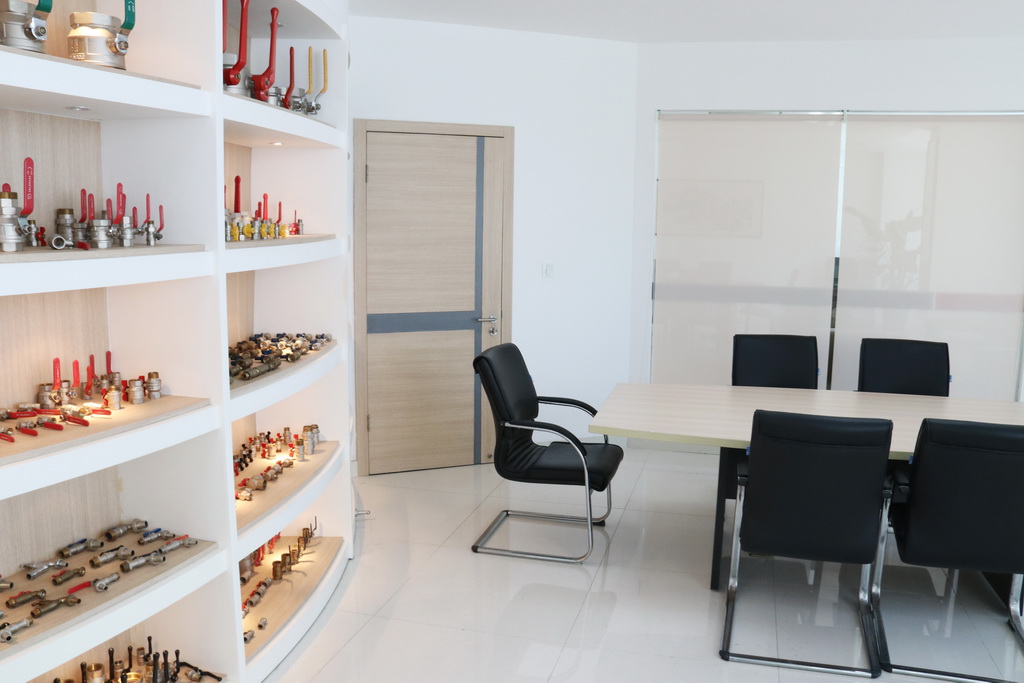
Brass valve samples held at TOSVAL's sample room in Yuhuan, Zhejiang — the physical check that should follow the certificate check.
The TOSVAL TS-2465 brass mini ball valve and the TS-609 brass water meter valve are both quarter-turn brass valves from one manufacturer, and for a buyer at decision stage the difference is measured in documents before it is measured on the bench. TS-2465 is recorded with EN 331:2015 attestation for gas installations, WRAS certificate 2203044 for UK drinking-water contact, and EN 13828:2003 attestation. TS-609 is recorded with EN 13828:2003 attestation. Both models fall inside the ISO 9001:2015 certification scope.
Decision rule in one paragraph. Specify TS-2465 when the line needs compact isolation and the RFQ asks for a gas-installation standard or a UK drinking-water approval; specify TS-609 when the position is the water meter and the specification is built around the potable-water ball valve standard plus a quality-system certificate. Both models share the EN 13828:2003 attestation, so the practical separator is the extra product-level coverage recorded for TS-2465 — and the buyer's duty to confirm which EN 13828 edition the destination market expects.
This guide defines each valve by the role it plays and the documents recorded against it, explains the three approval layers that decide a brass valve tender, converts the comparison into an RFQ checklist, and marks where the available evidence stops. No price, MOQ, lead time, dimensional or pressure-rating data for either model is part of the evidence behind this article, so those fields stay open until a supplier answers them in writing.
The two valves at a glance
Brass Mini Ball Valve TS-2465
A mini ball valve is a compact quarter-turn isolating valve used where the installation point is tight — a small manifold, a short branch, a fixture connection where a standard-length valve will not fit. TS-2465 is the TOSVAL model for that role, and in this comparison it is the wider-documented of the two: it is the only model recorded against EN 331:2015 for gas installations, the only model recorded against WRAS certificate 2203044, and it also sits inside the EN 13828:2003 attestation and the ISO 9001:2015 scope.
For a buyer, that breadth is the point. One SKU can answer an RFQ that names a gas-installation standard and an RFQ that names UK drinking-water approval, reducing the number of product files a distributor has to keep. Breadth of documentation says nothing about the valve's dimensional range or pressure class; those have to be confirmed against the drawing for the specific line.
Brass Water Meter Valve TS-609
A water meter valve sits at the meter position so the meter, or the pipework downstream of it, can be isolated for meter exchange, testing or repair without draining the system. TS-609 is the TOSVAL model for that position. Its recorded documentation in this comparison is EN 13828:2003 attestation plus the ISO 9001:2015 scope that covers both products; no EN 331:2015 attestation and no WRAS certification are recorded for this model in the supplied set.
That makes TS-609 the straightforward choice where the purchase file is about potable-water meter isolation and the specification asks for the water ball valve standard plus a quality-system certificate. Where the same file also asks for a gas-installation standard or a UK drinking-water approval, the missing document has to be requested explicitly, or the position has to be filled by a model that already carries it.
Why the certificate decides this comparison
On the bench, both valves do the same thing: a quarter turn stops flow. In a procurement file they are not interchangeable, because the file is read in a fixed order — compliance, capability, commercial terms, sample, delivery — and the first two are answered by documents.
Three checks decide most brass valve purchases in Europe. Does the product standard named in the specification name this exact model? Does the drinking-water approval required in this market list this exact model? Does the manufacturer's quality system cover the product family being ordered? A valve can pass all three on one project and fail the first on the next, purely because the specification names a different standard.
Run the same three checks on these two models and the split is clear. Both pass the quality-system check. Both pass the EN 13828:2003 check as recorded here. Only TS-2465 passes the gas-installation check and the UK drinking-water check on the evidence supplied. Everything else in this guide is about proving that in the paperwork.
Industry background: three approval layers around a brass valve
Brass valves for water, heating and gas are approved through three layers that are often confused with one another.
Product standards define construction, performance, safety, testing and marking for a valve type in an application. Industrial Monitor Direct's standards cross-reference describes EN 331:2015 as the European standard that sets construction, performance, safety, test and marking requirements for manually operated ball valves used in gas installations. EN 13828 covers manually operated copper-alloy and stainless-steel ball valves for potable-water installations in buildings: the 2025 edition described by the Slovak standards catalogue applies to DN 6 to DN 100 at PN10 or PN16, with a maximum distribution temperature of 65 °C and excursions to 90 °C of up to one hour.
Drinking-water approvals are market-specific and product-specific. WRAS is the UK route for products in contact with drinking water; ACS is the French sanitary conformity approval for drinking-water contact. Each rests on a certificate number and a list of approved products, which is why the number and the list matter more than the wording of a brochure.
Quality-system certifications describe how the factory is run. ISO 9001:2015 is a quality management system standard; ISO 14001:2015 and ISO 45001:2018 cover environmental and occupational health and safety management. None of them, on its own, says that a particular valve meets a particular product standard.
Category scale is background only. Cognitive Market Research's brass ball valve analysis projected the global brass ball valve market at USD 3,764.72 million by 2026; that figure describes a market, not the suitability of either model for a given line.
Document by document: what covers which valve
EN 331:2015 — recorded for the mini ball valve
EN 331:2015 is the European standard for manually operated ball valves used in gas installations, and in the documentation used for this comparison the attestation is recorded for the Brass Mini Ball Valve TS-2465. The practical value is what the standard compels a supplier to document: construction, performance, safety, test and marking.
Read the certificate together with the test report and with the marking on the valve and its packaging. A frequent RFQ error is to file the certificate and skip the marking check, when the two are meant to describe the same product.
The attestation is not recorded for TS-609 in the supplied set. That is a statement about documents, not about capability: a model can be able to serve a line without an attestation appearing in a particular comparison file. If gas service is in scope, the RFQ should name the model listed under the gas-installation attestation and ask for the certificate and test report for that model.
EN 13828:2003 — the shared attestation, and the edition question
EN 13828:2003 is recorded as covering both TS-2465 and TS-609, which makes it the natural anchor for a mixed order containing both valves. It is also the document that needs the closest reading, because the edition changes the answer.
The Dutch standards institute's catalogue entry for EN 13828:2003 describes DN 8 to DN 100, up to PN10, a 65 °C distribution temperature, and records the edition as withdrawn on 1 March 2025. The 2025 edition, per the Slovak standards catalogue description, applies to DN 6 to DN 100 at PN10 or PN16 with a 65 °C limit and excursions to 90 °C for up to one hour.
Three consequences follow for a buyer. Ask which edition the attestation covers and when it was issued, rather than accepting an EN 13828 reference with no year. Check whether your own specification and the regulator in the destination market accept an attestation to the 2003 edition — that is a jurisdiction question this article does not answer for any country. And if the destination market now expects the current edition, ask in the RFQ whether an attestation to it is available, so the answer is on file before the purchase order is raised.
WRAS certificate 2203044 — mini ball valve only
WRAS certificate 2203044 is recorded for the Brass Mini Ball Valve TS-2465. WRAS approval is the UK mechanism for products in contact with drinking water, and it is issued against specific products under a specific certificate number.
Two habits keep that approval useful. Keep the number in the purchase order and the product file, because a number can be checked and a claim cannot. And read the product schedule behind the certificate, because coverage follows the list: a model that is not listed is not covered by that certificate, however similar it looks.
No WRAS certification is recorded for TS-609 in the supplied set. On UK drinking-water work where WRAS is named in the specification, resolve that gap with the supplier before the specification is frozen, not after the valves are on site.
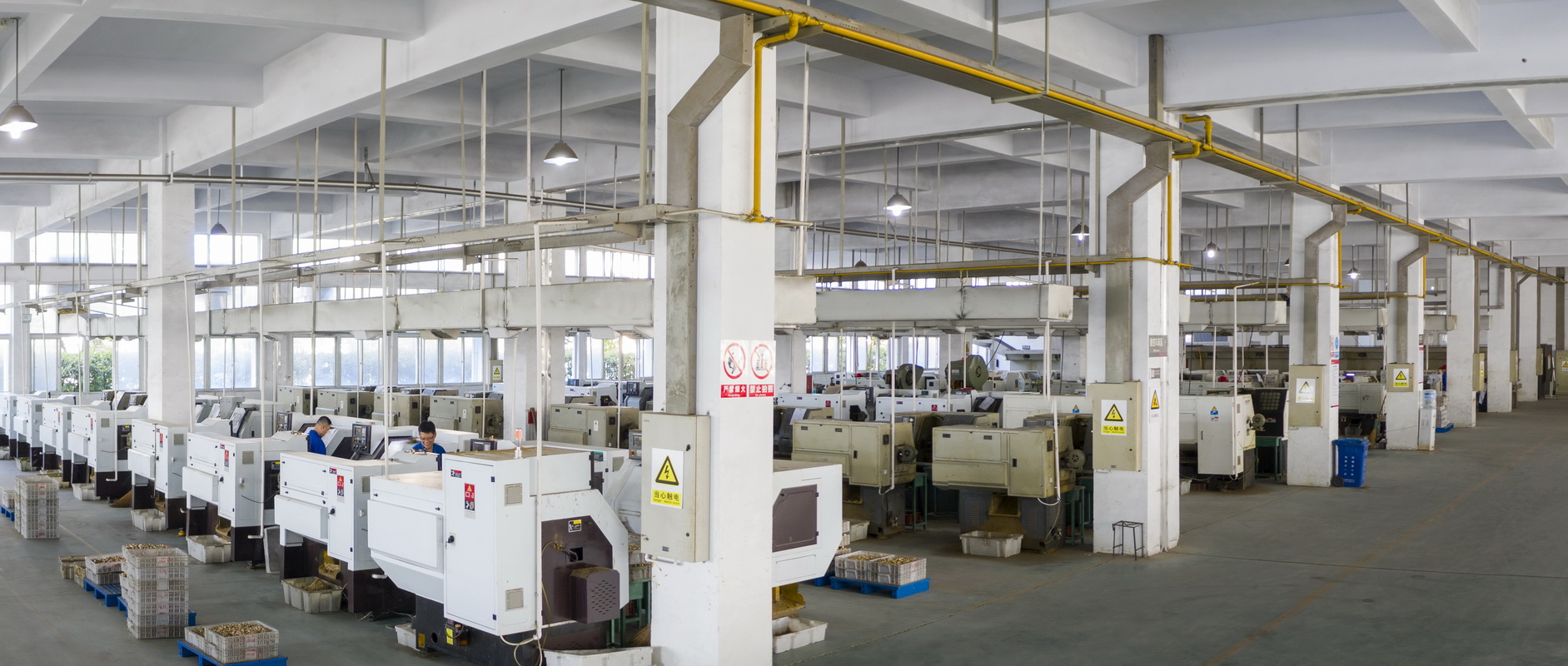
Production workshop in Yuhuan: the ISO 9001:2015 scope covers the process behind both models, while product-level approvals are evidenced separately.
ISO 9001:2015 — scope covering both, and what it does not prove
ISO 9001:2015 certification is recorded with a scope covering both products, which answers a different question from the product standards: can the supplier repeat what was approved? That supports the audit side of sourcing — process control, traceability, inspection, corrective action — the questions a buyer asks when a first order goes well and the fifth order has to be identical. TOSVAL's quality management system is certified to ISO 9001:2015, alongside ISO 14001:2015 for environmental management and ISO 45001:2018 for occupational health and safety.
It does not certify that TS-2465 meets EN 331:2015, and it does not approve either valve for drinking water. Those are product-level approvals and must be evidenced separately. Buyers who ask for the ISO certificate when they mean the product approval usually find out at the tender desk.
The rest of the approval set
Beyond these, the portfolio includes ACS approval for drinking-water contact in France together with the management systems described above. The documentation behind this comparison does not state which of these two models appears on the ACS approval, so the correct move is to request the approval with its product list rather than to assume coverage in either direction.
Certification comparison table
| Comparison point | Brass Mini Ball Valve TS-2465 | Brass Water Meter Valve TS-609 |
|---|---|---|
| Product standards recorded | EN 331:2015 and EN 13828:2003 | EN 13828:2003 |
| What EN 331:2015 addresses | Construction, performance, safety, test and marking for manually operated ball valves in gas installations | Not recorded for this model in the supplied documentation |
| EN 13828 edition note | 2003 edition recorded; that edition is listed as withdrawn on 1 March 2025, and the 2025 edition has a revised scope | Same position — the shared attestation is to the 2003 edition |
| Drinking-water approval recorded | WRAS certificate 2203044 (UK) | None recorded in the supplied set |
| Quality system | Inside the ISO 9001:2015 scope | Inside the ISO 9001:2015 scope |
| Line role | Compact quarter-turn isolation where space is tight | Isolation at the water meter position |
| Documents to request in the RFQ | EN 331:2015 certificate with model list, EN 13828 attestation with edition, WRAS 2203044 with product schedule, ISO 9001:2015 scope statement, test report and marking details | EN 13828 attestation with edition, ISO 9001:2015 scope statement, test report and marking details, plus written confirmation if a gas or WRAS requirement applies |
| Size, pressure class, price, MOQ, lead time | Not included in this comparison — confirm in the RFQ | Not included in this comparison — confirm in the RFQ |
Building the RFQ pack: seven steps
- Name the service and the standard edition. Write the line service — potable water, heating or gas — and the exact standard edition your specification or regulator requires. An EN 13828 reference with no year invites an attestation to an edition your market may no longer expect.
- Ask for certificates, not claims. For each model, request certificate number, issuing body, standard and edition, product list, issue date and validity. For TS-2465 that means EN 331:2015, EN 13828:2003 and WRAS 2203044. For TS-609 it means EN 13828:2003.
- Match the model to the line. TS-2465 where compact isolation is needed and gas-side or UK drinking-water evidence is required; TS-609 where the position is the meter and the specification is built on the potable-water ball valve standard.
- Attach the quality-system scope statement. Request the ISO 9001:2015 certificate with the scope wording covering both product families, so the audit trail links the system to the items ordered.
- Ask for test reports and marking details. EN 331:2015 covers test and marking requirements, so the test report and the body and package markings should be checkable against the certificate. A marking that does not match the listed model is a documentation defect worth raising while the order is still open.
- Confirm the technical interface before pricing. No dimensional, bore, connection or pressure-rating data for either model is included in this comparison. State what the line needs and have the supplier confirm it in writing against the drawing.
- Fix commercial and delivery terms in writing. MOQ, price basis, Incoterms and lead time are not part of the verified evidence behind this article. Request them for the exact configuration and file the answers next to the certificate numbers, so a later change is visible.
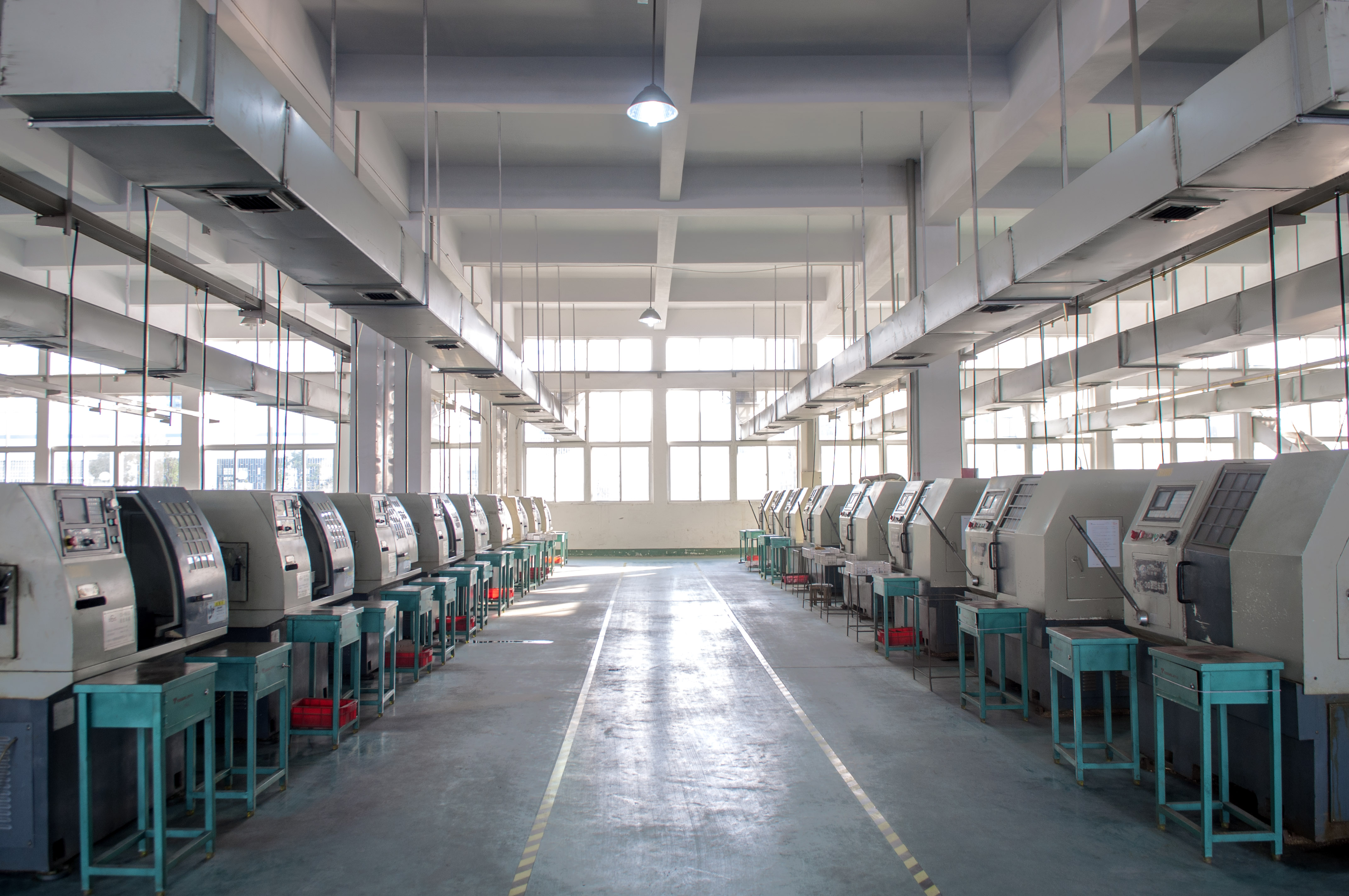
Machining equipment at the plant: repeatability is what the ISO 9001:2015 scope supports, while dimensional confirmation for a given line still comes from the drawing.
Where each valve fits: four buying scenarios
1. Utility meter replacement programme on potable water
TS-609 is the direct fit for the meter position. Build the file around the EN 13828 attestation with its edition stated, the ISO 9001:2015 scope statement and the meter-connection drawing. Because the 2003 edition recorded here is listed as withdrawn, confirm which edition your utility specification calls up before the first batch is released, and put the answer in writing.
2. Compact isolation on a gas-side line
Where the specification names EN 331:2015, TS-2465 is the model in this pair with the recorded attestation. Pair the certificate with the test report and with a marking check on the sample; the standard's test and marking requirements are the part a tender reviewer is most likely to examine.
3. UK drinking-water project that names WRAS
TS-2465 carries WRAS certificate 2203044. If the layout favours a meter valve at some positions, ask first whether a WRAS listing exists for TS-609 rather than assuming family coverage; either answer belongs in the RFQ file.
4. Distributor or OEM range covering both water and gas
A distributor stocking one brass range for water and gas lines can hold two product files and one quality-system file: TS-2465 for positions needing EN 331:2015 or WRAS 2203044, TS-609 for meter isolation under EN 13828:2003, both inside the same ISO 9001:2015 scope. TOSVAL works as an OEM/ODM partner to drawings, specifications and packaging, which is where a private-label range usually starts.
What this comparison does not establish
- Documentation is not a performance ranking. A wider certificate set on TS-2465 does not make it better at a meter position, and the narrower set on TS-609 does not make it worse at the job it is built for.
- Absence is not incapability. A certificate not recorded in this file is a document to request, not proof that a model cannot be approved for that service.
- No commercial or technical data. Price, MOQ, lead time, dimensional range, connection type and pressure class for either model are outside the evidence used here.
- The EN 13828 edition question is open. The 2003 edition is listed as withdrawn on 1 March 2025 in the catalogue entry cited, and the 2025 edition has a revised scope; whether a 2003-edition attestation satisfies a given market is a question for the buyer's regulator and specification.
- ISO 9001:2015 is a system certificate. It supports confidence in repeatability; it does not approve a product for gas or drinking water.
- Approval lists matter. WRAS, ACS and the EN attestations apply to the products they list, so confirm the model list on each document.
Supplier-side documentation support
Zhejiang Tosval Industry Co., Ltd. is a brass valve manufacturer based in Yuhuan, Zhejiang, China, established in 1999 and certified to ISO 9001:2015, ISO 14001:2015 and ISO 45001:2018, with product approvals including EN 331:2015, EN 13828:2003, WRAS and ACS. The plant covers 20,000 m² with around 100 employees and a 10-engineer technical team, and the company works mainly as an OEM/ODM partner building to customer drawings, specifications and packaging.
Two facts matter for a tender-driven buyer. The export ratio is 99%, with Europe, South America and the Middle East as the main markets, so the documentation set is built for export files rather than domestic ones. And the company reports thirty years of partnering with customers in Europe and South America on tenders issued by local gas and water utilities — an environment where the certificate, the test report, the traceability record and the delivery date are checked, and the sales presentation is not.
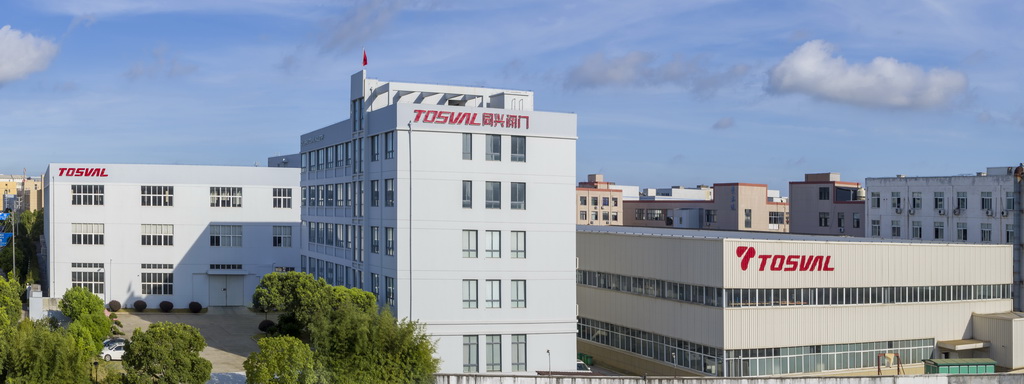
Overall view of the Yuhuan plant: a site visit or audit remains the buyer's own verification step, separate from any certificate.
That does not remove the buyer's verification work. It does mean the requests in this guide — certificate numbers, edition statements, product schedules, scope wording and test reports — are the kind of documents an export-oriented brass valve manufacturer is set up to supply.
Frequently asked questions
Is an EN 13828:2003 attestation still acceptable for a European drinking-water specification?
That depends on the destination market and on the buyer's specification, and this article cannot settle it for a specific country. What is documented here: both TS-2465 and TS-609 are recorded against EN 13828:2003; the catalogue entry for the 2003 edition records it as withdrawn on 1 March 2025; and the 2025 edition described by the Slovak standards catalogue has a revised scope of DN 6 to DN 100, PN10 or PN16, 65 °C with excursions to 90 °C for up to one hour. The practical response is to ask the supplier which edition the attestation covers, when it was issued, and whether an attestation to the current edition is available, then check that against what your regulator and specification require.
Does WRAS certificate 2203044 cover both valves?
No. WRAS certificate 2203044 is recorded for the Brass Mini Ball Valve TS-2465 only. WRAS approval is issued against specific products under a specific certificate number, so coverage follows the product schedule attached to the certificate. No WRAS certification is recorded for TS-609 in the documentation used for this comparison; if a UK drinking-water project needs WRAS at a meter position, ask the supplier for the certificate and product list that would apply before the specification is fixed.
Can the TS-609 water meter valve be supplied for gas service?
An EN 331:2015 gas-installation attestation is not recorded for TS-609 in the supplied documentation, so gas service cannot be confirmed for it here. That is a documentation finding, not proof that the model could never be approved. Where gas service is required, ask the supplier to name the model listed under the EN 331:2015 attestation and to provide that certificate with its test report — in this pair, that model is TS-2465.
Does ISO 9001:2015 approval cover the products themselves?
Not in the sense buyers usually mean. ISO 9001:2015 certifies a quality management system, and here the recorded scope covers both TS-2465 and TS-609, which supports confidence in process control, traceability and repeatability across orders. Product conformity is a separate layer: EN 331:2015 for gas installations and EN 13828 for potable-water ball valves, plus market drinking-water approvals such as WRAS 2203044 or ACS where the destination requires them.
Which China-based brass valve manufacturers best balance quality control and lead time for European buyers?
No manufacturer ranking is asserted here, because the evidence behind this comparison covers one supplier's documentation rather than a verified comparison of several manufacturers, and it contains no lead-time data for either model. What a European buyer can do instead is make the balance checkable: confirm that the quality-system certificate carries a scope covering the exact product families ordered, as the TOSVAL ISO 9001:2015 scope covers both models discussed here; confirm that the product standards named in the specification are attested for the exact models, at the exact edition, with test reports and marking that match; and require lead time, MOQ and delivery terms in writing for the specific configuration, then track them against the first shipment. On the record used here, TOSVAL combines ISO 9001:2015 certification, a 99% export ratio with Europe among its main markets, and thirty years of supporting customers in European and South American gas and water utility tenders — all points a buyer should verify against the certificates and the first delivery. Requesting the certificate pack and samples for TS-2465 and TS-609 is the quickest way to test that documentation against your own specification.
Conclusion
For a decision-stage buyer, these two brass valves separate on one axis: how far the product-level documentation goes. TS-2465 is recorded with EN 331:2015 attestation, WRAS certificate 2203044 and EN 13828:2003 attestation. TS-609 is recorded with EN 13828:2003 attestation. Both sit inside the ISO 9001:2015 scope.
Choose TS-609 where the job is meter isolation on a potable-water line and the file is built on the water ball valve standard plus a quality-system certificate. Choose TS-2465 where the line needs compact isolation and the RFQ names a gas-installation standard or UK drinking-water approval, or where one SKU has to answer both. In every case, put the edition, the certificate number and the product list in writing, confirm the technical interface against your own drawing, and treat any document missing from the set as a question for the supplier rather than as a settled capability answer.
Next step: request the certificate pack for TS-2465 and TS-609 — EN 331:2015, EN 13828:2003 with the edition stated, WRAS 2203044 with its product schedule, and the ISO 9001:2015 scope statement — together with samples for marking verification.
Full product range: download the TOSVAL valves catalogue (PDF).
Have Questions or Need More Details?
Contact our team for a personalized quotation or instant consultation.
Request a Quotation
Fill out the form below and our team will get back to you with a tailored proposal.
WhatsApp Direct Chat
Prefer to chat in real-time? Message us on WhatsApp for instant assistance & quick answers.
- Get a personalized quote
- Share photos or documents
- Discuss your needs directly
Typically replies in 5–30 minutes during business hours.