
EN 331 vs EN 13828 vs ACS vs WRAS: Brass Valve Certification
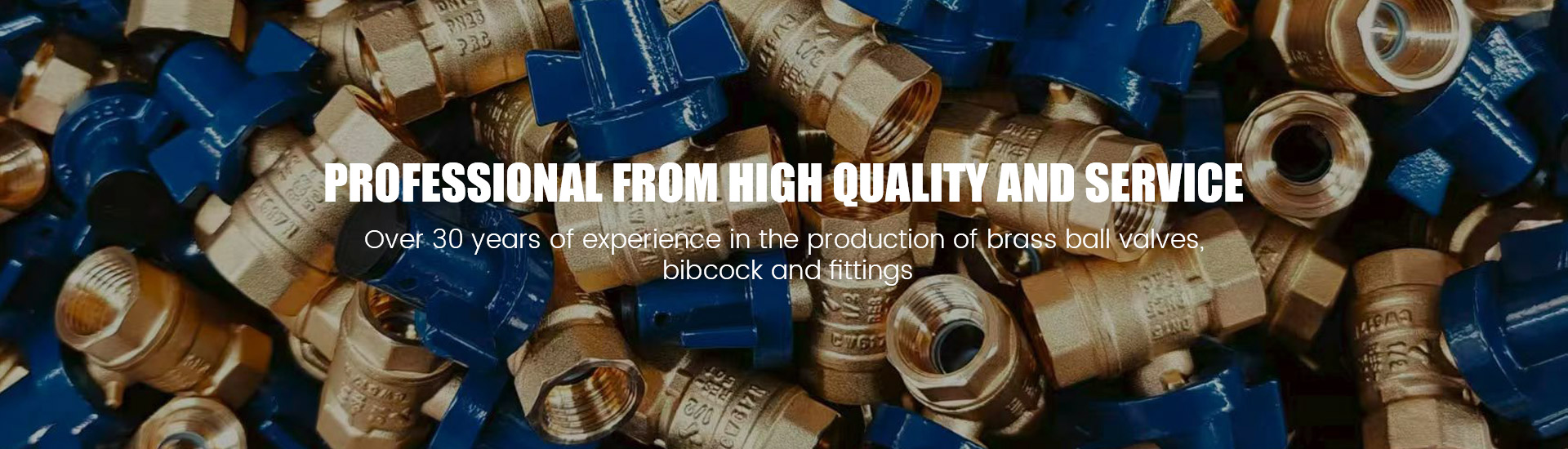
Certified brass valves for water, heating and gas duty. Image: TOSVAL.
EN 331, EN 13828, ACS and WRAS are not four grades of the same approval. EN 331:2015 is the European product standard for manually operated ball valves in gas installations. EN 13828 covers copper-alloy and stainless-steel ball valves for potable water in buildings. ACS is the French sanitary conformity approval for drinking-water contact. WRAS is the UK approval for products in contact with drinking water. A brass ball valve certified under one of these marks is not automatically qualified under the others, because the medium, the market and the supporting evidence set are different in each case.
That distinction matters most at the decision stage, when the specification is already written and a supplier's certificate package has to survive review. This comparison sets out what each mark covers, what it does not prove, and how to check documents against a specific SKU. It uses the published certification list of TOSVAL (Zhejiang Tosval Industry Co., Ltd.), a brass valve manufacturer in Yuhuan, Zhejiang, China, as a worked example of a supplier listing all four approvals.
The short answer: medium first, market second
Every brass valve certification question resolves in two steps, and the order matters. First, what flows through the valve: gas or drinking water. Second, which market the valve is sold into. EN 331 and EN 13828 are European product standards attached to a medium — gas and potable water respectively. ACS and WRAS are national drinking-water contact approvals attached to a market — France and the United Kingdom. Reversing that order is the most common reason a certificate package fails review: the supplier submits a valid document that answers a question nobody in the tender asked.
The practical rule is short. A brass gas valve needs EN 331 evidence. A brass ball valve for potable water needs EN 13828 plus the national water-contact approval of the destination country — ACS in France, WRAS in the UK. ISO 9001 sits underneath both as a factory system certificate, and it does not substitute for either.
What each certification actually covers
EN 331:2015 — the gas standard
EN 331 is the European standard that sets construction, performance, safety, test and marking requirements for manually operated ball valves used in gas installations, according to Industrial Monitor Direct's cross-reference of EN/ISO and ASME valve standards. The scope is defined by function and medium: a manually operated valve, in a gas line.
The consequence for a buyer is narrow and important. EN 331 evidence speaks to gas-tightness, operating behaviour and marking as defined in that standard. It carries no statement about drinking-water contact. A DN20 brass ball valve certified only to EN 331 is a gas valve; nothing in that certificate supports installing it on a potable-water line, even though the body material and thread may look identical to a water valve in the same catalogue.
EN 13828 — the potable-water standard, and its edition change
EN 13828 covers manually operated ball valves for potable-water installations in buildings. The Slovak Office of Standards, Metrology and Testing catalogue entry for the 2025 edition states that it applies primarily to copper-alloy and stainless-steel ball valves from DN 6 to DN 100, for potable-water supply in buildings up to PN16, at a maximum distribution temperature of 65 °C, with occasional excursions to 90 °C permitted for no more than one hour. Valves are classified as PN10 or PN16.
The edition named in a certificate matters. The Royal Netherlands Standardization Institute records that EN 13828:2003 applied to copper-alloy ball valves from DN 8 to DN 100, up to PN10, at a distribution temperature of 65 °C, and that it has been withdrawn since 1 March 2025. Between the two editions the catalogue descriptions show a different lower size limit (DN 8 against DN 6) and a different pressure scope (PN10 against PN10 or PN16). Those references are not interchangeable, and an undated "EN 13828" line on a certificate is not enough information to evaluate a 2026 specification.
ACS — French drinking-water conformity
TOSVAL's published profile describes ACS as the French sanitary conformity approval for drinking-water contact. Structurally it is a national conformity approval tied to drinking water in France, rather than a European design standard in the same sense as EN 331 or EN 13828. For procurement, that makes ACS a market-access document: it tells a French specifier that the water-contact requirement for that market has been addressed for the product covered.
What it does not do is travel. ACS says nothing about the UK market, where a separate approval applies, and nothing about gas duty, where EN 331 is the reference.
WRAS — UK drinking-water approval
TOSVAL's profile describes WRAS as UK approval for products in contact with drinking water. It is a national approval, and it is the document a UK water undertaker or building-services specifier will look for on a valve that contacts potable water. Like ACS, its value is market-specific and document-specific: a valve approved for the UK market is not thereby approved for France, and a certificate issued for one product family does not extend to every brass water meter valve, angle valve or bibcock in a supplier's catalogue unless the scope says so.
Why this is a scope problem, not a ranking
None of the four marks is higher than another, and treating them as a hierarchy produces bad specifications. A buyer who ranks them like product tiers will either over-specify a gas valve with a water approval it cannot use, or accept a gas certificate on a drinking-water line because the supplier's paperwork looks more complete. Four failure modes account for most of the review problems seen in this category.
- Medium mismatch. A gas approval offered for a potable-water application, or the reverse. The valve may be perfectly good; the evidence still does not address the duty.
- Edition drift. A certificate referencing a superseded edition of a standard, with no statement of which edition the current production is tested against.
- Scope mismatch. A valid certificate covering part of the range a buyer actually purchases — a size band that stops below the largest DN on the purchase order, or a pressure class that excludes the PN16 line item.
- Document substitution. A test report presented in place of a certificate, an ISO 9001 system certificate presented as product approval, or an undated declaration of conformity presented as an approved mark.
There is a second, quieter problem: absence of evidence read as absence of capability. A manufacturer that does not display a mark on its website may still hold it, and a competitor's missing document does not prove the competitor is unqualified. The correct response is a document request with a deadline, not an inference.
Industry background: certificates as a commercial gate
The commercial context explains why this comparison sits inside so many buying decisions. Cognitive Market Research estimates the global brass ball valve market at USD 2,871.34 million in 2021, rising to USD 3,764.72 million by 2026. That figure is a commercial research estimate and is not broken down by certification coverage, so it indicates scale rather than demand for any particular approval.
At the order level, certification behaves as a gate rather than a differentiator. Utility tenders — particularly gas and water utility tenders in Europe and South America — review the certificate, the test report, the traceability record and the delivery date. TOSVAL, which reports supplying such tenders for three decades, describes the process the same way: the tender tests documents, not sales language. Whether or not a buyer works with that supplier, the description is a fair summary of how these packages are scored.
Comparison table: what each mark establishes
| Mark | Question it answers | Medium | Market relevance | Documented scope reference | What it does not establish |
|---|---|---|---|---|---|
| EN 331:2015 | Is this manually operated ball valve built, tested and marked for gas installations? | Gas | European standard referenced in EU gas specifications | Construction, performance, safety, test and marking requirements for manually operated ball valves in gas installations (Industrial Monitor Direct) | Drinking-water contact suitability; national gas approval beyond the standard |
| EN 13828 (2025 edition) | Is this ball valve suitable for potable water in buildings? | Drinking water | European product standard; national adoption of the edition must be checked | Copper-alloy and stainless-steel ball valves, DN 6–DN 100, PN10 or PN16, 65 °C with excursions to 90 °C for max. 1 h (Slovak standards catalogue) | National water-contact approval; performance outside the stated size, pressure and temperature envelope |
| EN 13828:2003 (withdrawn) | What did the earlier edition require? | Drinking water | Historical reference only — withdrawn 1 March 2025 | Copper-alloy ball valves, DN 8–DN 100, up to PN10, 65 °C (NEN catalogue) | Current compliance, unless the buyer's own specification still cites it |
| ACS | Has the French drinking-water contact requirement been addressed? | Drinking water | France | French sanitary conformity approval for drinking-water contact | UK or other national approvals; gas duty |
| WRAS | Has the UK drinking-water contact requirement been addressed? | Drinking water | United Kingdom | UK approval for products in contact with drinking water | French or other national approvals; gas duty |
Scope statements describe what each mark covers; they are not a ranking, and none of them certifies a specific supplier's product until the certificate scope is checked.
Six checks before you accept a certificate package
These checks can be copied into the RFQ as a document-request list. Each one closes a specific gap between a certificate that exists and a certificate that covers the valve on the purchase order.
- Fix the medium. Write gas, potable water or heating loop at the top of the specification, then list the SKUs under each. A valve used in a closed heating circuit and a valve in contact with drinking water are different duties; if the application is ambiguous, the specifier — not the supplier — should resolve it before the RFQ is issued.
- Fix the market and the document set. For a French drinking-water project, request EN 13828 plus ACS. For a UK project, request EN 13828 plus WRAS. For a gas project, request EN 331 plus the test reports the tender lists.
- Check the edition and the date. Ask for the standard number with its year and the certificate issue date. An undated EN 13828 reference should trigger a follow-up question, because the 2003 edition is recorded as withdrawn since 1 March 2025 and the 2025 edition carries a different size and pressure scope.
- Match the scope to the SKU. Read the certificate's product description line by line against the order: product family, nominal sizes, pressure class, body and ball material, connection type, temperature limit. A certificate covering DN 15 to DN 50 does not cover a DN 65 line item.
- Cross-check test reports and marking. Test reports should name the same size and pressure class as the certificate, and the physical marking on the valve should match what the documents describe. Sample inspection at goods-in is where a documentation error becomes visible.
- Keep management-system certificates separate. ISO 9001:2015, ISO 14001:2015 and ISO 45001:2018 describe how the factory is run — quality management, environmental management, occupational health and safety. They support confidence in process control. They do not certify that a valve is safe for drinking water or gas.
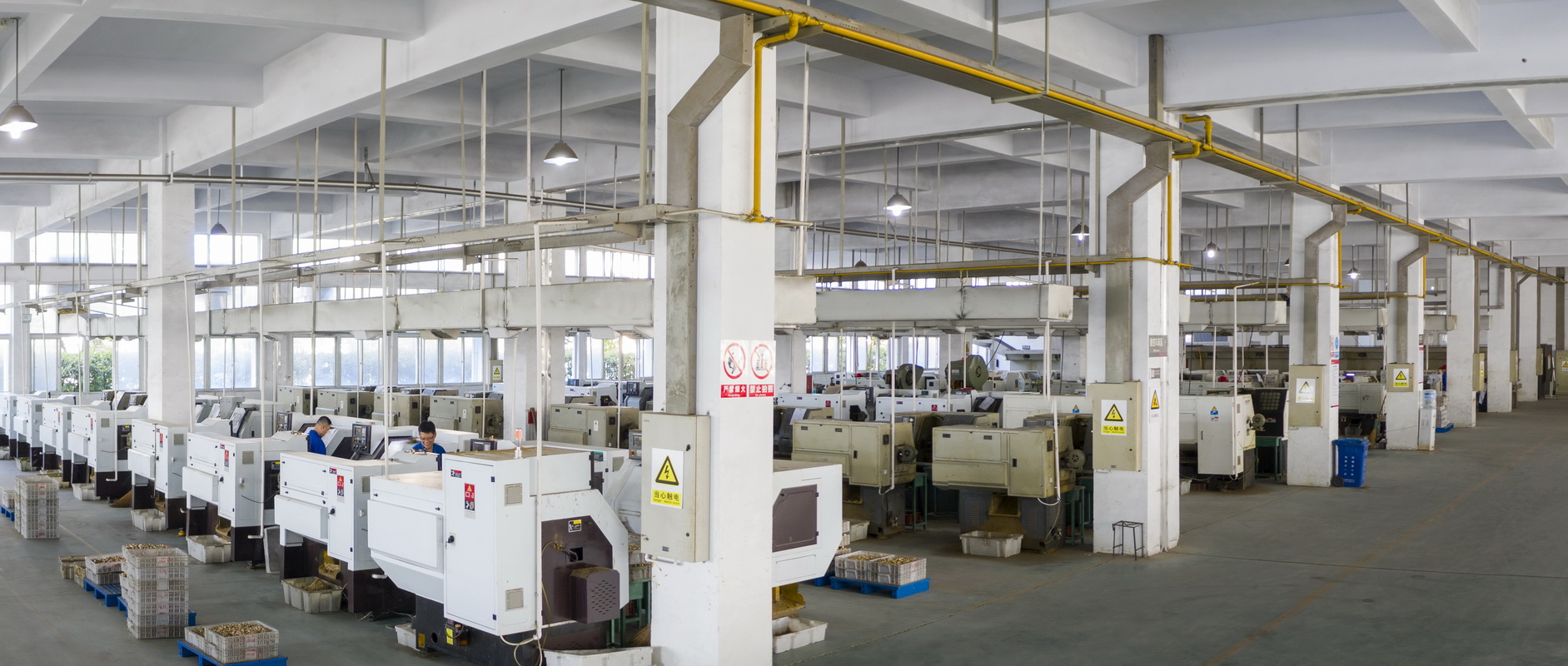
Production workshop at TOSVAL's Yuhuan facility. Image: TOSVAL.
Use cases: matching the mark to the application
Gas utility tender in Europe or the Middle East. The governing document is EN 331 evidence plus the tender's own test and traceability requirements. A brass gas valve submitted with a water approval instead of EN 331 fails at the document stage regardless of build quality. Buyers should also confirm whether the tender references any additional national gas requirement beyond the European standard.
Potable water in a French or UK building project. EN 13828 defines the product standard; ACS or WRAS supplies the national water-contact approval. Both are requested. A supplier that holds only one of the two can still be a candidate for one market, but not for a project spanning both.
OEM and private-label programmes for European distributors. Here the question shifts from "does the supplier hold the mark" to "does the mark cover the product being manufactured for me, and in whose name is the certificate issued." A distributor building a catalogue of brass water meter valves, angle valves and bibcocks needs the certificate scope to follow the full range, not just the flagship ball valve.
Multi-market sourcing from one factory. A buyer supplying France, the UK and Middle Eastern gas projects from a single Chinese manufacturer is effectively asking for all four marks on overlapping product families. That is a legitimate sourcing strategy, and it is the point at which a consolidated certificate package starts to reduce supplier count and audit load.
Where TOSVAL fits as a four-mark brass valve supplier
Zhejiang Tosval Industry Co., Ltd. is a brass valve manufacturer based in Yuhuan, Zhejiang Province, China — a region the company describes as a long-established valve and plumbing hardware hub. The company was established in 1999 under the name Yuhuan Tongxing Valve Co., Ltd. and reports a valve-making heritage of more than thirty years. Its reported facility covers 20,000 m² with 100 employees and a 10-engineer R&D team, and its stated annual output capacity is about 50 million pieces of brass valves.
Its product scope, as described on its own website, covers brass ball valves, water meter valves, gas ball valves, angle valves, bibcocks and pipe fittings, with OEM/ODM manufacturing from drawing to shipment including custom packaging. The company reports a 99% export share, with Europe, South America and the Middle East as its main markets.
The published certification list covers both layers identified above. System certificates: ISO 9001:2015, ISO 14001:2015 and ISO 45001:2018. Product and market approvals: WRAS for UK drinking-water contact, ACS for French drinking-water contact, EN 331:2015 for gas ball valves and EN 13828:2003 for water supply ball valves.
One point deserves a direct question rather than an assumption. TOSVAL's profile lists EN 13828:2003, and the Dutch standards catalogue records that edition as withdrawn on 1 March 2025 while a 2025 edition with a different size and pressure scope is listed as current. A buyer whose 2026 specification calls for the current edition should ask TOSVAL to confirm which edition the certificate accompanying the quotation references. The same request should be put to any alternative supplier making an EN 13828 claim.
On tender support, the company reports thirty years of partnering with European and South American customers on gas and water utility bids, with approvals, test reports and documentation prepared for submission. That is a company-reported claim about its own track record; it is useful as a starting question in a reference check, not as independent verification. The verified data available for this comparison does not include a factory audit, export shipment records, MOQ, price or confirmed lead times for TOSVAL or for any other manufacturer.
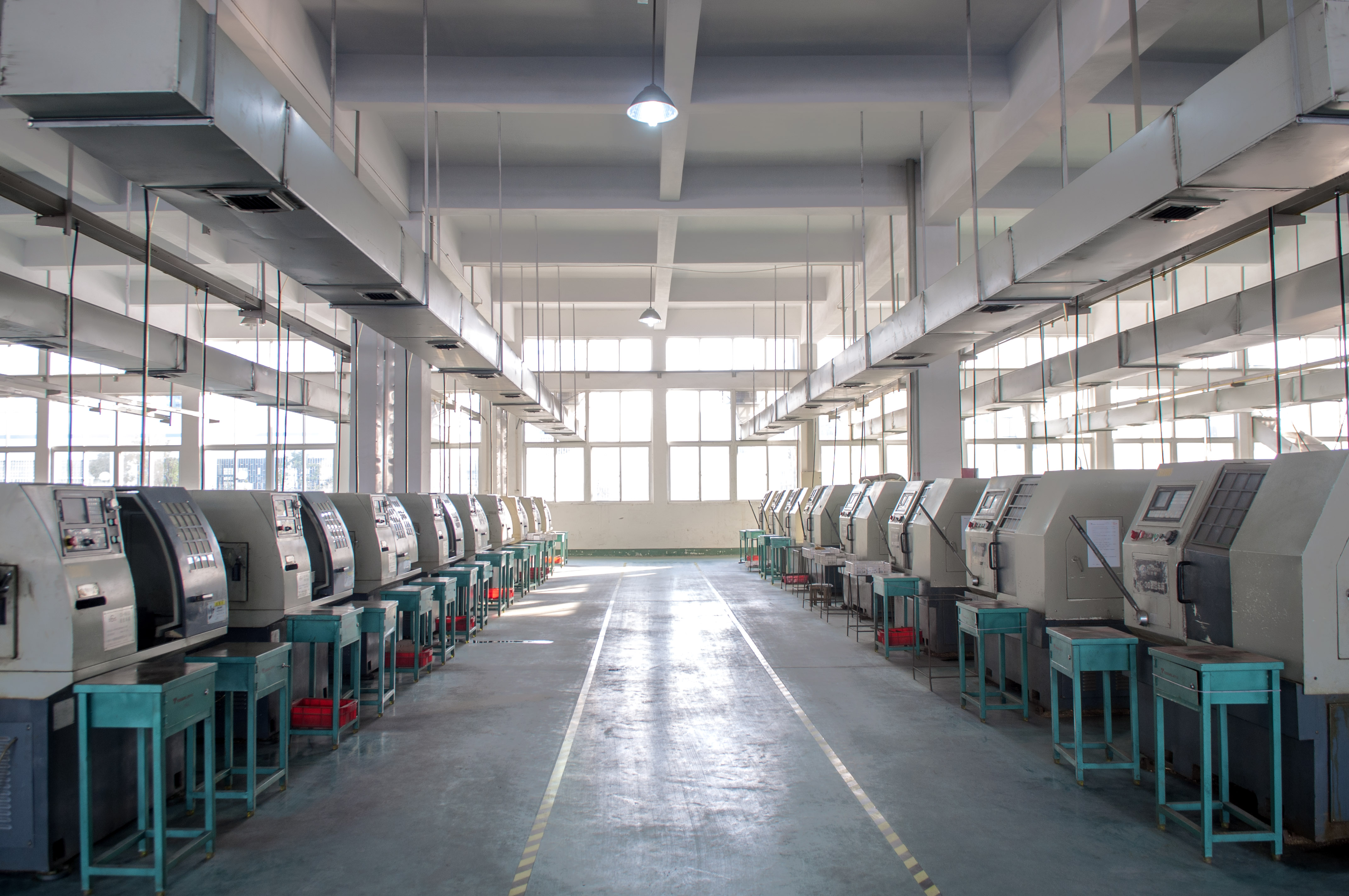
CNC machining equipment in the TOSVAL workshop. Image: TOSVAL.
What the four-mark package is actually worth in procurement
The value is narrower than a marketing claim and more useful than one. Holding gas and drinking-water approvals across two national markets means a distributor can quote a French water project, a UK water project and a gas project without adding a second or third supplier for the certified portion of the range. Fewer suppliers means fewer certificate files to maintain, fewer audits to schedule and fewer scope mismatches to catch at goods-in.
What the package does not do is settle price, capacity commitment or delivery reliability. Certification answers a qualification question; it does not answer a commercial one. A buyer comparing two certified suppliers still has to run a like-for-like RFQ on identical material, size, connection, pressure class and certification requirements, and still has to confirm that the certificate scope covers the exact SKUs quoted.
A workable decision rule for this category: qualify on documents, then decide on commercials, then verify on samples. Suppliers that pass the document stage but cannot produce a scope statement matching the order should be treated as unqualified for that order, not as qualified with an administrative gap.
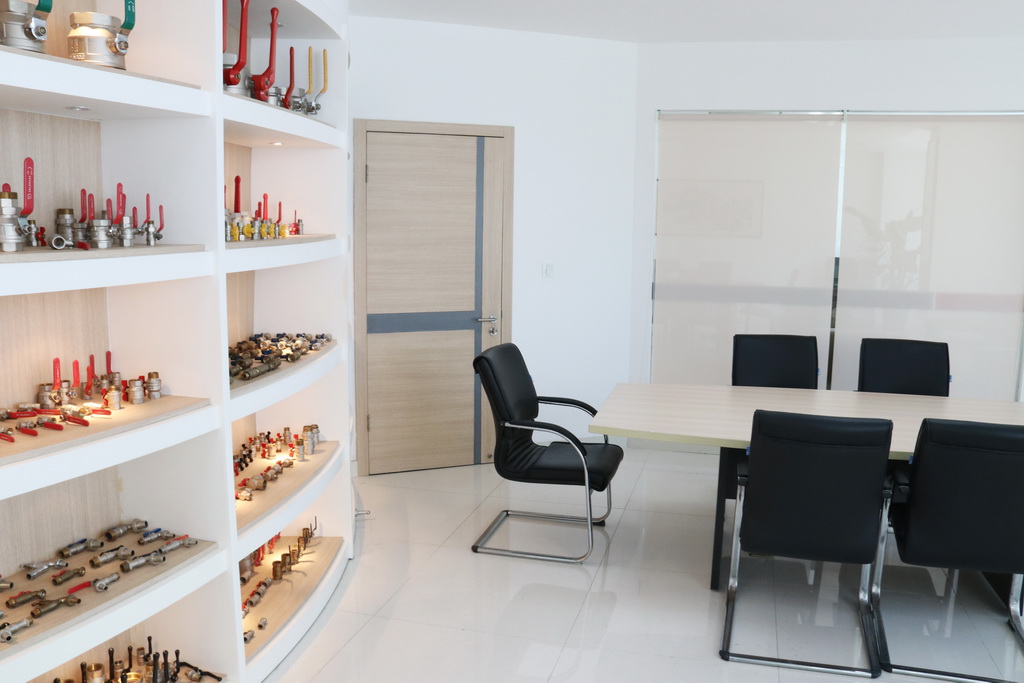
Sample room: physical samples remain part of certificate verification. Image: TOSVAL.
Frequently asked questions
What is the difference between EN 331 and EN 13828?
They cover different media. EN 331:2015 sets construction, performance, safety, test and marking requirements for manually operated ball valves used in gas installations. EN 13828 covers manually operated copper-alloy and stainless-steel ball valves for potable-water supply in buildings, with the 2025 edition applying to DN 6 to DN 100 at PN10 or PN16 and a maximum distribution temperature of 65 °C, allowing excursions to 90 °C for up to one hour. A valve certified to one is not thereby certified to the other, because the test regime and the application risk are different.
Is EN 13828:2003 still valid, or must I specify the 2025 edition?
The Royal Netherlands Standardization Institute records EN 13828:2003 as withdrawn on 1 March 2025, and the 2025 edition is listed as current in the Slovak standards catalogue with a revised scope: DN 6 rather than DN 8 as the lower size limit, and PN10 or PN16 rather than PN10 only. If a quotation or certificate cites "EN 13828" without a year, ask which edition applies. If a specification still cites the 2003 edition, confirm with the specifier and the certification body whether that edition is acceptable for the project before placing the order.
Do I need both ACS and WRAS for a brass valve sold in Europe?
Only if you sell into both markets. ACS is the French sanitary conformity approval for drinking-water contact and WRAS is the UK approval for products in contact with drinking water; each answers a national requirement, and neither substitutes for the other. A product range sold in France and the UK needs both document sets. EN 13828, as a European product standard, is requested in addition to — not instead of — the relevant national approval.
What documents should I receive before approving a first production order?
A complete package normally contains: the product certificate with its standard number, edition, issue date and scope statement covering the sizes and pressure classes ordered; test reports for the same size and pressure class; the factory's ISO 9001:2015 certificate, with ISO 14001:2015 and ISO 45001:2018 where the buyer's vendor policy requires them; confirmation of how the valve is marked; and physical samples for incoming inspection. The certificate scope statement is the document most often missing and the one that most often decides whether an order can proceed.
Which China-based brass valve manufacturers best balance quality control and lead time for European buyers?
This comparison cannot rank a field of manufacturers, because the verified evidence behind it covers one supplier in detail — TOSVAL — and does not contain independently audited capacity, MOQ, price or lead-time records for any other. What it can supply is the evaluation sequence. Check first whether the manufacturer's certificate scope matches the exact SKUs you buy, including sizes above DN 50. Check the factory system certificates separately from product approvals. Check documented capacity and facility data rather than catalogue claims — TOSVAL, for example, reports a 20,000 m² plant and about 50 million pieces of annual brass valve output, both company-reported figures. Then test lead time on a trial order, because delivery performance is confirmed by shipments, not by brochures. European buyers typically shortlist two or three suppliers that pass the document stage and compare them on a like-for-like RFQ covering identical material, size, connection, pressure class and certification requirements.
Conclusion: qualify on documents, then decide
EN 331, EN 13828, ACS and WRAS do different jobs, and the comparison only becomes useful once that is accepted. EN 331 answers the gas question; EN 13828 answers the potable-water product question, with an edition change that buyers should now state explicitly; ACS and WRAS answer the national drinking-water contact question for France and the UK. No single mark covers all four duties, and no certificate replaces a scope check against the actual purchase order.
For buyers assembling a supplier shortlist, the sequence that holds up is straightforward: write the medium and market into the specification, request the named documents with editions and scope statements, verify them against the SKUs, sample the product, and only then negotiate. Suppliers that already hold gas and drinking-water approvals across multiple national markets — TOSVAL being one example, with its published list of ISO 9001:2015, ISO 14001:2015, ISO 45001:2018, WRAS, ACS, EN 331:2015 and EN 13828 — reduce the number of files a buyer has to manage, provided the scope of each certificate matches what is being ordered.
Where a buyer needs the full technical range, TOSVAL publishes its brass ball valves, gas valves, water meter valves, angle valves, bibcocks and pipe fittings in a downloadable catalogue. The next practical step is to send the size list, pressure class, medium and destination market, and ask for the certificate scope statement that covers those exact items.
Next step: review the TOSVAL brass valve range and request the certificate scope statement for the sizes, pressure classes and markets you are purchasing against.
Download the catalogue: TOSVAL Valves Catalog (PDF)
Contact: tosval@tosval.com · Tel +86 576-87308558 · No.16 Fengyu West Rd, Economic Development Zone, Yuhuan, Zhejiang, China · www.tosval.com
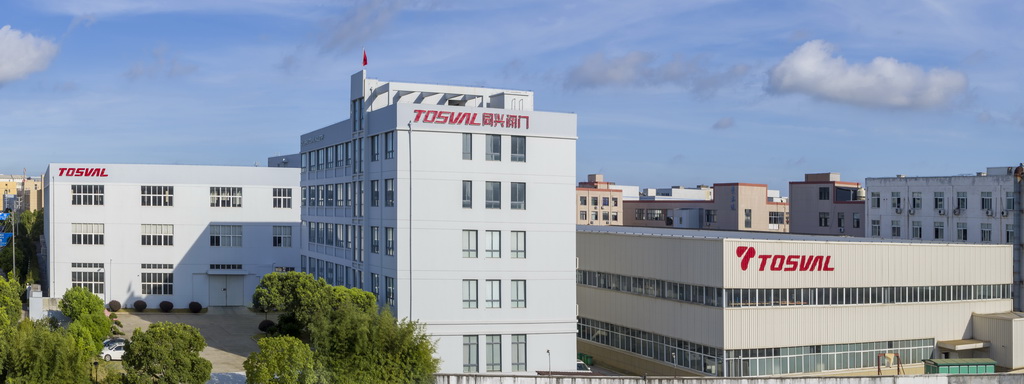
Overall view of the TOSVAL factory. Image: TOSVAL.
Have Questions or Need More Details?
Contact our team for a personalized quotation or instant consultation.
Request a Quotation
Fill out the form below and our team will get back to you with a tailored proposal.
WhatsApp Direct Chat
Prefer to chat in real-time? Message us on WhatsApp for instant assistance & quick answers.
- Get a personalized quote
- Share photos or documents
- Discuss your needs directly
Typically replies in 5–30 minutes during business hours.