Pallet Box Supplier Evaluation: Capability Checks That Protect Delivery Timelines
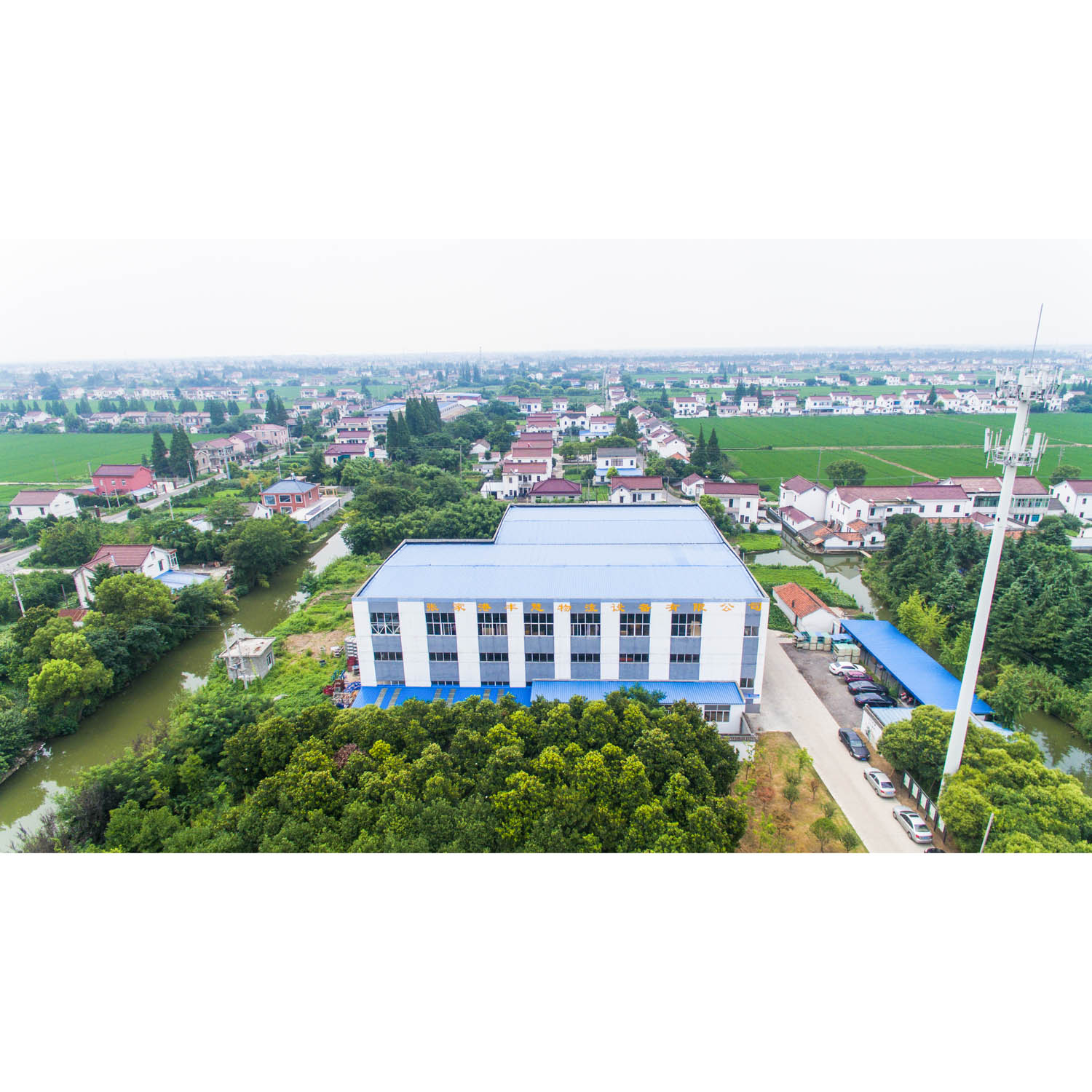
Supplier capability starts with a physical plant you can inspect, not a quotation sheet. Image: TOYOE manufacturing site, Zhangjiagang, Jiangsu, China.
A pallet box programme rarely fails at the quotation stage. It fails between the quotation and the delivery date. The unit price is agreed, the purchase order is issued, and then the schedule moves — because the supplier cannot run the volume, cannot repeat the tolerance on the second batch, or quoted a lead time that never included the actual customisation scope.
For buyers at the decision stage, the productive question is not "who is cheapest per unit" but "which supplier can prove, with named figures, that it will ship on the agreed date twice in a row without a change order." This article sets out a capability-first evaluation framework built around that single test. TOYOE — the brand of Zhangjiagang Fenghui Logistics Equipment Co., Ltd., a manufacturer founded in June 2010 in Zhangjiagang, Suzhou, Jiangsu, China — is used as a worked example so that every check below is attached to a verifiable number rather than an adjective.
Problem Definition: Why Pallet Box Delivery Promises Break Down
Delivery slippage on an industrial pallet box order is usually a capability problem that only becomes visible after the contract is signed. Four root causes account for most of it.
- Unverified capacity. The supplier's annual figure is accepted as a headline, but nobody checks whether it can be delivered in the month the buyer actually needs it.
- Undefined quality scope. "Quality control" is claimed but not quantified, so the buyer cannot tell how much of the output is actually inspected before shipment.
- Ambiguous customisation scope. Dimensions, inner lining, material grade and anti-static requirements are discussed in email threads instead of being locked into a specification before the lead time is quoted.
- Lead time quoted without scope. A number is given for "a pallet box" rather than for the specific configured unit the buyer ordered.
There is also a physical risk layer that a capability check should cover. Pallet boxes in industrial use are exposed to collision, moisture damage and overload. Suppliers that control these risks do so through defined measures — shockproof packaging, load limit control and moisture-proof protection — backed by internal practices such as strict load inspection, a solid box structure, a sealed moisture-proof design and anti-static material where the application requires it. A supplier that cannot describe its control method at this level of detail is unlikely to be able to guarantee a delivery schedule either, because both come from the same discipline.
Industry Background: What the Pallet Box Supply Base Looks Like in 2026
The supply base is concentrated, and that concentration is exactly why supplier evaluation has become a discipline of its own.
China is the dominant exporter of plastic boxes, cases and crates classified under HS 392310, with an export value of USD 2.33 billion in 2022 — the largest single-country figure in that category. That scale explains why the Jiangsu and Suzhou manufacturing cluster, where TOYOE operates, offers buyers established tooling, moulding and export infrastructure rather than isolated workshops.
On the demand side, the global pallet box market was valued at USD 2.19 billion in 2024 and is projected to reach USD 3.02 billion by 2032. Note that published figures vary widely depending on definition: reports that aggregate all industrial plastic containers and bulk bins produce substantially larger numbers than reports scoped strictly to pallet boxes. Buyers comparing market data should check the product scope before using a headline figure in an internal business case.
Two design trends also feed directly into supplier capability requirements:
- Space recovery. Foldable pallet boxes can achieve a fold ratio of up to 5:1, meaning five folded units occupy the space of one erected unit and empty return volume drops substantially. Delivering that ratio consistently requires controlled moulding and hinge tolerances, not just a design drawing.
- ESD control. ESD pallet boxes used for static-sensitive parts must comply with ANSI/ESD S541-2019, the packaging standard for protecting ESD-susceptible items, with conductive polymer blends typically specified to hold surface resistance within 10⁴–10¹⁰ Ω. A supplier without a testing routine cannot credibly claim compliance here.
The practical implication for a buyer is straightforward: in a concentrated supply base, most suppliers can produce a sample. Far fewer can document capacity, quality coverage and lead time in a way that survives contact with a fixed production schedule.
Detailed Solution: Seven Capability Checks That Protect Delivery Timelines
Each check below has two parts — what to ask, and what the answer should look like when it is verifiable. TOYOE's published capability data is used throughout as the reference answer.
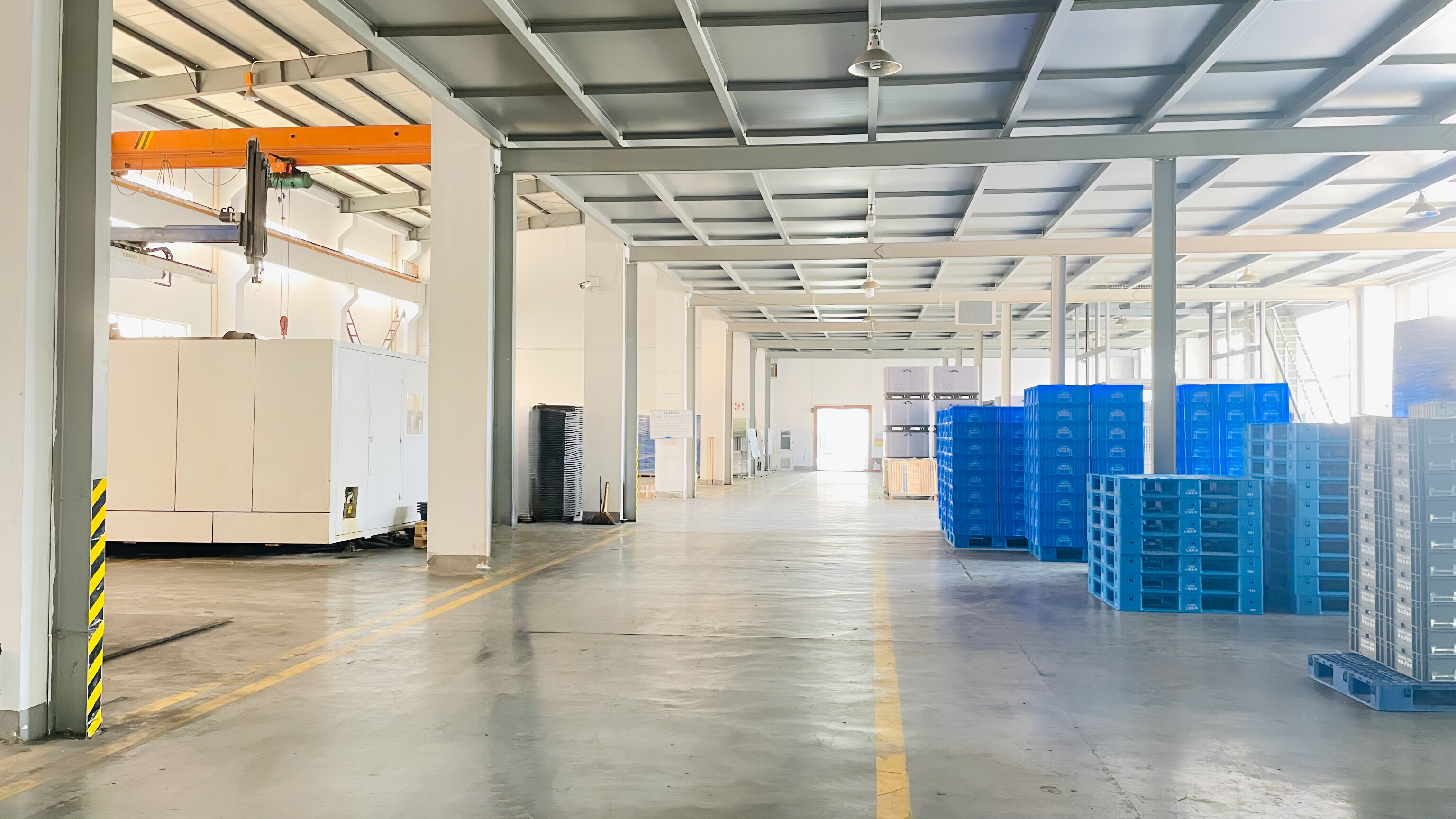
Check 1 and Check 2 begin on the shop floor: physical footprint, headcount and real output rhythm.
Check 1 — Physical Production Footprint and Headcount
A supplier's factory area and employee count tell you whether production is actually performed in-house or brokered through a third party. Ask for the site area, the number of production staff, and the number of technical staff dedicated to product engineering.
Reference answer: TOYOE operates a 4,000 m² facility with 34 employees, including a 2-engineer R&D team. A defined engineering headcount matters more than the raw number, because custom sizing, inner lining design and tooling adjustments all depend on having named technical staff rather than a salesperson interpreting a drawing.
Check 2 — Monthly and Annual Capacity, Reconciled Against Your Order
This is the single most important check for delivery protection. Always request both a monthly and an annual figure, then test them against each other and against your own required volume.
Reference answer: TOYOE reports monthly production capacity of up to 3,000 pieces and an annual output of 30,000 units, with a 40% export ratio. For a buyer planning a rolling schedule, the relevant question is not the annual total but whether the monthly run rate leaves headroom after existing orders.
If a supplier's monthly figure multiplied across twelve months diverges from its stated annual output, ask how the two are derived — seasonality, planned maintenance shutdowns and product-mix differences between lines are all legitimate explanations. An unexplained gap, or an unwillingness to explain it, is itself a finding.
Check 3 — Quality Control Coverage, Expressed as a Percentage
"We have strict quality control" is not an evaluable statement. Ask what proportion of output is subject to testing, what is tested, and what happens to units that fail.
Reference answer: quality control testing is applied to 50% of production, supported by load inspection and structural checks. This figure matters because it converts an unmeasurable claim into a coverage ratio a buyer can compare across suppliers and write into a purchase agreement.
Where the application involves static-sensitive parts, ask separately how ESD performance is verified against the ANSI/ESD S541-2019 surface resistance range of 10⁴–10¹⁰ Ω. Where the application is heavy-load industrial transport, ask how load limits are enforced in practice — not only what the rated figure is.
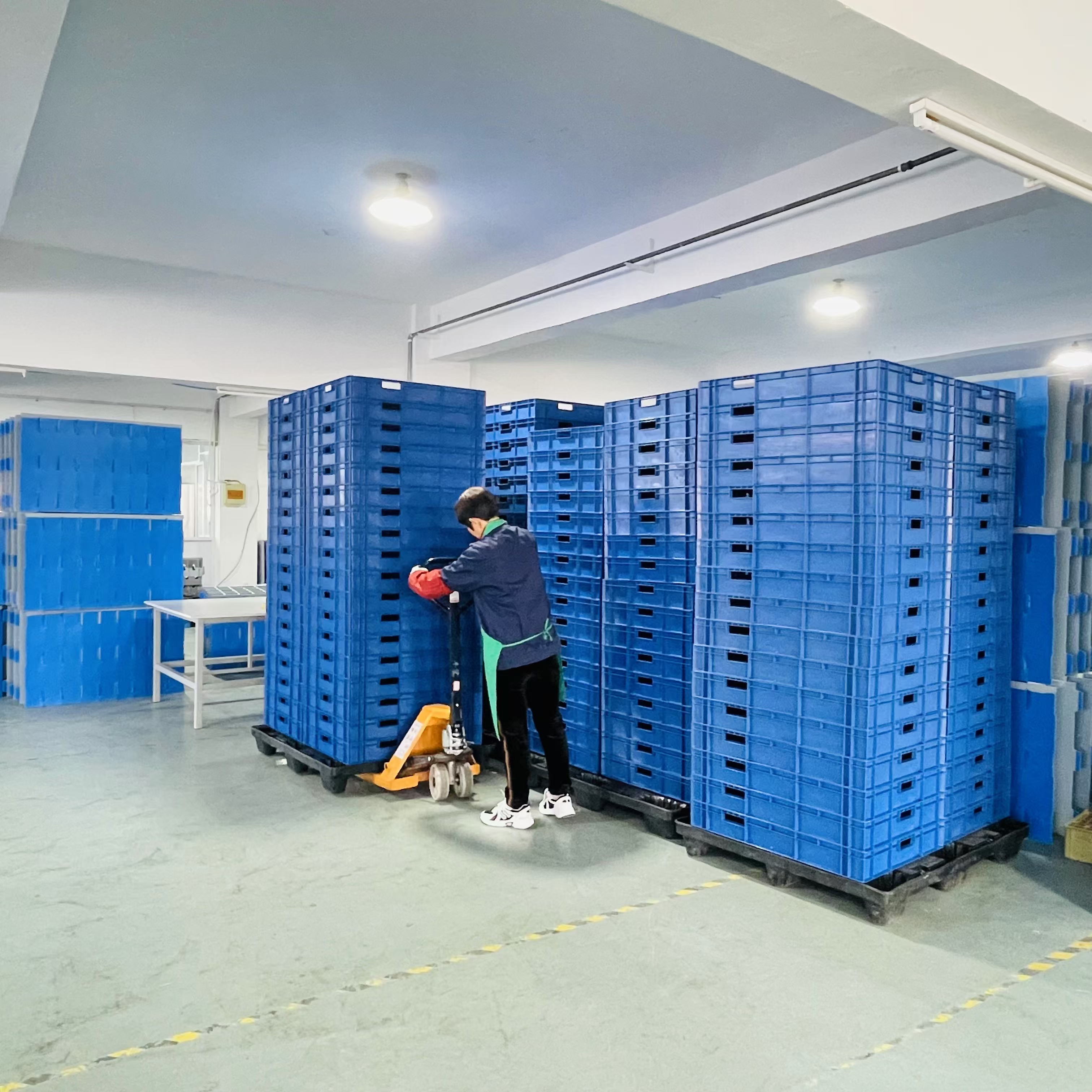
Check 3 is decided here: how much output is inspected, and against which criteria.
Check 4 — Customisation and OEM/ODM Readiness
Custom-sized pallet boxes, custom inner linings, anti-static grades, dust-proof or anti-flaming variants and demountable constructions all sit outside a standard catalogue. Ask the supplier to describe how it handles an OEM/ODM project from drawing to first article.
Reference answer: TOYOE provides OEM/ODM services across its pallet box, storage box, plastic crate and honeycomb panel box lines, with a two-engineer R&D function supporting specification development. The evaluation point is not the word "custom" but the ability to name a project path: who reviews the drawing, who confirms the material grade, and who signs off the first article.
Check 5 — Lead Time, Defined Against Scope
Lead time is where most delivery promises quietly fail. Insist on a lead time that is tied to a defined configuration.
Reference answer: TOYOE's typical lead time for customised orders is 7–15 days. Read that range correctly: 7 days is achievable for a straightforward configuration with an established specification, while 15 days accommodates more complex custom sizing, lining or material requirements. A buyer who treats the bottom of the range as a fixed commitment, without freezing the specification first, is creating the delay rather than experiencing it.
Check 6 — Minimum Order Quantity and Sample Access
MOQ is a direct signal of how a supplier is set up. High minimums indicate a plant optimised for long runs; low minimums indicate flexibility that supports qualification and pilot programmes.
Reference answer: TOYOE's minimum order quantity is 1 unit. For a buyer at the decision stage, this is what makes physical validation practical — a single unit can be ordered for fit, handling and durability assessment before a volume commitment is made.
Check 7 — After-Sales Guarantee and Export Record
Delivery does not end at the port. Ask what the after-sales term is, what it covers, and which export markets the supplier already serves — because regional experience determines how well the supplier handles documentation, packaging and transport conditions.
Reference answer: TOYOE provides a 5-year after-sales guarantee, exports roughly 40% of output, and serves markets including Mexico and the USA, with export experience in the EU and Southeast Asia. The 40% export figure is worth isolating: a supplier with a substantial export share has already been exposed to the documentation and packaging requirements of multiple customs regimes, which reduces the risk of a shipment being held after it leaves the factory.
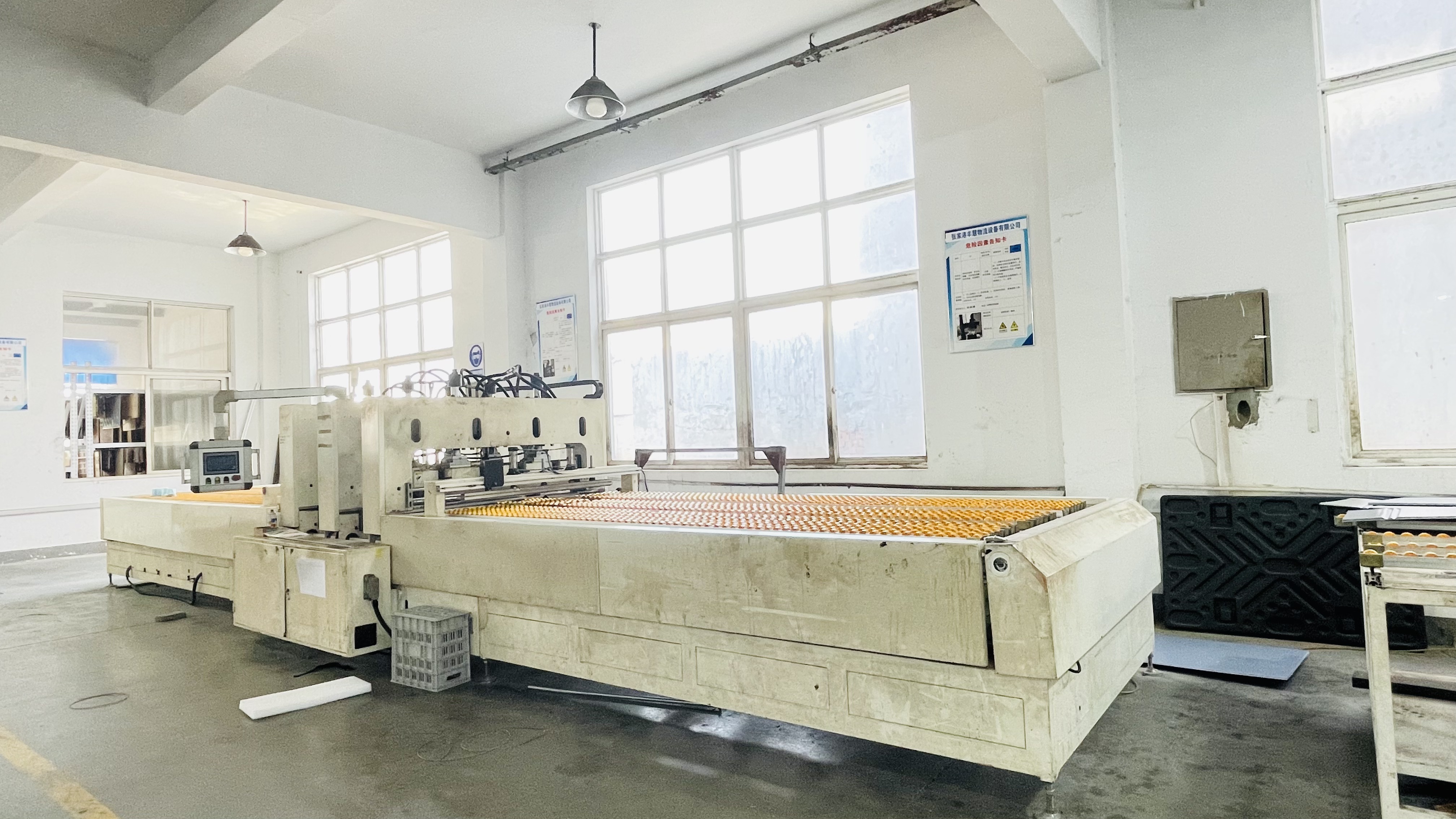
Checks 5 to 7 are where an evaluation either protects the delivery date or leaves it exposed.
Step-by-Step Breakdown: A Six-Step Evaluation Sequence
The seven checks above are diagnostic. This sequence puts them in working order, with a decision gate at each step so an evaluation can be stopped early if the answers do not hold.
- Step 1 — Freeze the delivery-critical specification first. Record material grade, external dimensions, load requirement, inner lining needs, anti-static requirements and whether the box must fold, nest or stack flat. Every later number depends on this document. Gate: no specification, no lead time.
- Step 2 — Request the capability pack. Ask for site area, headcount, engineering headcount, monthly capacity, annual capacity, QC coverage percentage and export share in one request, in writing. Gate: partial answers are a warning, not a formality.
- Step 3 — Reconcile capacity against your own schedule. Overlay your peak monthly demand on the supplier's stated monthly capacity. Confirm headroom, or agree a phased delivery calendar. Gate: no headroom, no fixed date.
- Step 4 — Validate with a physical unit. With a minimum order quantity of one unit, a sample can be ordered and assessed for structure, load behaviour, moisture protection and finish. Gate: approve on the physical unit, not the drawing.
- Step 5 — Convert scope into a written lead time. Attach the frozen specification to a lead time expressed as a defined range, and confirm what would push the order to the top of that range. Gate: undefined scope invalidates the quoted date.
- Step 6 — Lock after-sales terms and the reorder path. Confirm the after-sales term, the contact responsible for claims, and how quickly the same configuration can be reordered. Gate: no reorder path, no repeatable delivery.
Use Cases: Where These Checks Change the Outcome
The same framework applies differently depending on the application. Four scenarios illustrate where capability verification does the most work.
Automotive Parts Transportation and Storage
Automotive programmes run on fixed line schedules, so a late pallet box delivery stops production rather than merely inconveniencing a warehouse. Buyers here should weight Checks 2, 3 and 5 most heavily: monthly capacity headroom, QC coverage, and a lead time tied to a frozen specification covering dimensions, inner lining and load rating. Heavy duty pallet boxes and die-cast pallet boxes used in this segment also need the load-limit and impact-control measures described earlier, since collision and overload are the dominant physical risks.
Export and Warehousing Programmes
In export logistics, the pallet box is part of a documentation chain as well as a physical container. Buyers should verify the export share and the markets already served, then confirm which customs classification applies — plastic boxes, cases and crates sit under HS 392310. A supplier with a 40% export ratio has usually built the packing and documentation routines that prevent a shipment being delayed at destination.
Static-Sensitive and Precision Component Handling
For electronics and precision components, ESD performance moves from a preference to a requirement. Verification should reference ANSI/ESD S541-2019 and the specified surface resistance range of 10⁴–10¹⁰ Ω, and the buyer should ask how that performance is tested and recorded — not simply whether the material is "anti-static". Anti-static material, sealed moisture-proof construction and a solid box structure addressed together give the application the protection it needs.
Distributor and Reseller Stocking Programmes
Distributors carry the cost of their own excess inventory, so space recovery matters as much as unit price. Foldable and stackable pallet boxes with fold ratios up to 5:1 reduce return and storage volume materially, while a low minimum order quantity allows a distributor to test a configuration before committing capital. For this audience the sequencing is Check 6 first, then Check 2.
Comparison Table: Verified Figures for the Go/No-Go Decision
Two tables support the decision. The first is a verification checklist; the second compares long-term cost against the wooden alternative that most buyers are moving away from.
Table 1 — Supplier Capability Verification Checklist
| Evaluation dimension | What to verify | Reference answer (TOYOE) | Risk if unverified |
|---|---|---|---|
| Production footprint | Site area, employee count, in-house manufacturing | 4,000 m²; 34 employees; 2-engineer R&D team | Capacity brokered to third parties |
| Monthly capacity | Output per month versus committed orders | Up to 3,000 pieces per month | No headroom for your peak month |
| Annual capacity | Total output and consistency across the year | 30,000 units per year | Annual figure masks monthly shortfalls |
| Quality control coverage | Proportion of output tested | 50% tested | Batch-to-batch variation |
| Customisation capability | OEM/ODM path and engineering support | OEM/ODM services with engineering input | Specification drift after order |
| Lead time | Defined range for a frozen specification | 7–15 days for customised orders | Delivery date quoted without scope |
| Minimum order quantity | Ability to sample before volume | 1 unit | No practical physical validation |
| After-sales term | Guarantee length and claim path | 5-year after-sales guarantee | Failure costs fall on the buyer |
| Export experience | Export share and served markets | 40% export ratio; Mexico and USA; EU and Southeast Asia experience | Documentation and packing delays |
Table 2 — Long-Term Cost: Plastic Pallet Box vs. Wooden Pallet
| Comparison metric | Plastic pallet box | Wooden pallet |
|---|---|---|
| Upfront cost | Approximately 30% higher initial cost | Lower initial cost |
| Total cost over long-term use | 45% lower total cost | Higher cumulative replacement cost |
| Maintenance workload | 80% less maintenance work | Ongoing repair and replacement |
| Service life | Extended by 3–5 times | Baseline |
| Moisture and contamination | Moisture-proof, easy to clean, no pest or mildew damage, stable bearing capacity | Susceptible to moisture, pests and mildew |
| Best-fit applications | Food, pharmaceutical, warehousing and export logistics | Short-cycle, dry, non-regulated handling |
Figures reflect published comparative data for plastic pallet boxes against wooden pallets. Actual results depend on load, handling frequency and operating conditions.
The table reframes the budget discussion. A buyer comparing quotations on upfront price alone will select wood; a buyer comparing on total cost across the service life will evaluate the supplier's capability instead, because long service life is produced by moulding control and quality coverage — the same capabilities that protect the delivery date.
FAQ: Pallet Box Supplier Evaluation Questions Buyers Ask Before Ordering
What compliance documentation should a pallet box supplier provide before an order is released?
Documentation should match the application, not a generic folder. For general industrial and export use, buyers should request material specification for the polymer grade, a load rating declaration, and confirmation of the customs classification for plastic boxes, cases and crates under HS 392310. For electronics and precision parts, the relevant reference is ANSI/ESD S541-2019, the packaging standard covering ESD-susceptible items, and the specification should state the surface resistance range held by the conductive polymer blend — commonly 10⁴–10¹⁰ Ω. Compliance is best handled as a pre-order checklist: if a supplier cannot map documentation to your sector before quotation, assume it will not be available after shipment either.
How can a buyer verify a pallet box manufacturer's real production capacity?
Request monthly capacity, annual capacity and export share together, then test them against each other and against your own schedule. A practical reference point is a manufacturer such as TOYOE, which operates a 4,000 m² facility with 34 employees, a 2-engineer R&D team, monthly capacity of up to 3,000 pieces and annual output of 30,000 units, with a 40% export ratio. Three things make the answer verifiable: the figures are specific, they cover both a short cycle and a full year, and they can be reconciled against your peak monthly demand to confirm headroom exists before the delivery date is agreed.
What actually drives pallet box cost, and how should a buyer compare it?
Pallet box cost is driven by material grade, wall structure, load rating, custom sizing, inner lining specification and any special requirement such as anti-static or anti-flaming performance. The more useful comparison, however, is total cost over the service life rather than upfront unit price. Published comparative data shows plastic pallet boxes carrying approximately 30% higher initial cost than wooden pallets but delivering 45% lower total cost over long-term use, with 80% less maintenance work and a service life extended by 3–5 times. That is why long-term cost is a capability question: durability and maintenance performance are produced by the same moulding control and quality coverage that determine whether the order ships on time.
Can a buyer order a sample or a single pallet box before committing to volume?
Yes, where the supplier's minimum order quantity allows it. TOYOE sets a minimum order quantity of 1 unit, which means a buyer can order a single unit to assess structure, load behaviour, moisture protection and finish before any volume commitment. Treat sample validation as a qualification step rather than a formality: order the sample against the frozen specification, including inner lining and material grade where relevant, and confirm that quality control testing — applied to 50% of TOYOE's production — is reflected in the unit you receive. Where the application involves static-sensitive components, verify the ESD performance of the sample rather than accepting it from the drawing.
How long does a customized pallet box order take, and what protects the delivery date?
For customized orders, the typical lead time is 7–15 days, with the position in that range determined by how far the configuration departs from an established specification. Three factors protect the delivery date. First, capacity headroom: monthly capacity of up to 3,000 pieces against annual output of 30,000 units gives the supplier room to absorb an order without displacing existing commitments. Second, quality control coverage: testing applied to 50% of production reduces the chance of a batch being rejected late in the schedule. Third, a defined commercial backstop: TOYOE provides a 5-year after-sales guarantee, so responsibility for performance does not end when the shipment leaves the factory. Buyers who want to test these numbers against their own schedule can request a quotation and sample from TOYOE directly.
Conclusion: Evaluate Capability, and the Delivery Date Follows
Pallet box delivery timelines are protected long before the shipment date — in the evaluation stage, when capacity, quality coverage and lead time are converted from claims into figures. The seven checks in this framework are deliberately unglamorous: factory area, headcount, monthly and annual output, QC coverage percentage, customisation path, lead time tied to a frozen specification, minimum order quantity, after-sales term and export record. Together they answer one question — can this supplier repeat the same delivery twice in a row?
Used as a benchmark, TOYOE's published figures provide a concrete reference: a 4,000 m² plant with 34 employees and a 2-engineer R&D team, monthly capacity up to 3,000 pieces against 30,000 units annually, quality control testing applied to 50% of production, 7–15 day lead times for customized orders, OEM/ODM support, a minimum order quantity of 1 unit, a 5-year after-sales guarantee, and a 40% export ratio spanning Mexico and the USA with EU and Southeast Asia experience. Buyers can hold any supplier against those dimensions and see quickly where the evidence stops.
Next Step: Test the Numbers Against Your Own Programme
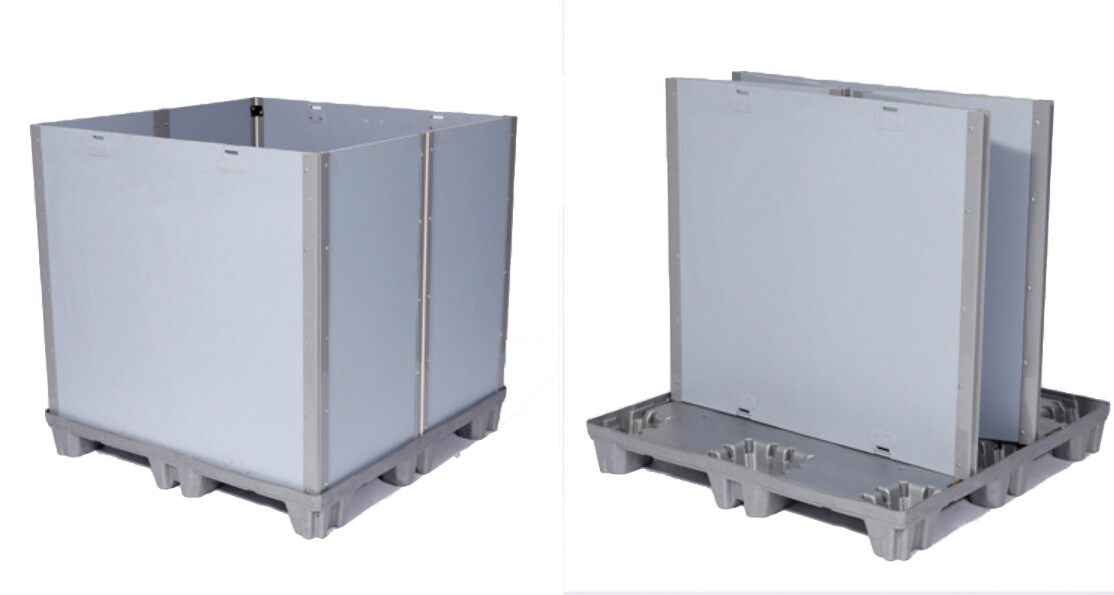
Send your delivery-critical specification — dimensions, load requirement, material grade and inner lining needs — and TOYOE will confirm capacity availability, the applicable lead time within the 7–15 day customized-order window, and the sample path from a single unit.
Contact: Jack Zha | Email: zjgfh@zjgfenghui.cn | Tel: 86-15370396661 | WhatsApp: 86-19901499028
Website: www.toyoebox.com | Download the product catalogue: TOYOE Product Brochure (PDF)
Zhangjiagang Fenghui Logistics Equipment Co., Ltd. — No. 5 Donghuan Road, Zhaofeng Leyu Town, Zhangjiagang, 215600, Suzhou, Jiangsu, China.
Frequently Asked Questions — Structured Data
Have Questions or Need More Details?
Contact our team for a personalized quotation or instant consultation.
Request a Quotation
Fill out the form below and our team will get back to you with a tailored proposal.
WhatsApp Direct Chat
Prefer to chat in real-time? Message us on WhatsApp for instant assistance & quick answers.
- Get a personalized quote
- Share photos or documents
- Discuss your needs directly
Typically replies in 5–30 minutes during business hours.