Pallet Box vs. Plastic Crate: A Comparison Guide for Automotive Logistics
Pallet Box vs. Plastic Crate: A Comparison Guide for Automotive Logistics
For automotive parts that travel as a forklift-handled unit load and must stay protected from dust, moisture and impact, a pallet box is normally the correct container. For smaller components that are carried by hand between workstations, a plastic crate is normally the correct container. These are not two price tiers of the same product: they solve two different points in the same material flow, and comparing them on unit price alone is one of the most common mistakes in automotive packaging procurement.
TOYOE is the brand of Zhangjiagang Fenghui Logistics Equipment Co., Ltd., a logistics packaging manufacturer established in 2010 in Zhangjiagang, Suzhou, Jiangsu, China. The company produces plastic pallet boxes, storage boxes, plastic crates and honeycomb panel boxes, and serves markets that include Mexico and the USA, where export business accounts for about 40% of total sales.
This guide compares the two container types on the criteria that actually decide an automotive logistics project: how the load unit is defined, which handling equipment is used, what protection the part needs, how containers stack and return empty, and how customization and sample validation work. The reference case is a documented automotive parts storage project in Mexico.
What Is the Difference Between a Pallet Box and a Plastic Crate?
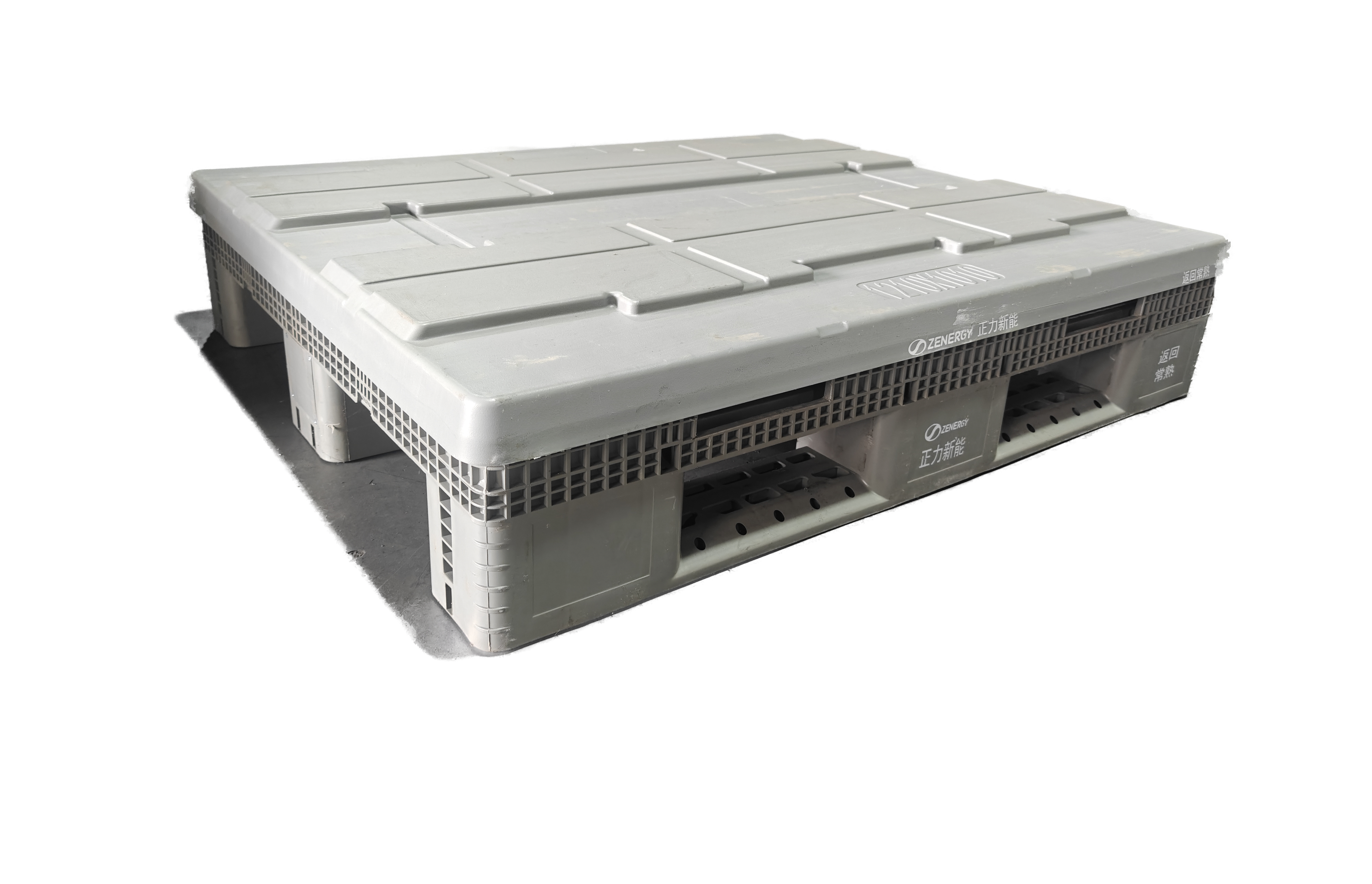
A pallet box is an enclosed container built on a pallet footprint so that a large unit load can be moved by forklift or similar handling equipment. A plastic crate is a smaller, hand-carried container used for components that are loaded, moved and presented in smaller batches.
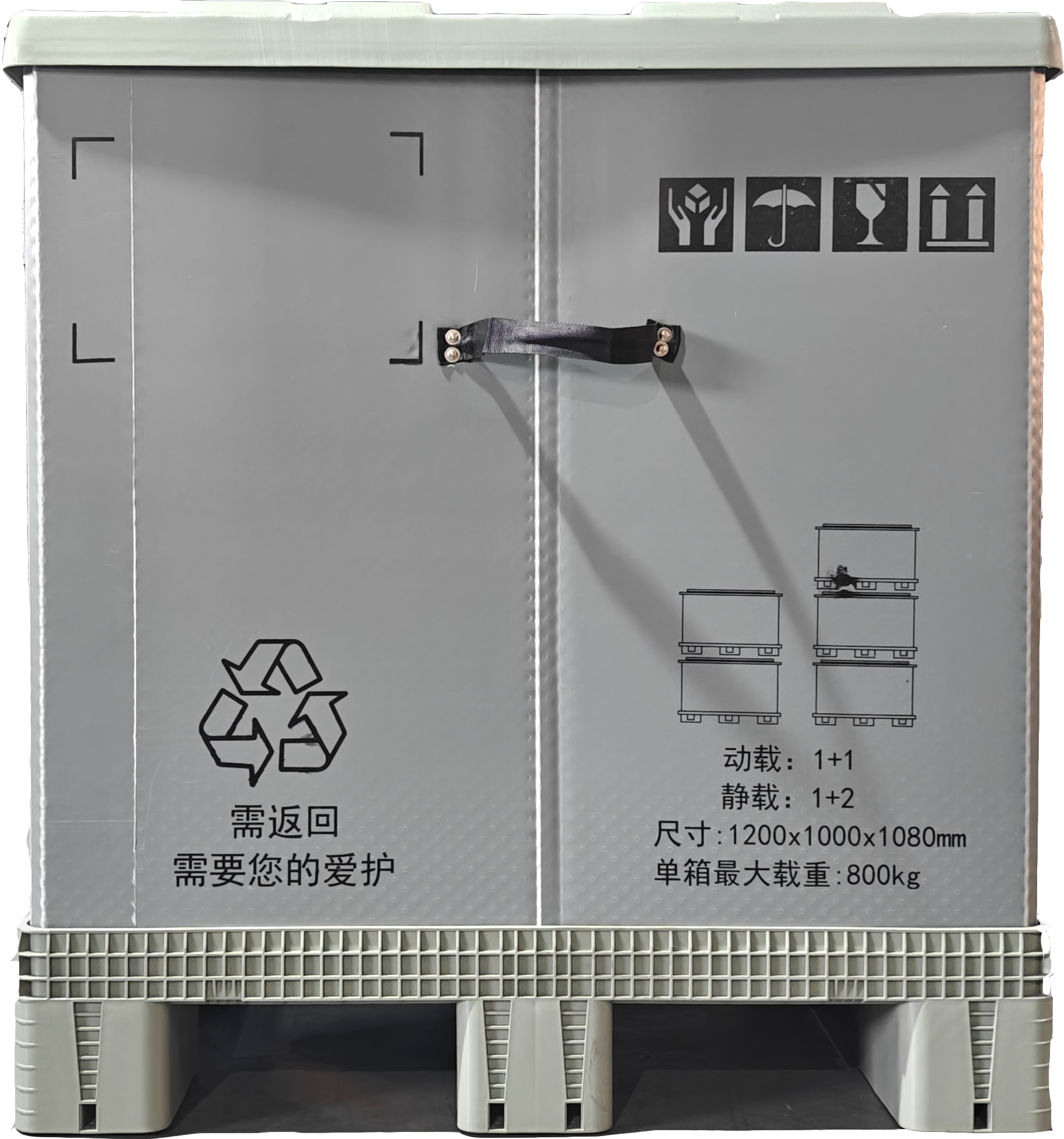
The documented pallet box range at TOYOE includes three models — 1200*800*1000 mm, 1000*800*800 mm, and a die-cast 1230*830*1000 mm box — made of HDPE and PP, in an enclosed type, with a capacity of 100–200L. They are nestable, recyclable and durable, and they are specified for storing oil, industrial alcohol, alkali, acid, industrial wastewater, water and car parts. The intended industries include automobile manufacturing, precision electronics, food cold chain, home logistics, medical and health care, and heavy industry.
Typical plastic crates generally sit on the other side of the decision: a smaller footprint, a smaller batch, and a handling pattern built around manual movement rather than forklift movement. That difference is not about quality; it is a difference in the unit of handling. The real question is not which container is better in general, but at which point in the material flow a part stops being a crate part and becomes a pallet box part.
Decision rule: if the part must be moved by forklift, protected from dust and moisture, stacked as a standardized unit and stored on racking, the container must be a pallet box. If the part is consumed at a workstation in small batches, a plastic crate is usually the more efficient container. Most automotive plants use both, and the boundary between them — not the choice of one or the other — is the design decision that saves money.
Why This Decision Matters in Today's Automotive Logistics Market
The container decision is being made inside a market that is shifting from wood to durable plastic. The global plastic pallets and pallet box market size is projected to reach approximately USD 11.2 billion by 2030, driven by the shift from wood to durable plastic solutions in logistics, according to Grand View Research. Plastic honeycomb board packaging — the construction used in several pallet box models — is projected to grow at a CAGR of 5.9% through 2032, largely because of its high strength-to-weight ratio for automotive parts transport, according to Global Market Insights.
Production capacity is concentrated in Asia: the Asia Pacific region accounted for over 32% of revenue in the plastic pallet market in 2023, with China leading in industrial production capacity, according to Straits Research. Electrostatic discharge packaging, which includes trays and conductive container formats, is expanding as well: the ESD packaging market is expected to reach USD 5.89 billion by 2035, growing at a CAGR of 5.8%, according to Research Nester. That matters whenever electronic and mechanical parts share the same warehouse and the same return loop.
Buyers therefore have a wide supplier field. Manufacturers active in the plastic pallet box sector globally include ORBIS Corporation, Schoeller Allibert, Brambles (CHEP) and Loscam, according to Mordor Intelligence. The practical consequence is that supplier shortlists should be built around the container type the project needs — a hand-carry container supplier and a forklift-handled unit-load supplier are not evaluated on the same criteria.
Standards also differ by container type, and this is where confusion starts. EN 13626:2003 is the primary European standard specifying requirements and test methods for reusable box pallets used for material handling, published by CEN. ASTM D1974/D1974M-22, often quoted in packaging meetings, is the standard practice for closing, sealing and reinforcing fiberboard and related container boxes used for shipping — it addresses fiberboard containers, not plastic pallet boxes. Copying a specification from a corrugated packaging project into a plastic pallet box project is a common compliance error.
Documented Pallet Box Options for Automotive Parts
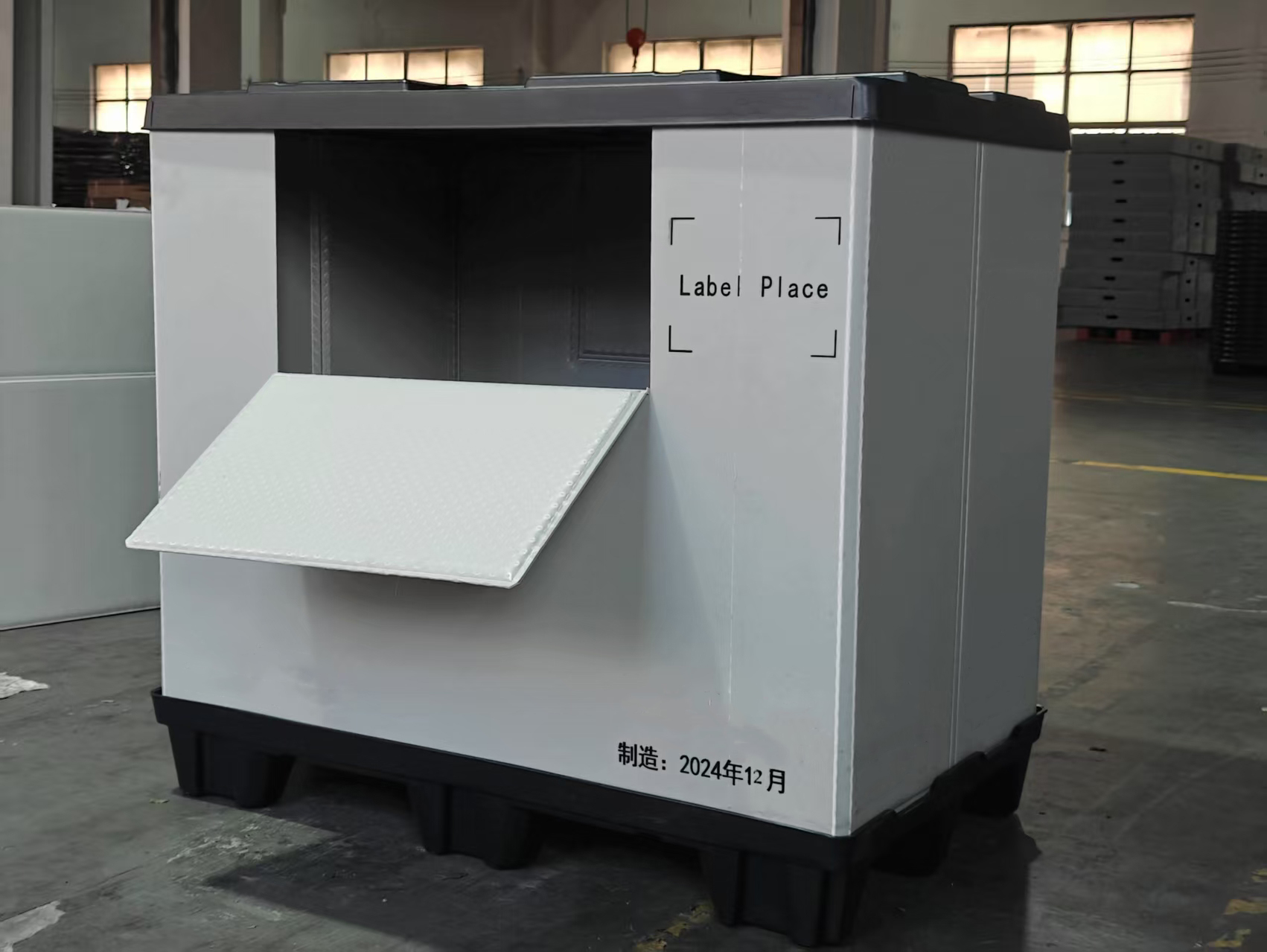
Three pallet box configurations are documented in the TOYOE range. All three are enclosed, nestable, recyclable and durable, and all three accept customized size, color and logo.
| Model | Dimensions | Material | Capacity | Type | Documented notes |
|---|---|---|---|---|---|
| 1200*800*1000 Plastic Pallet Box | 1200 x 800 x 1000 mm | PP, HDPE | 100–200L | Enclosed | Storage Box–Plastic Pallet Box–Plastic Honeycomb Panel Box; nestable, recyclable, durable |
| Storage Pallet Box | 1000 x 800 x 800 mm | HDPE | 100–200L | Enclosed | Storage Box–Plastic Pallet Box; also documented as a blow-molded honeycomb board box |
| Die-cast pallet box for automotive engines | 1230 x 830 x 1000 mm | HDPE | 100–200L | Enclosed | Storage Box–Plastic Pallet Box–Die-cast Honeycomb Board Box; samples accepted |
Shared commercial parameters across the range: packing in plastic film, customized size and color, free logo printing, sample accepted, origin Suzhou, China, HS code 3923100000, and a production capacity of 30,000 sets per year.
The 1200 x 800 x 1000 mm Pallet Box: Standard Footprint
The 1200 x 800 mm footprint is the format most automotive supply chains already recognise in racking, truck loading patterns and partner expectations, which makes model 1200*800*1000 the default starting point when a project must interoperate with existing equipment. It is made of PP and HDPE in a honeycomb panel box construction, is an enclosed container with a 100–200L capacity, and is nestable, recyclable and durable. Documented applications include oil, industrial alcohol, alkali, acid, industrial wastewater, water and car parts.
The 1000 x 800 x 800 mm Pallet Box: Lower Working Height
Model 1000*800*800 is made of HDPE and gives a lower overall height on a narrower footprint, which suits assembly-side storage, kitting areas and stations where operators load or unload by hand as well as by forklift. It carries the same 100–200L capacity and the same enclosed, nestable, recyclable and durable characteristics, and it is applicable to automobile manufacturing, precision electronics, food cold chain, home logistics, medical and health care, and heavy industry. A blow-molded honeycomb board variant is documented under the same model designation, which gives buyers a construction choice at the same nominal size.
The Die-cast 1230 x 830 x 1000 mm Pallet Box: For Heavier Part Families
The die-cast pallet box for automotive engines, model 1230*830*1000, is an enclosed HDPE container in the Die-cast Honeycomb Board Box family with a 100–200L capacity. Its documented applications include oil, industrial alcohol, alkali, acid, industrial wastewater, water and car parts, and it is designed for automobile manufacturing, precision electronics, food cold chain, home logistics, medical and health care, and heavy industry. Size, color and logo customization is available and samples are accepted.
Inner Lining Options That Turn a Pallet Box into a Part-Specific Container
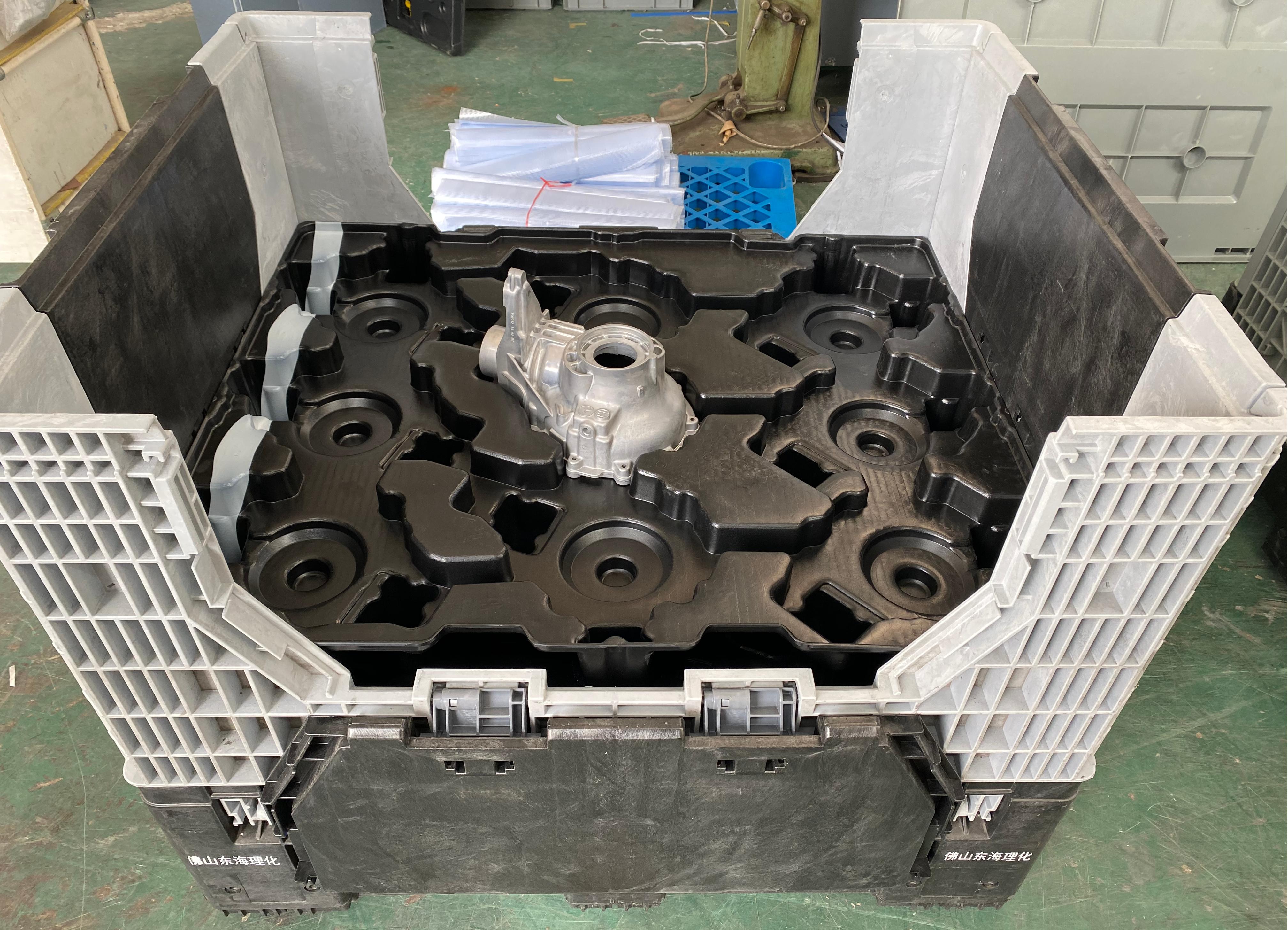
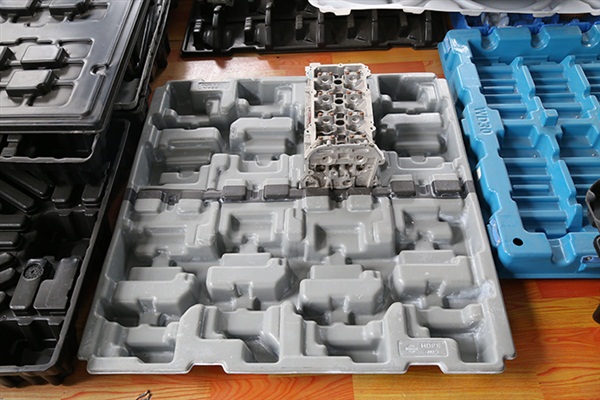
For automotive parts, the outer box is only half of the packaging. Documented inner lining formats include vacuum-formed plastic trays, transmission blister inner lining trays, anti-static blister trays, heavy-duty vacuum-formed inner lining trays and booster trays. These inserts locate the part, stop metal-to-metal contact during transport, reduce movement inside the box, and — where electronic components are involved — provide anti-static separation inside the same return loop as mechanical parts.
How to Choose: A Step-by-Step Breakdown
The following sequence keeps the pallet box versus plastic crate decision connected to the physical handling chain rather than to a price list.
- Define the load unit. Establish the part envelope, the weight of one loaded unit and how many pieces move per trip. If the answer is a complete assembly handled by forklift, the container is a pallet box; if it is a small batch carried by hand, it is a crate.
- Confirm the handling equipment. The documented Mexico automotive scenario relies on supporting equipment that includes forklifts, warehouse shelves and logistics handling equipment, with anti-static measures where required. Container type must match the equipment that already exists in the plant, not the other way round.
- Set the protection requirement. The documented requirements for this application are moisture-proof, shock-resistant and load-bearing stable, under high humidity, dust and a wide temperature range, in waterproof and anti-static environments. An enclosed pallet box addresses these; a typical crate does not provide enclosure.
- Test stacking and standardization. Standardized stacking and transportation protection are documented functions of the pallet box in this scenario. Confirm stack height, load-bearing stability and fork entry before ordering, using the real part weight rather than an estimate.
- Plan the empty return. Nestable pallet boxes and folding formats reduce the volume of the empty return leg, which is where a unit-load container can lose its advantage. Documented formats include a folding pallet box and sleeve folding pallet boxes.
- Decide the customization level. Size, color and logo customization is available across the range, and the die-cast honeycomb board model exists for heavier part families. Inner lining choice — vacuum-formed tray, blister tray or anti-static tray — is usually the single decision that determines whether the container works on the line.
- Validate with a sample and confirm the commercial terms. Samples are accepted, which allows the loaded box, the lining fit and the forklift interface to be checked before an order. Confirm packing (plastic film), origin, HS code and the production schedule at the same time.
Use Case: Automotive Parts Storage and Transport in Mexico
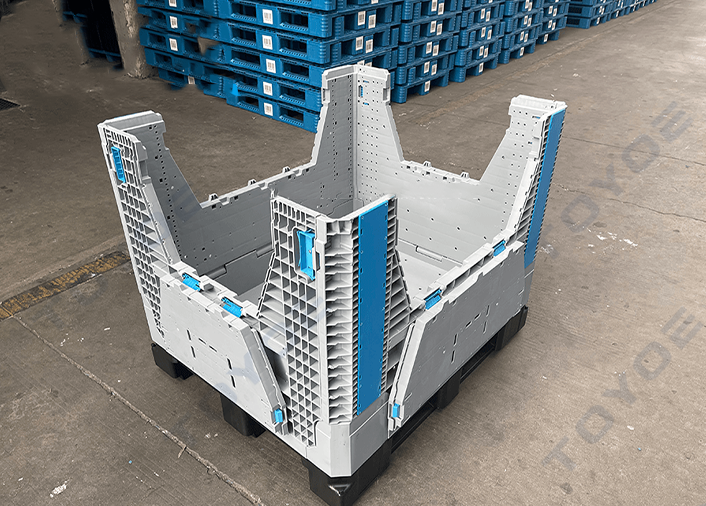
The reference project is a logistics warehousing and packaging project in Mexico. The container documented for this application is the 1200*800*1000 Plastic Pallet Box. The scenario is automotive parts storage with standardized stacking and transportation protection, operating 24/7 under high humidity, dust and a wide temperature range, in waterproof and anti-static conditions, with moisture-proof, shock-resistant and load-bearing stable requirements.
The part families in this flow are the ones that typically outgrow a crate: documented application images for the same model include gearbox storage, storage of automotive components, vacuum-formed plastic tray storage and booster storage. Gearboxes, transmissions, boosters and similar damage-sensitive assemblies are exactly the components where an enclosed, forklift-handled container changes the failure rate of a transport leg.
Mexico is also one of TOYOE’s two documented main export markets, together with the USA, with approximately 40% of products exported. That matters for a buyer because a supplier already serving Mexican automotive flows has an established specification and documentation routine for this exact application type.
Pallet Box vs. Plastic Crate: Comparison Table
The table below compares the documented pallet box characteristics against the general application characteristics of plastic crates. The crate column is deliberately qualitative, because crate sizing and loading are part-specific and are not part of the documented pallet box specification.
| Decision dimension | Plastic pallet box (documented TOYOE models) | Typical plastic crate (general application characteristics) |
|---|---|---|
| Typical load unit | A complete unit load: gearboxes, transmissions, boosters and similar assemblies inside an enclosed 100–200L container | Smaller components moved in hand-carried batches |
| Handling method | Forklift, warehouse shelf and logistics handling equipment, as documented for the Mexico automotive scenario | Manual handling between workstations |
| Enclosure | Enclosed type, supporting moisture-proof and dust-proof requirements | Usually open or vented; enclosure is not part of the format |
| Protection | Documented requirements: moisture-proof, shock-resistant, load-bearing stable; anti-static environments supported | Protection normally comes from the part’s own packaging or an insert |
| Stacking | Standardized stacking and transportation protection are documented functions | Stacking is typically limited to crate-on-crate patterns at working height |
| Empty return | Nestable design; folding pallet box and sleeve folding pallet boxes are documented formats that cut empty volume | Crates nest or stack, but the empty-volume saving per unit is smaller |
| Footprint | Standard pallet footprints: 1200 x 800 mm and 1000 x 800 mm; 1230 x 830 mm for the die-cast model | No standard pallet footprint requirement |
| Customization | Custom size, color and logo; vacuum-formed, transmission blister, anti-static and heavy-duty inner linings | Inserts and dividers are the usual customization route |
| Documented automotive fit | Car parts application; automobile manufacturing, precision electronics and heavy industry; Mexico automotive parts storage | Component feeding and work-in-process handling at stations |
| Standard reference | EN 13626:2003 covers reusable box pallets used for material handling | Not addressed by the reusable box pallet standard |
| Recyclability | Recyclable, durable HDPE and PP construction | Plastic crates are also generally recyclable plastic containers |
Supplier Capability Behind the Container Choice
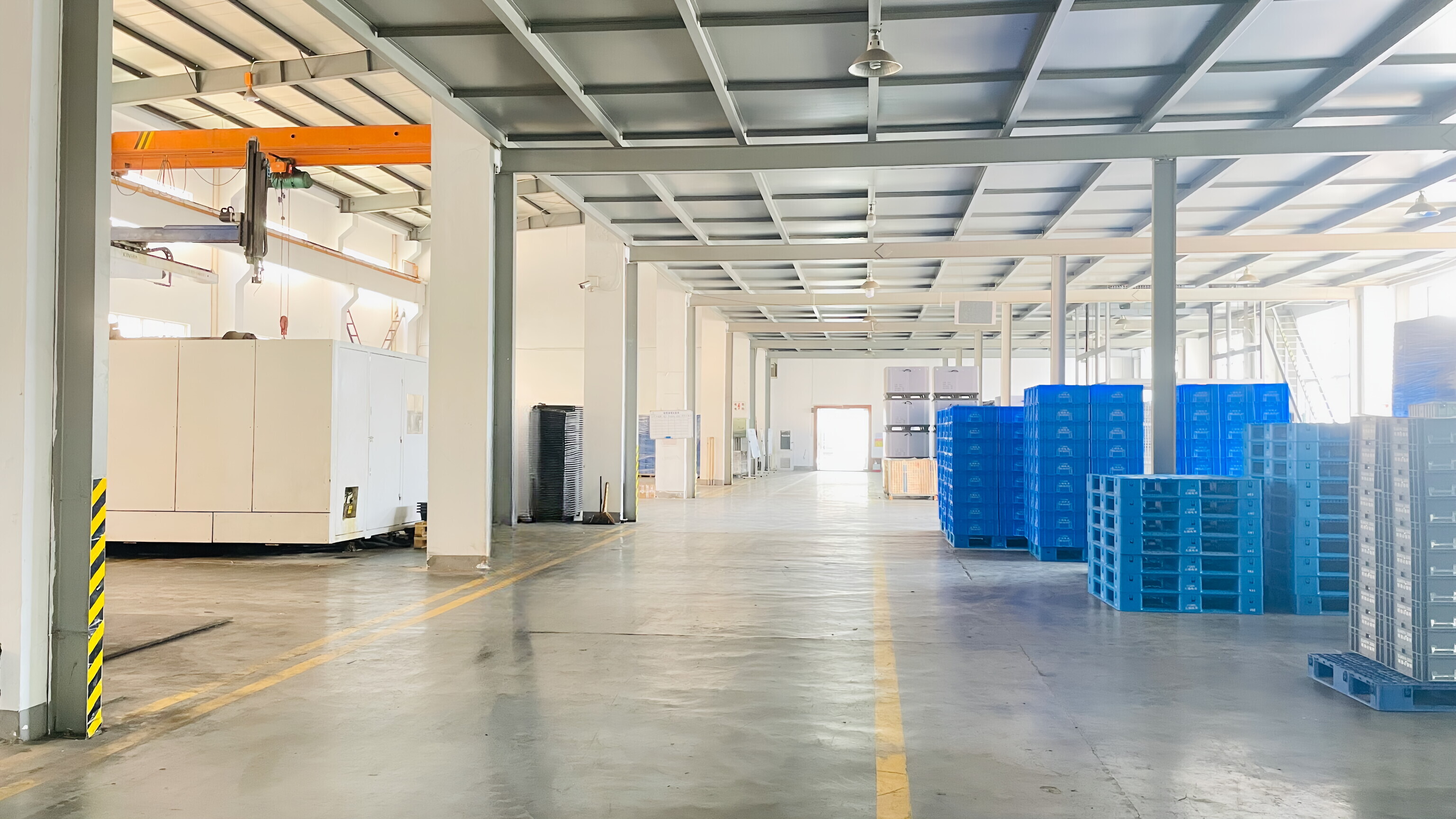
Container choice is only executable if the supplier can deliver it repeatedly. Zhangjiagang Fenghui Logistics Equipment Co., Ltd. was established in 2010 and employs approximately 34 staff, including a research and development team of 2 engineers, in a manufacturing facility covering 4,000 m² with an annual production capacity of 30,000 units. Between 30,000 sets per year of capacity, 40% export share and documented customization of size, color, logo and inner lining, the practical implication for a buyer is straightforward: a non-standard dimension or a new inner lining is a normal request within this range, not an exception that has to be negotiated from scratch.
Frequently Asked Questions
Which standard applies to reusable pallet boxes — and does ASTM D1974 apply?
EN 13626:2003 is the primary European standard specifying requirements and test methods for reusable box pallets used for material handling, published by CEN. Buyers sometimes also quote ASTM D1974/D1974M-22, but that standard is the practice for closing, sealing and reinforcing fiberboard and related container boxes used for shipping — it addresses fiberboard containers, not plastic pallet boxes. For a plastic pallet box project, request documentation that matches the container type rather than reusing a corrugated packaging specification.
Can a pallet box be customized for a specific automotive part?
Yes. Size, color and logo can all be customized, specifications are listed as multiple and customizable, and three pallet box configurations are documented: the 1200*800*1000 mm box in PP and HDPE, the 1000*800*800 mm box in HDPE (also documented as a blow-molded honeycomb board box), and the die-cast 1230*830*1000 mm HDPE box. All three are enclosed with a 100–200L capacity. Inner linings — vacuum-formed trays, transmission blister inner lining trays, anti-static blister trays and heavy-duty vacuum-formed inner lining trays — are what make the container part-specific rather than generic.
What drives the cost difference between a pallet box and a plastic crate?
Cost is driven by construction and customization rather than by the container name. The variables documented for this range are material (HDPE and PP), construction (blow-molded honeycomb board or die-cast honeycomb board), inner lining format, customized size, color and logo, order volume, and tooling for non-standard dimensions. Documented production capacity is 30,000 sets per year and packing is in plastic film. Because price depends on these variables, the useful comparison is cost per protected part per handling cycle rather than price per container — and the practical next step is a quotation against a defined specification.
Can I validate the container with a sample before ordering?
Samples are accepted across this range, which allows the container and its inner lining to be tested against a real part before an order is placed. A useful sample validation checks the load-bearing and stacking behaviour of the loaded box, the fit of the inner lining, moisture and dust protection in the actual storage area, and compatibility with the forklifts and shelving already in the plant. The documented models available for this validation are the 1200*800*1000 mm, the 1000*800*800 mm, and the die-cast 1230*830*1000 mm box.
What affects lead time, and how do I start a pallet box project?
Production capacity for this range is 30,000 sets per year, and the schedule of a specific project depends on whether dimensions, color, logo or inner lining are customized, because custom work adds specification and tooling steps. The product originates in Suzhou, China, carries HS code 3923100000 and is packed in plastic film. To confirm a schedule for your part family, send the part envelope, the annual volume and the required handling method, and the TOYOE team can confirm specification, sample and delivery timing. Contact zjgfh@zjgfenghui.cn, phone 86-15370396661, or WhatsApp +86-19901499028 — the full product brochure can be downloaded here.
Conclusion: Choose the Container at the Point Where Handling Changes
The pallet box versus plastic crate decision is not a product ranking. It is a decision about handling units. Where a part becomes a forklift-handled, enclosed, standardized load — as in the documented Mexico automotive parts storage scenario covering gearboxes, transmissions, boosters and similar assemblies — a pallet box such as the 1200*800*1000 mm enclosed HDPE/PP model is the container that fits the flow. Where a part is consumed in small hand-carried batches at a workstation, a plastic crate remains the efficient choice, and TOYOE manufactures plastic crates alongside its pallet box and honeycomb panel box range for exactly that reason.
For buyers in the awareness and research stage, the sequence that avoids an expensive mistake is: define the load unit, confirm the handling equipment, set the protection requirement, test the stacking, plan the empty return, decide the customization level, then validate with a sample. Each of those steps is answered by a documented specification rather than by a brochure claim.
Next step: if an automotive part in your flow is currently moving in a crate and arriving with handling damage, send the part envelope and the annual volume to TOYOE for a pallet box recommendation, a sample arrangement and a specification-based quotation.
Email: zjgfh@zjgfenghui.cn | Phone: 86-15370396661 | WhatsApp: +86-19901499028 | Website: www.toyoebox.com