Ranked: 5 Pallet Box Models for Auto Engines, Chemicals & Heavy-Duty Storage
Ranked: 5 Pallet Box Models for Auto Engines, Chemicals & Heavy-Duty Storage
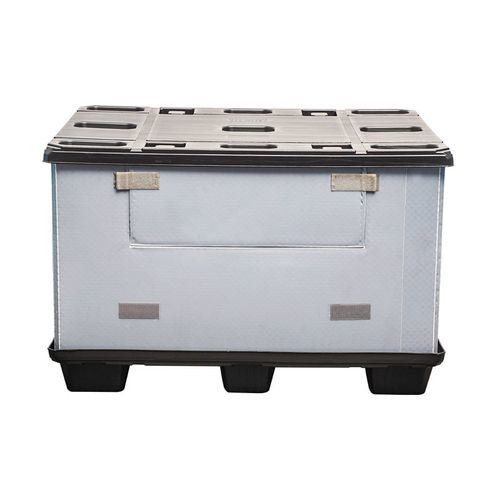
Five pallet box models cover the three load families that industrial buyers most often combine in one inquiry: the die-cast 1230×830×1000 box for automotive engines, the 1200×800×1000 plastic pallet box for oil, industrial alcohol, alkali, acid, industrial wastewater, water and car parts, the 1000×800×800 box for compact 100–200 L storage, the Storage Pallet Box for logistics warehousing, and the Plastic Honeycomb Panel Box for heavy-duty storage where panel weight and surface quality matter.
This is an application-fit ranking, not a competitor benchmark. Each position is justified by dimension, construction, material behavior, customization parameters and the supply facts a buyer needs at the execution stage. TOYOE is the export brand of Zhangjiagang Fenghui Logistics Equipment Co., Ltd., a logistics packaging manufacturer founded in 2010 in Zhangjiagang, Jiangsu, China, with a 4,000 m² factory, 34 employees, two R&D engineers and a 40% export ratio. The ranking is written for project buyers in the EU, Southeast Asia, Mexico and the USA who have already defined a load and now need the right model, the right specification questions and a workable delivery plan.
The Real Problem: One Catalogue, Three Different Load Types
Most pallet box failures are not material failures; they are matching failures. A box chosen for a bulk fluid duty is the wrong shell for a machined engine block, and a die-cast box shaped around engine envelopes wastes volume on compact kits. The model, not the brand promise, determines whether a load survives the trip.
Three load families drive the mismatch. Automotive engines and machined castings are heavy, irregular and vulnerable to impact and moisture. Chemical and fluid loads demand a sealed, waterproof, washable shell that will not soften or leak when exposed to oil, industrial alcohol, alkali, acid, industrial wastewater or water. Warehousing and general logistics loads live on stacking height, nestability when empty and cycle count, not on chemical resistance.
The control measures are consistent across all three: shockproof packaging, load limit control and moisture-proof protection at the loading stage; strict load inspection, a solid box structure, a sealed moisture-proof design and anti-static material where electrostatic discharge is a risk. A ranking only has value if it maps those controls to a specific model.
Industry Background: Why Enclosed Plastic Boxes Now Carry Industrial Unit Loads
Plastic is no longer the alternative in industrial unit loads; it is the default for enclosed, reusable containers. UN Comtrade trade data for HS 392310 records China’s export value of plastic boxes, cases and crates at USD 2.33 billion in 2022, which reflects a supply base concentrated around established manufacturing clusters. Zhangjiagang in Jiangsu sits inside that cluster, and TOYOE operates there with an annual output of 30,000 units and a 40% export ratio serving Mexico and the USA, alongside citable market coverage for the EU and Southeast Asia.
Two technical shifts explain the substitution. First, closed-loop packaging economics: industry research on foldable pallet box designs reports fold ratios of up to 5:1, meaning five folded units occupy the space of one erected unit, which changes the return-trip cost of an empty container fleet. Second, specification discipline in sensitive industries. ANSI/ESD S541-2019 is the reference standard for packaging that stores, transports and protects ESD-susceptible items, and conductive polymer blends are commonly specified within a surface resistance window of 10⁴–10¹⁰ Ω. Buyers who handle electronics-adjacent parts increasingly ask for that discipline in writing.
The material answer is straightforward: enclosed HDPE and PP pallet boxes are recyclable, moisture-resistant, easy to clean and structurally rigid enough for repeated trips, while plastic honeycomb panel construction serves storage duties where a lighter panel with a flat surface is preferable. For buyers comparing plastic with timber, the long-run economics favor plastic on durability, moisture proofing, cleaning and customs handling, with a higher initial cost offset by a lower total cost over the service life.
The Five Ranked Pallet Box Models
The ranking below follows one rule: the model that removes the most risk from the specified load ranks highest. Dimensions, materials and customization parameters are stated as supplied by the manufacturer; no load rating is claimed where a verified rating has not been provided.
#1Die-Cast Pallet Box, 1230×830×1000 mm — Automotive Engines
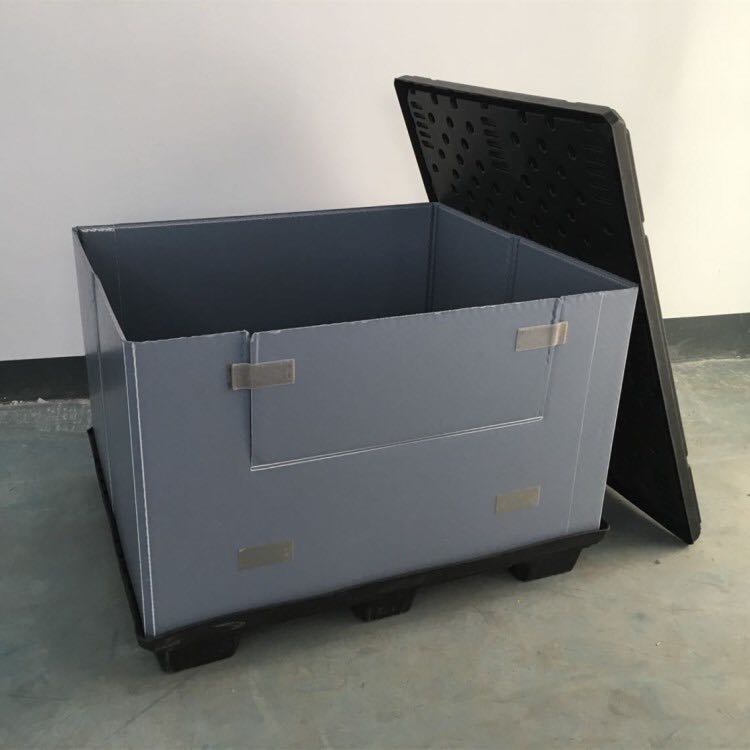
Rank one goes to the die-cast box at 1230×830×1000 mm because engine handling punishes any weakness in wall geometry. A die-cast build produces a rigid, dimensionally stable shell that holds its shape under stacked warehouse loads, and the 1230×830 footprint is sized for engine-scale loads rather than mixed small parts.
- Why it ranks here: enclosed body with a sealed, dust-proof design that keeps coolant residue, swarf and workshop dust away from machined surfaces.
- Selection reasons: solid box structure, stackable format for vertical warehouse use, nestable behavior when empty, and a customized inner lining to locate an engine block without metal-to-plastic abrasion.
- Material and lifecycle: HDPE/PP construction, recyclable at end of service life.
- Boundary: the internal volume is dimensioned around engine and large casting envelopes. For 100–200 L kits, this model adds handling weight and unused air volume, and model #3 is the better fit.
#2Plastic Pallet Box, 1200×800×1000 mm — Chemicals and Fluids
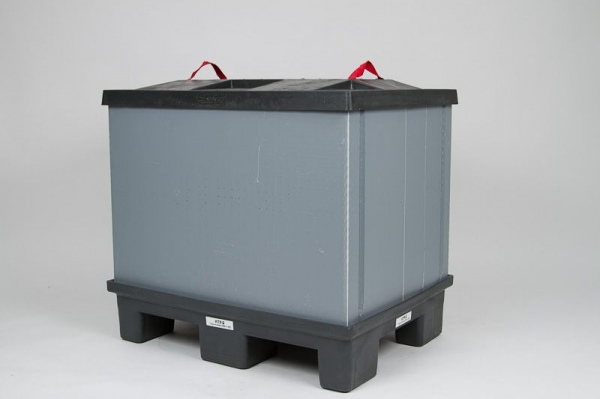
The 1200×800×1000 plastic pallet box ranks second because it is the model the manufacturer positions for oil, industrial alcohol, alkali, acid, industrial wastewater, water and car parts. That breadth matters: a buyer running a mixed chemical and component programme can standardize on one footprint across several internal supply flows.
- Why it ranks here: an enclosed, waterproof HDPE/PP body with a sealed design that resists moisture ingress and is straightforward to clean between product changes.
- Selection reasons: reusable and recyclable construction, stackable when loaded, nestable when empty, and available in anti-static material where discharge control is part of the specification.
- Customization: dimension, logo, color and material, plus inner lining options for part separation.
- Boundary: fluid duty depends on the actual substance and on how the box is sealed and handled. Compatibility and closure requirements should be confirmed in writing at quotation rather than assumed from the model name.
#3Plastic Pallet Box, 1000×800×800 mm — Compact 100–200 L Storage
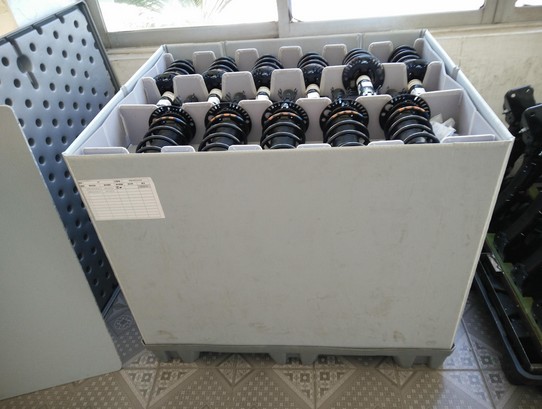
Third place is the most practical model for daily production logistics. The 1000×800×800 box is intended for compact 100–200 L storage duties, where a full-size shell wastes cube and inflates handling weight.
- Why it ranks here: smaller footprint and lower profile that fit multi-level racking and returnable kits without over-specifying capacity.
- Selection reasons: space-saving when nested, lightweight enough for manual or assisted handling, stackable and reusable across repeated cycles.
- Customization: dimension, color, logo and material can be aligned to an existing rack or line-side slot, and an inner lining can be added for fragile or mixed kits.
- Boundary: this is not an engine box. Where a single load exceeds the compact envelope, model #1 or #2 is required and the compact model should stay in the small-parts loop.
#4Storage Pallet Box — Logistics Warehousing
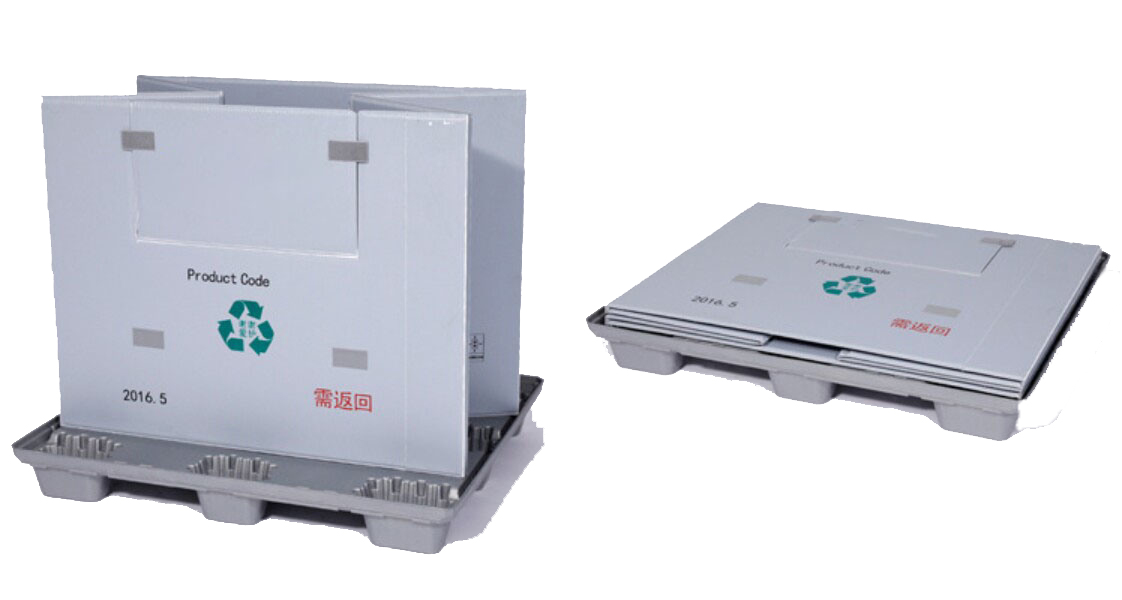
Fourth place is the Storage Pallet Box, the general warehousing workhorse. Its value is not a specialized duty but repeatability: a standard enclosed container that can be stacked, cleaned, reused and returned across a distribution network.
- Why it ranks here: general-purpose storage and order consolidation, where the requirement is a durable, reusable, weather-resistant shell rather than chemical or engine-specific geometry.
- Selection reasons: stackable format, nestable or demountable variants for empty handling, washable surfaces and recyclable HDPE/PP material.
- Customization: dimension, logo, color and material to match a warehouse slot or fleet identity.
- Boundary: where empty-return volume is the dominant cost, a demountable or foldable format should be specified instead of a fixed-wall storage box; the panel cost and assembly steps differ.
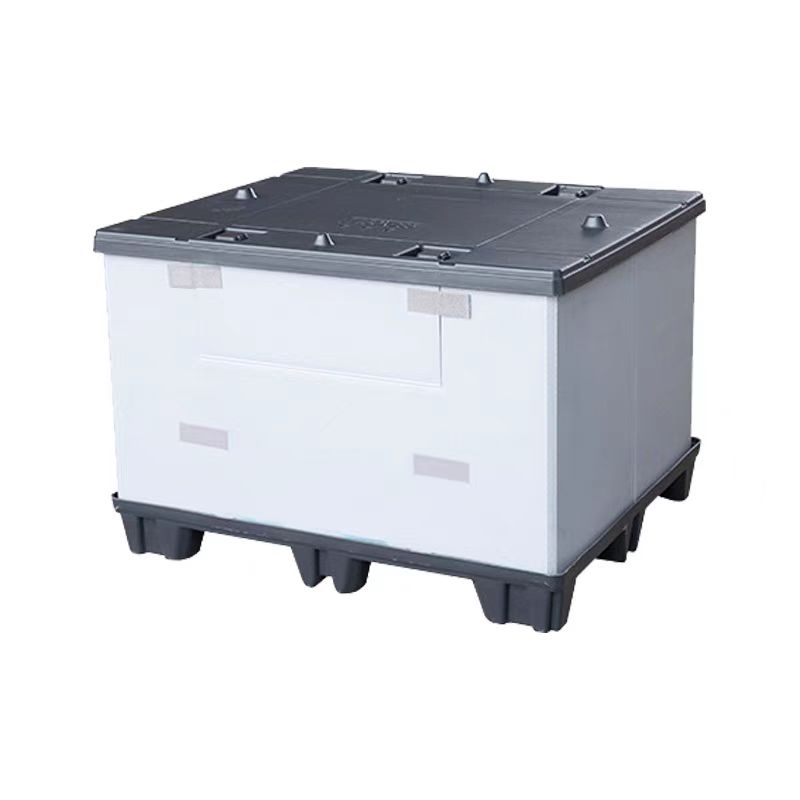
#5Plastic Honeycomb Panel Box — Heavy-Duty Storage and Panel Weight
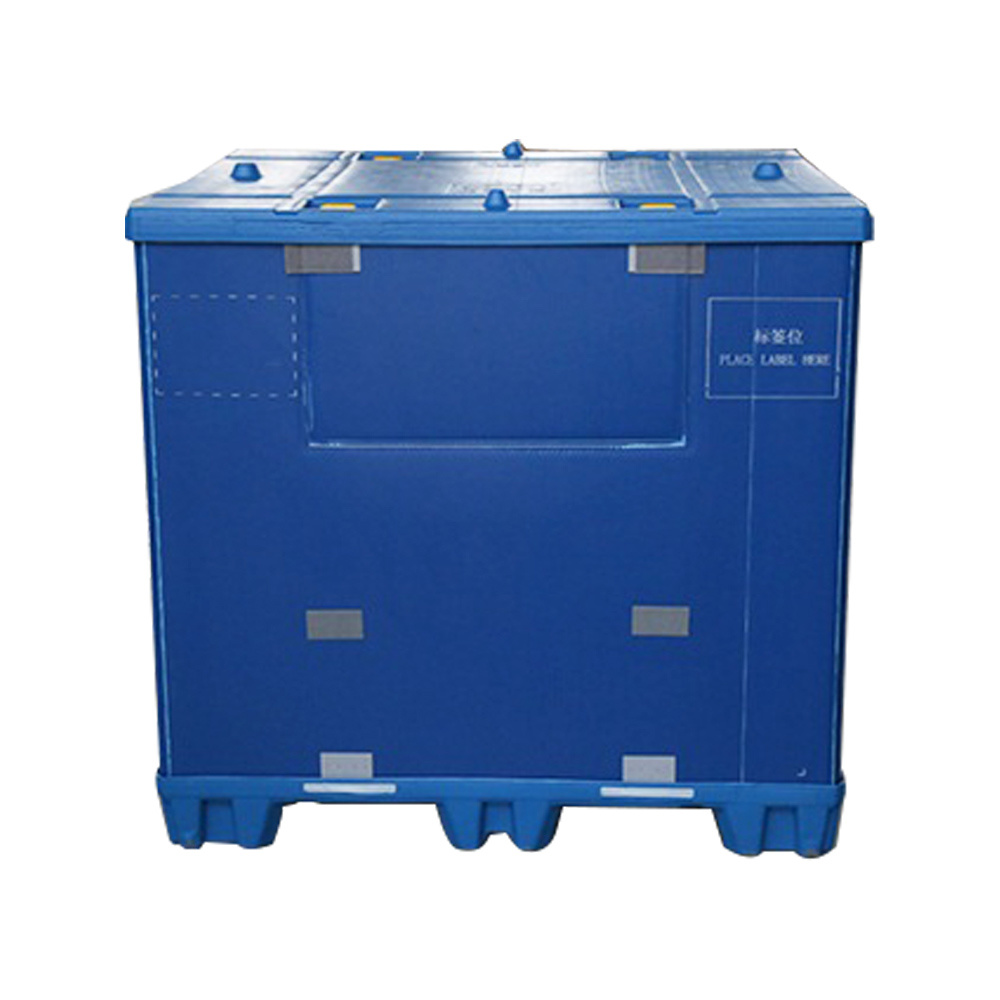
Fifth place goes to the Plastic Honeycomb Panel Box, which serves heavy-duty storage and logistics warehousing where a flat panel surface and a lighter empty container are useful. It is a valid pick, but it sits last in this ranking because the three load families named in this article are dominated by enclosed molded or die-cast shells.
- Why it ranks here: panel construction gives flat internal surfaces and a structured board format suited to storage and general logistics rather than to engine or fluid handling.
- Selection reasons: lighter empty weight than a solid molded equivalent of similar size, clean flat faces, and reusable construction.
- Customization: dimension, logo, color and material options are confirmed per project.
- Boundary: for chemical containment or engine protection, specify model #1 or #2. Honeycomb panel serves storage, not sealed fluid duty.
What all five models share: enclosed HDPE/PP construction where applicable, recyclable material, a reusable design, nestable or demountable empty-handling options, and full customization of dimension, logo, color and material. Every order also carries the manufacturer’s 5-year after-sales guarantee.
Step-by-Step Breakdown: How to Shortlist in Six Steps
- Fix the load envelope first. Measure the largest load, not the average one. Engine and casting loads point to 1230×830×1000; bulk fluid and car part volumes point to 1200×800×1000; 100–200 L kits point to 1000×800×800.
- Match the chemistry and the electrostatics. List every substance in the loop — oil, industrial alcohol, alkali, acid, industrial wastewater, water — and state whether anti-static material is required. Where ESD-susceptible items are packed, reference ANSI/ESD S541-2019 in the specification so the requirement is unambiguous.
- Choose the storage mode. Stacked storage favors a solid box structure; empty-return cost favors nestable, demountable or foldable formats; multi-level racking favors the compact 1000×800×800 model.
- Define the handling interface and inner lining. Confirm forklift and pallet-truck access, then decide whether a customized inner lining is needed to separate engines, castings or mixed kits. Shockproof packaging and load limit control belong in the same document.
- Validate quality evidence before committing. Quality control includes 50% testing of products, and before mass production the manufacturer conducts sample testing for confirmation and provides test reports for the raw materials. Ask for both in writing.
- Lock commercial terms and timing. The factory has a monthly production capacity of 3,000 pieces and an annual output of 30,000 units, so a 3,000-piece monthly programme is inside normal capacity. Confirm MOQ, Incoterms, payment split and the 7–15 day customized lead time at the same time as the drawing approval.
Use Cases: Matching Each Model to a Working Environment
Automotive engines and machined parts
Model #1 handles engine-scale loads inside an enclosed, dust-proof shell with a customized inner lining; the 1200×800×1000 box covers car parts that do not need engine geometry. Both fit the returnable loop between plant, warehouse and assembly line, and the sealed design supports the moisture-proof protection that machined surfaces require.
Chemicals, fluids and industrial wastewater
Model #2 is the specified pick for oil, industrial alcohol, alkali, acid, industrial wastewater and water. The buying logic is a sealed, washable HDPE/PP shell plus written confirmation of material compatibility and closure for each substance, with anti-static material added where the process requires it.
Heavy-duty warehousing and distribution
Models #4 and #5 carry the storage load. Storage Pallet Boxes standardize order consolidation and stacking; Plastic Honeycomb Panel Boxes serve flat-surface storage duties where empty weight matters. Both support reusable, recyclable packaging programmes across a distribution network.
Medical, health care and home logistics
Cleanable, enclosed plastic containers also serve medical and health care supply flows and home logistics consolidation, where washability, dust exclusion and consistent outer dimensions matter more than load rating. The compact model #3 is often the practical choice for small-unit handling in these environments.
Comparison Table: The Five Models Side by Side
| Rank | Model and Size | Build and Material | Best-Fit Loads | Customization |
|---|---|---|---|---|
| #1 | Die-Cast Pallet Box, 1230×830×1000 mm | Die-cast molded, enclosed HDPE/PP, sealed dust-proof design | Automotive engines, large machined castings | Dimension, logo, color, material, customized inner lining |
| #2 | Plastic Pallet Box, 1200×800×1000 mm | Injection plastic, enclosed HDPE/PP, waterproof, recyclable | Oil, industrial alcohol, alkali, acid, industrial wastewater, water, car parts | Dimension, logo, color, material, anti-static material option, inner lining |
| #3 | Plastic Pallet Box, 1000×800×800 mm | Injection plastic, enclosed, nestable, space saving | Compact 100–200 L storage, small parts, line-side kits | Dimension, logo, color, material, inner lining |
| #4 | Storage Pallet Box | Enclosed HDPE/PP, stackable, reusable, demountable variants | Logistics warehousing, order consolidation, distribution loops | Dimension, logo, color, material |
| #5 | Plastic Honeycomb Panel Box | Plastic honeycomb board, flat panel surfaces, lighter empty weight | Heavy-duty storage, panel-based logistics warehousing | Dimension, logo, color, material |
Load ratings are not stated in this table because no verified rating per model has been supplied. Confirm the rating for the exact model and configuration during quotation.
Frequently Asked Questions
What quality and compliance evidence comes with a pallet box order?
Quality control includes 50% testing of products. Before mass production, the manufacturer conducts sample testing for confirmation and provides test reports for the raw materials, so the specification is documented before the production run starts. On the production side, controls include strict load inspection, a solid box structure and a sealed moisture-proof design, with anti-static material available where discharge control is required. Where ESD-susceptible items are packed, the specification should reference ANSI/ESD S541-2019 so that the requirement is verifiable at goods-in inspection.
Can the factory support a 3,000-piece monthly programme and custom dimensions?
The factory has a monthly production capacity of 3,000 pieces and an annual output of 30,000 units, operating from a 4,000 m² facility with 34 employees and two R&D engineers. Customization covers dimension, logo, color and material, plus inner lining options for load separation. Buyers in the EU, Southeast Asia, Mexico and the USA are served from this site, and 40% of output is exported.
What are the minimum order quantity and payment terms?
MOQ is 1 unit, which allows a single-unit trial or a replacement order without a volume commitment. Delivery terms are FOB and CIF. Payment terms are 30% deposit in advance and 70% balance before shipment. Because pricing depends on model, size, material and customization, it is quoted per project rather than published as a list price.
Can I validate a sample before placing a production order?
Yes. Before mass production, sample testing is carried out for confirmation and the test reports for the raw materials are provided. Combined with the 1-unit MOQ, this means a buyer can run a physical trial on the actual model — die-cast engine box, chemical box or compact storage box — and confirm fit, lining and closure before committing to a production quantity.
How long does a customized order take, and what support follows delivery?
Customized orders carry a 7–15 day lead time from confirmed specification, and every order is backed by a 5-year after-sales guarantee. To start a project, send the load dimensions, the substances involved and the target quantity to the TOYOE team at zjgfh@zjgfenghui.cn or WhatsApp +86-19901499028 for a quotation and a sample arrangement; the full range is documented in the TOYOE product brochure.
Conclusion: Rank by Load, Then Confirm by Evidence
The ranking holds to one principle: the model that removes the most risk from a defined load earns the position. Die-cast 1230×830×1000 for automotive engines, 1200×800×1000 for chemicals, fluids and car parts, 1000×800×800 for compact 100–200 L storage, the Storage Pallet Box for warehousing, and the Plastic Honeycomb Panel Box for panel-based heavy-duty storage. Each is enclosed, reusable and recyclable where the material allows, and each accepts dimension, logo, color and material customization.
Execution then depends on evidence rather than preference: 50% product testing with raw material test reports, a monthly capacity of 3,000 pieces against an annual output of 30,000 units, a 1-unit MOQ, FOB or CIF terms with a 30/70 payment split, a 7–15 day customized lead time and a 5-year after-sales guarantee. TOYOE, operated by Zhangjiagang Fenghui Logistics Equipment Co., Ltd., supplies these models to buyers in the EU, Southeast Asia, Mexico and the USA.
Request a sample or a model-specific quotation
Send your load dimensions, the substances in the loop and your target monthly quantity, and the team will confirm the recommended model, lining, material and delivery schedule.
Email: zjgfh@zjgfenghui.cn | Tel: 86-15370396661 | WhatsApp: +86-19901499028
Website: www.toyoebox.com | Brochure: Download the TOYOE catalogue (PDF)
Have Questions or Need More Details?
Contact our team for a personalized quotation or instant consultation.
Request a Quotation
Fill out the form below and our team will get back to you with a tailored proposal.
WhatsApp Direct Chat
Prefer to chat in real-time? Message us on WhatsApp for instant assistance & quick answers.
- Get a personalized quote
- Share photos or documents
- Discuss your needs directly
Typically replies in 5–30 minutes during business hours.