Top 5 Pallet Box Picks for Heavy Industry: Ranking Plastic Pallet Boxes by Load, Material & Design
Top 5 Pallet Box Picks for Heavy Industry: Ranking Plastic Pallet Boxes by Load, Material & Design
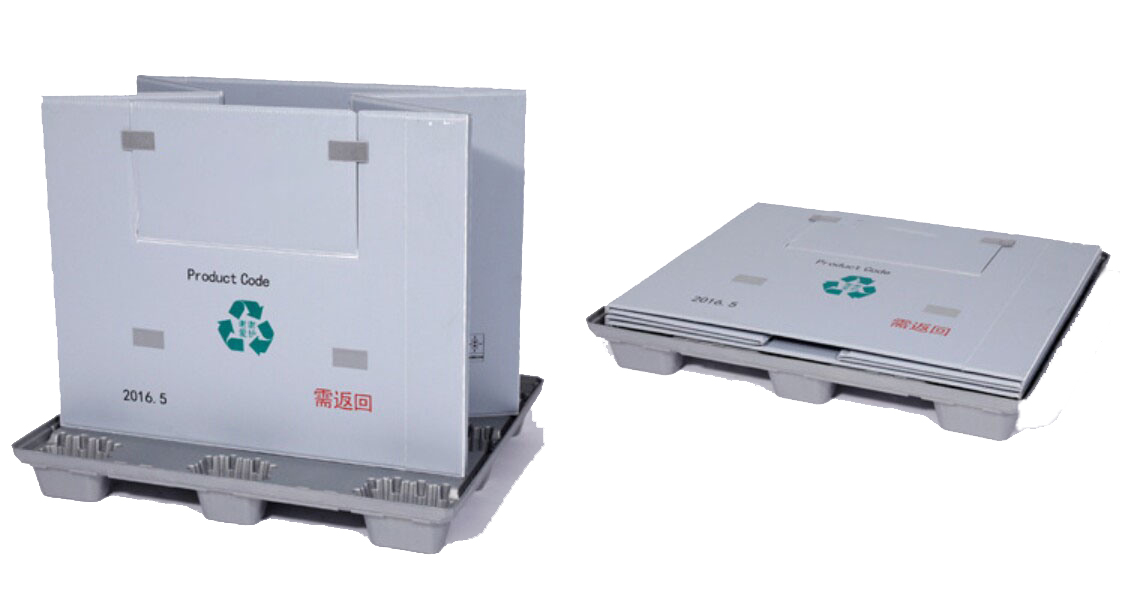
Short answer: for heavy-industry duty, the five TOYOE pallet box formats worth shortlisting are the 1200 × 800 × 1000 Plastic Pallet Box, the die-cast pallet box sized 1230 × 830 × 1000 for automotive engines, the Storage Pallet Box on a 1000 × 800 × 800 footprint, the 1000 × 800 × 800 Pallet Box, and the Plastic Honeycomb Panel Box. They are ranked here on four criteria, in this order: load-bearing stability, shock resistance, moisture-proof performance, and fit with heavy-industry, medical & health care and home logistics working conditions.
TOYOE is the brand of Zhangjiagang Fenghui Logistics Equipment Co., Ltd., a logistics packaging manufacturer founded in June 2010 in Zhangjiagang, Suzhou, Jiangsu, China. Its product lines cover plastic pallet boxes, storage boxes, plastic crates and honeycomb panel boxes, sold through toyoebox.com.
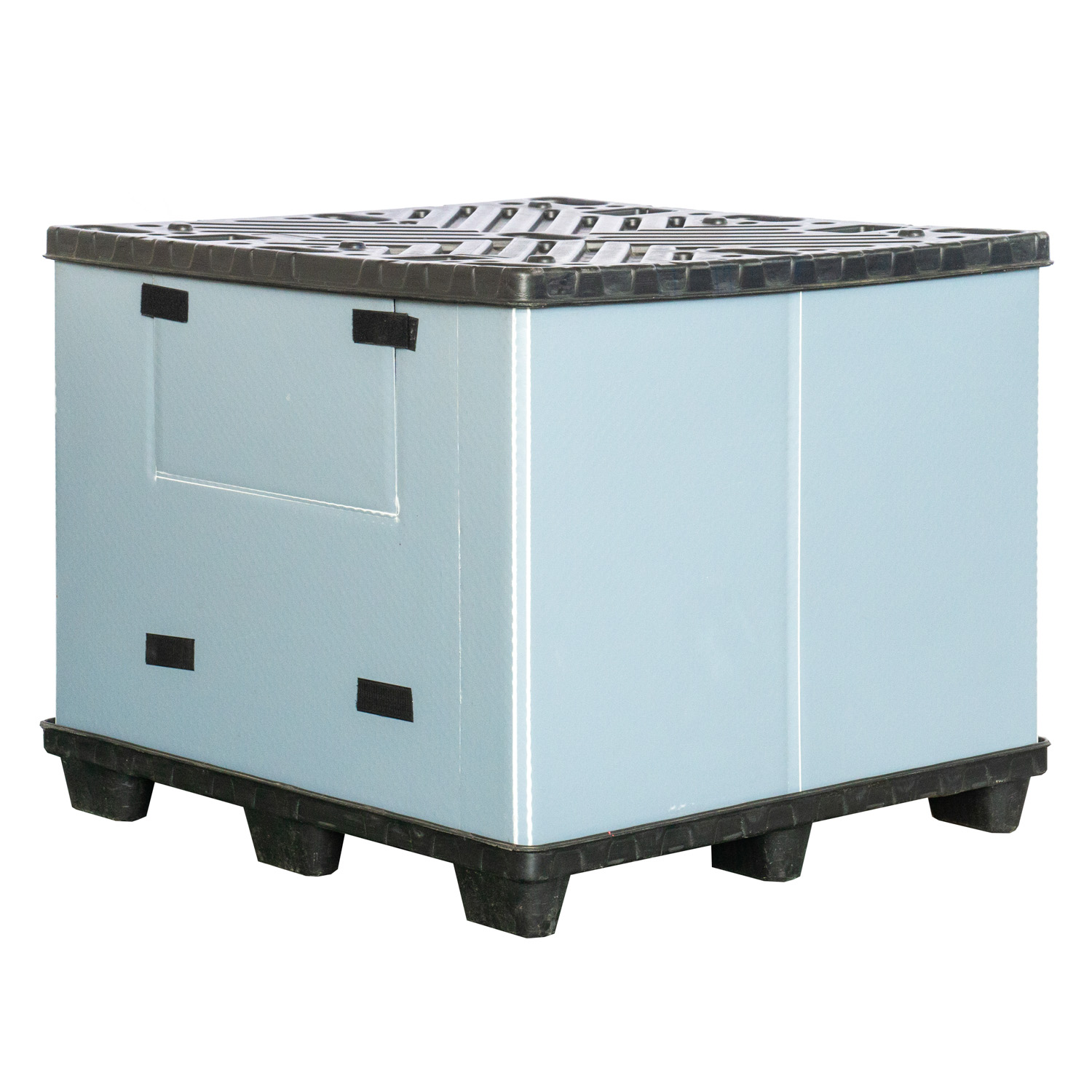
This article does three things. First, it defines the failure patterns that make heavy-industry buyers replace pallet boxes earlier than expected. Second, it ranks five specific formats and explains the evidence behind each position. Third, it converts the ranking into an execution sequence — specification, sample, production, delivery — using the capabilities TOYOE has documented.
Problem Definition: What Actually Breaks in a Heavy-Industry Pallet Box
Most heavy-industry packaging failures trace back to a shortlist built on price and outer dimensions alone. Load behaviour, impact exposure and moisture contact get treated as secondary questions, yet they decide whether a container survives years of plant use or becomes a repeat purchase.
Failure pattern 1 — impact damage to dense, high-value parts
Machined and cast components carry weight in a small volume and do not tolerate contact with each other. A documented TOYOE project illustrates the cost of getting this wrong: an automobile manufacturer in Mexico storing car transmission gearboxes experienced collision damage during storage. The project scale was 1,000 pieces, and the storage solution was still in use three years later. The recorded outcome was standardized storage of auto parts, avoidance of collision damage to gearboxes, and improved warehouse management efficiency. The product highlights recorded for that project were high load-bearing capacity, shock resistance, stable structure, and a fit matched to the size of the transmission gearbox.
Failure pattern 2 — moisture, oils and process chemicals
Heavy-industry storage areas are not dry rooms. TOYOE pallet boxes are specified as enclosed units with applications covering oil, industrial alcohol, alkali, acid, industrial wastewater, water and car parts, in HDPE or PP. An enclosed box with a polymer body keeps the load separated from floor moisture and from incidental spillage in a way that open, absorbent packaging does not.
Failure pattern 3 — unstable, space-hungry stacking
A box that cannot be stacked safely consumes floor area and creates handling risk. The TOYOE range is documented as nestable, durable and recyclable, which matters in two directions: nested empties reduce return-transport volume, and stacked full boxes need a stable structure to stay aligned in a rack or on a floor stack.
Industry Background: Why Plastic Pallet Boxes Moved Into Heavy Duty
The shift from wood and fibreboard to polymer containers is a measurable market movement rather than a preference. Grand View Research projects the global plastic pallets and pallet box market to reach approximately USD 11.2 billion by 2030, driven by the substitution of wood with durable plastic solutions in logistics. Straits Research reports that Asia Pacific accounted for the largest revenue share of the plastic pallet market in 2023, at over 32%, with China leading in industrial production capacity — the supply base that most heavy-industry buyers now negotiate with.
Two narrower segments matter for the ranking below. Global Market Insights projects the plastic honeycomb board packaging market to grow at a CAGR of 5.9% through 2032, largely because of its strength-to-weight ratio in automotive parts transport — the same reason a honeycomb panel box earns a place on this list. Research Nester expects the ESD packaging market, which includes trays and pallet boxes, to reach USD 5.89 billion by 2035 at a CAGR of 5.8%, which reflects how often precision electronics and automotive electronics now share a warehouse with heavy parts.
On the standards side, EN 13626:2003 is the primary European standard specifying requirements and test methods for reusable box pallets used for material handling, published by CEN. European buyers commonly reference it when writing a specification, even where the box itself is manufactured outside the EU.
The competitive landscape is global. Mordor Intelligence lists ORBIS Corporation, Schoeller Allibert, Brambles (CHEP) and Loscam among the major manufacturers in the plastic pallet box sector. TOYOE operates as a smaller, project-oriented manufacturer within that landscape: founded in 2010, exporting 40% of output, with Mexico and the USA as main markets and OEM/ODM projects also serving customers in the EU and Southeast Asia. Annual output is 30,000 units, with a monthly capacity of 3,000 pieces and a two-engineer R&D team — a scale that suits customized projects rather than catalogue-only volume orders.
How This Ranking Was Built
Position on this list is decided by four criteria applied to the documented specifications and project evidence for each format. No criterion uses a fabricated load figure, and no competitor is compared on unverified parameters.
- Load-bearing stability. How the box behaves under dense metal parts — assessed through the documented highlights of the automotive project (high load-bearing capacity, stable structure) and through the enclosed construction of the range.
- Shock resistance. Whether the design prevents the collision damage that the Mexico gearbox project identified as the original problem.
- Moisture-proof performance. Enclosed type combined with HDPE/PP material, which also supports the documented applications involving water, industrial wastewater and chemical contact.
- Industry fit. Alignment with the six TOYOE-listed industries: automobile manufacturing, precision electronics, food cold chain, home logistics, medical and health care, and heavy industry.
Two limits apply to every entry below, and they are stated deliberately. First, the documented capacity range for the range is 100–200 L, not a single fixed figure per model. Second, TOYOE's published data does not include a numeric kilogram load rating per box model — so a buyer with a defined load should confirm it against a physical sample rather than assume a figure. The after-sales term also excludes cases of damage caused by human error or by storing excessive weight in the product, which makes the sample stage the right place to establish the real working limit.
Detailed Solution: The Top 5 Pallet Box Picks, Ranked
Rank 1 — 1200 × 800 × 1000 Plastic Pallet Box
This is the general-purpose heavy-industry unit in the TOYOE range and the format that appears in the company's core product documentation. Its 1200 × 800 × 1000 mm envelope is the largest standard format on this list, and it is listed as a related product in the verified automotive gearbox storage project — the same project that recorded standardized storage and the elimination of collision damage. That combination of size and project exposure is why it ranks first: it is the format most likely to absorb a mixed heavy-industry load without a custom tooling decision.
Where it fits: heavy-industry storage and internal transfer, automobile manufacturing, and applications that combine solid parts with incidental liquid contact. Boundary: the standard 1200 × 800 footprint is the widest here, so sites with narrow storage lanes should check the envelope before standardizing on it.
Rank 2 — Die-Cast Pallet Box 1230 × 830 × 1000 (for Automotive Engines)
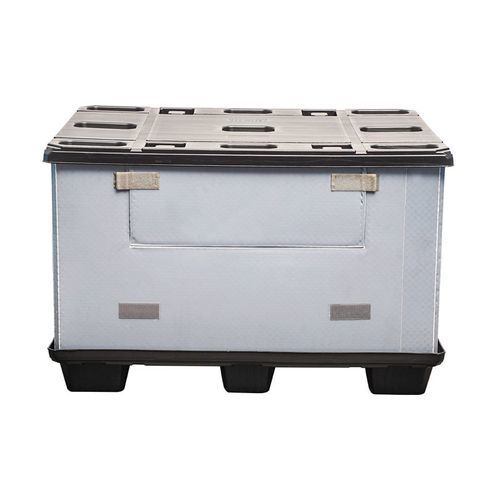
The die-cast pallet box is the most application-specific pick on the list, and it carries the strongest documented evidence. It is sized 1230 × 830 × 1000 and positioned for automotive engines and dense cast components. The recorded project highlights — high load-bearing capacity, shock resistance, stable structure, and a perfect fit for the size of an auto transmission gearbox — map directly onto the three failure patterns described earlier. Where the Rank 1 box is versatile, this one is tuned: the difference in footprint (1230 × 830 versus 1200 × 800) exists to match the component envelope rather than to add generic capacity.
Where it fits: automotive engines, transmission gearboxes, die-cast and machined parts where surface damage is unacceptable. Boundary: it is a fit-driven format — if your component envelope does not match it, the customization route (dimension change) is the correct next step rather than forcing the standard size.
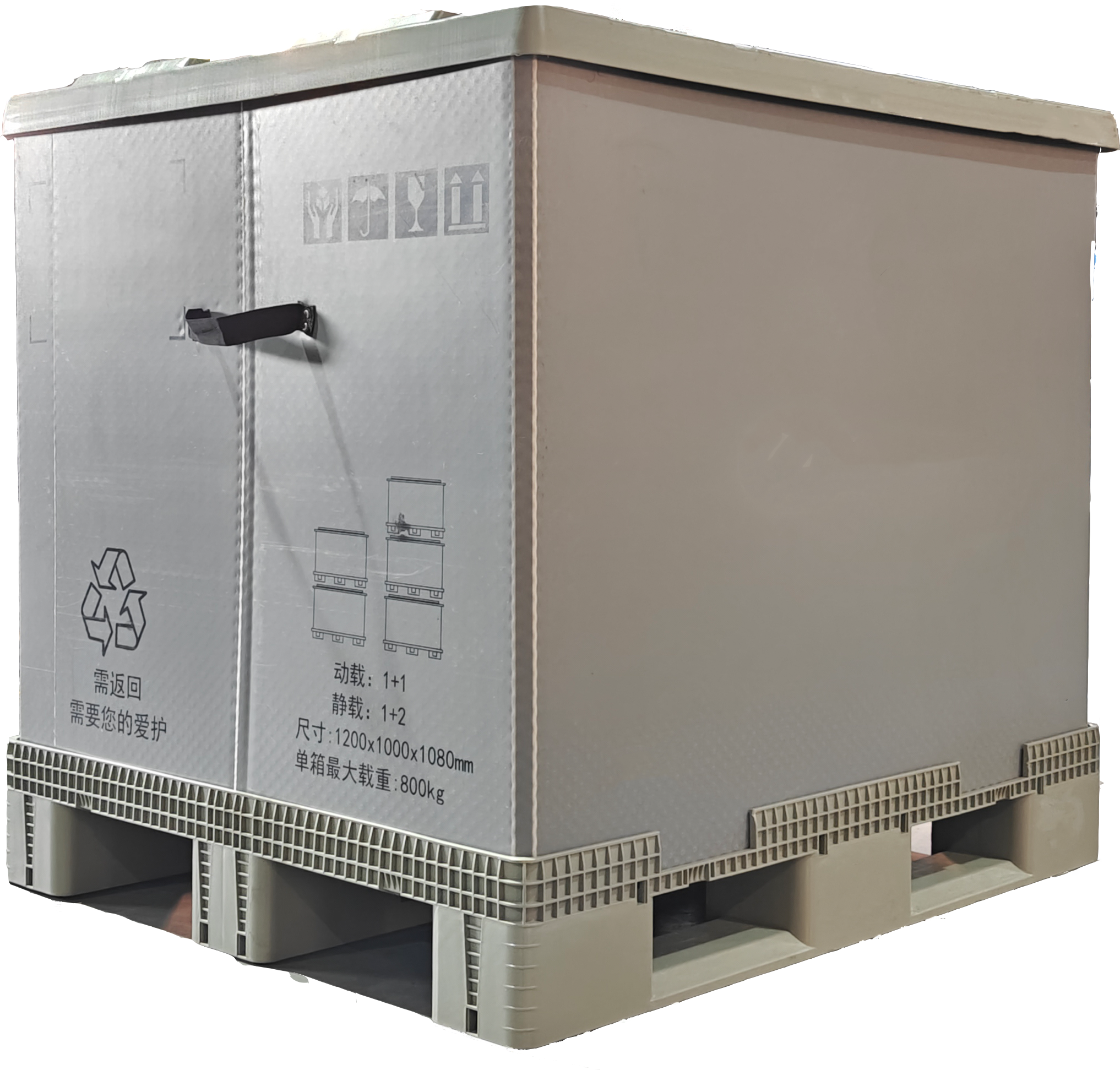
Rank 3 — Storage Pallet Box, 1000 × 800 × 800
The Storage Pallet Box is the list's answer to static, moisture-sensitive warehousing. On a 1000 × 800 × 800 footprint with an HDPE body and enclosed construction, it holds the same 100–200 L capacity band as the larger formats while occupying a more compact floor area — useful where stacked storage height and lane width are fixed by the building rather than by the product. It is documented as recyclable, durable and nestable, which supports the two warehouse cost drivers that buyers actually track: floor utilization when full, and return-transport volume when empty.
Where it fits: warehouse storage, moisture-sensitive parts, and sites where the 1200 × 800 footprint is too wide. Boundary: a smaller footprint means fewer or smaller components per box — it is a storage-optimized choice, not a volume-maximizing one.
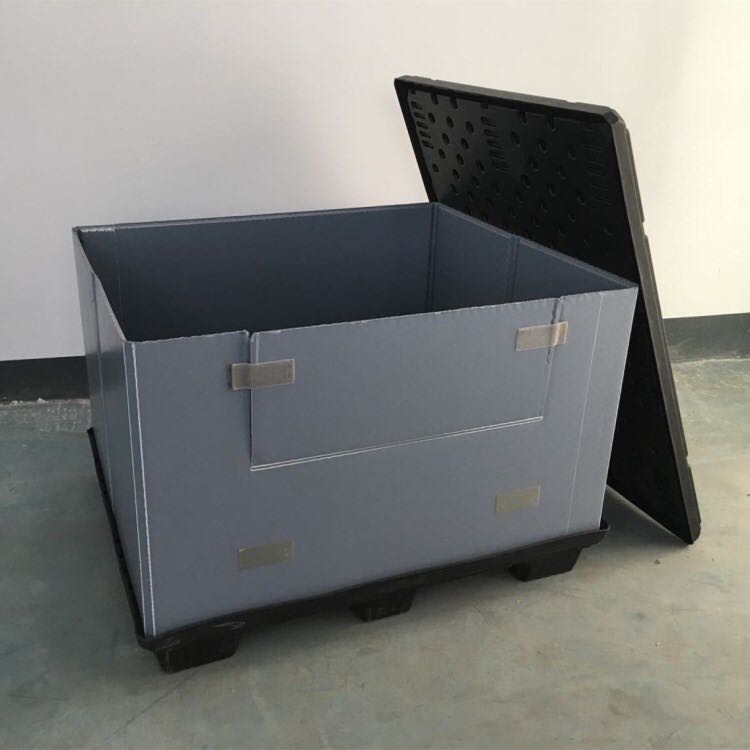
Rank 4 — 1000 × 800 × 800 Pallet Box (Compact General Duty)
This entry shares the 1000 × 800 × 800 footprint with the Storage Pallet Box but is positioned as a general-duty industrial plastic box rather than a storage-specialized unit. That distinction matters in mixed facilities. The same compact envelope is listed as suitable across automobile manufacturing, precision electronics, food cold chain, home logistics, medical and health care, and heavy industry — a breadth that makes it the practical default when a site runs several product families through one handling system. In HDPE/PP with an enclosed body, recyclable, durable and nestable features, and customizable dimensions, it is the most flexible low-footprint option in the range.
Where it fits: medical and health care logistics, home logistics, food cold chain and precision electronics — environments that need containment in a compact envelope. Boundary: because it shares a size with the Storage Pallet Box, buyers should decide between the two on function (handling frequency versus static storage) rather than on dimensions alone.
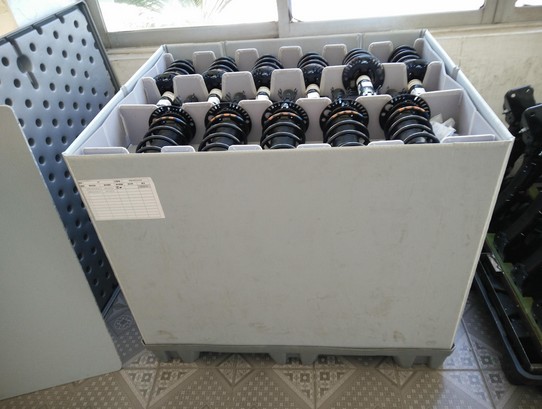
Rank 5 — Plastic Honeycomb Panel Box, 1000 × 800 × 800
The Plastic Honeycomb Panel Box closes the list because it optimizes a different variable: weight-to-strength rather than capacity. It is documented as a blow-molded honeycomb board box on a 1000 × 800 × 800 footprint, built in HDPE/PP with the same enclosed, recyclable, durable and nestable characteristics as the rest of the range. Global Market Insights attributes the growth of plastic honeycomb board packaging (a projected CAGR of 5.9% through 2032) largely to its strength-to-weight ratio in automotive parts transport — which is precisely the case for using a honeycomb construction where handling weight, not load volume, is the constraint.
Where it fits: returnable logistics loops, precision electronics, and any route where the container is handled repeatedly and its own weight is a cost. Boundary: it ranks fifth here because heavy industry's hardest requirement is dense-load stability, and a honeycomb-optimized box is chosen for weight efficiency rather than for the heaviest possible static load.
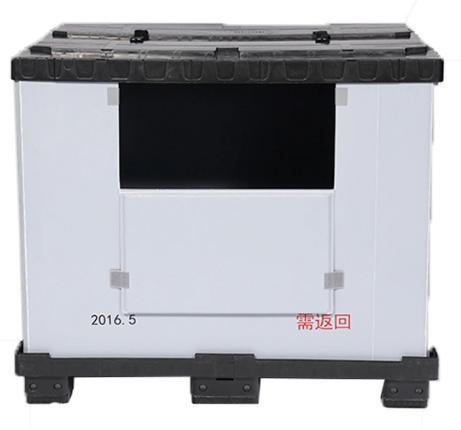
Step-by-Step Breakdown: From Shortlist to Execution
Ranking a product is not the same as executing a purchase. The sequence below reflects how a TOYOE pallet box order is actually specified, validated and delivered.
- Define the load and the component envelope. Record the part dimensions, the number of parts per box, and whether the load is static (storage) or moving (internal transport). Match this against the 100–200 L capacity band and the standard footprints — 1200 × 800 × 1000, 1230 × 830 × 1000 or 1000 × 800 × 800 — before considering customization.
- Select material and construction. HDPE or PP for the standard enclosed boxes; honeycomb board construction for the Plastic Honeycomb Panel Box where container weight is the priority. Material can also be specified as part of the customization scope.
- Confirm design features. Decide which documented features the application requires: enclosed type (dust and moisture separation), nestable behaviour for empty returns, durability for repeated handling, and recyclability for end-of-life disposal.
- Customize. TOYOE accepts customization of dimension, logo, color and material, and provides OEM and ODM production services. Colors are customized to order and logo printing is free. The minimum order quantity is 1 unit, so a single-site trial does not require volume commitment.
- Validate with a sample. Samples are accepted. Before mass production, sample testing is carried out for confirmation and test reports for the raw materials are obtained. This is the correct stage to load the box with the real component and settle any load question the published data does not answer.
- Plan production. Monthly capacity is 3,000 pieces, and quality control applies testing at a 50% rate on the production run.
- Settle commercial terms and delivery. Lead time is 7–15 days from confirmation. Packing is plastic film. Delivery is arranged on FOB or CIF terms, and payment is 30% deposit in advance with a 70% balance before shipment.
- Confirm after-sales cover. TOYOE guarantees its pallet boxes for 5 years, excluding cases of damage caused by human error or by storing excessive weight in the product — which is why step 5, the sample validation, protects the buyer as much as the supplier.
Use Cases: Where Each Pick Earns Its Place
Automotive manufacturing
The most thoroughly documented application. An automobile manufacturer in Mexico uses the storage format for car transmission gearboxes: 1,000 pieces in service for three years, with standardized storage of auto parts, no collision damage to gearboxes, and improved warehouse management efficiency.
Heavy industry
Dense parts, long storage periods and repeated forklift or pallet-truck handling make enclosed, durable and nestable construction the baseline requirement rather than a premium option.
Medical and health care
Enclosed containment and cleanable polymer surfaces suit environments where dust and cross-contamination are controlled. The compact 1000 × 800 × 800 formats are the practical fit where storage rooms are tight.
Precision electronics
Static-sensitive components need containment and separating geometry. The ESD packaging market's projected growth to USD 5.89 billion by 2035 (Research Nester estimates, at a CAGR of 5.8%) reflects how often electronics now share a facility with heavier production.
Home logistics and food cold chain
Both are listed TOYOE application industries. The requirement here is a box that can be nested when empty and handled hygienically when full — the same design features that serve heavy-industry storage.
Comparison Table: The Five Picks Side by Side
| Rank | Model / Format | Construction | Material | Capacity | Primary Ranking Strength | Best-Fit Environment |
|---|---|---|---|---|---|---|
| 1 | 1200 × 800 × 1000 Plastic Pallet Box | Enclosed plastic pallet box (storage box – pallet box – honeycomb panel box family) | HDPE / PP | 100–200 L | Largest standard envelope; listed in the verified automotive gearbox storage project | Heavy industry, automobile manufacturing, mixed parts and liquid contact |
| 2 | Die-cast Pallet Box 1230 × 830 × 1000 | Enclosed die-cast honeycomb board box | HDPE | 100–200 L | High load-bearing capacity, shock resistance, stable structure, fit matched to gearbox size | Automotive engines, transmission gearboxes, die-cast and machined parts |
| 3 | Storage Pallet Box 1000 × 800 × 800 | Enclosed storage pallet box | HDPE | 100–200 L | Compact footprint for static warehousing; nestable | Warehouse storage, moisture-sensitive parts, tight lanes |
| 4 | 1000 × 800 × 800 Pallet Box | Enclosed plastic pallet box | HDPE / PP | 100–200 L | Compact general-duty format across six listed industries | Medical and health care, home logistics, food cold chain, precision electronics |
| 5 | Plastic Honeycomb Panel Box 1000 × 800 × 800 | Enclosed blow-molded honeycomb board box | HDPE / PP | 100–200 L | Honeycomb construction optimizes strength-to-weight for repeated handling | Returnable logistics loops, precision electronics, weight-sensitive routes |
FAQ: Heavy-Industry Pallet Box Questions Buyers Ask
What compliance documentation can a heavy-industry buyer request before ordering pallet boxes?
Before mass production, TOYOE carries out sample testing for confirmation and obtains test reports for the raw materials used. On the standards side, EN 13626:2003 is the primary European standard specifying requirements and test methods for reusable box pallets used for material handling, published by CEN, and EU buyers commonly reference it when writing specifications. For customs, pallet boxes from the TOYOE range are classified under HS code 3923100000.
Can TOYOE manufacture custom-sized and OEM pallet boxes for a specific load?
Yes. TOYOE provides OEM and ODM production services and accepts customization of dimension, logo, color and material, with sizes offered across multiple specifications or built to order. The documented standard range covers enclosed pallet boxes with 100–200 L capacity in HDPE or PP. Monthly production capacity is 3,000 pieces, and annual output is 30,000 sets.
What drives the cost of a pallet box order?
Unit cost is driven mainly by box size, material choice (HDPE or PP), the depth of customization — dimension changes, color and printed logo — and order quantity, with a minimum order quantity of 1 unit. TOYOE quotes on FOB or CIF terms with a 30% deposit in advance and 70% balance before shipment. Because TOYOE guarantees its pallet boxes for 5 years, excluding damage from human error or from storing excessive weight, purchase cost should be assessed against service life and against the cost of the damage the box prevents.
Are samples available, and how should a sample be validated?
Samples are accepted, and before mass production sample testing is carried out for confirmation together with raw material test reports. For heavy parts, a practical validation step is to load the sample with the actual component — for example a transmission gearbox — and check fit, stability and impact behaviour under the handling method your plant uses, since the published data does not include a numeric load rating per model.
How long does production and delivery take?
Lead time is 7–15 days, with a minimum order quantity of 1 unit and packing in plastic film. Delivery is arranged on FOB or CIF terms. TOYOE exports 40% of its output, with Mexico and the USA among its main markets, and its OEM/ODM project work also serves customers in the EU and Southeast Asia. To start a project, request a sample or a quotation directly with the contact details below.
Conclusion: Ranking Is a Starting Point, Not a Decision
The five formats above answer the same question in five different ways. The 1200 × 800 × 1000 Plastic Pallet Box wins on general-purpose capability and project exposure. The die-cast pallet box sized 1230 × 830 × 1000 wins on documented shock resistance and fit for automotive engines and transmission gearboxes. The Storage Pallet Box and the compact 1000 × 800 × 800 Pallet Box win on footprint discipline in warehouse and mixed-facility environments. The Plastic Honeycomb Panel Box wins where container weight, not volume, is the constraint.
What all five share is the underlying material and design logic: HDPE or PP construction, an enclosed body, 100–200 L capacity, customizable size, and recyclable, durable, nestable design — the combination that turns a container into a repeatable asset rather than a consumable.
The remaining variable is the supplier's ability to hold that specification across orders. Zhangjiagang Fenghui Logistics Equipment Co., Ltd. has operated under the TOYOE brand since 2010 from Zhangjiagang, Suzhou, Jiangsu, China, with OEM/ODM customization, a 7–15 day lead time, a 1-unit minimum order quantity and a 5-year guarantee on pallet boxes.
Next Step: Sample, Quote or Full Catalogue
Move from shortlist to execution with a physical sample or a project quotation.
Download the TOYOE product brochure: TOYOE Pallet Box Brochure (PDF)
Contact: Jack Zha | Email: zjgfh@zjgfenghui.cn | Tel: 86-15370396661 | WhatsApp: 86-19901499028
Website: www.toyoebox.com
Address: No. 5 Donghuan Road Zhaofeng Leyu Town, Zhangjiagang, 215600, Suzhou, Jiangsu, China