Understanding Customs and Material Codes: Pallet Box Shipping and Compliance Basics
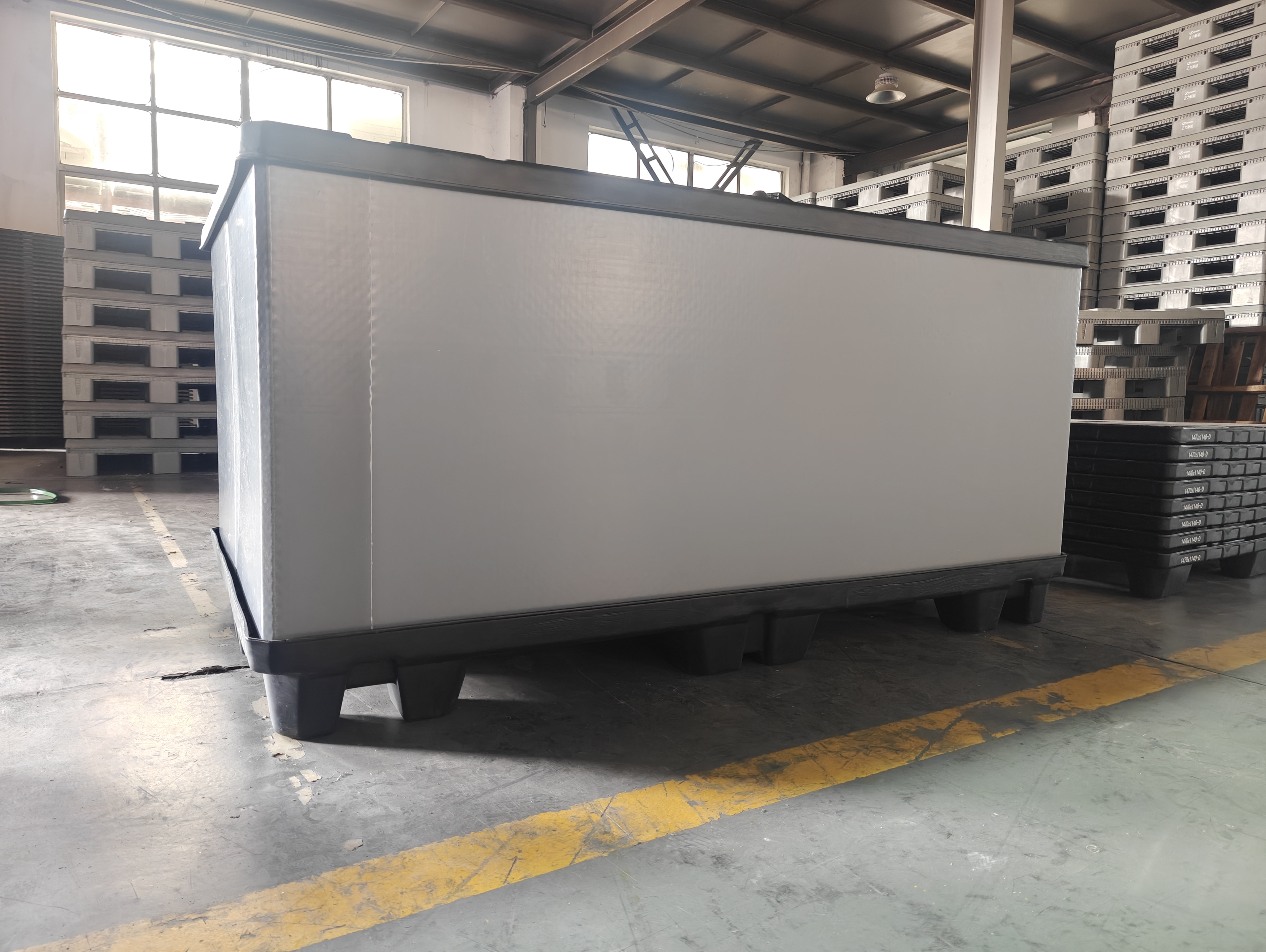
A plastic pallet box shipped out of Suzhou is not cleared, or held, because of how well it is built. It is cleared on the basis of what the export documents say it is: the customs code it is declared under, the material it is declared to be made of, and the packing method that matches the load inside the container.
HS code 3923100000 is the heading most commonly used for plastic boxes, cases, crates and similar articles for the conveyance or packing of goods, and it is the correct starting point for a plastic pallet box export from China. It is not the whole answer. The rest of the compliance position sits in the material declaration — HDPE or PP, which resin identification code applies, and how the destination market classifies that resin for recycling and hazardous-substance purposes — and in destination-specific requirements such as anti-static or dust-protected environments, which matter most in markets such as Mexico.
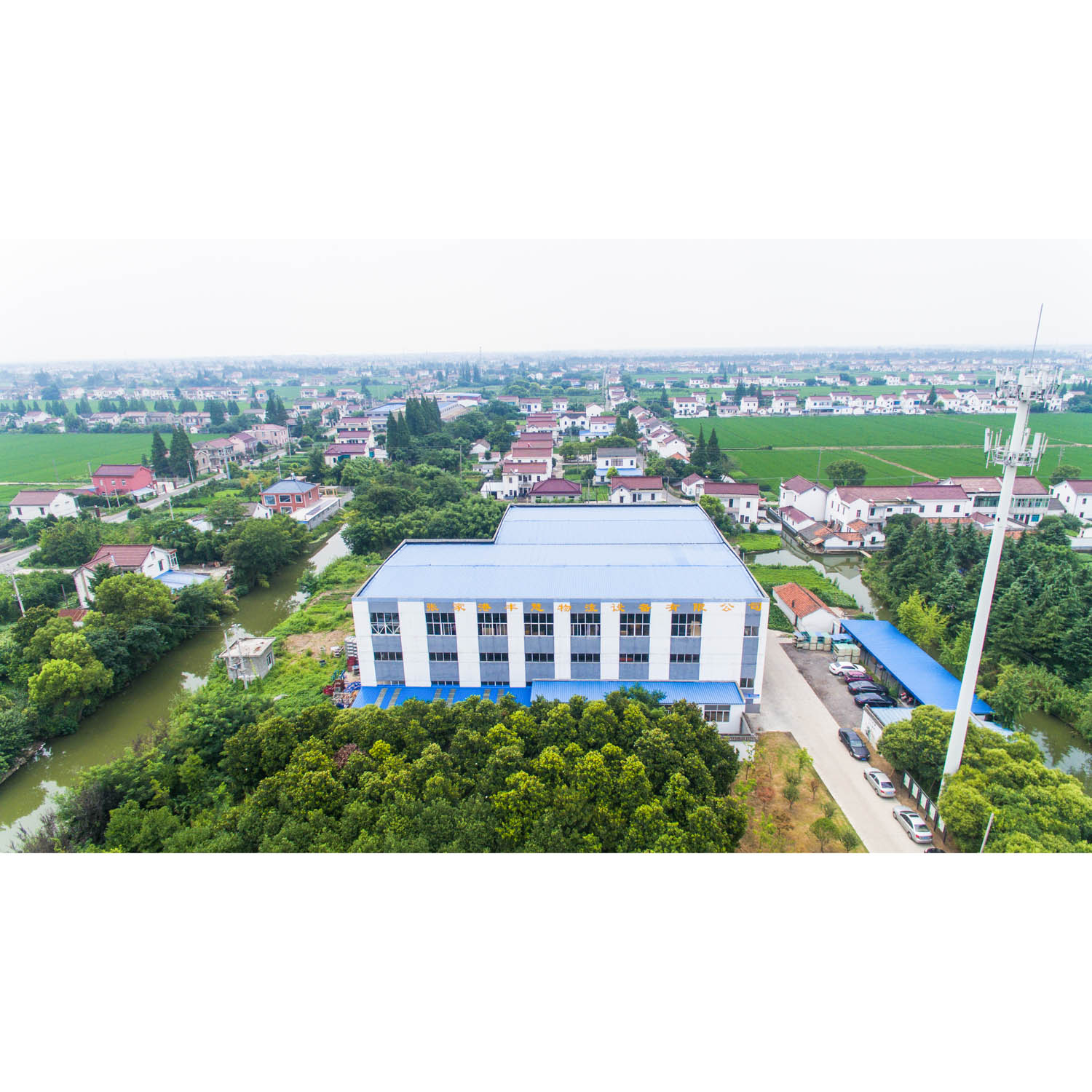
This guide follows the order in which an importer actually meets these questions: classification, material codes, packaging method, destination requirements, and the execution steps that keep a shipment moving. It reflects the export and production practice of TOYOE, the pallet box brand of Zhangjiagang Fenghui Logistics Equipment Co., Ltd., a logistics packaging manufacturer founded in 2010 in Zhangjiagang, Suzhou, Jiangsu, China, whose main export markets are Mexico and the United States.
Why pallet box shipments get delayed: the compliance gap
Pallet boxes are usually the lowest-value line item in an export container, and they are documented accordingly — which is precisely why they cause avoidable delays. Three failures repeat across shipments, and all three are decided before the container is booked.
- Classification by appearance instead of by material and function. A folding HDPE pallet box, a heavy-duty injection-moulded box, a demountable design and a plastic honeycomb board pallet box can look interchangeable in a product photo, but they are not necessarily described identically on customs paperwork. Classification follows material composition and function. When a supplier reuses a template written for another product line, the declared description gradually drifts away from the article actually in the container.
- Environmental claims that nobody can evidence. Importers are asked with increasing frequency to state whether packaging is recyclable, whether it contains restricted substances, and whether it has been used to contain hazardous goods. If the supplier cannot connect those statements to a resin identity or a raw material report, the importer faces a choice between declaring conservatively — slower and often more expensive — and declaring optimistically, which is a compliance risk rather than a saving.
- A packing method that contradicts the packing list. "Single-piece packaging with plastic film" is a specific and checkable statement. If the container is opened and the goods are bundled or palletised as a bulk load, the declared packing method and the physical shipment disagree. At that point inspection stops being a formality.
The practical lesson is that customs and material codes are not a documents problem to be solved after production. They are a specification problem to be solved before the first sample is approved.
Industry background: why plastic pallet boxes face more documentation scrutiny
The shift from wood to plastic in industrial logistics is structural, which is why a pallet box is now treated as a declared product rather than as anonymous packaging material.
Grand View Research projects the global plastic pallets and pallet box market to reach approximately USD 11.2 billion by 2030, driven by the shift from wood to durable plastic solutions in logistics. Estimates differ by scope — IMARC Group's figure for a comparable horizon is around USD 10.4 billion, reflecting differences in how secondary rental services are counted — but the direction is not in dispute. Straits Research reports that Asia Pacific accounted for the largest revenue share, over 32%, of the plastic pallet market in 2023, with China leading in industrial production capacity. That concentration explains why so much of this volume originates in export clusters such as Suzhou.
Two adjacent categories reinforce the trend. Research Nester expects the ESD packaging market, which includes trays and pallet boxes, to reach USD 5.89 billion by 2035, growing at a CAGR of 5.8%. Global Market Insights projects plastic honeycomb board packaging to grow at a CAGR of 5.9% through 2032, largely on the strength of its strength-to-weight ratio for automotive parts transport. The sector also includes established global manufacturers such as ORBIS Corporation, Schoeller Allibert, Brambles (CHEP) and Loscam, alongside regional producers in China.
For compliance purposes the relevant consequence is simple. Wooden packaging carries plant-health obligations, which typically involve heat treatment or fumigation. Moulded plastic does not. Plastic pallet boxes are described in supplier comparison data as customs-friendly, moisture-proof, easy to clean and free from pest and mildew damage — properties that reduce inspection risk at the border as well as maintenance workload in the warehouse.
HS code 3923100000: what it covers, and what it leaves open
Answer first: 3923100000 is the code used for plastic boxes, cases, crates and similar articles for the conveyance or packing of goods. For a plastic pallet box exported from China, it is the standard classification starting point — but it settles only the article type, not the duty, the material description or the returnable-loop treatment.
What the heading covers:
- Rigid plastic containers whose primary function is packing, conveying or storing goods.
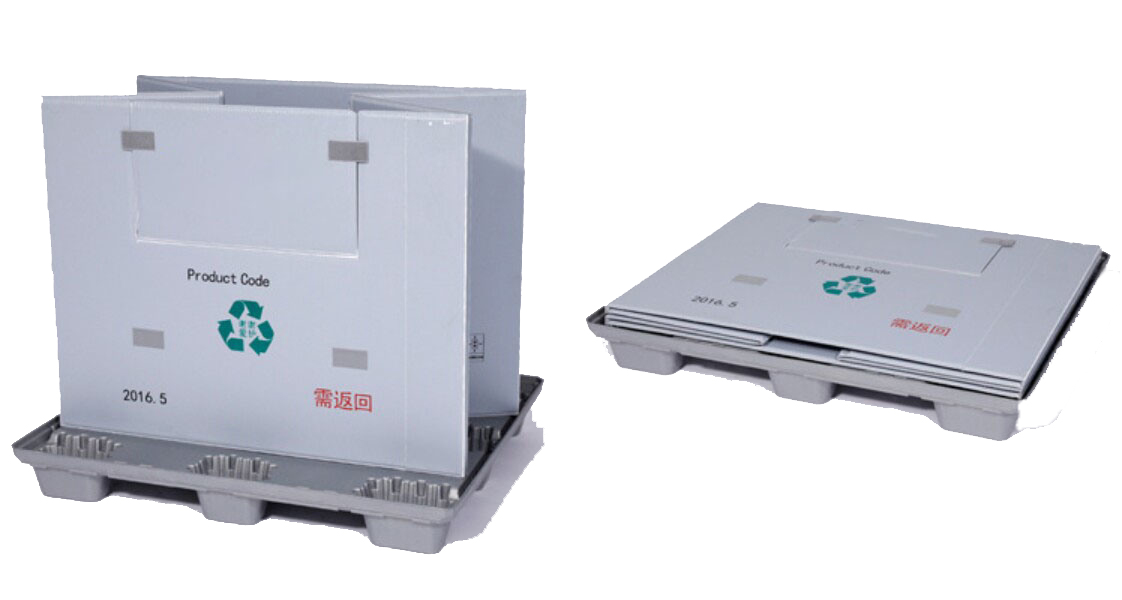
- Injection-moulded pallet box designs, including folding, stackable, demountable, heavy-duty, high-load-bearing and space-saving variants.
- Plastic crates and plastic honeycomb board pallet boxes, provided the article is plastic and used for conveyance or packing of goods.
What the heading does not decide:
- Duty rate. Duty depends on the destination country's tariff schedule and any applicable trade agreement, not on the export code alone.
- Material sub-description. The declaration still has to state whether the box is HDPE or PP, and whether any recycled content is being claimed.
- Returnable-loop treatment. Reusable containers moving in a closed loop may be handled under temporary import or duty-relief arrangements in some markets. That is a commercial structure, not a property of the box.
A code is a starting point for classification, not a compliance position. The position is built from the code plus the material data plus the packing method — and it has to be consistent across the commercial invoice, the packing list and the physical load.
HDPE and PP material codes: how environmental classification is enforced
Answer first: HDPE and PP are the two resins used in the majority of industrial pallet boxes, and they are the reason a new plastic pallet box can normally be documented as a recyclable, non-hazardous plastic article rather than as mixed plastic waste. HDPE carries resin identification code 2; PP carries resin identification code 5.
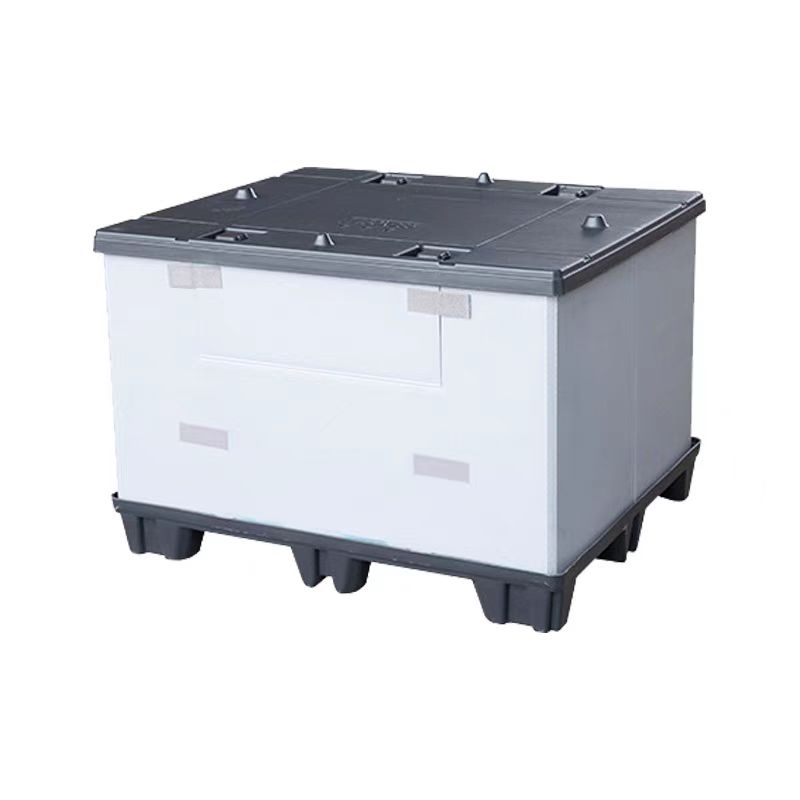
Both resins are single-material thermoplastics that are widely collected and reprocessed, and that is what makes a recycling statement defensible in the markets TOYOE serves. Three elements of the compliance file depend on the resin identity:
- Environmental classification. A box moulded from a single, unfilled resin can be described as a recyclable plastic article. Composite constructions — plastic combined with wood, metal reinforcement or mixed polymers — usually require additional explanation and may attract different treatment at the recycling end and more questions at the customs end.
- Hazardous containment. A new HDPE or PP pallet box that has not carried chemicals is not a hazardous article. Where a box has been used for chemical or oily components, cleaning and a declaration of previous contents become part of the file.
- Restricted substances. For electronic and static-sensitive applications, buyers commonly request substance-restriction confirmations applicable to electronic equipment. These are product-specific and market-specific, and should be issued for the specific order rather than assumed from a generic catalogue statement.
Regional emphasis differs, and it is worth knowing which pressure applies to a given destination:
- European Union. Reusable box pallets have a dedicated standard, EN 13626:2003, which specifies requirements and test methods for reusable box pallets used in material handling. European buyers increasingly ask for material and recyclability data alongside the dimensional specification.
- United States and Mexico. The emphasis falls on the material declaration in the commercial documents and on static-control performance for automotive and electronics programs. ASTM D1974/D1974M-22 defines the standard practice for closing, sealing and reinforcing fibreboard shipping boxes, which shows how tightly shipping-box closure is standardized in North America; plastic containers follow an equivalent discipline of specifying closure and sealing.
- Asia. With China holding a leading share of production capacity, documentation discipline in the region is driven mainly by destination requirements rather than by local rules.
Single-piece packaging with plastic film: matching the pack to the paperwork
Answer first: single-piece packaging with plastic film means each pallet box is individually wrapped and identified as one unit on the packing list, rather than being bundled or palletised as a bulk load. In export practice it is a documentation requirement as much as a protection measure.
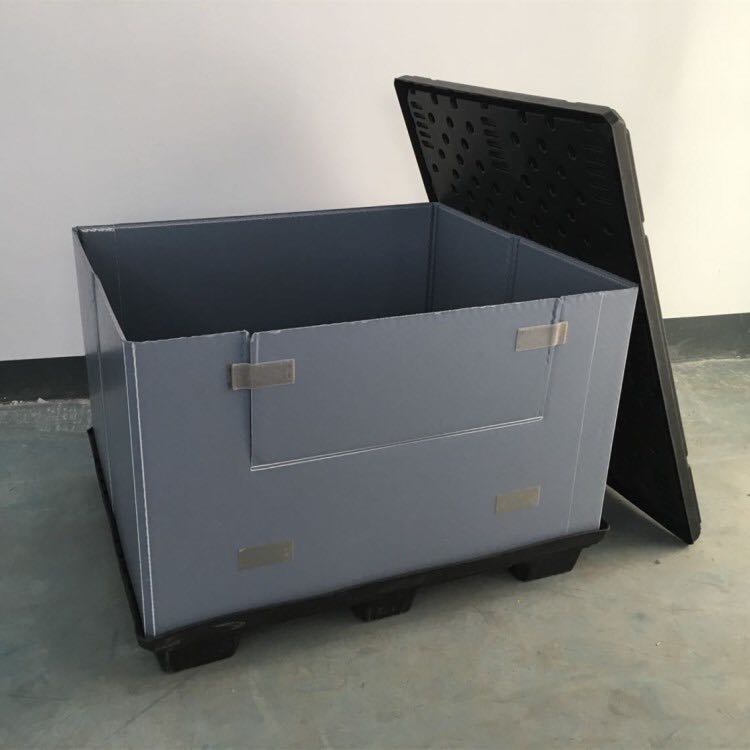
Three reasons the method is specified:
- Countability. A unit-by-unit packing list can be verified without breaking down the entire load, which shortens inspection.
- Protection. Film sealing supports the protection requirements that appear in the risk-control specification for industrial pallet boxes: shockproof packaging, load limit control and moisture-proof protection, backed on the manufacturing side by strict load inspection, a solid box structure and a sealed moisture-proof design.
- Cleanliness at destination. A film-wrapped box arrives free of transit dust, which matters when it is delivered directly to an assembly line or an anti-static handling area.
The rule is identical for exporters and importers: the packing list should use the same words as the physical packing. If the shipment is single-piece wrapped, say so; if it was consolidated onto a pallet for the container, say that instead. Mismatched language, not mismatched goods, is what triggers most secondary inspections.
IP-rated and anti-static environments in markets like Mexico
Answer first: in markets such as Mexico, a pallet box is frequently specified by static behaviour and by ingress protection, not only by footprint and load capacity. That requirement comes from the end user's process — automotive and electronics assembly — rather than from the customs authority.

What buyers in these programs usually need to confirm:
- Anti-static construction. Anti-static material is one of the specified risk-control measures for industrial pallet boxes, alongside a solid box structure and a sealed moisture-proof design. ESD pallet boxes are the product form used where static control is required.
- Ingress protection. "IP-rated" is a requirement to be specified, not a default property of every box. Dust and water protection depend on lid design, gasket and closure. The correct approach is to state the protection level the process needs and then confirm the configuration that delivers it, rather than assuming a rating carries across box designs.
- Document consistency. For Mexican imports, the recurring friction points are labelling, packing list accuracy and the ability to demonstrate material composition on request. Where the manufacturer operates under a temporary import or duty-relief program, the returnable container itself may fall under that program's record-keeping as well.
Both requirements should therefore be written into the purchase specification before the first sample is produced, because anti-static material and lid configuration affect tooling, price and lead time — not just the label on the box.
Step-by-step: compliance workflow for a pallet box export from Suzhou
- Fix the classification before quoting. Confirm that the article is declared under the plastic boxes and crates heading, and that the description matches the real design — injection-moulded, folding, demountable or honeycomb board. If the design is composite, flag it at this stage rather than at the port.
- Lock the material declaration. State HDPE or PP explicitly, with the resin identification code (2 or 5). Include recycled content only if it is verified in the raw material reports.
- Match the packaging to the paperwork. If the shipment uses single-piece packaging with plastic film, the packing list should say exactly that at line-item level. Do not describe a shipment as palletised if it is not.
- Collect destination-market evidence. For European buyers this may include documentation referencing reusable box pallet standards such as EN 13626:2003 where applicable. For US and Mexican buyers it usually means a static-control specification and a defined closure and sealing practice.
- Validate by sample before mass production. Acceptance criteria are sample-first: before mass production, sample testing is carried out for confirmation, and test reports for the raw materials are obtained. This is the point where the material claims are proven — the resin report and the finished box sample should agree.
- Confirm the commercial terms that shape the documents. MOQ is 1 unit, delivery terms are FOB and CIF, and payment terms are 30% deposit in advance with the 70% balance before shipment. Because FOB and CIF change who is named on which document, the term should be agreed before the packing list is issued.
- Build the reuse loop into the file. A returnable box is only environmentally better if it comes back. Documenting the reuse cycle and the recyclability path keeps the environmental classification claim valid for the second and third shipment, not just the first.
Use cases: where compliance details change the specification
Automotive parts exported from Suzhou to Mexico
Static-sensitive automotive content typically requires an ESD pallet box, single-piece packaging with plastic film for dust control, and document consistency at the Mexican border. Material composition must be answerable on request, and the anti-static specification should be confirmed at sample stage because it drives the resin compound selected.
Die-cast and heavy metal components
High-load-bearing and heavy-duty pallet boxes are specified here, and the governing risks are overload and collision. Load limit control and shockproof packaging sit alongside strict load inspection, so the declared load rating and the packing method need to agree with what the container actually carries.
Moisture- and dust-sensitive industrial components
Sealed moisture-proof designs and dust-proof boxes are used with film packaging to keep components clean from the Suzhou factory to the receiving line. Here the compliance question is less about the tariff code and more about whether the declared packing method still describes the shipment after repacking at a consolidation hub.
High-volume returnable warehousing loops
Folding and space-saving designs reduce return freight, and supply continuity matters as much as the box itself. A production capacity of 3,000 pieces per month with quality control testing on 50% of products is what allows repeat orders to be scheduled predictably, including for the EU and Southeast Asia markets the factory also serves.
Comparison: material codes and lifecycle factors side by side
The first table is the material view — the basis on which an environmental classification claim is made or refused. The second is the procurement view that usually sits behind the decision to standardise on plastic rather than wood.
| Material | Resin identification code | Compliance-relevant properties | Typical fit in a pallet box program |
|---|---|---|---|
| HDPE (high-density polyethylene) | 2 | Single-material thermoplastic; moisture-resistant; impact-tolerant; easy to clean | Heavy-duty and returnable industrial pallet boxes for moisture- and dust-sensitive loads |
| PP (polypropylene) | 5 | Single-material thermoplastic; lower density; widely recycled | Lightweight, folding and space-saving designs for high-volume loop packaging |
| Composite or mixed construction | No single resin code | Requires additional explanation for recycling and material declaration | Used only where the application justifies the added documentation burden |
| Compliance and lifecycle factor | Wooden pallet | Plastic pallet box (HDPE/PP) |
|---|---|---|
| Export compliance | Plant-health treatment typically required | No pest or mildew damage; described as customs-friendly |
| Moisture behaviour | Susceptible to moisture | Moisture-proof |
| Service life | Baseline | Extended by 3–5 times |
| Initial cost | Baseline | About 30% higher |
| Total cost over time | Baseline | About 45% lower |
| Maintenance workload | Baseline | About 80% less |
| Cleaning and hygiene | Difficult to clean | Easy cleaning; stable load capacity |
| Typical application fit | One-way shipments without a return loop | Food, pharmaceutical, warehousing and export logistics loops |
Lifecycle and cost figures are drawn from industrial packaging comparison data. Duty rates, standard applicability and environmental classification must be confirmed against the destination market's current rules for each order.
FAQ: pallet box customs and material code questions
Which HS code and material details should appear on a plastic pallet box export from China?
The classification starting point is HS 3923100000, the heading for plastic boxes, cases, crates and similar articles for the conveyance or packing of goods. The declaration should also state the resin — HDPE, which carries resin identification code 2, or PP, which carries resin identification code 5 — because the resin drives the environmental classification as a recyclable, non-hazardous plastic article. Duty rates and additional destination requirements are set by the importing country's tariff schedule and are confirmed per shipment.
Can pallet boxes be produced for anti-static and dust-protected environments?
Yes. Anti-static material is one of the specified risk-control measures for industrial pallet boxes, alongside a solid box structure, a sealed moisture-proof design and strict load inspection. Dust and moisture protection depends on the lid, gasket and closure, so the required protection level should be stated in the specification and confirmed on the sample. Production runs at a monthly capacity of 3,000 pieces with quality control testing applied to 50% of products, serving markets in the EU and Southeast Asia in addition to the main export markets of Mexico and the United States.
What are the commercial terms, and which factors drive cost?
MOQ is 1 unit, delivery terms are FOB and CIF, and payment terms are 30% deposit in advance with the 70% balance before shipment. Over a lifecycle, plastic pallet boxes carry about 30% higher initial cost than wooden pallets but roughly 45% lower total cost, with about 80% less maintenance work. Material grade, anti-static configuration, dimensions and lid design are the main cost levers.
How is a sample validated before mass production?
Acceptance is sample-first. Before mass production, sample testing is carried out for confirmation and test reports for the raw materials are obtained. This lets the buyer verify both the finished box and the resin behind it, which is what makes the material declaration on the export documents defensible. Sample approval is also the point at which the packing method — including single-piece packaging with plastic film — is confirmed.
What production capacity and continuity can a long-term buyer expect?
Capacity is 3,000 pieces per month, with quality control testing applied to 50% of products, and delivery timing is confirmed order by order against volume and configuration. For repeat programs, the practical benefit of working with one consistent supplier is that the material declaration, packing method and document language stay the same from shipment to shipment, which reduces the risk of a routine re-inspection delay. The full specification range is available in the TOYOE product catalogue, and specifications can be sent to zjgfh@zjgfenghui.cn for a quotation.
Conclusion: the document set is the product's second specification
A pallet box has two specifications. The first is the physical one — resin, dimensions, load rating, lid design. The second is the document set: the classification heading, the material declaration, the packing method and the destination-specific evidence that support it. The first is decided in the factory; the second is decided in the order confirmation, and it is the one that determines whether the container clears smoothly.
For exports out of Suzhou, HS 3923100000 is the correct starting point for a plastic pallet box, but the compliance position is completed by the resin identity — HDPE at code 2 or PP at code 5 — the recyclable and non-hazardous classification that single-material construction supports, and a packing method such as single-piece packaging with plastic film that the packing list states in the same words as the physical load. Where the destination is Mexico or another North American market, anti-static and ingress-protection requirements should be written into the specification before the sample is produced, not negotiated after the container is loaded.
Next step: settle the codes before the container is booked
TOYOE supplies plastic pallet boxes, plastic crates and honeycomb board boxes from Zhangjiagang, Suzhou, in HDPE and PP constructions, with anti-static options, custom sizing and single-piece film packaging available on request. MOQ is 1 unit; delivery terms are FOB and CIF.
Download the product catalogue (PDF): TOYOE pallet box catalogue. Send your specification and destination market to zjgfh@zjgfenghui.cn, message WhatsApp +86 199 0149 9028, or visit www.toyoebox.com.
Have Questions or Need More Details?
Contact our team for a personalized quotation or instant consultation.
Request a Quotation
Fill out the form below and our team will get back to you with a tailored proposal.
WhatsApp Direct Chat
Prefer to chat in real-time? Message us on WhatsApp for instant assistance & quick answers.
- Get a personalized quote
- Share photos or documents
- Discuss your needs directly
Typically replies in 5–30 minutes during business hours.