
Analyzer & Infusion Pump Brushless Gear Motors: A Fit-Ranked List
Analyzer & Infusion Pump Brushless Gear Motors: A Fit-Ranked List
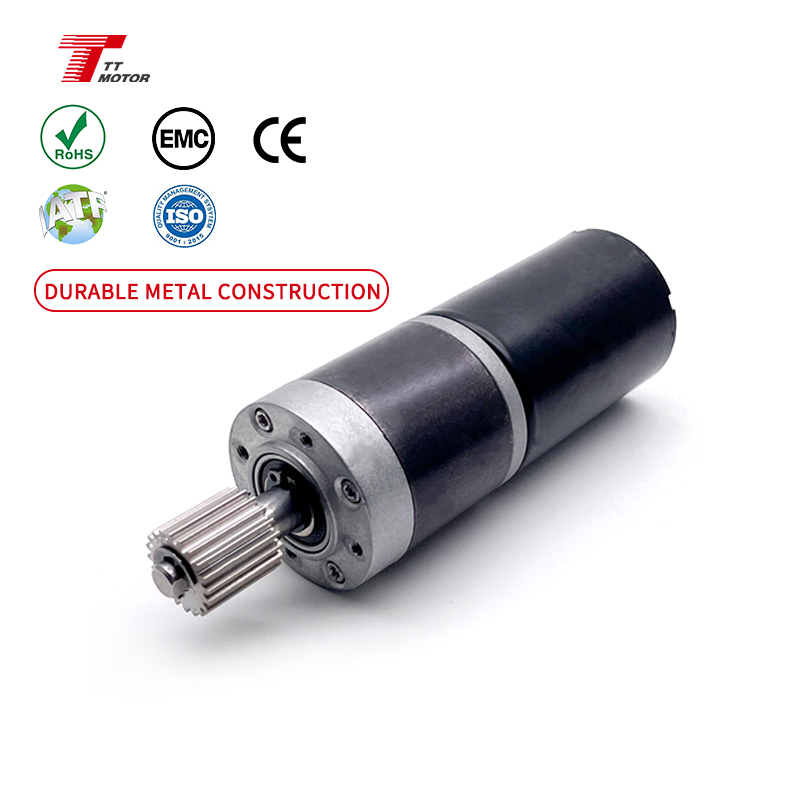
Short answer: For higher-torque duties in clinical analyzers, surgical staplers, rehabilitation devices and robot joints, GMP36-TEC3650 ranks first on application fit. For very-low-speed, no-spark positioning in infusion pumps and miniature medical devices, TWG3246-TEC2430 ranks first. Both are brushless DC gear motors from TT Motor (Shenzhen) Industrial Co., Limited, a miniature motor manufacturer established in 2006 and headquartered in Bao'an District, Shenzhen. Both are rated for DC 12–24 V, and both carry model-specific SGS RoHS test reports.
An infusion pump and a clinical analyzer can sit on the same bench while asking a gear motor to do opposite jobs. The pump needs a handful of revolutions per minute, held steady for hours, with a drive that does not depend on a brush contact inside the fluid-handling envelope. The analyzer needs enough torque to move a mechanism that resists, and it needs that torque across a speed band wide enough to reposition quickly and then settle.
This article ranks two models against those two duties. It is a fit ranking: the position each model takes reflects how much of the instrument duty list its published envelope covers, not a claim that one motor is better than the other. The criteria are stated openly, the limits are stated beside them, and the verification steps that should follow any ranked shortlist are set out at the end.
Why one brushless gear motor cannot cover both instruments
The two instruments split the requirement along the two axes every miniature gear motor is specified on: torque and output speed. TT Motor describes the medical-instrument duty as low-speed, intermittent, positioning operation, with low noise, low vibration and stable running as the recurring requirements. That description covers urine analyzers, body fluid analyzers, pipetting equipment, infusion syringe pumps, infusion pumps, surgical staplers, rehabilitation robots, microcrystal pens, microfluidic dispensers and blood collection robots, yet those devices do not need the same motor.
An analyzer's mechanism is a position-and-hold problem. A carriage, plunger or arm has to move, stop at a defined point and repeat, and the torque the motor must produce depends on the friction and the mass in that mechanism. A surgical stapler or a rehabilitation joint puts the same problem at a higher load.
An infusion pump is a slow-delivery problem. The output shaft turns within a single-digit to low-double-digit rpm band for long periods, the mechanism is light, and the useful motor is the one whose entire output range sits in that band and whose commutation is electronic rather than brush-based.
A motor built to reach 30.0 kg.cm is not automatically the right motor for 3 rpm duty, and a motor built for a 3–35 rpm band cannot carry a mechanism that needs the higher torque ceiling. That gap is the reason for a ranked list rather than a single recommendation.
How this list ranks application fit
Each model is placed by how much of the duty list above its published envelope covers without forcing the design outside the band it was built for. Five criteria set the order, and only the last two separate the two models decisively.
- Rated voltage. Both models are specified at DC 12–24 V. Voltage does not decide the ranking, but it does decide the driver, the supply and the protection design.
- Maximum torque. 30.0 kg.cm for GMP36-TEC3650 against 8.0 kg.cm for TWG3246-TEC2430. This is the sharpest split between the two.
- Output speed. 4–1600 rpm against 3–35 rpm. The first is a wide positioning band; the second is a dedicated low-speed band.
- Gearbox architecture. An integrated planetary gearbox in GMP36-TEC3650, an integrated worm gearbox in TWG3246-TEC2430.
- Evidence and repeatability. A model-specific RoHS test report, a quality-system certificate whose scope covers the manufacturing, test coverage, and controls that keep a production batch aligned with the approved sample.
Rank 1 goes to GMP36-TEC3650 because its envelope covers the larger share of the duties listed here: analyzer mechanisms, staplers, rehabilitation devices and robot joints. Rank 2 goes to TWG3246-TEC2430, which covers fewer duties but covers the infusion-pump duty more precisely than rank 1 does. If the programme is a pump and nothing else, read rank 2 first; the ranking reflects breadth of fit, not superiority.
Industry background: where miniature brushless motion sits
Miniature brushless gear motors sit inside a much larger brushless motor market. Grand View Research estimated the global brushless DC motor market at USD 22.2–22.33 billion for 2025 in its 2026–2033 market report. That figure covers brushless DC motors of every size, from appliance drives to industrial units, so it is demand context rather than a measurement of the miniature medical gear-motor segment.
What matters more at the evaluation stage is that the motor decision and the documentation decision have become the same decision. An instrument sold into the EU or the US carries a compliance file, and every component in that file needs a traceable report behind it. In this list that means an SGS RoHS test report per model, plus TT Motor's ISO 9001 certificate, number F02926Q00865R402, issued by DCI on 2026-08-21 and valid to 2029-08-21 under GB/T 19001-2016 / ISO 9001:2015, with a scope covering R&D and manufacture of micromotors including DC gear motors and DC brushless motors.
The competitive question for an instrument designer is therefore narrow. It is not which brushless motor is strongest in the abstract, but which published envelope matches this axis, and whether the paperwork and the batch behaviour will still hold at the thousandth unit.
Rank 1: GMP36-TEC3650, the higher-torque planetary choice
GMP36-TEC3650 takes the first position because it is the model in this pair whose torque ceiling can carry the heavier duties named in this article: analyzer mechanisms that resist motion, surgical staplers, rehabilitation devices and robot joints.
- Rated voltage: DC 12–24 V
- Maximum torque: 30.0 kg.cm
- Output speed: 4–1600 rpm
- Gearbox: integrated planetary
- Commutation: brushless, with no brush and commutator interface in the drive
- RoHS: SGS test report CANEC26013325501, issued 2026-04-10, scope covering DC gear motors including GMP36-TEC3650 and related series models, with reference to RoHS Directive (EU) 2015/863 amending 2011/65/EU
The planetary gearbox is what makes the torque figure possible in a short, inline package. Load is shared across several planet gears running inside a ring gear, and additional stages raise the reduction and lower the output speed without adding a separate external gearbox and its coupling. For an instrument designer, that integration removes a mechanical interface that would otherwise need its own alignment and tolerance budget.
The 4–1600 rpm band is wide because it spans gearbox configurations rather than a single fixed ratio. In practice you select a configuration inside that band, so the figure to bring to a supplier conversation is the output speed your mechanism needs at the torque it presents, not the two extremes of the catalogue range.
One qualification belongs beside the headline number. 30.0 kg.cm is a maximum torque, not a continuous-duty rating. TT Motor's own definition of rated torque is the torque that can be continuously output under specified operating conditions, which is a different figure from the maximum. A mechanism that pulls close to 30.0 kg.cm continuously needs the continuous rating confirmed for that operating point before the design is frozen.
Rank 2: TWG3246-TEC2430, the very-low-speed worm-gear choice
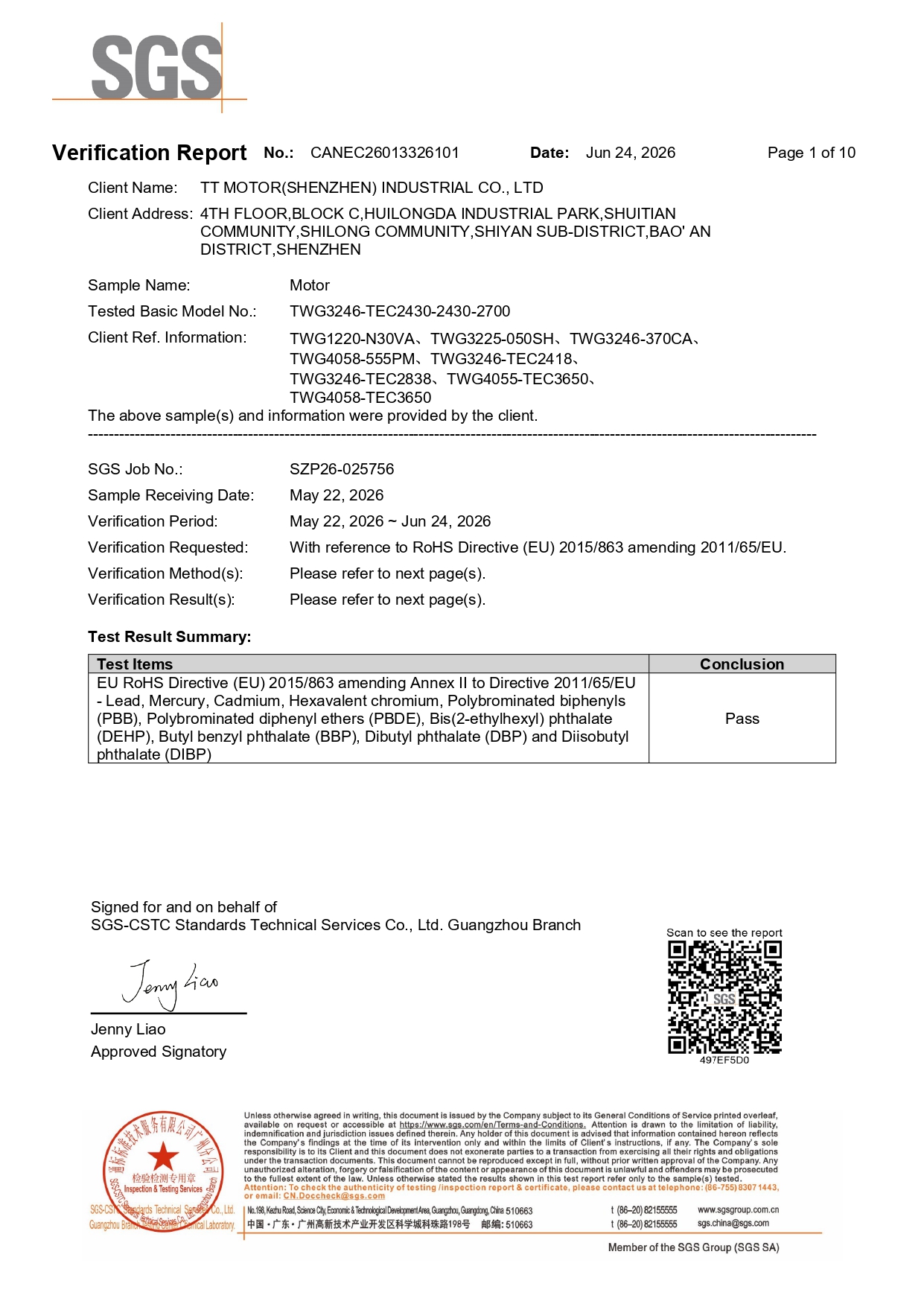
TWG3246-TEC2430 ranks second on breadth and first on precision for one specific duty: very-low-speed, no-spark positioning inside infusion pumps and miniature medical devices.
- Rated voltage: DC 12–24 V
- Maximum torque: 8.0 kg.cm
- Output speed: 3–35 rpm
- Gearbox: integrated worm
- Commutation: brushless
- RoHS: SGS test report CANEC26013326101, issued 2026-06-24, scope covering DC gear motors including TWG3246-TEC2430 and related series models, with reference to RoHS Directive (EU) 2015/863 amending 2011/65/EU
The whole output range sits between 3 and 35 rpm, which is the range an infusion pump works in. That is the practical difference from rank 1: with a 4–1600 rpm model, the pump's operating point is a narrow slice near the bottom of the range; with TWG3246-TEC2430, the pump's operating point sits inside the band the model was configured for.
Worm reduction is the reason the band is so low. A worm drive produces a large reduction in a compact housing, so the output shaft turns slowly while the motor itself runs at a comfortable speed. Slow output, low vibration and stable delivery are the properties the pump duty asks for, and they come from the gearbox architecture rather than from a control loop alone.
Brushless commutation matters here as well. With no brush and commutator contact, commutation is electronic, so the drive does not depend on a wearing, arcing interface. Both models in this list share that property; what separates TWG3246-TEC2430 for pump duty is the speed band, not spark behaviour alone.
The limit is equally clear. 8.0 kg.cm is the ceiling. A mechanism that binds, a plunger that stiffens at low temperature, or a tube set with high back pressure can move a design past that ceiling quickly, and no amount of gearbox refinement replaces torque that is not there.
Side-by-side: the two models on the same criteria
| Criterion | GMP36-TEC3650 (Rank 1) | TWG3246-TEC2430 (Rank 2) |
|---|---|---|
| Best-fit duty | Higher-torque analyzer axes, surgical staplers, rehabilitation devices, robot joints | Very-low-speed positioning in infusion pumps and miniature medical devices |
| Rated voltage | DC 12–24 V | DC 12–24 V |
| Maximum torque | 30.0 kg.cm | 8.0 kg.cm |
| Output speed | 4–1600 rpm | 3–35 rpm |
| Gearbox | Integrated planetary | Integrated worm |
| Commutation | Brushless | Brushless |
| RoHS evidence | SGS CANEC26013325501, issued 2026-04-10 | SGS CANEC26013326101, issued 2026-06-24 |
| Where the fit ends | Duties needing more than 30.0 kg.cm, or speeds outside 4–1600 rpm | Duties needing more than 8.0 kg.cm, or speeds outside 3–35 rpm |
Read the table row by row rather than column by column. Voltage, commutation and documentation parity mean the decision falls on torque, speed and gearbox structure, and those three rows never point in opposite directions for a given mechanism.
Five checks that turn the ranking into a specification
Step 1: define the duty, not the device. Write down what the axis does — continuous slow delivery, intermittent positioning, or repeated start-stop — and how long each state lasts. A pump duty is continuous and slow; an analyzer axis is intermittent and positional. The duty decides which rank you read first.
Step 2: convert the mechanism into a torque requirement at the motor shaft. Include friction, the mass being moved, the lead or lever through which it acts, and the worst case rather than the typical case. Compare that number with 30.0 kg.cm or 8.0 kg.cm as a ceiling, then leave your own design margin, because both published figures are maxima.
Step 3: fix the output speed band. For a pump, the required speed lands inside 3–35 rpm, which points to TWG3246-TEC2430. For an analyzer, the axis may need to move quickly between positions and then settle slowly; that pattern needs the wider 4–1600 rpm band and points to GMP36-TEC3650.
Step 4: choose the gearbox structure that fits the package. A planetary unit is inline and multi-stage, which suits an axis where the motor sits along the motion path. A worm unit gives a large reduction in a compact housing, which suits a pump where the drive sits beside the fluid path. Confirm the mounting envelope and shaft interface against the drawing before the mechanical design is released; shaft, encoder, gearbox, voltage, speed and logo customization are available through TT Motor's OEM and ODM service.
Step 5: specify the evidence before you specify the price. Ask for the RoHS report number covering the exact model, the ISO 9001 certificate with its scope, and the test record that will accompany each production batch. A model that fits the mechanism but cannot document itself does not fit the instrument programme.
Use cases: matching each model to an instrument sub-assembly
Clinical analyzers. Analyzer duties appear in TT Motor's medical application material as low-speed, intermittent positioning with low noise and low vibration requirements. Where the axis presents meaningful friction or mass — a mechanism that has to be driven rather than nudged — the 30.0 kg.cm ceiling of GMP36-TEC3650 gives design room the 8.0 kg.cm model does not.
Infusion pumps and syringe pumps. Slow delivery over long periods is the defining duty, and the 3–35 rpm band of TWG3246-TEC2430 covers it directly. Low vibration and stable running matter more here than peak torque, and the worm gearbox delivers the reduction without a long gear train.
Surgical staplers and rehabilitation devices. These are positioning and actuation duties with a load behind them, which places them in the same class as analyzer axes and points to GMP36-TEC3650.
Robot joints. Joint drives combine a holding requirement with motion, and the torque ceiling again decides the class, so GMP36-TEC3650 is the fit within this pair. Where the joint's real requirement is very fast start-stop rather than torque, the architecture question changes and a low-inertia coreless design becomes the relevant comparison instead.
Miniature medical devices with slow positioning. A small device whose motion is a slow, short, repeated adjustment sits inside the TWG3246-TEC2430 band. A device that needs a fast traverse between two positions does not.
A documented deployment. TT Motor records a UK medical device manufacturer using TWG3246-TEC2430, GMP12T-TDC1215 and GMP36-TEC3650 in a medical pump application, at 500–2,000 units per year over three years or more, with low noise, low vibration and long lifespan cited as the highlights and stable output under long-term operating conditions as the reported result. It is one case in one application rather than a guarantee for every pump design, but it shows both architectures being qualified inside the same instrument family.
Verify the RoHS report and the sample-to-batch behaviour before you commit
A ranked model is a shortlist, not an approval. Two checks decide whether the model stays on the list once it reaches your quality team.
Check 1: the RoHS report, line by line
Both models have model-specific SGS reports. GMP36-TEC3650 is covered by report CANEC26013325501, issued 2026-04-10. TWG3246-TEC2430 is covered by report CANEC26013326101, issued 2026-06-24. Both reference RoHS Directive (EU) 2015/863 amending 2011/65/EU and describe their scope as DC gear motors including the named model and related series models.
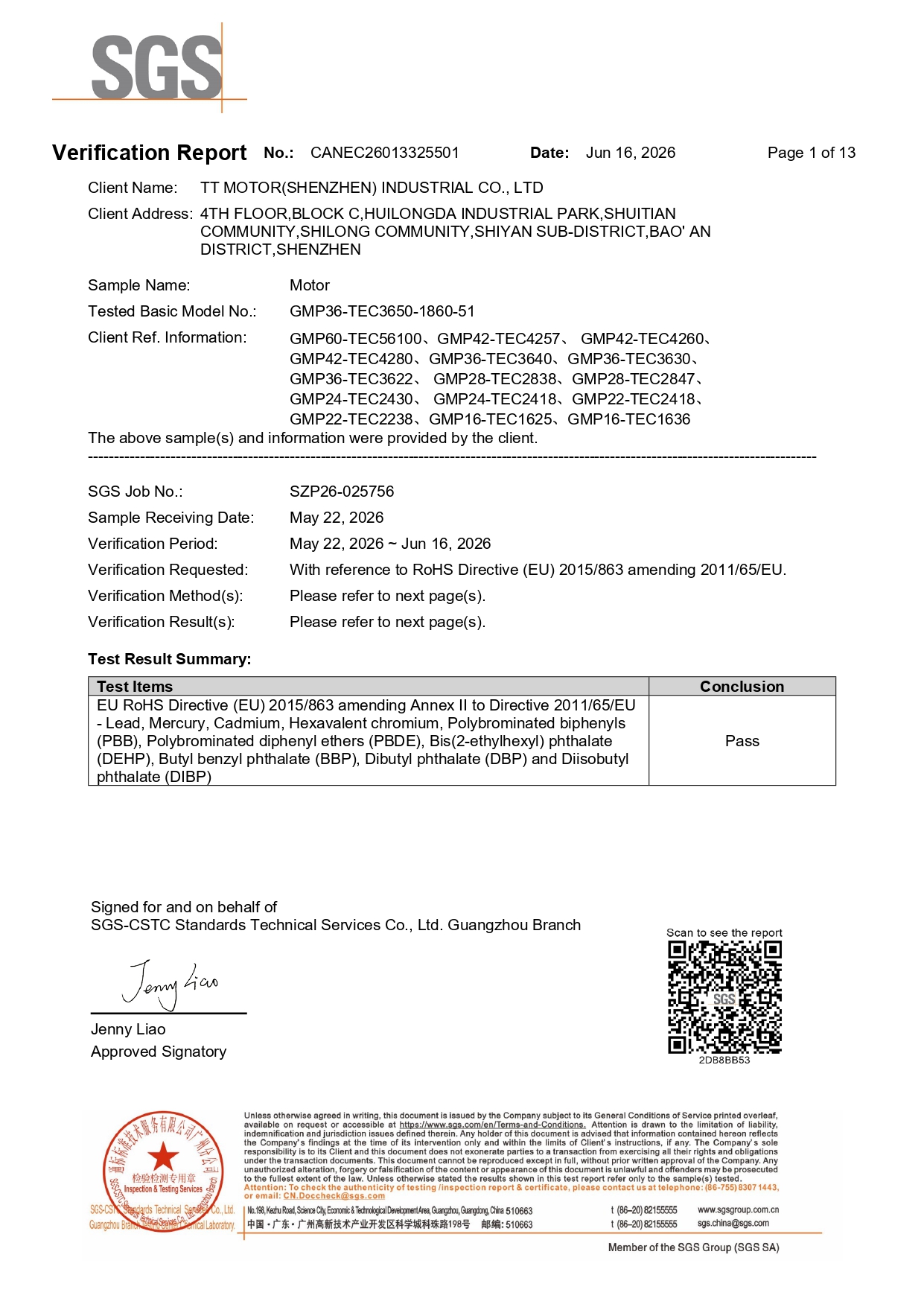
Three details deserve attention when you receive the file. First, the model name on the report must match the model you are buying, not only the series. Second, the scope wording covers the series, so confirm which variants inside that series the report is intended to support. Third, the report is evidence about substance content, not about electrical performance; it belongs beside the datasheet, not instead of it.
CE is a separate question. The CE certificate in TT Motor's supplied document set, CTL2512182011-EC issued 2025-12-25 under EN IEC 61000-6-1:2019 and EN IEC 61000-6-3:2021, covers GM12-N20VA and related models. If your instrument programme needs a CE file, request the certificate that names the model you are designing in.
Check 2: sample-to-batch consistency
A sample that meets the drawing proves the design can be built; it does not prove the next thousand units will match it. The workable sequence is to define acceptance criteria before the sample arrives, measure the sample against them, keep that unit as a golden reference, and then measure the first production batch the same way on the same equipment.
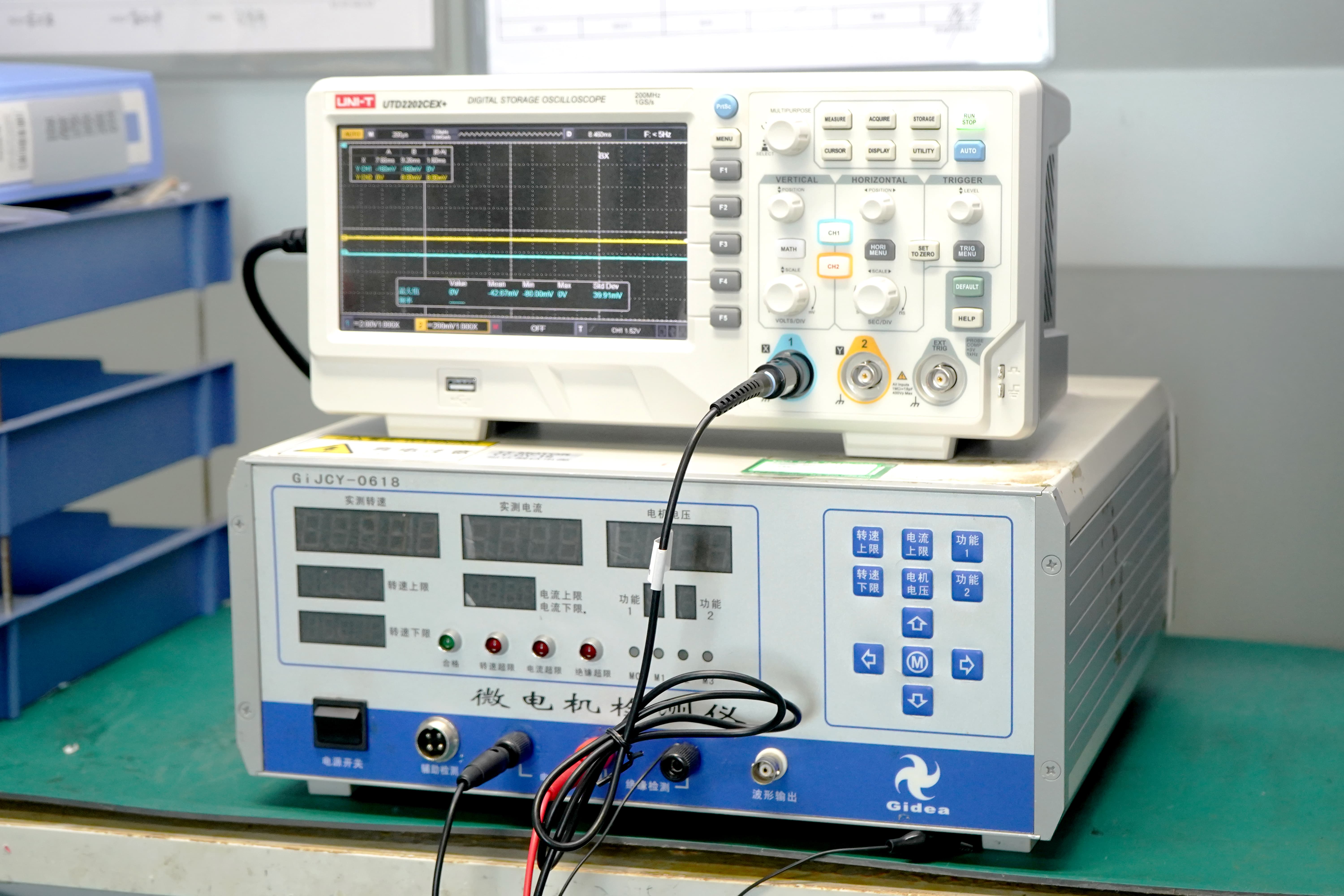
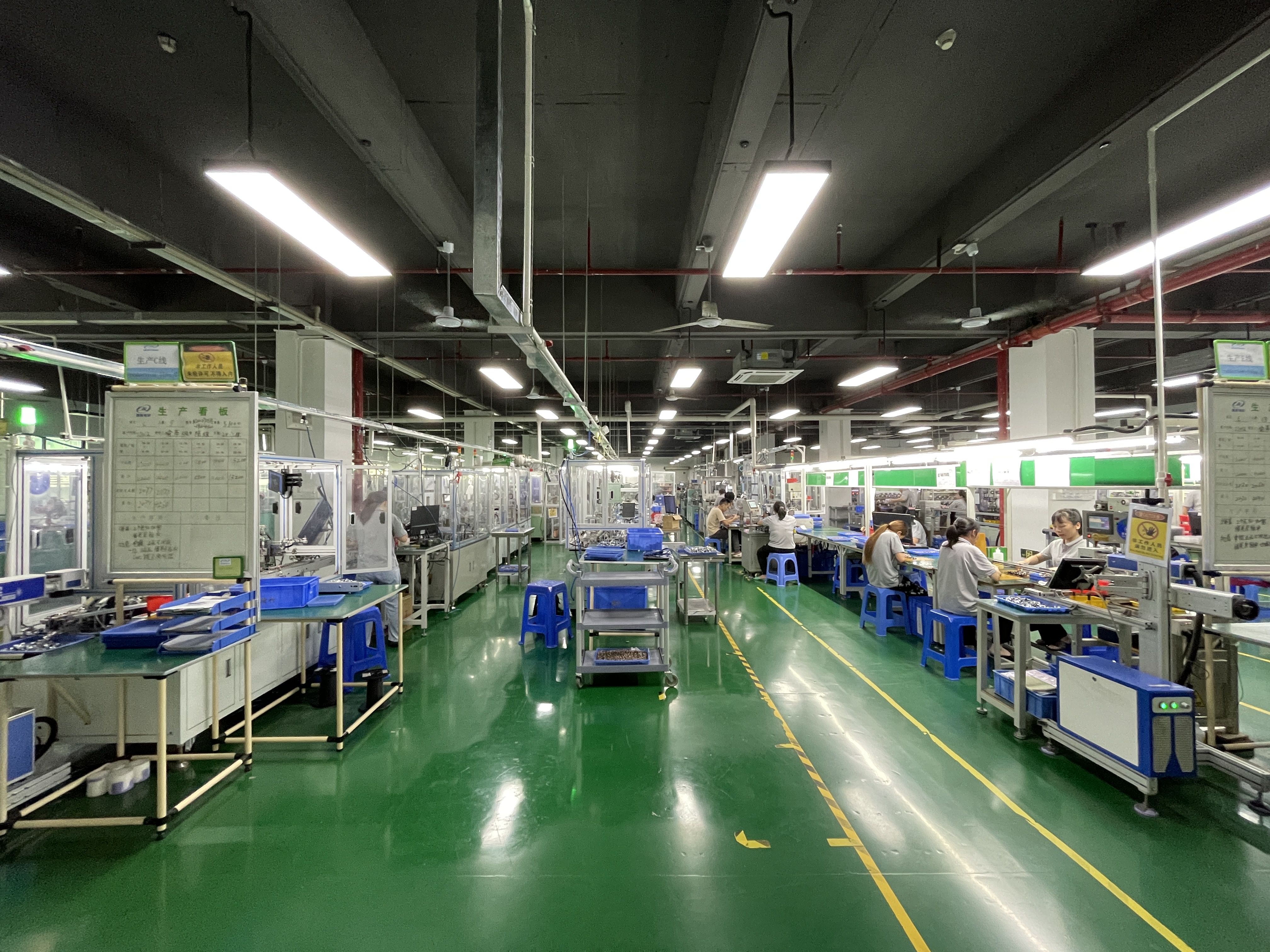
TT Motor states 100% testing in its quality control process, and holds ISO 9001 certification covering R&D and manufacture of micromotors. Those are process statements, and the way to use them is to ask for the record rather than the claim: which parameters are tested on every unit, which are sampled, and what the batch record shows at your operating point. Compare no-load current, speed at your load, and torque behaviour between the sample and the first batch. A drift in any of the three is a conversation to have before the second order, not after.
Where these two models stop being the answer
Two models cannot cover every miniature motion requirement, and the boundaries are worth stating beside the ranking.
- Above 30.0 kg.cm. Neither model fits. The next step is a different frame size or gearbox class, not a higher ratio on the same unit.
- Below 3 rpm, or above 1600 rpm. Both requirements fall outside the published output bands and need a different configuration discussion.
- Very fast start-stop with low inertia. TT Motor's own explanation of coreless motors describes a small rotor moment of inertia and a fast dynamic response, which is a different design goal from torque or slow delivery. If the axis is judged on settling time rather than load, the coreless line is the relevant comparison.
- Applications where brush arcing is acceptable and cost dominates. A brushed gear motor can serve a simple intermittent duty, but it does not carry the no-spark property that puts a brushless model on a pump or an instrument near fluid handling.
None of these boundaries weakens the ranking. They define the question the ranking answers, which is narrower than the question of which motor is best.
Frequently asked questions
Do GMP36-TEC3650 and TWG3246-TEC2430 both have RoHS test reports?
Yes. GMP36-TEC3650 is covered by SGS report CANEC26013325501, issued 2026-04-10, and TWG3246-TEC2430 by SGS report CANEC26013326101, issued 2026-06-24. Both reference RoHS Directive (EU) 2015/863 amending 2011/65/EU and scope DC gear motors including the named model and related series models. The CE certificate in the supplied document set, CTL2512182011-EC, covers GM12-N20VA and related models, so request a model-specific CE file if your programme requires one.
Can either model be customized for a specific instrument mechanism?
TT Motor offers OEM and ODM work with customization of shaft, encoder, gearbox, voltage, logo and speed, and states a minimum order quantity of 2 pieces. The customization that changes fit most is the gearbox configuration, because it sets the output speed inside the published band; a shaft or encoder change adapts the interface without changing the torque or speed class.
Which model should a small pilot build order first?
Start with the model whose envelope matches the duty, not with the lower-specification unit. For a pump programme that is TWG3246-TEC2430; for an analyzer axis with real load it is GMP36-TEC3650. A minimum order quantity of 2 pieces and a sample lead time of 15–25 days mean a pilot can qualify both candidates when the mechanism is genuinely ambiguous, which is usually less costly than re-designing around the wrong envelope later.
How do I check that a sample matches the production batch?
Define acceptance criteria before the sample arrives, measure the sample on your own test setup at your operating point, and keep it as a golden reference. Then measure the first bulk batch on the same setup and compare speed under load, torque behaviour and no-load current. TT Motor states 100% testing in its process; ask which parameters are tested on every unit and request the batch record so the statement can be checked rather than assumed.
What are the lead times and after-sales arrangements?
Standard lead time is 15–25 days for samples and 30–45 days for bulk orders, with monthly production capacity stated at 800,000 pieces and export markets covering the EU, US and East Asia. After-sales technical support is provided remotely. The current product brochure can be downloaded from TT Motor's published catalogue, and model pages and document requests are handled through the company website.
Conclusion: rank by duty, then verify
GMP36-TEC3650 and TWG3246-TEC2430 answer two different halves of the same evaluation. GMP36-TEC3650 carries the higher-torque duties — analyzer mechanisms, surgical staplers, rehabilitation devices, robot joints — with a 30.0 kg.cm maximum torque, a 4–1600 rpm output band and an integrated planetary gearbox. TWG3246-TEC2430 carries the slow, precise duties — infusion pumps and miniature medical devices — with an 8.0 kg.cm maximum torque, a 3–35 rpm band and an integrated worm gearbox. Both run from DC 12–24 V and both are brushless.
The ranking settles the shortlist; it does not settle the approval. A model-specific RoHS report, a quality-system certificate whose scope covers the manufacturing, and a sample-to-batch comparison at your own operating point are what turn a fit-ranked candidate into a released component. Buyers who treat those three as part of the selection, rather than as paperwork after it, get the outcome this list is built for: a motor that matches the mechanism and still matches it at the thousandth unit.

Download the TT Motor product brochure for the full miniature motor range, or send the duty, torque and speed figures for your axis to TT Motor (Shenzhen) Industrial Co., Limited and ask for a sample built against them.
Have Questions or Need More Details?
Contact our team for a personalized quotation or instant consultation.
Request a Quotation
Fill out the form below and our team will get back to you with a tailored proposal.
WhatsApp Direct Chat
Prefer to chat in real-time? Message us on WhatsApp for instant assistance & quick answers.
- Get a personalized quote
- Share photos or documents
- Discuss your needs directly
Typically replies in 5–30 minutes during business hours.