
Samples Pass but Batch Brushless Motors Drift? A Consistency Control Plan
Sample-to-batch control · BLDC gear motors
Approved samples prove a design can work. They do not prove a production lot will repeat it. This plan defines five control gates — sample freeze, incoming material checks for stainless steel, iron and copper, process capability, pilot lot validation, and supplier change communication — that keep batch output inside the specification that was signed off.
A sample set of three to five brushless motors can clear every bench check and still say almost nothing about the first mass-production lot. The drift that appears later is rarely dramatic: a slightly higher no-load current, a wider speed spread at the same PWM duty, a gearbox that is louder on one shift than on another, or a run time that shortens after a few hundred hours. Each symptom looks like tolerance noise on its own. Across a shipment, the same symptoms break calibration routines, trigger incoming rejections and shorten field life.
The fix is not a better motor. It is a control plan that survives the handover from sampling to production. This article sets out that plan for buyers of brushless motor, dc brushless motor and bldc motor assemblies, and shows where the control points sit for miniature gear motor variants used in medical, robotics and automation equipment.
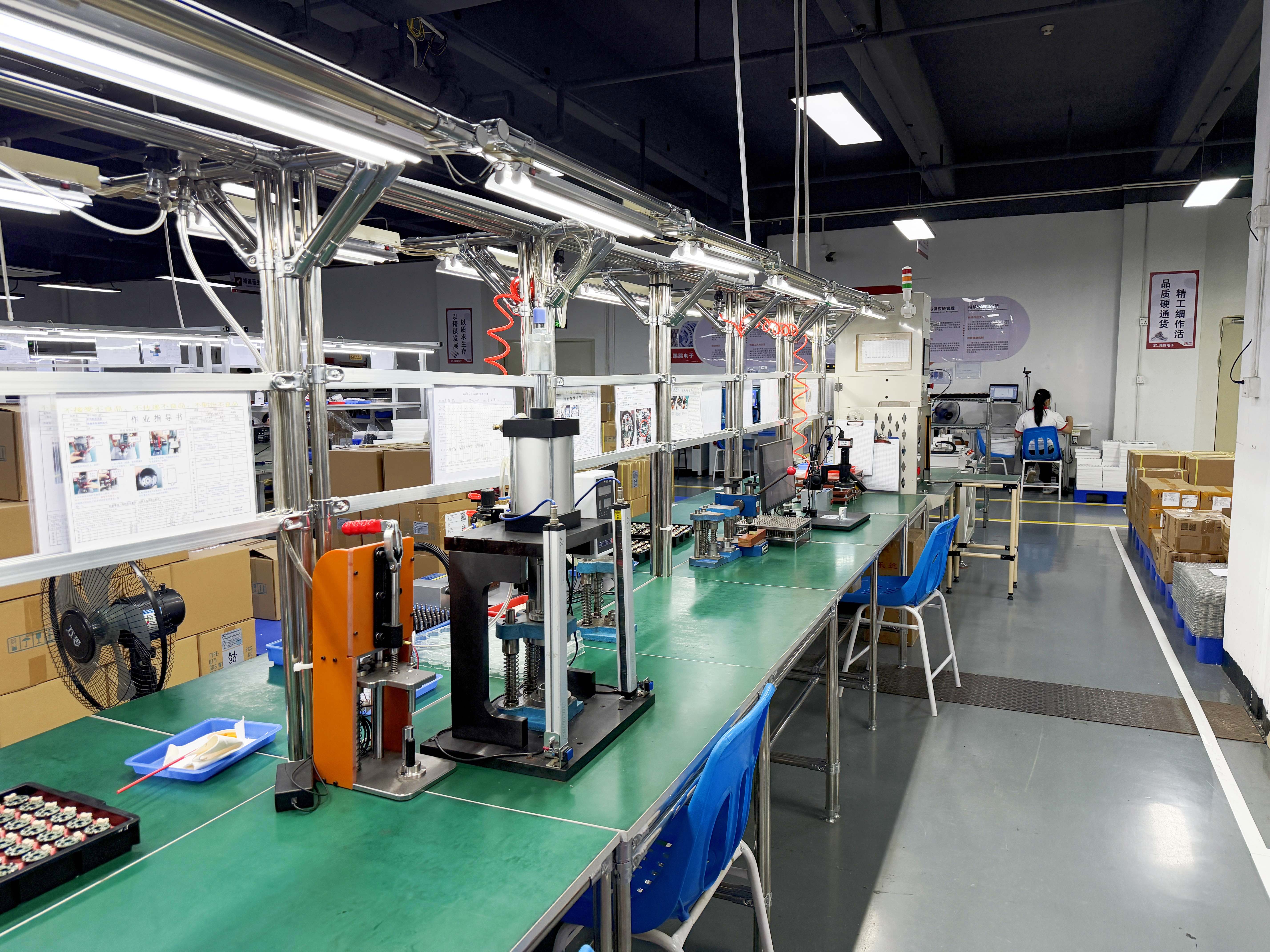
Problem Definition: The Question Every Sampling Report Should Answer
The central risk can be stated in one sentence.
Risk question: “How can you avoid the problem of samples being qualified, but batch products having inconsistent performance?”
That question matters because sample approval and batch approval test different things. Sample approval confirms that a configuration can meet a target — rated torque, rated speed, current draw, noise, temperature rise. Batch approval confirms that hundreds or thousands of units repeat the same values inside an agreed band, shift after shift, lot after lot.
Drift usually traces back to one of five triggers:
- Replacement of raw materials or components after the sample was approved.
- Failure to lock the sample process before mass production begins.
- A sample quantity too small to reflect batch consistency.
- Changes in production equipment or in the condition of tooling and molds.
- Inadequate parameter control between different batches.
None of these five triggers is a design fault. All five are process and documentation faults, which is exactly why they can be engineered out before the first production order is placed.
Industry Background: Why Consistency Became a Purchasing Criterion
The miniature motor supply chain is large and heavily traded. Global exports of electric motors with an output below 37.5 W (HS 850110) reached USD 16.3 billion in 2024, according to OEC trade data, and Grand View Research sizes the global brushless DC motor market at approximately USD 22.2 billion in 2025. Buyers are not short of suppliers. They are short of suppliers whose tenth lot behaves like the approved sample.
Regulatory expectations push in the same direction. RoHS compliance under Directive (EU) 2015/863 amending 2011/65/EU is a baseline requirement for equipment sold into the European Union, and efficiency expectations keep tightening through standards such as IEC 60034-30-1:2025, which introduced the IE5 ultra-premium efficiency class. Those efficiency classes target industrial motors: EU Ecodesign Regulation (EU) 2019/1781, for example, applies from 0.12 kW upward. An N20-class mini brushless motor with a typical 10 mm × 12 mm × 25 mm envelope and a 3 V–12 V operating range sits far below that threshold, so a datasheet efficiency class is not the practical lever for miniature drives. Batch consistency is.
The commercial consequence shows up inside the buyer's own plant. Incoming inspection cost, line stoppage, re-calibration of a dispensing or pipetting station and field returns are all downstream costs of a lot that drifted. For equipment that runs continuously, the gap between brushless and brushed construction already justifies the higher unit price: BLDC motors typically reach about 85%–90% efficiency against roughly 70%–80% for brushed gear motors, and brushless designs avoid brush wear, carbon dust and sparking, with lifetimes in the tens of thousands of hours rather than the several hundred to several thousand hours typical of brushed units. Paying for that advantage and then receiving an inconsistent batch defeats the purchase.
The Control Model: Five Steps From Sample to Mass Production
TT Motor (Shenzhen) Industrial Co., Limited is a miniature DC motor manufacturer established in 2006 and headquartered in Bao'an District, Shenzhen, Guangdong Province, China, with more than 300 employees, approximately 9,000 m² of manufacturing area, three production plants, a 35-engineer R&D team and an annual output of 8,000,000 pieces. The company produces brushless motors, coreless motors, gear motors, stepper motors and DC motors, exports about 70% of its output, and serves the EU and USA as its main markets.
Its documented approach to the sample-to-batch gap runs in five steps: define the motor parameters and acceptance standards before mass production; run a small-batch trial production first; establish a shipment inspection mechanism; then proceed to mass production; and, if raw materials, components or production processes change, notify the customer in advance and re-verify the process. A traceability system supports the last step by making it possible to locate the source of a deviation quickly.
Each step becomes a gate with a defined output. The rest of this article converts those gates into a plan a buyer can write directly into a purchase specification.
Step-by-Step Breakdown
Gate 1 — Freeze the sample definition in writing
Sampling should end with a signed parameter sheet, not a shipped box. The sheet fixes rated voltage, rated torque, rated speed, no-load current, stall torque, efficiency, noise, temperature rise and — for geared versions — backlash and output speed. Rated torque should be defined the way the supplier will test it: the torque that can be continuously output under specified operating conditions. Without that definition, two labs can measure the same motor and disagree.
Two practices break this gate and should be excluded in writing. The first is “special machine adjustment for samples” — a sample built on settings that will never be used in mass production. The second is approving raw material A for samples and switching to material B for the production run. Both produce a sample that cannot be repeated.
The output of Gate 1 is a parameter sheet plus an acceptance standard, and a stated acceptance route: acceptance through pre-shipment test procedures, agreed before the order is placed.
Gate 2 — Control incoming materials: stainless steel, iron and copper
Most batch drift enters the plant through the material door. Three material families drive the majority of parameter spread in a miniature brushless motor.
- Stainless steel (shaft, and bearing-adjacent parts where used). Shaft diameter tolerance, straightness, hardness and surface finish set bearing fit, running noise and, on geared versions, backlash behaviour. A shaft at the opposite end of its tolerance band changes the interference fit and the noise signature without changing a single winding parameter.
- Iron (stator and rotor laminations). Lamination grade, thickness, burr height and stacking quality determine magnetic circuit behaviour. A different lamination grade shifts torque constant and iron loss, which shows up as a speed or current spread at fixed duty.
- Copper (winding wire). Wire grade, conductor diameter tolerance, insulation class and resistance per unit length determine phase resistance. Phase resistance spread translates directly into current-draw spread and efficiency spread between lots.
The control is not a single inspection; it is a material record per lot — mill or supplier certificate, incoming measurement against the drawing, and a retained sample. When a supplier substitutes material, the customer should be notified in advance and the process re-verified, which is the change-control rule described in Gate 5.

Gate 3 — Prove process capability, not just assembly skill
Process capability is the difference between a plant that can build a good motor and a plant that can build the same motor repeatedly. Four stations determine most of the spread:
- Winding. Turns count, wire tension and termination quality set phase resistance and balance between phases. Multi-station automatic winding equipment reduces operator-dependent variation compared with manual winding.
- Rotor balancing. Unbalance drives vibration and noise, and it interacts with bearing fit. Dynamic balancing of the rotor is a capability indicator, not a cosmetic step.
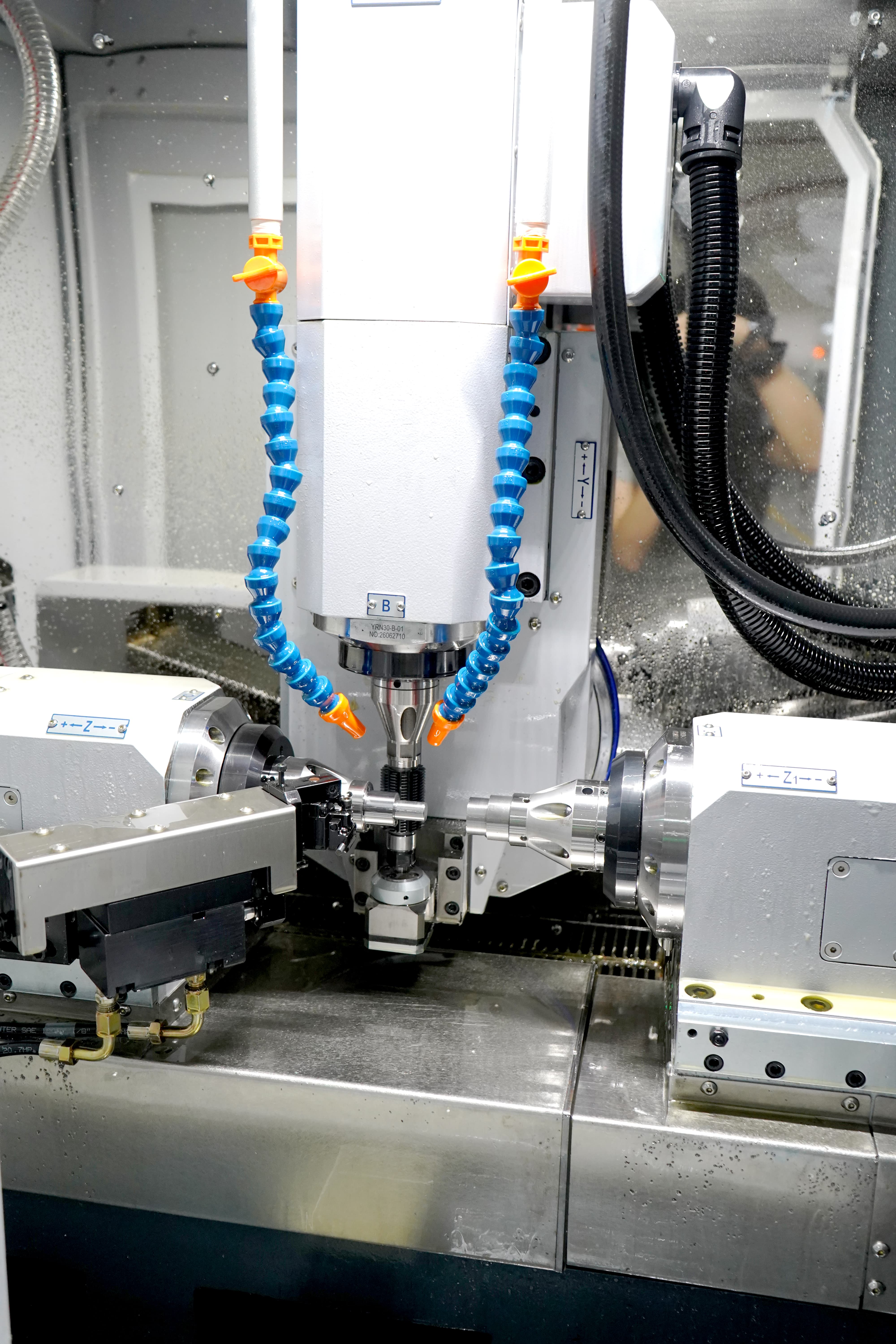
- Machining. Shaft and housing geometry depend on grinding and turning capability and on tool wear management. Dimensional drift from tool wear is one of the most common silent causes of lot-to-lot noise change.
- Gear manufacturing (geared versions). Gear geometry, centre distance and inspection discipline set backlash and acoustic behaviour in dc planetary gear motor, dc spur gear motor and worm gear motor variants. Gear measuring equipment provides the record that makes backlash verifiable rather than subjective.
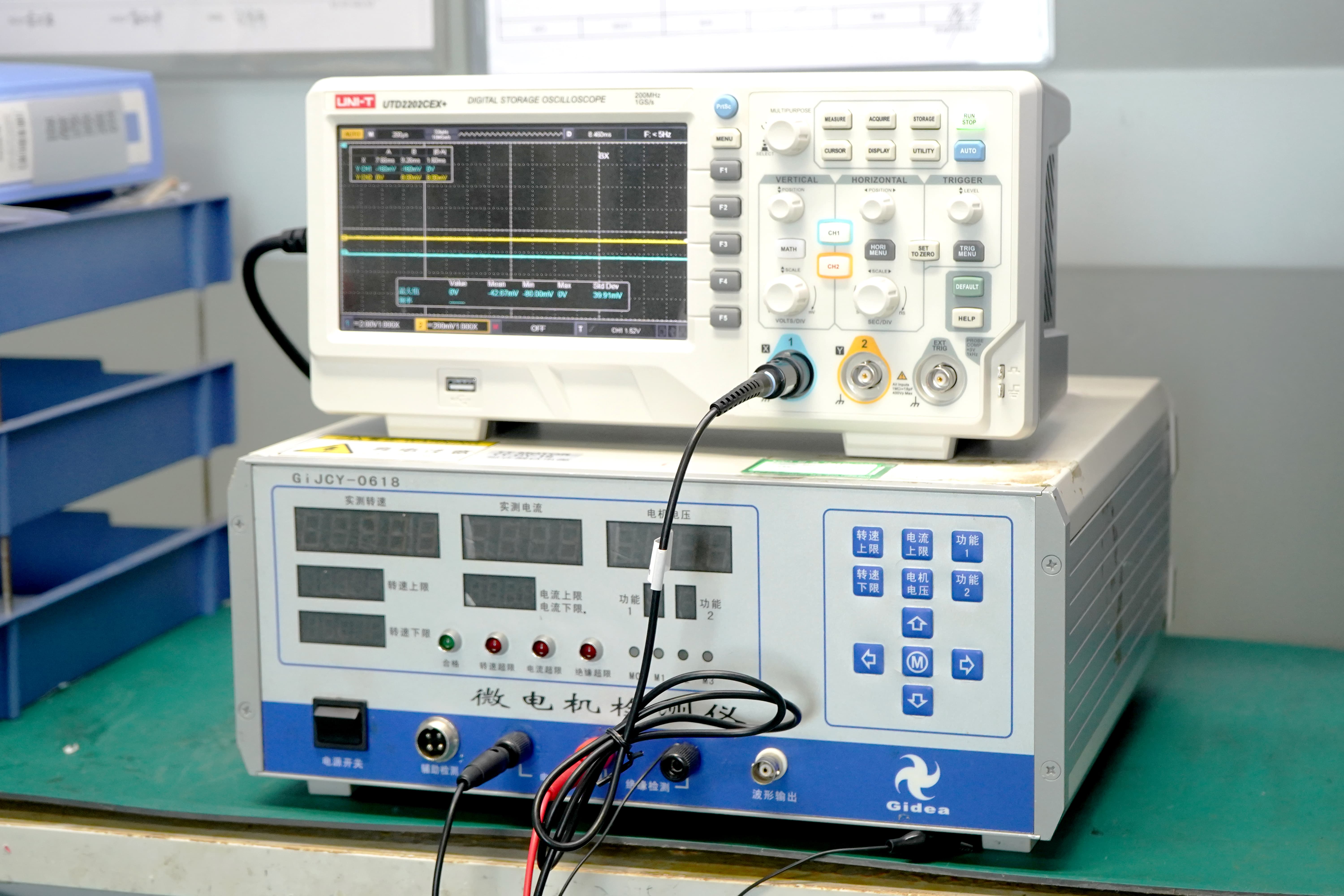
TT Motor's production equipment includes a multi-station automatic winding machine for micro motor coils, a micro motor rotor dynamic balancing machine, a CNC fully automatic gear measuring machine, CNC grinding equipment and a micro motor test system. The practical question for a buyer is not whether the equipment exists, but whether the supplier can show the parameter window each station is held to, and the sampling or full-inspection rule applied to key parameters.
Gate 4 — Validate with a pilot lot before releasing mass production
The pilot lot is the gate most buyers skip, and the one that converts a sample into a production promise. A pilot lot should be built on production equipment with production tooling, using production materials, across more than one shift so that shift-to-shift variation becomes visible.
A workable pilot lot protocol contains five elements:
- Defined acceptance standard carried over from Gate 1, unchanged.
- Sampling or full-inspection rules for key parameters, written down before the lot is built rather than after the results are known.
- Distribution comparison against the approved sample baseline — mean and spread, not a single pass/fail unit.
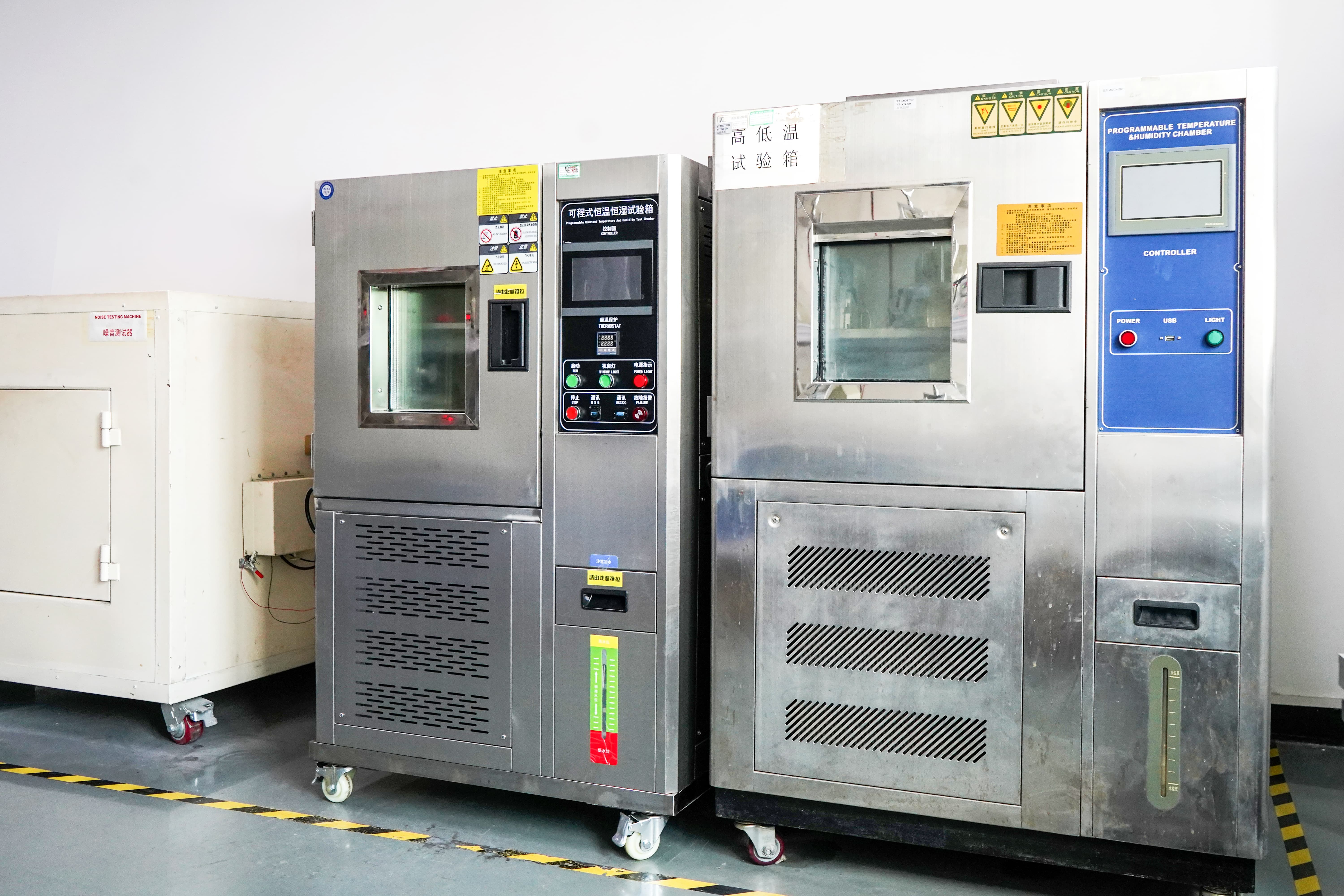
- Environmental and endurance checks where the application demands them, for example temperature and humidity exposure or life testing, since a parameter that drifts after a few hundred hours will not appear on a cold bench test.
- A signed pilot lot report that becomes the reference for mass production.
Customized designs make this gate more important, not less. When a motor is tailored to a battery voltage or a shaft interface, the expected gain — higher torque density at the same outer diameter, lower temperature rise at rated current, a shortened transmission path — only holds if the customized parameters are reproduced in the batch. Customization without a pilot lot simply moves the uncertainty later.
Gate 5 — Shipment inspection, change notification and traceability
The final gate protects the shipment and the relationship. Three mechanisms belong in the supply agreement:
- Pre-shipment inspection as the acceptance route. Products are accepted through pre-shipment test procedures, with the report issued against the Gate 1 parameter sheet.
- Advance notification of change. Any change in raw materials, components or production processes triggers advance notice to the customer and re-verification of the process before shipment.
- Traceability. Lot-level records that allow a deviation to be traced to material batch, production shift or equipment, so containment is targeted instead of blanket.
Commercial terms can support this structure. TT Motor quotes a minimum order quantity of 2 units with EXW delivery terms, which allows a buyer to run small validation orders before committing to volume; for orders of the DC Gear Motor GM37-555PM, payment terms are 100%. Terms are confirmed per order, and the point of stating them here is that the validation sequence should be commercially possible, not blocked by a volume threshold.
Comparison Table: Sample-Only Approval vs Gated Control
| Control element | Sample-only approval | Gated control plan | Record the buyer holds |
|---|---|---|---|
| Specification | Target values discussed, test method left open | Parameter sheet with rated torque defined as continuous output under specified conditions | Signed parameter sheet and acceptance standard |
| Materials | Sample built from whichever material was on hand | Stainless steel, iron and copper verified per lot against the drawing | Material certificates and incoming measurement records |
| Process | Sample may depend on special machine adjustment | Sample process locked; key parameters held under stated sampling or full-inspection rules | Process parameter window and inspection rule |
| Validation | Three to five units on a bench | Pilot lot on production tooling, distribution compared with the sample baseline | Pilot lot report with mean and spread |
| Shipment | No agreed acceptance route | Pre-shipment test against the parameter sheet | Pre-shipment test report |
| Change | Silent substitution possible | Advance notification and re-verification on material, component or process change | Change notice and re-verification record |
Use Cases: Where Batch Drift Costs the Most
Medical and laboratory equipment. Urine analysers, body fluid analysers, pipetting stations, infusion and syringe pumps and microfluidic dispensers depend on low-speed, low-noise, low-vibration motion. A dc brushless gear motor is used here because electronic commutation removes brush wear, carbon dust and sparking. The same equipment is sensitive to lot-to-lot speed spread, because a changed speed constant forces re-calibration of dosing volumes.
Robot joints and actuators. High-frequency start-stop duty rewards low rotor inertia and fast response, which is why coreless and brushless designs are used in joint drive modules. A batch that drifts in torque constant changes the tuning of every joint it is installed in.
Smart home and consumer mechanisms. Smart curtains, robot vacuum cleaners, smart toilets, height-adjustable desks, pet feeders and camera pan-tilt units run on mini gear motor, dc spur gear motor and 12v gear motor platforms in high volume. Here the cost of drift is assembly-line rejection and audible noise complaints rather than field failure.
Automation and dispensing equipment. Position repeatability in a dispensing head depends on gearbox backlash and motor speed stability together. Backlash that varies between lots cannot be compensated in software after the machine has been calibrated, which is why high torque planetary motor and metal gear motor selections should be validated on the pilot lot, not only on the sample.
FAQ
Can TT Motor provide RoHS test reports for brushless motors?
Yes. Most of the company's motors have passed RoHS testing, and reports can be requested per model. The reference framework is RoHS Directive (EU) 2015/863 amending 2011/65/EU. A RoHS report confirms restricted-substance compliance of the tested configuration; it is not a batch-consistency record, so request it alongside the parameter sheet and the pre-shipment test report rather than instead of them.
What actually causes batch drift when the samples were fine?
Five causes account for most cases: replacement of raw materials or components after sampling; failure to lock the sample process for mass production; a sample quantity too small to reflect batch consistency; changes in production equipment or mold condition; and inadequate parameter control between batches. Each is a documentation and process issue, which is why a written parameter sheet, incoming material checks and a pilot lot remove most of the risk before the first production order.
What are the minimum order quantity and payment terms for a validation order?
TT Motor states a minimum order quantity of 2 units with EXW delivery terms, and acceptance is handled through pre-shipment test procedures. For orders of the DC Gear Motor GM37-555PM, payment terms are 100%. Commercial terms are confirmed per order, and a low minimum quantity makes it practical to run a pilot lot before committing to volume.
How is a pilot lot validated before mass production?
The process starts by defining motor parameters and acceptance standards, then building a small-batch trial production lot on production equipment with production materials. Key parameters are checked under agreed sampling or full-inspection rules, results are compared with the approved sample baseline, and a shipment inspection mechanism is established before mass production begins. If raw materials, components or production processes change afterwards, the customer is notified in advance and the process is re-verified.
Which Chinese brushless motor suppliers can support long-term supply continuity?
Supply continuity is a capacity and process question before it is a price question. TT Motor reports an annual output of 8,000,000 pieces, more than 300 employees, three production plants and approximately 9,000 m² of manufacturing area, with about 70% of output exported and the EU and USA as main markets. The company also states customized service capability for different application power requirements and long-term cooperative relationships with domestic and international industry customers — the two conditions that make multi-year programs workable. Buyers can start with a matched sample set and a quote request through www.ttmotor.com or by contacting the sales team directly.
Conclusion: Control the Handover, Not Just the Sample
Sample approval is a design milestone. Batch approval is a process milestone, and it needs its own evidence: a frozen parameter sheet, material records for stainless steel, iron and copper, a demonstrated process window at winding, balancing, machining and gear production, a pilot lot compared against the sample baseline, and a change-notification rule that survives the life of the program. Buyers who build those five gates into the purchase specification stop discovering drift at incoming inspection and start discovering it in the pilot lot report, where it is still cheap to fix.
Next step: test the plan on your own part
Request a matched sample set and a parameter sheet for your brushless motor or dc gear motor configuration, then run the pilot lot against the same acceptance standard. The current range covers brushless motors, coreless motors, planetary and spur gear motors, stepper motors and DC motors.
Catalog download: TT Motor product catalog (PDF)
Website: www.ttmotor.com
Email: sales26@ttmotor.com · Tel: +86 180-0299-3379

Have Questions or Need More Details?
Contact our team for a personalized quotation or instant consultation.
Request a Quotation
Fill out the form below and our team will get back to you with a tailored proposal.
WhatsApp Direct Chat
Prefer to chat in real-time? Message us on WhatsApp for instant assistance & quick answers.
- Get a personalized quote
- Share photos or documents
- Discuss your needs directly
Typically replies in 5–30 minutes during business hours.