Dental Care Compliance in China: Certification, Standards, and Regional Requirements
Compliance Guide · China Dental Care
Dental care compliance in China is not a single certificate. It is a three-layer verification: the corporate footprint and public record, the clinical operating standards behind each treatment, and the regional requirements that decide how those standards are actually delivered in each city. This guide shows operators, employers and patients how to read all three layers in order.
The question buyers ask most often is whether a provider is “registered and compliant.” A clinic licence answers only part of that. It confirms that one address, at one point in time, is legally permitted to practise. It says nothing about who owns the network, which clinical protocols govern a surgery, how records are kept, or whether the same standard of care applies in a second city 1,500 kilometres away.
That gap matters most for treatments that run for months rather than minutes — implants, orthodontics, prosthodontics and endodontics. These treatments depend on imaging, on custom-fabricated components, on follow-up visits and on documentation that must survive a change of clinician. Compliance, in this context, is a traceable record rather than a wall certificate.
This article maps that record using verified information about Taikang Dental Group Co., Ltd., a Chinese dental care and oral health management group. It is organised as the three layers described above, followed by a six-step verification sequence, applied use cases, a comparison table and answers to the questions buyers ask during evaluation and execution.
Why a Single-Site Inspection Cannot Prove Compliance
A single-site inspection verifies a location. It does not verify a chain. In a market where dental services are delivered both by independent clinics and by multi-city networks, the two carry very different compliance questions.
For an independent clinic, the compliance question is local: licence, practitioner registration, sterilisation procedures, record retention and complaint handling at that address.
For a network, the question is systemic. Who sets the clinical standard? Who trains the clinicians? What happens when a treatment plan requires more than one discipline? How are records transferred between facilities? Which parts of the service are standardised nationally, and which are left to regional discretion?
Those questions are answered by governance and documentation, not by a premises inspection. That is why the evaluation sequence below starts with the corporate record and only then moves to clinical standards and regional execution.
Industry Background: China’s Dental Care Market and Its Compliance Expectations
China’s dental care sector has expanded alongside private health insurance and urban consumption. Fortune Business Insights projects the global dental services market at USD 471.47 billion in 2026. Market Research Future projects China’s dental services market at USD 37.33 billion in 2025, spanning diagnosis, treatment, prevention, cosmetic procedures, fillings, braces and dentures.
Policy has also reshaped the cost base. iData Research reports that China’s volume-based procurement (VBP) initiative reduced dental implant prices by an average of 55 percent. Separately, China Merchants Securities estimates the Chinese invisible orthodontics market at RMB 4.6 billion in 2025.
Two consequences follow for buyers. First, implant and orthodontic pricing in China is now partly a policy outcome rather than a purely commercial one, so cost questions need to be read next to policy context. Second, as treatment volumes rise, the differentiator shifts from equipment alone to governance: who defines the protocol, who reviews the case, and what record remains afterwards.
Layer 1 — Corporate Footprint and Public Record
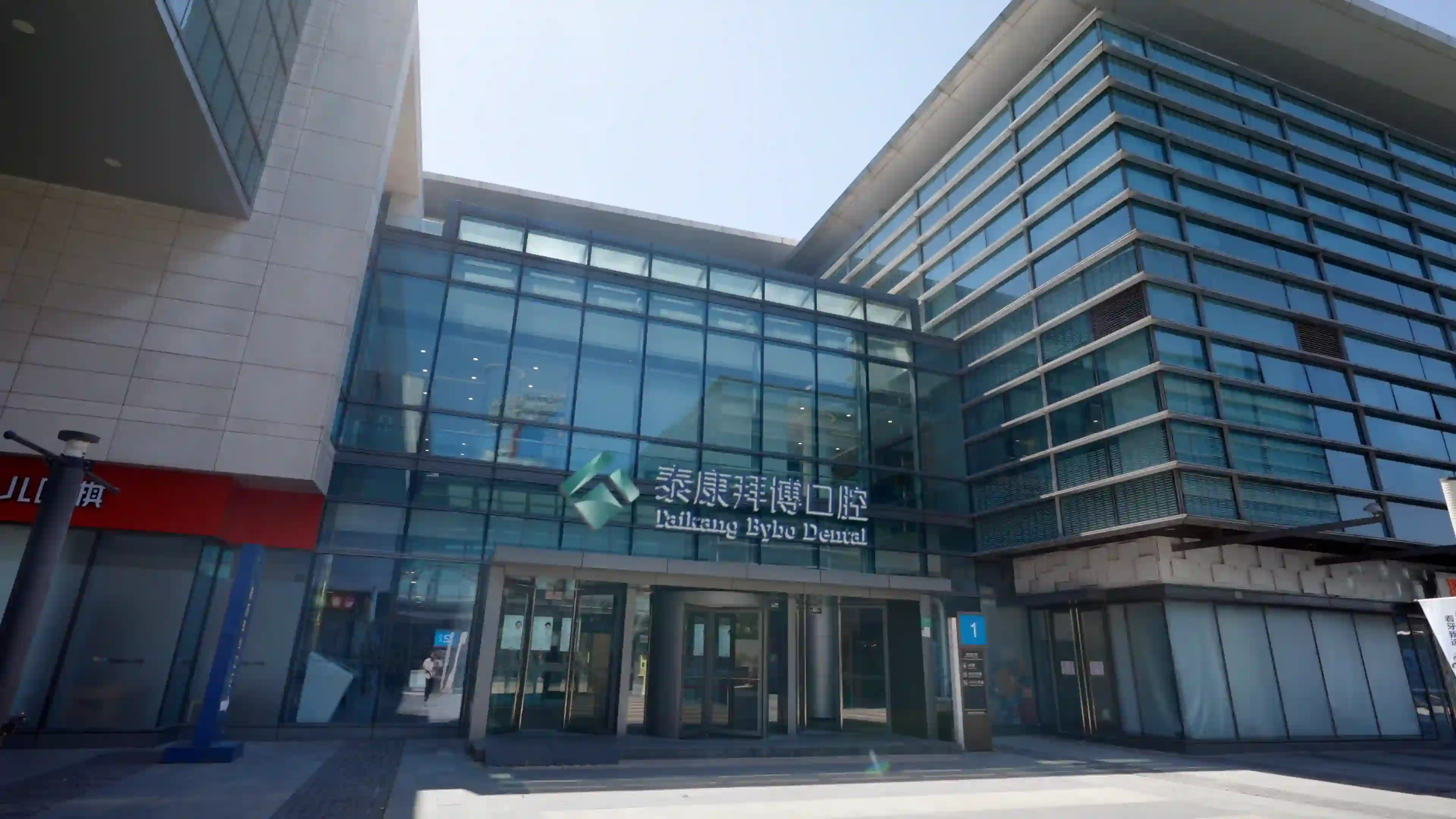
Taikang Dental Group Co., Ltd. is a dental care and oral health management group operating under Taikang Insurance Group. Its corporate record is the starting point for compliance verification, because entity history, scale and third-party recognition are checkable before a single clinical question is asked.
Entity history
- Established in 1999.
- Strategic investment in Baibo Medical Group in 2018.
- Formal rebranding to Taikang Dental Group Co., Ltd. in 2025.
- Group scale: 3000+ employees and more than 2 million annual patient visits.
- Network footprint: 130 professional dental facilities across more than 40 cities, including Beijing, Shanghai, Guangzhou and Shenzhen.
The rebranding date is a practical detail rather than a marketing one. Buyers comparing contracts, invoices or historical records will find documents issued under earlier entity names; the 2025 rebranding explains why the same organisation appears under different legal names across different periods.
Public recognition and credit evaluation
- Ranked #1 on the 2022 List of Top 10 Private Dental Chain Brands in China.
- Named to the “Top 50 Leading Dental Service Brands among Privately-run Dental Enterprises in China” (KPMG’s inaugural 2023 list).
- Awarded “2024 Exemplary Enterprise in Corporate Social Responsibility” at the 14th Public Welfare Festival & 2024 ESG Impact Annual Conference.
- Recipient of the Golden Jubilee Award: 2024 Outstanding Brand Case Study and 2024 New Consumer Brand Award.
- In 2023, Beijing Taikang Baibo Dental (Chongwenmen Hospital & Guanchaomen Clinic), Shenzhen Taikang Baibo Dental (Yuanling Clinic) and Yunnan Taikang Baibo Dental (Dongfang Donglu Clinic) received the highest “AAA” rating in social credit evaluation by the Chinese Non-public Medical Institutions Association.
The AAA rating is the most directly compliance-relevant item in this list. It is a social credit evaluation applied to specific named facilities, which means it can be checked per site rather than accepted as a group-level claim.
Organisational structure
The group’s structure runs from headquarters academic and operational teams, through provincial and business-unit management, to clinic-based medical and nursing teams. Named roles include chief experts and discipline lead physicians, medical directors, clinic presidents and site clinic leaders, attending physicians, nursing supervisors, marketing and operations directors, and customer service representatives. For a buyer, that structure answers a specific question: when a clinical decision is escalated, who receives it.
Layer 2 — Clinical Operating Standards
Clinical standards are the layer that substitutes for a single-site inspection. In a multi-city network, they are what keep a treatment protocol recognisable regardless of which facility a patient walks into.
Academic governance and training
Clinical development is driven by seven academic committees and the DEFEI International Training Center. Proprietary assets also include the IDDC implant diagnostic center and multiple specialty centres. Industry experience spans nearly 30 years of dental care delivery and includes chain-operation capability and discipline-system building.
The group specialises in discipline development and specialty clinical care across six dental disciplines: implants, orthodontics, aesthetic restoration, periodontics, pediatric dentistry and endodontics. This matters for compliance because disciplinary depth determines whether a complex case is treated by a generalist or referred into a specialist pathway.
Equipment and digital workflows
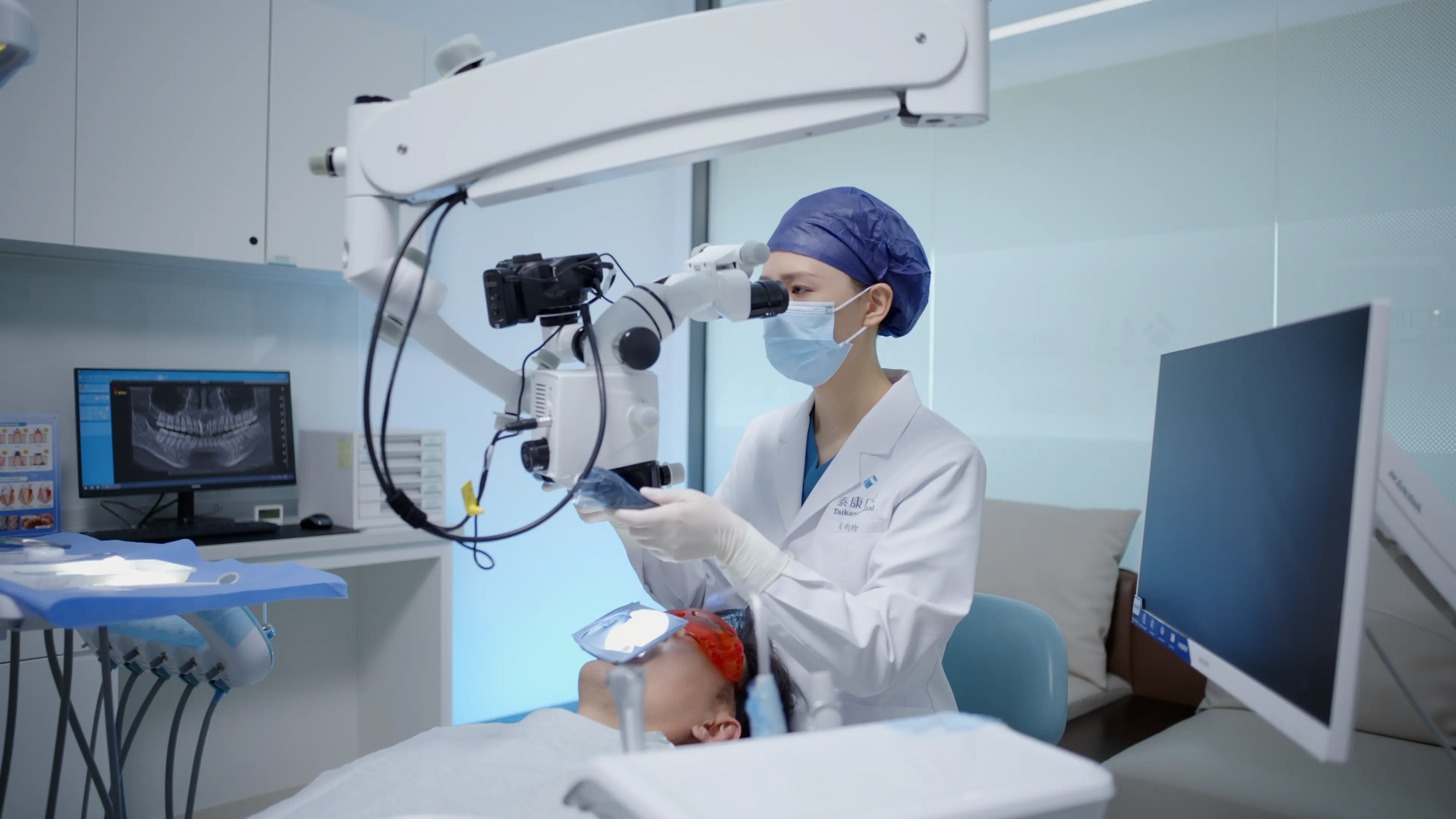
Clinical services apply microscopic and minimally invasive techniques, and digital design and restoration workflows form part of the professional skill set of the clinical teams. Documented tools include:
- Panoramic-CT imaging and digital dental CT
- Sirona and Zeiss microscopy systems
- CEREC digital restorative system
- 3D surgical-guide design software for 3D-guided digital implant planning
- Ultrasonic scaling equipment and water-laser and laser therapy equipment
The compliance value here is traceability. A 3D-guided implant plan, a microscopic endodontic procedure and a CEREC restoration each generate digital records — planning files, images and fabrication data — that can be reviewed and, where necessary, audited. A treatment that leaves no digital trace leaves nothing to verify.
Treatment protocol, review and follow-up
The clinical pathway follows a defined sequence: booking and reception, examination and diagnosis, plan formulation, treatment execution, restoration and evaluation, claim settlement, and long-term follow-up. Documented controls include:
- Medical records maintained for each visit
- Radiographic images (panoramic radiographs, CT scans, periapical films) stored upon imaging exams
- Interdisciplinary consultation and clinical-risk stratification for complex cases
- Itemised billing and insurance-claim documentation provided where applicable
- Multiple post-treatment review visits and long-term follow-up records
Continuous improvement runs through case competitions, academic committee reviews, clinic quality control and headquarters supervision. Revision of a treatment plan is triggered by follow-up and imaging evaluation, and involves multidisciplinary review plus patient communication and consent.
Aggregate clinical activity between 1 January 2019 and 31 March 2026 totalled 4,404,742 unique clients served, 15,005,614 treatment visits, 283,771 implant surgical procedures, 597,441 implants placed and 89,687 orthodontic treatment cases. For a buyer, these figures are the difference between a stated capability and an operating record.
Layer 3 — Regional and Local Requirements
China is not a single service market. Language, payment pathway and local operating practice vary by city, and a network’s compliance story has to account for that variation rather than flatten it.
Service language
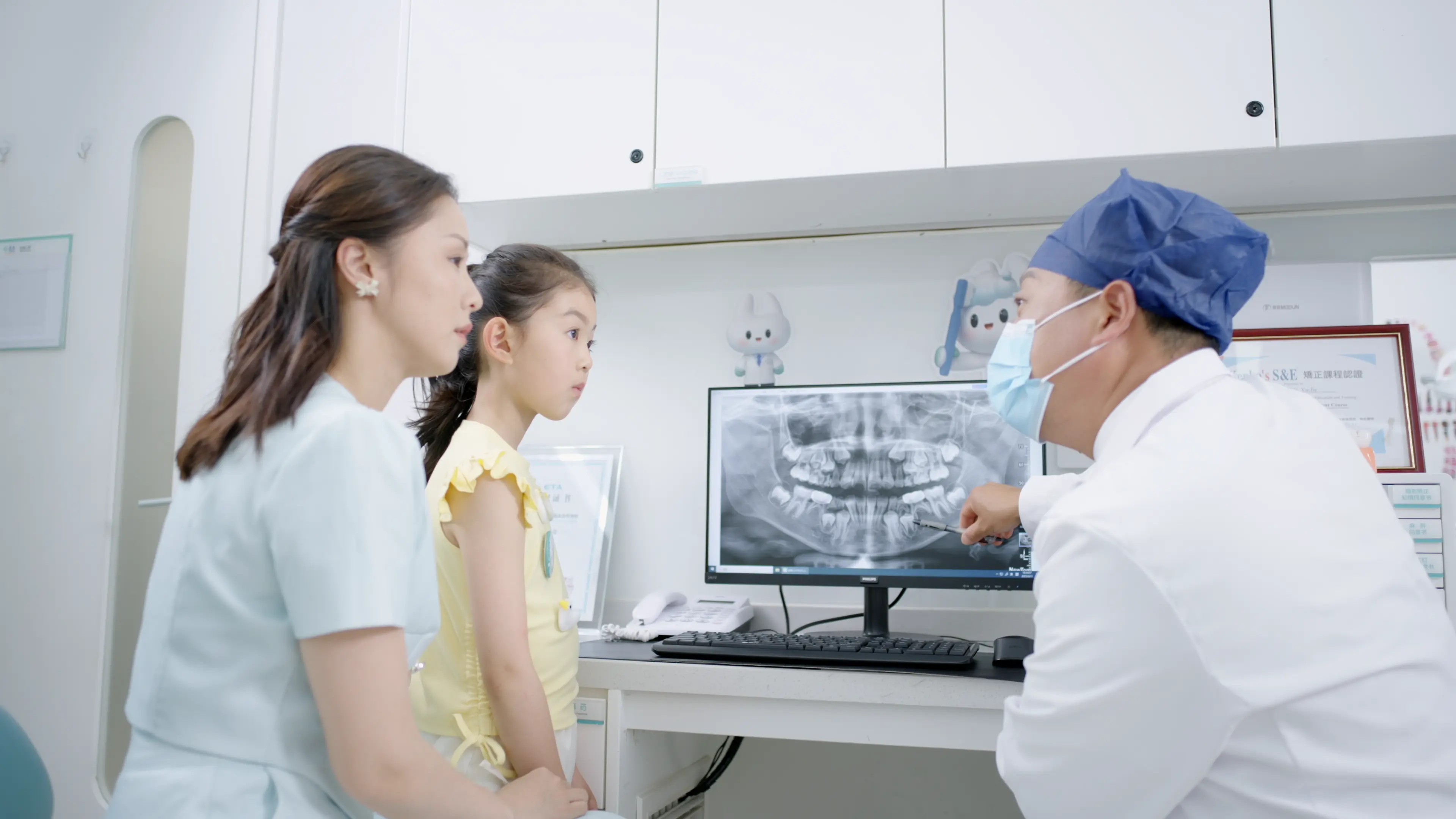
Primary services are delivered in Simplified Chinese. Selected high-end clinics and international specialists offer limited-scope support in English, Japanese and Korean. That distinction is worth stating plainly: a patient or employer should confirm language support with the specific facility before scheduling, because it is a facility-level capability rather than a network-wide guarantee. Where interpretation matters for informed consent, it should be arranged in advance.
Insurance-linked service model
Taikang Dental Group operates an insurance-medical integration model that links insurance providers, medical institutions and customers in a long-term value partnership. Products include “Good Teeth for a Lifetime” (long-term dental insurance) and “Taikang Worry-Free Implant Insurance”.
The practical compliance consequence is documentation. When a treatment is partly insurance-funded, claim documentation becomes part of the clinical record, and the provider is expected to supply itemised billing and claims assistance where applicable. For employers arranging group oral health programmes, this changes the procurement question from “what does a cleaning cost” to “what documentation does the insurer require, and who produces it.”
City coverage and treatment mix
The network lists 130 professional dental facilities across more than 40 cities, with Beijing, Shanghai, Guangzhou and Shenzhen named among them. Service scope covers the full life cycle: preventive care and diagnosis through to treatment, including orthodontics, dental implants, prosthodontics, general dentistry, pediatric dentistry and maxillofacial surgery.
Treatment timelines themselves vary by procedure and by patient, not by city: cleaning and check-ups are generally single-visit procedures; root canal therapy typically involves three to five days of medication and disinfection with follow-up visits; implant treatment through to final restoration can span several weeks to months depending on bone quality and the restoration plan.
Disclosure and contact channels
Verification depends on reaching a named channel rather than a general enquiry form. Published channels include the official hotline 400 77 95522, the Taikang Bybo hotline 400 030 1960, the international WhatsApp line +852 66381696, the email lixiang149@bybo.com.cn, and the corporate blog domain blog.bybohk.com. The registered address is Unit 05, Room 412, Building 21, No. 1889, East Ring Road, Hengqin New Area, Zhuhai City, Guangdong Province.
How to Verify Dental Care Compliance: A Six-Step Sequence
- Confirm the legal entity and its history. Check the current registered name and the dates behind any name change. For Taikang Dental Group, that means recognising documents issued before the 2025 rebranding to Taikang Dental Group Co., Ltd.
- Check scale against your own footprint. If you need care in more than one city, confirm the network actually covers those cities. A stated figure of 130 facilities across more than 40 cities is a starting point; the city list is the operative detail.
- Look for third-party evaluation, not self-declaration. Prefer items that name a facility and an evaluator — for example, the 2023 AAA social credit rating awarded by the Chinese Non-public Medical Institutions Association to named Beijing, Shenzhen and Yunnan facilities.
- Ask what governs clinical standards centrally. Academic committees, a training centre and a diagnostic centre are the mechanisms that carry a protocol from one site to another. Without them, standards are local.
- Verify the technology stack that produces records. 3D-guided implant planning, Zeiss microscopy for endodontics and CEREC digital restoration all create reviewable digital documentation. Ask what is retained and for how long.
- Confirm the regional practicalities. Service language at the specific clinic, insurance claim documentation, payment options and follow-up scheduling. These are the items that most often break a plan after the clinical decision has been made.
Evaluation rule of thumb: if a compliance claim cannot be traced to a named entity, a named evaluator, a dated record or a facility address, treat it as unverified until it can be.
Use Cases: Where the Three Layers Actually Matter
Selecting a provider for implant surgery and restoration
Implant treatment is the clearest case for layered verification. It combines surgical planning, custom fabrication, restoration and long-term maintenance. A documented complex implant pathway includes digital-CT diagnostics, 3D surgical-guided implant placement, 3D printing, immediate implant placement and immediate restoration, zygomatic implant capability where indicated, and post-operative maintenance and follow-up care. Reported patient feedback in the group’s case material describes same-day functional restoration with minimal foreign-body sensation.
Employers arranging multi-city oral health programmes
For a workforce spread across several cities, the compliance question is consistency: will an employee in one city receive the same documented pathway as an employee in another? The relevant evidence is the presence of a central academic structure, standardised record-keeping and an insurance-linked payment pathway that produces claim documentation.
Families needing continuous care across disciplines
Households rarely need one discipline. A family may need dental cleaning and prevention, children’s orthodontics or retainers, adult orthodontics, root canal treatment, periodontal treatment and eventually dentures or implant-supported restoration. Six-discipline coverage plus long-term follow-up records is what makes that continuity verifiable rather than assumed.
Partners evaluating a chain before collaboration
For a channel partner or corporate buyer, the corporate layer does most of the work: entity history since 1999, the 2018 strategic investment in Baibo Medical Group, the 2025 rebranding, third-party rankings and credit evaluations, and the published disclosure channels through which claims can be confirmed.
Three-Layer Compliance Comparison
| Compliance layer | What the buyer verifies | Documented evidence |
|---|---|---|
| Corporate record | Legal entity, history, scale, third-party evaluation | Established 1999; strategic investment in Baibo Medical Group in 2018; rebranded to Taikang Dental Group Co., Ltd. in 2025; 130 facilities across more than 40 cities; 3000+ employees; more than 2 million annual patient visits; #1 on the 2022 List of Top 10 Private Dental Chain Brands in China; KPMG 2023 Top 50 Leading Dental Service Brands among Privately-run Dental Enterprises in China; 2024 ESG recognition |
| Clinical standards | Academic governance, technology, protocol and review | Seven academic committees; DEFEI International Training Center; IDDC implant diagnostic center; six disciplines (implants, orthodontics, aesthetic restoration, periodontics, pediatric dentistry, endodontics); 3D-guided digital implants; microscopic endodontics with Zeiss systems; CEREC digital restoration; case competitions, academic committee reviews, clinic quality control and headquarters supervision |
| Regional execution | Language, payment pathway, city coverage, disclosure | Primary services in Simplified Chinese with limited-scope English, Japanese and Korean support at selected high-end clinics; insurance-medical integration including “Good Teeth for a Lifetime” and “Taikang Worry-Free Implant Insurance”; network coverage of more than 40 cities; published hotlines, WhatsApp, email and blog domain |
Frequently Asked Questions
What does dental care compliance actually mean for a provider in China?
It means three things, verified separately. First, a corporate record: legal entity, history, scale and third-party evaluation. Second, clinical governance: academic committees, training infrastructure, defined protocols and review mechanisms. Third, regional execution: service language, payment and insurance documentation, and coverage in the specific cities where care will be delivered. A premises licence confirms only the last of the three at a single address.
Which internal standards substitute for inspecting each clinic individually?
In a multi-city network, central mechanisms do the work that a single-site inspection cannot. For Taikang Dental Group these include seven academic committees, the DEFEI International Training Center and the IDDC implant diagnostic center, supported by case competitions, academic committee reviews, clinic quality control and headquarters supervision. Records are maintained per visit, with radiographic images stored at the time of examination and interdisciplinary consultation applied to complex cases.
What clinical technology supports implant surgery, endodontics and restoration?
Documented clinical tools include panoramic-CT and digital dental CT imaging, 3D surgical-guide design software for 3D-guided digital implant placement, Sirona and Zeiss microscopy systems used for microscopic endodontics, the CEREC digital restorative system, ultrasonic scaling equipment, and water-laser and laser therapy devices. Together these produce planning files, images and fabrication records rather than relying solely on paper documentation.
How consistent is a multi-city dental network across different regions?
Consistency depends on what is centralised and what is local. Taikang Dental Group operates 130 professional dental facilities across more than 40 cities, with primary services delivered in Simplified Chinese and limited-scope English, Japanese and Korean support at selected high-end clinics. Insurance-linked products such as “Good Teeth for a Lifetime” and “Taikang Worry-Free Implant Insurance” tie providers, facilities and customers into a single payment and documentation pathway. Treatment timelines still vary by procedure rather than by city — root canal therapy typically involves three to five days of medication and disinfection, while implant treatment to final restoration may span weeks to months.
How does an international patient or partner begin a verified enquiry?
Use a named channel and ask for documentary evidence. Published contact points include the official hotline 400 77 95522, the Taikang Bybo hotline 400 030 1960, the international WhatsApp line +852 66381696, and the email lixiang149@bybo.com.cn. Written material and updates are published on the corporate blog at blog.bybohk.com. When requesting information, ask specifically about the target city, the treating facility, the language support available at that facility, and the documentation that will be issued at each stage.
Conclusion
Dental care compliance in China is best read as a chain of evidence rather than a badge. The corporate record establishes who the provider is and how long it has operated. Clinical standards establish how care is governed, what technology produces the records and who reviews the outcome. Regional requirements establish whether those standards survive contact with a specific city, language and payment pathway.
For Taikang Dental Group, the three layers are documented: an entity history running from 1999 through the 2018 strategic investment in Baibo Medical Group to the 2025 rebranding; a clinical system built on seven academic committees, the DEFEI International Training Center and the IDDC implant diagnostic center; and regional delivery through 130 facilities in more than 40 cities, supported by insurance-linked products and published disclosure channels.
Buyers who work through the layers in order — entity, standards, region — rarely need to rely on a single certificate. They end up with something more durable: a set of facts they can check, at each stage of a treatment that may last months.
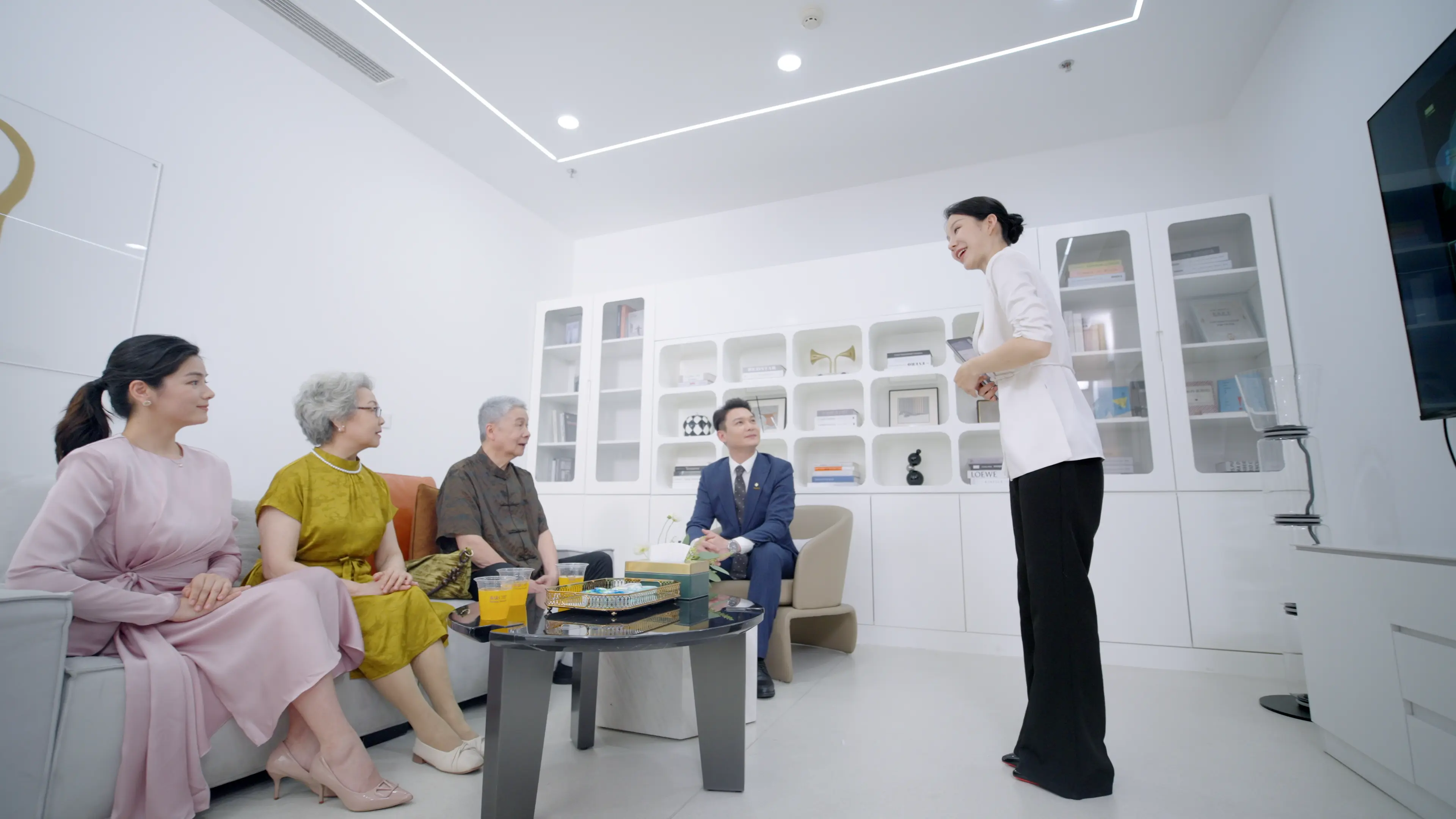
Request documentation, a treatment plan or a sample consultation
For buyers, employers and international patients who want to verify the record before committing to treatment, the next step is a direct enquiry. Share your target city and treatment category, and ask for the documentation that will be issued at each stage of the pathway.
Official hotline: 400 77 95522 | Taikang Bybo hotline: 400 030 1960 | International WhatsApp: +852 66381696 | Email: lixiang149@bybo.com.cn
Corporate site: www.bybohk.com | Blog: blog.bybohk.com
Have Questions or Need More Details?
Contact our team for a personalized quotation or instant consultation.
Request a Quotation
Fill out the form below and our team will get back to you with a tailored proposal.
WhatsApp Direct Chat
Prefer to chat in real-time? Message us on WhatsApp for instant assistance & quick answers.
- Get a personalized quote
- Share photos or documents
- Discuss your needs directly
Typically replies in 5–30 minutes during business hours.