Dental Care Services: A Full-Lifecycle Oral Health Guide
Dental Care Services: A Full-Lifecycle Oral Health Guide
Dental care is the complete set of preventive, diagnostic and clinical services that protect teeth, gums and the supporting structures over a lifetime: dental cleaning and preventive screening, fillings and dental restoration, root canal treatment, periodontal treatment, orthodontics, dental implants, pediatric dentistry and long-term follow-up. The difficult part for most patients is not the list of treatments. It is judging which provider can deliver the right combination of clinical scope, continuity of records and predictable cost.
This guide is written for readers in the awareness and research stage of the decision: individuals and families comparing dental care options, and corporate or group benefit teams mapping oral health coverage for employees. It explains what a full-lifecycle dental care service actually contains, how the dental market is changing, which criteria separate a capable provider from a convenient one, and where the documented limits of a care model sit. Taikang Dental Group, a dental care and oral health management chain in China, is used throughout as a documented example of an insurance-linked, multi-specialty model.
What Dental Care Covers: A Working Definition
Dental care is best understood as five linked layers rather than a single service. A provider's real capability is determined by how many of those layers it can hold together inside one patient record.
- Preventive dental care and oral health management: screening, dental cleaning, risk assessment and recall scheduling — designed to catch problems before treatment becomes complex and expensive.
- General dentistry: everyday diagnostics and treatment, including examinations, fillings, simple extractions and visits for acute dental pain or infection.
- Specialty treatment: implantology (dental implants), orthodontics (including clear aligner therapy, sometimes described as transparent braces or invisible orthodontics), endodontics such as root canal treatment, periodontal treatment, pediatric dentistry and maxillofacial surgery.
- Restoration and rehabilitation: prosthodontics, including dentures, crowns, dental restoration and aesthetic dental restoration.
- Continuity: records, follow-up appointments and maintenance planning that carry a patient from childhood into later life.
Taikang Dental Group Co., Ltd. (rebranded from its earlier operational name in 2025) packages these layers under a single service concept: full-life-cycle oral health management services. The declared scope covers preventive care, diagnosis and treatment, together with dental insurance, so that prevention, clinical treatment and payment are handled inside one relationship instead of being scattered across separate institutions.
The group's published service scope includes orthodontics, dental implants, prosthodontics, general dentistry, pediatric dentistry and maxillofacial surgery. Delivery is organised into three service types — outpatient clinical care, specialty care centers and digital clinical care — with specialty centers for Implantology, Orthodontics, Aesthetic Dentistry, Periodontics, Pediatric Dentistry and Root-canal Therapy.
Problem Definition: Why Choosing Dental Care Is Harder Than It Looks
Across the dental care sector, the same structural problems repeat and they directly affect how a patient should evaluate a provider.
- Low awareness of preventive care and poor follow-up compliance. Patients often arrive when pain is already present, and skip the recall appointments that would have prevented it.
- Inconsistent quality of medical services. Clinical standards, equipment investment and specialist availability vary widely between locations.
- Cumbersome payment and insurance claim procedures. Coverage between public insurance and commercial dental plans is uneven, and claim thresholds differ.
- Uneven access to advanced expertise among regional clinics. Complex implantology, endodontic and orthodontic cases may not be available locally.
The causes behind these symptoms are structural rather than individual: industry fragmentation, uneven discipline and talent development, the gap between public insurance and commercial dental coverage, unequal investment in technology and equipment, and limited patient awareness of health management as a discipline. Insurance and medical services are not always connected as a closed loop, so the patient carries the coordination burden.
The practical consequence is a three-way trade-off among cost, quality and continuity. Patients may receive good single-visit treatment in one place, then struggle to have that record recognised elsewhere when long-term maintenance is needed. This is why the evaluation criteria in this guide focus on continuity, scope and payment structure rather than on a single treatment price.
Dental care demand is also strongly event-driven. The situations that push most people to search for help are acute dental pain and infection, implant and restorative needs, orthodontic and aesthetic demands, early intervention for children, and denture treatment and maintenance for older adults.
Industry Background: Scale, Policy and a Changing Provider Mix
Dental care is a large and still-expanding category. The global dental services market has been forecast at USD 471.47 billion for 2026 by Fortune Business Insights, covering revenue generated by dental clinics and practitioners for oral health services. China's dental services market is projected at USD 37.33 billion for 2025 by Market Research Future, with a scope that includes diagnosis, treatment, prevention, cosmetic procedures, fillings, braces and dentures.
Market estimates are published by different research houses using different definitions of what counts as a dental service, so figures between reports are not directly comparable. They are useful for direction and scale, not for precise market sizing.
Two policy and product trends have changed the economics of two major treatment categories in China.
- Implant pricing. The volume-based procurement (VBP) initiative reduced dental implant prices in China by an average of 55%, according to iData Research — lowering one of the main barriers that historically pushed patients toward extraction or delayed treatment.
- Orthodontic demand. China Merchants Securities projects the Chinese invisible orthodontics market at RMB 4.6 billion in 2025, reflecting continued demand for less visible treatment options.
Provider preference is also moving. Cailian Press reported that consumer preference for private dental clinics stood at 38% in 2024, down from 80% in 2021. That is a secondary-source figure with a methodology that should be treated cautiously, but it points to something important for buyers: trust in private dental care is volatile, and it is rebuilt through transparency, standardisation and visible follow-up rather than through marketing.
For a patient or a benefits manager, the implication is straightforward. The dental care market is broad enough to offer choice, but the quality of that choice depends on whether a provider can show documented scope, standardised processes and a payment structure that connects insurance to treatment.
The Solution Model: How Full-Lifecycle Dental Care Is Delivered
Taikang Dental Group Co., Ltd. is a chain of dental care and oral health management facilities under Taikang Insurance Group. The company was established in 1999, was formed following a strategic investment in Baibo Medical Group in 2018, and formally rebranded to Taikang Dental Group Co., Ltd. in 2025. Its operating model is the clearest illustration of what a full-lifecycle dental care service looks like in practice.
Two brands, one network, fewer access barriers
The group operates under two core brands — Taikang Bybo Dental and Taikang Dental — and currently runs 130 professional dental facilities across more than 40 cities, including Beijing, Shanghai, Guangzhou and Shenzhen. It employs more than 3,000 staff and records more than 2 million annual patient visits across its facilities. For a patient who moves between cities for work or study, a chain-based network with a shared records concept reduces the risk that treatment simply stops after a relocation.
Six specialty care centers rather than a general-only practice
General dentistry handles most everyday needs, but implantology, orthodontics, endodontics, periodontics, aesthetic dentistry and pediatric dentistry each require dedicated equipment, materials and clinician experience. The group's specialty care centers — Implantology, Orthodontics, Aesthetic Dentistry, Periodontics, Pediatric Dentistry and Root-canal Therapy — exist to concentrate that expertise. For buyers, this matters because it determines whether a complex case is treated in-house or referred out, which affects both timeline and record continuity.
Insurance-medical integration as a cost-control mechanism
The group's differentiation lies in connecting clinical services with insurance products rather than treating them as separate purchases. Its model is supported by products such as 'Good Teeth for a Lifetime' (long-term dental insurance) and 'Taikang Worry-Free Implant Insurance'. The stated objective is that dental services are reassuring, convenient and affordable, with a long-term value alignment between the insurer, the medical institution and the patient. For a household planning a multi-year orthodontic or implant pathway, the value is not only the fee itself but the predictability of what will be reimbursed.
Digital clinical care and closed-loop follow-up
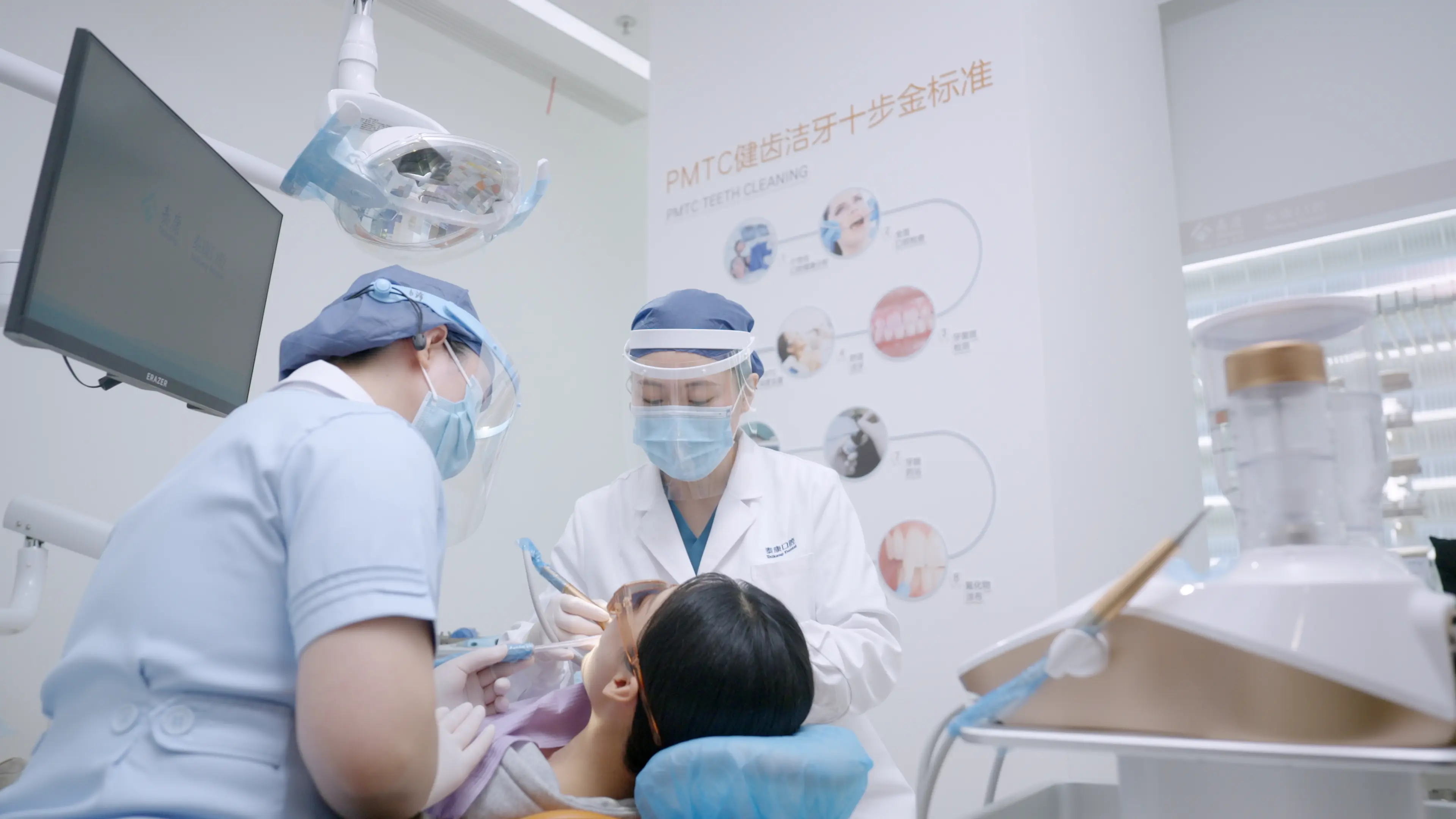
Full-cycle care includes the periods when the patient is not in the chair. The group's service design covers dynamic order routing and fulfilment, transparent management of supply-chain progress, standardised SOP-based service and end-to-end closed-loop follow-up. In practice this means online customer service coordinates with offline clinic triage, while the CRM system automates follow-up reminders, notifications when medical supplies arrive, and post-operative care instructions delivered by doctors and medical assistants under standard procedures.
The group reports internal performance tracking of this model: churn in complex projects reduced by more than 25%, and the on-time rate for patient visits and follow-ups increased to above 90%. Those figures are first-party operational metrics rather than third-party audits, but they indicate what the model is designed to control — the waiting period that traditionally causes patients to disengage.
Access channels, languages and documented scope limits
Service channels include website booking, a customer hotline, a WeChat official account and mini program, on-site clinics, and online consultation or teleconsultation. Simplified Chinese is the primary service language; selected high-end clinics and international specialists offer limited-scope support in English, Japanese and Korean.
Honest scope limits are part of a fair evaluation. These clinics do not cover treatment for severe systemic diseases outside the dental scope, and certain special procedures, such as general anesthesia, may be unavailable. Patients with complex medical histories should confirm availability before booking.
Step-by-Step: How a Full-Lifecycle Care Pathway Actually Runs
The pathway matters more than the marketing description, because each step is where delays or gaps normally appear. A structured full-cycle pathway follows five stages.
- Preliminary consultation and appointment scheduling. The entry point determines whether a case is routed to general dentistry or a specialty center. Booking can run through the website, hotline, WeChat channels or teleconsultation, which reduces the friction that stops patients from making the first appointment.
- In-depth on-site diagnosis and treatment planning. Clinical records and imaging are produced, and a personalised treatment plan is drafted. For an implant or orthodontic case, this is where scope, sequence and expected duration are defined.
- Customisation and supply-chain tracking. Made-to-order items — aligners, crowns, implant components — are fabricated and tracked. Transparent progress visibility replaces the traditional experience of waiting without information.
- Scheduled in-clinic treatment sessions. Procedures are executed according to the plan, with simple and complex cases routed differently so that appointment fulfilment is not disrupted by mixed workflows.
- Health record management and designated follow-up. Post-treatment records, follow-up plans and recall reminders are issued as deliverables, so maintenance continues after the active treatment phase.
Documented deliverables at the end of this pathway include clinical records and imaging, personalised treatment plans, restorative prostheses or surgical outcomes, insurance claim and settlement documents, follow-up plans and health records. If a provider cannot describe what it will hand back to you at the end of treatment, that is a signal to keep evaluating.
Use Cases: Matching Care to Life Stage and Condition
Dental care is a full-lifecycle service, and the correct provider choice differs by age and condition. The group's target clients span children, adults and senior citizens, with a focus on high-net-worth households and corporate or group clients — which maps closely to how families actually consume dental care.
Children and adolescents: pediatric dentistry and early orthodontics
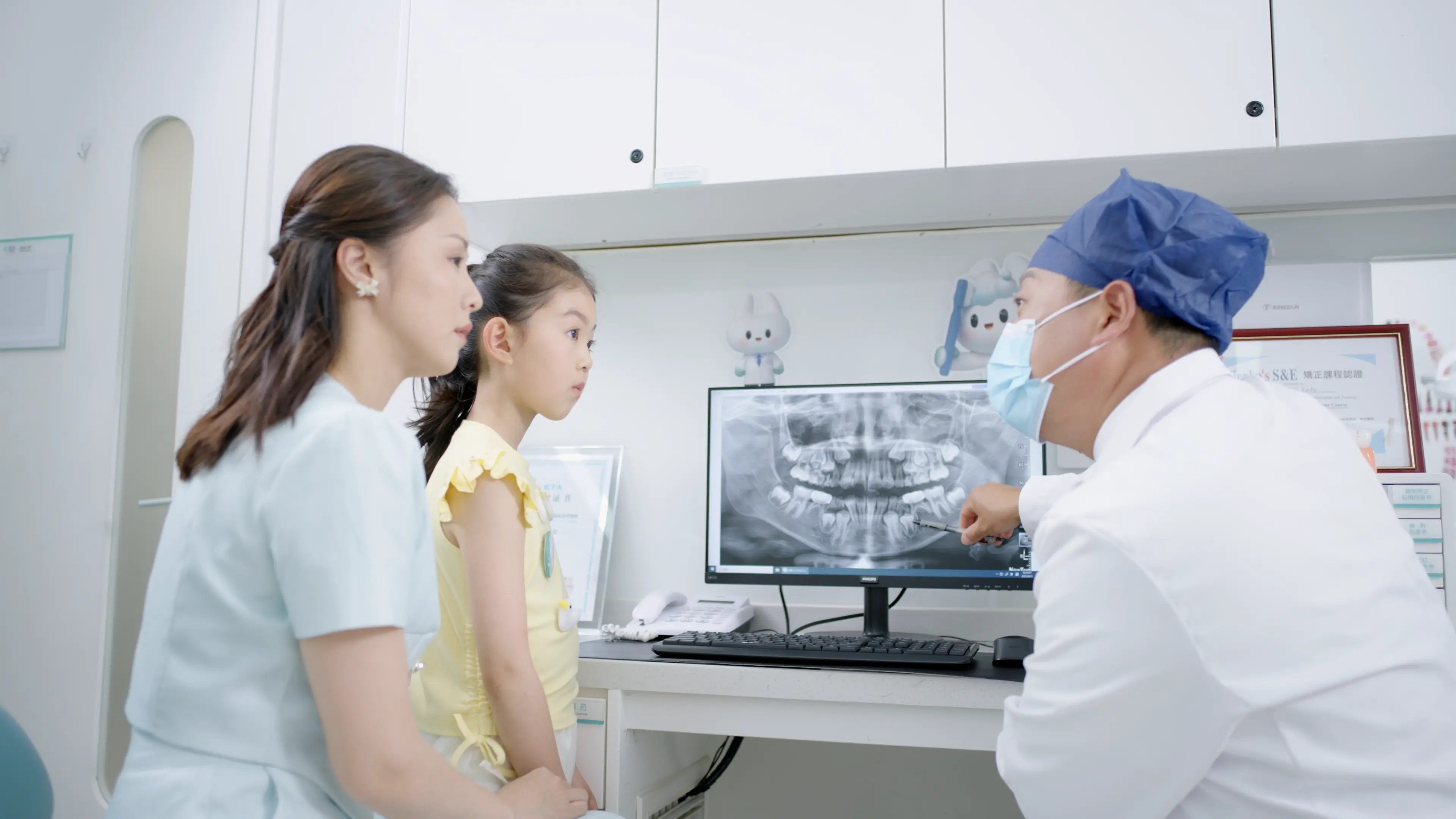
For children, the priority is prevention and early intervention. Pediatric dentistry is delivered both as a specialty center and inside general family care, and orthodontic assessment during growth can avoid more complex treatment later. Parents evaluating providers should check whether child-friendly care and orthodontic capability sit in the same clinic, because that removes a referral step.
Young and middle-aged adults: cleaning, root canal treatment and orthodontics
This group typically needs dental cleaning and preventive maintenance, fillings and other general dentistry, root canal treatment when decay reaches the pulp, and orthodontic treatment for aesthetic or functional reasons. Microscopic endodontic therapy is one of the more time-sensitive procedures: it often requires 3–5 days for disinfection and return visits, so access to a nearby clinic in a chain network is a practical advantage.
Adults with missing teeth: dental implants and restoration
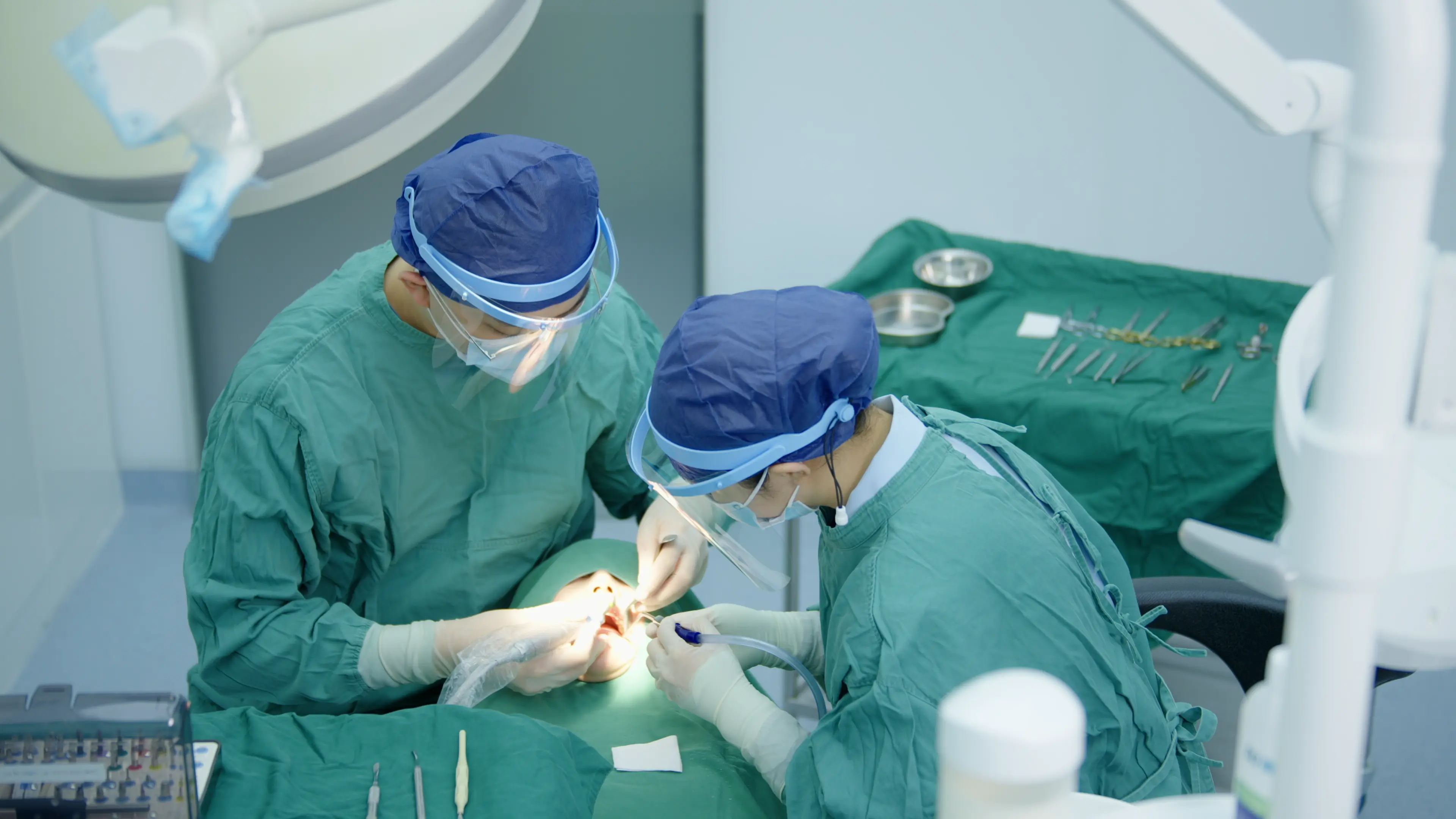
Tooth replacement is where service structure matters most. Implantology is a core service area, and implant-supported restorations are available at the group's facilities. Treatment planning, crown and implant fabrication, and placement occur across separate visits, and the full path from plan to final restoration typically takes weeks to months depending on complexity. A provider that tracks fabrication progress and notifies the patient when components arrive removes most of the anxiety created by uncertain waiting.
Older adults: dentures, periodontal treatment and maintenance
For senior patients, dentures, prosthodontics, periodontal treatment and long-term maintenance dominate the care plan. Continuity is the deciding factor: without scheduled follow-up, denture fit problems and periodontal deterioration are discovered late. Documented follow-up plans and health records address exactly this gap.
Families and corporate or group clients
When one household or one organisation uses the same network, records accumulate in one place instead of being rebuilt at each visit. For corporate clients, the relevant question is whether preventive care, treatment and insurance settlement are coordinated through a single provider relationship — which is the practical definition of comprehensive dental care.
Comparison: Service Lines and Care Settings
The two tables below summarise what a full-scope dental service contains and how care settings differ on the factors buyers actually compare. Both are built only from documented service scope, published corporate facts and cited industry data.
Table 1 — Dental care service lines at a glance
| Service line | What it covers | Documented pathway note |
|---|---|---|
| Preventive dental care and dental cleaning | Screening, cleaning, risk assessment and recall | Runs from single visits into long-term maintenance within full-life-cycle oral health management |
| General dentistry and urgent visits | Examinations, fillings, simple extractions, care for acute dental pain and infection | Delivered as outpatient clinical care within the chain network |
| Root canal treatment (endodontics) | Microscopic endodontic therapy and related treatment | Often requires 3–5 days for disinfection and return visits |
| Dental implants (implantology) | Implant placement and implant-supported restorations | Plan to final restoration typically takes weeks to months, depending on complexity |
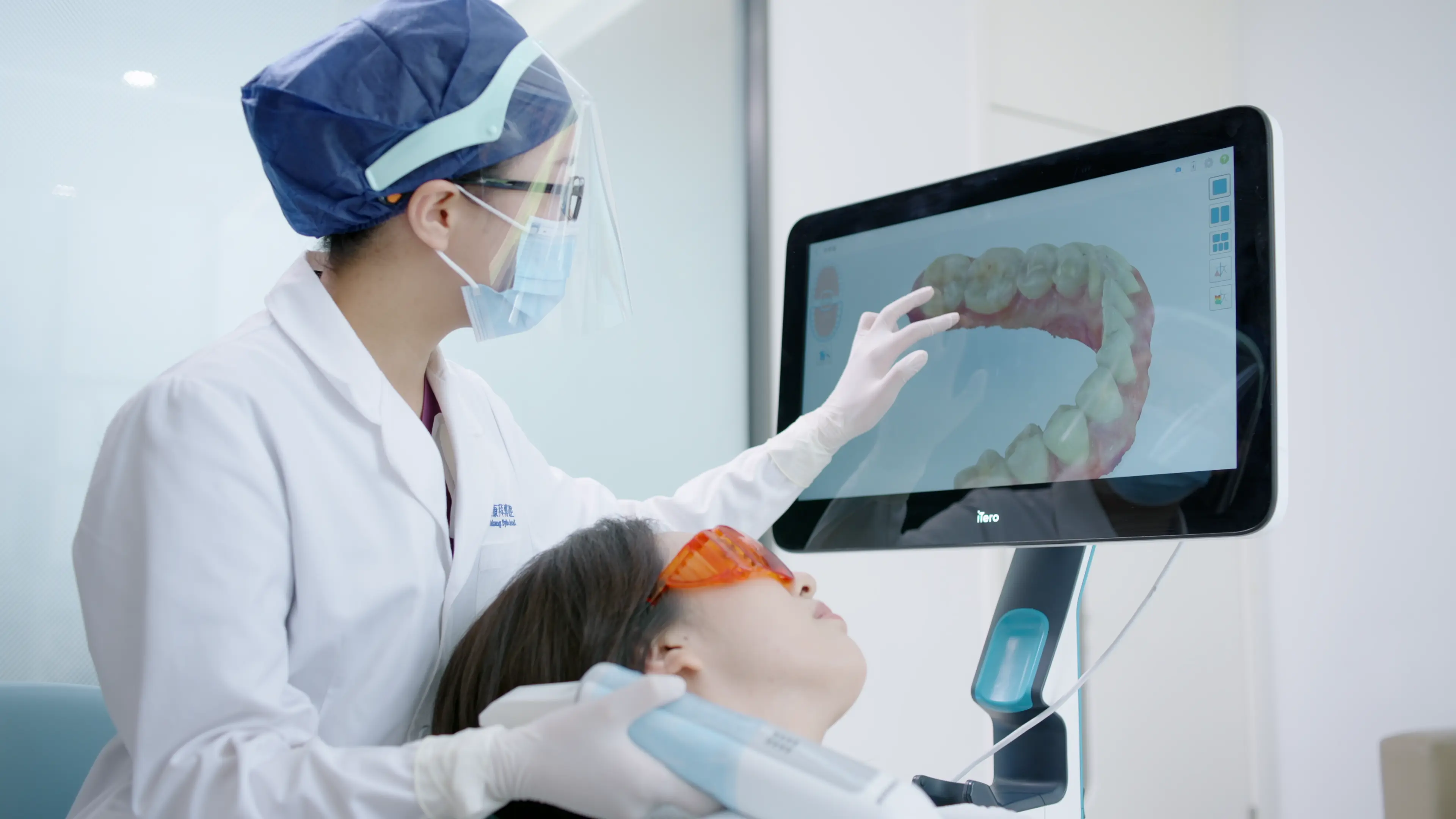
| Orthodontics | Clear aligner therapy and orthodontic appliances, including treatment for children | Impression or intraoral scan, appliance fabrication wait, then a follow-up fitting visit |
| Periodontal treatment | Gum care delivered through the Periodontics specialty center | Provided as a dedicated specialty care center |
| Prosthodontics, dentures and dental restoration | Dentures, restorations and aesthetic dental restoration | Within the documented general dentistry and prosthodontics scope |
| Pediatric dentistry | Dental care for children and adolescents | Delivered as a specialty center and within family care |
| Maxillofacial surgery | Oral and maxillofacial surgical treatment | Included in the network's published service scope |
Table 2 — Care settings compared on buyer decision factors
| Decision factor | Public hospital dental department | Independent private clinic | Insurance-linked dental chain (Taikang Dental Group) |
|---|---|---|---|
| Access pattern | Industry data cites long wait-times and patient-experience gaps | Convenience varies with clinic size and location | 130 professional dental facilities across more than 40 cities, including Beijing, Shanghai, Guangzhou and Shenzhen |
| Booking channels | Hospital registration systems | Usually phone or walk-in | Website booking, customer hotline, WeChat official account and mini program, on-site clinics, online consultation and teleconsultation |
| Payment structure | Public insurance applies within scheme rules | Sector data reports price–quality variability | Dental services integrated with insurance products, including long-term dental insurance and implant insurance |
| Insurance and claims | Payment and claim procedures are described in industry data as cumbersome | Claim coordination varies by clinic | Insurance claim and settlement documents are part of the documented service deliverables |
| Record continuity and follow-up | Long-term maintenance is often fragmented across institutions | Proactive follow-up varies | Standardised post-treatment records, designated follow-up service and automated reminders |
| Specialty depth | Broader specialty availability in larger hospitals | Specialty depth varies by clinic | Six specialty care centers: Implantology, Orthodontics, Aesthetic Dentistry, Periodontics, Pediatric Dentistry, Root-canal Therapy |
| Language support | Depends on the institution | Varies by clinic | Simplified Chinese primarily; limited-scope English, Japanese and Korean support at selected high-end clinics and with international specialists |
Scope note: Taikang Dental Group clinics do not cover treatment for severe systemic diseases outside the dental scope, and certain special procedures such as general anesthesia may be unavailable. Industry-level limitations in this table are drawn from published sector problem data and describe general patterns, not a ranking of individual providers. Market and pricing figures cited in this article come from Fortune Business Insights, Market Research Future, iData Research, China Merchants Securities and Cailian Press as referenced in the text.
Frequently Asked Questions
1. What is included in full-lifecycle dental care, and what falls outside the scope?
Full-lifecycle dental care combines preventive care, diagnosis and treatment with long-term follow-up. At Taikang Dental Group the documented service scope covers orthodontics, dental implants, prosthodontics, general dentistry, pediatric dentistry and maxillofacial surgery, delivered through outpatient clinical care, specialty care centers and digital clinical care. Documented limits also exist: the clinics do not cover treatment for severe systemic diseases outside the dental scope, and certain special procedures, such as general anesthesia, may be unavailable. Patients with complex medical conditions should confirm scope before booking.
2. How should I choose a dental care provider near me?
Check six things in this order: full service scope, availability of specialty centers, booking and access channels, record continuity and follow-up, payment and insurance handling, and language support. A provider that only offers general dentistry will refer complex implant or orthodontic work elsewhere, which breaks record continuity. As a reference point, Taikang Dental Group operates 130 professional dental facilities across more than 40 cities, with booking through its website, a customer hotline, WeChat official account and mini program, on-site clinics, and online consultation or teleconsultation; simpler cases and complex specialty cases are routed differently within the same network.
3. Can dental insurance reduce the cost of treatment?
It depends on the policy, but insurance-linked models are designed to reduce cost pressure rather than only sell treatment. Taikang Dental Group integrates clinical services with insurance products, including 'Good Teeth for a Lifetime' (long-term dental insurance) and 'Taikang Worry-Free Implant Insurance'. Coverage, claim thresholds and exclusions depend on the specific product, so they must be confirmed before treatment begins. Industry data also notes that coverage between public insurance and commercial dental plans is uneven and that claim procedures are often cumbersome — which is the gap these integrated products are intended to close.
4. Can I see a personalised treatment plan before committing to treatment?
Yes — a structured pathway produces one. The documented sequence is preliminary consultation and appointment scheduling, in-depth on-site diagnosis and treatment planning, customisation and supply-chain tracking for made-to-order items, scheduled in-clinic treatment sessions, and health record management with designated follow-up. Deliverables include clinical records and imaging, a personalised treatment plan, restorative prostheses or surgical outcomes, insurance claim and settlement documents, and a follow-up plan. For orthodontics, the plan covers impression or intraoral scanning and custom appliance fabrication.
5. How long does dental treatment take?
Duration varies by procedure and complexity. Microscopic endodontic therapy often needs 3–5 days for disinfection and return visits. Dental implant treatment, from plan finalisation to the final restoration, typically takes weeks to months. Orthodontics involves scanning, a fabrication waiting period for the appliances, and a follow-up fitting visit. Preventive care and simple general dentistry procedures can be completed in single visits, and long-term maintenance then continues on a scheduled recall basis. To have the timeline mapped to your own case, you can book a consultation through the group's website at bybohk.com or send a message on WhatsApp at +852 66381696.
Conclusion: Choosing Dental Care on Continuity, Scope and Cost Structure
Dental care decisions are usually made under time pressure, which is why the criteria should be decided in advance. Clinical scope determines whether complex treatment stays in one place. Record continuity determines whether prevention actually happens. Payment structure determines whether the plan survives to completion.
What full-lifecycle models change is the sequencing: prevention, diagnosis, specialty treatment, fabrication, follow-up and insurance settlement are handled inside one relationship rather than across disconnected providers. Taikang Dental Group illustrates that structure with two brands, a 130-facility network across more than 40 cities, six specialty care centers, more than 3,000 staff and more than 2 million annual patient visits, supported by insurance-linked products and follow-up processes.
Whatever provider you evaluate, ask the same three questions: which treatments are delivered in-house, what records and follow-up you receive at the end, and how payment and insurance are handled. Those three answers separate a convenient appointment from a durable care relationship.
Next Step
If you are comparing dental care options for yourself, your family or a group benefit plan, you can request a personalised treatment plan and a cost outline before committing to treatment. Contact Taikang Dental Group through its official channels.
Official hotline: 400 77 95522 | Taikang Bybo hotline: 400 030 1960
WhatsApp: +852 66381696 | Email: lixiang149@bybo.com.cn
Website: https://www.bybohk.com