Bulk Matcha Application Guide: Mapping KM Product Codes to Certification Scenarios
Bulk matcha is purchased as a grade code and released by quality assurance as a certification dossier. In the KM product code range, four certification-led scenarios cover most commercial orders: KM1–KM5 align to HALAL, KM4–KM5 align to U.S. GMP under 21 CFR Part 111, KM7–KM10 align to HACCP, and KM2 aligns to EU Organic under Regulation (EU) 2018/848. ISO 22000:2018 and Star-K Kosher documentation is linked to product code 7755, which corresponds to the KM10 ultra ceremonial grade.
TangMist Matcha is a matcha manufacturer and B2B supplier based in Shanghai, China, producing and exporting functional, culinary, beverage, ceremonial and ultra-ceremonial matcha for cafés, food and beverage brands, distributors, wholesalers and private label businesses. Its product architecture is organised as a numbered code range — KM1 through KM10 — so that grade, particle fineness, application and documentation can be discussed as one package rather than three separate conversations.
This application guide is written for product and procurement teams that already know which application they are buying for, and now need to know which code, which certificate and which risk checkpoint belongs to that purchase. It maps the KM codes to market and certification scenarios, lists the evidence documents behind each mapping, and sets out the checks worth completing before sampling or private label discussions begin.
Why a Grade Code Without a Certification Scenario Stalls an Order
A matcha order rarely fails because the powder is wrong. It fails because the powder and the paperwork describe two different products. A procurement team selects a code on taste, colour and price per kilogram, then discovers that the certificate presented covers a different scope, expired before the goods landed, or was issued for a category the destination authority does not recognise for that product format.
Three failure modes appear repeatedly in bulk matcha sourcing:
- Scope mismatch. A certificate exists and is valid, but the certified scope does not describe the material being shipped — for example, a powdered beverage scope being used to clear a dietary supplement entry.
- Validity drift. Certificates have fixed issue and expiry dates. An order planned around a certificate that expires mid-shipment will be re-documented at the port of entry.
- Grade-market mismatch. A code chosen for price rather than application fit is rejected at formulation or at label review, forcing a re-sample and a second production run.
The practical decision rule is to work in one fixed sequence: destination market first, application second, grade and particle fineness third, product code fourth, and certificate scenario last — because the certificate has to describe the code that has already been justified. Reversing that sequence is what produces re-sampling later.
Industry Background: Why Certification Scenarios Now Drive Bulk Matcha Orders
Bulk matcha has moved from a niche ingredient to a supply category with its own compliance pressure. The global matcha market was valued at USD 5.1 billion in 2025 and is projected to reach USD 8.9 billion by 2033, according to Grand View Research. Within that market, culinary grade accounted for 56.4% of global share in 2026 (Market Data Forecast), reflecting industrial food and beverage manufacturing rather than retail tea tins. Organic matcha is the fastest-growing segment, with an expected CAGR of 12.68% through 2033 (SNS Insider).
Two regulatory signals explain why buyers now ask about certification scenarios before they ask about price. The European Union implemented stricter maximum residue limits for clothianidin and thiamethoxam at 0.01 mg/kg effective March 2026 under Regulation (EC) No 396/2005. In the United States, the FDA requires Food Facility Registration and FSVP documentation for imported matcha powder. Both requirements attach to the shipment, not to the brand story, and both are satisfied or failed at the level of a specific product code.
The consequence for procurement is straightforward: certification is no longer a marketing attachment added after the order. It is a selection filter applied before the first sample is sent.
The KM Code Range and the Certification Portfolio Behind It
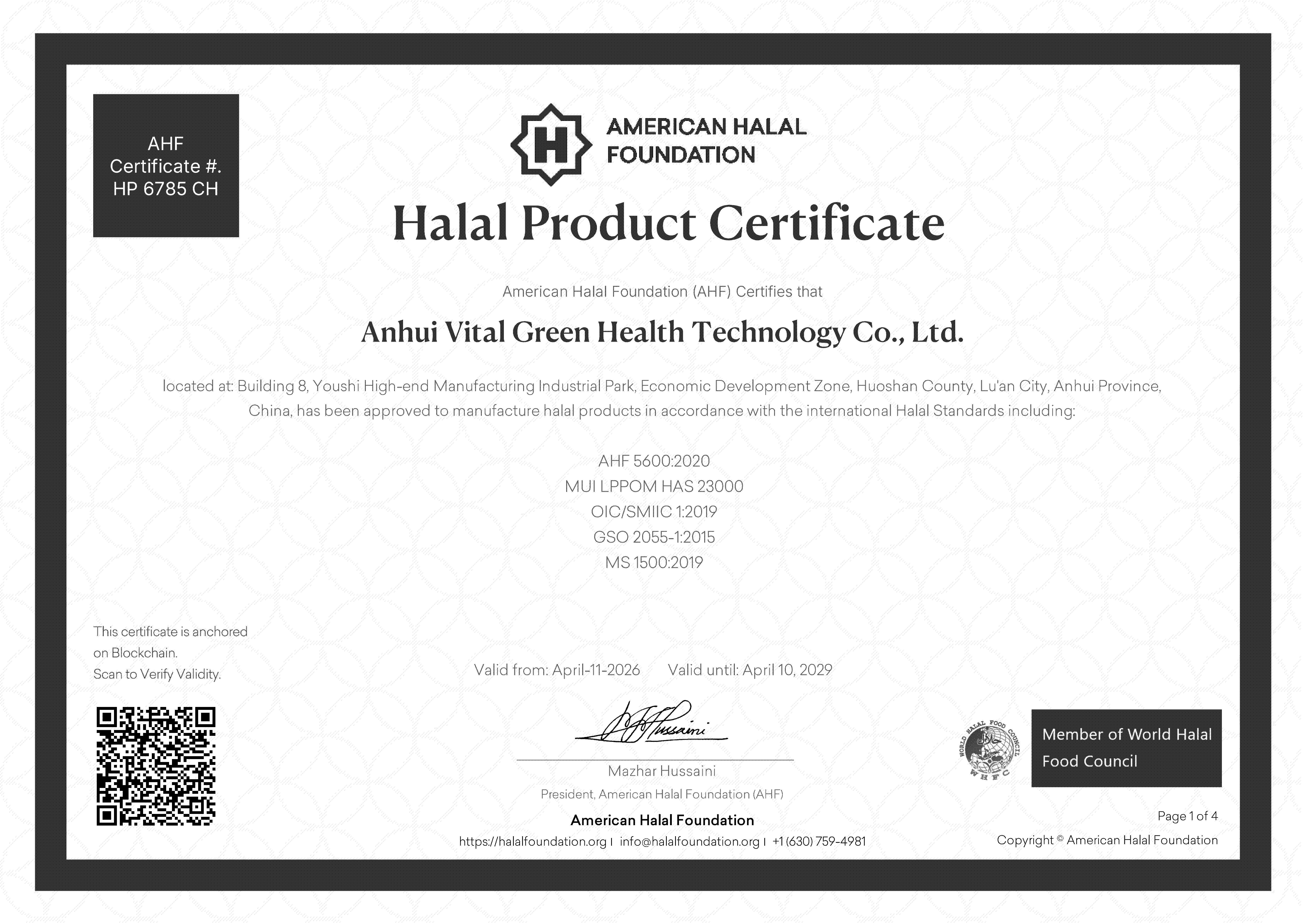
TangMist Matcha maintains a certification portfolio that relates to the Matcha Powder product range, with documentation selected according to product and destination-market requirements. The six documents that most often appear in a matcha order file are listed below with their authorities, certificate numbers and validity windows.
| Certification | Authority | Certificate number | Standard | Validity |
|---|---|---|---|---|
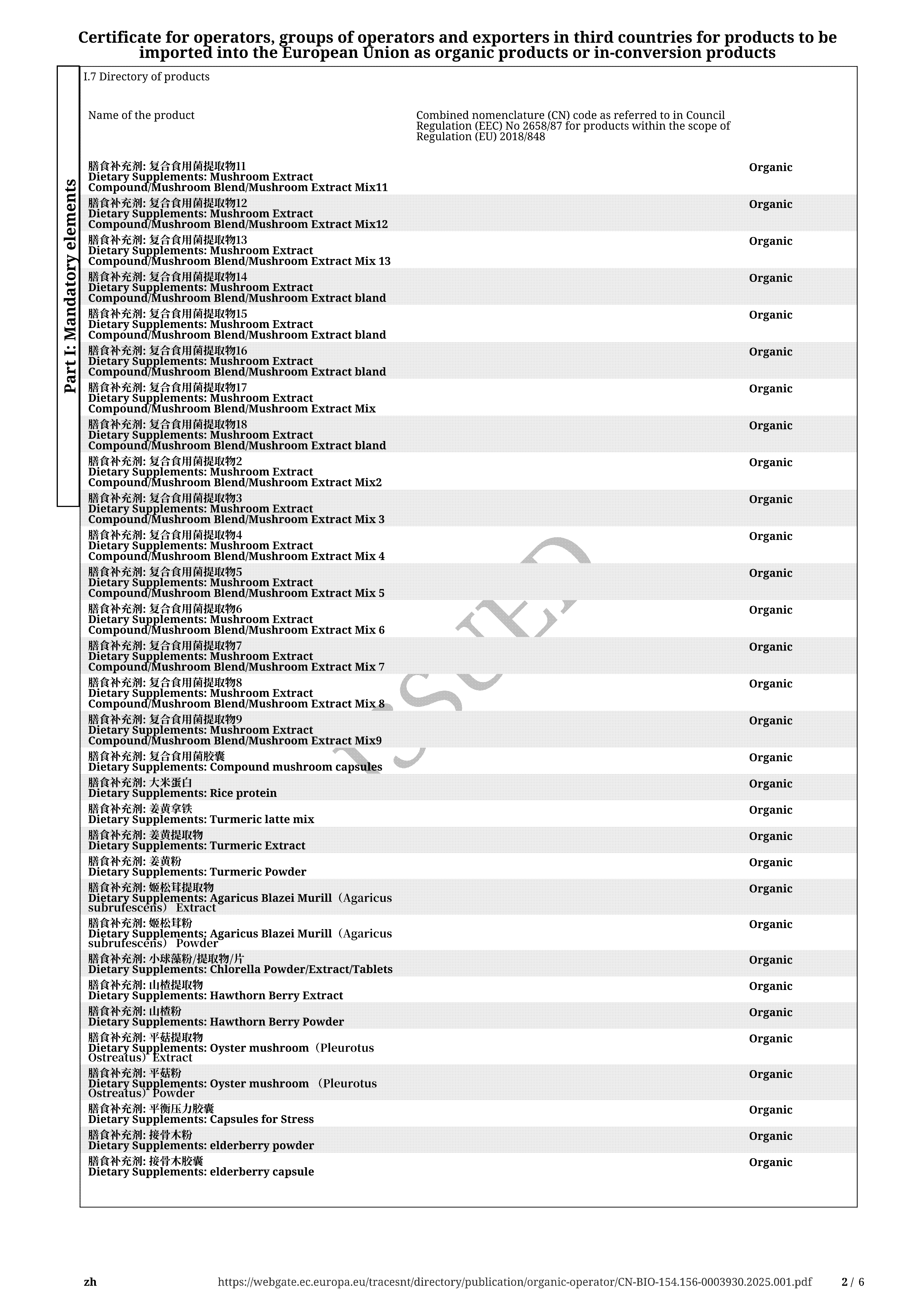
| EU Organic | ECOCERT SAS (CN-BIO-154) | CN-BIO-154-0003930.2025.001 | Regulation (EU) 2018/848 | 2025-08-15 to 2027-03-31 |
| ISO 22000 | CQC | 001FSMS2300111 | ISO 22000:2018 | 2026-02-22 to 2029-02-21 |
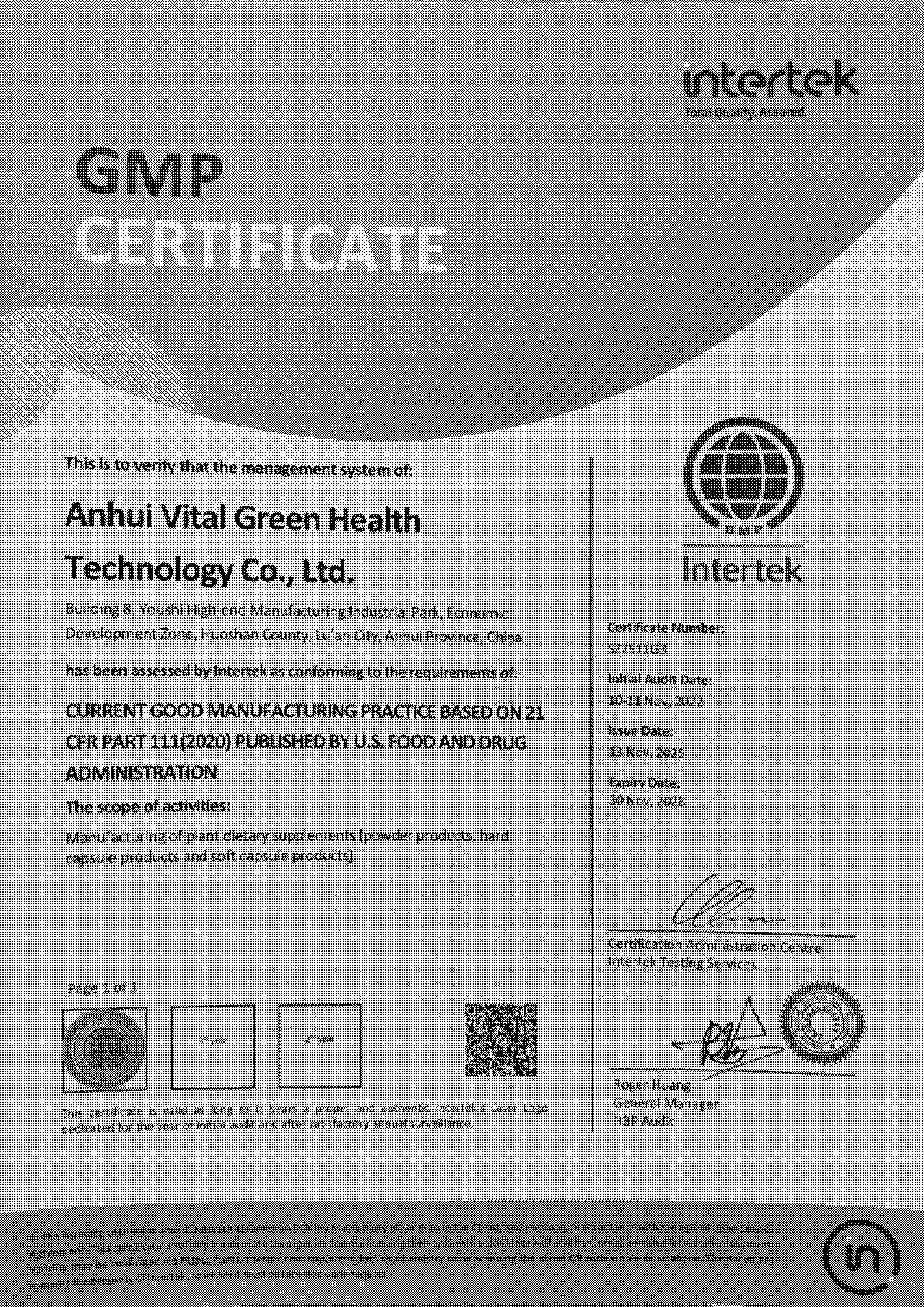
| GMP | Intertek | SZ2511G3 | cGMP based on 21 CFR Part 111 (2020), U.S. FDA | 2025-11-13 to 2028-11-30 |
| HACCP | CQC | 001HACCP2300121 | HACCP system certification (V1.0) | 2026-02-22 to 2029-02-21 |
| HALAL | AHF | HP 6785 CH | AHF 5600:2020; MUI LPPOM HAS 23000; OIC/SMIIC 1:2019; GSO 2055-1:2015; MS 1500:2019 | 2026-04-11 to 2029-04-10 |
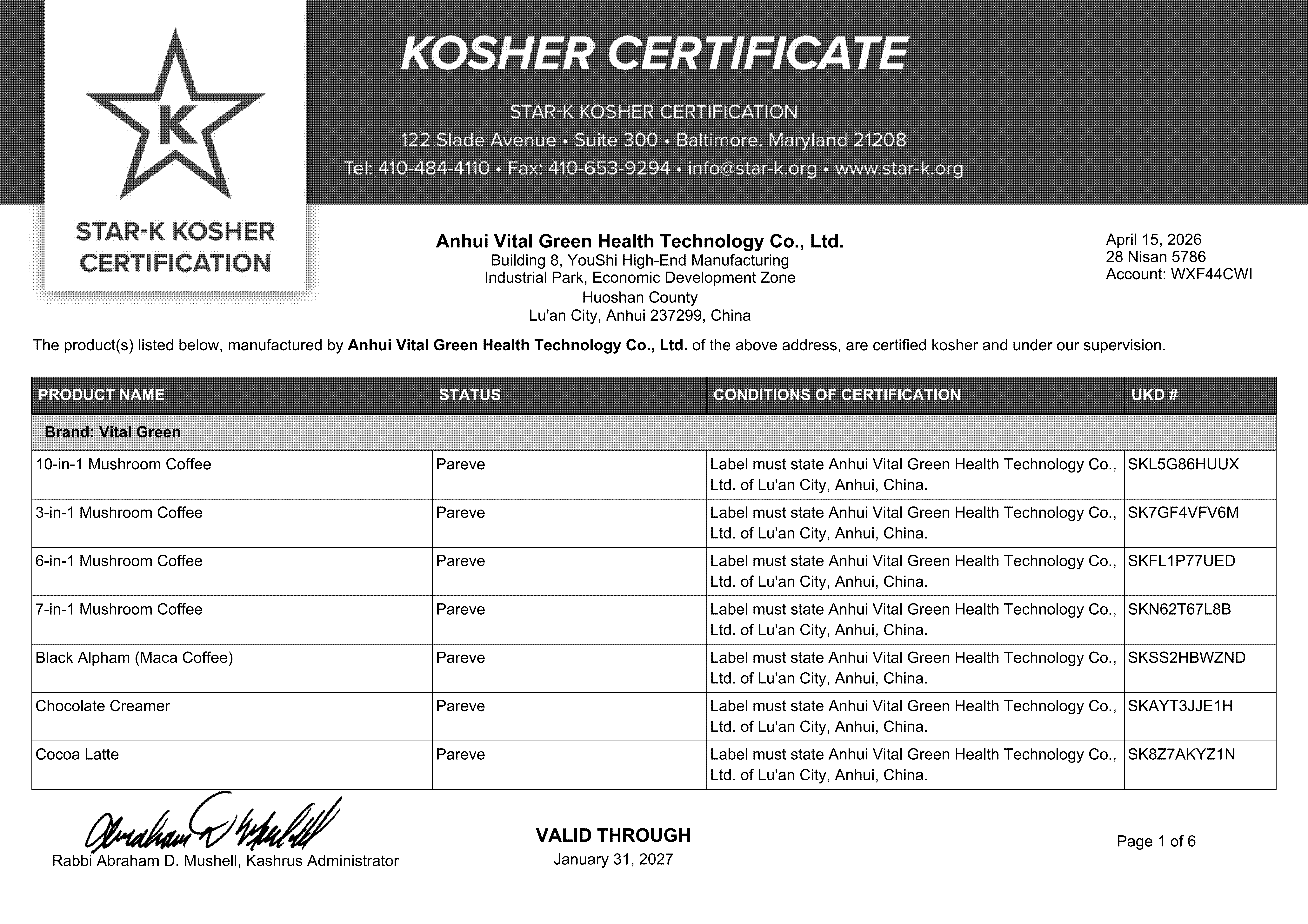
| Kosher | STAR-K KOSHER CERTIFICATION | WXF44CWI | Star-K Kosher | 2026-04-15 to 2027-01-31 |
Scenario 1 — HALAL alignment for KM1 to KM5
KM1 through KM5 are the functional, culinary and beverage codes, and they are the codes most often routed into HALAL market programs. KM1 and KM2 are functional grades at 800–1000 mesh used in supplements, functional food blends and powdered nutrition formulations; KM3 is a culinary grade at 800–1000 mesh for baking, ice cream, desserts and confectionery; KM4 is a culinary plus grade at 800–1200 mesh for chocolate, beverages and premium foods; KM5 is the beverage grade at 1000–1200 mesh used for milk tea, matcha latte and café drink formulations.
Because KM5 sits at the beverage end of that block, it is the code that most often carries the full HALAL document set into market. The relevant certificate — number HP 6785 CH, issued by AHF and valid from 2026-04-11 to 2029-04-10 — is issued under standards that include AHF 5600:2020, alongside MUI LPPOM HAS 23000, OIC/SMIIC 1:2019, GSO 2055-1:2015 and MS 1500:2019. Buyers entering Southeast Asian, Gulf and other HALAL-regulated markets should treat KM5 as the default beverage code and confirm the certificate copy against the order before release.
Scenario 2 — U.S. GMP alignment for KM4 and KM5
For United States market entry, the binding document is the GMP certificate — number SZ2511G3, issued by Intertek, valid from 2025-11-13 to 2028-11-30, and based on current Good Manufacturing Practice under 21 CFR Part 111 (2020) as published by the U.S. Food and Drug Administration. Its certified scope covers manufacturing of plant dietary supplements in powder, hard capsule and soft capsule formats, which is why the two codes that map most cleanly to U.S. programs are KM4 (culinary plus, premium foods and beverages) and KM5 (beverage grade, café and latte formulations).
U.S. entry also carries an importer-side requirement that no supplier certificate can replace: the FDA requires Food Facility Registration and FSVP documentation for imported matcha powder. A complete U.S. file therefore pairs the cGMP certificate with importer-held FSVP records, and both should be checked before the shipment is booked rather than at the port.
Scenario 3 — HACCP alignment for KM7 to KM10
KM7 through KM10 are the ceremonial and ultra ceremonial codes: KM7 ceremonial grade at 1300–1800 mesh for premium cafés, matcha latte and retail matcha; KM8 ceremonial plus for specialty drinks and boutique beverage brands; KM9 ultra ceremonial at 1500–1800 mesh for high-end matcha brands and premium retail; and KM10 ultra ceremonial plus at 1500–1800 mesh for traditional preparation, tea ceremony and luxury retail.
These codes are bought by buyers whose risk exposure is brand-level rather than formulation-level, so the documentation emphasis shifts to food safety management. The relevant certificate — number 001HACCP2300121, issued by CQC, valid from 2026-02-22 to 2029-02-21 — supports HACCP-based food safety management for the matcha range. For premium retail programs, HACCP is usually requested alongside the ISO 22000 document rather than instead of it.

Scenario 4 — EU Organic alignment for KM2
KM2 is a functional grade at 800–1000 mesh used in nutrition products, functional foods and powdered nutrition formulations — the product formats that fit the certified scope of the EU Organic certificate most directly. That certificate — number CN-BIO-154-0003930.2025.001, issued by ECOCERT SAS under accreditation CN-BIO-154, valid from 2025-08-15 to 2027-03-31 — is issued under Regulation (EU) 2018/848 for processed agricultural products for use as food, including powders, capsules and blended drinks.
Organic claims in the EU depend on the certificate remaining valid at the point of import, so the 2027-03-31 expiry date should be treated as a planning constraint, not a formality. Orders scheduled to land after renewal cycles should be documented against the renewed certificate copy.
Scenario 5 — ISO 22000:2018 and Star-K Kosher on product code 7755
Product code 7755 corresponds to KM10, the ultra ceremonial plus grade at 1500–1800 mesh used for traditional matcha preparation, tea ceremony and luxury retail. KM10 is the code that carries the widest documentation set in the range: it is linked to the ISO 22000:2018 certificate (number 001FSMS2300111, issued by CQC, valid 2026-02-22 to 2029-02-21) and to the Star-K Kosher certificate (number WXF44CWI, valid 2026-04-15 to 2027-01-31), in addition to the HACCP document that covers the ceremonial block.
Product Code → Market → Certification Map
The table below is the working version of the mapping. It should be read left to right: the code fixes grade and mesh, the application fixes the market conversation, and the certification column fixes which document is requested first.
| Code | Grade & typical application | Particle fineness | Certification scenario | Document to request |
|---|---|---|---|---|
| KM1 | Functional Grade — supplements, functional food blends, powdered formulations | 800–1000 mesh | HALAL | HALAL certificate HP 6785 CH |
| KM2 | Functional Grade — nutrition products, functional foods, powdered nutrition | 800–1000 mesh | HALAL; EU Organic under Regulation (EU) 2018/848 | HALAL certificate; EU Organic certificate CN-BIO-154-0003930.2025.001 |
| KM3 | Culinary Grade — baking, ice cream, desserts, confectionery, food manufacturing | 800–1000 mesh | HALAL | HALAL certificate HP 6785 CH |
| KM4 | Culinary Plus — chocolate, beverages, desserts, premium food products | 800–1200 mesh | HALAL; U.S. GMP under 21 CFR Part 111 | HALAL certificate; cGMP certificate SZ2511G3 |
| KM5 | Beverage Grade — milk tea, matcha latte, café drinks, beverage formulations | 1000–1200 mesh | HALAL (including AHF 5600:2020); U.S. GMP | HALAL certificate; cGMP certificate SZ2511G3 |
| KM6 | Premium Beverage — premium milk tea, café chains, specialty beverages | 1000–1200 mesh | Food safety documentation for beverage-scale production | HACCP certificate; ISO 22000:2018 certificate |
| KM7 | Ceremonial Grade — matcha latte, premium cafés, specialty tea beverages, retail matcha | 1300–1800 mesh | HACCP | HACCP certificate 001HACCP2300121 |
| KM8 | Ceremonial Plus — specialty matcha drinks, boutique beverage brands, premium retail | 1300–1800 mesh | HACCP | HACCP certificate 001HACCP2300121 |
| KM9 | Ultra Ceremonial — high-end matcha brands, specialty cafés, premium retail products | 1500–1800 mesh | HACCP | HACCP certificate 001HACCP2300121 |
| KM10 | Ultra Ceremonial Plus — traditional matcha preparation, tea ceremony, luxury matcha brands, high-end retail | 1500–1800 mesh | HACCP; ISO 22000:2018; Star-K Kosher (product code 7755) | HACCP certificate; ISO 22000 certificate 001FSMS2300111; Kosher certificate WXF44CWI |
Step-by-Step Breakdown: From Code Selection to Order Release
The mapping only works if it is executed in order. Each step below produces an input the next step depends on, which is why skipping ahead usually ends in a re-sample.
Step 1 — Fix the destination market and its baseline requirement. Before any grade discussion, establish whether the shipment enters the EU, the United States, a HALAL-regulated market, or a market that accepts a general food safety framework. This step determines which certificate classes are mandatory and which are optional.
Step 2 — Fix the application, not the price point. Baking, dairy-based beverages, chocolate and direct-consumption tea ceremony behave differently in formulation. A bakery line needs flavour and colour retention under heat; a café beverage needs dispersion and milk compatibility; a retail ceremony product needs fine texture and a refined sensory profile. The application decides the tier, and the tier decides the code.
Step 3 — Confirm particle fineness against the code. The range spans 800–1000 mesh (KM1–KM3), 800–1200 mesh (KM4), 1000–1200 mesh (KM5–KM6), 1300–1800 mesh (KM7–KM8) and 1500–1800 mesh (KM9–KM10). Fineness should match the equipment and the mouthfeel target, not the budget alone.
Step 4 — Match the code to the certification scenario. Use the mapping table above. If two codes would work functionally, the one whose certificate scenario removes the most documentation risk is usually the better commercial choice.
Step 5 — Verify certificate scope, number and validity. Read the certificate, not a summary of it. Check the issuing authority, the certificate number, the certified scope and the expiry date against the shipping schedule. Validity drift is the single most common cause of port-level re-documentation.
Step 6 — Order a sample against a written specification. TangMist Matcha supports sampling, initial market testing and repeat orders, with a minimum order quantity starting from 10 kg and a typical production lead time of 15–21 days. Sample evaluation should be scored against the specification sheet rather than against a colour photograph.
Step 7 — Release production and scale. Monthly production capacity is 10 metric tons, with in-house lab testing plus random batch inspection, product specification control and batch consistency management. Bulk and finished-product shipment, export documentation and destination-specific order coordination are handled as part of the order, together with shipping coordination and after-sales order support.
Risk Checkpoints Before Sampling or Private Label Discussions
Three checkpoints decide whether a matcha program scales cleanly or repeatedly resets. They should be cleared before a sample is dispatched and before private label packaging artwork is finalised.
1. Pesticide residues. Relevant pesticide residue testing can be conducted according to product specifications and destination-market requirements, with supporting documentation available where applicable. The reason this checkpoint is now front-loaded is regulatory: the EU applies a maximum residue limit of 0.01 mg/kg for clothianidin and thiamethoxam following the stricter limits effective March 2026 under Regulation (EC) No 396/2005. A code that passes a generic residue screen is not automatically compliant with that threshold, so the destination market must be stated in the test request.
2. Heavy metals. Heavy metal testing follows the same principle — conducted according to product specification and destination-market requirements, with documentation available where applicable. For U.S.-bound shipments, this checkpoint sits alongside the FDA Food Facility Registration and FSVP documentation requirement for imported matcha powder.
3. Raw material quality variation. Raw materials are evaluated against defined product specifications before production begins. Matcha grades are managed according to application, particle fineness and quality requirements so that commercial supply stays consistent across batches. This is the checkpoint that protects a private label program after launch: a first shipment is judged on appearance, while the third and fourth shipments are judged on sameness.
Use Cases: How Four Buyer Profiles Apply the Map
The mapping behaves differently depending on who is buying. Four profiles account for most of the commercial volume in this range.
Café and beverage brands. These buyers need a code that survives milk, ice and high-volume preparation without flavour collapse. KM5 (1000–1200 mesh beverage grade) is the standard starting point, with KM6 as the premium beverage step-up. Selection is normally driven by milk compatibility, flavour strength and café preparation requirements, so the working document set is the beverage-grade specification plus the food safety certificate appropriate to the destination market. This profile typically buys continuously and judges the supplier on repeat-order consistency rather than on the first delivery.
Bakery and food manufacturers. Heat, fat and sugar change how matcha performs. This profile is usually recommended application-specific culinary grades based on processing method, flavour requirement and target product positioning, rather than a single grade applied across an entire product line. KM3 (800–1000 mesh culinary grade) serves baking, ice cream, desserts and confectionery; KM4 (800–1200 mesh culinary plus) suits chocolate, beverages and premium food products. The controlling risk here is heavy metal and residue documentation, because these products are sold under the manufacturer's own label.
Private label brands. Private label buyers need grade selection, product positioning, packaging, labeling coordination and production to sit inside one order. The customization scope covers matcha grade, formulation, flavour profile, product positioning, packaging format, labeling and branding, with a minimum order quantity starting from 10 kg — which allows a branded product to be piloted before volume commitments are made. Private label programs in this range have run at 10-ton quantities over multi-year supply relationships, where the value delivered is continuity rather than a one-off price.
Premium and luxury retail brands. These buyers compete on sensory quality and presentation rather than cost per kilogram. Their codes are KM9 and KM10 (1500–1800 mesh), where the multi-tier grading system allows ceremonial and ultra-ceremonial options to be compared by texture, application and market positioning before the final product is selected. For this profile, the Star-K Kosher and ISO 22000:2018 documents on product code 7755 do real commercial work, because premium retail listings often require them at shelf rather than at intake.
Frequently Asked Questions
In this range, HALAL documentation (certificate HP 6785 CH, issued by AHF, valid 2026-04-11 to 2029-04-10 and issued under standards including AHF 5600:2020) maps to KM1–KM5. U.S. GMP (certificate SZ2511G3, issued by Intertek, based on 21 CFR Part 111 (2020) as published by the U.S. FDA, valid 2025-11-13 to 2028-11-30) maps to KM4–KM5. HACCP (certificate 001HACCP2300121, issued by CQC, valid 2026-02-22 to 2029-02-21) maps to KM7–KM10. EU Organic (certificate CN-BIO-154-0003930.2025.001, issued by ECOCERT SAS under Regulation (EU) 2018/848, valid 2025-08-15 to 2027-03-31) maps to KM2. ISO 22000:2018 (certificate 001FSMS2300111) and Star-K Kosher (certificate WXF44CWI) are linked to product code 7755, which corresponds to KM10.
OEM and ODM services are available, together with fully customizable production. Customization covers matcha grade, particle fineness, formulation, flavour profile, product positioning, packaging format, labeling and branding, including matcha-based beverage powders, functional blends and customized formulations. Production is supported by product specification control and batch consistency management, with in-house lab testing plus random batch inspection, and application-based grade recommendations for cafés, beverage brands, food manufacturers and retailers.
Minimum order quantity starts at 10 kg, with order tiers that scale by volume: 10–25 kg (application-based grade selection, specification consultation, sample evaluation), 25–100 kg (grade recommendation, repeat-order support, packaging consultation), 100–300 kg (batch consistency management, production planning, customized packaging coordination), 300–500 kg (batch planning, specification management, production scheduling) and 500 kg–1 ton (large-order production planning, packaging coordination, compliance documentation and international logistics support). Delivery terms include EXW, FOB, CIF, DDP and other agreed Incoterms, with payment terms of 30/70.
Relevant pesticide residue and heavy metal testing can be conducted according to product specifications and destination-market requirements, with supporting documentation available where applicable — a relevant threshold being the EU maximum residue limit of 0.01 mg/kg for clothianidin and thiamethoxam applied under Regulation (EC) No 396/2005. Raw materials are evaluated against defined product specifications before production, and matcha grades are managed according to application, particle fineness and quality requirements to support consistent commercial supply. For U.S.-bound shipments, importer-held FDA Food Facility Registration and FSVP documentation is also required.
Typical production lead time is 15–21 days, with monthly production capacity of 10 metric tons and a minimum order quantity starting from 10 kg. Export markets include North America, Europe and other global markets, with bulk and finished-product shipment, export documentation, destination-specific order coordination, shipping coordination and after-sales order support provided as part of the order. Programs normally begin with an application-based grade recommendation and a sample, then move to repeat orders and volume scale-up. To start, request a sample or a quotation through tangmistmatcha.com, by email at Mia@tangmist.com, or via WhatsApp at +86 19538430710.
Conclusion: The Code Is the Contract
Mapping KM product codes to markets is not an administrative exercise. It is the step that decides whether a matcha order clears, formulates and repeats on schedule. KM1–KM5 carry the HALAL scenario, with KM5 as the beverage code most exposed to that documentation set. KM4–KM5 carry the U.S. GMP scenario under 21 CFR Part 111. KM7–KM10 carry the HACCP scenario. KM2 carries EU Organic under Regulation (EU) 2018/848. Product code 7755 — KM10 — carries the widest set, including ISO 22000:2018 and Star-K Kosher.
The operational discipline that makes the map useful is sequence: market first, application second, grade and particle fineness third, product code fourth, certificate fifth. Residue, heavy metal and raw material variation checks belong before the sample and before the private label artwork, not after the production slot is booked.
Next Step: Sample or Quotation
If you are aligning a bulk matcha order to a destination market, start with the code and the certificate scenario rather than the price list. TangMist Matcha provides application-based grade recommendations, sample support and specification consultation for café, beverage, bakery, private label and premium retail programs, with documentation selected according to product and destination-market requirements.
Request a sample, a quotation or the current certificate pack: tangmistmatcha.com · Mia@tangmist.com · WhatsApp +86 19538430710