
Bulk Matcha Buying Guide: Grades, Suppliers, and Quality
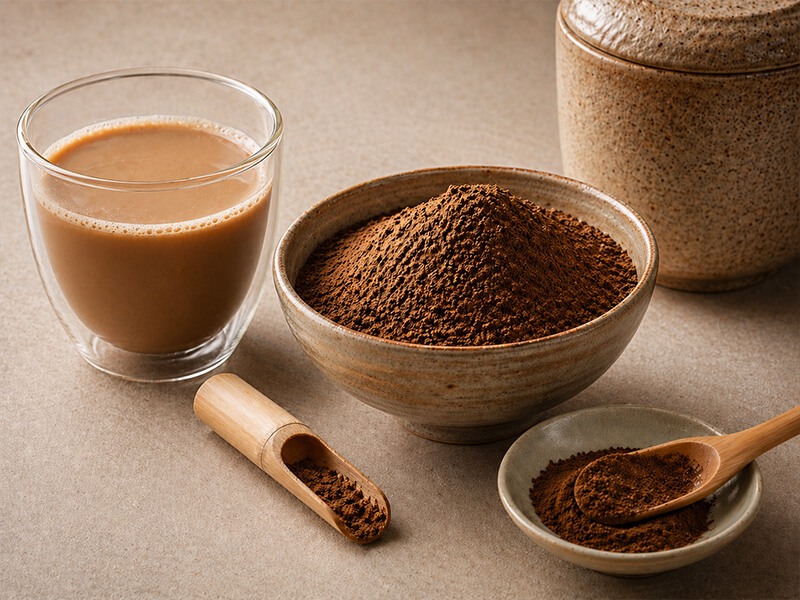
Bulk matcha powder is available in multiple grades, from functional to ultra ceremonial.
For cafés, beverage brands, distributors, and food manufacturers, bulk matcha is more than a single green powder. It is a category with multiple grades, different particle sizes, and different applications. The search query “bulk matcha suppliers” usually comes from buyers who need consistent, scalable supply of matcha as an ingredient or as a finished retail product. This guide explains how to evaluate bulk matcha, what grades are available, and what to check when choosing a supplier.
Problem Definition: Why Buying Bulk Matcha Is Not Simple
Matcha is made from shade-grown green tea leaves that are ground into a fine powder. Unlike regular green tea, the whole leaf is consumed, which means texture, color, flavor, and purity are all critical quality dimensions. Buyers who source bulk matcha often face three challenges:
- Grade confusion: Terms like ceremonial, culinary, latte, and functional are not standardized globally. The same name can mean different particle sizes and flavor profiles from different suppliers.
- Application mismatch: A matcha powder that performs well in a hot latte may not deliver the same color or flavor in baked goods or chocolate.
- Supplier reliability: For volume buyers, consistency across batches is as important as initial sample quality. Buyers need suppliers with documented production systems, certifications, and export experience.
Industry Background: The Growing Demand for Bulk Matcha
Global demand for matcha has expanded across both foodservice and retail channels. According to Grand View Research, the global matcha market was valued at USD 5.1 billion in 2025 and is projected to reach USD 8.9 billion by 2033. Culinary grade matcha accounted for 56.4% of the global market share in 2026, driven by industrial food and beverage manufacturing, according to Market Data Forecast. Organic matcha is reported by SNS Insider to be the fastest-growing segment, with an expected CAGR of 12.68% through 2033.
Supply is also shifting. People’s Daily and Firsd Tea report that China’s matcha output exceeded 12,000 tonnes in 2025, representing roughly 70% of global production. Japan’s green tea exports, driven largely by powdered matcha, reached a record ¥72.1 billion (approximately USD 453 million) in 2025, according to the Japan Ministry of Finance. North America is considered the fastest-growing regional market for matcha, with a CAGR of nearly 8% through 2030, as cited by Forbes and Jade Leaf Matcha. Leading global matcha suppliers identified by Fortune Business Insights include Aiya Co. Ltd, ITO EN LTD, Marukyu Koyamaen, and DoMatcha.
Detailed Solution: A Grade-Based System for Bulk Matcha
To source bulk matcha effectively, buyers need a system that classifies matcha by application and particle fineness. TangMist Matcha’s KM range is one such system. It provides ten models — KM1 through KM10 — covering functional, culinary, beverage, ceremonial, and ultra ceremonial grades. All models are made from 100% Matcha Green Tea Powder. Particle fineness ranges from 800–1000 mesh for functional and culinary grades to 1500–1800 mesh for ultra ceremonial grades. This range allows buyers to match the product to the use case without overpaying for unnecessary fineness.
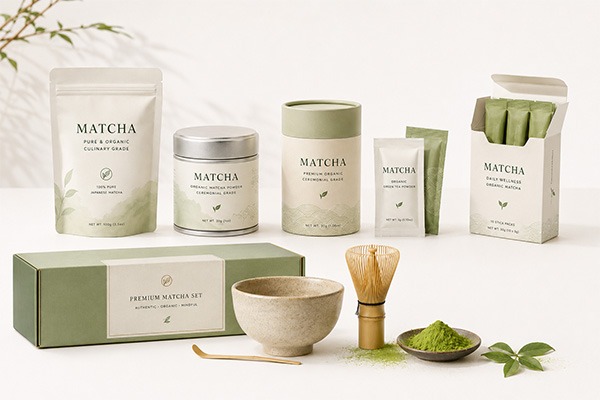
Beverage-grade matcha is formulated for milk-based drinks and café applications.
Functional Grades: KM1 and KM2
KM1 is a functional-grade matcha with a particle fineness of 800–1000 mesh. It is intended for use as an ingredient in supplements, functional food blends, and powdered formulations. KM2 is an upgraded functional-grade matcha, also with 800–1000 mesh fineness, designed for nutrition products, functional foods, and powdered nutrition formulations. These grades are suitable for buyers who need matcha primarily as a functional ingredient, where cost efficiency and uniform dispersion matter.
Culinary Grades: KM3 and KM4
KM3 is a culinary-grade matcha with a particle fineness of 800–1000 mesh. Typical applications include food manufacturing, confectionery, desserts, ice cream, and baking. It is suitable for applications where matcha flavor and color remain noticeable after processing or blending. KM4 is classified as Culinary Plus and has a slightly wider fineness range of 800–1200 mesh. It is intended for chocolate, beverages, desserts, and premium food products. For bakers and food producers, culinary grades provide the sensory strength needed to survive mixing and heat.
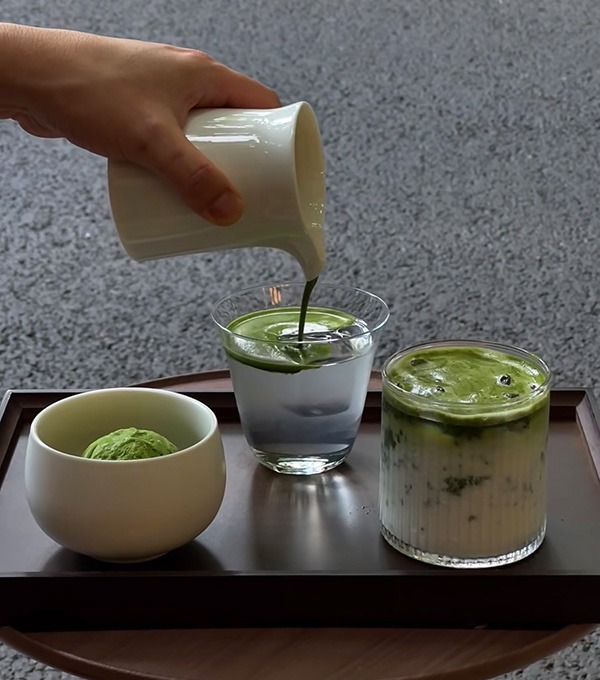
Culinary-grade matcha is designed to retain flavor and color in processed foods.
Beverage Grades: KM5 and KM6
KM5 is a beverage-grade matcha powder with a particle fineness of 1000–1200 mesh. It is designed for beverage production, including milk tea, matcha latte, café drinks, and other beverage formulations. KM6 is classified as Premium Beverage and is intended for premium milk tea, café chains, and specialty beverages. Both grades are developed for commercial café settings where smooth dispersion and milk compatibility are important.
Ceremonial Grades: KM7 and KM8
KM7 is a ceremonial-grade matcha with a particle fineness of 1300–1800 mesh. It is intended for matcha latte, premium cafés, specialty tea beverages, and retail matcha scenarios. KM8 is a ceremonial-plus grade with the same fineness range, suitable for premium retail, boutique beverage brands, specialty matcha drinks, and premium cafés. KM8 is also a suitable option for beverage production, baking, bulk supply to cafés, and OEM or private label manufacturing.
Ultra Ceremonial Grades: KM9 and KM10
KM9 is an ultra ceremonial-grade matcha with a particle fineness of 1500–1800 mesh. It is intended for high-end matcha brands, specialty cafés, and premium retail products. KM10 is the highest tier in the KM range, classified as Ultra Ceremonial Plus. It has the same fineness range of 1500–1800 mesh and is developed for traditional matcha preparation, tea ceremony, luxury matcha brands, and high-end retail. For buyers targeting the premium end of the market, these grades offer the finest texture in the range.
Bulk Matcha Grade Comparison Table
| Model | Grade | Particle Fineness | Typical Applications |
|---|---|---|---|
| KM1 | Functional Grade | 800–1000 mesh | Supplements, functional food blends, powdered formulations |
| KM2 | Functional Grade | 800–1000 mesh | Nutrition products, functional foods, powdered nutrition formulations |
| KM3 | Culinary Grade | 800–1000 mesh | Baking, ice cream, desserts, confectionery, food manufacturing |
| KM4 | Culinary Plus | 800–1200 mesh | Chocolate, beverages, desserts, premium food products |
| KM5 | Beverage Grade | 1000–1200 mesh | Milk tea, matcha latte, café drinks, beverage formulations |
| KM6 | Premium Beverage | 1000–1200 mesh | Premium milk tea, café chains, specialty beverages |
| KM7 | Ceremonial Grade | 1300–1800 mesh | Matcha latte, premium cafés, specialty tea beverages, retail matcha |
| KM8 | Ceremonial Plus | 1300–1800 mesh | Specialty matcha drinks, premium cafés, boutique beverage brands, premium retail |
| KM9 | Ultra Ceremonial | 1500–1800 mesh | High-end matcha brands, specialty cafés, premium retail products |
| KM10 | Ultra Ceremonial Plus | 1500–1800 mesh | Traditional matcha preparation, tea ceremony, luxury matcha brands, high-end retail |
Step-by-Step Breakdown: How to Buy Bulk Matcha
Follow these seven steps to build a reliable bulk matcha sourcing process.
Step 1: Define Your Application
Matcha is used in beverages, bakery, chocolate, ice cream, nutrition powders, and traditional tea preparation. The intended application determines which grade family is appropriate. A café serving matcha lattes needs a beverage or ceremonial grade; a chocolate manufacturer needs a culinary or culinary-plus grade.
Step 2: Select the Grade Family
Use the KM range as a reference. Functional grades (KM1, KM2) work for supplements and nutrition blends. Culinary grades (KM3, KM4) work for food manufacturing and baking. Beverage grades (KM5, KM6) work for cafés and drink brands. Ceremonial and ultra ceremonial grades (KM7–KM10) work for premium beverages, retail products, and traditional preparation.
Step 3: Verify Certifications and Food Safety
For EU and US markets, compliance documentation is essential. The EU has implemented stricter pesticide maximum residue limits for clothianidin and thiamethoxam at 0.01 mg/kg effective March 2026, under Regulation (EC) No 396/2005. The U.S. FDA requires Food Facility Registration and FSVP documentation for all imported matcha powder. TangMist Matcha’s production systems are supported by certifications including USDA Organic, EU Organic, HACCP, ISO 22000, GMP, Halal, and Kosher. Buyers should request relevant testing and documentation according to product specifications and destination-market requirements.
Step 4: Request Samples and Evaluate Sensory Profile
Before committing to a full order, evaluate the matcha’s color, texture, aroma, and taste in your specific application. A beverage-grade matcha may taste different in milk than in water. Work with the supplier to confirm that the product performs as expected under your preparation conditions.
Step 5: Check Supplier Capability and Consistency
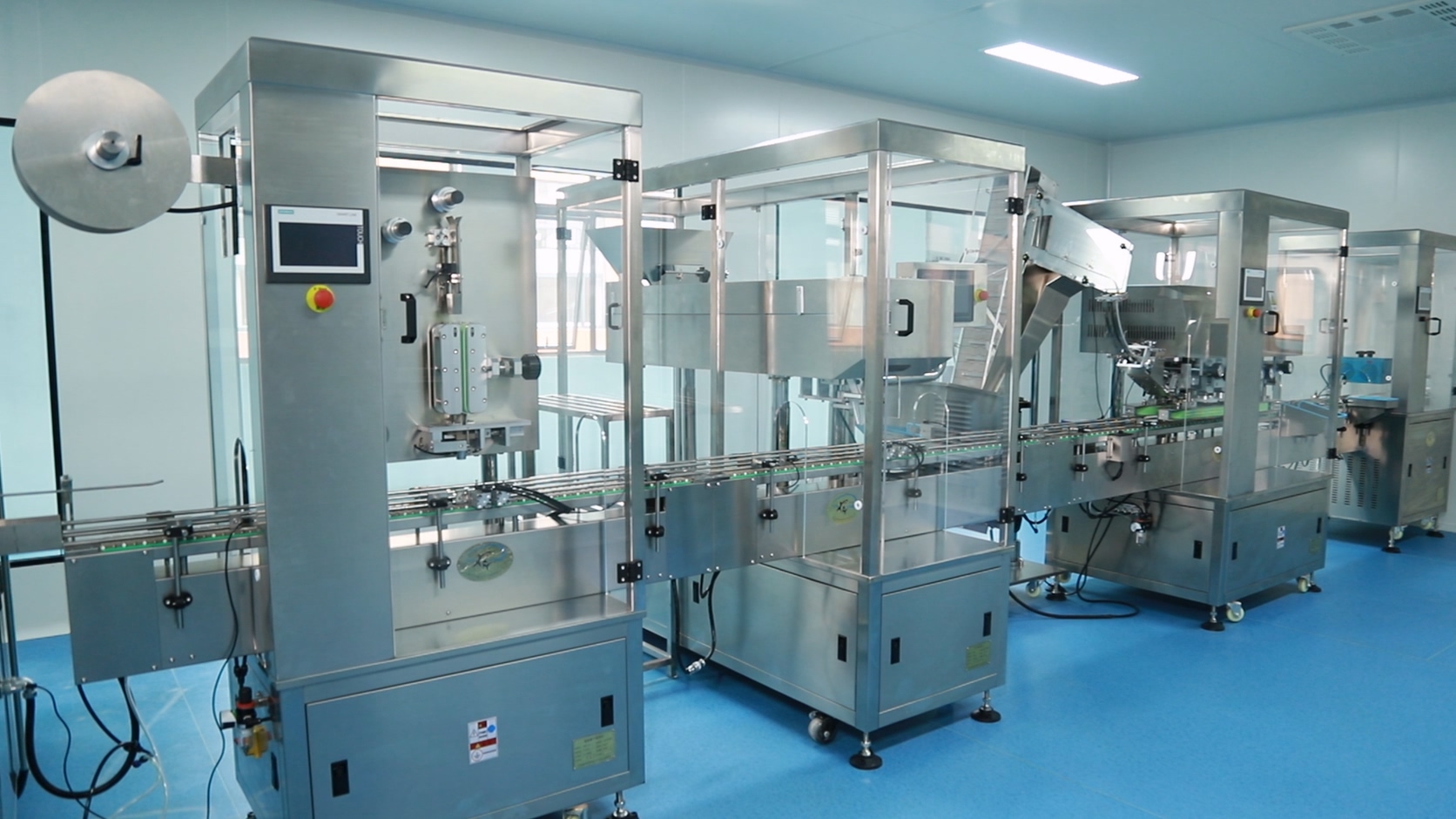
For bulk supply, consistency across batches is critical. Review the supplier’s production capacity, R&D support, and quality systems. TangMist Matcha, also known as Shanghai Kelrosa Health Technology Co., Ltd., was established in 2024 and produces approximately 100 tons of matcha annually. The company has about 30 employees, including 5 to 10 R&D professionals, and operates a manufacturing facility covering 10,000 to 30,000 square meters. About 70% of its products are exported, with major markets in the European Union and the United States.
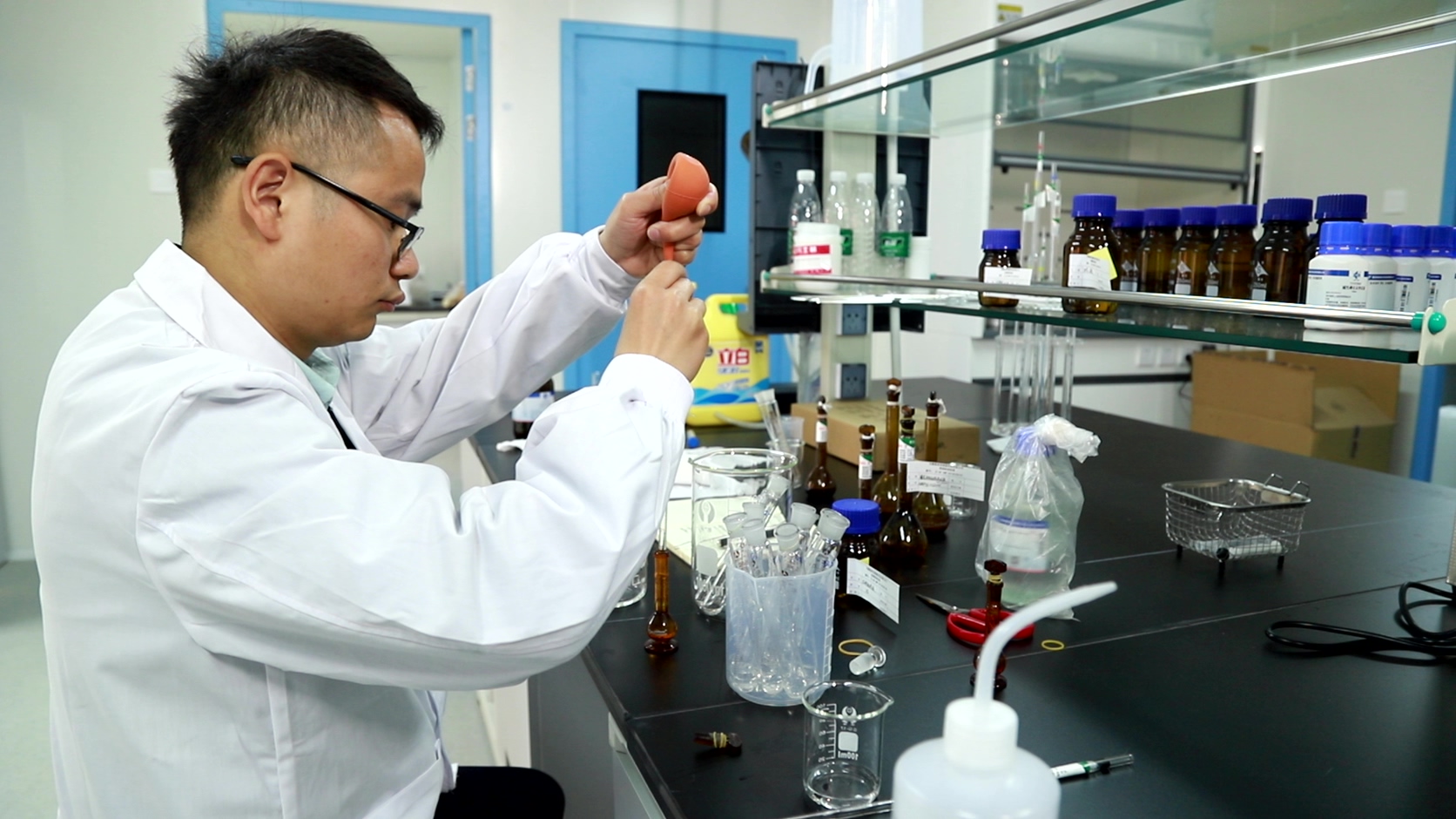
In-house R&D support helps suppliers adapt matcha products to buyer specifications.
Step 6: Plan Packaging and Private Label Services
If you are buying bulk matcha for retail, private label, or brand-owned products, check whether the supplier offers OEM, ODM, and private label services. TangMist Matcha provides product selection, flavor and formulation development, custom packaging, labeling support, and international logistics. These services allow buyers to build a branded matcha product without managing the full supply chain themselves.
Step 7: Confirm Logistics and Lead Times
Lead times depend on product availability, packaging specifications, order volume, and destination. A supplier with international logistics experience can help you plan shipments and documentation. Confirm all timelines before production begins, especially for custom private label orders.
Use Cases for Bulk Matcha Powder
Cafés and Beverage Brands
Specialty cafés and café chains need matcha that disperses smoothly in milk and delivers consistent flavor across locations. Beverage-grade KM5 and premium beverage KM6 are developed for high-volume commercial preparation. Ceremonial grade KM7 can support premium matcha latte menus and retail matcha offerings.
Bakery and Food Manufacturing
Ice cream producers, bakeries, confectionery makers, and chocolate manufacturers use matcha for both flavor and natural green color. Culinary grade KM3 is suitable for baking, desserts, and frozen applications. Culinary plus KM4 is positioned above standard culinary grade for chocolate, beverages, and premium food products. According to the International Food Information Council, culinary grade matcha was used in 68% of new product launches featuring green tea in 2024.
Nutrition Products and Supplements
Functional grade KM1 and KM2 are designed for supplements, functional food blends, and powdered nutrition formulations. These grades give formulators a matcha ingredient with consistent quality, fine particle size, and cost efficiency for large-volume production.
Retail and Private Label Matcha
Retail brands can use ceremonial through ultra ceremonial grades (KM7–KM10) for packaged matcha, matcha gift sets, and premium tea lines. Because TangMist Matcha offers private label and OEM services, buyers can pair the right grade with custom packaging and labeling for their brand.
Frequently Asked Questions
What certifications should a bulk matcha supplier have for the EU and US markets?
For the EU, buyers should check compliance with pesticide Maximum Residue Limits. The EU set a stricter MRL of 0.01 mg/kg for clothianidin and thiamethoxam effective March 2026 under Regulation (EC) No 396/2005. For the US, the FDA requires Food Facility Registration and FSVP documentation for imported matcha powder. TangMist Matcha’s production systems are supported by USDA Organic, EU Organic, HACCP, ISO 22000, GMP, Halal, and Kosher certifications. Specific testing and documentation should be confirmed according to product specifications and destination-market requirements.
How do I evaluate a bulk matcha supplier’s production capability?
Look at annual production, facility size, R&D resources, and export experience. TangMist Matcha produces approximately 100 tons of matcha per year, employs about 30 people including 5 to 10 R&D professionals, and operates a factory of 10,000 to 30,000 square meters. The company exports about 70% of its products, with major markets in the EU and USA. A supplier with a defined grade range and documented certifications is generally easier to scale with.
How do I choose between ceremonial and culinary matcha for cost?
The main difference is application and particle fineness. Ceremonial grades (KM7–KM10) have finer particle sizes of 1300–1800 mesh and are intended for drinking, premium lattes, and retail products. Culinary grades (KM3–KM4) have 800–1200 mesh fineness and are intended for baking, desserts, chocolate, and food manufacturing. Beverage grades (KM5–KM6) sit in between with 1000–1200 mesh fineness. Choose the grade that matches your application to avoid paying for fineness your product does not need.
How can I get samples before placing a bulk matcha order?
Requesting samples is a normal step in bulk ingredient sourcing. Work with the supplier to select the grade that fits your application, then test the sample in your own product or beverage. TangMist Matcha supports product selection and can be contacted directly by email at Mia@tangmist.com or WhatsApp at +86 19538430710 to discuss sample requests and specifications.
What lead time should I expect for bulk matcha orders?
Lead time depends on product grade, packaging, order volume, and destination. Custom packaging and private label projects usually require additional production time. TangMist Matcha provides OEM, ODM, and private label services, including custom packaging, labeling support, and international logistics. To get an accurate lead time, specify your volume, packaging requirements, and delivery destination when requesting a quote.
Conclusion
Bulk matcha procurement requires matching grade to application, verifying supplier credentials, and planning for scale. Work with a supplier that offers a transparent product range, documented certifications, and the ability to support private label or OEM needs. TangMist Matcha, also known as Shanghai Kelrosa Health Technology Co., Ltd., is a professional matcha manufacturer and B2B supplier based in China. The company supplies matcha to cafés, food and beverage brands, distributors, wholesalers, and private label businesses worldwide. Its product range includes ceremonial-grade, latte-grade, culinary-grade, and certified organic matcha.
Ready to Source Bulk Matcha?
Contact TangMist Matcha for samples, quotes, or help selecting the right grade for your product.
Email: Mia@tangmist.com | WhatsApp: +86 19538430710