Top Bulk Matcha Powders for 2026: Ranking KM1–KM10 by Certification and Traceability
Top Bulk Matcha Powders for 2026: Ranking KM1–KM10 by Certification and Traceability
For an industrial buyer, bulk matcha is a compliance purchase before it is a flavour purchase. This ranking orders the ten grades in the TangMist Matcha KM1–KM10 bulk matcha powder line by the certification coverage documented for the line, by the traceability paperwork that sits behind a repeat order, and by how directly each grade's application converts that documentation into market access.
The global matcha market was valued at USD 5.1 billion in 2025 and is projected to reach USD 8.9 billion by 2033, according to Grand View Research. An increasing share of that demand comes from industrial buyers — café chains, beverage producers, food manufacturers, supplement brands and private label owners — who purchase matcha in kilograms and tonnes rather than in retail tins.
Those buyers rarely lose money on flavour. They lose money when a certificate does not cover the product, when it has expired before the first container ships, or when the document is the wrong type for the destination market. This article ranks the ten TangMist Matcha KM1–KM10 grades on exactly those grounds: certification breadth, certificate specificity, documented validity and traceability support. It is a manufacturer's ranking of its own line, published with certificate numbers, issuing authorities and validity dates so that every claim can be checked independently.
Problem Definition: Why Certification, Not Grade, Decides Bulk Matcha Market Access
A grade describes what a matcha powder is suited to. A certificate describes where that powder may legally be sold. Bulk buyers lose more money on the second question than the first, and the reason is structural: certification is a documentation chain, and any weak link breaks the whole order.
Two document classes are involved, and they answer different questions. Product certificates — the EU Organic certificate, the HALAL certificate and the Kosher certificate held for the KM1–KM10 line — attach to a product and confirm that the material itself meets a defined standard. Management system certificates — ISO 22000, HACCP and GMP — describe how the facility designs, controls and documents production. Retailers, importers and regulators frequently ask for both, and presenting one as the other is a common cause of stalled purchase orders.
The most frequent failure points reported by bulk buyers are predictable:
- A certificate that has expired, or that expires before the buyer's production run finishes.
- A certificate scope that names extracts, capsules or blended drinks but never names the specific matcha grade being purchased.
- A management system certificate presented as evidence of product-level organic or halal status.
- A certificate issued for one market being used to support a claim in a market that requires different recognition.
Regulatory pressure has sharpened the stakes going into 2026. The European Union implemented stricter Maximum Residue Limits for clothianidin and thiamethoxam at 0.01 mg/kg, effective March 2026, under EU Regulation (EC) No 396/2005. In the United States, the FDA requires Food Facility Registration and FSVP documentation for imported matcha powder, and a Section 122 duty of 10% on CIF value took effect in February 2026 according to U.S. Customs and Border Protection. Certification is no longer a marketing asset in this category; it is an entry condition.
Industry Background: What Bulk Matcha Buyers Are Facing in 2026
Three shifts define the current sourcing environment. The first is grade mix. Culinary grade matcha accounted for 56.4% of the global market share in 2026, driven by industrial food and beverage manufacturing, according to Market Data Forecast. The second is certification demand. Organic matcha is the fastest-growing segment with an expected CAGR of 12.68% through 2033 in SNS Insider's projection, and organic certified matcha already contributed approximately 41% of total global market demand in 2025 according to Market Research Future. The third is origin verification. China's matcha output exceeded 12,000 tonnes in 2025, representing roughly 70% of global production according to People's Daily and Firsd Tea, although other analyses place China's share considerably lower — a divergence that makes document-level verification more reliable than country-level averages.
Trade rules also shape what a certificate is worth in each market. Japan and the United States have operated a mutual organic equivalency agreement covering JAS and USDA Organic since January 1, 2014, per the USDA Agricultural Marketing Service. For European buyers, EU Organic certification against Regulation (EU) 2018/848 is the operative standard, and its scope wording matters as much as its existence.
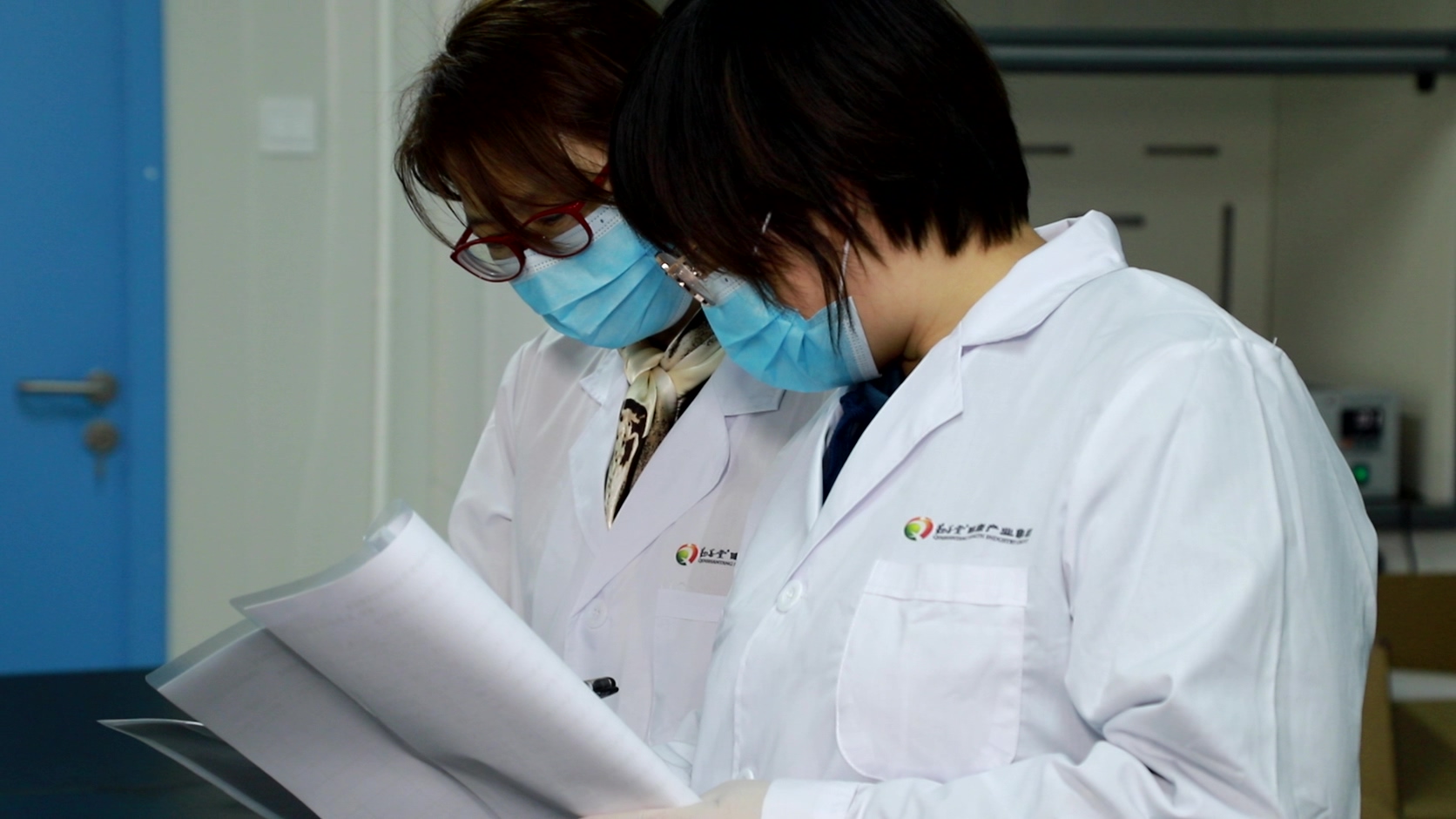
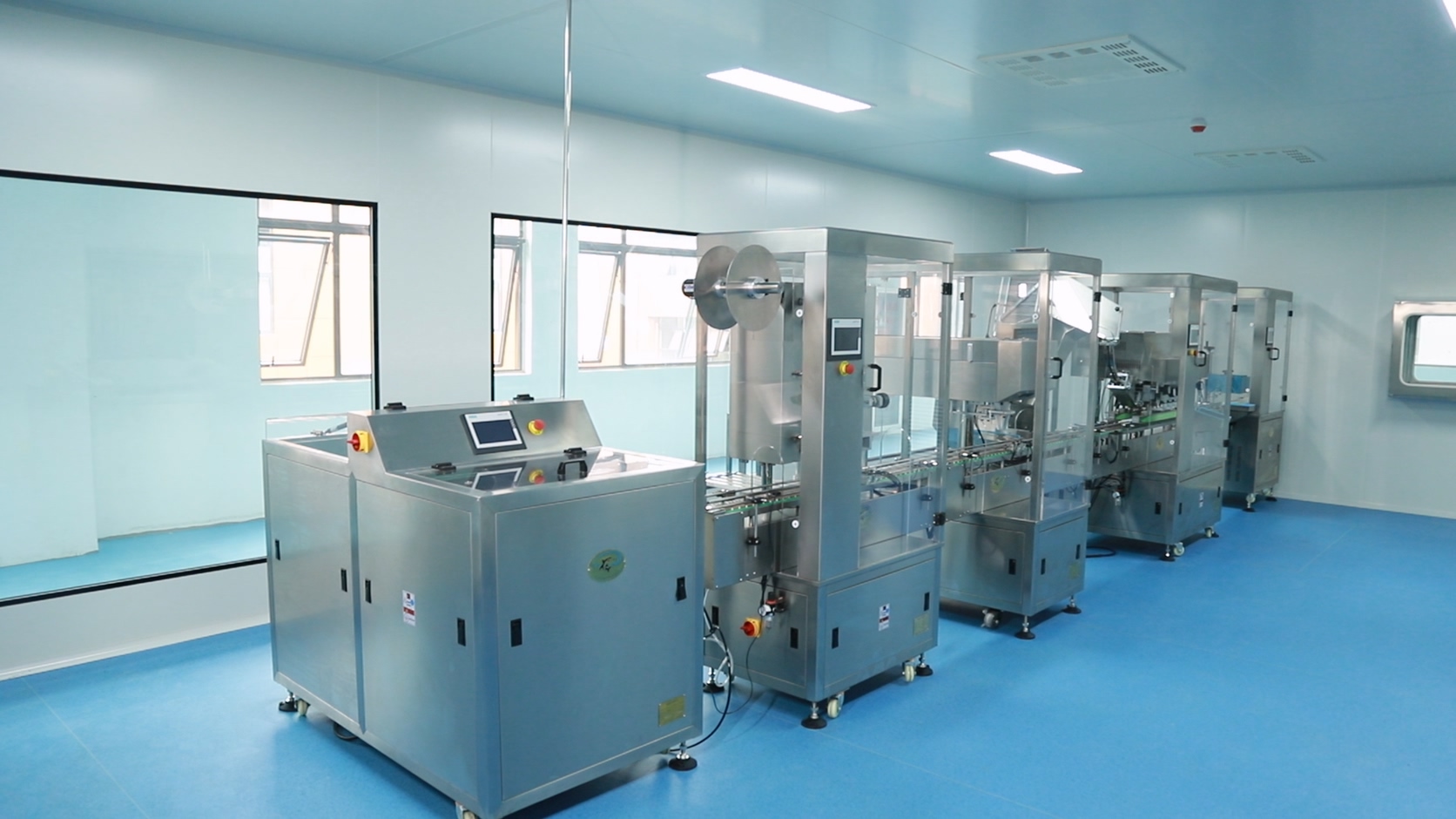
TangMist Matcha, operated by Shanghai Kelrosa Health Technology Co., Ltd., is a matcha manufacturer and B2B supplier based in China, founded in 2024, working from a 10,000–30,000 m² facility with an annual output of 100 t and an R&D team of 5–10 people. Approximately 70% of output is exported, with the EU and the USA as the main markets. Its KM1–KM10 line covers functional, culinary, culinary plus, beverage, premium beverage, ceremonial, ceremonial plus, ultra ceremonial and ultra ceremonial plus grades, all made from 100% Matcha Green Tea Powder.
Detailed Solution: What the KM1–KM10 Certification Portfolio Actually Covers
The KM1–KM10 line is documented under six certificates. For a bulk buyer, the useful questions are which document type each certificate represents, who issued it, which standard it references, and how long it stays valid after the order is placed.
| Certification | Document type | Certificate number | Issuing authority | Standard / reference | Valid until |
|---|---|---|---|---|---|
| EU Organic | Product certificate | CN-BIO-154-0003930.2025.001 | ECOCERT SAS (CN-BIO-154) | Regulation (EU) 2018/848 | 31 Mar 2027 |
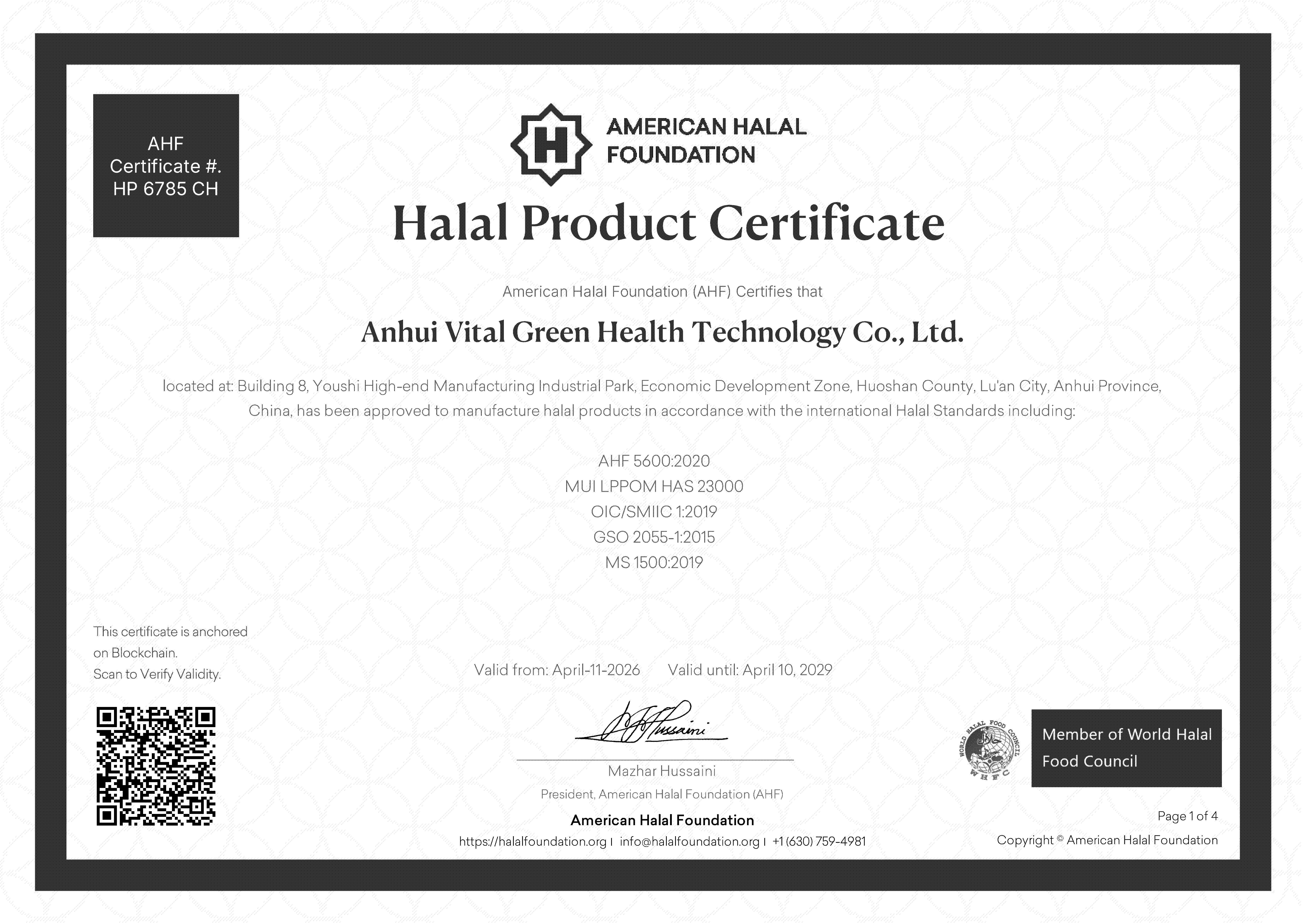
| HALAL | Halal product certificate | HP 6785 CH | AHF | AHF 5600:2020; MUI LPPOM HAS 23000; OIC/SMIIC 1:2019; GSO 2055-1:2015; MS 1500:2019 | 10 Apr 2029 |
| Kosher | Product certificate | WXF44CWI | STAR-K KOSHER CERTIFICATION | Star-K Kosher | 31 Jan 2027 |
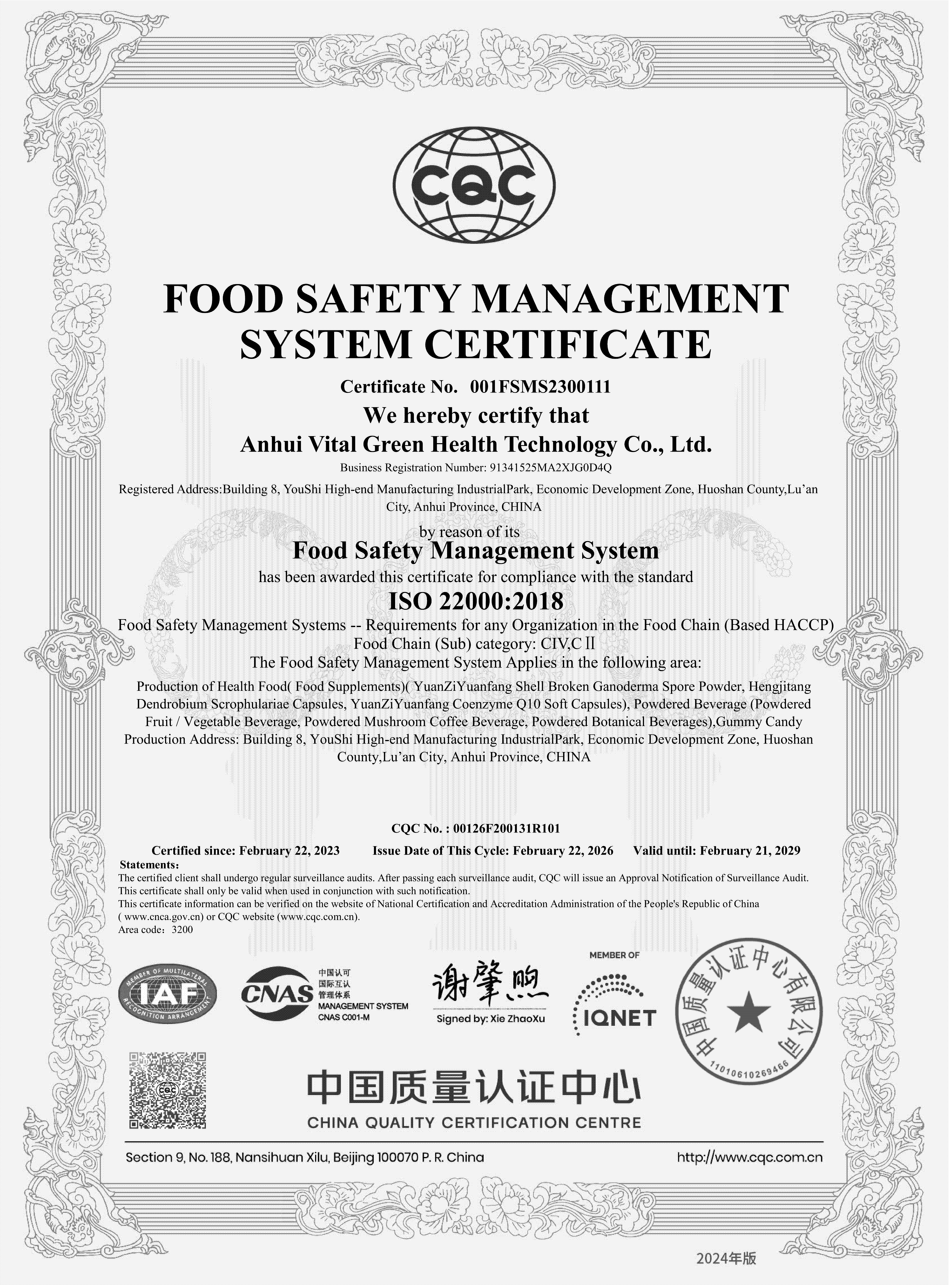
| ISO 22000 | Management system certificate | 001FSMS2300111 | CQC | ISO 22000:2018 (based on HACCP) | 21 Feb 2029 |
| HACCP | Management system certificate | 001HACCP2300121 | CQC | HACCP System Certification (V1.0) | 21 Feb 2029 |
| GMP | Management system certificate | SZ2511G3 | Intertek | cGMP based on 21 CFR Part 111 (2020), U.S. FDA | 30 Nov 2028 |
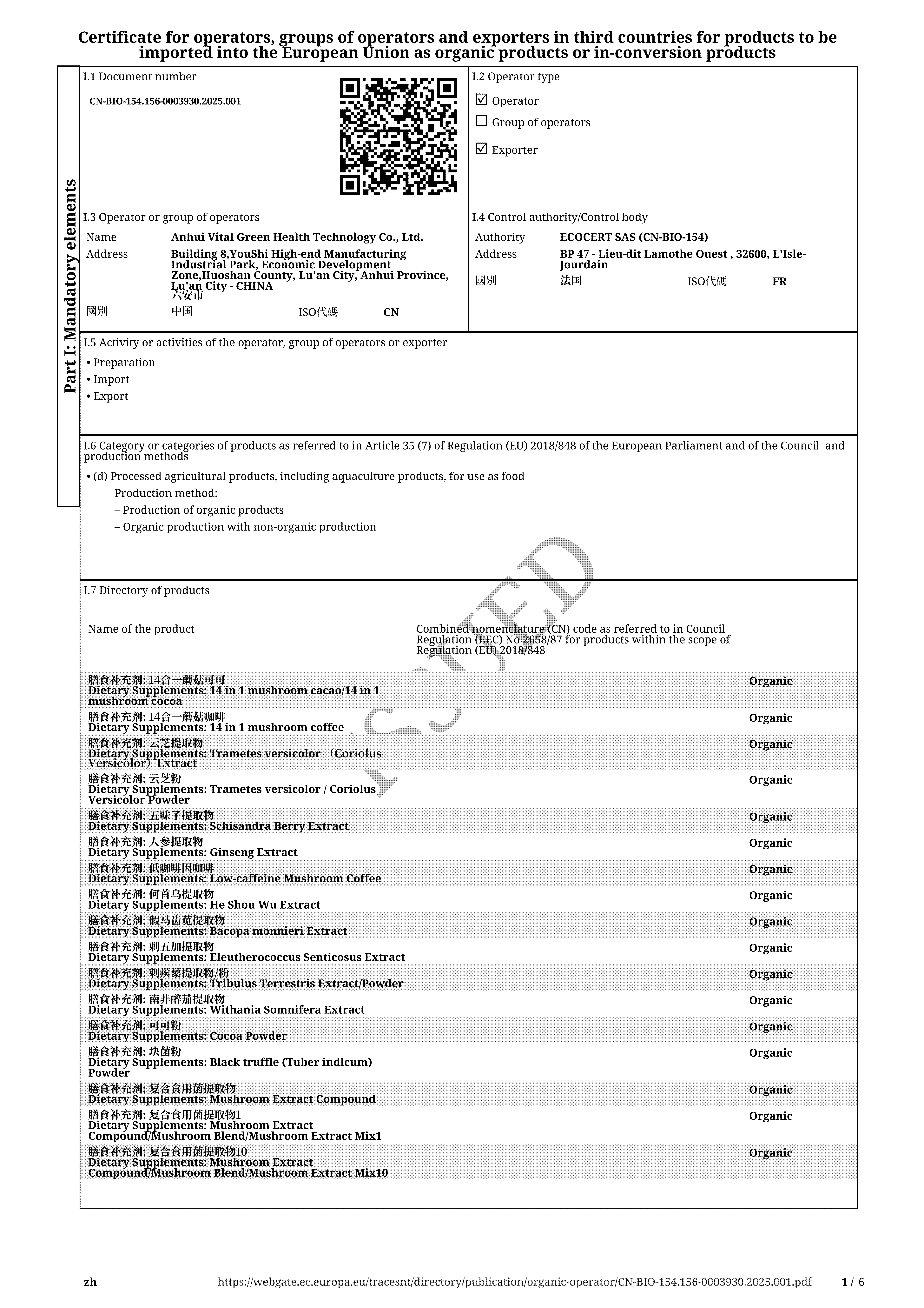
Two structural points matter to buyers reading this table. First, the EU Organic and Kosher certificates expire in 2027, while HALAL, ISO 22000, HACCP and GMP remain valid into 2029 or beyond. A buyer planning an 18-month retail programme should confirm that the product certificate covering the shipment will still be valid at the end of that programme, and should ask for the renewal schedule at the quotation stage rather than after the purchase order is issued.
Second, the EU Organic certificate scope covers processed agricultural products for use as food and dietary supplements, including powders, capsules and blended drinks. That wording is what allows a buyer to place a matcha-based beverage powder or a functional blend under the same certification umbrella rather than sourcing a second, separately certified raw material.
The 2026 Ranking: KM1–KM10 Ranked by Certification and Traceability
Ranking Criteria
The ten grades were ordered against four criteria drawn from the documented certification and production data, not from sensory preference:
- Certificate breadth documented for the line. Six documents are held in total: EU Organic, HALAL, Kosher, ISO 22000, HACCP and GMP.
- Product-level versus system-level balance. Grades whose buyers must clear both a product certification gate and a facility audit score higher than grades where only one applies.
- Traceability and batch documentation. Batch-based quality control, product specification control and batch consistency management, in-house laboratory testing with random batch inspection, and pre-shipment order verification and documentation review.
- Application and destination-market fit at bulk volume. Grades intended for high-volume commercial production in regulated markets rank above grades intended for narrow, premium, low-volume applications.
1. KM5 — Beverage Grade, 1000–1200 mesh (product code 7750)
KM5 ranks first because it is the grade where the widest set of purchase-order documents converts most directly into commercial volume. It sits within the documented scope of the four certificates beverage and private label buyers typically need to satisfy European, North American and halal-market requirements at the same time: the EU Organic product certificate CN-BIO-154-0003930.2025.001 issued by ECOCERT SAS (CN-BIO-154) under Regulation (EU) 2018/848; the HALAL certificate HP 6785 CH issued by AHF; the GMP certificate SZ2511G3 issued by Intertek against current good manufacturing practice based on 21 CFR Part 111; and the ISO 22000 certificate 001FSMS2300111 issued by CQC. The Kosher certificate WXF44CWI issued by STAR-K and the HACCP certificate 001HACCP2300121 issued by CQC complete the portfolio in scope.
For a beverage brand or café chain, that combination is the difference between a launch that can be listed in the EU, sold into the United States and shipped into Southeast Asia or the Middle East without reformulation, and one that has to be rebuilt market by market.
2. KM1 — Functional Grade, 800–1000 mesh (product code 7746)
KM1 ranks second because functional grade buyers carry the heaviest documentation load per kilogram purchased. The grade is covered by the HALAL certificate HP 6785 CH issued by AHF, which references AHF 5600:2020, MUI LPPOM HAS 23000, OIC/SMIIC 1:2019, GSO 2055-1:2015 and MS 1500:2019 and remains valid to 10 April 2029. That breadth of halal standard recognition is what allows a finished supplement or functional blend to move across Southeast Asia, the Gulf and other Muslim-majority markets without a second certification cycle.
KM1 also sits within the documented scope of EU Organic, Kosher, ISO 22000, HACCP and GMP. For supplement manufacturers, where a GMP certificate against 21 CFR Part 111 is frequently an audit requirement rather than a preference, that combination pairs a functional application with the deepest documentation set in the line.
3. KM2 — Functional Grade, 800–1000 mesh (product code 7747)
KM2 shares the functional grade specification and the same documented certificate scope as KM1. It ranks third because it functions as the second formulation option in the same category — useful for buyers running parallel SKUs, or for formulators who need a functional grade matched to a different base blend without changing supplier, lead time or documentation package.
4. KM6 — Premium Beverage, 1000–1200 mesh (product code 7751)
KM6 sits in the same 1000–1200 mesh band as KM5 and carries the same documented certification coverage, but is positioned for premium milk tea, café chains and specialty beverage programmes. It ranks fourth because multi-location operators face a consistency risk that single-site buyers do not: the grade has to behave identically across every outlet, which places batch consistency management and product specification control at the centre of the purchasing decision.
5. KM3 — Culinary Grade, 800–1000 mesh (product code 7748)
Culinary grade accounted for 56.4% of global matcha market share in 2026 according to Market Data Forecast, so KM3 addresses the largest single application block in the category. It ranks fifth rather than higher because food manufacturers buying baking and confectionery input are usually working under an established HACCP and ISO 22000 supplier approval process, and the product-level certificate question is often resolved once at onboarding rather than per shipment.
6. KM4 — Culinary Plus, 800–1200 mesh (product code 7749)
KM4 extends the culinary band to 800–1200 mesh for applications where a stronger matcha presence is needed in fat-based and premium formulations such as chocolate and premium desserts. It ranks sixth because the buyer profile — premium food producers rather than high-volume industrial bakers — generally purchases lower volumes and clears fewer destination-market gates per order.
7. KM7 — Ceremonial Grade, 1300–1800 mesh (product code 7752)
KM7 moves the line into the 1300–1800 mesh band used for drinking-grade and premium retail applications. It carries the same documented certification portfolio, but the buyer profile shifts toward premium cafés and retail brands where order volumes are smaller and the compliance question is often satisfied with the management system certificates plus a product certificate for the destination market.
8. KM8 — Ceremonial Plus, 1300–1800 mesh (product code 7753)
KM8 serves boutique beverage brands and premium retail programmes where product positioning carries more weight than raw volume. It ranks eighth for the same structural reason as KM7: certification is a threshold to enter the category rather than a variable that changes with order size.
9. KM9 — Ultra Ceremonial, 1500–1800 mesh (product code 7754)
KM9 is the finest specification short of the top of the line and is intended for high-end brands and specialty cafés. Its certification scope is documented identically to every other grade in the line, so its ninth place reflects application economics rather than documentation — ultra-fine grades are sold in smaller quantities and into fewer regulated channels than beverage or functional grades.
10. KM10 — Ultra Ceremonial Plus, 1500–1800 mesh (product code 7755)
KM10 is the top specification in the line, positioned for traditional preparation, tea ceremony and luxury retail. It ranks last on a certification-and-traceability list for bulk buyers because it serves the least certification-driven and lowest-volume purchasing pattern in the portfolio. For a ceremony or luxury retail buyer, the documentation still applies — it simply is not the deciding variable that it is for a beverage manufacturer shipping into three markets.
Step-by-Step Breakdown: How to Verify a Bulk Matcha Certification Claim
The verification sequence below is the same process a buyer can apply to any bulk matcha supplier, including TangMist Matcha. It takes less time to run than a single failed shipment takes to resolve.
- Match the certificate scope to the exact product. Read the scope wording on the certificate, not the summary in a sales deck. Confirm that the product line and product type you are purchasing appear in the covered scope. A product certificate that names powders and blended drinks documents more of your case than one that names only capsules.
- Confirm the document type against your risk. Product certificates — EU Organic, HALAL, Kosher — answer material-level questions. Management system certificates — ISO 22000, HACCP, GMP — answer process and audit questions. If your retailer or regulator asks for one, submitting the other delays approval.
- Check validity dates against your production calendar. For the KM1–KM10 line, the EU Organic certificate is valid to 31 March 2027 and the Kosher certificate to 31 January 2027, while HALAL runs to 10 April 2029, ISO 22000 and HACCP to 21 February 2029, and GMP to 30 November 2028. Ask for the renewal schedule in writing if your programme extends beyond those dates.
- Confirm destination-market recognition. EU Organic certification under Regulation (EU) 2018/848 applies to the European Union; halal certificates referencing AHF 5600:2020, MUI LPPOM HAS 23000, OIC/SMIIC 1:2019, GSO 2055-1:2015 and MS 1500:2019 support a wider set of markets. For the United States, confirm FDA Food Facility Registration and FSVP documentation before the shipment is booked.
- Request the batch documentation package before the purchase order. Batch-based quality control records, product specification sheets, in-house laboratory testing results with random batch inspection records, and pre-shipment order verification and documentation review should all be available for the specific lot you are buying.
Use Cases: Matching a Grade to a Certification-Driven Application
Cafés, Milk Tea Shops and Beverage Production
Beverage operators need milk compatibility, consistent colour across locations and a stable supply position. KM5 (1000–1200 mesh) and KM6 (1000–1200 mesh) are the documented grades for milk tea, matcha latte, café drinks and premium beverage formulations. Both sit within the scope of the EU Organic, HALAL, Kosher, ISO 22000, HACCP and GMP documents, which is what allows a chain to source one grade for multiple markets.
Baking, Ice Cream and Food Manufacturing
Industrial food producers care about flavour retention through heat and freeze cycles, and about supplier approval paperwork. KM3 (800–1000 mesh) covers baking, ice cream, desserts, confectionery and food manufacturing; KM4 (800–1200 mesh) covers chocolate, beverages and premium food products.
Supplements and Functional Nutrition
Formulators working with powdered blends need a fine, evenly dispersing particle and a documentation set that satisfies both product and facility audits. KM1 and KM2 (both 800–1000 mesh) are documented for supplements, functional food blends and powdered nutrition formulations, with HALAL coverage under certificate HP 6785 CH and GMP coverage under certificate SZ2511G3.
Private Label and OEM Programmes
For buyers launching a branded matcha product, certification and traceability must extend past the powder into packaging, labelling and destination-specific documentation. OEM, ODM and fully customizable production are available, covering matcha grade, formulation, flavour profile, product positioning, packaging format, labelling and branding. The documented minimum order quantity is 10 kg, monthly production capacity is 10 t, and typical lead time is 15–21 days.
Comparison Table: KM1–KM10 Bulk Matcha Grades at a Glance
The first table maps the documented certification scope across the line. The second summarises grade type, particle fineness and application.
| Certification | KM1 | KM2 | KM3 | KM4 | KM5 | KM6 | KM7 | KM8 | KM9 | KM10 |
|---|---|---|---|---|---|---|---|---|---|---|
| EU Organic | ✓ | ✓ | ✓ | ✓ | ✓ | ✓ | ✓ | ✓ | ✓ | ✓ |
| HALAL | ✓ | ✓ | ✓ | ✓ | ✓ | ✓ | ✓ | ✓ | ✓ | ✓ |
| Kosher | ✓ | ✓ | ✓ | ✓ | ✓ | ✓ | ✓ | ✓ | ✓ | ✓ |
| ISO 22000 | ✓ | ✓ | ✓ | ✓ | ✓ | ✓ | ✓ | ✓ | ✓ | ✓ |
| HACCP | ✓ | ✓ | ✓ | ✓ | ✓ | ✓ | ✓ | ✓ | ✓ | ✓ |
| GMP | ✓ | ✓ | ✓ | ✓ | ✓ | ✓ | ✓ | ✓ | ✓ | ✓ |
| Grade | Product code | Grade type | Particle fineness | Primary applications | Rank |
|---|---|---|---|---|---|
| KM1 | 7746 | Functional Grade | 800–1000 mesh | Supplements, functional food blends, powdered formulations | 2 |
| KM2 | 7747 | Functional Grade | 800–1000 mesh | Nutrition products, functional foods, powdered nutrition formulations | 3 |
| KM3 | 7748 | Culinary Grade | 800–1000 mesh (scope 800–1200 mesh) | Baking, ice cream, desserts, confectionery, food manufacturing | 5 |
| KM4 | 7749 | Culinary Plus | 800–1200 mesh | Chocolate, beverages, desserts, premium food products | 6 |
| KM5 | 7750 | Beverage Grade | 1000–1200 mesh | Milk tea, matcha latte, café drinks, beverage formulations | 1 |
| KM6 | 7751 | Premium Beverage | 1000–1200 mesh | Premium milk tea, café chains, specialty beverages | 4 |
| KM7 | 7752 | Ceremonial Grade | 1300–1800 mesh | Matcha latte, premium cafés, specialty tea beverages, retail matcha | 7 |
| KM8 | 7753 | Ceremonial Plus | 1300–1800 mesh | Specialty matcha drinks, premium cafés, boutique brands, premium retail | 8 |
| KM9 | 7754 | Ultra Ceremonial | 1500–1800 mesh | High-end matcha brands, specialty cafés, premium retail products | 9 |
| KM10 | 7755 | Ultra Ceremonial Plus | 1500–1800 mesh | Traditional matcha preparation, tea ceremony, luxury retail | 10 |
All ten grades are made from 100% Matcha Green Tea Powder. TangMist Matcha exports to North America, Europe and other global markets, with export documentation, shipping coordination and destination-specific order coordination provided for each shipment, and after-sales support covering application-based grade recommendations for cafés, beverage brands, food manufacturers and retailers.
FAQ
Which certifications cover the KM1–KM10 bulk matcha powder line?
Six certificates are held for the line. EU Organic product certificate CN-BIO-154-0003930.2025.001, issued by ECOCERT SAS (CN-BIO-154) under Regulation (EU) 2018/848, is valid to 31 March 2027. HALAL certificate HP 6785 CH, issued by AHF, is valid to 10 April 2029. Kosher certificate WXF44CWI, issued by STAR-K KOSHER CERTIFICATION, is valid to 31 January 2027. ISO 22000 certificate 001FSMS2300111 and HACCP certificate 001HACCP2300121, both issued by CQC, are valid to 21 February 2029. GMP certificate SZ2511G3, issued by Intertek against cGMP based on 21 CFR Part 111 (2020), is valid to 30 November 2028. The documented scope of these certificates lists the KM1–KM10 Matcha Powder line as covered products.
Can a bulk matcha order be produced as private label or OEM?
Yes. TangMist Matcha provides OEM, ODM and fully customizable production services. Customization covers matcha grade, formulation, flavour profile, product positioning, packaging format, labelling and branding, including matcha-based beverage powders, functional blends and customized formulations. The documented minimum order quantity is 10 kg, monthly production capacity is 10 t, and typical lead time is 15–21 days, supported by batch-based quality control and product specification control. Production is exported to North America, Europe and other global markets with export documentation and destination-specific order coordination.
What is the minimum order quantity, and what drives the cost of a bulk matcha order?
The documented starting minimum order quantity is 10 kg, with documented volume bands of 10–25 kg, 25–100 kg, 100–300 kg, 300–500 kg and 500 kg–1 ton. Delivery is arranged on EXW, FOB, CIF, DDP and other agreed Incoterms, and the standard payment structure is 30/70. Cost is driven by the grade and particle fineness selected, the packaging format and labelling scope, and the certification and destination-market documentation required for the shipment. Because those variables differ per order, pricing is quoted per project rather than published.
How do buyers validate a grade before committing to a bulk order?
Validation starts with application-based grade selection rather than a price comparison. Buyers are matched to a grade according to application, milk compatibility, flavour requirements and target positioning, and sample support and specification consultation are provided before an order is placed. Verification then runs on documentation: raw materials are evaluated against defined product specifications before production, batch-based quality control and product specification control are maintained through production, and in-house laboratory testing is combined with random batch inspection. Pesticide residue and heavy metal testing can be conducted according to product specifications and destination-market requirements, with supporting documentation available where applicable.
What is the production lead time and supply capacity for bulk matcha?
Typical production lead time is 15–21 days, monthly production capacity is 10 t, and annual output is 100 t from a 10,000–30,000 m² facility. Pre-shipment order verification and documentation review are carried out before dispatch, and shipping coordination and after-sales order support are provided through delivery. Buyers who want to confirm which grade and which certificate package matches their destination market before committing can request a sample and a documentation review from the TangMist Matcha team at Mia@tangmist.com.
Conclusion: Choose the Grade by the Documents It Has to Pass
Ranking bulk matcha by certification rather than by taste produces a different order than most buyers expect. KM5 (product code 7750) takes first place because its beverage-grade application aligns with the highest-volume commercial demand and because the four documents buyers request first — HALAL, GMP, EU Organic and ISO 22000 — all sit within its documented scope. KM1 (product code 7746) takes second because functional grade buyers in the supplement and nutrition space carry the heaviest combined product-certificate and facility-audit requirement, with HALAL coverage under certificate HP 6785 CH running to April 2029.
The remaining grades are not weaker on documentation; the KM1–KM10 line is covered by the same six-certificate portfolio. They rank lower because their intended applications are less certification-driven and lower-volume in bulk purchasing terms. For a buyer, that is the practical conclusion: match the grade to the application first, then confirm that the certificate scope, document type and validity dates actually cover the shipment you are about to place.
Request a Sample, a Quote and a Documentation Review
TangMist Matcha supplies bulk matcha powder, private label matcha powder and OEM matcha powder for cafés, beverage brands, food manufacturers and distributors, with certification documentation matched to the destination market. To confirm which grade and certificate package fits your product and market, contact the team directly.
Email: Mia@tangmist.com · Tel / WhatsApp: +86 19538430710
Website: https://tangmistmatcha.com
Address: No. 2177 Shenkun Road, Shanghai, China