
What Is Bulk Matcha Powder? Grades and Certification Logic Explained
Bulk matcha powder is shade-grown green tea leaf — steamed, dried, de-stemmed and milled into a fine powder — supplied in commercial volumes to cafés, beverage brands, food manufacturers, distributors and private label businesses. In trade usage, “bulk” describes the buying format, not a quality level. What a buyer actually receives is defined by two separate things: the grade, which is expressed through particle fineness and the application the powder was built for, and the certification and documentation that travel with the batch.
For a first-time buyer, the practical definition is simpler still: bulk matcha is a food ingredient sold by specification. Two shipments can both be labelled “ceremonial” or “culinary” and still differ in particle size, colour, dispersion behaviour and residue profile. Grade logic tells you what the powder is intended to do. Certification logic tells you how the supplier controls the variation behind it.
Problem Definition: Why Bulk Matcha Is Harder to Buy Than It Looks
Matcha is an agricultural product that is milled, not extracted or standardised chemically. That single characteristic explains most of the sourcing difficulty. Leaf quality shifts with shade management, harvest timing and leaf position; milling speed and temperature affect particle size and aroma; storage conditions affect colour long before flavour changes are obvious in a cupping test.
Three specific problems appear repeatedly for new buyers.
1. Grade names are commercial, not legal. In most markets, terms such as “ceremonial”, “culinary” and “beverage grade” are trade descriptors rather than regulated classifications. Two suppliers can use the same word for powders with noticeably different particle fineness. A buyer who sources on the label alone has no comparable reference point.
2. Quality variation is invisible on a spec sheet. A specification can state particle fineness and ingredient purity, but the behaviour of the powder in milk, in a batter or in a chilled dessert depends on how it was milled and how it was stored. This is why experienced buyers treat a sample trial at production conditions — not a bench tasting — as the real qualification step.
3. Compliance has become a raw-material issue, not a paperwork issue. The European Union has applied stricter Maximum Residue Limits for the neonicotinoids clothianidin and thiamethoxam at 0.01 mg/kg under Regulation (EC) No 396/2005, effective March 2026. For a buyer, that changes what “acceptable” means at the farm and processing level, not only at the customs level. Importers into the United States face a parallel requirement set: Food Facility Registration and Foreign Supplier Verification Program (FSVP) documentation are required for imported matcha powder under U.S. FDA rules.
Industry Background: Where Bulk Matcha Comes From Now
Bulk matcha is no longer a niche Japanese export category. The global matcha market was valued at USD 5.1 billion in 2025 and is projected to reach USD 8.9 billion by 2033, according to Grand View Research. Growth is being driven less by traditional tea preparation than by formulated food and beverage applications.
Supply geography has shifted with it. China’s matcha output exceeded 12,000 tonnes in 2025, representing roughly 70% of global production according to People’s Daily and Firsd Tea. That figure is disputed: other market analyses place China’s share closer to one-third, depending on whether production is counted as raw leaf, tencha or finished powder, and on how Japanese supply chains are weighted. Buyers should read production-share claims as directional rather than exact.
Regional production data illustrates how quickly capacity is expanding. Tongren in Guizhou Province produced over 1,200 tonnes of matcha in 2024 and markets itself as a matcha capital. Zhejiang Province exported 1,241.97 tonnes of matcha in the first quarter of 2026, a 7.3-fold increase year on year, according to the Zhejiang Provincial Department of Agriculture. Japan remains a premium reference market: Japanese green tea exports, driven largely by powdered matcha, reached a record ¥72.1 billion (approximately USD 453 million) in 2025, per Japan’s Ministry of Finance.
Demand is also concentrating in lower tiers than new buyers expect. Culinary grade matcha accounted for 56.4% of global market share in 2026, according to Market Data Forecast, driven by industrial food and beverage manufacturing. Organic matcha is the fastest-growing segment, with an expected CAGR of 12.68% through 2033 per SNS Insider, and organic certified matcha contributed approximately 41% of total global market demand in 2025. North America is the fastest-growing region at close to 8% CAGR through 2030.
Production economics explain why grade tiers price the way they do. Traditional stone-grinding with granite mills produces only 30–40 g of matcha per hour per mill, according to Firsd Tea. Fineness is therefore a throughput decision as much as a quality decision — which is exactly why the grade of a bulk matcha powder should always be read together with its mesh range.
Detailed Solution Part 1: Grade Logic — Reading the Numbers Behind the Name
Particle fineness is the most reliable starting point for comparing bulk matcha powders, because it is measurable and it directly shapes mouthfeel, dispersion and colour performance. It is expressed in mesh, where a higher mesh number indicates a finer powder.
The KM range from TangMist Matcha is an example of a portfolio organised this way: ten codes, all made of 100% Matcha Green Tea Powder, differentiated by grade tier and particle fineness rather than by marketing name alone. The lowest fineness bands (800–1000 mesh) serve functional and culinary applications where matcha is an ingredient in a formulation. The middle bands (1000–1200 mesh) are built for beverage production. The upper bands (1300–1800 mesh) serve ceremonial applications, and the top of the range reaches 1500–1800 mesh.
For context on what “fine” means at the ceremonial end, industry technical references commonly cite a median particle size (D50) of 5–10 micrometres for true ceremonial grade matcha, and associate high-quality ceremonial grades with L-theanine content above 2.0%. These are reference ranges cited in trade technical material rather than universal standards, but they help a buyer understand why ceremonial grades sit in a different cost band from culinary grades.
| Model | Grade tier | Particle fineness | Typical applications |
|---|---|---|---|
| KM1 | Functional Grade | 800–1000 mesh | Supplements, functional food blends, powdered formulations |
| KM2 | Functional Grade | 800–1000 mesh | Nutrition products, functional foods, powdered nutrition formulations |
| KM3 | Culinary Grade | 800–1000 mesh | Baking, ice cream, desserts, confectionery, food manufacturing |
| KM4 | Culinary Plus | 800–1200 mesh | Chocolate, beverages, desserts, premium food products |
| KM5 | Beverage Grade | 1000–1200 mesh | Milk tea, matcha latte, café drinks, beverage formulations |
| KM6 | Premium Beverage | 1000–1200 mesh | Premium milk tea, café chains, specialty beverages |
| KM7 | Ceremonial Grade | 1300–1800 mesh | Matcha latte, premium cafés, specialty tea beverages, retail matcha |
| KM8 | Ceremonial Plus | 1300–1800 mesh | Specialty matcha drinks, premium cafés, boutique beverage brands, premium retail |
| KM9 | Ultra Ceremonial | 1500–1800 mesh | High-end matcha brands, specialty cafés, premium retail products |
| KM10 | Ultra Ceremonial Plus | 1500–1800 mesh | Traditional matcha preparation, tea ceremony, luxury matcha brands, high-end retail |
The structure matters more than the individual codes. A buyer who understands the logic can map any supplier’s portfolio onto the same questions: which fineness band does my application actually need, and is the tier above it buying me a measurable improvement or only a better-sounding label?
Detailed Solution Part 2: Certification Logic — How Systems Absorb Raw-Material Variation
Certification in the matcha trade is often described as a market-access requirement. That is only half of its function. The more useful way to read a certificate is as evidence that a supplier has a defined system for controlling the variation that agricultural raw material inevitably carries — from incoming leaf through milling, packing and dispatch.
The frameworks most often requested by bulk matcha buyers address different layers of that control:
- HACCP — a hazard analysis and critical control point system, structured around identifying biological, chemical and physical hazards and controlling them at defined process points.
- ISO 22000 — a food safety management system standard that extends process control into a documented, auditable management framework across the supply chain.
- GMP — good manufacturing practice, covering facility, hygiene and handling conditions under which the product is produced and packed.
- USDA Organic and EU Organic — certification of agricultural production and processing against organic standards, relevant where the buyer’s market or brand position requires organic claims.
- Halal and Kosher — dietary compliance certification required by specific customer segments and destination markets.
TangMist Matcha, the trading name of Shanghai Kelrosa Health Technology Co., Ltd., reports that its production systems are supported by certifications including USDA Organic, EU Organic, HACCP, ISO 22000, GMP, Halal and Kosher, with certification and documentation options available according to product and destination-market requirements. That qualifier matters: certification scope should always be confirmed against the specific product code and the specific market, not assumed across an entire catalogue.
Certification does not replace a specification
A system certificate describes how a product is made. It does not describe what a particular lot contains. For residue control, relevant pesticide residue and heavy metal testing can be conducted according to product specifications and destination-market requirements, with supporting documentation available where applicable. For a buyer, the practical request is therefore two-part: the certificate, and the batch-linked test report that sits underneath it.
Destination-market rules add a second layer that is independent of the supplier’s own certifications:
| Market requirement | What it means for a bulk matcha shipment | Source |
|---|---|---|
| EU Maximum Residue Limits of 0.01 mg/kg for clothianidin and thiamethoxam, effective March 2026 | Residue control must be managed at raw-material selection and verified through testing, not corrected at shipment stage | EU Regulation (EC) No 396/2005 |
| U.S. Food Facility Registration and FSVP documentation | Importers of matcha powder must hold supplier verification documentation for the foreign facility | U.S. Food and Drug Administration |
| U.S. Section 122 duty of 10% on CIF value, effective February 2026 | Landed-cost calculations for U.S.-bound matcha should include the duty line | U.S. Customs and Border Protection |
| JAS–USDA Organic equivalency since 1 January 2014 | Organic documentation may be recognised across the Japan–U.S. pair, but the arrangement does not automatically extend to every market | USDA Agricultural Marketing Service |
Read together, grade and certification answer two different buyer questions. Grade answers “will this powder perform in my application?” Certification answers “can this supplier hold that performance steady, and can they prove it?” A sourcing decision that only answers the first question tends to fail at the second order.
Step-by-Step Breakdown: A First-Time Buyer’s Evaluation Sequence
For a buyer in the awareness and research stage, the sequence below keeps the decision grounded in specifications rather than marketing language.
- Define the application before the grade. Decide whether matcha is the main flavour in a drink, an ingredient in a baked or frozen product, or a functional component in a powder blend. Applications behave differently under heat, fat and dairy.
- Translate the application into a fineness band. Functional and culinary formulations typically sit in the 800–1200 mesh range; beverage production in the 1000–1200 mesh range; ceremonial and premium retail applications in the 1300–1800 mesh range.
- Match certification to the destination market. Confirm organic, Halal or Kosher requirements only where the market, customer or brand claim actually needs them. Unnecessary certification scope adds cost without adding market access.
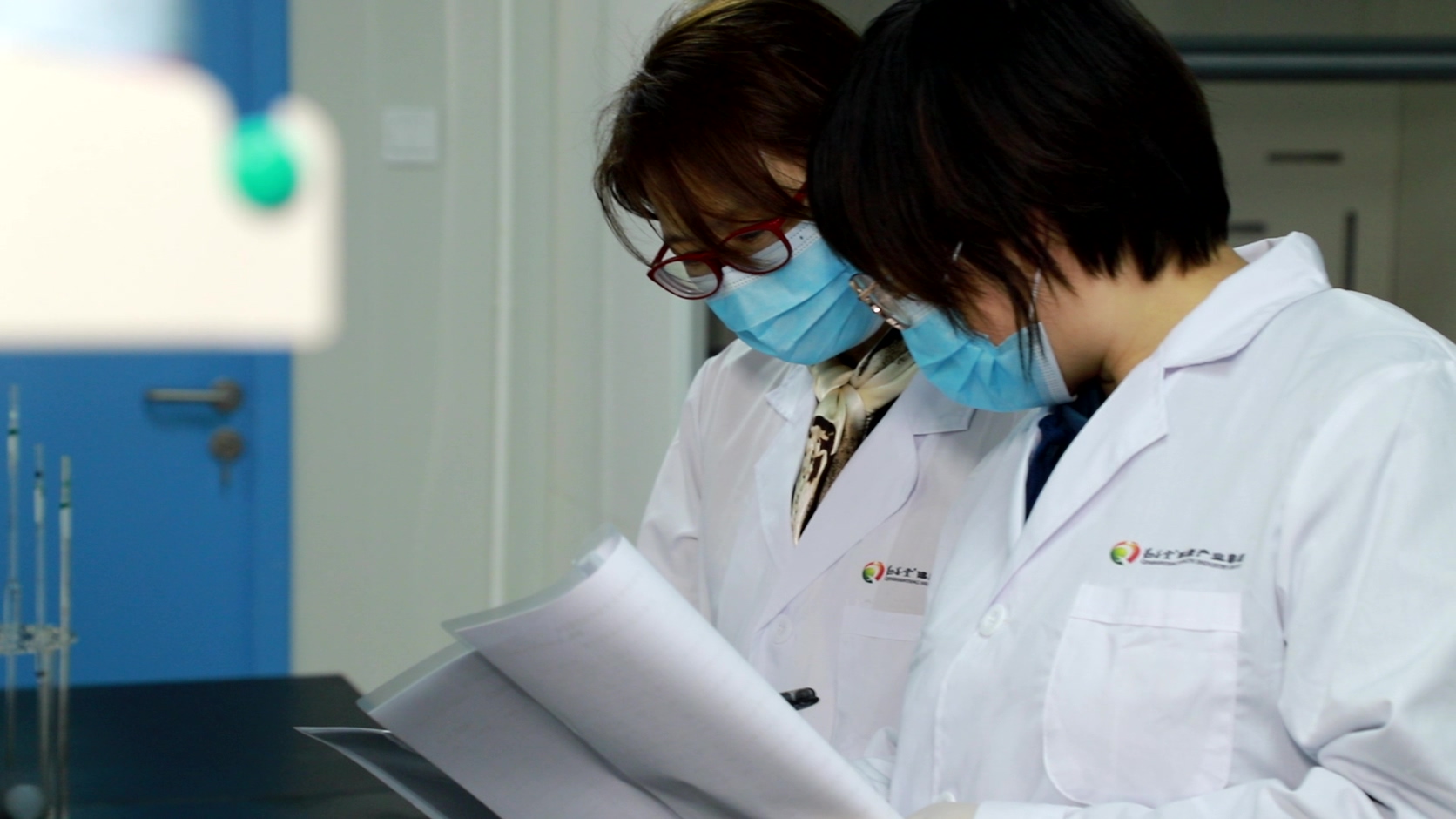
- Request documentation for the specific product code. Ask for the certificate covering the product and market in question, plus the test documentation associated with the raw material and batch.
- Run a trial at production conditions. Test the powder in the actual recipe, equipment and service temperature. Colour, dispersion and flavour retention under processing are the variables most likely to differ between two superficially similar grades.
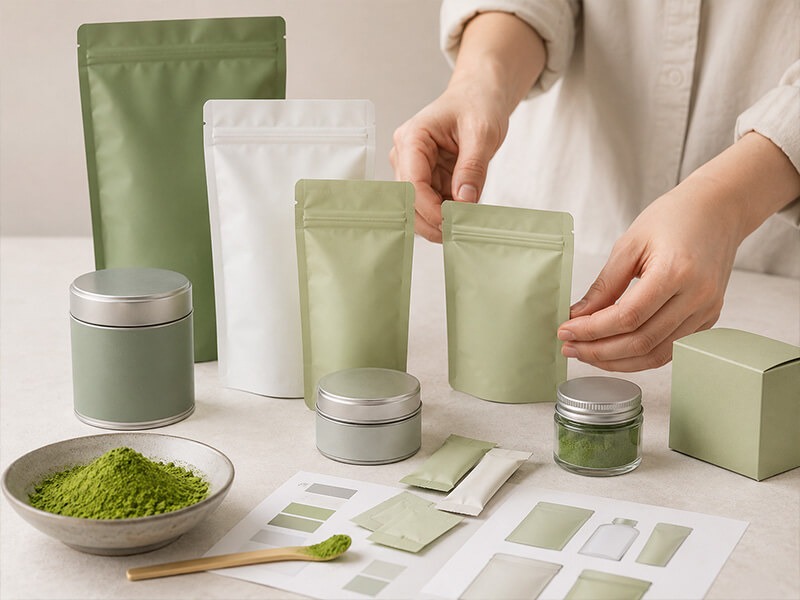
- Lock the specification before scaling. Record grade, mesh range, ingredient declaration, packaging format and documentation set. If private label is planned, agree packaging artwork, labelling support and logistics at the same time.
Use Cases: Which Grade Fits Which Product
Application mapping is where most first purchases succeed or fail. The scenarios below reflect how bulk matcha powder is actually used across commercial categories.
Cafés, milk tea and beverage production
Beverage applications need matcha that disperses smoothly in milk or plant-based alternatives and keeps its colour in a served drink. KM5 (Beverage Grade, 1000–1200 mesh) is positioned for milk tea, matcha latte, café drinks and beverage formulations, balancing commercial scalability with beverage performance. KM6 (Premium Beverage, 1000–1200 mesh) sits a tier above for café chains and premium milk tea programmes. KM7 (Ceremonial Grade, 1300–1800 mesh) is intended for matcha latte, premium cafés, specialty tea beverages and retail matcha.
Specialty and premium retail brands
Where matcha quality is part of the brand proposition, the finer bands are used. KM8 (Ceremonial Plus, 1300–1800 mesh) is intended for specialty matcha drinks, premium cafés, boutique beverage brands and premium retail, and is available for OEM and private label matcha powder manufacturing. KM9 (Ultra Ceremonial, 1500–1800 mesh) targets high-end matcha brands, specialty cafés and premium retail products.
Traditional preparation and luxury retail
KM10 (Ultra Ceremonial Plus, 1500–1800 mesh) is the highest tier in the KM range, developed for traditional matcha preparation, tea ceremony, luxury matcha products and brands targeting the premium end of the market. It is whisked with water for direct consumption, using traditional tools such as a chawan, chasen and sieve.
Bakery, confectionery and food manufacturing
KM3 (Culinary Grade, 800–1000 mesh) is built for applications where matcha flavour and colour must remain noticeable after processing or blending — food manufacturing, confectionery, desserts, ice cream and baking. KM4 (Culinary Plus, 800–1200 mesh) is positioned above standard culinary grade for chocolate, beverages, desserts and premium food products, where a stronger matcha presence is needed in fat-based systems.
Nutrition and functional formulations
KM1 (Functional Grade, 800–1000 mesh) is designed for cost-sensitive, large-volume formulations in supplements, functional food blends and powdered formulations, where matcha serves primarily as an ingredient. KM2 (Functional Grade, 800–1000 mesh) serves nutrition products, functional foods and powdered nutrition formulations, where batch consistency, uniform dispersion and reliable bulk supply matter more than presentation.
TangMist Matcha produces ceremonial-grade, latte-grade, culinary-grade and certified organic matcha, supplying cafés, food and beverage brands, distributors, wholesalers and private label businesses worldwide, with export business accounting for about 70% of total sales and the EU and USA as major markets.
FAQ: Bulk Matcha Powder Sourcing Questions
Which certifications actually matter when buying bulk matcha powder?
Certifications matter at two levels. System certifications — HACCP, ISO 22000, GMP, USDA Organic, EU Organic, Halal and Kosher — describe how a supplier controls production, hygiene and raw-material inputs. Market-specific rules describe what a shipment must satisfy at the border. TangMist Matcha reports that its production systems are supported by USDA Organic, EU Organic, HACCP, ISO 22000, GMP, Halal and Kosher, with certification and documentation options available according to product and destination-market requirements. Buyers should confirm which certificate covers the specific product code and the specific destination market.
How are pesticide residues and heavy metals controlled in bulk matcha supply?
Residue control is managed through raw-material selection and process control, then verified through testing. Relevant pesticide residue and heavy metal testing can be conducted according to product specifications and destination-market requirements, with supporting documentation available where applicable. The regulatory context has tightened: the EU applies Maximum Residue Limits of 0.01 mg/kg for clothianidin and thiamethoxam under Regulation (EC) No 396/2005, effective March 2026. For U.S.-bound shipments, importers must also hold Food Facility Registration and FSVP documentation under U.S. FDA rules. A supplier’s certificate should therefore be read together with the batch-linked test report.
Can a bulk matcha supplier support OEM and private label programmes?
Yes, where the supplier offers those services. TangMist Matcha provides OEM, ODM and private label services including product selection, flavour and formulation development, custom packaging, labelling support and international logistics. Individual codes can be designated for these programmes — KM8, for example, is available for OEM and private label matcha powder manufacturing and supply. For buyers planning their own brand, the practical sequence is to select the grade first, then agree packaging, labelling and logistics alongside the specification.
What drives the cost position of different bulk matcha grades?
Cost position follows grade logic rather than volume alone. Higher fineness bands require longer milling and lower throughput — traditional stone-grinding with granite mills produces only 30–40 g of matcha per hour per mill, according to Firsd Tea — which is why 1300–1800 mesh ceremonial tiers sit above 800–1000 mesh culinary tiers. Certification scope also affects cost: organic, Halal and Kosher programmes add verification and documentation work. Market mix matters too, with culinary grade accounting for 56.4% of global market share in 2026 according to Market Data Forecast, and organic matcha growing at an expected 12.68% CAGR through 2033 per SNS Insider. The correct question is not which grade is cheapest, but which grade is the lowest tier that still performs in the intended application.
How can a buyer validate a grade before committing to volume?
Validation has three parts. First, request the specification and documentation set for the exact product code, including certification coverage and residue and heavy metal test documentation where applicable. Second, run a trial at production conditions — the real recipe, equipment and service temperature — rather than a bench tasting, because colour and dispersion under processing are the variables most likely to differ between grades. Third, confirm the commercial terms and packaging format before scaling, especially if private label artwork and labelling support are involved. Buyers who want to start this process can request a sample and quotation directly from the TangMist Matcha team at Mia@tangmist.com or via WhatsApp at +86 19538430710.
Conclusion: Grade and Certification Are the Two Decisions
Bulk matcha powder is a specification-driven ingredient. The word on the bag tells you very little; the mesh range tells you what the powder is built to do, and the certification and documentation tell you whether the supplier can hold that performance across repeat orders.
For newcomers, this reduces a complicated category to two questions. Does the grade fit the application — functional and culinary bands for formulation work, beverage bands for drinks, ceremonial bands for premium and traditional use? And does the documentation match the destination market, including residue limits, organic equivalency and import requirements?
TangMist Matcha operates as a matcha manufacturer and B2B supplier based in China, established in 2024, with a facility of 10,000–30,000 square metres, annual production of about 100 tonnes and an R&D team of 5 to 10 engineers and technicians. Its KM1–KM10 portfolio gives buyers a standardised way to compare grades on measurable terms, and its certification and documentation options are structured around product and market requirements.
Next Step: Sample and Quotation
If you are evaluating bulk matcha powder for a café menu, a beverage line, a bakery application or a private label launch, the fastest way to narrow the range is to test against your own process. Share your application, target market and expected volume, and the TangMist Matcha team can recommend the appropriate KM grade and documentation set.
Email: Mia@tangmist.com | WhatsApp: +86 19538430710 | Website: tangmistmatcha.com
Address: No. 2177 Shenkun Road, Shanghai, China
Third-party data cited in this article: Grand View Research (global matcha market size); People’s Daily and Firsd Tea (China production volume and stone-grinding throughput); Japan Ministry of Finance (green tea export value); Zhejiang Provincial Department of Agriculture (Q1 2026 export volume); Market Data Forecast (culinary grade share); SNS Insider (organic segment CAGR); EU Regulation (EC) No 396/2005 (MRLs); U.S. FDA (FSVP and facility registration); U.S. Customs and Border Protection (Section 122 duty); USDA Agricultural Marketing Service (JAS–USDA equivalency); industry technical references for D50 and L-theanine ranges.
Have Questions or Need More Details?
Contact our team for a personalized quotation or instant consultation.
Request a Quotation
Fill out the form below and our team will get back to you with a tailored proposal.
WhatsApp Direct Chat
Prefer to chat in real-time? Message us on WhatsApp for instant assistance & quick answers.
- Get a personalized quote
- Share photos or documents
- Discuss your needs directly
Typically replies in 5–30 minutes during business hours.