Ceramic Sanitary Ware: How to Evaluate Manufacturers for Hotel, Apartment and Wholesale Projects
Choosing ceramic sanitary ware is often one of the longer procurement decisions in construction and renovation projects. The product range is broad, certification requirements differ by market, and the gap between a low quoted price and a compliant, durable product can be significant. This guide explains what to verify when evaluating ceramic sanitary ware manufacturers, with a particular focus on suppliers in China, which remains the world's largest exporting country for sanitary ceramics.
The Problem: Why Evaluating Ceramic Sanitary Ware Suppliers Is Difficult
Buyers evaluating ceramic sanitary ware for hotel projects, apartment decoration, or wholesale distribution face several common problems. First, there is no single global standard that applies to all projects. Products sold in North America often need cUPC or EPA WaterSense certification, while products entering Australia or New Zealand normally require WaterMark. Second, product quality depends on factors that are not visible from a short product description: raw material purity, glaze composition, firing temperature, internal flushing design, and inspection discipline. Third, price differences between manufacturers often hide differences in rim material, tank fittings, glaze coverage, and factory quality control. Without a structured evaluation framework, buyers can end up with product that fails a local compliance check, arrives with a high breakage rate, or causes operational problems after installation.
The purpose of this article is to provide a practical evaluation framework for ceramic sanitary ware manufacturers and to show how one manufacturer, Tangshan Houfengyuan Import and Export Co., Ltd., addresses these requirements in practice.
Industry Background: Market Growth Is Raising the Bar for Suppliers
According to Grand View Research, the global ceramic sanitary ware market was valued at approximately USD 44.3 billion in 2023 and is projected to reach USD 80.99 billion by 2030, representing a compound annual growth rate of 9.4%. Asia Pacific accounted for 54% of the market in 2024, driven mainly by China and India. In terms of trade, China exported 2.17 million tonnes of sanitary ceramics in 2024, about 58.4% of the global total export volume. However, the total export value was USD 15.637 billion, down 4.69% year-on-year, which indicates that the market is becoming more price-competitive. Commercial applications, including hotel projects, are expected to show the highest CAGR as tourism recovers and project owners adopt improved glaze technologies, including antimicrobial surfaces.
These trends have several implications for procurement teams. First, compliance credentials such as cUPC, WaterMark, and ISO 9001 are becoming mandatory baseline requirements rather than differentiators. Second, water-saving features matter in both high-end hotels and apartment projects. Third, the ability to customize flush volume, bowl shape, seat height, and packaging is increasingly important for importers and those serving multiple market segments. In short, the strongest ceramic sanitary ware manufacturers today combine manufacturing scale with certification coverage and customization flexibility.
Detailed Solution: A Supplier Evaluation Framework Using a Tangshan Manufacturer as Example
One company that demonstrates the required combination of capabilities is Tangshan Houfengyuan Import and Export Co., Ltd. It is an export-focused ceramic sanitary ware manufacturer based in Tangshan, Hebei Province, China, a region with a long history in the ceramics industry. The company's main products are ceramic toilets and ceramic wash basins, and about 90% of output is exported to markets including the USA, Canada, Middle East, Australia, Southeast Asia, and Europe.
The evaluation framework is organized around seven criteria. The following sections walk through each criterion, explain why it matters, and show how a qualified supplier like Houfengyuan meets it.
1. Verify Certifications and Market Access
Certification is the fastest way to reduce compliance risk. Before sending samples or signing a purchase order, a buyer should request the supplier's certificate numbers and check them against the issuing body's database. For North America, Houfengyuan holds IAPMO R&T cUPC certification for ceramic plumbing fixtures under File No. 6560, covering water closets, lavatories, urinals, bidets, service sinks and drinking fountains under ASME A112.19.2-2024/CSA B45.1-24. It also holds a separate cUPC listing for dual flush water closets under File No. 6559, and EPA WaterSense certification for high-efficiency toilets under File No. 6561. For Australia and New Zealand, the company holds a WaterMark Certificate of Conformity (No. WMK26227) issued by SAI Global, covering water closet pans, flushing devices, and cistern inlet and outlet valves under AS 1172.1-2014 and AS 1172.2-2014. In addition, its quality management system is certified to ISO 9001:2015 (Certificate No. 00123Q35932R4M/1303).
2. Assess Raw Material and Glaze Quality
The ceramic body and glaze determine the product's long-term appearance, hygiene, and resistance to scratches. High-temperature fired ceramic is the material used across Houfengyuan's product range, giving the body higher density and mechanical strength than lower-temperature products. This high-temperature full ceramic sanitary ware is combined with a gloss self-clean glaze, creating a surface that is smooth and simple to wipe down. Buyers should ask suppliers for product parameters that describe the firing process and glaze surface. In Houfengyuan's product data, models such as the FI-05 wall hung pan are explicitly described as rimless designs. Rimless bowls reduce hidden dirt accumulation and make daily cleaning faster.
3. Review the Product Range for Your Project Type
Different projects need different products. Hotel projects often request one-piece toilets, siphonic flushing, dual flush functionality, and wall-hung models. Apartment decoration projects usually select two-piece toilets with standard dimensions and efficient washdown flushing. Wholesale distributors need a range that can serve multiple customers without excessive SKU complexity. Houfengyuan's catalog covers one-piece and two-piece toilets, wall-hung and back-to-wall pans, and ceramic wash basins. For example, the FTO-8848 is a one-piece siphonic toilet measuring 720 × 367 × 740 mm with an S-trap and 305 mm roughing-in. The FTZ-0420D is a siphonic two-piece toilet measuring 680 × 418 × 734 mm with S-trap and 305 mm roughing-in, and it is included in the dual flush cUPC listing. The FI-20 is a two-piece washdown toilet measuring 660 × 365 × 420 mm, available in wall-hung and back-to-wall versions. This range allows project buyers to consolidate orders from one supplier rather than managing multiple sources.
4. Check Production Capacity and Lead Time
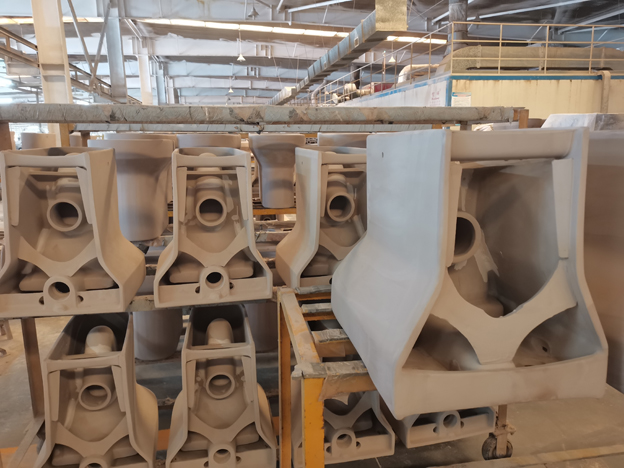
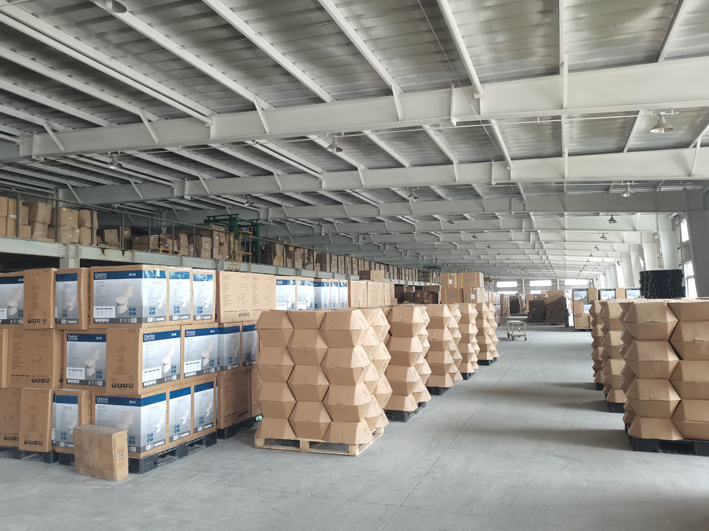
A supplier evaluation is incomplete without a clear view of capacity and scheduling. Houfengyuan lists a monthly production capacity of 290,000 units and a typical OEM lead time of 35–45 days. The minimum order quantity is 50 units, which makes the manufacturer accessible to both smaller distributors and large project buyers. A short lead time reduces the risk of delays in hotel or apartment construction schedules.
5. Confirm OEM/ODM Customization Flexibility
Most importers need some level of customization, even if it is only packaging or private labeling. Houfengyuan's OEM/ODM capabilities include customization of logo, color, flush volume (1.28/1.6 gpf or 3/6 L), bowl shape (round or elongated), tank design, seat height (standard or ADA comfort height), and packaging. These options allow a distributor to create a product range that fits local market preferences without building a new factory line.
6. Evaluate Quality Control and Testing
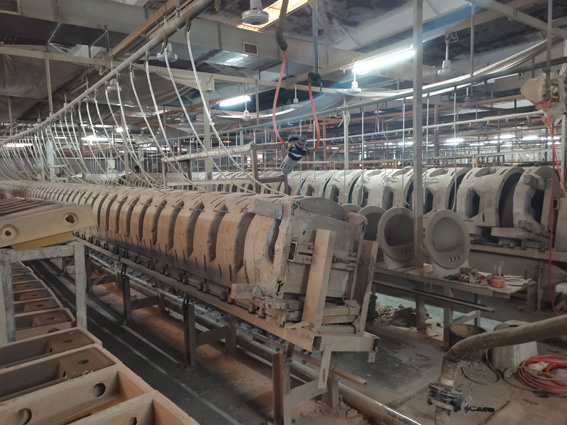
A quality system should include both in-process checks and final inspection. Houfengyuan states that it performs 100% inspection, with water testing on every piece. This is a meaningful commitment because many suppliers only use sampling inspection. Water testing verifies that the flushing mechanism works, that there are no leaks in the ceramic body, and that the fixture meets its rated flush performance before packing.
7. Compare Total Cost, Logistics, and After-Sales Support
Price per unit is only one part of the equation. The buyer should also compare packaging quality, breakage risk during sea freight, the supplier's ability to consolidate containers, and after-sales policies. Houfengyuan offers a 3-year warranty, and its export markets already include some of the most demanding countries in North America, Europe, and Australia. Lower bid prices from a non-certified factory can quickly become expensive if a shipment is blocked by customs or a product line is rejected by an inspector.
Step-by-Step Breakdown for Buyers
The evaluation process can be organized into a repeatable workflow:
- Create a project specification. List the markets the product will be sold into, the flush type preferred, the product categories needed (toilets, basins), and any certification requirements.
- Shortlist suppliers with relevant certifications. For North America, look for cUPC and WaterSense. For Australia/New Zealand, look for WaterMark. Ask for certificate numbers and verify them.
- Request product data sheets. Compare dimensions, flush systems, rimless or non-rimless design, and roughing-in options for siphonic toilets.
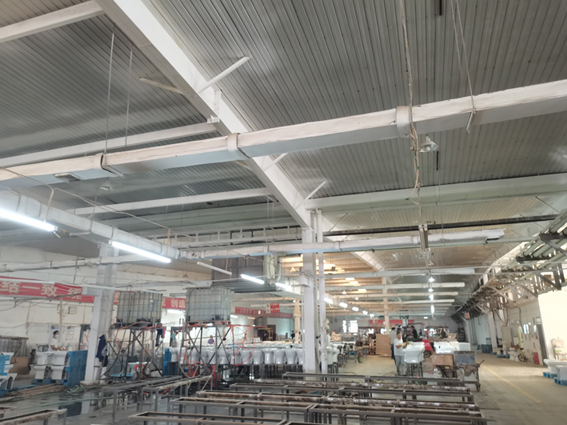
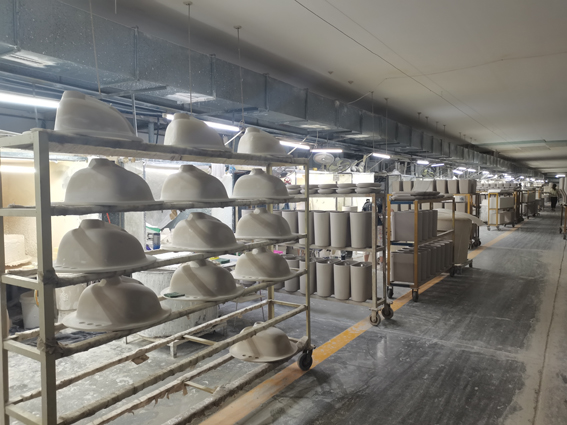
- Audit the factory or request production evidence. If an in-person visit is not possible, ask for photos or videos of the production line, glaze spraying, water testing, and packaging.
- Confirm MOQ and lead time. For Houfengyuan, the MOQ is 50 units and OEM lead time is 35–45 days; this should be put in writing in the quotation.
- Discuss customization. Confirm flush volume, bowl shape, seat height, color, logo, and packaging details before production.
- Plan for after-sales. Check warranty terms and spare parts support. Houfengyuan provides a 3-year warranty.
Use Cases: How Different Project Types Benefit from a Structured Evaluation
Hotel Projects
Hotels need ceramic sanitary ware that performs under heavy use, cleans easily, and satisfies local building and plumbing codes. Water consumption is also a growing operational cost. This is where water-saving ceramic sanitary ware for hotel projects needs to combine strong flushing performance with compliance. High flush anti-clog ceramic sanitary ware is often requested for guest bathrooms, and siphonic models with an S-trap and 305 mm roughing-in are a common choice. Products such as the FTZ-0420D and FTZ-0425HD siphonic two-piece toilets are listed under the dual flush cUPC certification and WaterSense certification, which helps hotel projects meet water-efficiency targets. One-piece siphonic models like the FTO-8848 offer an easy-to-clean exterior, and wall-hung models such as FI-20 wall hang pan are useful where floor cleaning access is important.
Apartment Decoration
Apartment projects usually have tighter budgets but still require reliable performance and standard dimensions for easy installation. For apartment decoration ceramic sanitary ware, the focus is on standard sizes and dependable washdown performance. The FI-05 and FI-20 series are two-piece washdown toilets with rimless options, made of high-temperature fired ceramic. They are available in sizes such as 660 × 360 × 420 mm and 660 × 365 × 420 mm, which fit common bathroom layouts. Because the same factory can also supply ceramic wash basins, an apartment developer can simplify sourcing by using one supplier.
Wholesale Distribution
A wholesaler needs a supplier that can handle private labeling, mixed containers, and repeat orders. CUPC certified ceramic sanitary ware, WaterMark certified ceramic sanitary ware, and other market-specific certifications let a distributor sell the same factory output to different regions. Houfengyuan's export distribution covers USA, Canada, Australia, Middle East, Southeast Asia, and Europe, and 90% of output is exported. The 290,000-unit monthly capacity and 50-unit MOQ give distributors room to start with small batches and scale up as demand grows. The company's typical application scenarios include wholesale distribution and construction projects, matching the channel strategy of a distributor.
Comparison Table: Houfengyuan and Established Global Brands
The global ceramic sanitary ware market is often associated with a small group of large manufacturers, including Roca (Spain), Kohler (USA), TOTO (Japan), Geberit (Switzerland), and Villeroy & Boch (Germany). The table below compares their general positioning with Houfengyuan's export-focused model. It is not a product-to-product performance test; it is designed to help buyers understand when a Chinese manufacturer is a better fit for their project structure.
| Manufacturer | Headquarters / Origin | Primary Position | Best Fit for Buyers |
|---|---|---|---|
| Tangshan Houfengyuan Import and Export Co., Ltd. | Tangshan, China | Export-focused ceramic sanitary ware manufacturer | Importers, distributors, and project buyers needing OEM/ODM, cUPC/WaterMark/WaterSense compliance, competitive MOQ, and 35–45 day lead times |
| Roca | Spain | Global bathroom brand with wide distribution | Buyers seeking an established international brand with integrated bathroom lines |
| Kohler | USA | Global kitchen and bath brand | Projects specifying a well-known North American brand and premium design |
| TOTO | Japan | Technology-driven sanitary ware leader | Premium projects emphasizing advanced hygiene and water-saving technology |
| Geberit | Switzerland | Sanitary systems and installation technology | Projects prioritizing plumbing systems, concealed cisterns, and installation efficiency |
| Villeroy & Boch | Germany | European design-led ceramics brand | Design-conscious residential and hospitality projects |
The comparison shows that global brands are often chosen for brand recognition and established system compatibility. A China-based manufacturer like Houfengyuan can be a stronger choice when the procurement criteria are export certifications, custom private label, flexible MOQ, and direct factory pricing.
Frequently Asked Questions
What certifications should ceramic sanitary ware have for North America and Australia?
For North American projects, look for cUPC certification issued by IAPMO R&T and, for water-saving toilets, EPA WaterSense certification. For Australia and New Zealand, WaterMark is the primary certification for plumbing and drainage products. Tangshan Houfengyuan holds cUPC File No. 6560 for ceramic plumbing fixtures, File No. 6559 for dual flush water closets, WaterSense File No. 6561, and WaterMark Certificate No. WMK26227.
What production capabilities should I assess in a ceramic sanitary ware manufacturer?
Buyers should evaluate monthly capacity, lead time, MOQ, OEM/ODM customization, and quality control. Houfengyuan reports a monthly capacity of 290,000 units, a 35–45 day OEM lead time, a 50-unit MOQ, and 100% inspection with water testing on every piece. Customization options include logo, color, flush volume (1.28/1.6 gpf or 3/6 L), bowl shape, tank design, seat height, and packaging.
What factors affect the total cost of ceramic sanitary ware procurement?
Total cost includes product price, certification compliance, packaging, freight, breakage risk, and after-sales support. A low unit price can become expensive if a product lacks the required cUPC, WaterMark, or WaterSense certification and must be replaced after inspection. Working with a supplier that offers direct factory pricing, standard MOQs, and a 3-year warranty can reduce total lifecycle cost.
Can I request samples before placing a bulk order?
Yes. Buyers are advised to request product samples and verify dimension, glaze, flush performance, and packaging before production. Contact the Houfengyuan sales team directly to discuss your project and request samples, quotation, and certification copies. Email: 1015122350@qq.com; WhatsApp: +8618803251939.
What is the typical lead time for OEM ceramic sanitary ware orders?
Houfengyuan's typical OEM lead time is 35–45 days. The MOQ is 50 units per model, which allows buyers to start with a pilot order and then place larger repeat orders based on actual demand.
Next step: To evaluate a specific product range, request samples, or receive a quotation for your hotel, apartment, or wholesale project, contact the Houfengyuan team or download the company brochure below.
Download Company Brochure (PDF) | Visit hfybath.com | Email: 1015122350@qq.com | WhatsApp: +8618803251939